How to Become a Data Analyst From a Non-Technical Background
How to become a data analyst in 8 steps: spreadsheets, SQL, a BI tool, statistics, then Python or R, plus projects drawn from the work you already do.
Changing direction, reskilling and staying employable as work changes.
How to become a data analyst in 8 steps: spreadsheets, SQL, a BI tool, statistics, then Python or R, plus projects drawn from the work you already do.
A career change at 40 is not too late: OECD retirement ages leave about 25 working years. What changes with age, money and hiring, and a plan to test first.
A career change at 30: US data show job moves are still common from 25 to 34, but pay built on years in your old field mostly stays behind.
Job shadowing as an adult in 7 steps: who to ask, a short request to send, what to watch on the day, questions to ask and the rules that come with it.
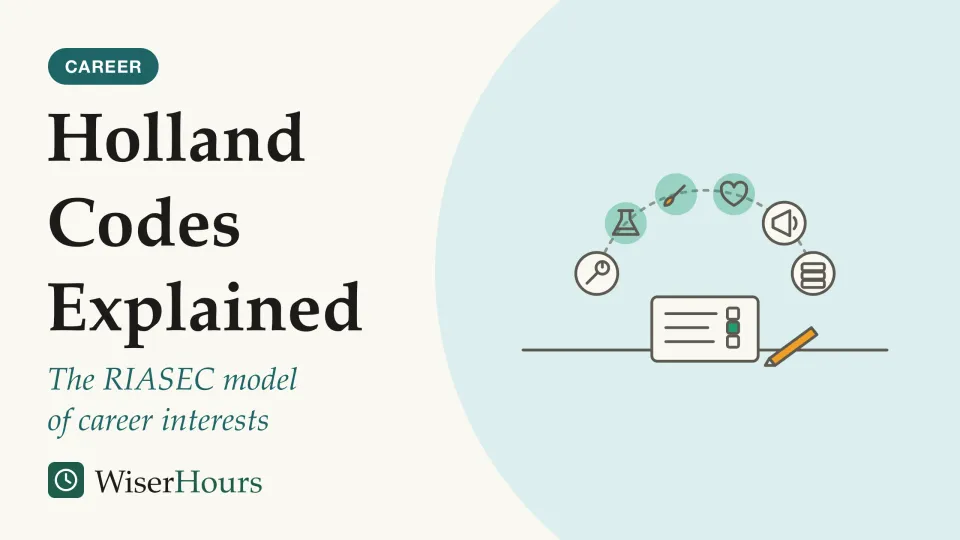
A Holland code ranks your top 3 of 6 work-interest types. How the RIASEC hexagon works, how O*NET's free test uses it, and what it can't predict.
What a career coach does, what research on coaching shows, what an hour typically costs (about US$234, ICF 2025) and how to choose one, with free options first.
How to change careers in 8 steps: pick a target role, test it cheaply, close the skill gap, build proof and plan your money, with realistic timelines.
Should you change careers? A 6-step way to decide, what a study of over 20,000 coin tosses found, and why no one officially counts career changes.
How tuition reimbursement works: approval first, pay then claim, grade rules and repayment clauses, plus the US $5,250 tax-free limit (2026) and UK rules.
Will AI take my job? Exposure studies count tasks AI could speed up, not lost jobs. The ILO's 2025 index: 1 in 4 workers exposed, about 3% highly.
Transferable skills are skills you can use across jobs. The US O*NET database lists 25 of them. How to find yours, and why the job you aim for matters.