Shiny Object Syndrome: How to Stop Switching Goals
Shiny object syndrome: 4 forces that pull you to the next new goal, 4 fixes that keep the current one alive, and a test for a healthy pivot.
How to build a capsule wardrobe in 5 steps: log what you wear for two weeks, pick a palette, size it to your climate and life, buy slowly, review each season.
14 analog hobbies in 4 groups, with cost, time and space for each, what research links them to, and how to start one that replaces the evening scroll.
Hoshin Kanri explained: Akao's 6 planning steps, catchball, the X-matrix, how it differs from OKRs, and a worked example for a 50-person company.
A goal setting worksheet in 7 boxes, from the goal to a review date, with the research behind each box and three shorter variants for different needs.
A 30-day challenge can start a habit, but a 2024 review says new health habits take two to five months. What fades after day 30, and how to plan day 31.
The overjustification effect: expected prizes for things people already enjoy can cut their interest. What a 1973 study and a review of 128 studies found.
Ultradian rhythms repeat many times a day. The 90-minute sleep cycle is well documented; a 90-minute focus cycle while awake is not. How to test your own.
How to increase attention span in 6 small steps: time your baseline, do five more when you want to stop, hide the phone, move on breaks, protect sleep.
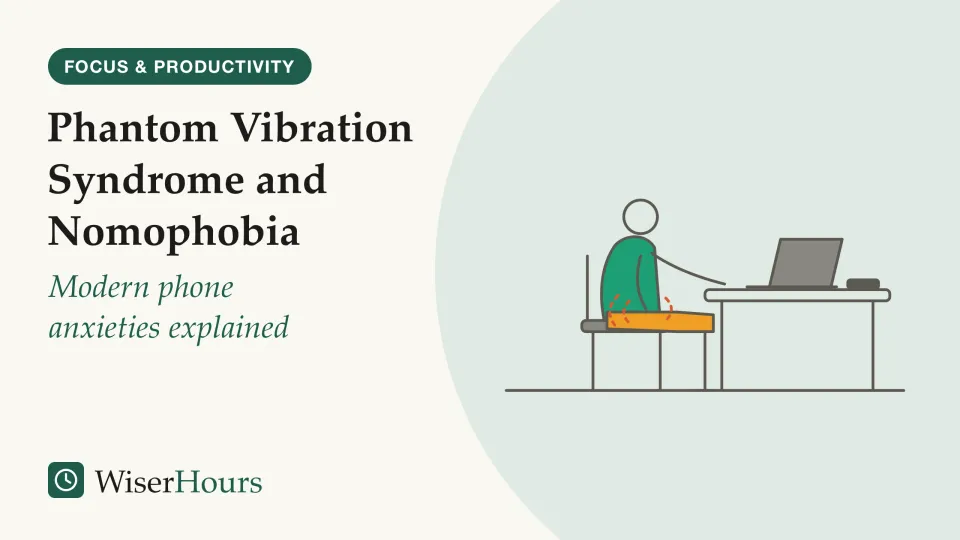
Phantom vibration syndrome, a buzz that never came, is common and rarely bothersome. Why it happens, what nomophobia is, and 5 simple steps.
How to stop being lazy: find what the feeling hides, then try 5 kind steps, from acting first to a two-minute start, and know when to see a doctor.
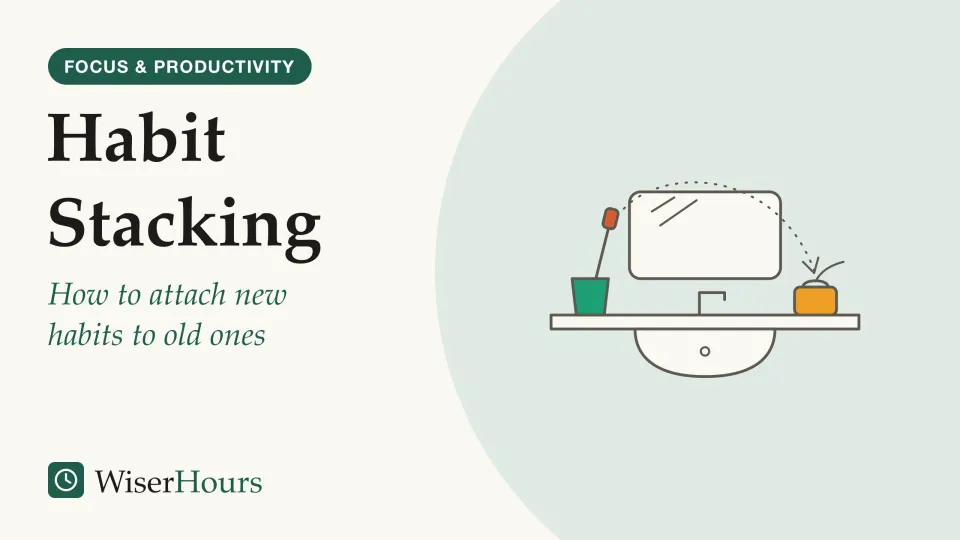
Habit stacking ties a new habit to one you already do. A 5-step method, 14 examples for work and home, and what the if-then research behind it shows.
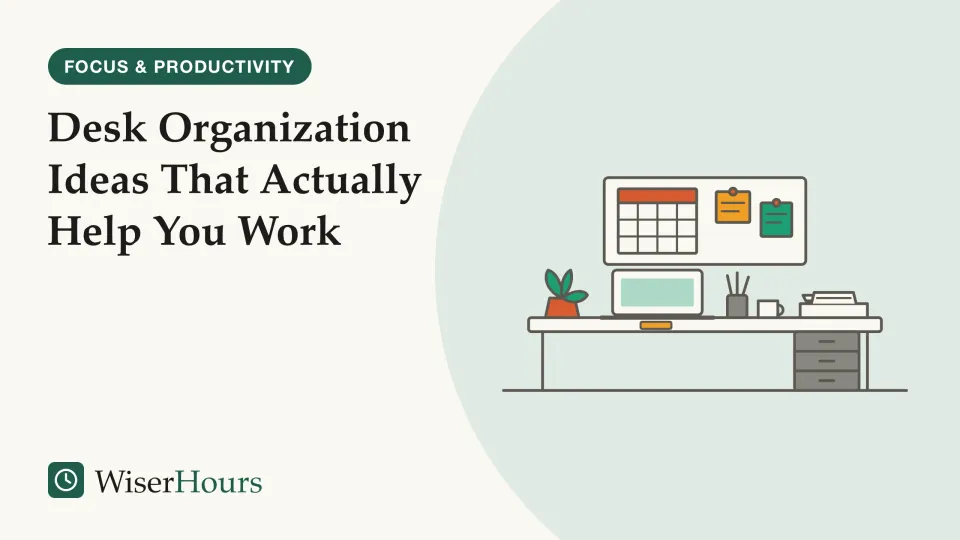
6 desk organization ideas that make work easier, from zoning by reach to a short end-of-day reset, and what research says about messy desks.
Give attention a direction
Deep work, attention span, flow and beating distraction: what the research says about concentrating in a noisy world.
Make room for what matters
Prioritization, time blocking, planning your day and protecting your calendar.
Find your starting point
Why we put things off, how motivation really works, and practical ways to get started and keep going.
Small steps, steady rhythm
The science of habit formation, morning and evening routines, and small changes that compound.
Turn intentions into plans
Setting goals you will actually reach, from annual reviews to weekly plans.
Build a system that fits
GTD, Kanban, bullet journaling, slow productivity and how to choose a system that fits you.
Create space beyond screens
Taming phones, notifications, social media and information overload.
A place for everything
Organizing your home, desk, files and life admin so they stop costing you time.