When Rewards Backfire: The Overjustification Effect
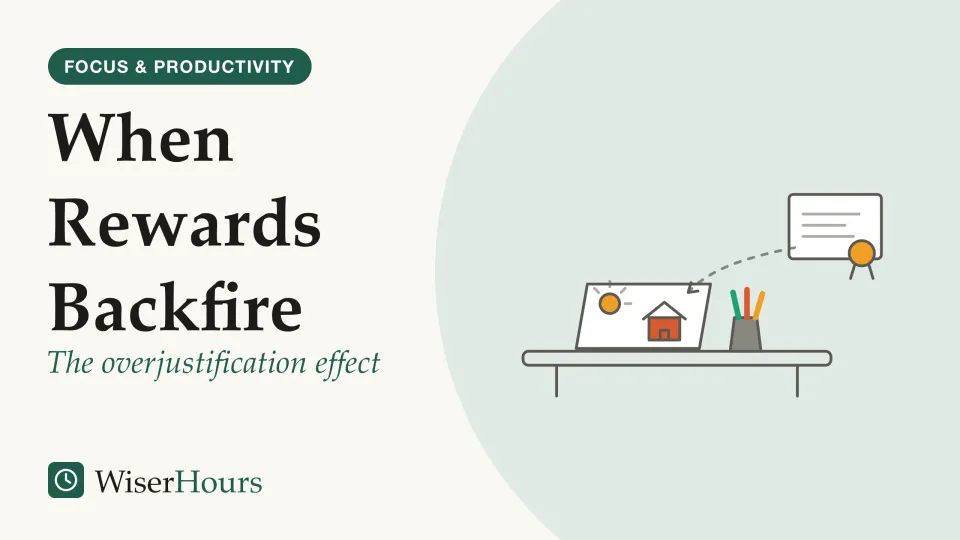
The overjustification effect: expected prizes for things people already enjoy can cut their interest. What a 1973 study and a review of 128 studies found.
Why we put things off, how motivation really works, and practical ways to get started and keep going.
The overjustification effect: expected prizes for things people already enjoy can cut their interest. What a 1973 study and a review of 128 studies found.
Rewards get people moving; interest and personal value keep them going. What 4 decades of research on intrinsic vs extrinsic motivation found.
How to stop being lazy: find what the feeling hides, then try 5 kind steps, from acting first to a two-minute start, and know when to see a doctor.
Languishing is feeling flat and aimless without being depressed. What the research says it is, how it is measured, 5 low-risk steps and when to get help.
Disciplined people resist temptation less often, not more. 5 steps to build self-discipline by designing your days instead of gritting your teeth.
Waiting to feel ready can keep you stuck. 5 gentle steps for a flat day: shrink the task, start first, change the room, check the basics, add a reward.
15 ways to stop procrastinating, each matched to the cause of delay it targets and graded by its evidence, from if-then plans to self-set deadlines.
How to stop procrastinating on studying: 5 steps that add the structure a course leaves out, and why one round of advice failed in a 2024 trial.
Revenge bedtime procrastination trades sleep for time of your own. The 3 reasons people give for staying up, and 6 low-risk habits to reclaim the night.
Why do we procrastinate? A 2007 meta-analysis of 691 correlations points to unpleasant tasks, distant rewards, self-doubt and impulsiveness.