How to Solve It: George Pólya's Four Steps, Still Useful Today
Pólya's How to Solve It in 4 steps: understand, plan, carry out, look back. The key questions, two worked examples and what later research adds.
Generating ideas, solving hard problems and getting past creative blocks.
Pólya's How to Solve It in 4 steps: understand, plan, carry out, look back. The key questions, two worked examples and what later research adds.
Problem-solving skills as a 6-step process: define it, find causes, generate options, choose, test small and review, with a work and a home example.
Functional fixedness explained: Duncker's candle problem step by step, 4 classic follow-up studies, everyday examples and ways to loosen it.
Six thinking hats, Edward de Bono's 1985 method: what each of the 6 colors covers, a sample meeting sequence with timings, and what the studies show.
Lateral thinking, Edward de Bono's 1967 idea, explained: 4 of his techniques worked through on one problem, and what the thin evidence on training shows.
How to come up with ideas: 12 techniques, from working alone first to a walk or an AI draft, each labelled for how strong its evidence is.
Does brainstorming work? Since 1958, lab studies have found people working alone out-produce talking groups. Why, and when group ideas pay off.
Intrapreneurship means acting like a founder inside a company. Where the 1978 term came from, 2 famous examples checked, and what helps employee ventures.
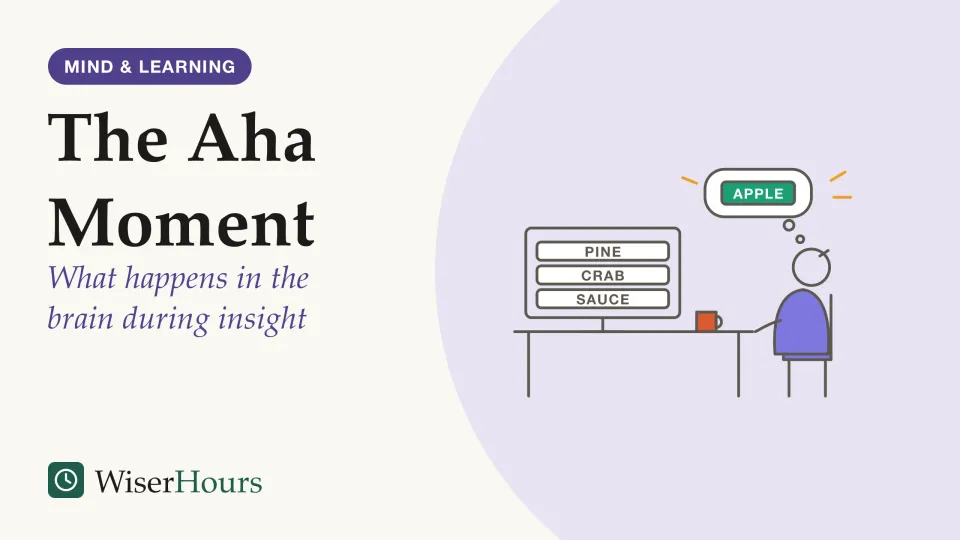
An aha moment is a sudden reframing of a problem. What brain studies, 4 accuracy experiments and a 2025 memory study show, and which parts are still thin.
Setting a stuck problem aside helps on average in lab studies. When a break works best, what to fill it with, and 2 popular explanations that did not hold up.
Rapid prototyping means testing a rough version of an idea before you commit. The 4 levels of fidelity, what each answers, and when rough misleads.
Design thinking in 5 stages: empathize, define, ideate, prototype and test. What each asks of you, an example, and what research supports.
Writer's block research since 1980 links it to rigid rules, harsh self-talk and waiting for the mood. What helps, plus a 2-week routine to test.
What is creativity? Psychologists define it as work that is both original and effective. How it is measured, what tests miss, and 3 myths to drop.