How to Organize Your Closet
How to organize your closet in 6 steps and one afternoon: empty it, edit by fit and use, zone by how often you wear things, and store the off-season safely.

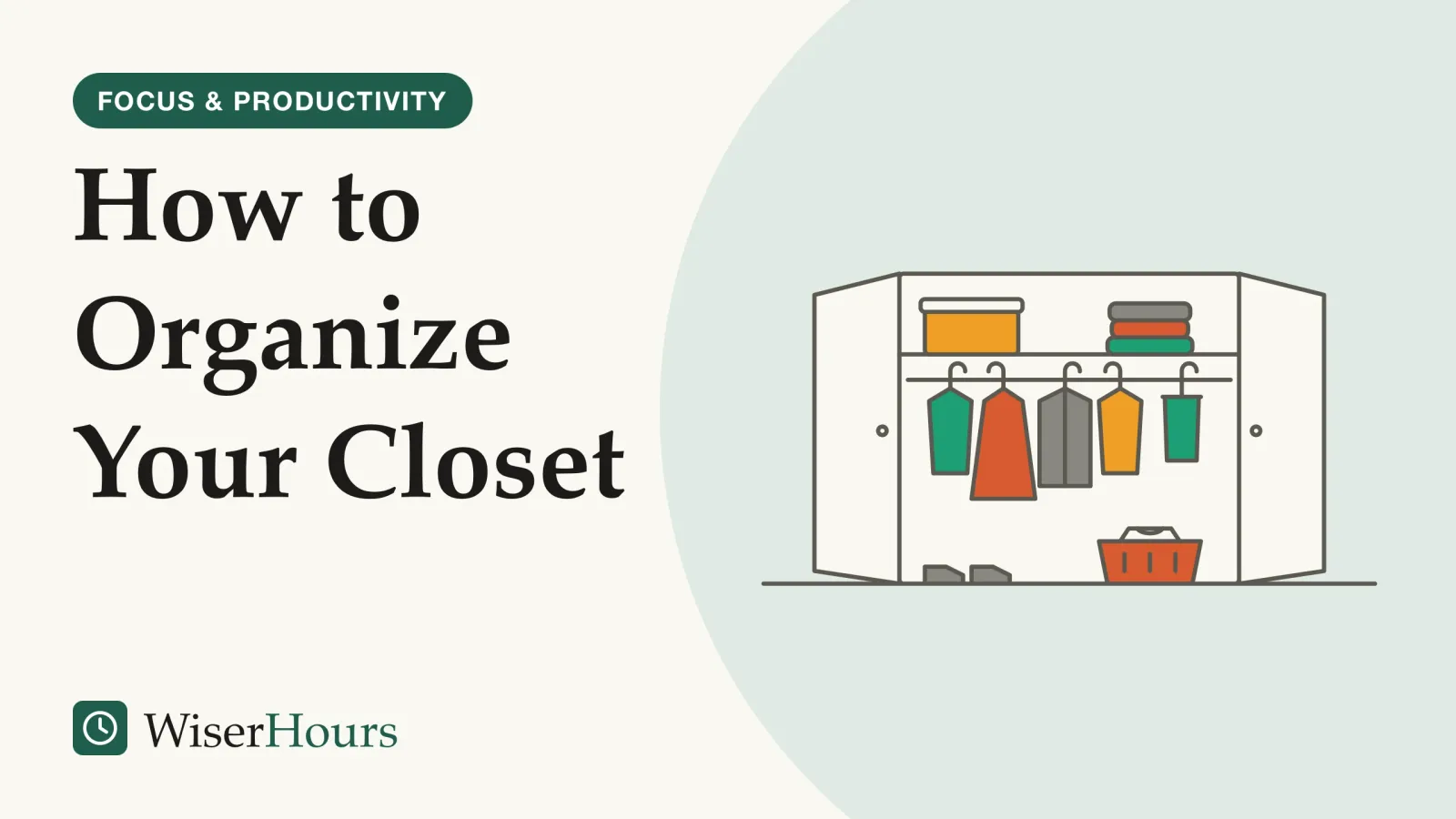
A crowded closet is usually short of decisions, not space. Knowing how to organize your closet starts there: edit first and arrange second, giving the best spots to what you put on. In a large 2012 survey of UK adults by WRAP, a UK waste and resources charity, the most common reason people gave for clothes going unworn was that they no longer fit.1 The six steps below fit a small reach-in closet, a freestanding wardrobe or a built-in, use only what you already own, and take one afternoon:
- Empty it and clean it
- Edit with four questions
- Zone by how often you wear things
- Hang what creases, fold what stretches
- Use the height you already have
- Box the off-season clothes
If your whole home feels like too much, a four-step way to get organized starts with one small area, such as a closet.
Prefer to watch? The video covers the same ground as this article.
Why good clothes stop being worn
Clothes usually go unworn for dull, fixable reasons rather than because their owners lack discipline. The WRAP survey is the largest look we found inside ordinary wardrobes, and its answers turn a vague “I have nothing to wear” into a sorting rule.
The study
Limited evidence
Unworn for a year or more, by UK adults' own estimates (WRAP, 2012)
WRAP asked 7,950 UK adults aged 16 and over about the clothes they own. By their own estimates, about 30% of the clothing in the average wardrobe had not been worn for at least a year. Asked why, 57% said some clothes no longer fit, 46% cited wear and tear, 44% said some were for formal occasions only, and 41% said they simply hadn’t got round to throwing them out.1
The figures are self-reportedself-report: A measure in which people describe their own behavior, feelings or circumstances, usually by answering a questionnaire. When the same person supplies both of the things being compared, shared habits of answering can make the link between them look stronger than it is.Full entry in the glossary, from one country and more than a decade old: a picture of common habits, not a measurement of your closet. Each reason points to a different fix: fit points to alteration or letting go, wear and tear to repair or textile recycling, occasion wear to a separate high shelf, and “haven’t got round to it” to an afternoon like this one.
Picture a rail with a suit that pinches, a coat with a broken zip, a wedding outfit and a pile of T-shirts kept out of habit. Each one needs a different decision, which is why “keep or toss?” stalls. Sort by the reason an item sits unworn, and most of the decisions make themselves.
How to organize your closet, step by step
Organize a closet in three phases: clear it completely, decide what stays, then arrange what is left by how often you wear it. The order matters because you cannot arrange clothes well until you know which ones are staying. Closet-organizing methods have not been put to a trial or survey that we could find, so this sequence is convention plus our reasoning. Allow an afternoon for a typical reach-in closet; a packed walk-in may need two sessions.
1. Empty it and clean it
Take everything out: rail, shelf, floor, the back corners and the hooks on the door. Pile it on the bed, which has to be clear by bedtime, so the job can’t drift into tomorrow. Wipe the shelves and vacuum the floor while the closet is bare; it is the only time you will see all of it.
Emptying matters because a full rail hides how much you own. Ten black tops spread across a closet look reasonable; on one bed, the duplicates are obvious.
2. Edit with four questions
Pick up each item and ask the four questions that follow from the WRAP reasons. Does it fit now? Is it in good repair, or worth repairing this month? Is it for an occasion you still go to? Would I choose it again today? A no to fit or repair sends an item to the basket for alteration, repair or letting go. A yes to occasion-only sends it to the high shelf rather than the rail.
Try on only the pieces that make you hesitate; most answers are quick. If you prefer a whole-home method, our guide to decluttering your home sets up exits for everything that leaves.
3. Zone by how often you wear things
Give the easiest space to the clothes you wear every week. In most closets that is the band between about waist and shoulder height, where you can see and reach things without bending or stretching. Clothes you wear monthly go to the edges of that band, occasion wear and off-season boxes go to the high shelf, and shoes and heavy bags go on the floor. This zoning is our reasoning from reach and frequency, not a tested rule.
- Reach zone, about waist to shoulder height: the clothes you wear every week, hung or folded where you can see them
- High shelf: out-of-season clothes and occasion wear, boxed and labelled
- Floor: shoes, bags and anything heavy or bulky
The point is friction. A shirt you wear twice a week, hidden behind three coats, costs you a small search every time; a ball gown at eye level costs you nothing but takes the space your shirt needed. Within the reach zone, group by type (shirts, trousers, dresses), then by color if that helps you see what you have. Set the bands by your own height, not by where the rail happens to sit.
4. Hang what creases, fold what stretches
Whether clothes should be hung or folded depends on the fabric: woven fabrics that crease, such as shirts, blouses, linen, silk, trousers and jackets, generally hang, while knits and stretchy fabrics generally fold. A 2025 Mental Floss guide to garment storage gives the same split: sweaters folded and laid flat to avoid stretching, activewear folded because spandex distorts on a hanger, and blazers and coats hung.2 The Woolmark Company, the wool industry’s body, also advises folding wool garments rather than hanging them in storage, to keep their shape.3
The reason is gravity. A hanger holds a garment by its shoulders, so a heavy knit slowly pulls itself longer, while a folded linen shirt sets into creases you will have to iron out. Jeans and cotton T-shirts cope either way, the same guide says, so fold them if rail space is short.2 For drawers, the upright folding described in the KonMari method explained keeps every folded item visible. When in doubt, hang one item for a fortnight and look at the shoulders.
- Myth
- Any sweater can live on a hanger if the hanger is good enough.
- Fact
- Garment-care guides advise folding sweaters and laying them flat, to stop them pulling and stretching out of shape.
5. Use the height you already have
Many closets waste air: the space under short hanging clothes and above the top shelf. Hang shirts and folded trousers together so a second rail, a stack of boxes or a low set of drawers can fit beneath them, and keep the full drop for dresses and coats. Shelf dividers or a few shoeboxes stop folded piles from toppling, and hooks on the back of the door take bags, belts or tomorrow’s outfit. Use what you own first, and buy only what fills a gap you have measured.
6. Box the off-season clothes
Clothes you will not wear for months leave the reach zone entirely, for the high shelf or under the bed. There, the risks are moths and damp, covered below.
Your closet afternoon
Small closets and wardrobes: what changes
In a small closet the steps stay the same, but the edit does more of the work, because the reach zone is short. A single rail in a narrow built-in or a freestanding wardrobe may hold only a season’s worth of everyday clothes, so off-season rotation stops being optional and becomes the plan.
One narrow rail in a rented room shows the problem: if winter coats hang there all summer, the T-shirts you wear daily end up on a chair, and the chair becomes the real closet.
Three adjustments help. Fold more: knits, T-shirts and jeans can move to a drawer or shelf, leaving the rail for what creases. Stack vertically: use the space under short hanging clothes, as in step 5. And move the occasion wear out, to a garment bag in another room or under a bed, so a single wedding outfit does not occupy a weekly slot.
Storing out-of-season clothes without moths or damp
Store out-of-season clothes clean, dry and in closed containers. The University of California’s pest-management program says clothes moth larvae feed on wool, fur and feathers, damage stained fabrics more readily, and are best kept out by storing items clean, pest-free and in an airtight container.4 The same guidance calls the protection from cedar chests debatable: cedar oil can kill small larvae but not large ones, and loses that effect after several years.4 The Woolmark Company still recommends cedar blocks over mothballs,3 but the program adds that a tightly built chest matters more than the wood, so treat cedar as an extra on top of clean, closed storage.4
That means wash or clean before you box, not after. A sweater worn once and put away “because it’s not dirty” carries exactly the traces the larvae look for. Check boxed wool now and then for small holes or silky webbing, especially under collars and cuffs, where the program says damage usually appears.4
Container choice is a trade-off. The Woolmark Company notes that vacuum bags save space but don’t let fabric breathe and can trap moisture, while cotton bags suit delicate clothes better.3 Use lidded boxes for sturdy cotton and breathable bags for delicate wool, and label every box, so an unexpected cold week costs you one box.
Turn your hangers to see what you never wear
The hanger-turn trick lets your habits do the editing: hang everything with the hooks facing one way, and turn a hanger round only after you have worn that item. A 2024 Ideal Home feature describes it as a free, gradual way to see, over several months, which clothes you reach for and which you never do.5
Decluttering experts quoted in the same feature add two cautions: the trick can become a way to postpone decisions for another year, and occasion and seasonal clothes need a separate review because they will stay unturned for good reasons.5 We could not find any study of the trick, so read what it shows as evidence for your own edit, not a verdict.
When the date comes, run the still-turned clothes through the four questions rather than bagging them on sight; some will turn out to be occasion wear that belongs on the high shelf.
Where the clothes you let go should go
Pass on, sell, repair or recycle clothes you no longer want rather than binning them: in the US and across the EU alike, most discarded textiles still end up in ordinary rubbish. The US Environmental Protection Agency estimates that in 2018 only about 13 percent of clothing and footwear textiles in US municipal waste were recycled.6 Across the EU, the European Environment Agency estimates that in 2020 more than two-thirds of textile waste went into mixed household waste rather than separate collection.7
Wearable clothes can go to friends, charity shops, community swaps or resale; worn-out ones to textile recycling banks. EU countries have had to set up separate collection of used textiles from 2025, though the agency warns that collected clothes may be lower in quality, which is likely to reduce the incentive for reuse.7 Elsewhere, schemes vary by country and town, so check with your local council or municipality first.
Before the bags leave
Donate only what someone else could wear: stained or torn items belong in a textile recycling bank, not a charity bag. And take the basket out of the house within a week, so the clothes that leave don’t drift back onto the rail.
A five-minute weekly reset keeps it working
A closet stays organized when putting things back takes less effort than dropping them on a chair. Habit research suggests a short routine tied to a fixed cue becomes automatic with repetition. A 2012 review written for family doctors by Benjamin Gardner, Phillippa Lally and Jane Wardle describes simple actions reaching automaticity faster than complex ones, and notes that an occasional missed repetition did little harm to habit formation.8 Those findings come from daily actions, so a weekly routine will likely take longer to run on its own.
Tie it to something that already happens weekly, such as putting away clean laundry, and spend five minutes on three jobs: hang or fold whatever is on the chair, move anything sitting in the wrong zone back to its band, and drop anything you have decided against into the leaving basket. Missing a week is not a reason to start over.
How sure is each step?
Only the reasons for unworn clothes, the storage advice and the textile figures rest on surveys or official sources; the sequence itself is convention.
| Step or claim | What the strongest source says | Evidence |
|---|---|---|
| Why clothes go unworn | Fit was the most common reason given, then wear and tear | Survey of UK adults, self-reported; limited1 |
| Zoning by frequency of use | No study found; our reasoning from reach | Gap |
| Hang or fold | Guides agree: fold knits and stretchy fabrics, hang crisp wovens | Expert opinion; consistent across guides2 |
| Storing off-season wool | Clean items in airtight containers; cedar’s effect debatable | University extension guidance4 |
| Hanger-turn trick | No study found; organizers warn it can delay decisions | Anecdote and expert opinion5 |
| Weekly reset | Simple actions turned automatic sooner than complex ones; an occasional miss mattered little | Review of habit research; daily, not weekly, actions8 |
The bottom line
Edit before you arrange: empty the closet and judge each item on fit, repair, occasion and whether you would choose it again. Give the reach zone to what you wear weekly, hang what creases, fold what stretches, and box clean off-season clothes out of the way. Pass on what someone else could wear, recycle the rest through a local scheme, and keep it all working with five minutes a week.
Frequently asked questions
Is a closet system or a set of matching hangers worth buying first?
Not before you have sorted. There is no research we could find showing that closet systems, matching hangers or organizers make a closet easier to keep in order. The steps here work with the rail, shelf and floor you already have. Buy storage, if at all, after editing and zoning, when you know exactly what needs a home and how many items it must hold.
How often should I do a full closet clear-out?
Twice a year, at the seasonal swap, is a sensible rhythm, though research has not fixed any interval. Every item passes through your hands at that point anyway. Between clear-outs, a short weekly reset and the hanger-turn trick do most of the editing for you, so the next full session takes less time than the first.
Where do clothes too worn to donate go?
Look for textile recycling rather than the household bin. EU countries must have separate collection systems for used textiles from 2025, according to the European Environment Agency. Elsewhere, collection points and rules vary by country and town, so check your council or municipality's website, or ask a local charity shop whether it accepts worn textiles, before you bag anything up.
Sources
- Valuing our clothes: The true cost of how we design, use and dispose of clothing in the UK. WRAP (Waste and Resources Action Programme), UK (2012). Summary report, published 11 July 2012
- 5 Garments You Should Never Hang in a Closet, Plus the Right Way to Store the Rest of Your Clothes. Wheatley, C. (2025). Mental Floss, 11 March 2025
- How to store wool clothes. The Woolmark Company (wool industry body), accessed October 2026
- Pest Notes: Clothes Moths. Choe, D.H. University of California Statewide Integrated Pest Management Program (US), Pest Notes publication 7435, updated March 2013
- I tried the reverse hanger trick to see if it could help clear out my overflowing wardrobe - this is what I learnt. Rinaldi, E. (2024). Ideal Home (UK), 30 December 2024
- Textiles: Material-Specific Data. US Environmental Protection Agency, last updated 19 March 2026
- Management of used and waste textiles in Europe's circular economy. European Environment Agency (2024). Briefing, published 21 May 2024
- Making health habitual: the psychology of 'habit-formation' and general practice. Gardner, B., Lally, P. & Wardle, J. (2012). British Journal of General Practice, 62(605), 664-666
How we researched this
Our sources were official waste and textile bodies (the UK's WRAP, the US EPA and the European Environment Agency), the University of California's pest-management guidance on clothes moths, a habit-formation review for family doctors, and reputable home and garment-care guides, all read in October 2026. No trial or survey of closet-organizing methods turned up, so the sequence is convention plus our reasoning; the wardrobe figures come from one UK survey of self-reported habits.
Keep reading
How to Build a Capsule Wardrobe
How to build a capsule wardrobe in 5 steps: log what you wear for two weeks, pick a palette, size it to your climate and life, buy slowly, review each season.

Desk Organization Ideas That Actually Help You Work
6 desk organization ideas that make work easier, from zoning by reach to a short end-of-day reset, and what research says about messy desks.
How to Create a Weekly Cleaning Schedule
How to make a weekly cleaning schedule in 5 steps that fit your free time and household, with 3 ready-made versions to copy and adapt.
Cable Management: A Simple Guide
Cable management in 6 steps with cheap parts: one power strip under the desk, heavy cables first, loose ties, slack, and the fire rules for cords and rugs.