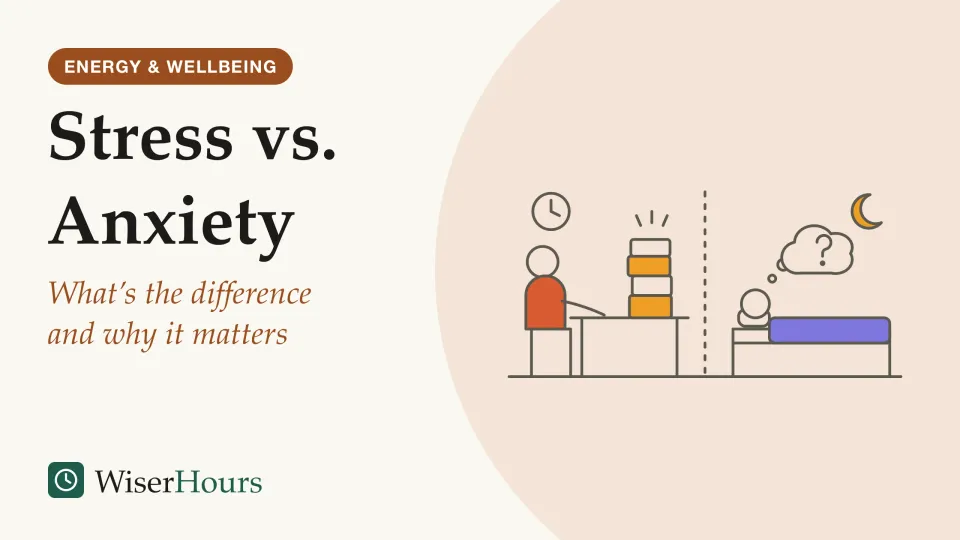
Stress vs. Anxiety: What's the Difference and Why It Matters
Stress vs anxiety: stress follows a cause and eases when it ends; anxiety can last with no threat. When worry lasting 6 months or more may be a disorder.
Understanding stress and practical, evidence-based ways to manage it.
Stress vs anxiety: stress follows a cause and eases when it ends; anxiety can last with no threat. When worry lasting 6 months or more may be a disorder.
The Yerkes-Dodson law grew from a 1908 mouse study, not office stress. What it found, how the inverted U was added later, and what holds up for people.
What is stress? How the fast and slow stress response works, which lab tasks 208 studies linked to the biggest cortisol rise, and when to see a doctor.
The perceived stress scale explained: what its 10 questions ask, how the 0-40 score works, what typical scores look like, and why it has no official cut-offs.
Physical symptoms of anxiety, from a racing heart to poor sleep: 9 common ones, why the body makes them, and the warning signs that need a doctor first.
Heart rate variability explained: what HRV measures, why breathing, age and time of day move it, what wearables miss, and what 58 biofeedback studies found.
Cognitive defusion, from ACT, means stepping back from a thought instead of arguing with it. Learn 6 exercises and what lab studies found.
Catastrophizing turns a setback into a disaster in your head. Test the thought in 6 steps at work, and see what CBT trials found about changing it.
High-functioning anxiety is not a diagnosis, but 6 months of hard-to-control worry may signal GAD. What clinicians assess, and why doing well is not mild.
Progressive muscle relaxation: tense one muscle group, then release it. How to do it, and what a review of 46 studies found for stress and anxiety.
How to calm down quickly: 5 short techniques graded by evidence, from slow breathing (12 trials pooled) to grounding, and who each may not suit.
Therapy for anxiety compared: what CBT, exposure and ACT involve, how long a course lasts (5 to 15 sessions on the NHS) and which suits which kind of anxiety.
A panic attack peaks within minutes and brings at least 4 of 13 listed symptoms; an anxiety attack has no separate clinical definition. How to tell them apart.
Work stress: 7 causes that recur in official lists, from workload to job insecurity, what you can influence, and what many employers must assess.
How to reduce stress: 15 everyday habits, from movement and sleep to email and news limits, sorted by how well research supports each one.