Getting help · Lesson 8 of 10
Consolidation Loans and Balance Transfers: Costs to Check
Learn what consolidation loans and balance transfers are, which costs hide in the small print, and why moving debt is not the same as reducing it.
 Video coming soon
You will often see offers to combine your debts or move them to a low-rate card. In this lesson you learn when these deals can help, and which costs hide in the small print. This is general education, not financial advice. Rules and offers differ by country, so check what applies where you live.
Two kinds of deal
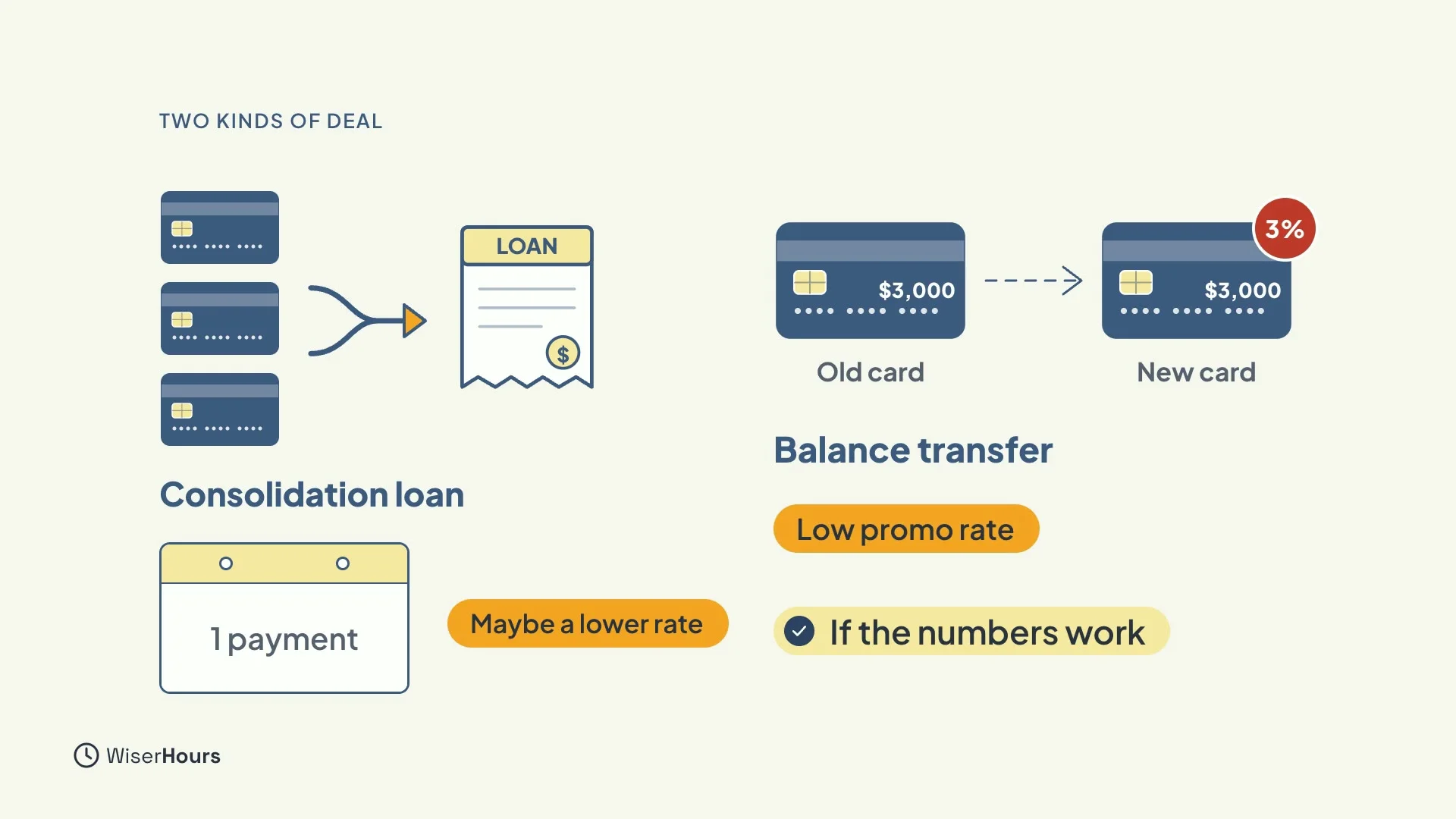
A consolidation loan pays off several debts, so you have one loan and one payment, maybe at a lower rate. A balance transfer moves a card balance to a new card with a low promotional rate, which means a special rate that lasts for a limited time. Both can save money, if the numbers really work.
 (opens the full-size picture)
What a balance transfer can cost
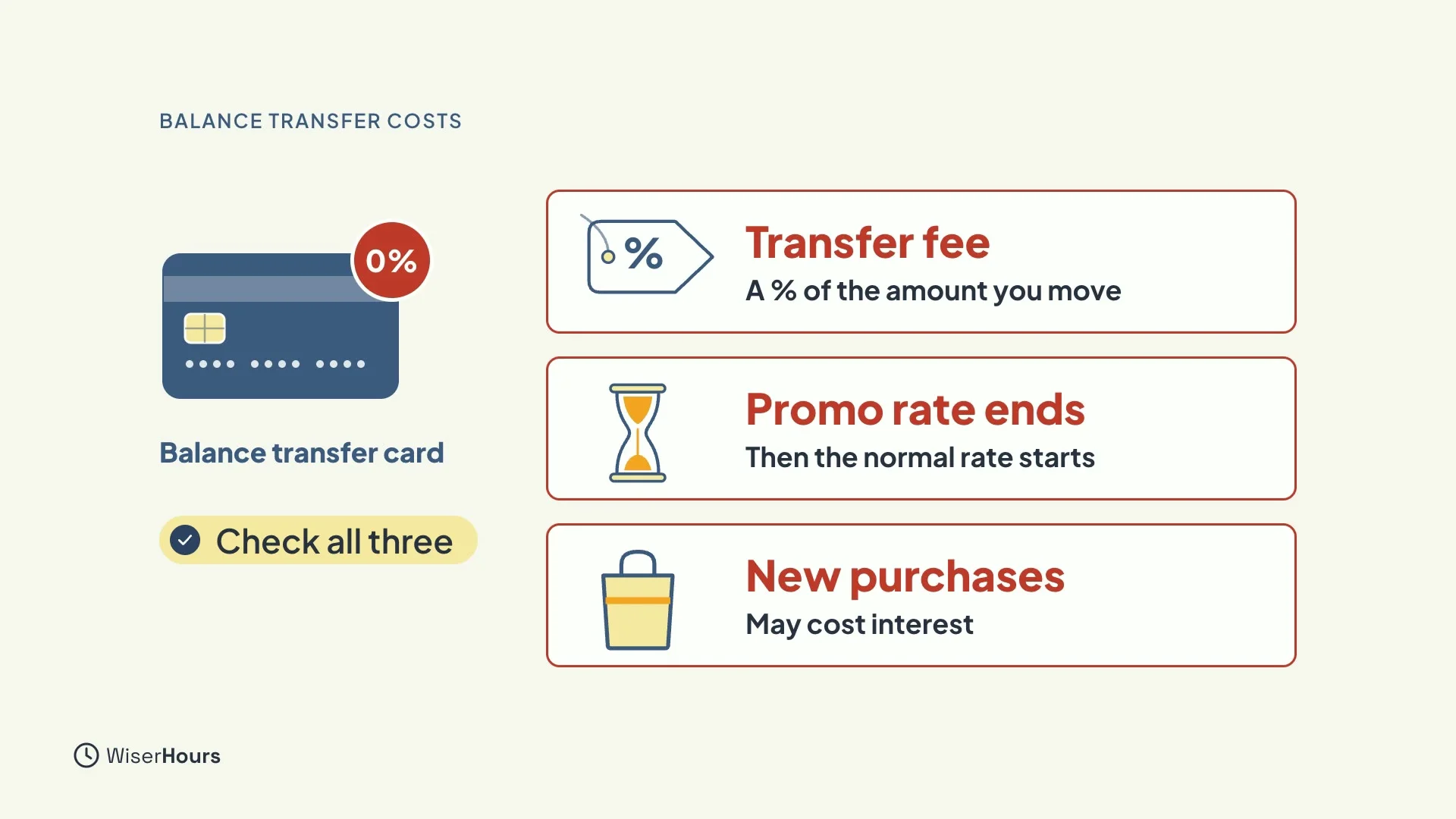
Check three things before you move a balance. There is usually a transfer fee, which is a percentage of the amount you move. The low rate lasts only for a while, and then the normal rate starts. And new purchases on that card may cost interest until everything is paid off.
 (opens the full-size picture)
Do the sums on paper
A low headline rate is not the whole story. Write down the fee, the rate after the offer ends and what you will pay in total, then compare that with what you pay now.
Lower payment, higher cost
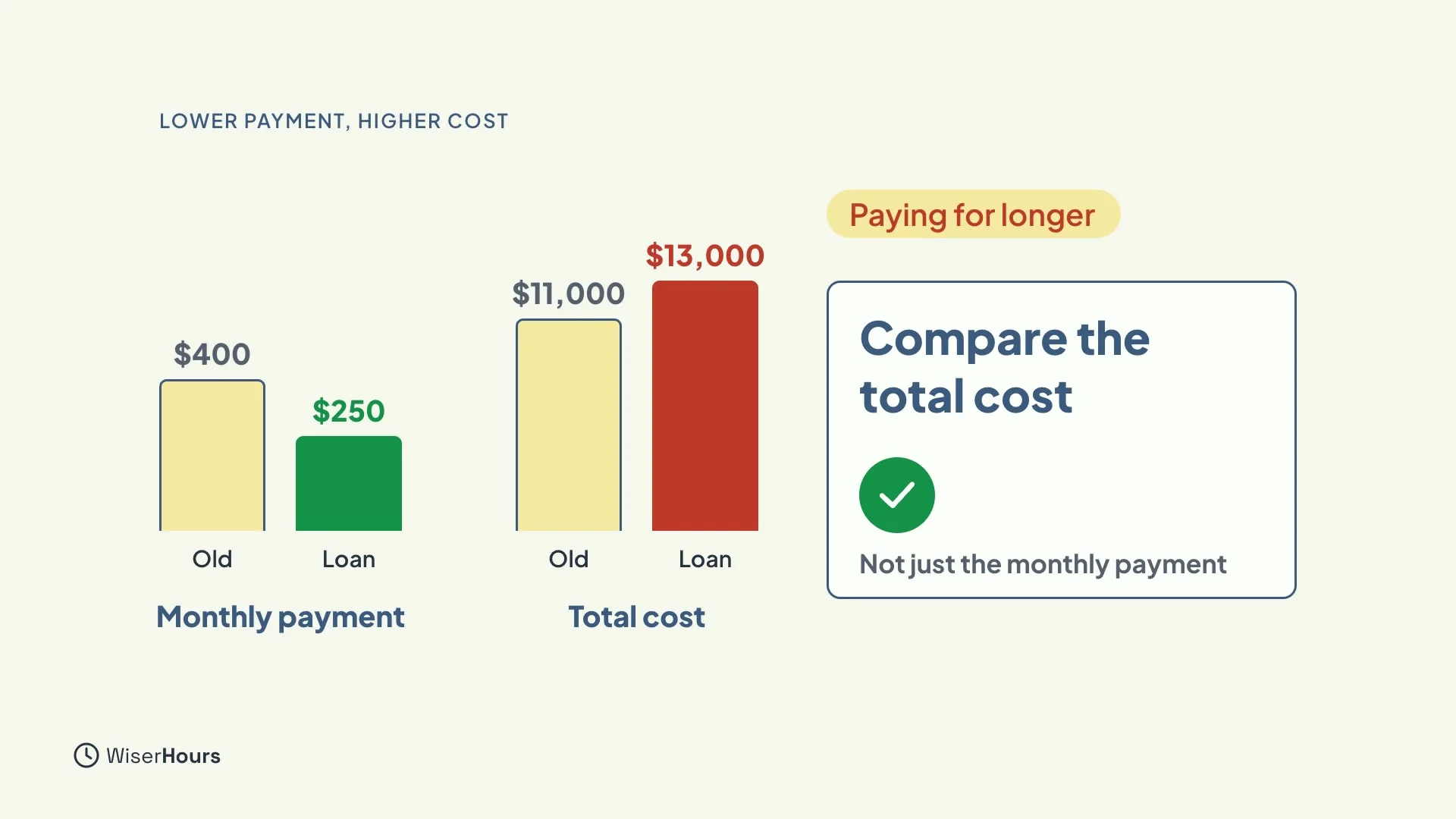
A consolidation loan can bring a smaller monthly payment. But often that is because you are paying for longer, and the total cost, with fees, can end up higher. In the drawn example, a monthly payment falls from $400 to $250, yet the total cost grows from $11,000 to $13,000. Always compare the total cost, not just the monthly payment.
 (opens the full-size picture)
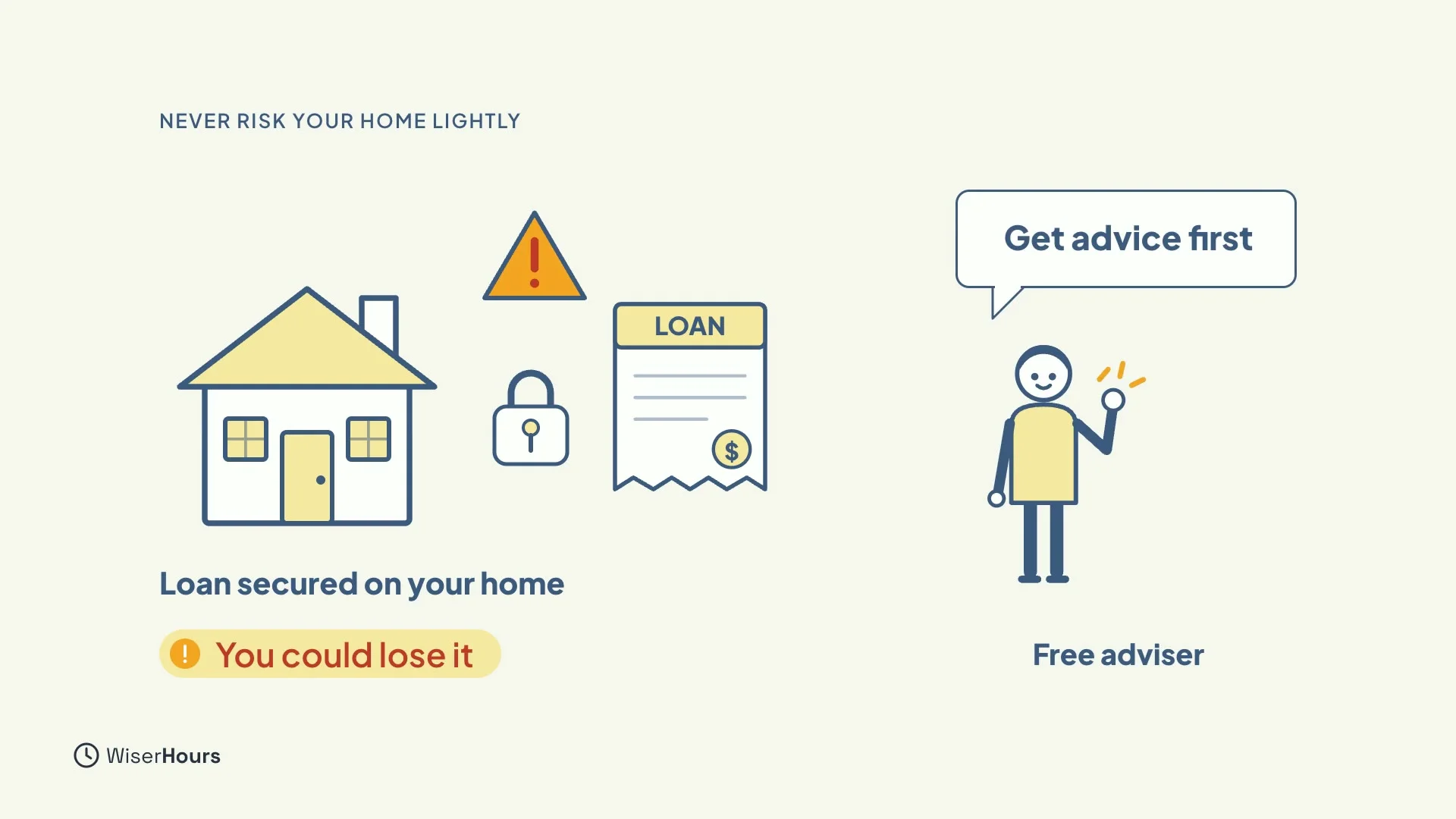
Never risk your home lightly
Some loans are secured against your home. If you cannot keep up the payments, you could lose it. Think very carefully, and get free advice, before you turn card debt into a debt secured on your house.
 (opens the full-size picture)
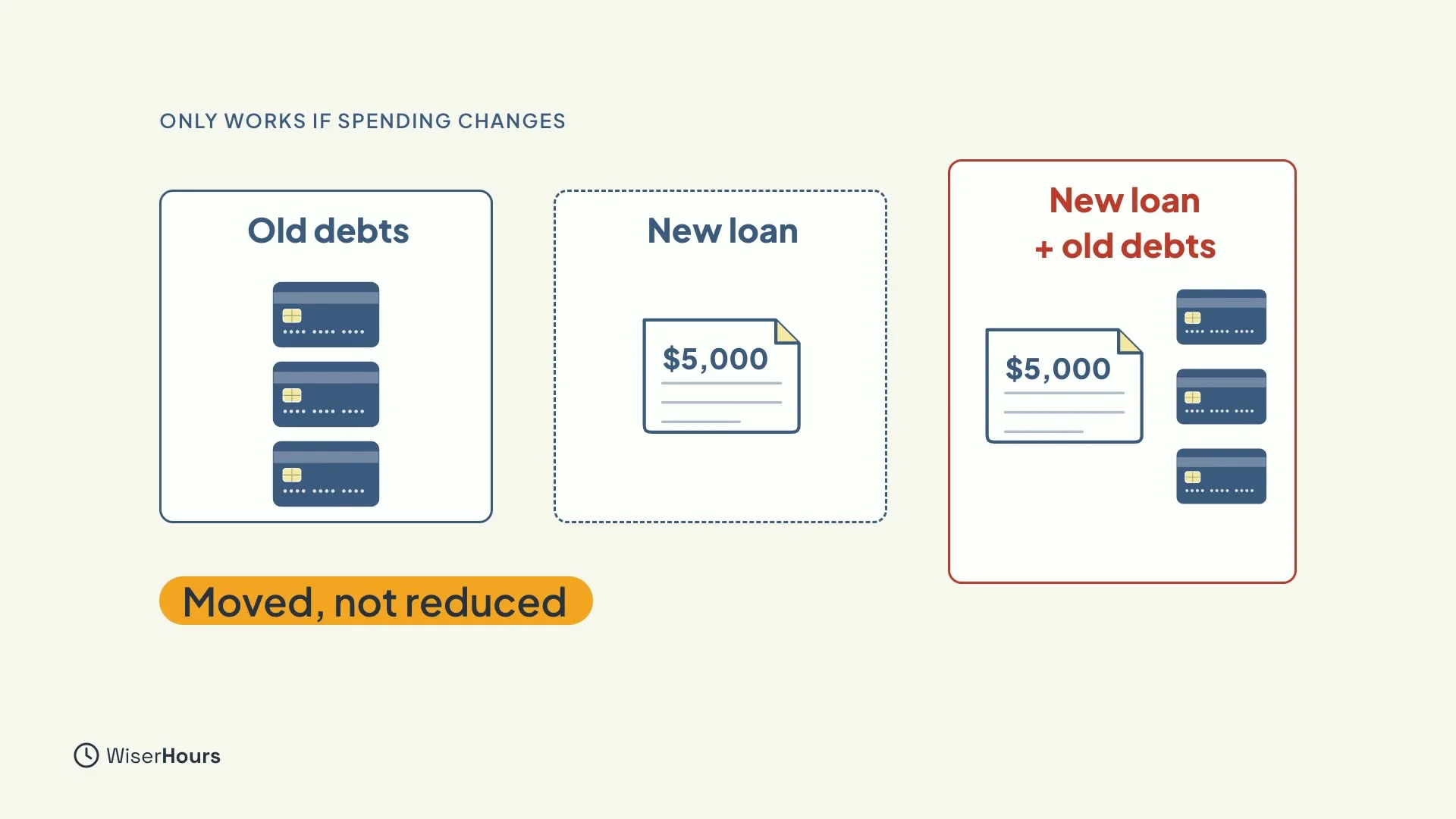
It only works if your spending changes
Most importantly, moving debt does not reduce it. A consolidation loan will not get you out of debt unless you spend less or earn more. If the old cards fill up again, you end up with the new loan and the old debts.
 (opens the full-size picture)
YOUR TURN
Read more
- What do I need to know if I’m thinking about consolidating my credit card debt?: a consumer-agency answer on balance transfers, loan costs and home equity.
- How To Get Out of Debt: a consumer-agency guide that also warns about consolidation loans that need your home as security.
Read the full lesson script
Welcome back. You'll often see offers to combine your debts or move them to a low-rate card. In this lesson, you'll learn when these deals help, and the costs hidden in the small print.
A consolidation loan pays off several debts, so you have one loan and one payment, maybe at a lower rate. A balance transfer moves a card balance to a new card with a low promotional rate. Both can save money, if the numbers really work.
Check three things. There's usually a transfer fee, a percentage of the amount you move. The low rate lasts only for a while, then the normal rate starts. And new purchases on that card may cost interest until everything is paid off.
A consolidation loan can bring a smaller monthly payment. But often that's because you're paying for longer, and the total cost, with fees, can end up higher. Always compare the total cost, not just the monthly payment.
Some loans are secured against your home. If you can't keep up the payments, you could lose it. Think very carefully, and get free advice, before you turn card debt into a debt secured on your house.
Most importantly, moving debt doesn't reduce it. A consolidation loan won't get you out of debt unless you spend less or earn more. If the old cards fill up again, you end up with the new loan and the old debts.
So remember: consolidation and balance transfers move debt, they don't remove it. Check the fees, when the low rate ends, and the total cost, not just the monthly payment. And never secure card debt on your home without advice. Before the next lesson, if you're offered a deal, write down the fee, the rate after the offer, and the total cost. Next, you'll find free help and learn to spot scams.
MAKE IT A SMALL WIN
Finished this lesson?
Mark it complete to save your progress on this device.