Your payoff plan · Lesson 6 of 10
Snowball or Avalanche: Which Debt to Pay First
Compare the two best-known ways to pay off several debts, and pick the order that suits you: lowest cost with the avalanche or quick wins with the snowball.
 Video coming soon
You have found some money for your debts. Now comes a simple question: which debt do you pay first? In this lesson you compare the two best-known answers, the snowball and the avalanche, so you can pick one and get started. This is general education, not financial advice, and your own numbers and local rules matter.
What both methods share
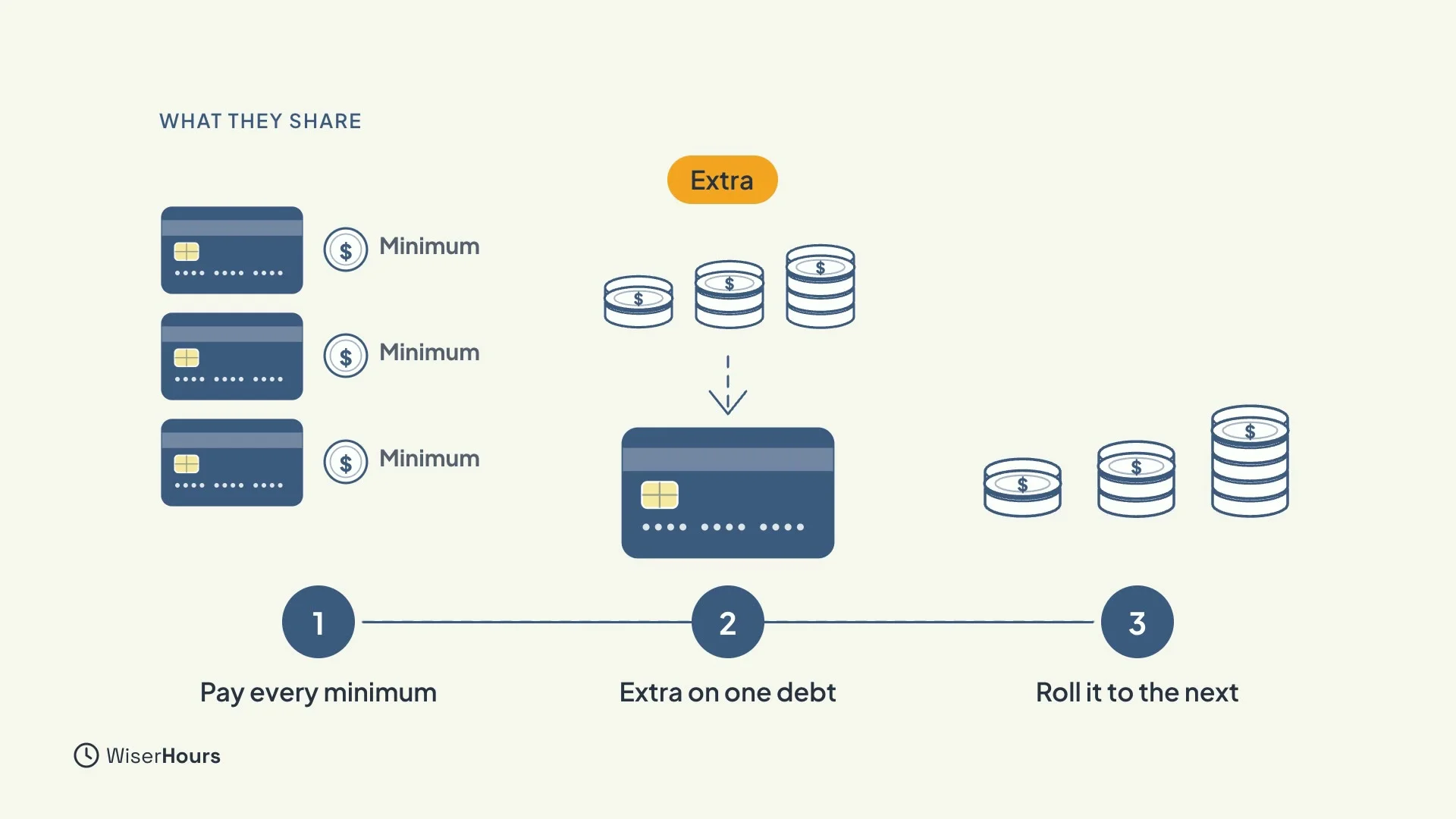
The two methods start the same way. First, pay the minimum on every debt, so none of them falls behind. Second, put all your extra money on one debt. Third, when that debt is gone, add its payment to the next one. The payment you send grows as each debt disappears, which is why people call it rolling.
 (opens the full-size picture)
Only one thing differs: which debt gets the extra money.
The avalanche: highest rate first
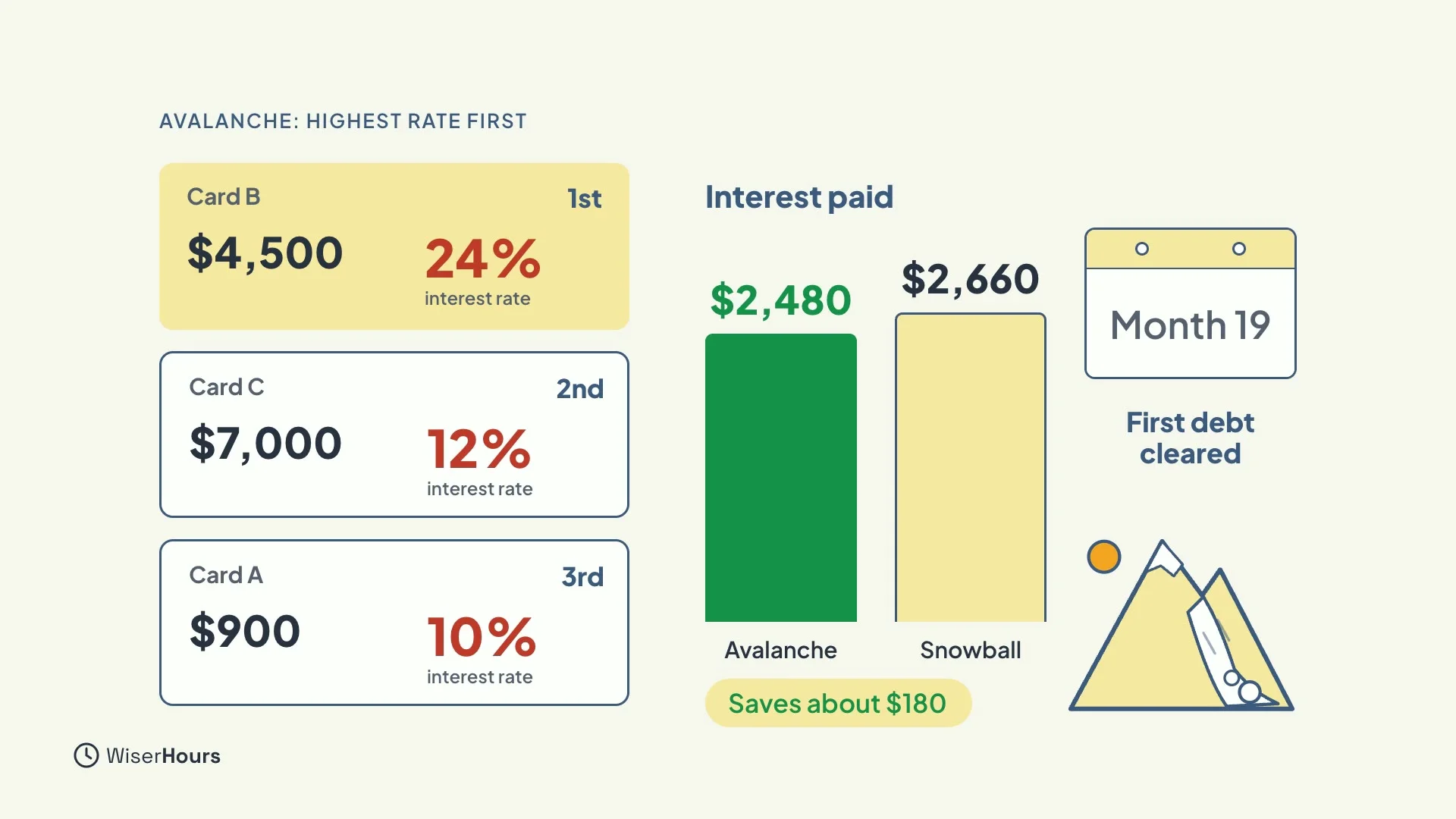
The avalanche goes after the debt with the highest interest rate first. That is the cheapest order, because the extra money stops the most expensive interest soonest. In a worked example with three debts and $500 a month, it saved about $180 in interest. But the first debt took 19 months to clear, so the first win comes late.
 (opens the full-size picture)
The snowball: smallest balance first
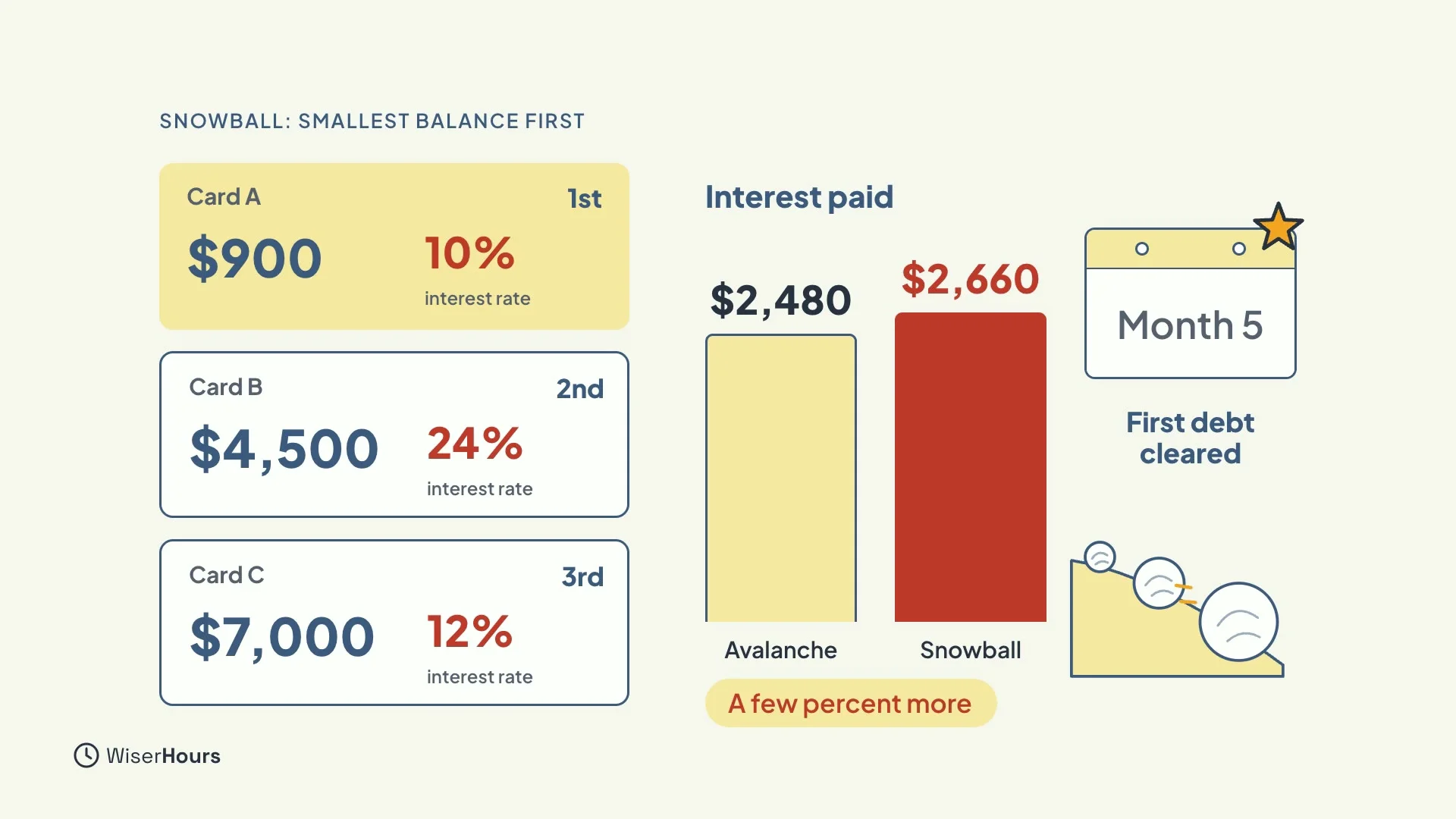
The snowball goes after the smallest balance first. It costs a bit more: one study found it cost households a few percent more in interest. In the same example it cost about $2,660 in interest instead of $2,480. In return, the first debt was gone in just five months, and a quick win like that can keep you going.
 (opens the full-size picture)
The example is made up
The numbers are a worked example with round figures: debts of $900 at 10 percent, $4,500 at 24 percent and $7,000 at 12 percent, paid with $500 a month. Your own debts, rates and rules will differ, so use it to see the pattern, not to predict your result.
What helps people finish
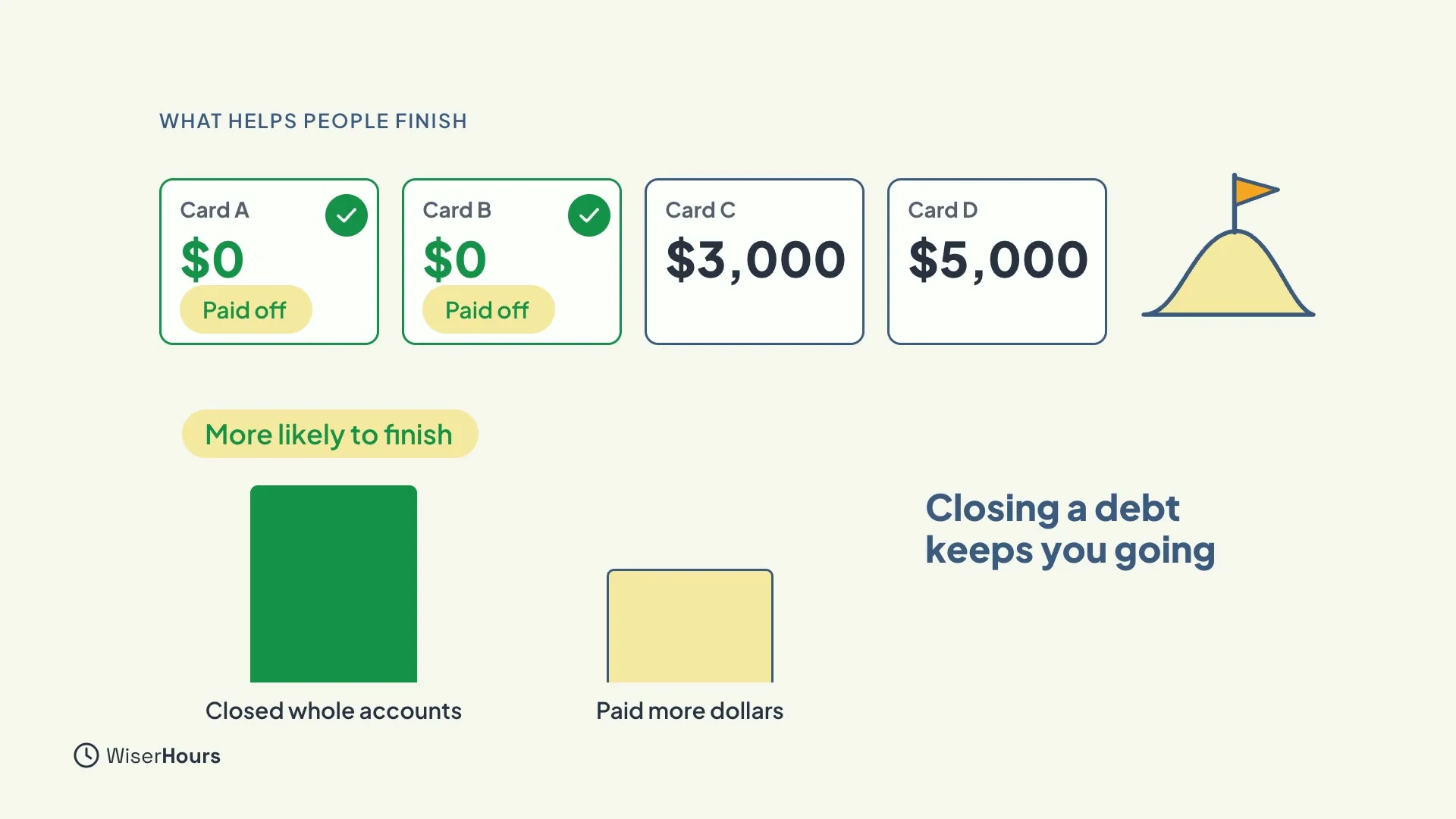
Motivation matters, because a plan only works if you keep going. Among people working through a debt programme, those who paid off whole accounts were more likely to finish than those who simply paid off more dollars. Closing a debt completely seems to keep people going. Keep in mind that this research watched people rather than testing a method, and it involved clients of one debt settlement programme, so it is a hint and not a promise.
 (opens the full-size picture)
Pick one and stick to it
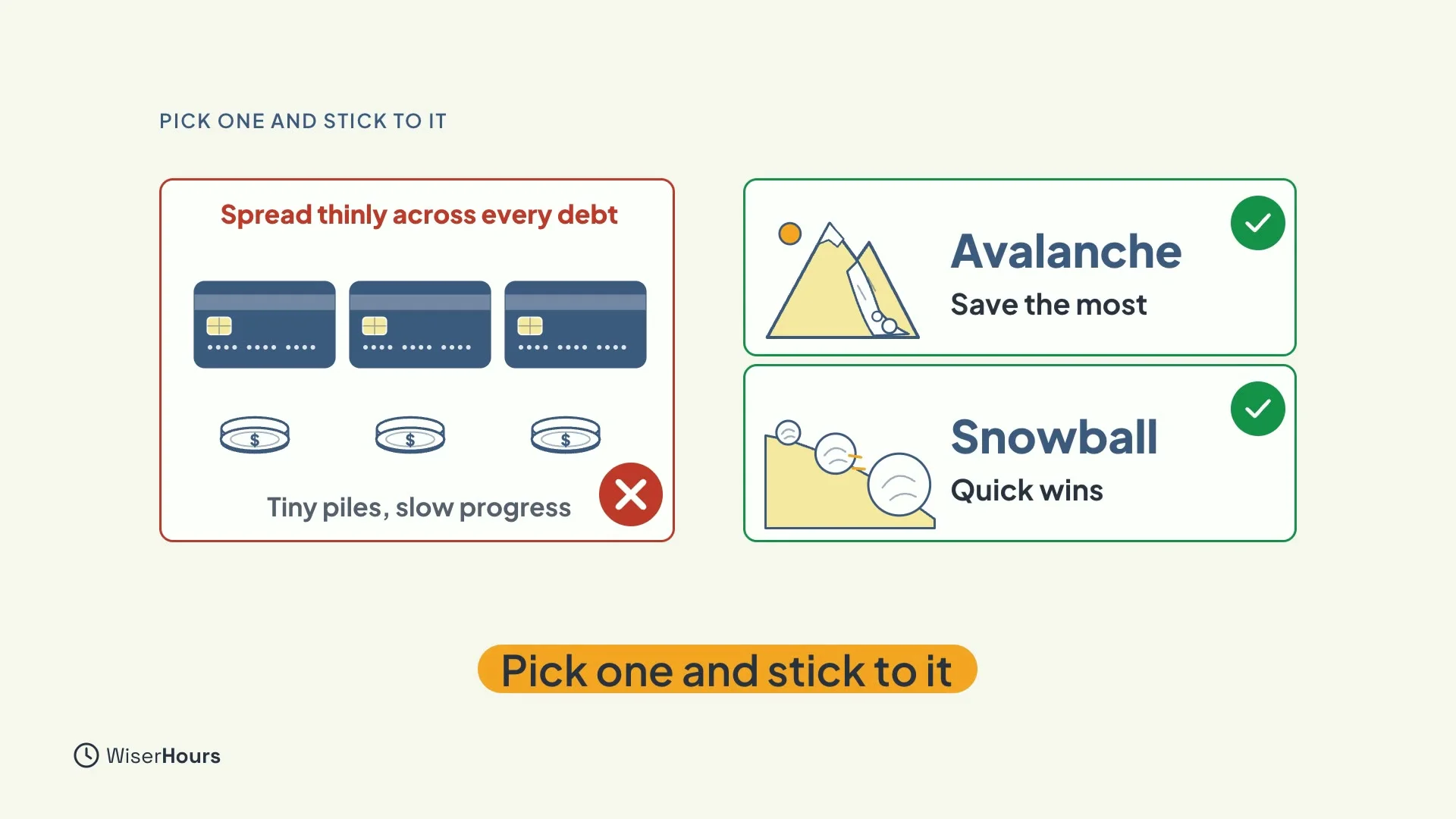
No trial has compared the two methods head to head, so nobody can say that one always wins. What we do know is that both beat spreading your money thinly across every debt, which is what most people do. Tiny payments on everything mean slow progress on all of it.
 (opens the full-size picture)
YOUR TURN
Read more
- Debt Snowball vs. Debt Avalanche: What the Research Says: the studies behind both methods and which fits your situation.
- How Debt Works: Principal, Interest, and Why Time Matters So Much: why a higher rate and a longer time cost more.
Read the full lesson script
Welcome back. You've found some money for your debts. Now, which debt do you pay first? In this lesson, you'll compare the two best-known methods, the snowball and the avalanche.
Both methods start the same way. Pay the minimum on every debt. Put all your extra money on one debt. When that one is gone, add its payment to the next. The payment grows as each debt disappears.
The avalanche goes after the debt with the highest interest rate first. That's the cheapest order. In a worked example with three debts and five hundred dollars a month, it saved about a hundred and eighty dollars in interest. But the first debt took nineteen months to clear.
The snowball goes after the smallest balance first. It costs a bit more. One study found it cost households a few percent more in interest. But the first debt was gone in just five months, and that quick win can keep you going.
Motivation matters. Among people working through a debt programme, those who paid off whole accounts were more likely to finish than those who simply paid off more dollars. Closing a debt completely seems to keep people going.
No trial has compared the two methods head to head. Both beat spreading your money thinly across every debt, which is what most people do. So choose the avalanche to save the most, or the snowball for quick wins, and stick with it.
So remember: in both methods, you pay every minimum and put all the extra on one debt. The avalanche saves the most interest, and the snowball gives faster wins. And either one beats spreading your money thin. Before the next lesson, put your debt list in both orders, and pick one. Next, you'll learn how to talk to your lenders.
MAKE IT A SMALL WIN
Finished this lesson?
Mark it complete to save your progress on this device.