Your payoff plan · Lesson 5 of 10
Find Money to Pay Down Debt and Stop New Debt
Build a budget from real spending, find the gap, pay priority bills first and stop new debt with a small starter emergency fund.
 Video coming soon
You have your list. Now you need money to pay it down faster. In this lesson you will find that money in your budget, decide which bills come first, and stop new debt from piling on while you pay the old debt off.
Start from real numbers
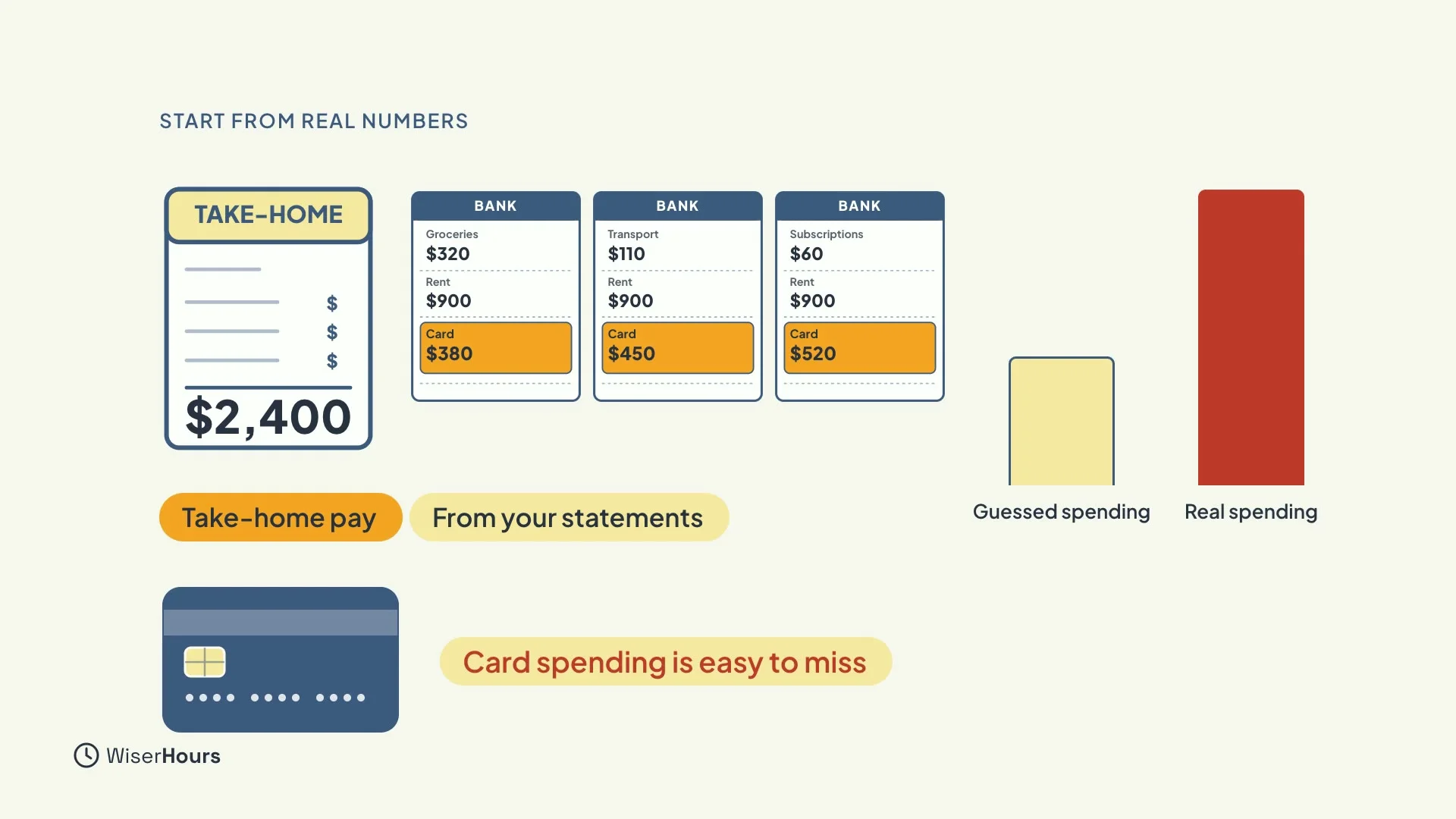
Start with your take-home pay, the money that actually reaches your account. Then list one or two months of real spending from your statements, not from memory. People usually underestimate what they spend, often by a lot, and spending by card is the easiest to miss. In small studies, people underestimated their latest card bill by about 30% on average, against about 7% for cash.
 (opens the full-size picture)
Find the gap
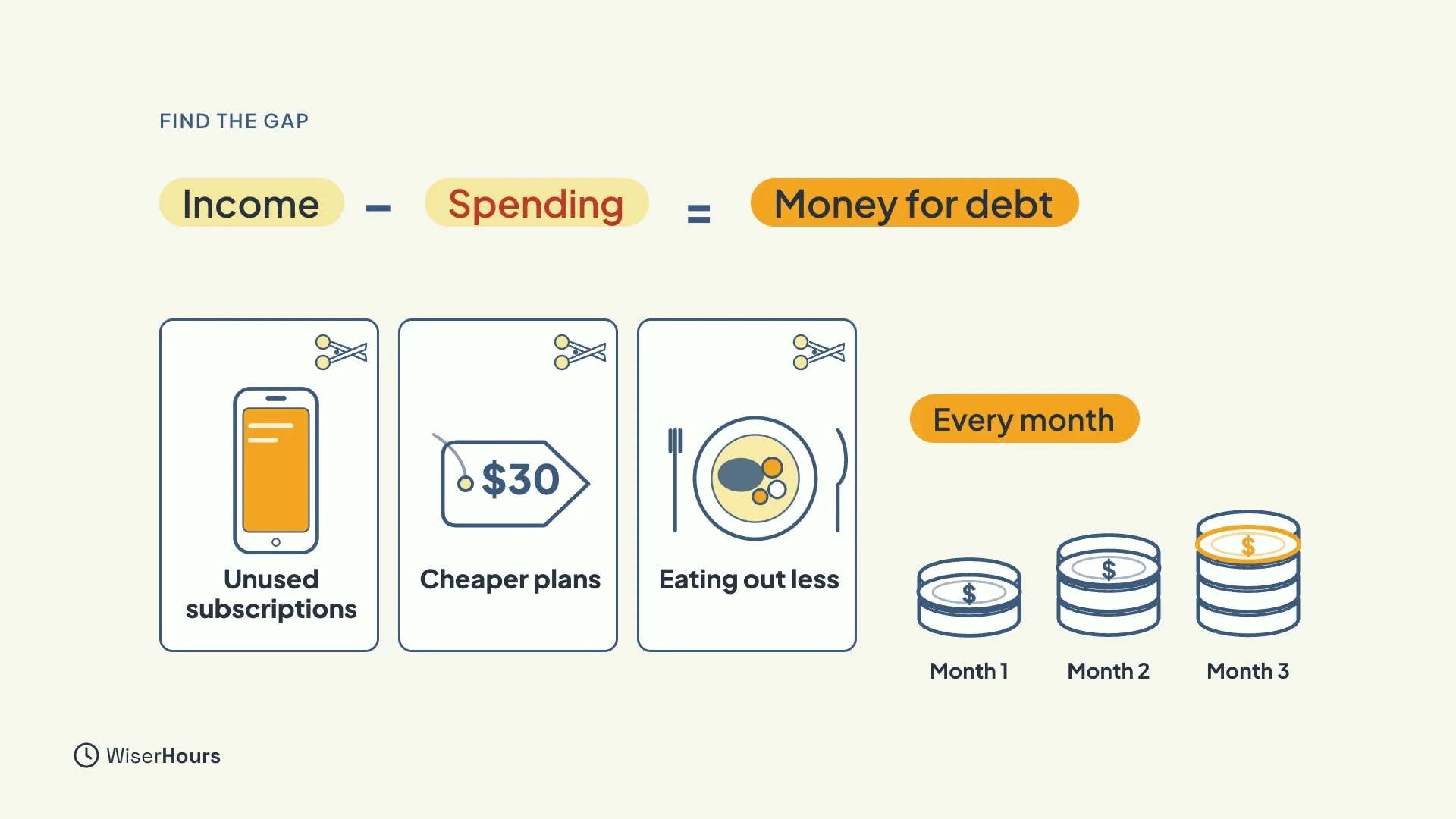
Take your spending away from your income. If there is money left, that is what goes to debt. If there is not, look for costs you can cut with the least pain, such as subscriptions you do not use, cheaper plans, or eating out less. Small amounts add up when they go to debt every month.
 (opens the full-size picture)
Priority bills first
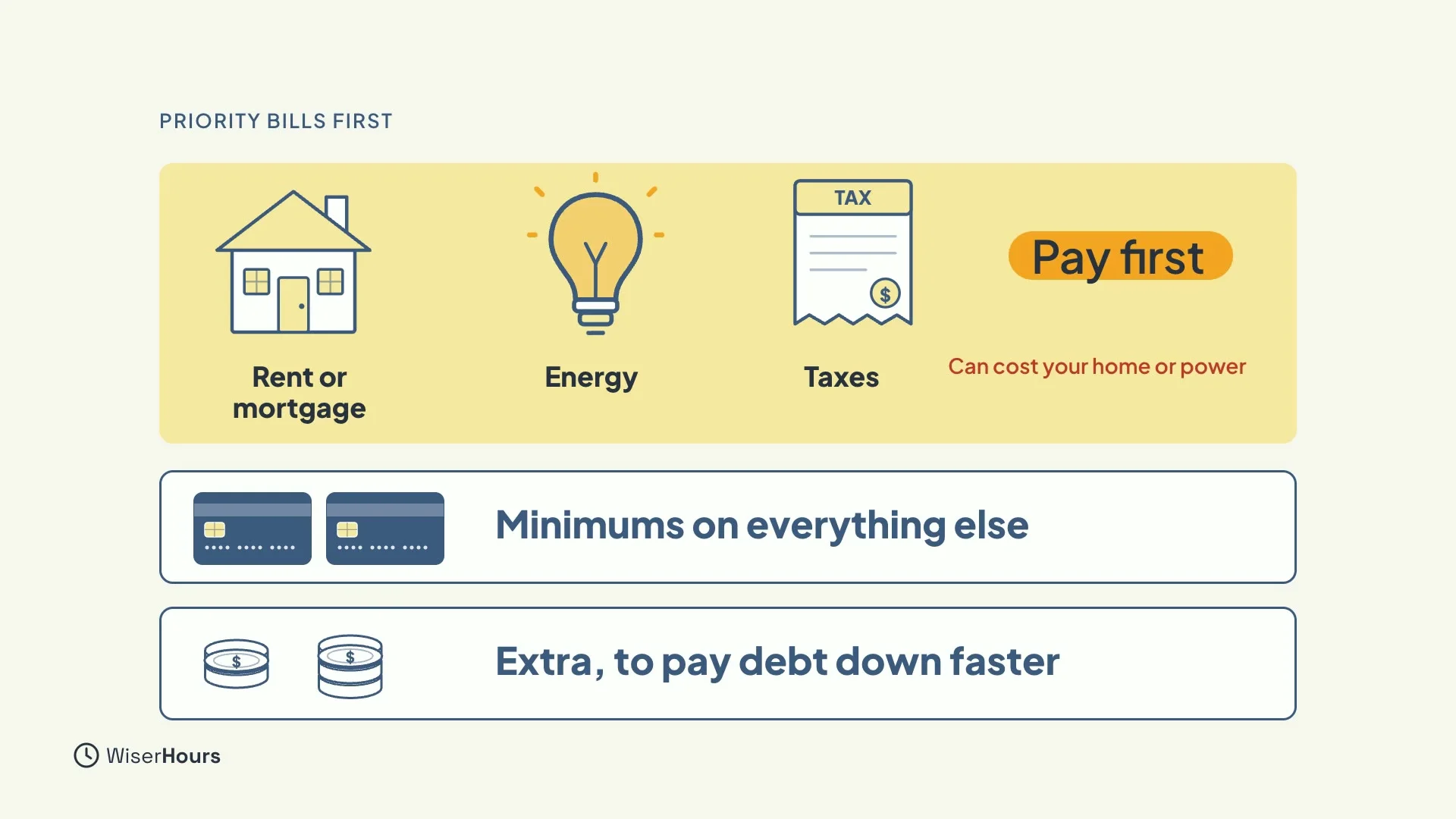
Some bills come before any other debt: your rent or mortgage, energy, and taxes. Falling behind on those can cost you your home or your power, so pay them first. Then pay the minimums on everything else. Then put the extra on top. If you cannot cover the minimums or these essential bills, get free advice before anything else.
 (opens the full-size picture)
A small starter fund
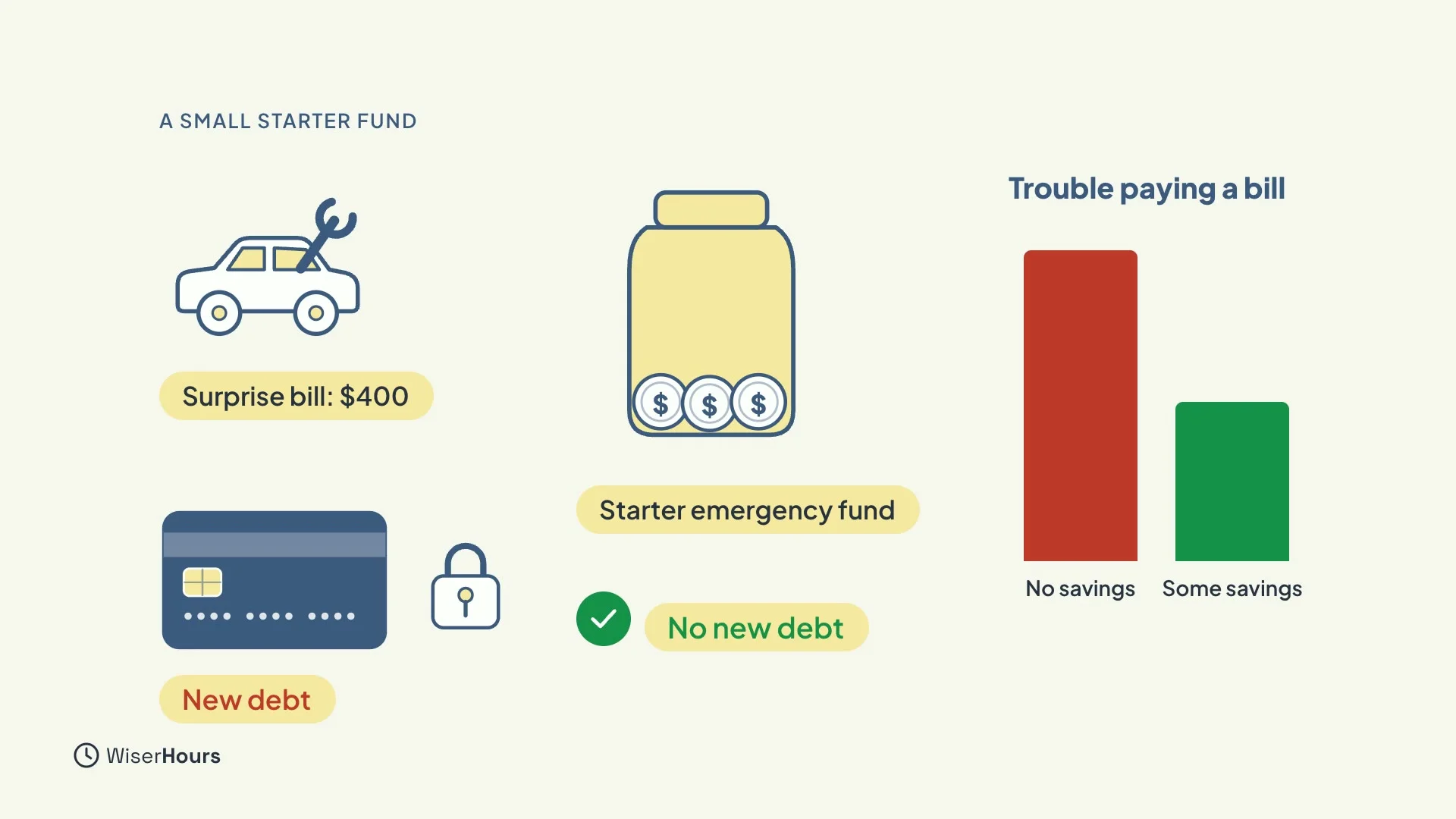
Next, stop new debt. Many debts start with a surprise bill, like a car repair. In a US survey, 79% of people with no savings had trouble paying a bill in the past year, against 44% of those with some savings. That is a link, not proof, but the idea is simple: a small cushion stops a shock from turning into a new card balance.
So keep a small starter emergency fundemergency fund: Money kept in an account you can reach quickly, to cover unexpected costs or a drop in income without borrowing. How much to hold depends on your circumstances, and official guidance differs by country.Full entry in the glossary while you pay down the expensive debt. You do not need a big amount to begin.
 (opens the full-size picture)
Close the tap
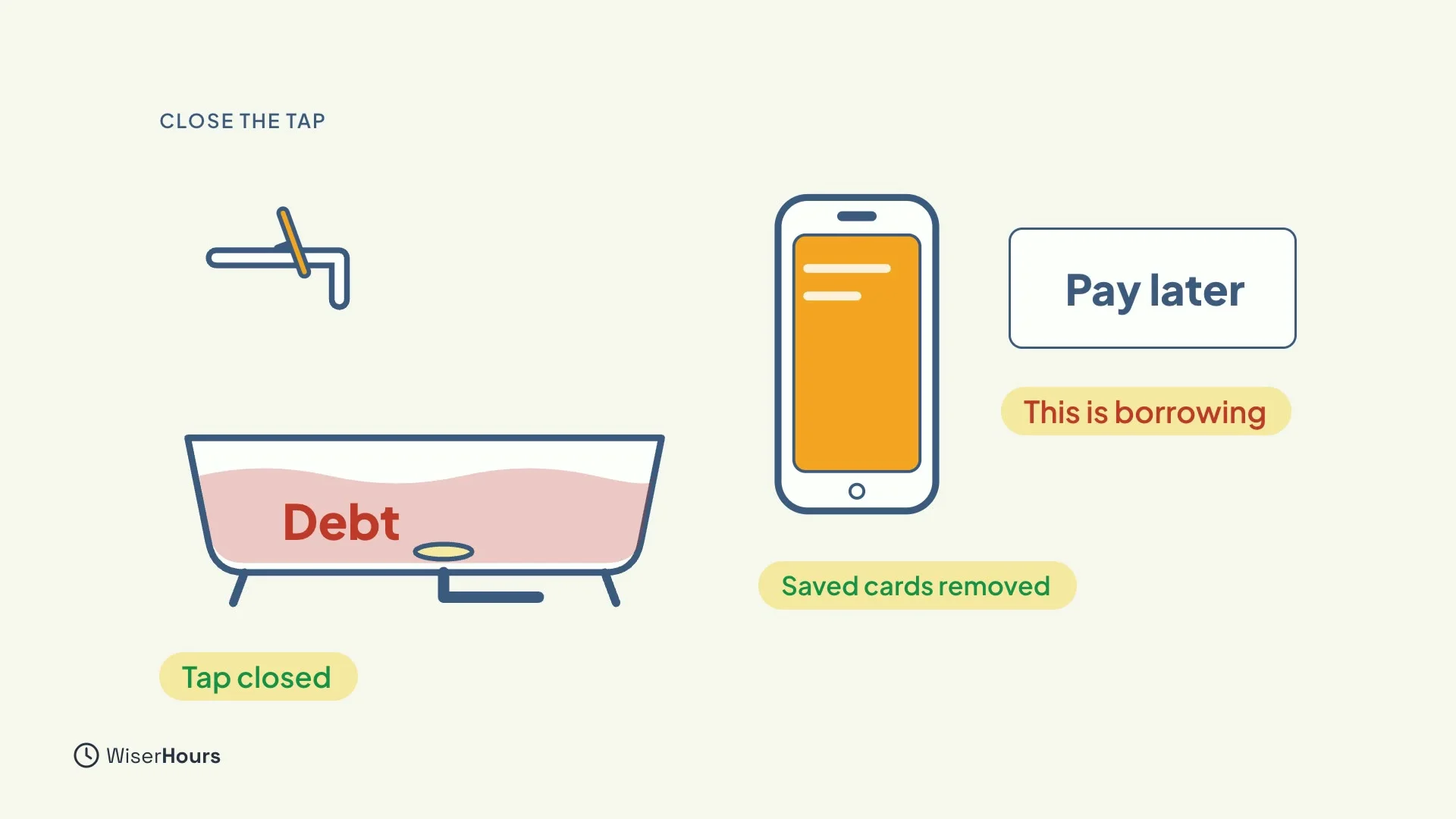
Finally, close the tap. Take the cards out of your phone’s wallet and your shopping sites, and treat pay-later plans as borrowing. You cannot empty a bath while the tap is still running.
 (opens the full-size picture)
YOUR TURN
Read more
- How to Make a Budget: A Step-by-Step Guide for Beginners: how to count take-home pay and list spending from statements.
- How to Track Your Spending Without Losing Your Mind: why card spending is easy to miss.
- Emergency Fund Basics: What It’s For, How Big, and Where to Keep It: why a small cushion stops new debt.
- Debt Snowball vs. Debt Avalanche: What the Research Says: which bills to pay first and when to get free advice.
Read the full lesson script
Welcome back. You have your list. In this lesson, you'll find money in your budget to pay it down faster, decide which bills come first, and stop new debt from piling on.
Start with your take-home pay, the money that actually reaches your account. Then list one or two months of real spending from your statements, not from memory. People usually underestimate what they spend, often by a lot, and spending by card is the easiest to miss.
Take your spending away from your income. If there's money left, that's what goes to debt. If there isn't, look for costs you can cut with the least pain: subscriptions you don't use, cheaper plans, eating out less. Small amounts add up when they go to debt every month.
Some bills come before any other debt: your rent or mortgage, energy, and taxes. Falling behind on those can cost you your home or your power, so pay them first. Then the minimums on everything else. Then the extra.
Next, stop new debt. Many debts start with a surprise bill. People with even a small amount saved cope with shocks much better than people with nothing. So keep a small starter emergency fund, while you pay down the expensive debt.
Finally, close the tap. Take the cards out of your phone's wallet and your shopping sites, and treat pay-later plans as borrowing. You can't empty a bath while the tap is still running.
So remember: build your budget from real spending, not guesses. Pay rent, energy and taxes first, then minimums, then extra. And stop new debt with a small starter fund and fewer saved cards. Before the next lesson, find one regular cost to cut, and move that amount to your debt. Next, you'll choose between the snowball and the avalanche.
MAKE IT A SMALL WIN
Finished this lesson?
Mark it complete to save your progress on this device.