How debt works · Lesson 2 of 10
How Interest Makes Debt Grow: Amount, Rate and Time
Learn the three things that decide what a debt costs, how interest grows on itself, and why paying more each month is your strongest lever.
 Video coming soon
Every debt has a price, and interest is how that price is charged. In this lesson you will see the three things that set the price, how interest grows on itself, and the one thing you can change quickly: how much you pay each month.
Three dials
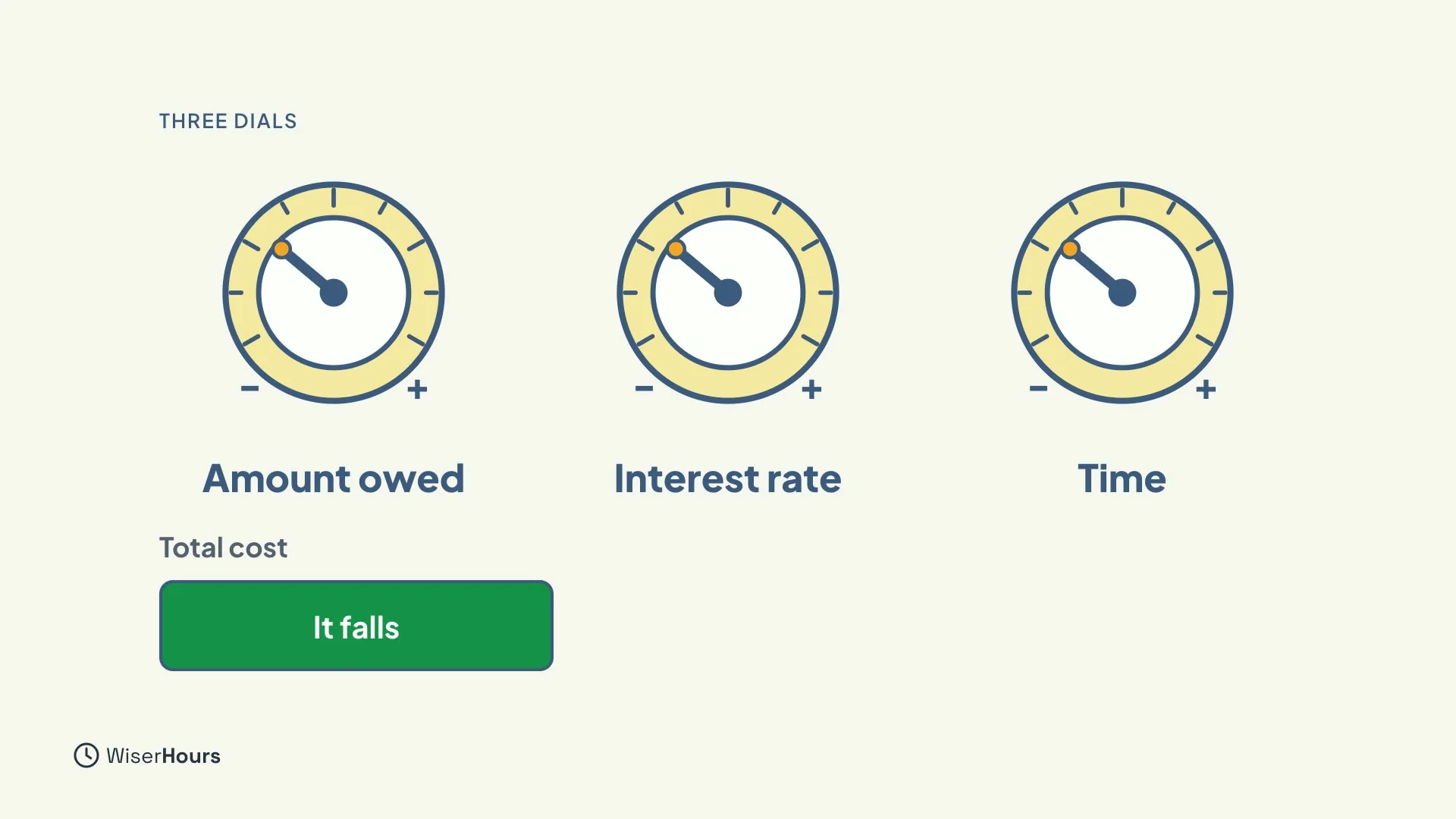
Think of every debt as having three dials. The first is the amount you owe. The second is the interest rate. The third is the time you take to pay it back. Turn any dial up, and the total cost goes up. Turn it down, and the cost falls.
 (opens the full-size picture)
Interest on interest
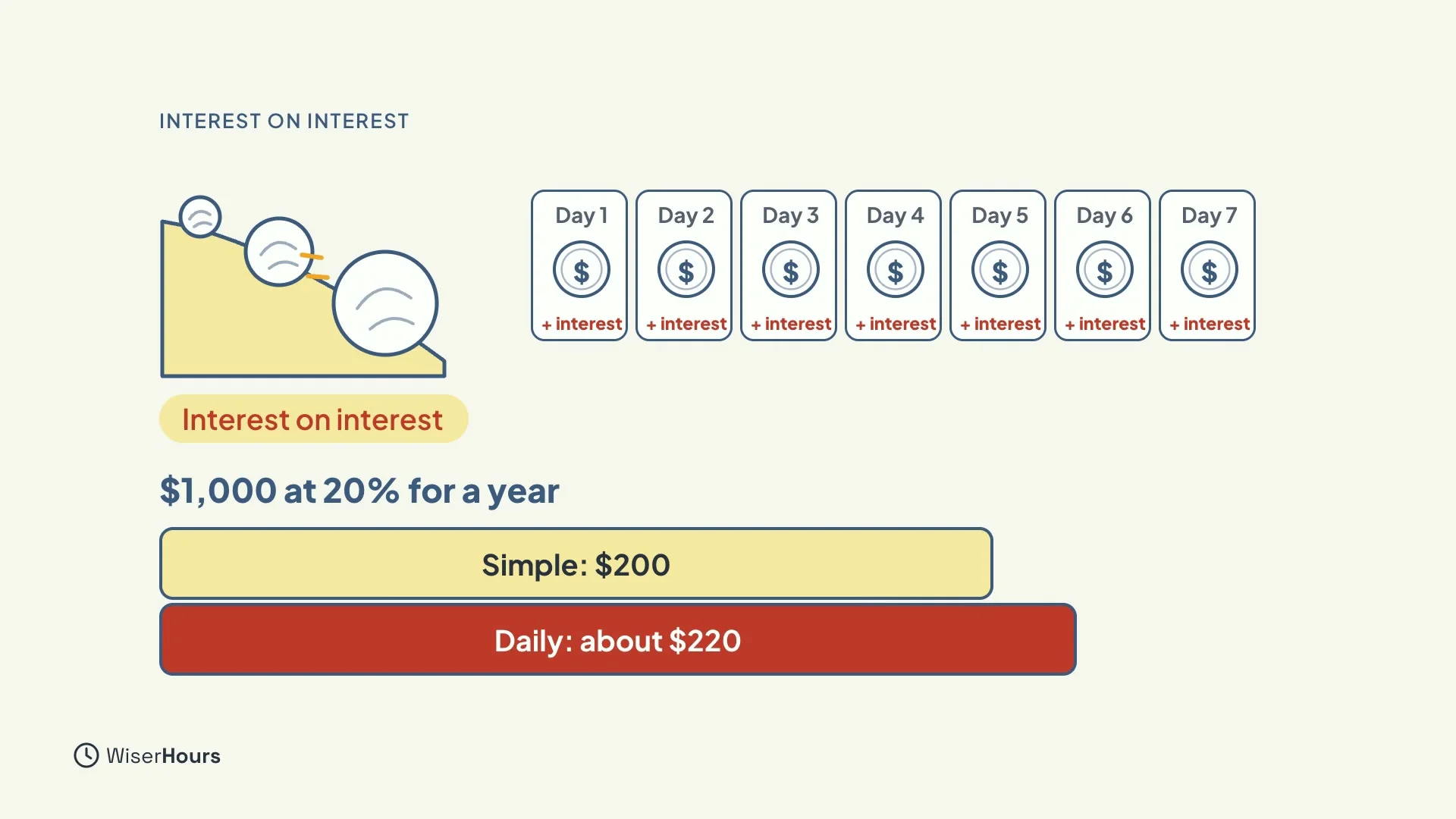
Interest is not charged just once. It is added again and again, often every day, and the next day’s interest is worked out on the bigger balance. So interest starts to earn interest of its own.
For example, leave $1,000 at 20% for a year. Simple interest, charged only on the original amount, would be $200. Charged daily, it is about $220. The rate never changed. The difference comes from interest being added to the balance every day.
 (opens the full-size picture)
Compare the APR
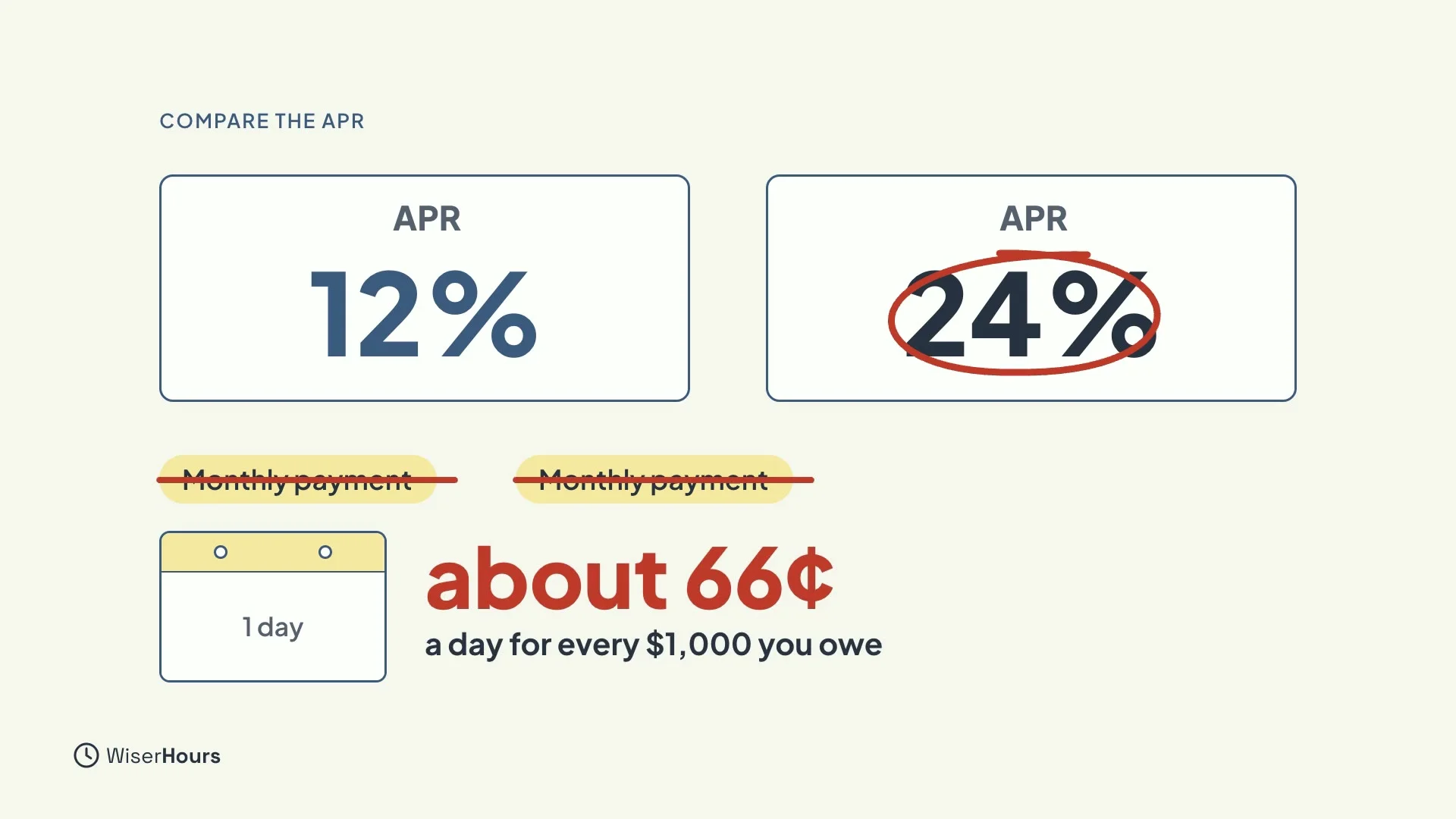
To compare debts, look at the APR, the yearly rate that includes most fees. Compare APR with APR, not a monthly payment with a monthly payment. A low monthly payment can hide a high rate, or a long time.
Daily charges are easy to miss because no single day looks expensive. On a card at 24%, every $1,000 you owe costs about 66 cents a day.
 (opens the full-size picture)
The lever you control
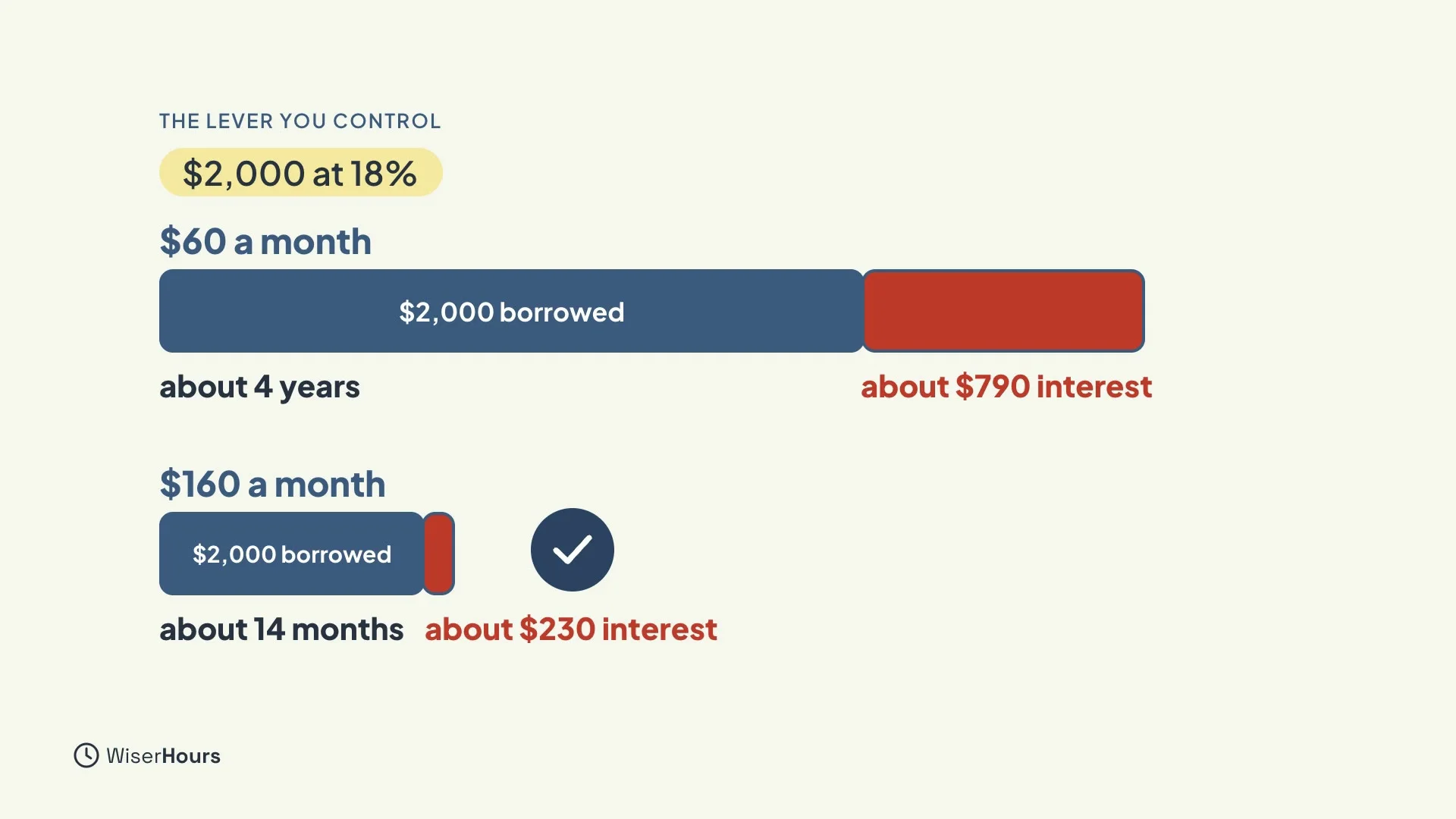
The rate and the amount are hard to change quickly. The payment is yours. Take $2,000 at 18%:
- Pay $60 a month, and it takes about 4 years and costs around $790 in interest.
- Pay $160 a month, and it is gone in about 14 months, for around $230 in interest.
Same debt, same rate. Only the payment changed.
 (opens the full-size picture)
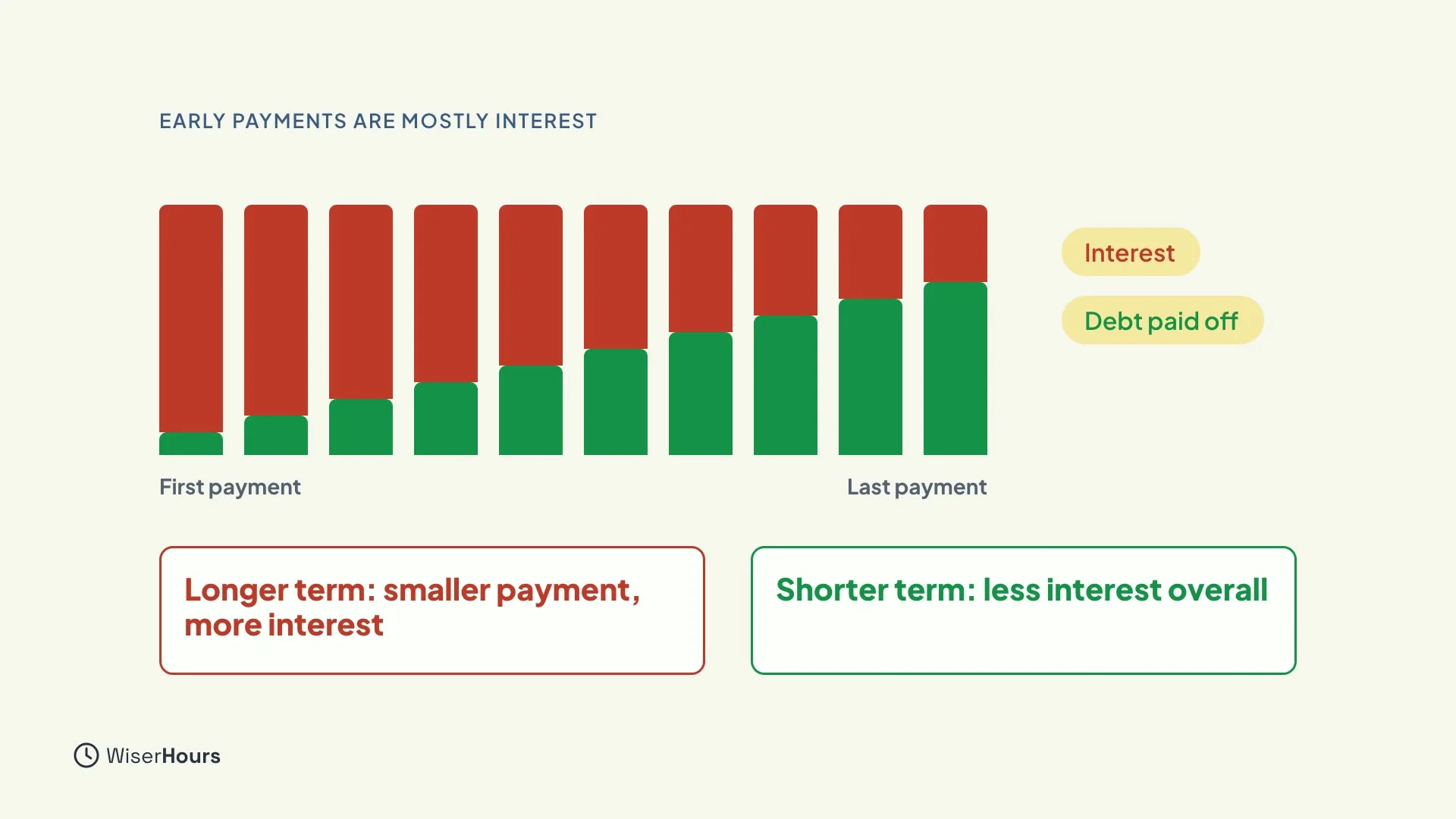
Early payments are mostly interest
On a long loan, the first payments go mostly on interest, and only a little reduces what you owe. A longer term means a smaller monthly payment, but more interest overall. Shorter is almost always cheaper.
 (opens the full-size picture)
These are simple examples with round numbers. Real loans add fees, and rules and rates differ by country and lender. Check your own statements.
YOUR TURN
Read more
- How Debt Works: Principal, Interest, and Why Time Matters So Much: the three levers, APR and why early payments are mostly interest.
Read the full lesson script
Welcome back. In this lesson, you'll see how interest makes a debt grow, the three things that decide its cost, and the one lever you control most.
Every debt has three dials. The amount you owe. The interest rate. And the time you take to pay it back. Turn any of them up, and the total cost goes up. Turn them down, and it falls.
Interest isn't charged just once. It's added again and again, often every day, and the next day's interest is worked out on the bigger balance. Leave a thousand dollars at twenty percent for a year, and simple interest would be two hundred dollars. Charged daily, it's about two hundred and twenty.
To compare debts, look at the APR, the yearly rate that includes most fees. Compare APR with APR, not a monthly payment with a monthly payment. A card at twenty-four percent costs about sixty-six cents a day for every thousand dollars you owe.
The rate and the amount are hard to change quickly. But the payment is yours. Take two thousand dollars at eighteen percent. Pay sixty dollars a month, and it takes about four years and costs around seven hundred and ninety in interest. Pay a hundred and sixty, and it's gone in about fourteen months, for around two hundred and thirty.
On a long loan, the first payments go mostly on interest, and only a little reduces what you owe. A longer term means a smaller monthly payment, but more interest overall. Shorter is almost always cheaper.
So remember: the amount, the rate and the time decide what a debt costs. Interest grows on itself, often daily. And paying more each month is the strongest lever you control. Before the next lesson, find the interest rate, the APR, on your biggest debt. Next, you'll see the trap of minimum payments.
MAKE IT A SMALL WIN
Finished this lesson?
Mark it complete to save your progress on this device.