Staying out · Lesson 10 of 10
Stay Out of Debt: Credit, Savings and Your Debt Plan
Learn how to protect your credit, build a savings cushion, look after yourself, and put your whole debt plan on one checklist.
 Video coming soon
This is the last lesson. Getting out of debt is one half of the job, and staying out is the other. In this lesson you see how to protect your credit, build a cushion, look after yourself and put everything into one plan. This is general education, not financial advice, and rules differ by country.
What your credit score watches
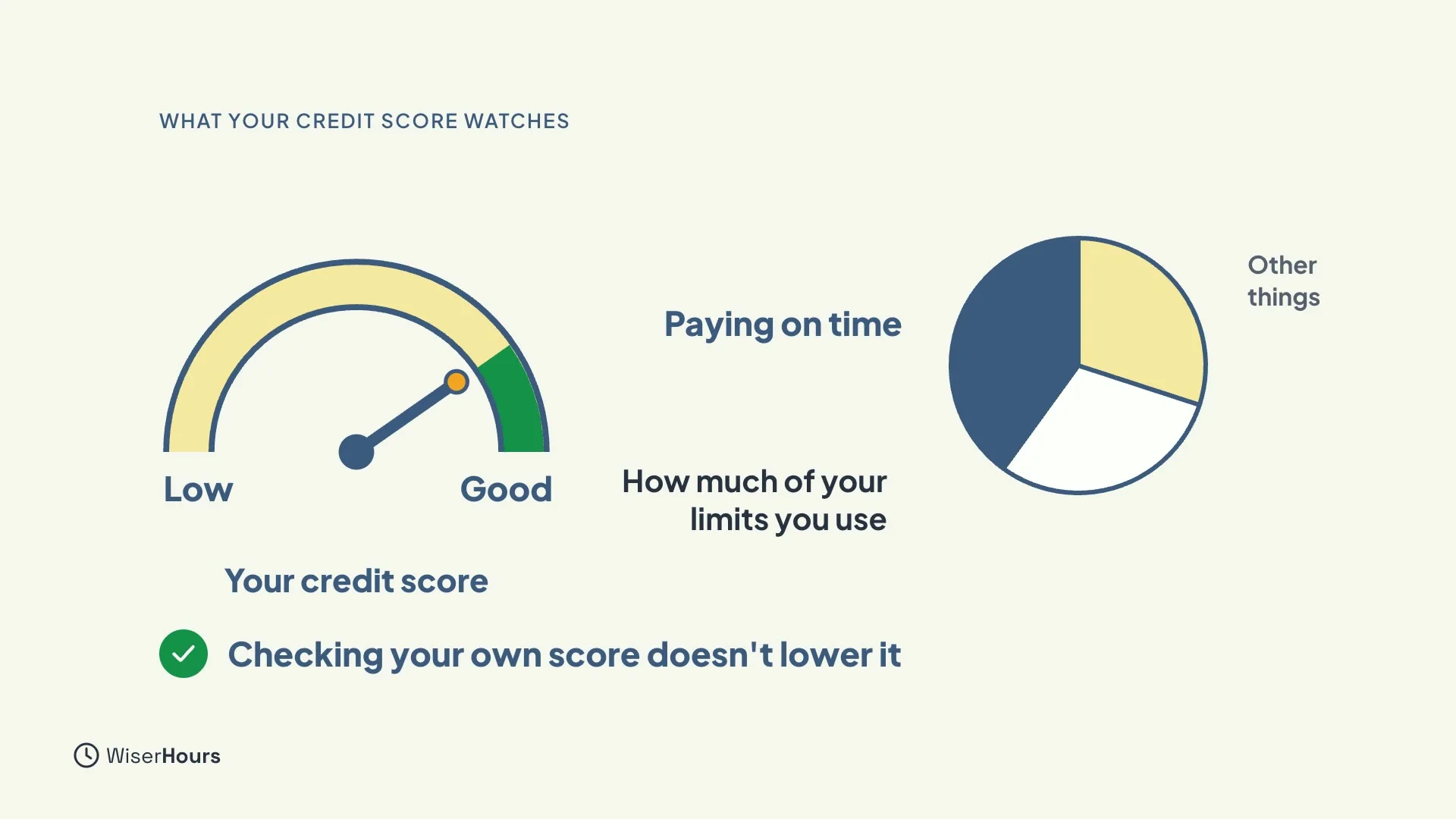
Most credit scores are built mainly on two things: whether you pay on time, and how much of your credit limits you are using. Paying every bill on time matters most of all. In one widely used US scoring model, paying on time is about 35 percent of the score and the amount you owe is about 30 percent, though other models and countries weigh things differently. A credit scorecredit score: A number calculated from a credit report that estimates how likely a person is to repay borrowing on time. Scoring models, score ranges and what they include differ between companies and countries, and lenders also weigh income and other details.Full entry in the glossary is a number that estimates how likely you are to repay on time. And checking your own score does not lower it.
 (opens the full-size picture)
Pay later is borrowing
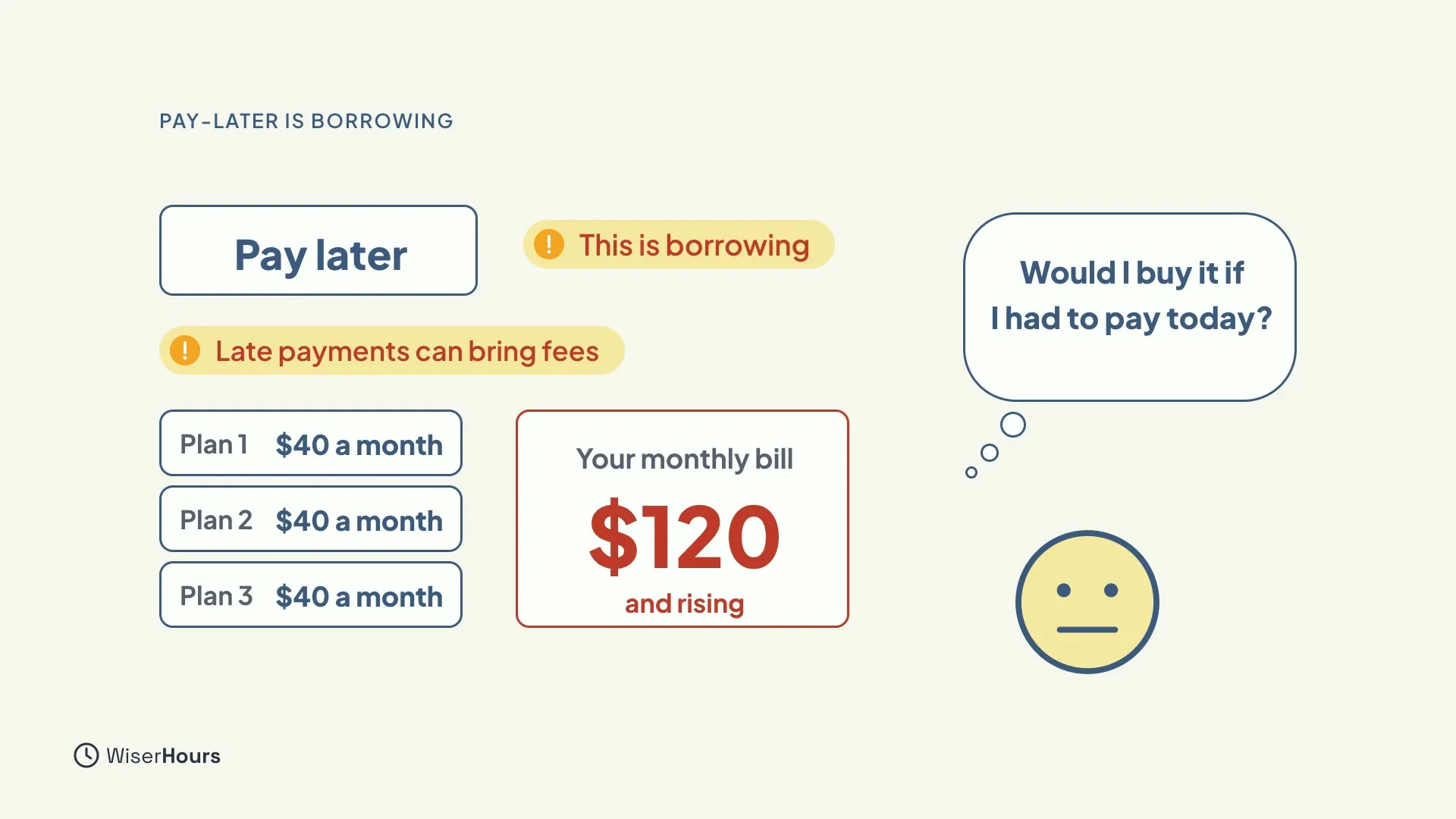
Treat buy now, pay later plans as borrowing, because they are. Late payments can bring fees, and several small plans at once can quietly add up to a large monthly bill. In the drawn example, three plans of $40 a month become a $120 bill, and rising. Before you tap the button, ask yourself: would I buy this if I had to pay today?
 (opens the full-size picture)
Keep building the cushion
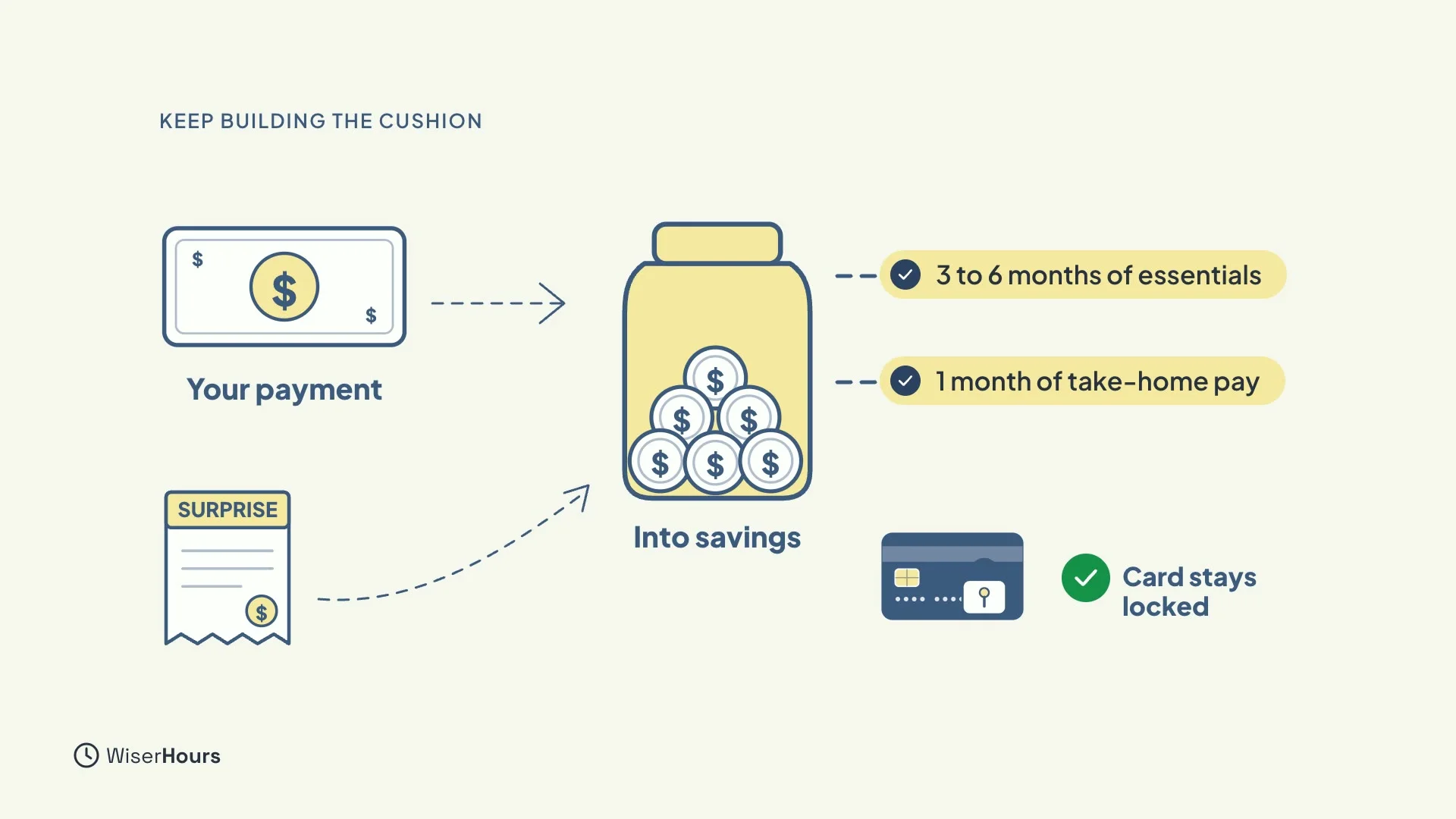
Once the expensive debt is gone, keep paying the same amount, but into savings. A first target is about one month of take-home pay. Then build towards three to six months of essential costs, which is a rule of thumb, not a law. Then the next surprise will not have to go on a card. This cushion is called an emergency fundemergency fund: Money kept in an account you can reach quickly, to cover unexpected costs or a drop in income without borrowing. How much to hold depends on your circumstances, and official guidance differs by country.Full entry in the glossary.
 (opens the full-size picture)
Look after yourself
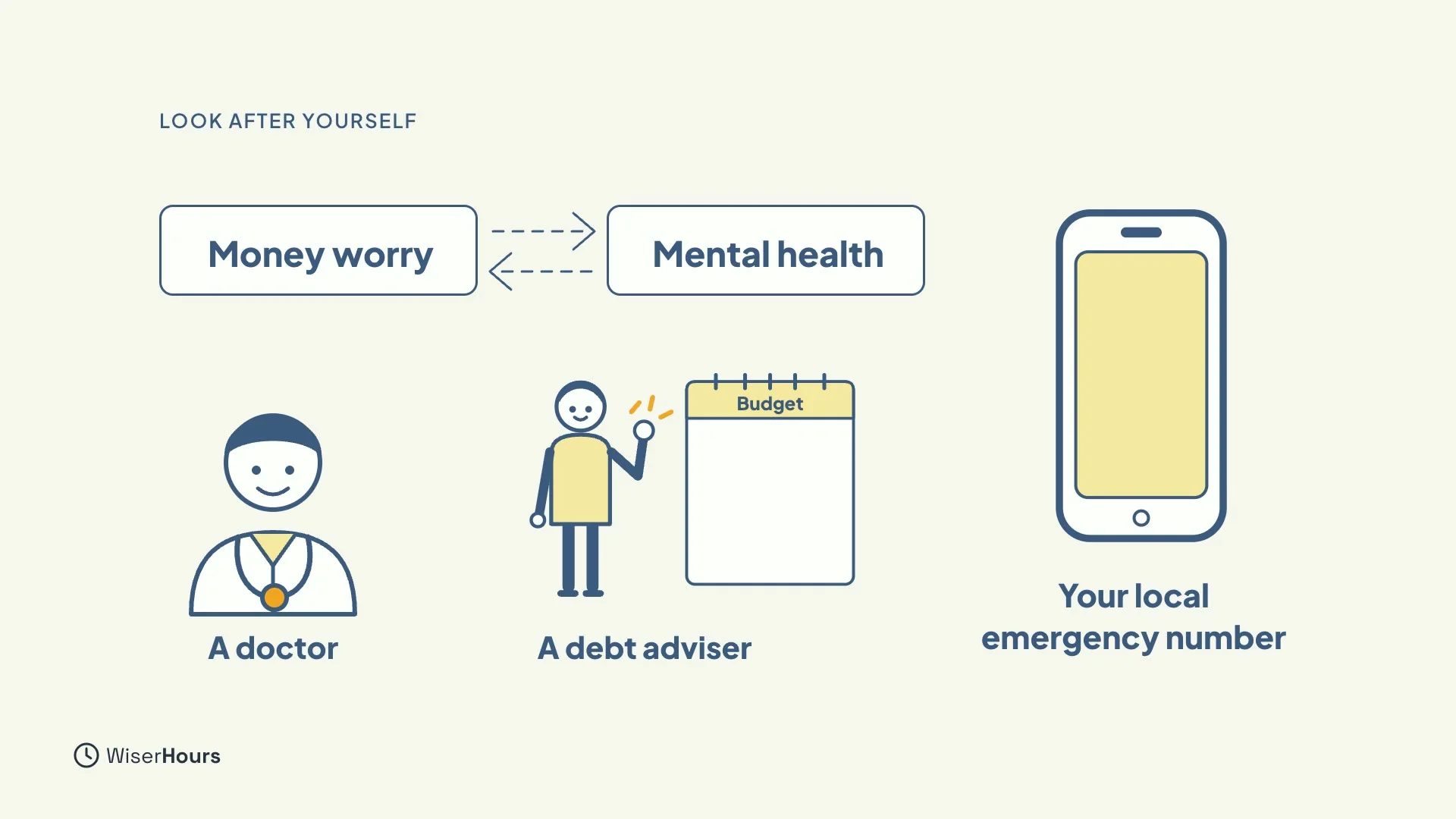
Money worry and mental health are closely linked, in both directions. If worry about money is wearing you down for weeks, talk to a doctor as well as a debt adviser. And if you ever feel unsafe, or are in danger, call your local emergency number first.
 (opens the full-size picture)
If you are not safe, do not wait
If you feel in danger, or you are thinking about harming yourself, call your local emergency number now, or ask someone near you to. For worry that is not an emergency, a doctor and a free debt adviser are the right next calls.
Your debt plan
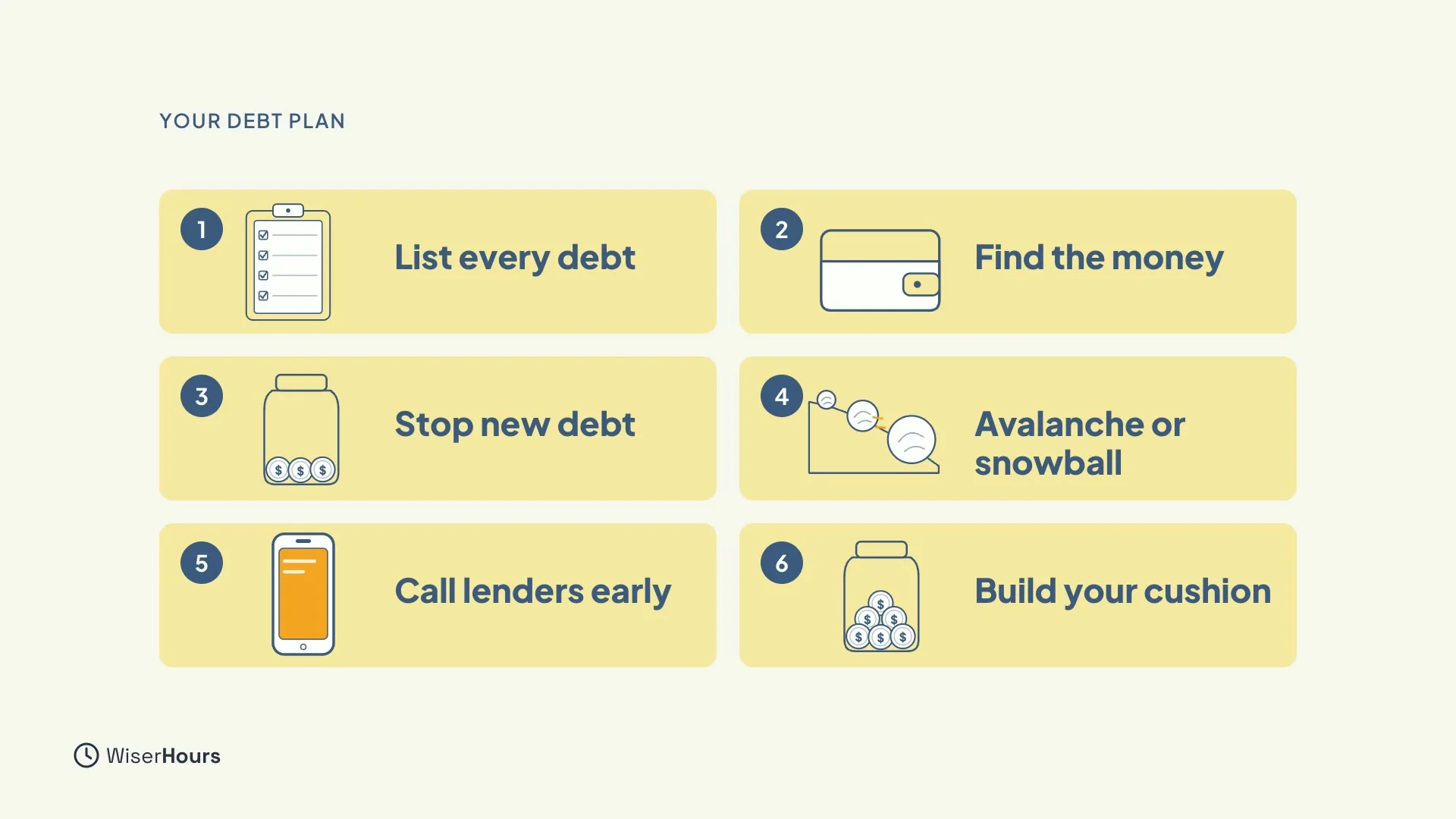
Here is your plan in six steps. List every debt. Find money in your budget, and pay priority bills first. Stop new debt with a starter fund. Pick the avalanche or the snowball, and pay a fixed amount above the minimums. Call lenders early, and get free advice if you need it. Then keep building your cushion.
 (opens the full-size picture)
YOUR TURN
Your Get Out of Debt plan
Thank you for taking this course.
Read more
- How Credit Scores Work: The Factors Behind the Number: what goes into a score and what helps it.
- Emergency Fund Basics: What It’s For, How Big, and Where to Keep It: how to build a cushion that keeps a shock from becoming debt.
- Money Anxiety: Why It Happens, How It Shows Up, and What Helps: how money worry and mental health affect each other, and who to call.
- Buy Now, Pay Later Explained: How It Works and Where the Risks Hide: the late fees and stacked plans to watch for.
Read the full lesson script
Welcome to the last lesson. Getting out of debt is one half of the job. Staying out is the other. In this lesson, you'll see how to protect your credit, build a cushion, look after yourself, and put it all into one plan.
Most credit scores are built mainly on two things: whether you pay on time, and how much of your credit limits you're using. Paying every bill on time matters most of all. And checking your own score doesn't lower it.
Treat buy now, pay later plans as borrowing, because they are. Late payments can bring fees, and several small plans at once can quietly add up to a large monthly bill. Ask yourself whether you'd buy it if you had to pay today.
Once the expensive debt is gone, keep paying the same amount, but into savings. A first target is about one month of take-home pay. Then build towards three to six months of essential costs. Then the next surprise won't go on a card.
Money worry and mental health are closely linked, in both directions. If worry about money is wearing you down for weeks, talk to a doctor as well as a debt adviser. And if you ever feel unsafe, call your local emergency number.
Here's your plan. List every debt. Find money in your budget, and pay priority bills first. Stop new debt with a starter fund. Pick the avalanche or the snowball, and pay a fixed amount above the minimums. Call lenders early, and get free advice if you need it. Then keep building your cushion.
So remember: pay every bill on time, and treat pay-later plans as borrowing. Once the debt is gone, send the same payment into savings. And if money worry wears you down, talk to someone. For your last task, fill in your debt plan, and start with one step this week. Thank you for taking this course.
MAKE IT A SMALL WIN
Finished this lesson?
Mark it complete to save your progress on this device.