Getting help · Lesson 9 of 10
Free Debt Help and How to Spot Debt-Relief Scams
Learn where to find free, honest debt advice, what a good adviser does, and the warning signs of debt-relief scams.
 Video coming soon
You do not have to sort out debt alone. In this lesson you see where to find free, honest help, what a good adviser does and the warning signs of debt-relief scams. This is general education, not financial or legal advice. Services and rules differ by country, so look for the ones where you live.
Free debt advice
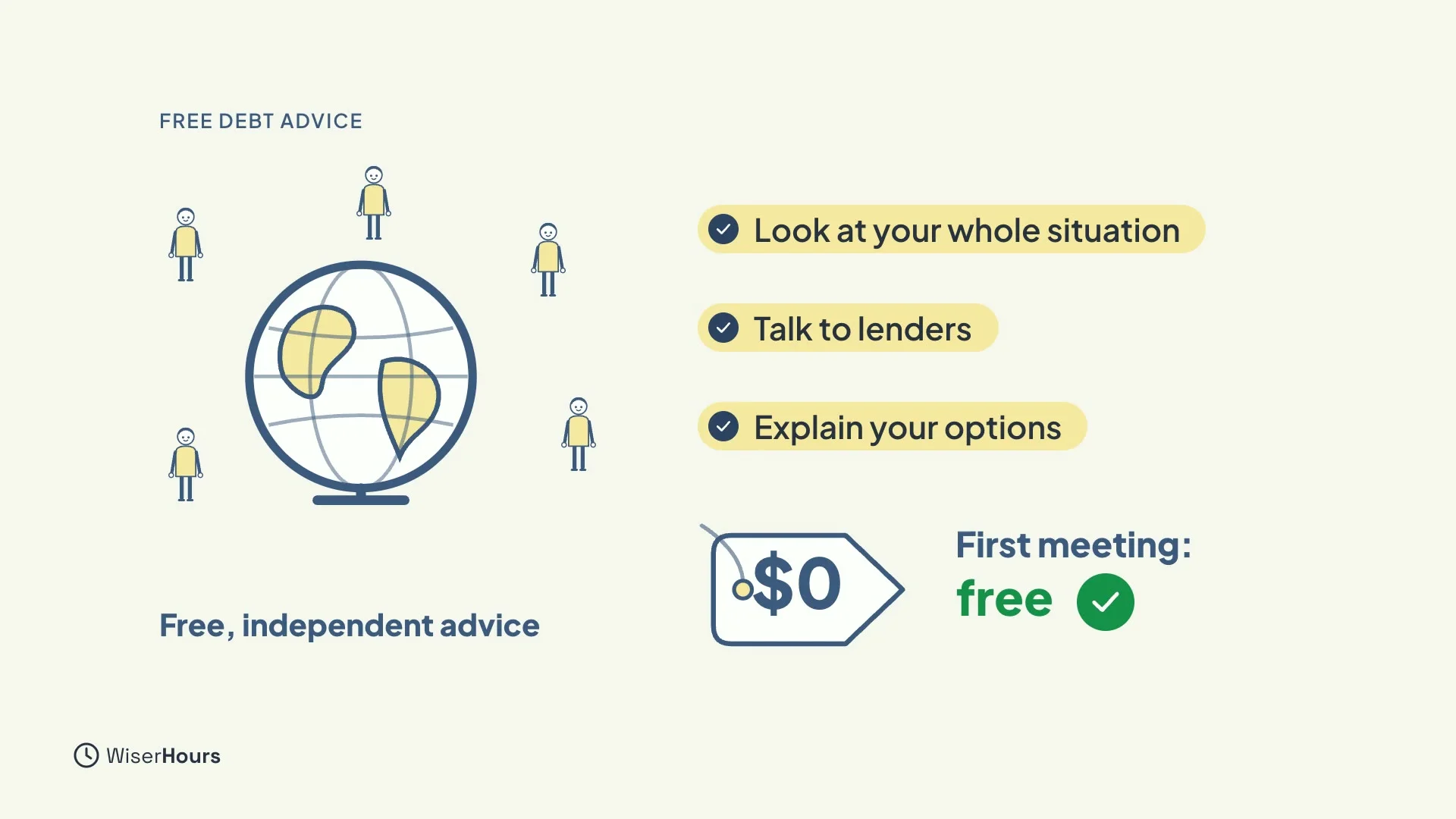
Many countries have free, independent debt advice services, often run by charities or the government. They can look at your whole situation, talk to lenders and explain your options. A good one never charges you for a first meeting. If a service wants money before it has even listened, treat that as a warning.
 (opens the full-size picture)
What a good adviser does
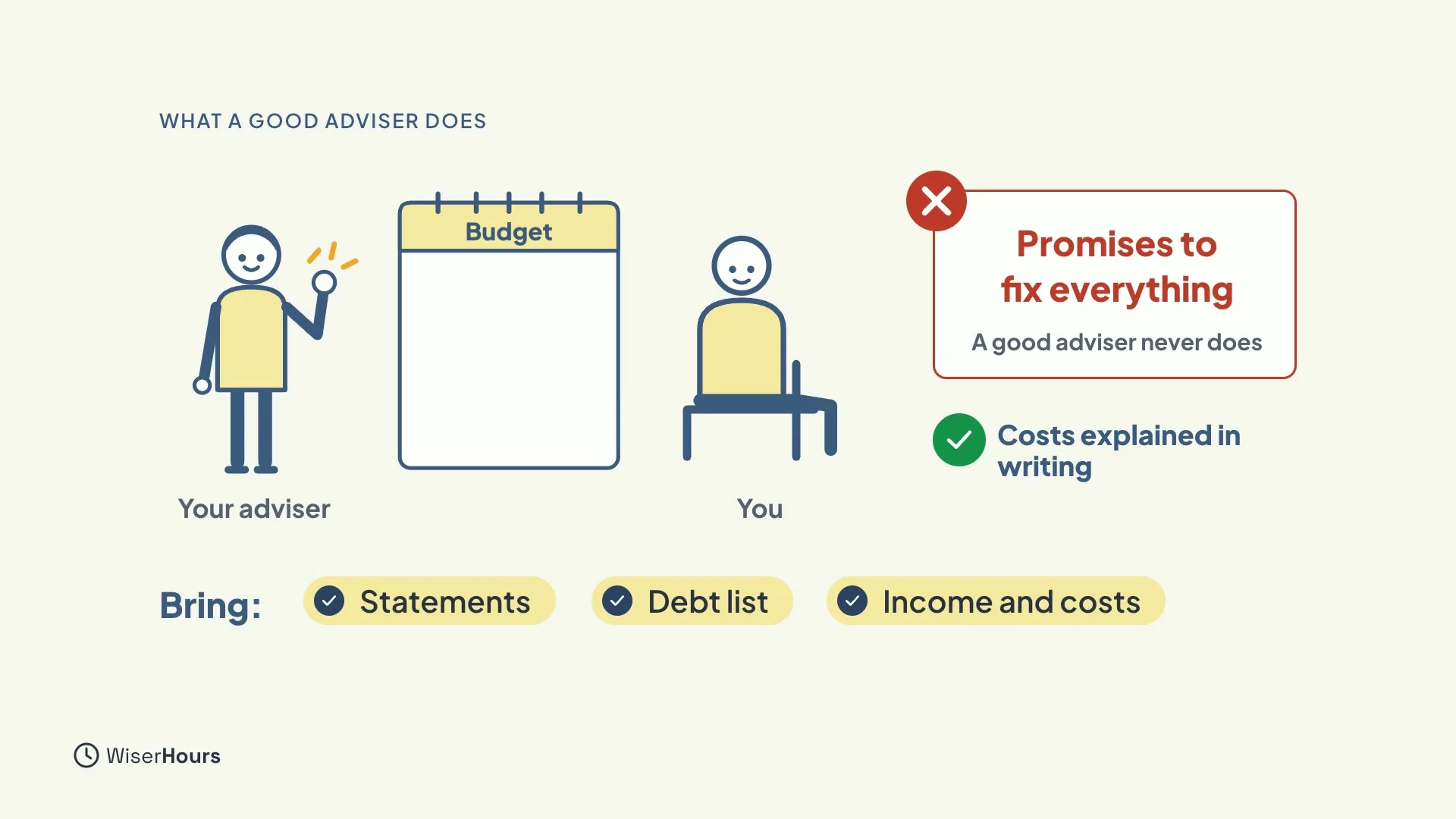
A good adviser spends time on your budget before suggesting anything. They do not promise to fix everything, and they explain the costs in writing. To get the most from a meeting, bring your statements, a list of what you owe, and your income and essential costs. The debt list you made earlier in this course is a good start.
 (opens the full-size picture)
Four warning signs
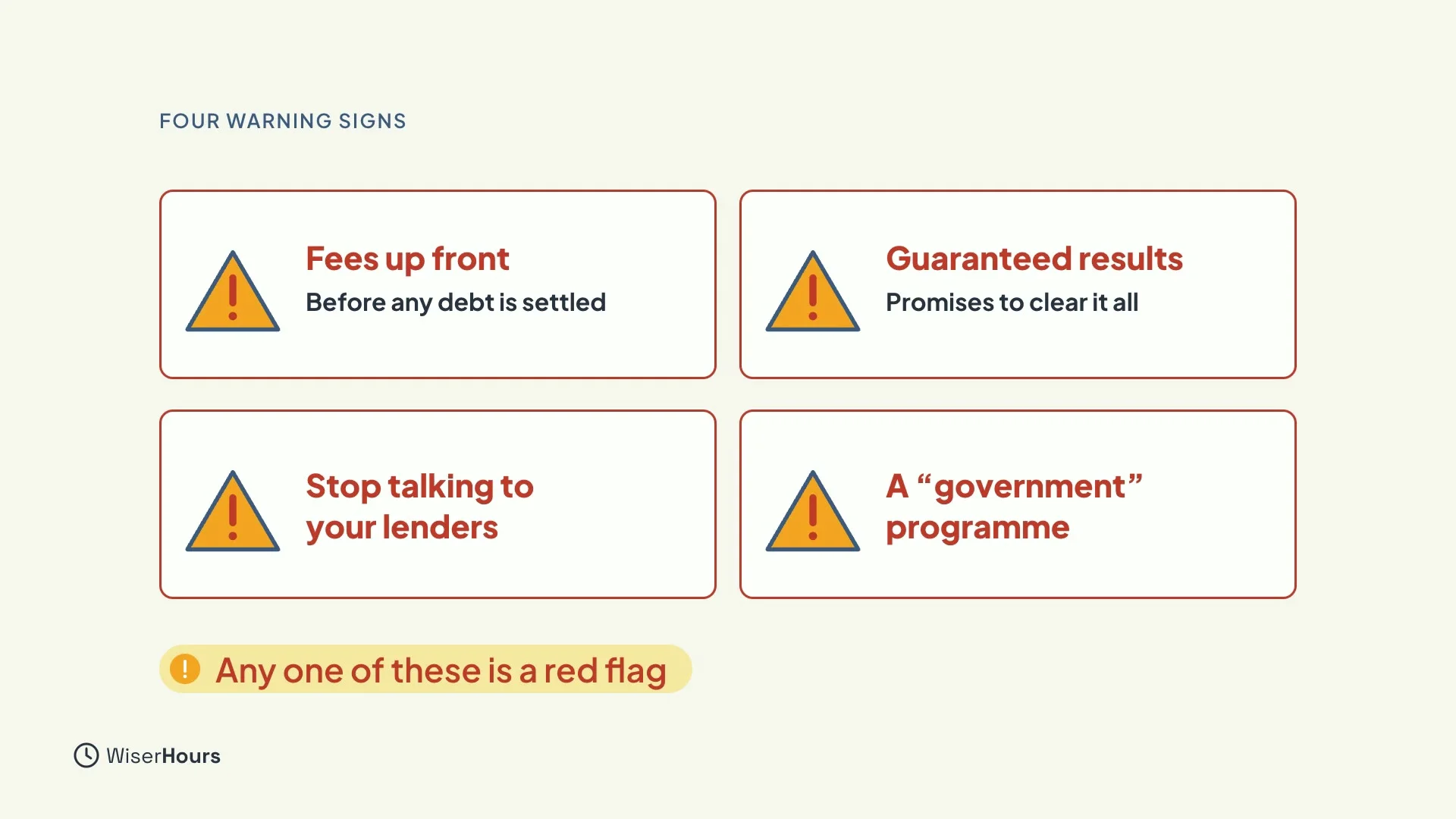
Be careful with any company that does one of these. It asks for fees before it settles any of your debts. It guarantees to clear all your debts. It tells you to stop talking to your lenders. Or it claims to offer a special government programme you have never heard of. Any one of these is a red flag.
 (opens the full-size picture)
Free first, paid never in advance
A company that asks for fees before it has settled any debt, or that guarantees results, is worth walking away from. Free advice services exist so you never need to pay just to get help.
The risk of debt settlement
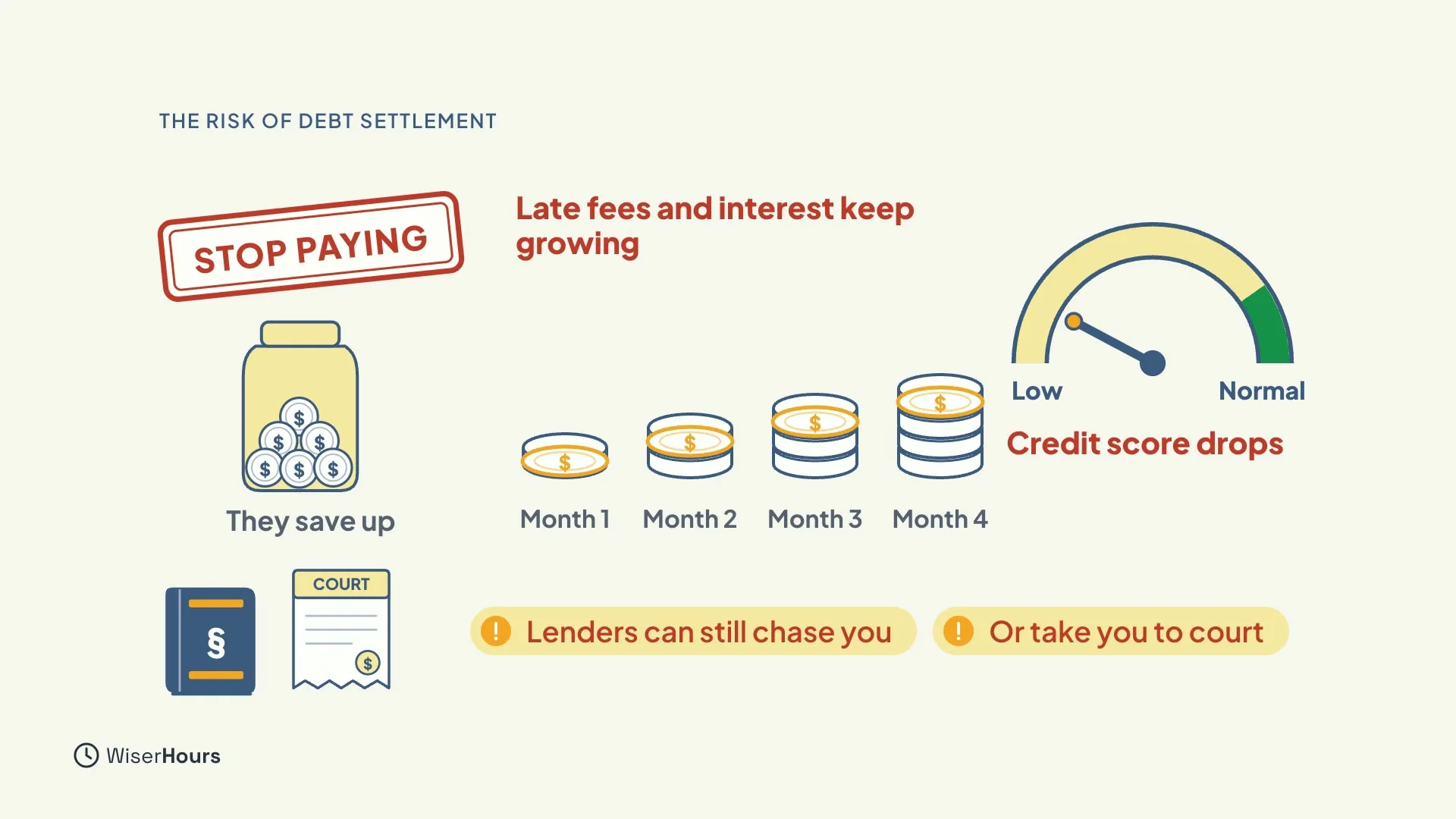
Some companies offer to settle your debts for less than you owe. They often tell you to stop paying while they save up. Meanwhile, late fees and interest keep growing, your credit score can drop, and lenders can still chase you or take you to court.
 (opens the full-size picture)
Check before you sign
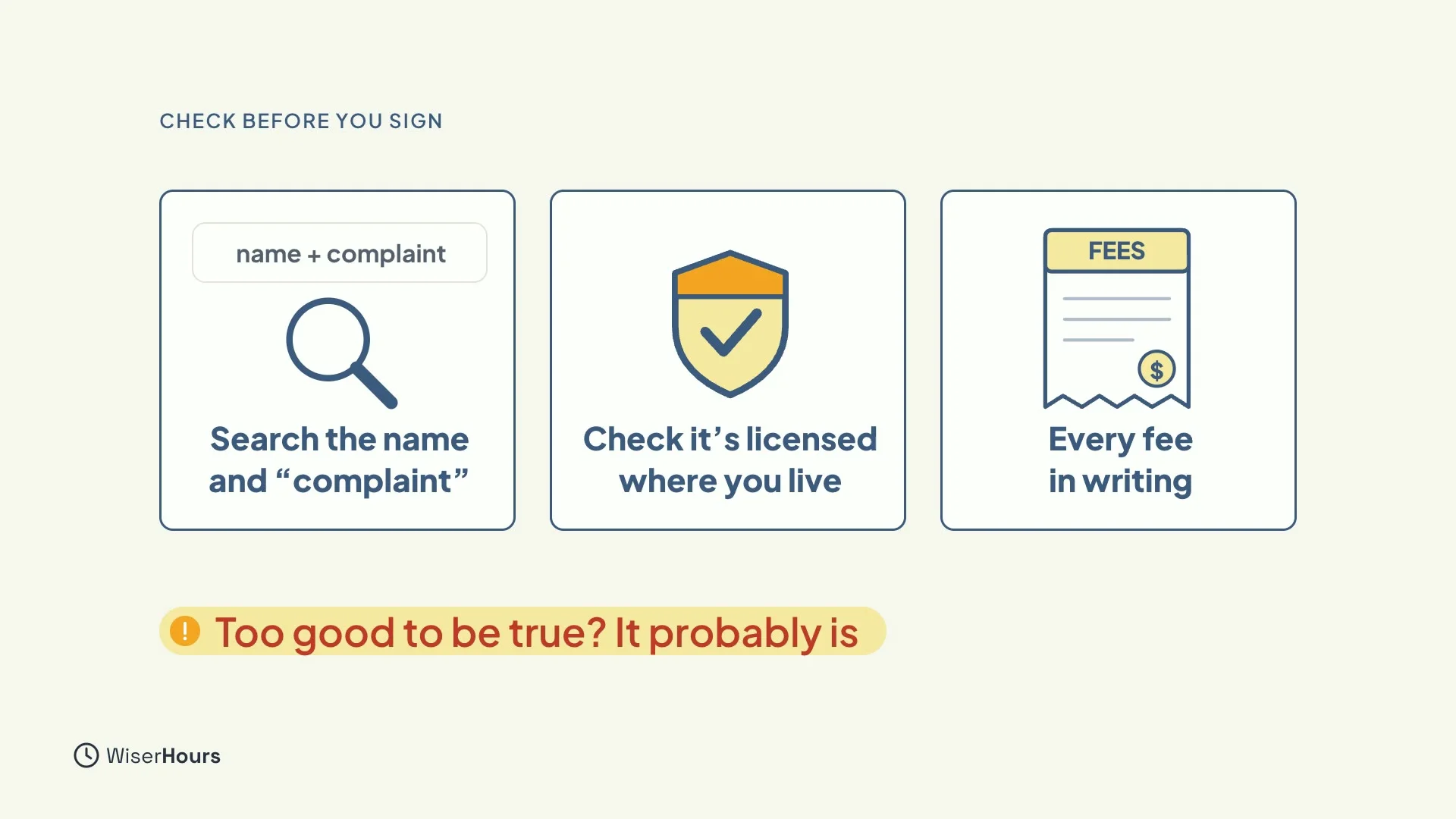
Before you sign anything, search the company’s name with the word complaint or review, and check that it is licensed or registered where you live. Get every fee in writing. If it sounds too good to be true, it probably is.
 (opens the full-size picture)
YOUR TURN
Read more
- How Debt Works: Principal, Interest, and Why Time Matters So Much: where free debt help is found, and why debt settlement can leave you owing more.
- Money Anxiety: Why It Happens, How It Shows Up, and What Helps: how to prepare for a first debt-advice appointment.
- How To Get Out of Debt: a consumer-agency guide to warning signs of debt-relief scams.
Read the full lesson script
Welcome back. You don't have to sort out debt alone. In this lesson, you'll see where to find free, honest help, what a good adviser does, and the warning signs of debt-relief scams.
Many countries have free, independent debt advice services, often run by charities or the government. They can look at your whole situation, talk to lenders, and explain your options. A good one never charges you for a first meeting.
A good adviser spends time on your budget before suggesting anything. They don't promise to fix everything, and they explain the costs in writing. Bring your statements, a list of what you owe, and your income and essential costs.
Be careful with any company that does one of these. Asks for fees before it settles any of your debts. Guarantees to clear all your debts. Tells you to stop talking to your lenders. Or claims to offer a special government programme you've never heard of.
Some companies offer to settle your debts for less than you owe. They often tell you to stop paying while they save up. Meanwhile, late fees and interest keep growing, your credit score can drop, and lenders can still chase you or take you to court.
Before you sign anything, search the company's name with the word complaint or review, and check that it's licensed or registered where you live. Get every fee in writing. If it sounds too good to be true, it probably is.
So remember: free, independent debt advice exists in many countries, and a good adviser looks at your whole budget first. Watch for upfront fees, guarantees, and being told to stop talking to your lenders. And check any company before you sign. Before the next lesson, find the free debt advice service in your country, and save its details. Next, you'll make a plan to stay out of debt.
MAKE IT A SMALL WIN
Finished this lesson?
Mark it complete to save your progress on this device.