How debt works · Lesson 1 of 10
Why Debt Feels Stuck, and the Way Out
See why your balance barely moves, why money worry is common and not a flaw, and the four-part plan this course follows.
 Video coming soon
Many people pay something toward their debt every month and still feel stuck. In this lesson you will see why that happens, why it says nothing bad about you, and what the way out looks like. This is general education, not financial advice.
Why the balance hardly moves
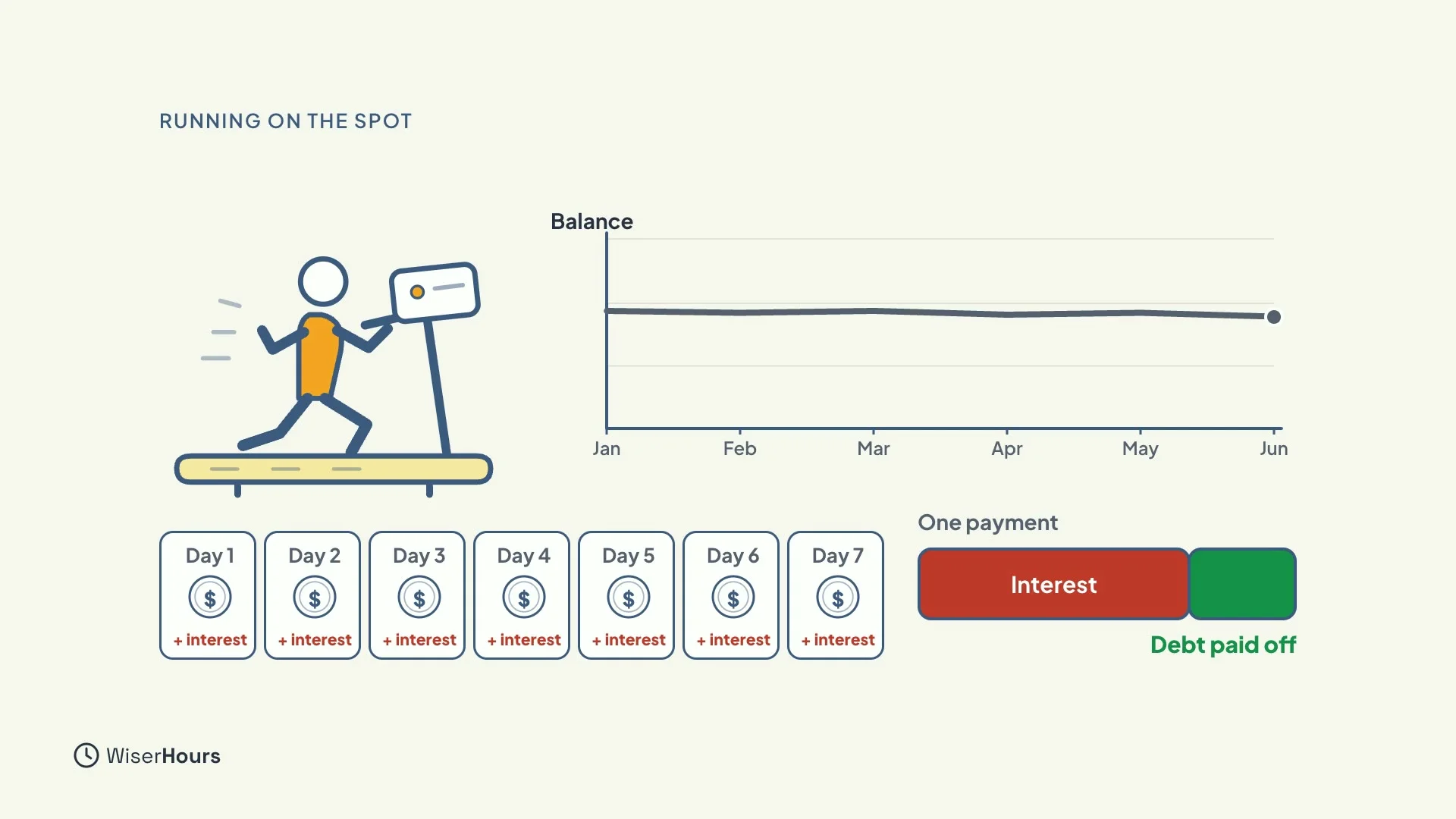
Imagine running on a treadmill: you work hard, but you stay in the same place. Debt can feel like that. You pay every month, yet the balance on the screen hardly changes.
The reason is compound interestcompound interest: Interest worked out on the original amount plus the interest already added to it, so the total grows faster over time. It works for savers and against borrowers, whose unpaid interest itself starts to attract interest.Full entry in the glossary: interest is added again and again, often every day. If your payment is close to the minimum, a large part of it can go on interest, and only a little reduces what you owe. The picture shows one payment split in two: a big red slice for interest and a small green slice for debt paid off.
 (opens the full-size picture)
Money worry is common, and not a flaw
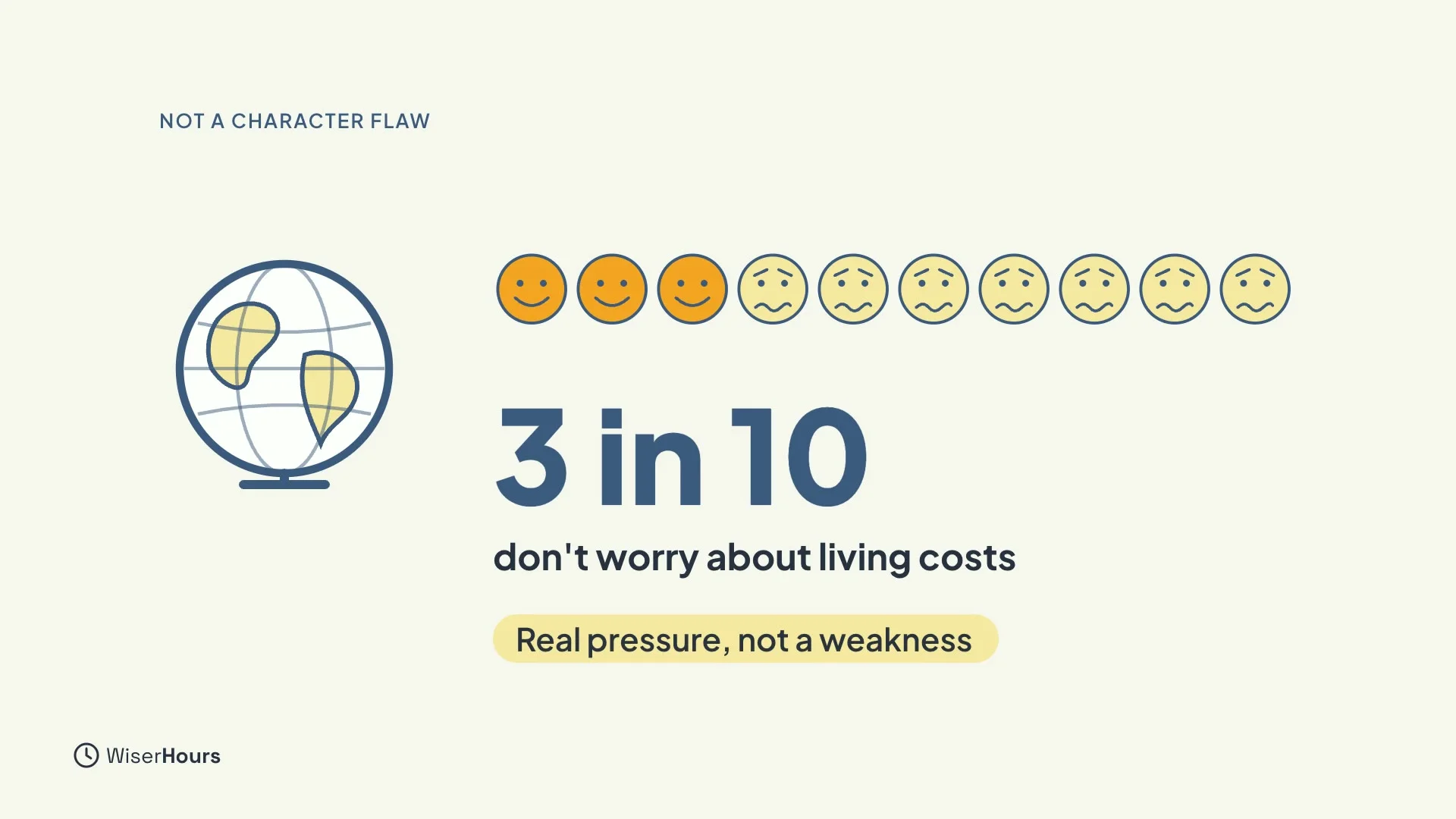
If you feel stressed about money, you are in good company. In a survey across 39 countries, only about 3 in 10 adults said they did not worry about paying their normal living costs. Worry about money usually reflects real pressure, not a weakness.
 (opens the full-size picture)
Looking away makes it grow
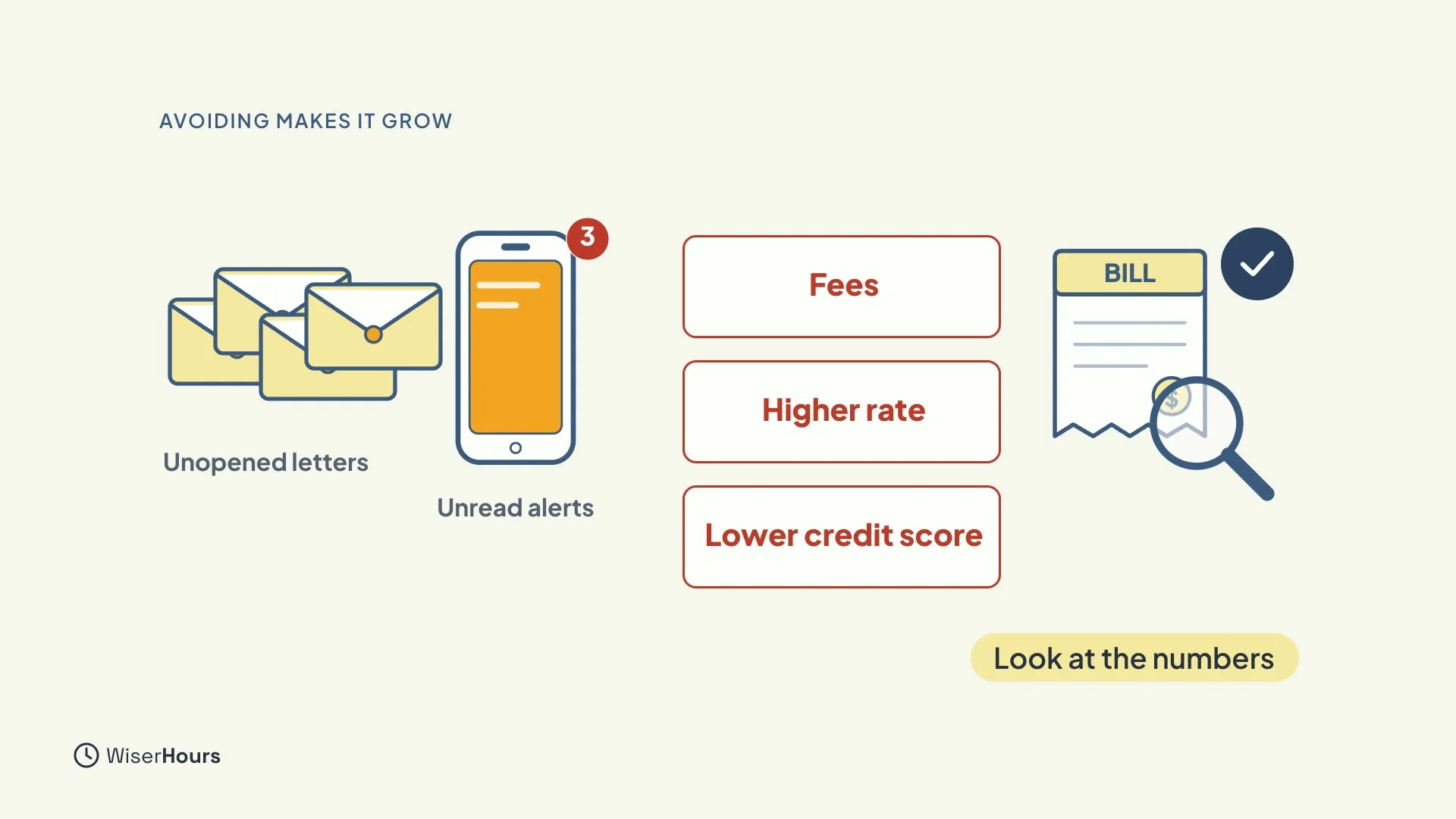
When money is tight, many people stop opening letters or checking their accounts. It is a natural reaction: the news feels bad, so you avoid it. But missed payments can bring fees, a higher interest rate and a lower credit scorecredit score: A number calculated from a credit report that estimates how likely a person is to repay borrowing on time. Scoring models, score ranges and what they include differ between companies and countries, and lenders also weigh income and other details.Full entry in the glossary. Debts you do not look at keep growing.
 (opens the full-size picture)
The way out has four parts
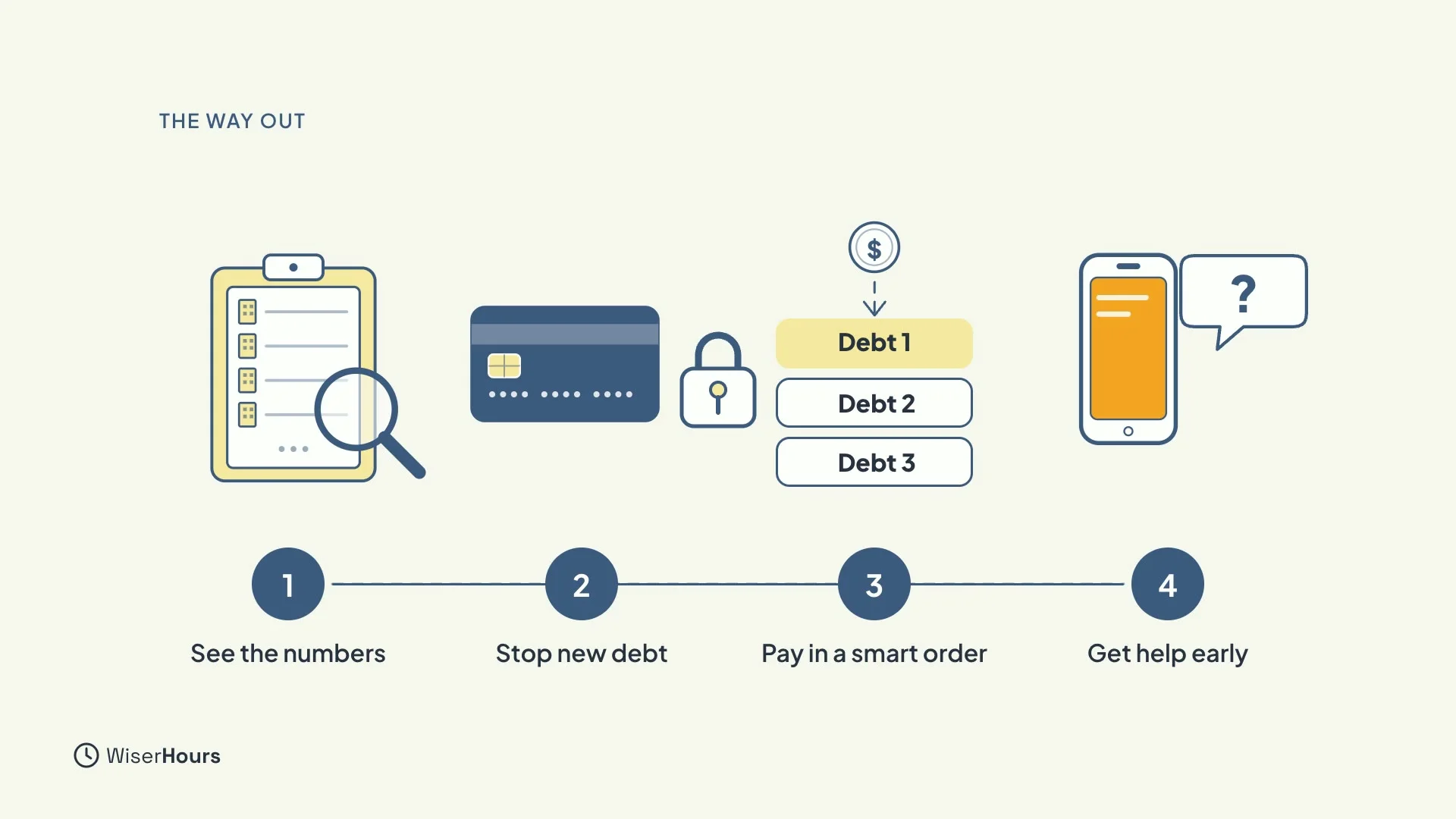
The way out is a plan, and it has four parts:
- See the numbers clearly.
- Stop adding new debt.
- Pay in a smart order, putting every extra amount on one debt at a time.
- Get help early, from your lenders or a free debt advice service.
 (opens the full-size picture)
What to expect from this course
Interest rules, credit scores and help services differ from country to country. So the examples use simple round numbers, and when the law matters, you will be asked to check your local rules.
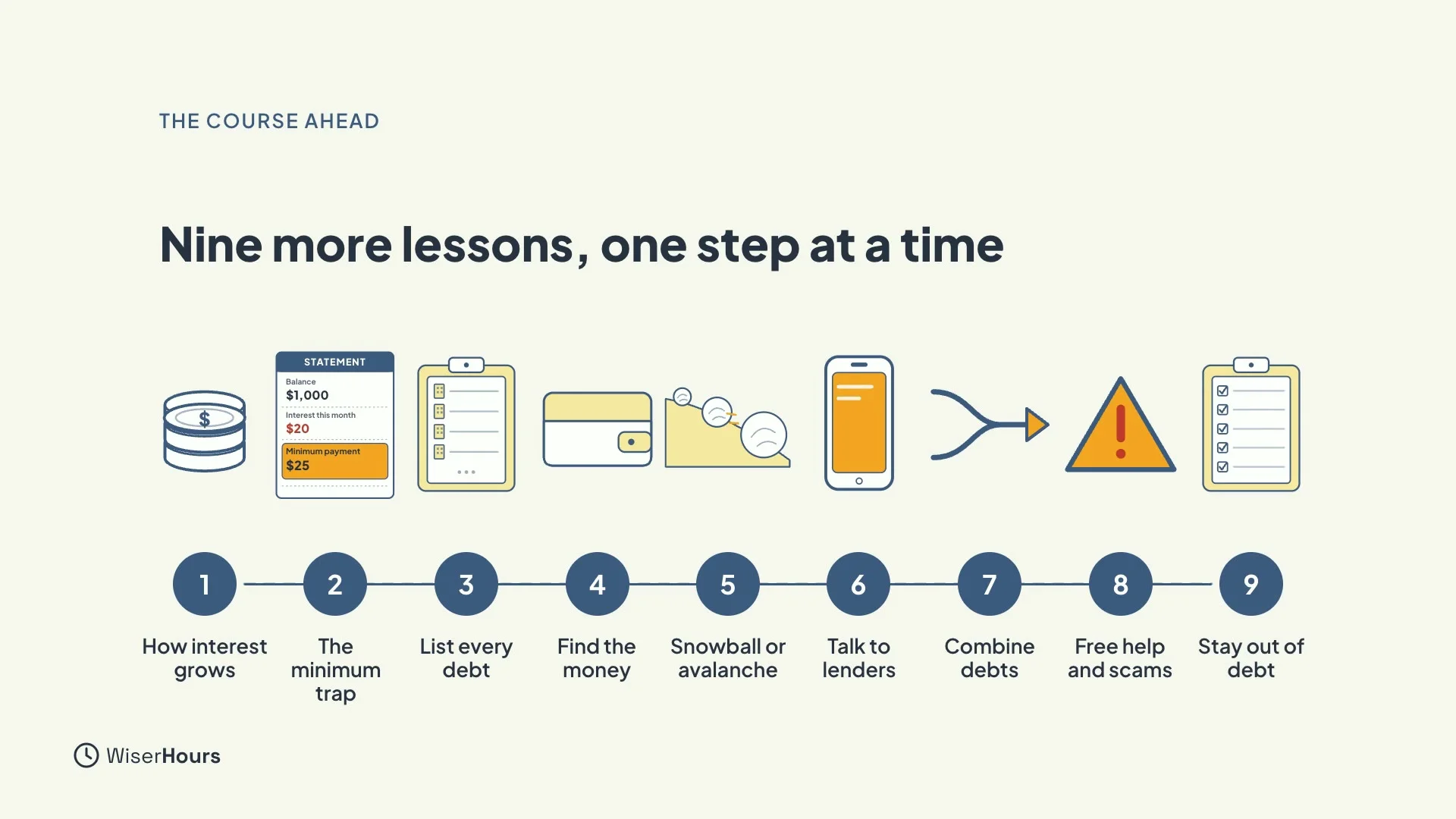
The course goes step by step. You will learn how interest makes debt grow and why minimum payments are a trap. Then you will list every debt and find money to pay it down. After that you will choose between the snowball and the avalanche, and learn to talk to your lenders. Later lessons cover consolidation and balance transfers, free help and how to spot scams, and finally a plan to stay out of debt.
 (opens the full-size picture)
YOUR TURN
Read more
- How Debt Works: Principal, Interest, and Why Time Matters So Much: the three numbers that decide what a debt costs.
- Money Anxiety: Why It Happens, How It Shows Up, and What Helps: why money worry is so common and how to make looking at your money easier.
Read the full lesson script
Welcome to Get Out of Debt. In this first lesson, you'll see why debt can feel impossible to shift, why that isn't a personal failing, and how this short course gives you a clear way out.
Many people pay something every month, yet the balance hardly moves. That's because interest is added again and again, often every day. If your payment is close to the minimum, a large part of it can go on interest, and only a little reduces what you owe.
Money worry is very common. In a survey across thirty-nine countries, only about three in ten adults said they didn't worry about the cost of living. Worry about money usually reflects real pressure, not a weakness.
When money is tight, many people stop opening letters or checking their accounts. It's a natural reaction, but missed payments can bring fees, a higher interest rate, and a lower credit score. Looking at the numbers, even briefly, is the first step out.
The way out has four parts. See the numbers clearly. Stop adding new debt. Pay in a smart order, putting every extra amount on one debt at a time. And get help early, from your lenders or a free debt advice service.
Interest rules, credit scores and help services differ from country to country. So the examples use simple round numbers, and when the law matters, you'll be asked to check your local rules. This course is general education, not financial advice.
Here's the course. First, you'll see how interest makes debt grow, and the trap of minimum payments. Then you'll list every debt, and find money to pay it down. Next, you'll choose between the snowball and the avalanche, and learn to talk to your lenders. After that, you'll weigh consolidation and balance transfers, and learn where to find free help and how to spot scams. Finally, you'll make a plan to stay out of debt.
So remember: when the balance barely moves, interest is usually the reason. Money worry is common, and it's not a flaw. And the way out is a plan: see the numbers, stop new debt, pay smart, and get help early. Before the next lesson, write down every kind of debt you have, like cards, loans, overdrafts and pay-later plans. Next, you'll see how interest makes debt grow.
MAKE IT A SMALL WIN
Finished this lesson?
Mark it complete to save your progress on this device.