Getting help · Lesson 7 of 10
Talk to Your Lenders: When to Call and What to Ask
Learn when to call your lenders, what to ask for, how to keep a record, and why you should never ignore court papers.
 Video coming soon
If you are struggling to pay, the people you owe would usually rather hear from you than chase you. In this lesson you learn when to call your lenders, what to ask for and how to keep a record. This is general education, not legal or financial advice, and rules differ from country to country.
Call early
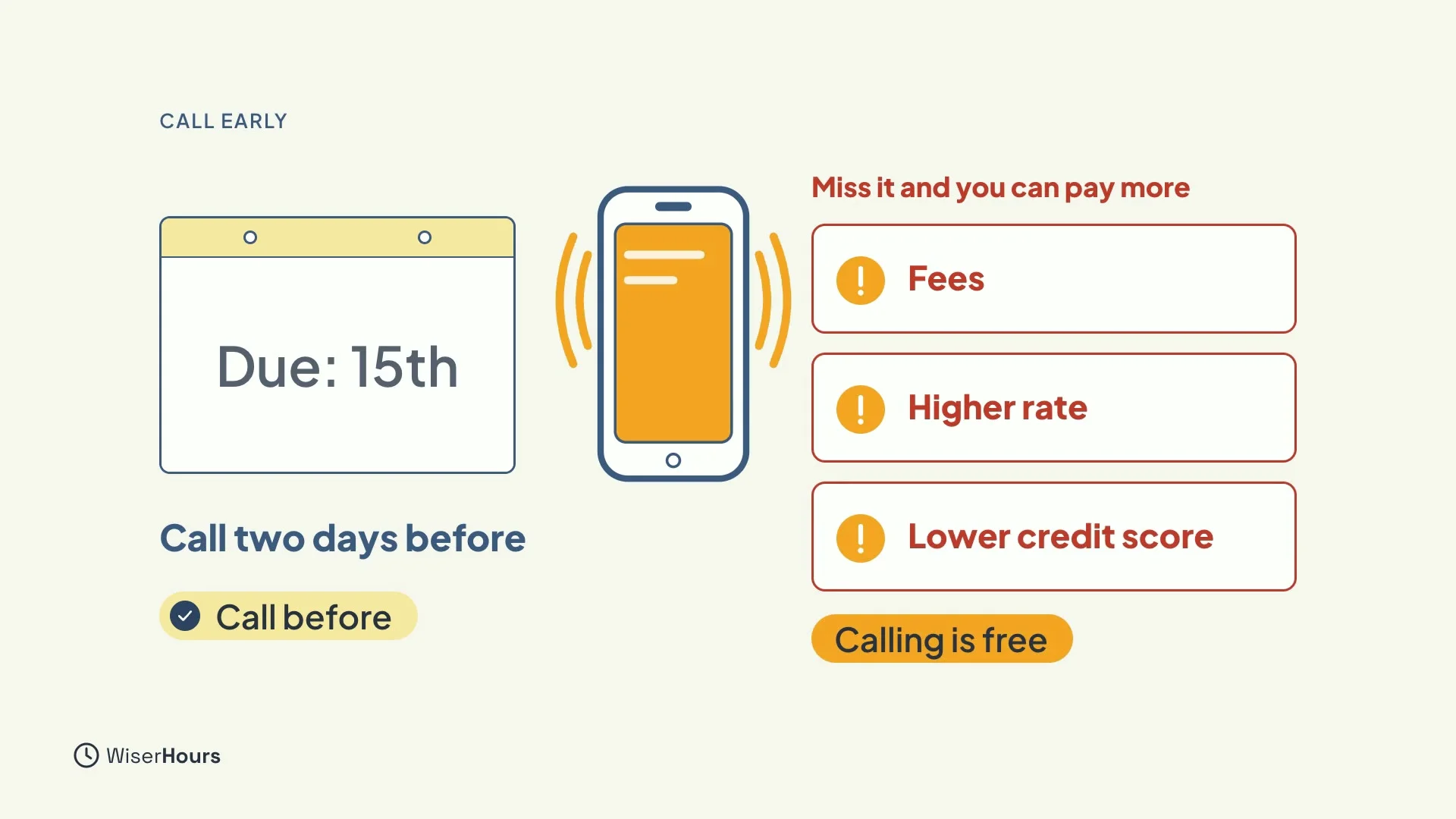
Call before you miss a payment, not after. Once payments are missed, fees can be added, the interest rate can go up and your credit scorecredit score: A number calculated from a credit report that estimates how likely a person is to repay borrowing on time. Scoring models, score ranges and what they include differ between companies and countries, and lenders also weigh income and other details.Full entry in the glossary can drop. Calling your lender yourself is free, so there is nothing to lose by asking. You do not need a company to do it for you.
 (opens the full-size picture)
What to ask for
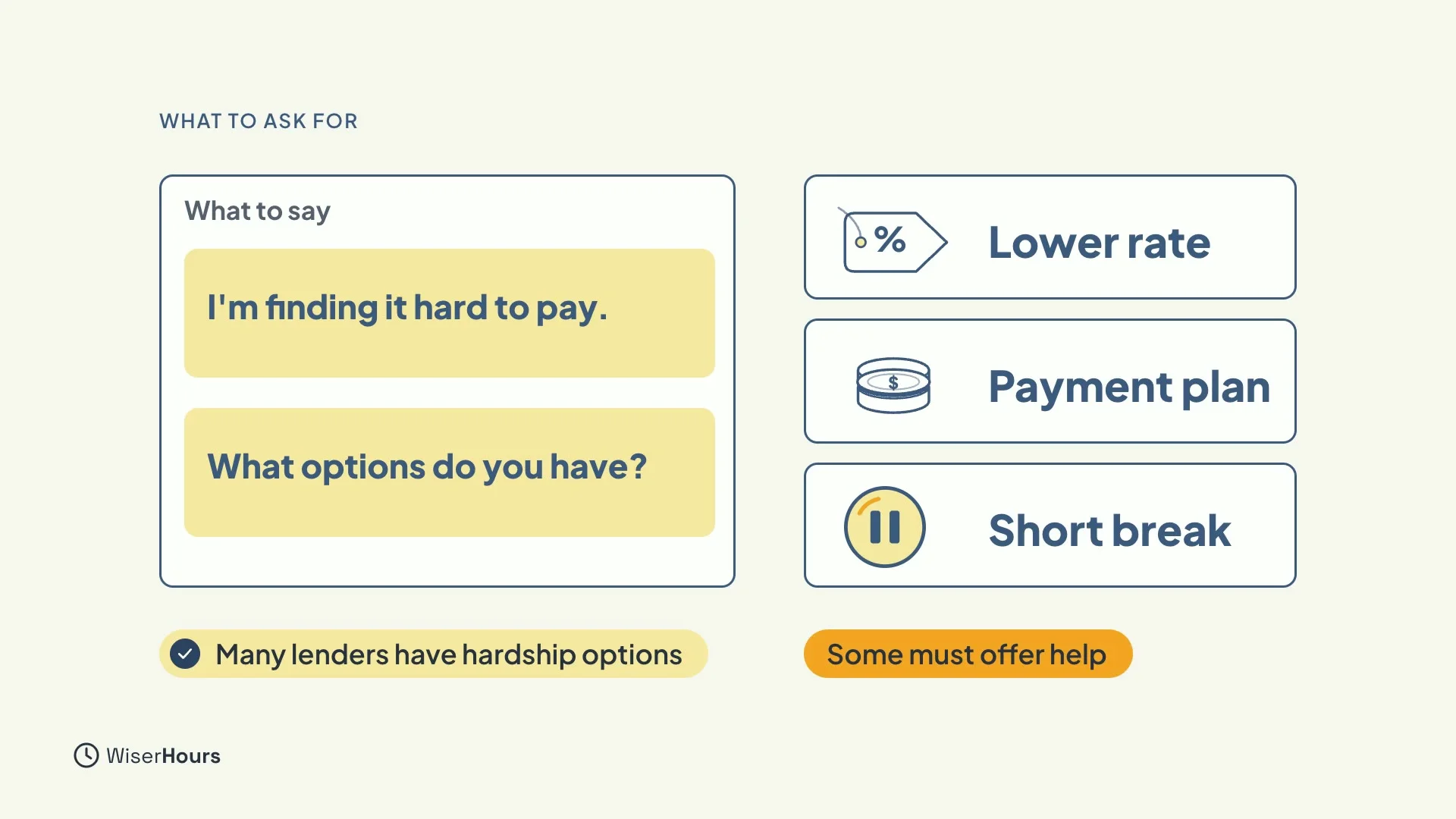
Start by explaining that you are finding it hard to pay, and ask what they can offer. That might be a lower interest rate, a payment plan with smaller payments or a short break in payments. Many lenders have hardship options, which are ways to help people who are stuck. In some places the rules even require lenders to offer help.
 (opens the full-size picture)
A short script
You do not need clever words. Say what is true, then ask a question: “I’m finding it hard to pay. What options do you have?” Write the answer down before you agree to anything.
Keep a record
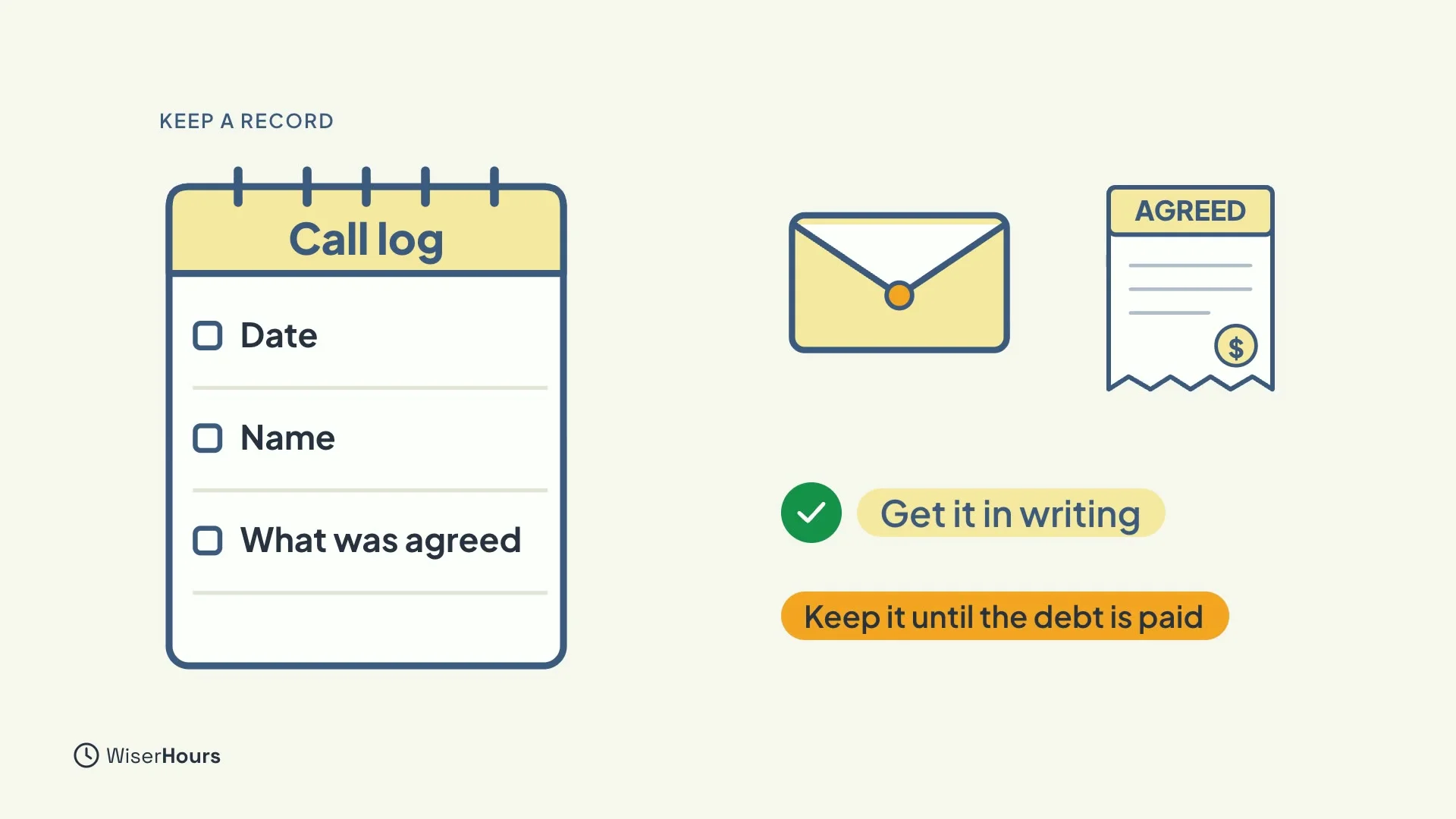
Keep a note of every call: the date, the name of the person you spoke to and what was agreed. Then ask for the agreement in writing, and keep it until the debt is paid. A written agreement protects you if the lender’s records ever disagree with yours.
 (opens the full-size picture)
If debts go further
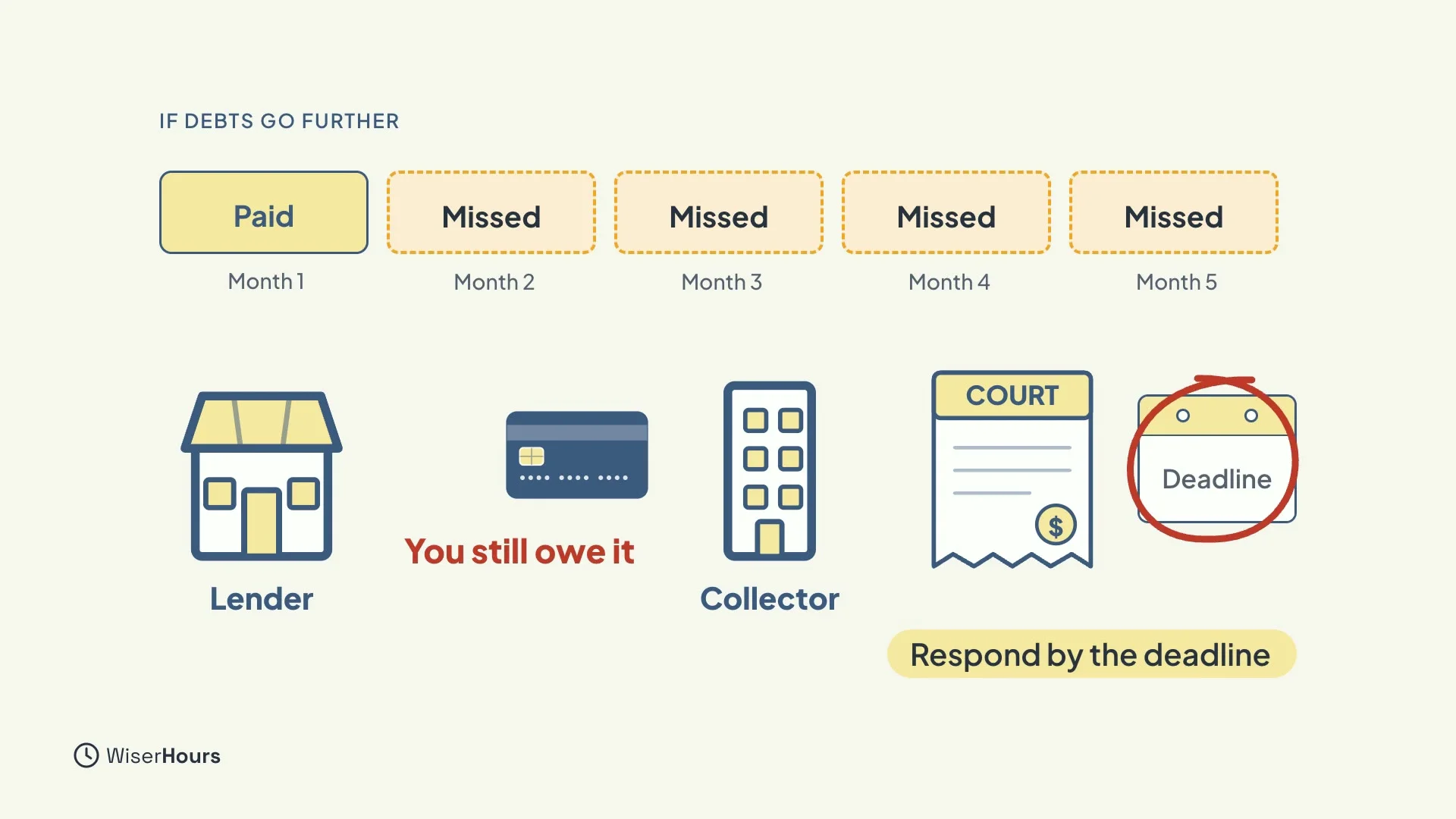
If payments stop for several months, a debt can be sold to a collection company. You still owe it, just to someone else. And if you ever get court papers, do not ignore them. Respond by the deadline, because ignoring them can mean losing your chance to defend yourself.
 (opens the full-size picture)
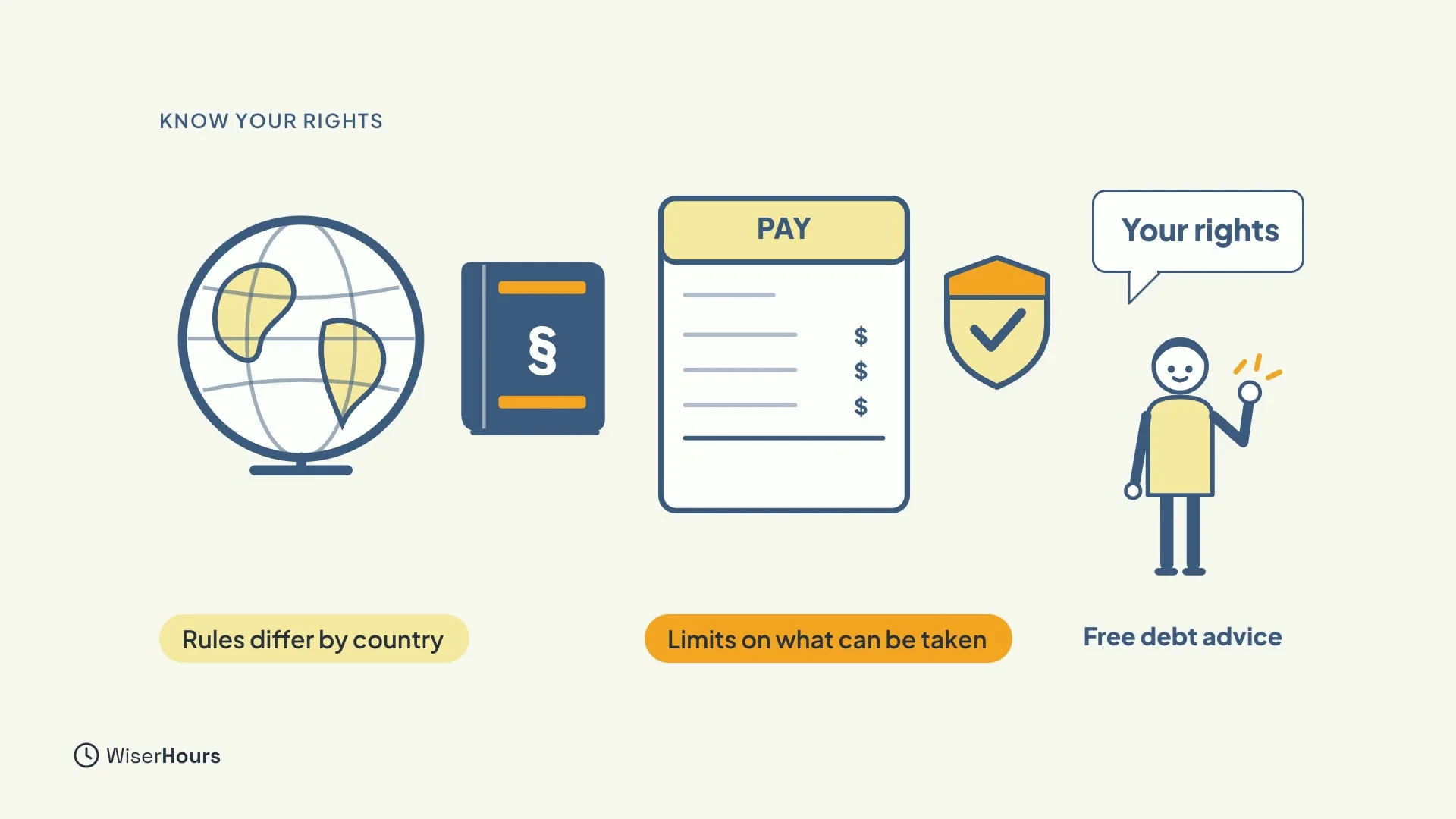
Know your rights
Rules on collectors and courts differ from country to country, and many places limit how much can be taken from your pay. If you are unsure, a free debt advice service can explain your rights where you live.
 (opens the full-size picture)
YOUR TURN
Read more
- How Debt Works: Principal, Interest, and Why Time Matters So Much: what happens after missed payments and where free help is found.
- Wage Garnishment Explained: How It Works and What Protections Exist: what court papers can lead to and how to respond.
- How To Get Out of Debt: a consumer-agency guide on telling creditors early and keeping records.
Read the full lesson script
Welcome back. If you're struggling to pay, the people you owe would usually rather hear from you than chase you. In this lesson, you'll learn when to call your lenders, what to ask for, and how to keep a record.
Call before you miss a payment, not after. Once payments are missed, fees can be added, the interest rate can go up, and your credit score can drop. Calling your lender yourself is free.
Explain that you're finding it hard to pay, and ask what they can offer. That might be a lower interest rate, a payment plan with smaller payments, or a short break in payments. Many lenders have hardship options, and some must offer help when people are stuck.
Keep a note of every call: the date, the name of the person you spoke to, and what was agreed. Ask for the agreement in writing, and keep it until the debt is paid.
If payments stop for several months, a debt can be sold to a collection company. You still owe it, just to someone else. And if you ever get court papers, don't ignore them. Respond by the deadline, because ignoring them can mean losing your chance to defend yourself.
Rules on collectors and courts differ from country to country, and many places limit how much can be taken from your pay. If you're unsure, a free debt advice service can explain your rights where you live.
So remember: call your lenders before you miss a payment, and ask what they can offer. Keep a record of every call, and get agreements in writing. And never ignore court papers. Respond by the deadline. Before the next lesson, write a three-sentence call script for your hardest debt. Next, you'll weigh up consolidation and balance transfers.
MAKE IT A SMALL WIN
Finished this lesson?
Mark it complete to save your progress on this device.