Your payoff plan · Lesson 4 of 10
How to List Every Debt You Have in One Place
Put every debt on one list with five columns, add up the totals, and keep it current with a short weekly money check.
 Video coming soon
You cannot fix what you cannot see. In this lesson you will put every debt you have on one list, including the small ones that are easy to forget, and learn a simple weekly habit that keeps the list up to date.
Why people look away
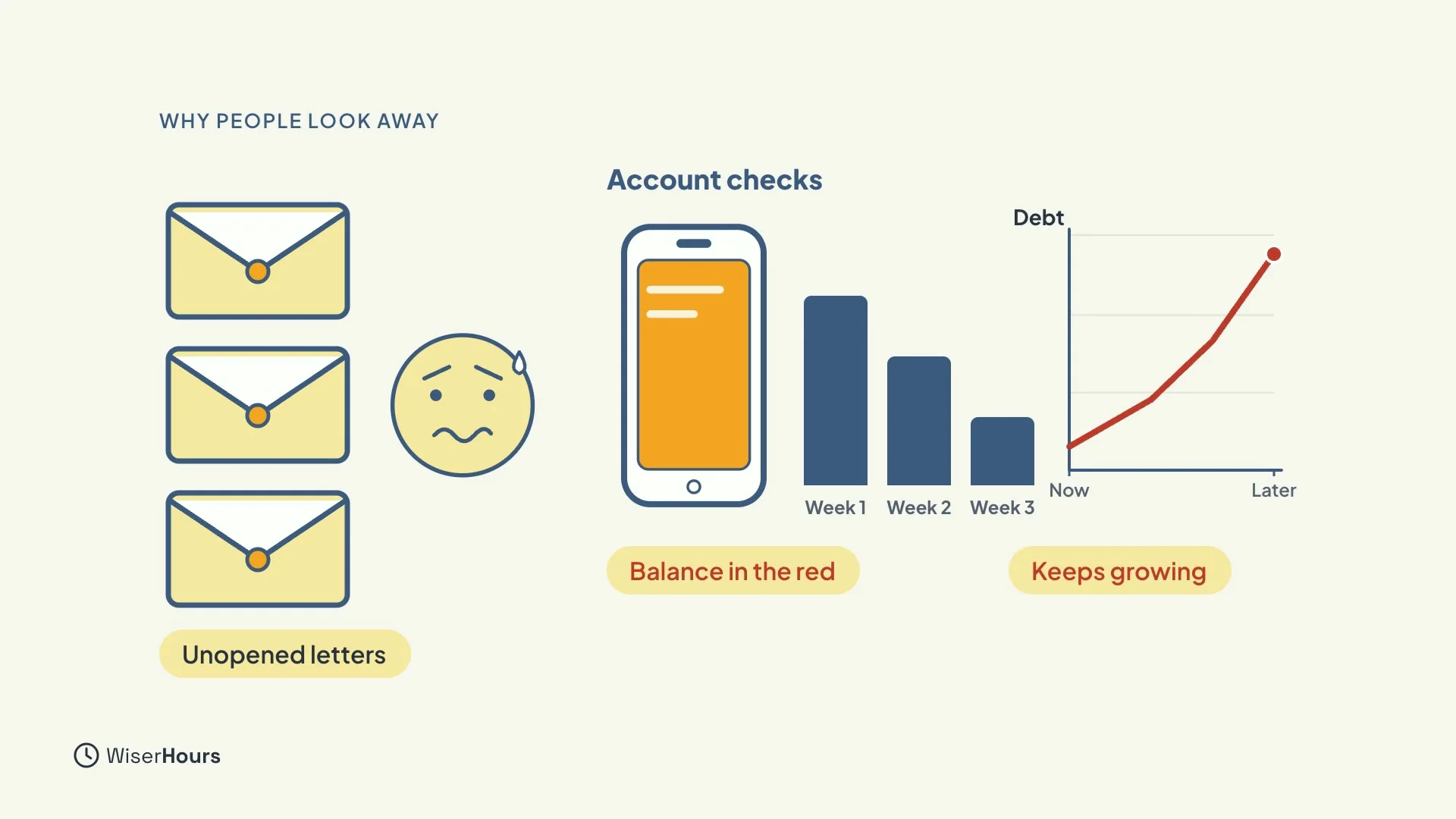
When money is tight, many people stop opening letters and checking their accounts. Researchers have seen people check their bank accounts less when they are overdrawn. It is a natural reaction, but it does not make the debt go away. Debts you do not look at keep growing.
 (opens the full-size picture)
Five columns
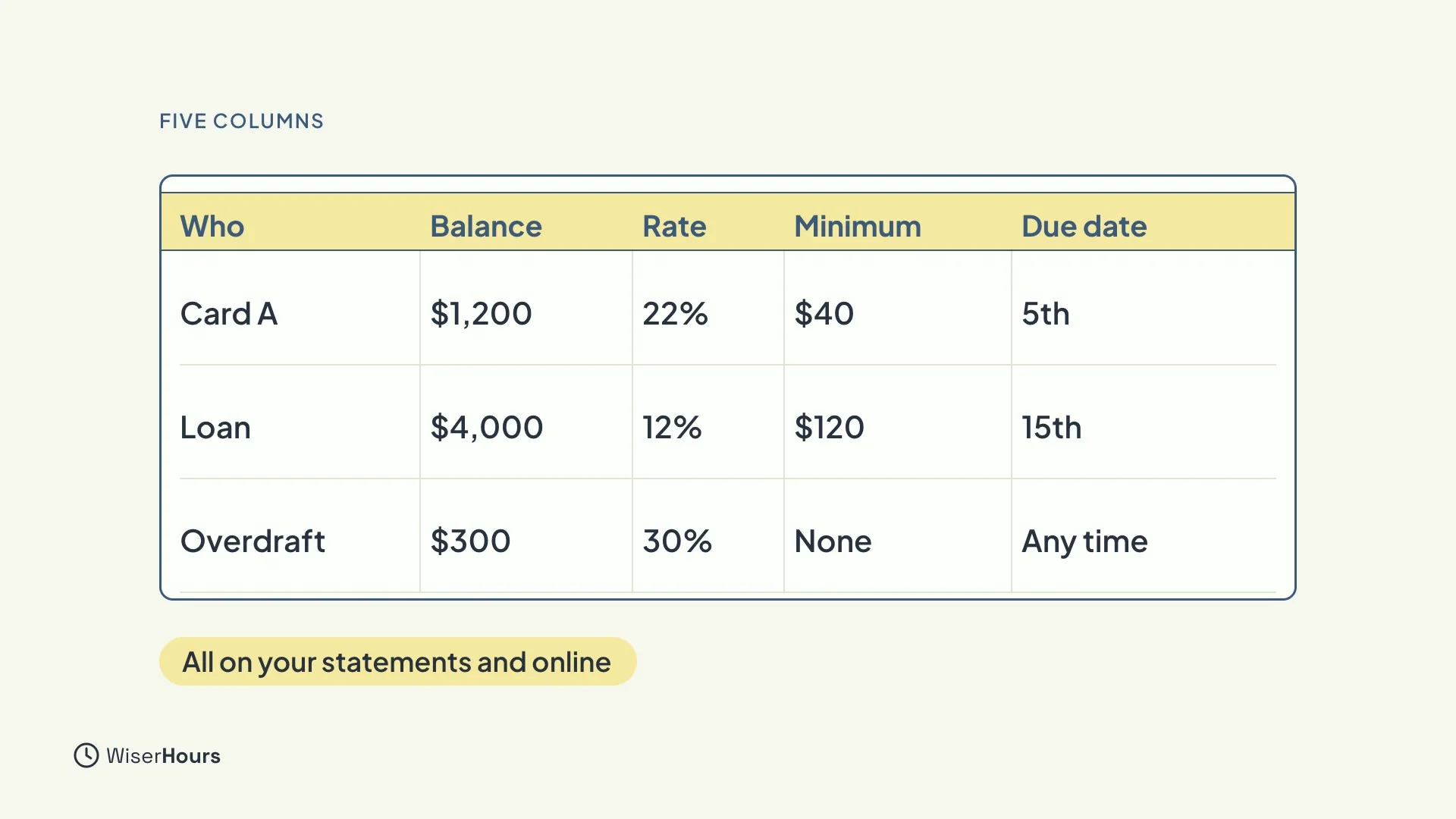
Make one list with five columns:
- Who you owe.
- How much (the balance).
- The interest rate.
- The minimum payment.
- The due date.
Your statements and your online accounts have all of these. Use a notebook, a spreadsheet or a printed page, whichever you will actually open.
 (opens the full-size picture)
Do not forget the small ones
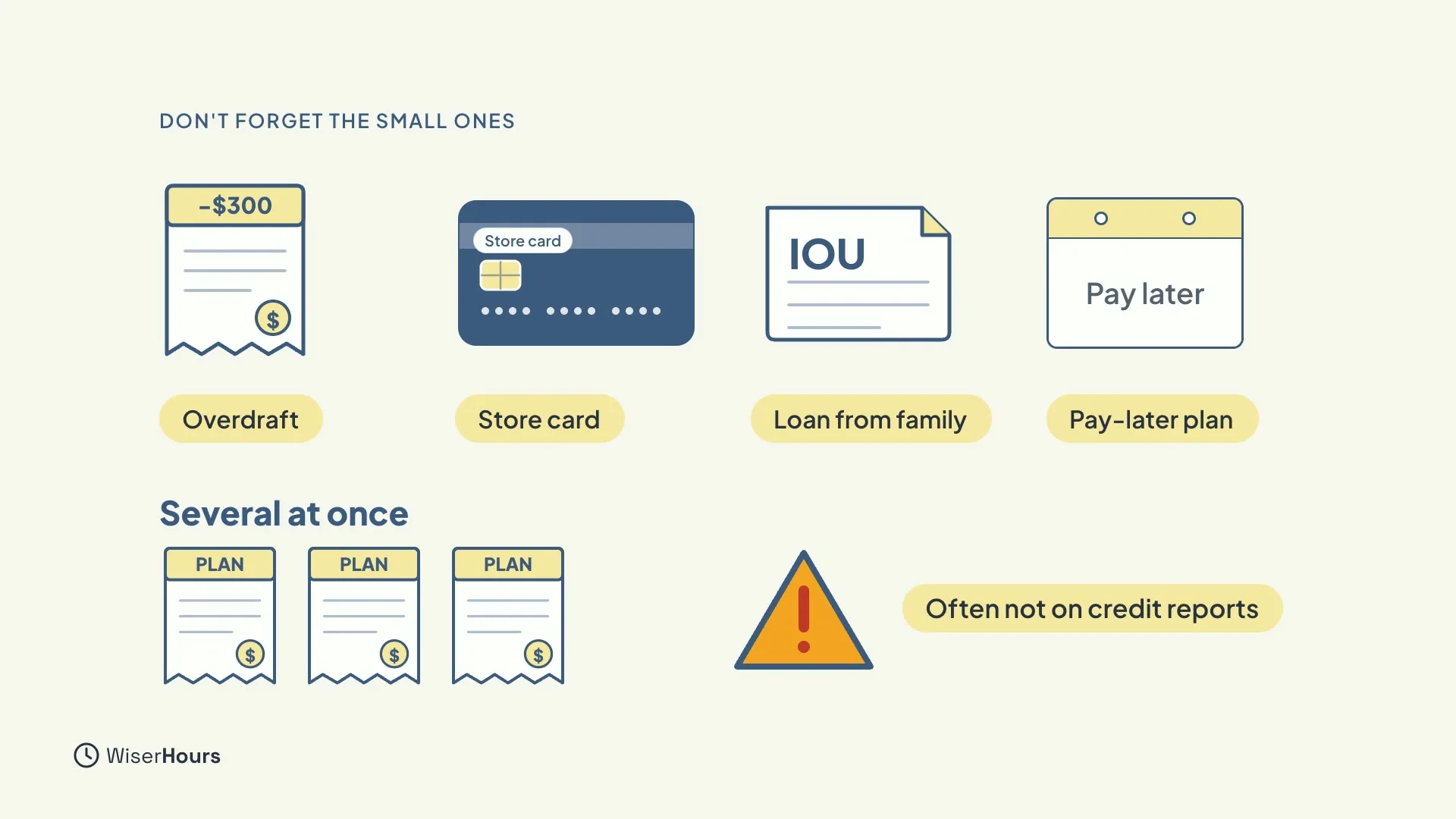
Include everything: overdrafts, store cards, loans from family and pay-later plans. Pay-later plans are easy to miss because each one looks small. In one study of US borrowers, about 6 in 10 had more than one plan open at the same time, and most of those loans did not appear on credit reports (the records lenders use to judge you).
 (opens the full-size picture)
Check your accounts, not only your post
Pay-later plans may not appear on a credit report, so look in your payment apps and online accounts as well as your letters.
Add it up
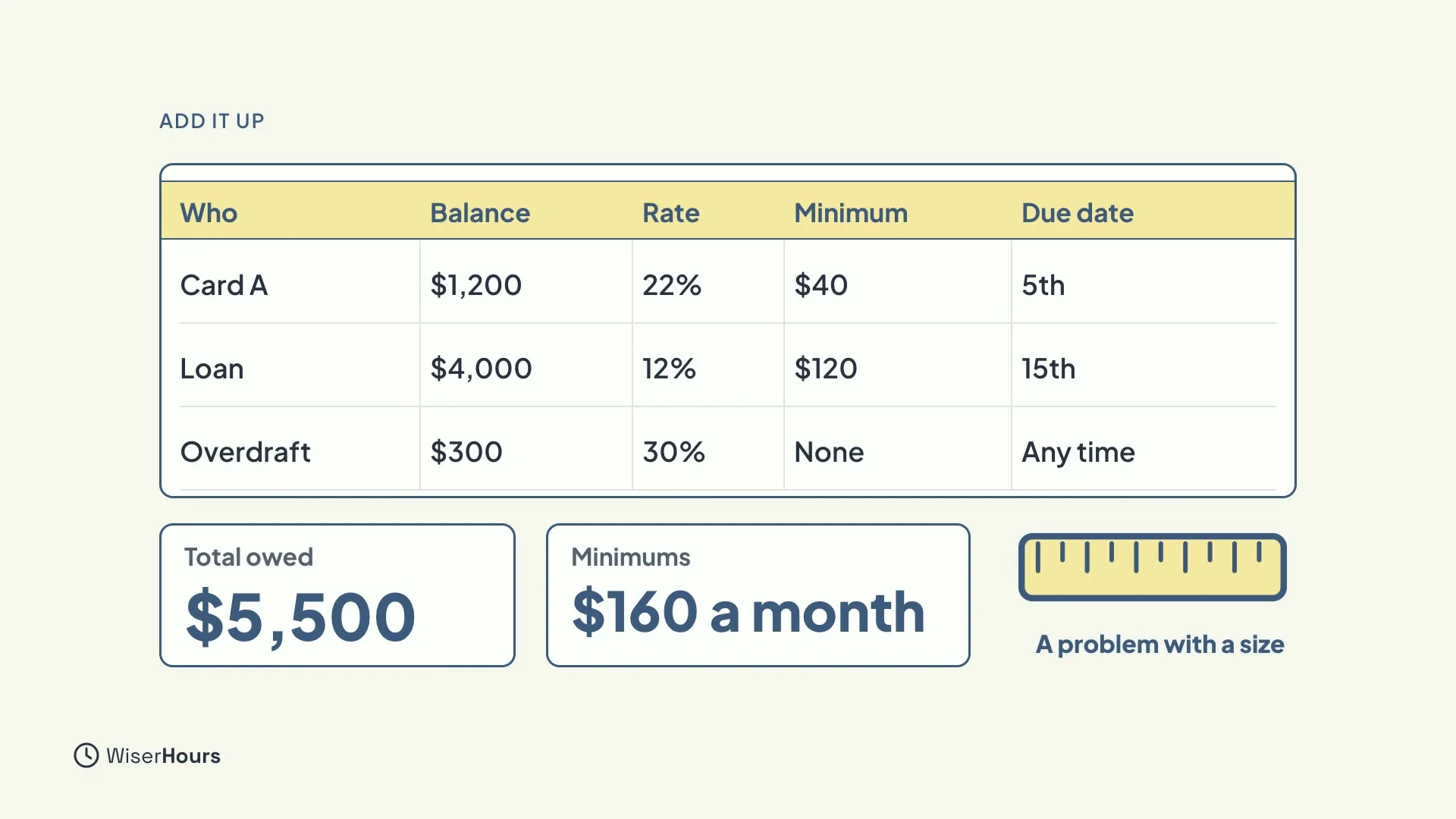
Now add up two totals: what you owe altogether, and the minimum payments altogether. In the example, that is $5,500 owed and $160 a month in minimums. The first number may feel heavy. But now it is a problem with a size, and a problem with a size can be planned for.
 (opens the full-size picture)
A weekly money check
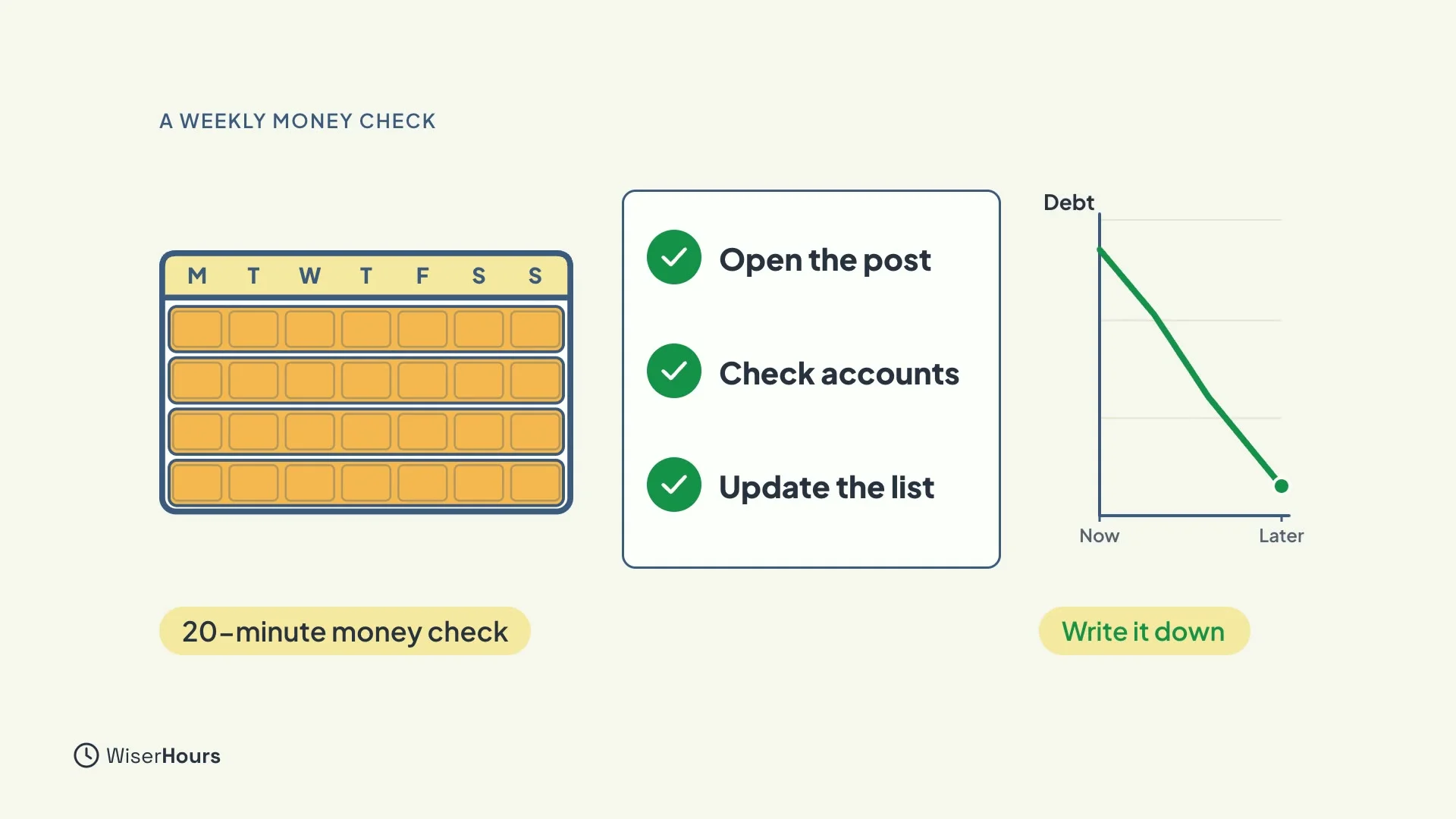
Keep the list alive with a short weekly money check. Set 20 minutes at the same time each week. Open the post, look at your accounts and update the list. A fixed slot works because you do not have to feel ready: it happens whatever the balance says. Checking progress regularly also helps people reach their goals, especially when they write it down. Most of that research is about health goals, so this is a sensible habit rather than a promise.
 (opens the full-size picture)
YOUR TURN
Read more
- How to Track Your Spending Without Losing Your Mind: why people avoid looking at money, and how a fixed check-in slot helps.
- Buy Now, Pay Later Explained: How It Works and Where the Risks Hide: how small pay-later plans stack up.
- Money Anxiety: Why It Happens, How It Shows Up, and What Helps: a weekly slot for opening the post.
Read the full lesson script
Welcome back. You can't fix what you can't see. In this lesson, you'll put every debt you have on one list, including the small ones that are easy to forget.
When money is tight, many people stop opening letters and checking their accounts. Researchers have seen people check their bank accounts less when they're overdrawn. It's a natural reaction, but debts you don't look at keep growing.
Make one list with five columns. Who you owe. How much. The interest rate. The minimum payment. And the due date. Your statements and your online accounts have all of these.
Include everything: overdrafts, store cards, loans from family, and pay-later plans. Pay-later plans are easy to miss. In one study, most users had more than one plan running at once, and many weren't on any credit report.
Then add up the totals: what you owe altogether, and the minimum payments altogether. The first number may feel heavy. But now it's a problem with a size, and a problem with a size can be planned for.
Keep the list alive with a short weekly money check. Set twenty minutes, open the post, look at your accounts, and update the list. Checking progress regularly helps people reach their goals, especially when they write it down.
So remember: debts you don't look at keep growing. Put every debt on one list, with who, how much, the rate, the minimum and the due date. And keep it alive with a short weekly money check. Before the next lesson, make your debt list with all five columns. Next, you'll find money to pay it down.
MAKE IT A SMALL WIN
Finished this lesson?
Mark it complete to save your progress on this device.