How debt works · Lesson 3 of 10
The Minimum Payment Trap and How to Escape It
See why paying only the card minimum can keep you in debt for years, and how a fixed payment above the minimum gets you out sooner.
 Video coming soon
Every card statement shows a minimum payment. It looks like a helpful number, but paying only that amount can keep you in debt for years. In this lesson you will see why, and how a fixed, higher payment changes the picture.
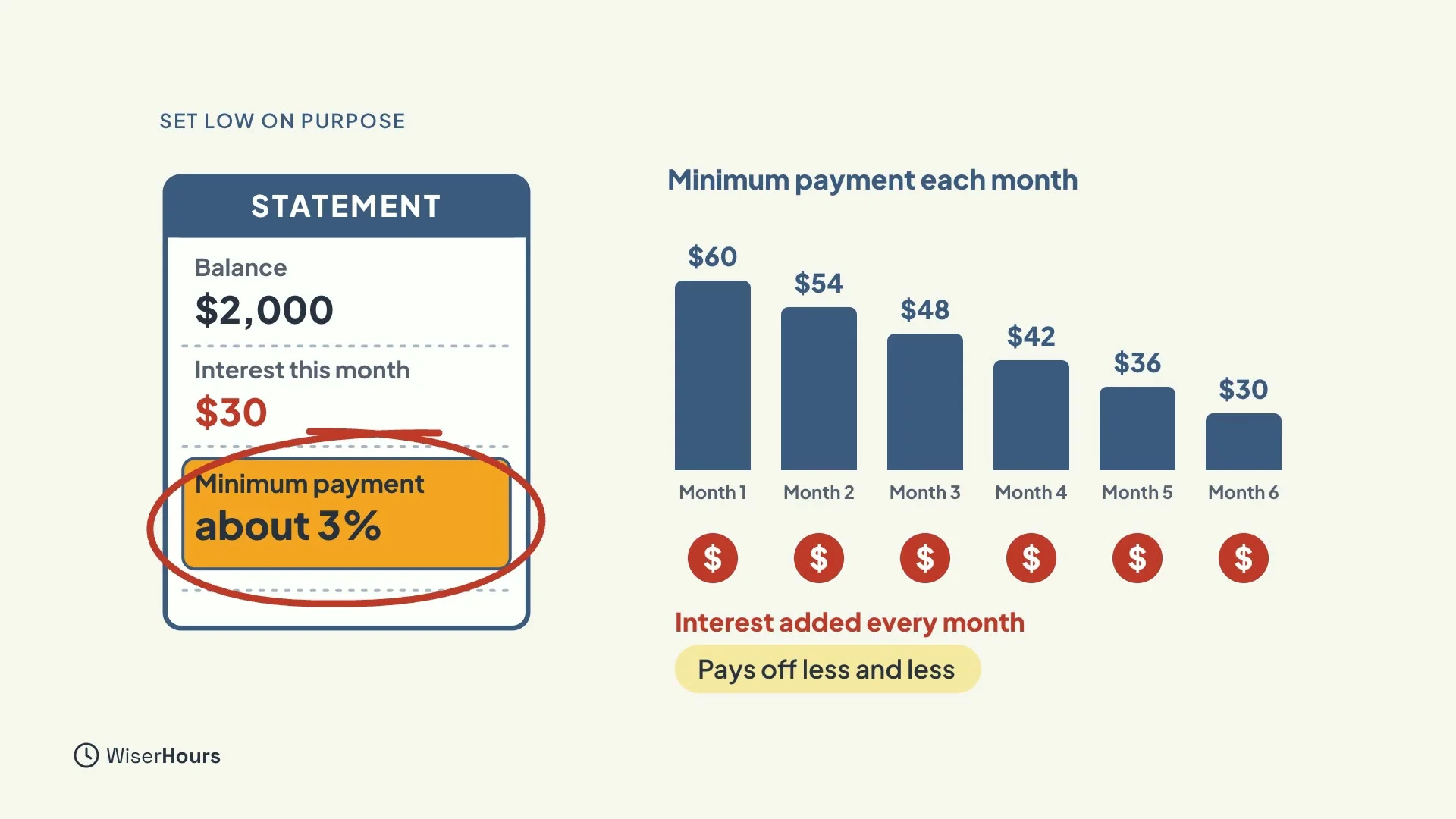
Set low on purpose
The minimum is usually a small slice of the balance, often a few percent. As the balance falls, the minimum falls too. That feels easy, but it means you pay off less and less each month, while interest keeps running.
 (opens the full-size picture)
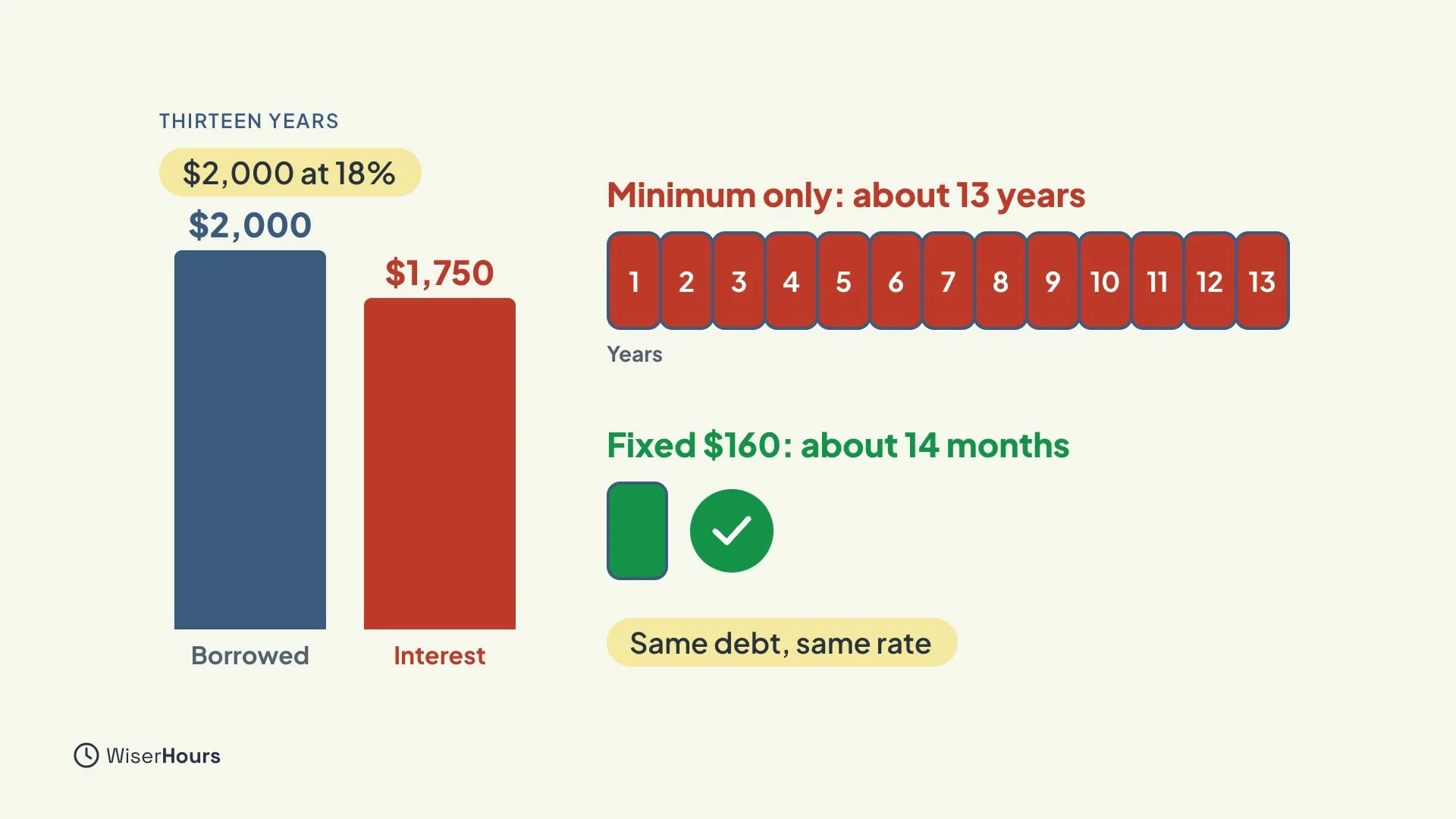
Thirteen years
Take the same $2,000 at 18%. Pay only the shrinking minimum, and it can take about 13 years to clear, with nearly as much paid in interest as you borrowed: about $1,750. A fixed payment of $160 a month clears it in about 14 months.
The minimum is not a plan. It is the smallest amount your card issuer will accept without treating you as late. Because it falls as your balance falls, it never gives interest less time to work. A fixed payment stays the same, so the balance drops faster and faster as less of each payment is needed for interest.
 (opens the full-size picture)
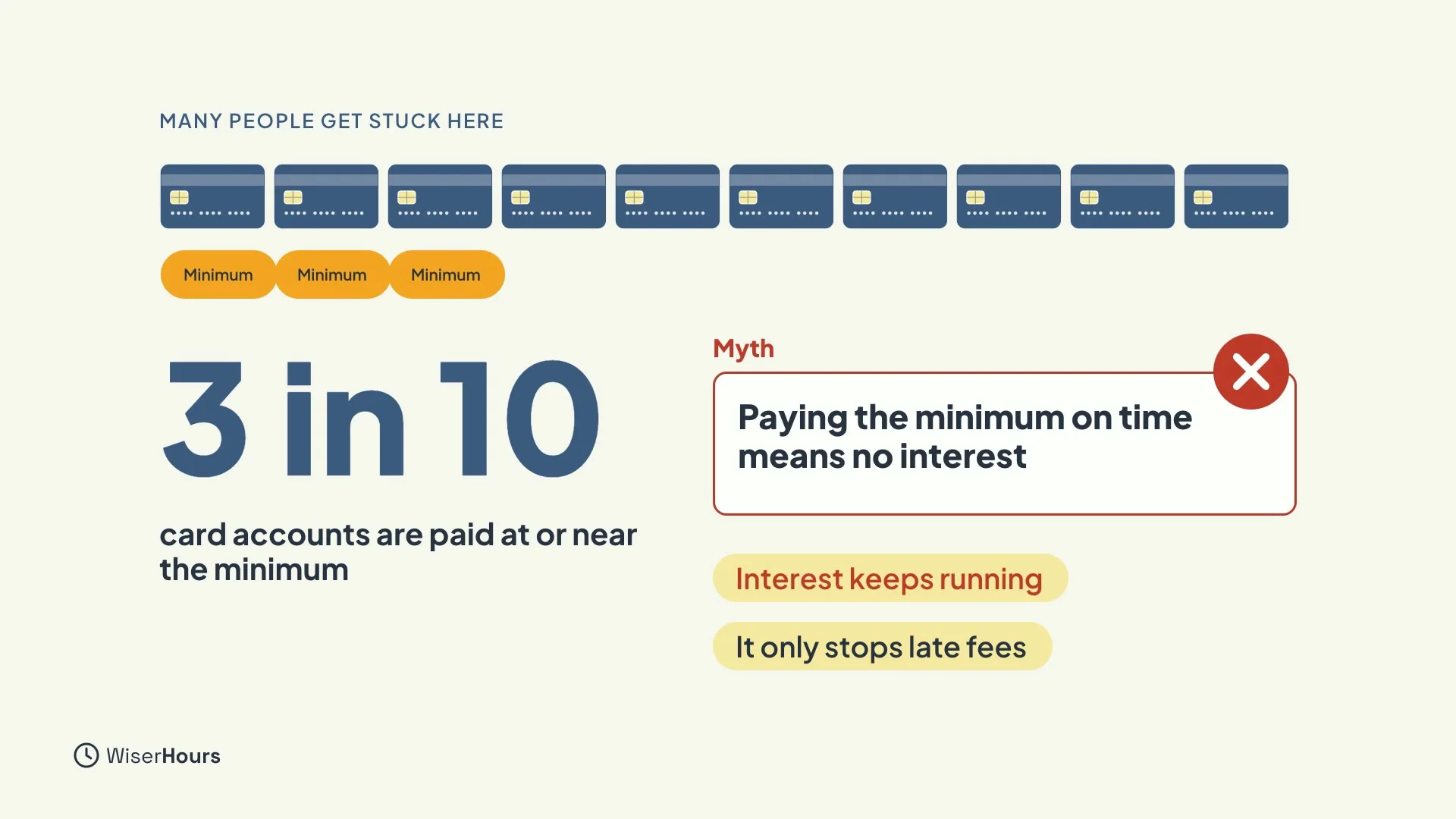
Many people get stuck here
This is not rare. In one large study of card accounts, about 3 in 10 were regularly paid at or near the minimum. And paying the minimum on time does not stop interest. It only stops late fees. If you can only manage the minimum for now, do that on time, and then use the rest of this course to find more room.
 (opens the full-size picture)
Pay in full where you can
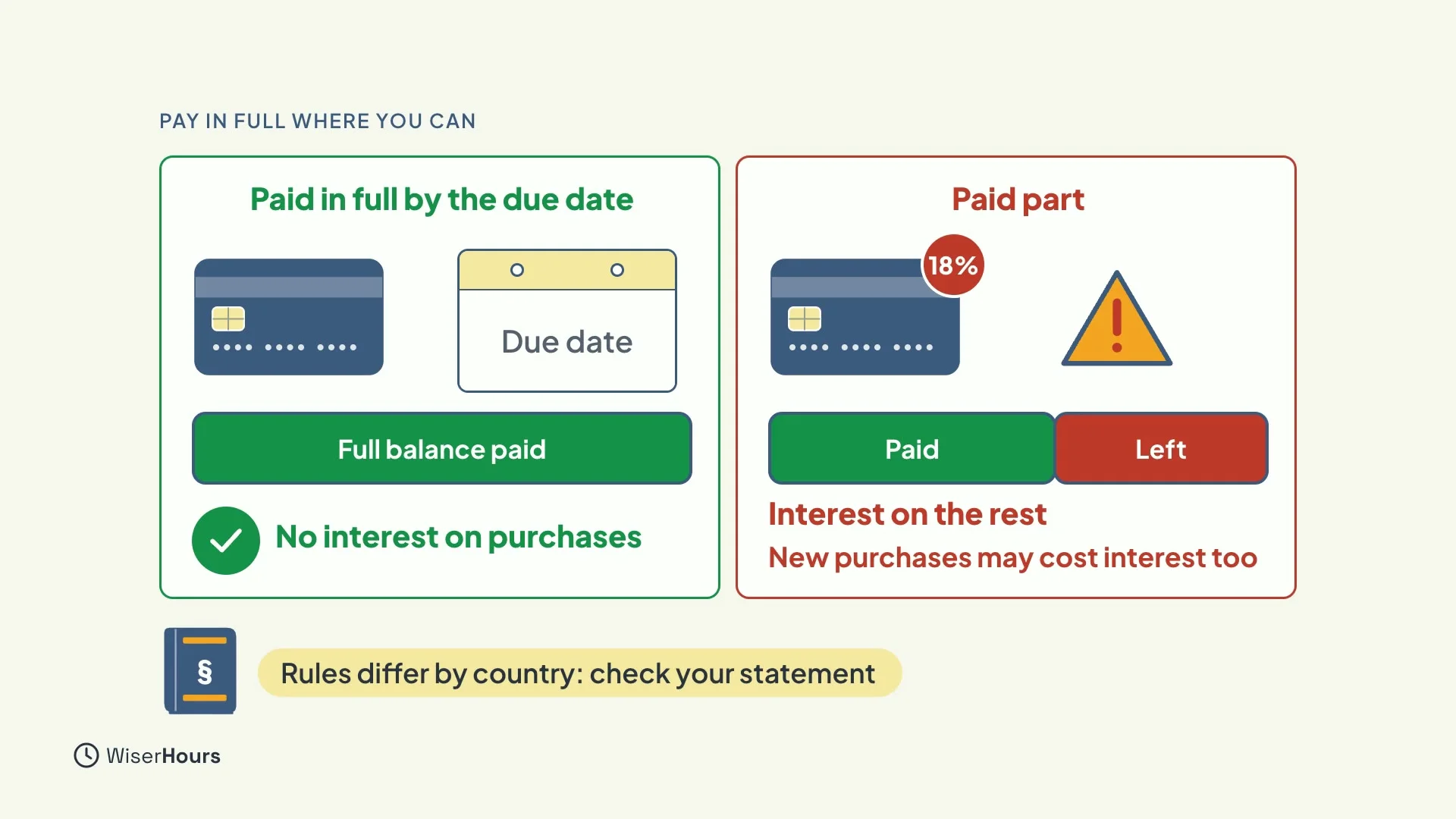
On most credit cards, if you pay the full statement balance by the due date, new purchases cost no interest. Pay less than that, and interest falls on what is left, and new purchases may start costing interest straight away.
Rules differ by country
Some card issuers do not offer an interest-free period at all. Check your own statement and your card terms to see how yours works.
 (opens the full-size picture)
Fix a payment above the minimum
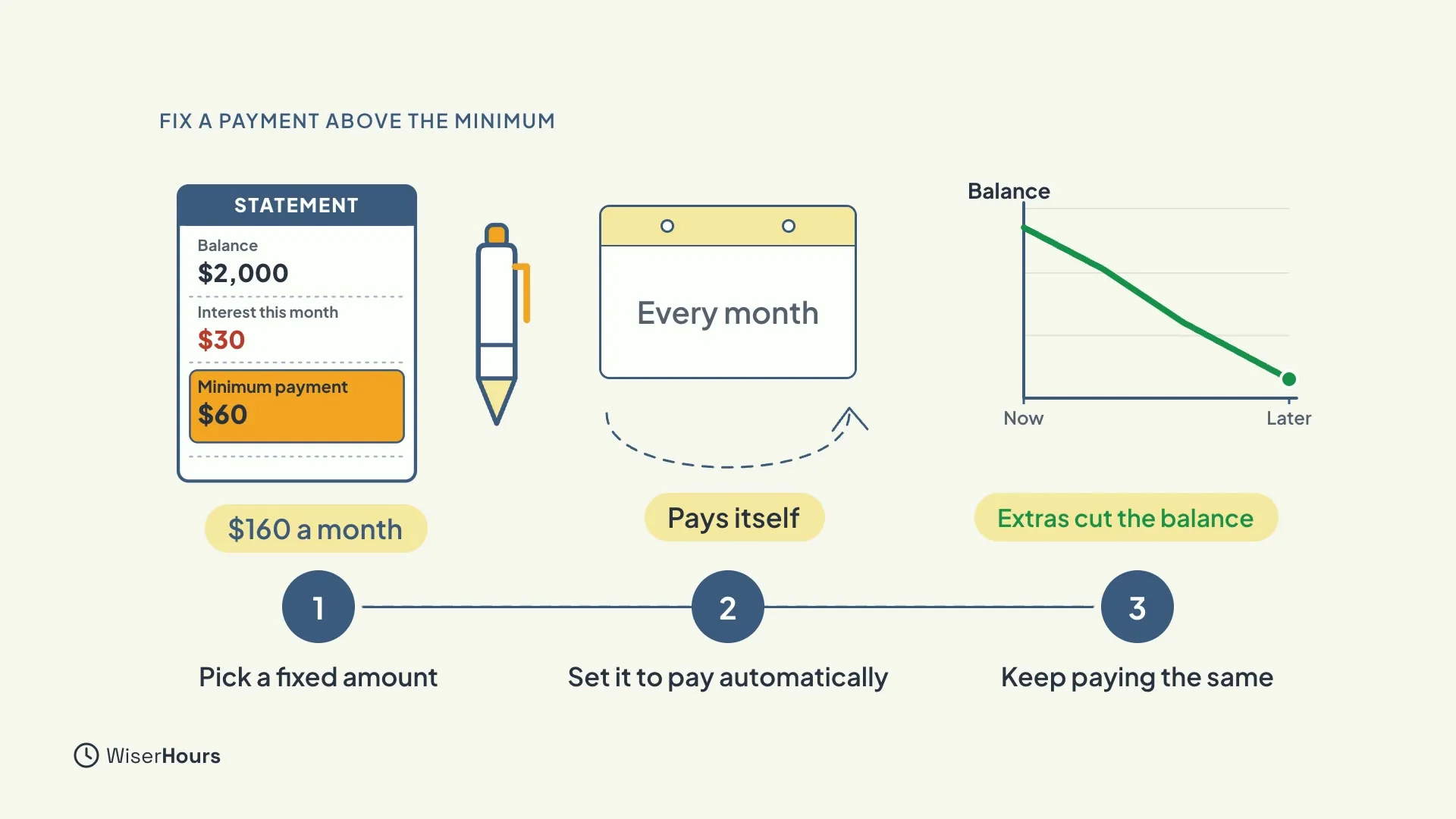
So pick a fixed amount above the minimum, one you can keep up every month, and set it as an automatic payment. As the minimum falls, keep paying the same amount. Every extra dollar goes straight to the balance.
 (opens the full-size picture)
YOUR TURN
Read more
- How Debt Works: Principal, Interest, and Why Time Matters So Much: how minimum payments stretch the time a debt takes to clear.
Read the full lesson script
Welcome back. Every card statement shows a minimum payment. In this lesson, you'll see why paying only that amount can keep you in debt for years, and how a fixed, higher payment gets you out.
The minimum is usually a small slice of the balance, often a few percent. As the balance falls, the minimum falls too. That feels easy, but it means you pay off less and less each month, while interest keeps running.
Take that same two thousand dollars at eighteen percent. Pay only the shrinking minimum, and it can take about thirteen years to clear, with nearly as much paid in interest as you borrowed. A fixed payment of a hundred and sixty dollars clears it in about fourteen months.
This isn't rare. In one large study of card accounts, about three in ten were regularly paid at or near the minimum. And paying the minimum on time does not stop interest. It only stops the late fees.
On most credit cards, if you pay the full statement balance by the due date, new purchases cost no interest. Pay less than that, and interest falls on what's left, and new purchases may start costing interest straight away. Rules differ by country, so check your statement.
So pick a fixed amount above the minimum, one you can keep up every month, and set it as an automatic payment. As the minimum falls, keep paying the same amount. Every extra dollar goes straight to the balance.
So remember: the minimum shrinks as you pay, so it keeps you in debt for years. Paying the minimum on time doesn't stop interest. And a fixed payment above the minimum is the way out. Before the next lesson, find the minimum and the full balance on your next statement, and choose a fixed amount above the minimum. Next, you'll list every debt you have.
MAKE IT A SMALL WIN
Finished this lesson?
Mark it complete to save your progress on this device.