Beginner · Job Search, Resume & Interviews
How to Find a Job
Run your job search like a steady weekly plan. Short lessons, plain words and one step you can use the same day.
Course complete. You have finished every lesson.
What you’ll learn
- How a job search really works, and why a weekly plan beats sending more applications
- How to tell people you're looking, and where to find jobs without falling for fake ads
- How to write a CV summary with proof, explain a gap and write a short cover letter
- How to prepare for an interview from the job ad
- How to answer "tell me about yourself" and tell short STAR stories
This course is for anyone looking for a job: after studies, after a break, after a layoff or while still in work. You don’t need a perfect CV to start. Each lesson takes about two and a half minutes and teaches one step, with simple pictures and plain words.
Lessons
Chapter 1: Plan your search
How a job search really works, your target and your weekly plan.
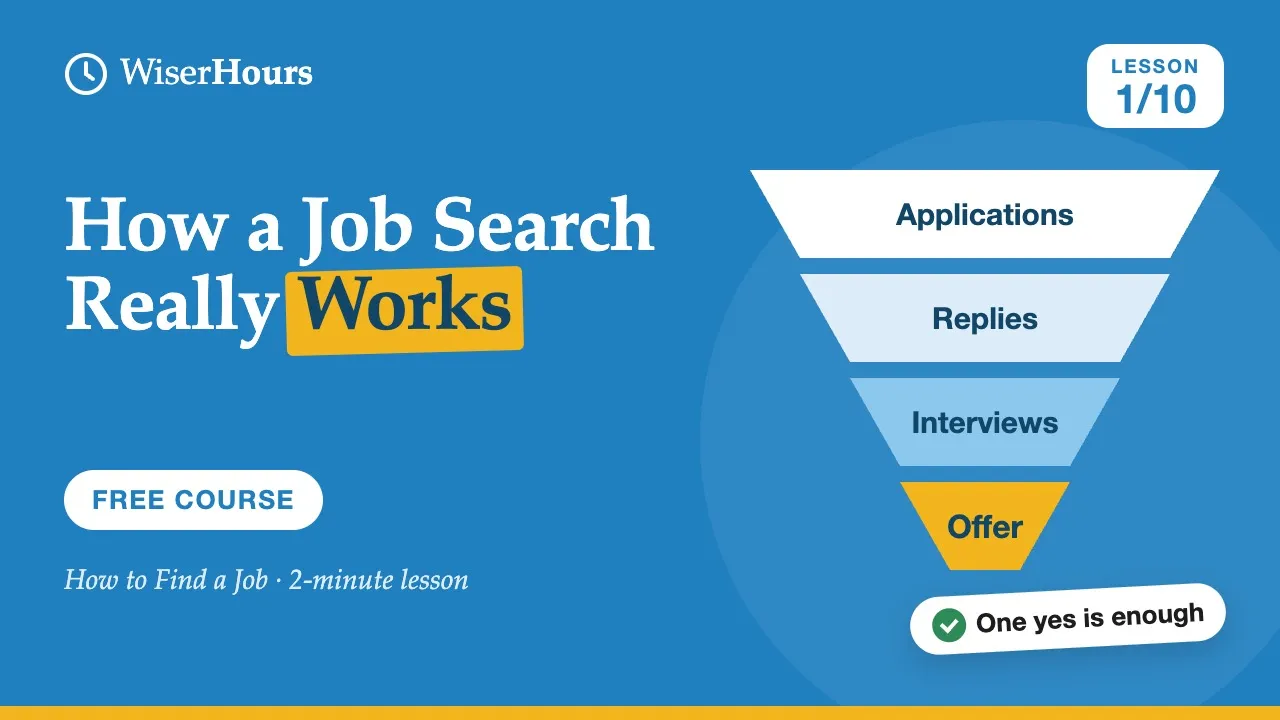
- Lesson 1 How a Job Search Really Works: Months, Replies and a Plan Learn how long a job search usually takes, why most applications get no reply, and why skills plus motivation beat sending more. Completed.
- Lesson 2 Your Target and Weekly Job Search Plan Write a clear job target, widen it by one related job, and set a weekly plan with numbers and a simple application log. Completed.
Chapter 2: Find openings
Telling people you're looking, job boards and fake job ads.
- Lesson 3 Tell People You're Looking: Use Your Network See why the people you know are a strong way into a job, whom to list, and how to send a small, clear ask. Completed.
- Lesson 4 Where to Find Jobs and How to Spot a Fake Job Ad Choose three kinds of job board, apply on the employer's own page, and learn the warning signs of a fake job ad. Completed.
Chapter 3: Your application
A CV summary with proof, a work gap and a cover letter that gets read.
- Lesson 5 Your CV Summary: Proof, Not Nice Words Write a short CV summary with a job title, two strengths and one proven result, and learn what hiring software really does. Completed.
- Lesson 6 How to Explain a Gap in Your Work History Learn when a gap in your work history matters, how to show it honestly on your CV and profile, and how to answer in an interview. Completed.
- Lesson 7 A Cover Letter That Gets Read Write a short four-part cover letter, know when a letter is worth sending, and adapt one letter to each job instead of starting over. Completed.
Chapter 4: Interviews
Preparing from the job ad, tell me about yourself, and STAR stories.
- Lesson 8 Prepare for an Interview From the Job Ad Turn a job ad into four to six requirements, match each to a true story, and practise out loud with feedback before the interview. Completed.
- Lesson 9 Tell Me About Yourself: A Simple Answer Answer the first question of almost every interview with a simple present, past, future formula that runs 60 to 90 seconds. Completed.
- Lesson 10 STAR Stories and How to Keep Your Search Going Answer tell-me-about-a-time questions with one true STAR story, then keep a steady weekly rhythm until your search works. Completed.
About this course
Every lesson comes in two forms with the same content: a short video with English captions, and a written page with pictures, a “Try it” step and the full transcript. Follow the lessons in order, or jump to the step you need.
What you need: a few hours a week for your search, and a notebook or your phone’s notes for the Try it steps.
The lessons draw on our guides to starting a job search, cover letters, interview preparation and the STAR method, plus published research on hiring. This course is general information: hiring rules and customs differ by country and by employer.
Good questions
Answers, plainly
How long does the course take?
10 lessons, about 25 minutes in all. Most lessons take about 2 minutes, so one fits into a short break. Take them in order, or jump to the one you need.
Do I need to sign up or pay?
No. Every lesson is free and open, with no account and no email address. Your progress ticks are saved in your own browser only.
Can I watch it instead of reading?
Yes. Every lesson has a short video and a written page with pictures, so you can watch, read, or both.
Who is it for?
Complete beginners, anywhere in the world. Plain words, round example numbers and no background needed.