Plan your search · Lesson 2 of 10
Your Target and Weekly Job Search Plan
Write a clear job target, widen it by one related job, and set a weekly plan with numbers and a simple application log.

English captions available in the player. Prefer reading? Follow the written lesson below.
A search without a target or a schedule turns into a blur of tabs and forms. This lesson gives you two small pieces of paper that keep it moving: a target and a weekly plan.
Write your target
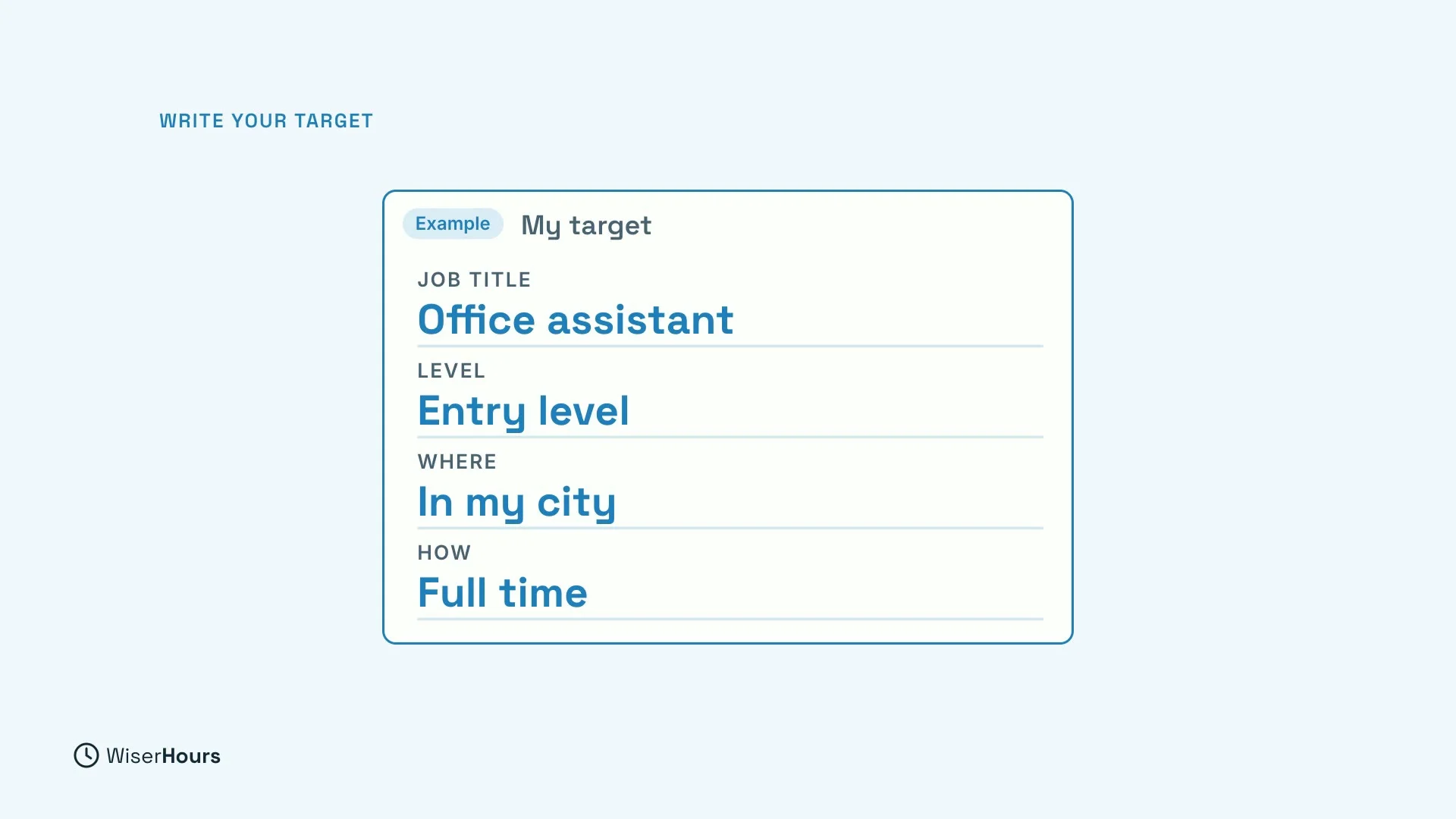
Start by writing down the job you want: the job title, the level, and where and how you want to work. For example: office assistant, entry level, in my city, full time. Four short lines are enough.
 (opens the full-size picture)
Widen it one notch
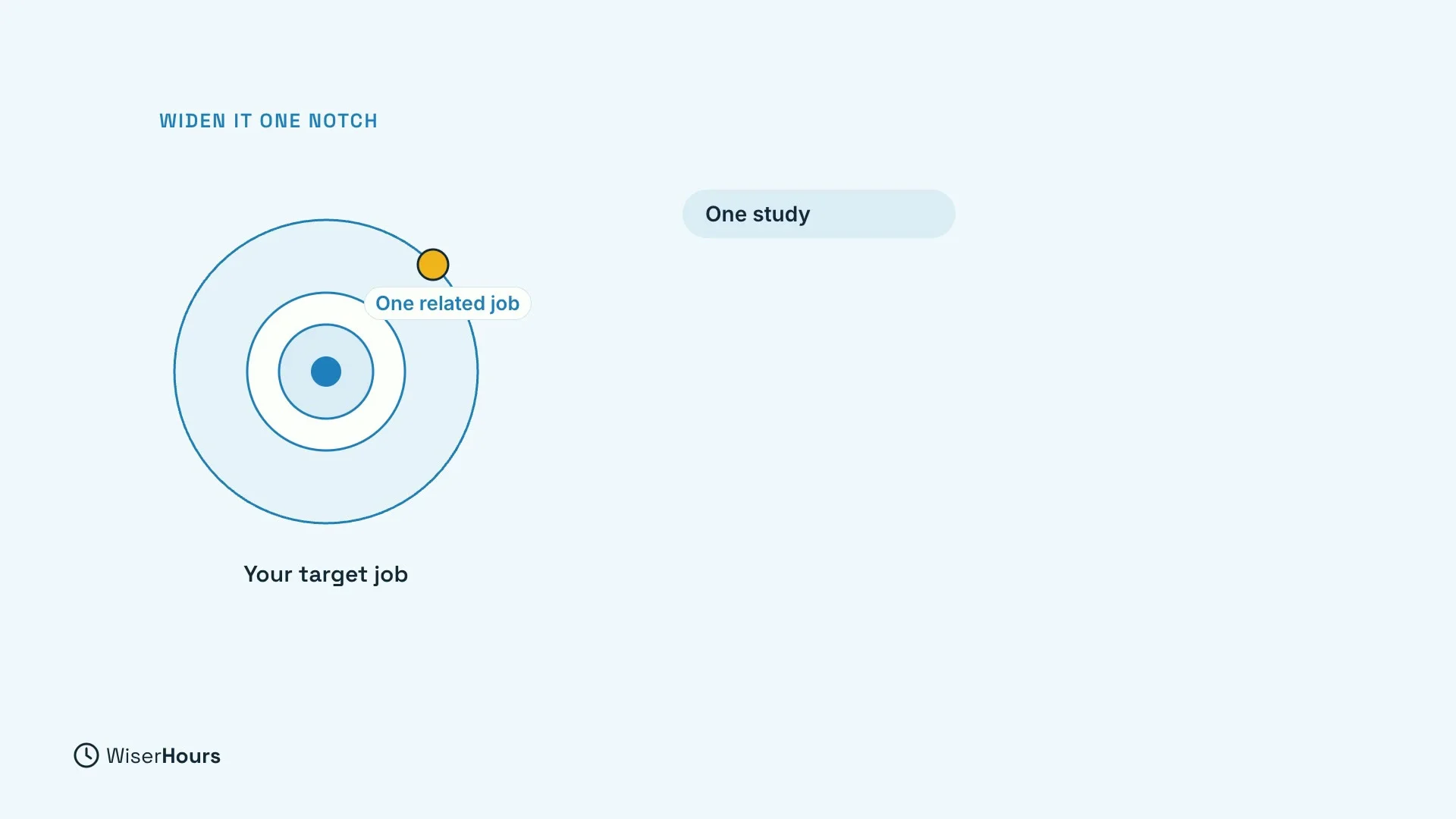
Then add one related job that uses similar skills. In one study, people who were shown related jobs searched more widely and reported more interviews. The gain came mostly from people who had been searching very narrowly. If you have been looking for only one exact title, this step may matter most for you.
 (opens the full-size picture)
A plan with numbers
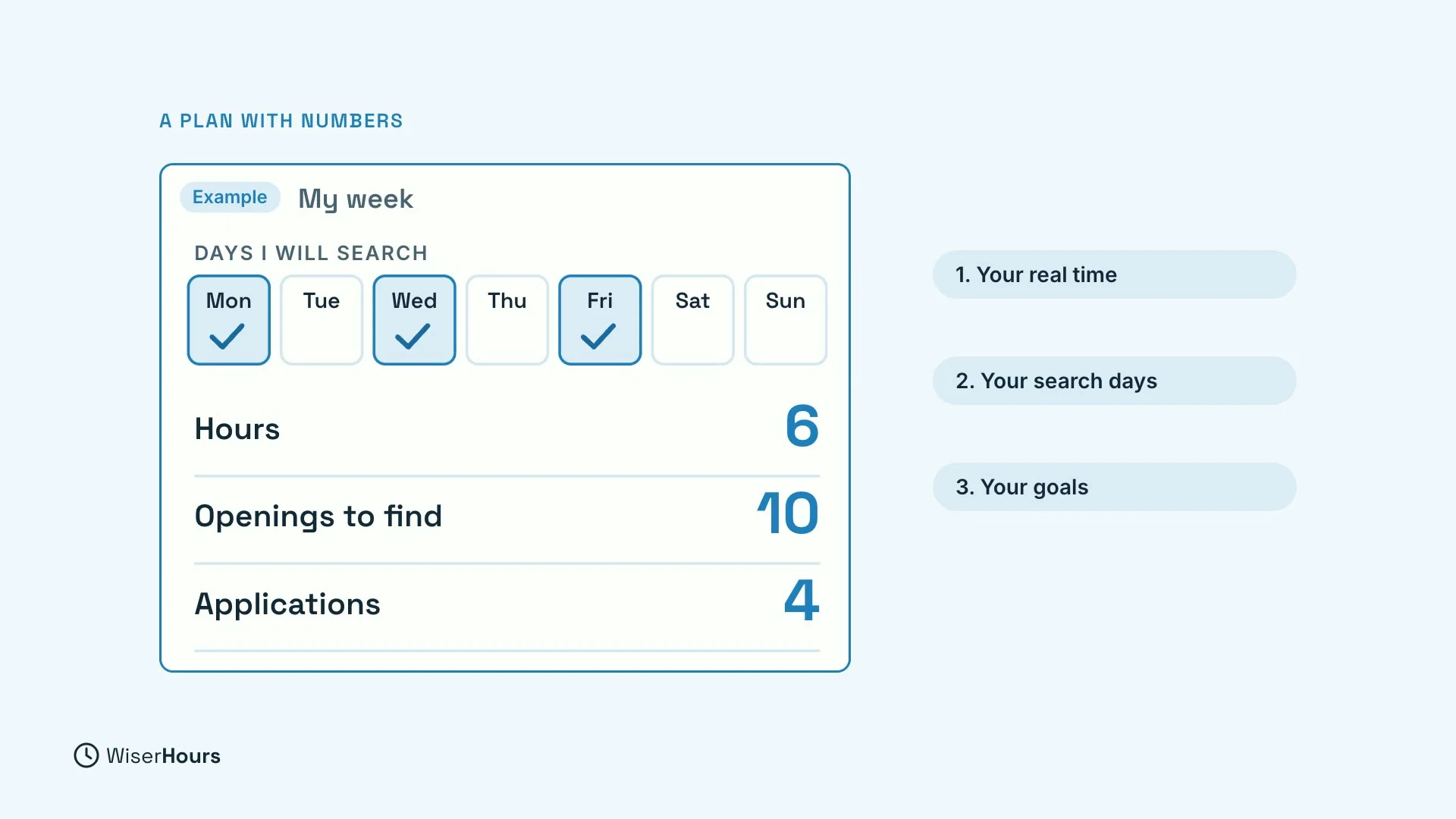
Next, write a weekly plan with numbers in it. Start from the time you really have. Then pick the days you will search and set goals: how many hours, how many openings to find and how many applications to send. The example below uses three search days, 6 hours, 10 openings to find and 4 applications. Your numbers will differ.
 (opens the full-size picture)
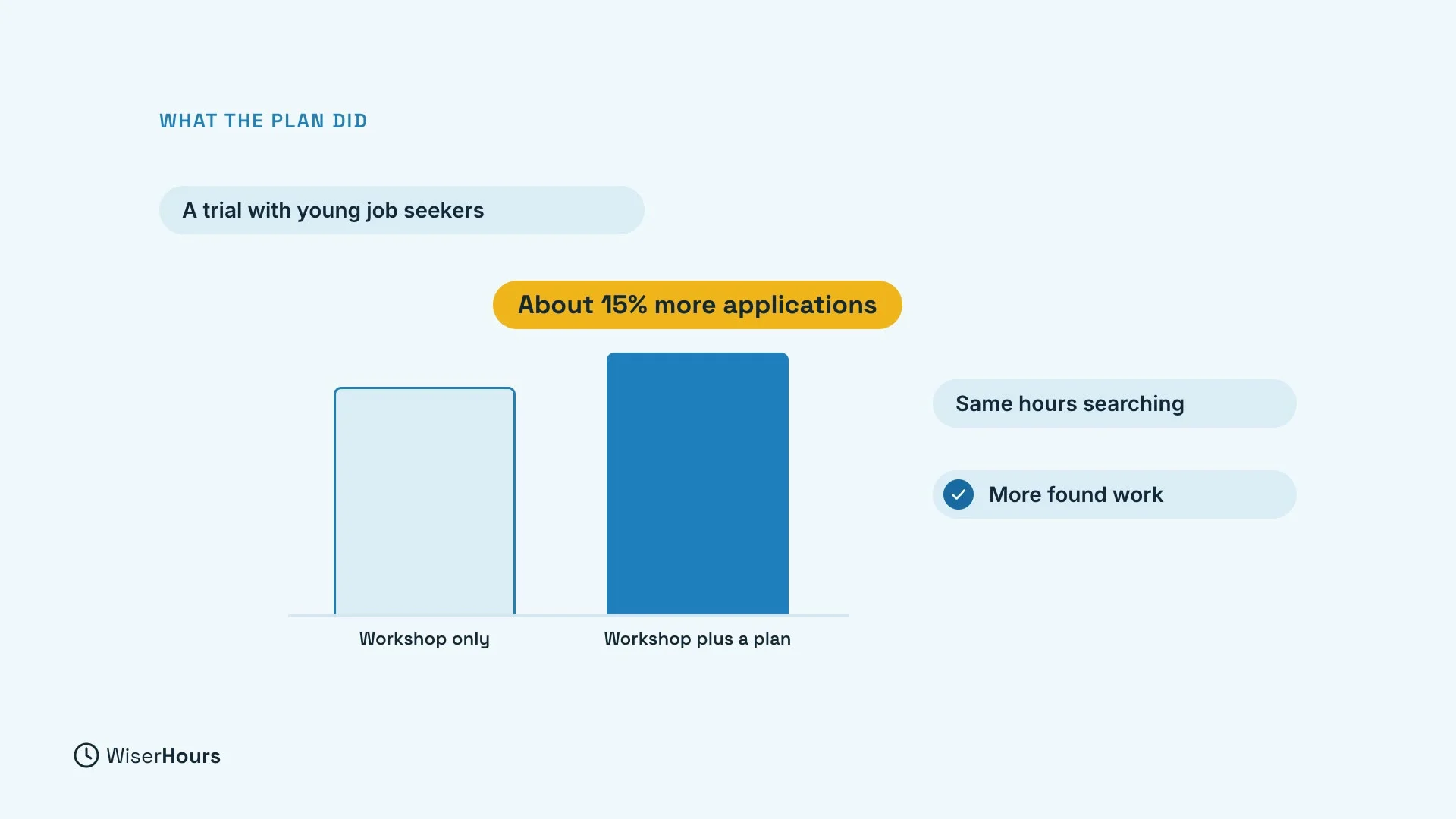
In a trial with young job seekers in South Africa, people who wrote this kind of plan sent about 15% more applications without spending more hours searching. A few weeks later, more of them had found work. It was one trial, so treat it as encouraging rather than a promise.
 (opens the full-size picture)
Log every application
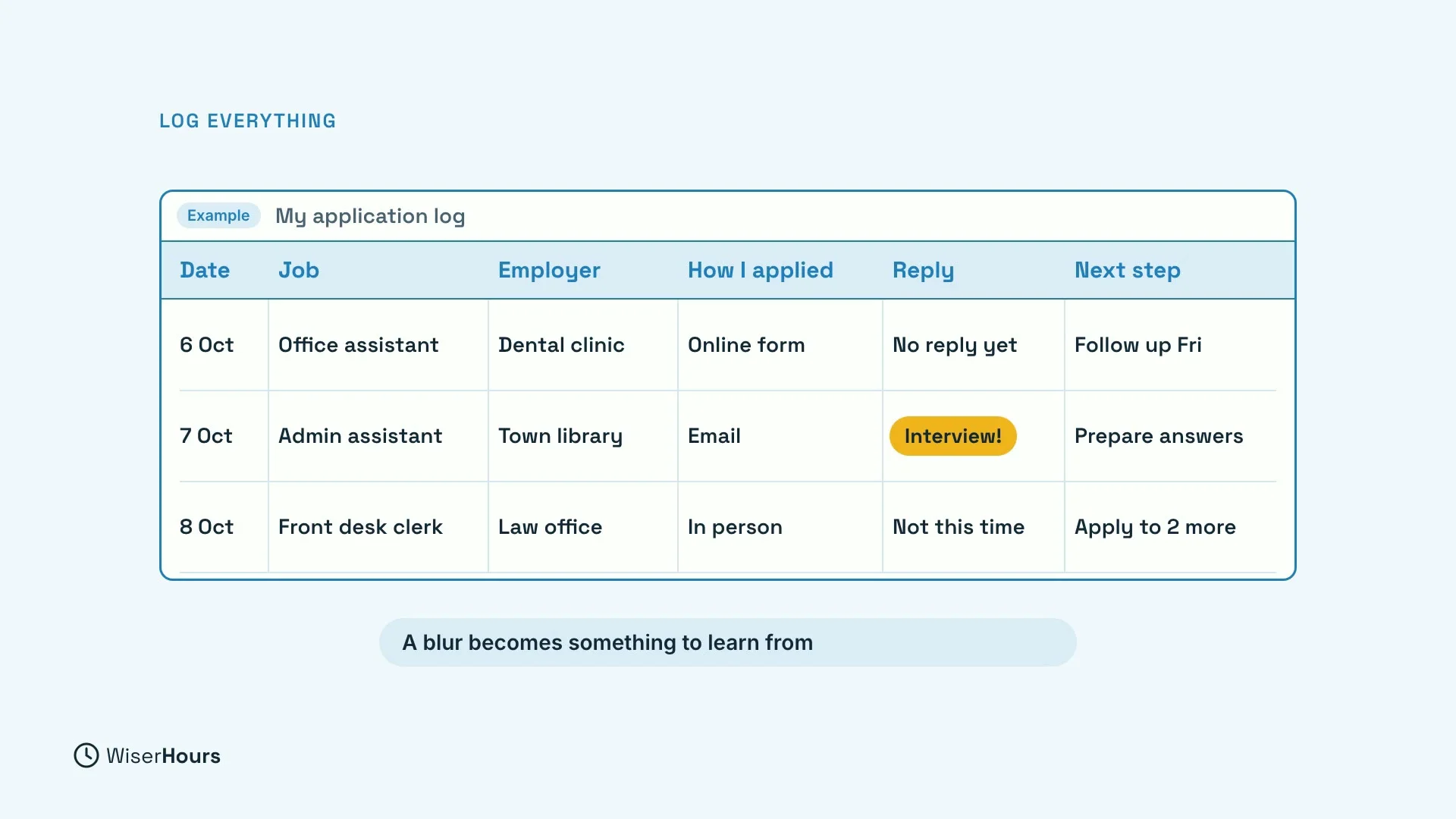
Keep a simple log of every application: the date, the job, the employer, how you applied, the reply and your next step. It turns a blur of applications into something you can learn from.
 (opens the full-size picture)
Review once a week
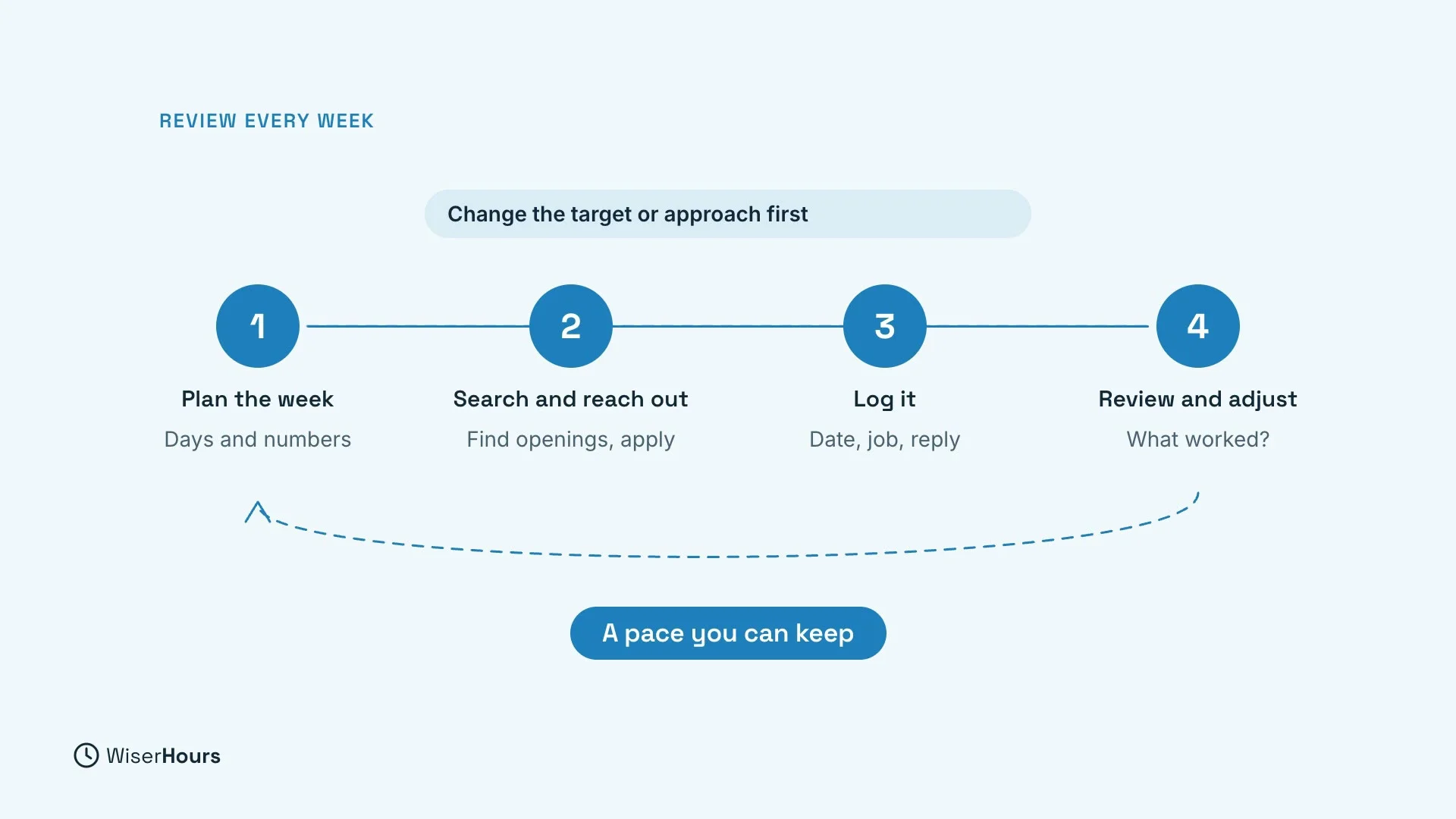
Once a week, sit down with your log and your plan. What worked? What went nowhere? Change the target or the approach before you simply send more. And choose a pace you can keep for months, not just for one busy week.
 (opens the full-size picture)
YOUR TURN
Read more
- How to Start a Job Search: A Step-by-Step Plan: turns this lesson into a full starting plan.
- Best Job Boards Compared: where your openings will come from.
Read the full video transcript
In this lesson, you will go from needing a job to having a clear target and a simple weekly plan. Two small pieces of paper that keep a search moving.
Start by writing down the job you want. The job title, the level, and where and how you want to work. For example, office assistant, entry level, in my city, full time.
Then add one related job that uses similar skills. In one study, people who were shown related jobs searched more widely and reported more interviews.
The gain came mostly from people who had been searching very narrowly.
Next, write a weekly plan with numbers in it. Start from the time you really have. Then pick the days you will search and set goals. How many hours, how many openings to find, and how many applications to send.
In a trial with young job seekers in South Africa, people who wrote this kind of plan sent about 15% more applications without spending more hours searching. And a few weeks later, more of them had found work.
Keep a simple log of every application. The date, the job, the employer, how you applied, the reply, and your next step. It turns a blur of applications into something you can learn from.
Once a week, sit down with your log and your plan. What worked? What went nowhere? Change the target or the approach before you simply send more. And choose a pace you can keep for months, not just for one busy week.
So, write a target and widen it one notch. Make a weekly plan with numbers in it. And log and review every week.
Before the next lesson, write this week's plan with three numbers in it. Next, you will tell people you are looking, and see who helps most.
MAKE IT A SMALL WIN
Finished this lesson?
Mark it complete to save your progress on this device.