Interviews · Lesson 10 of 10
STAR Stories and How to Keep Your Search Going
Answer tell-me-about-a-time questions with one true STAR story, then keep a steady weekly rhythm until your search works.
English captions available in the player. Prefer reading? Follow the written lesson below.
This last lesson covers the “Tell me about a time” questions, and how to keep your search going until it works. One short, true story is the tool for the first, and a steady weekly rhythm is the tool for the second.
Most answers miss
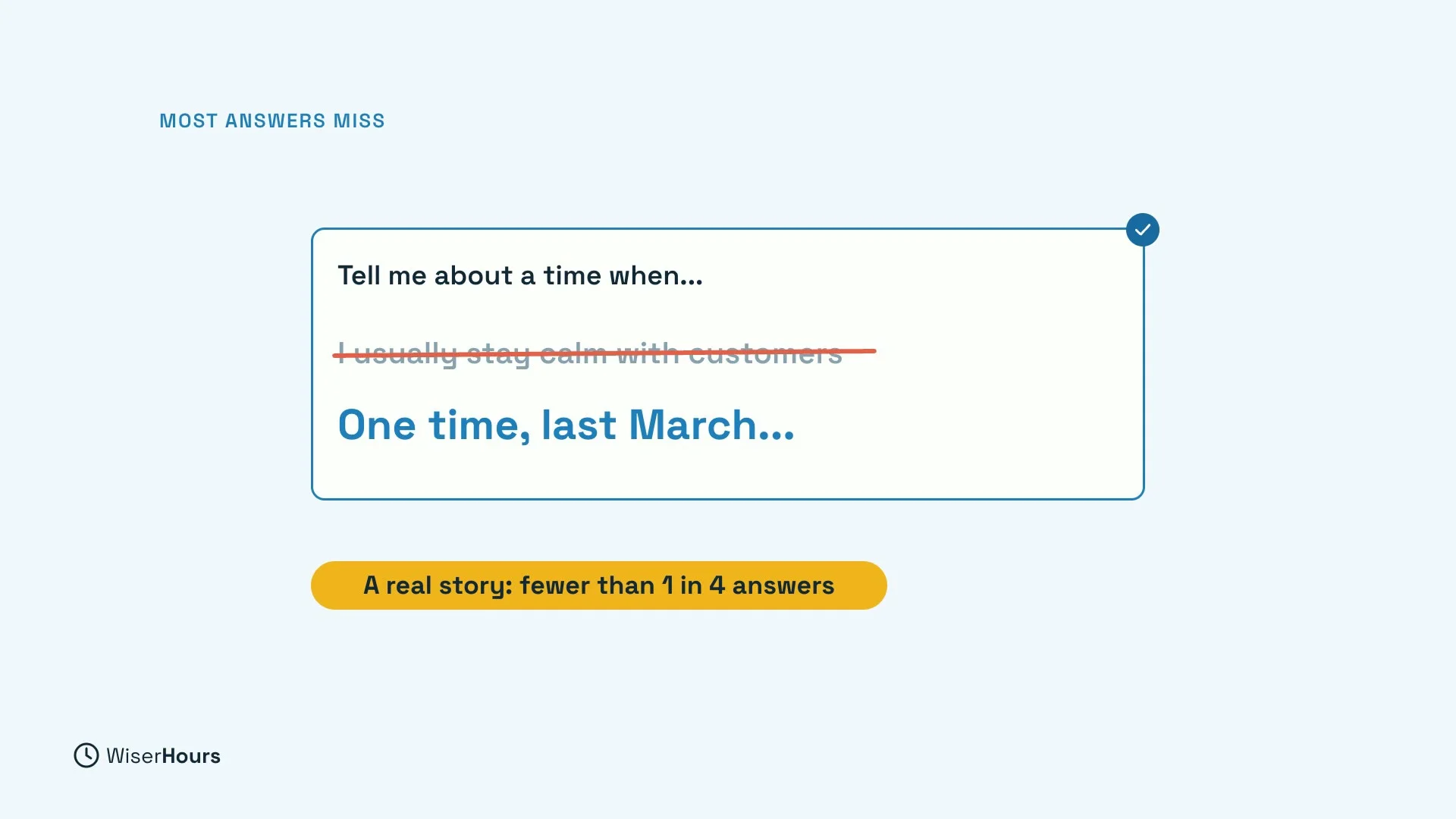
Interviewers often ask “Tell me about a time when…” Most people answer with a summary of what they usually do. In real interviews that researchers studied, applicants told an actual story less than one time in four.
 (opens the full-size picture)
Pick your best example
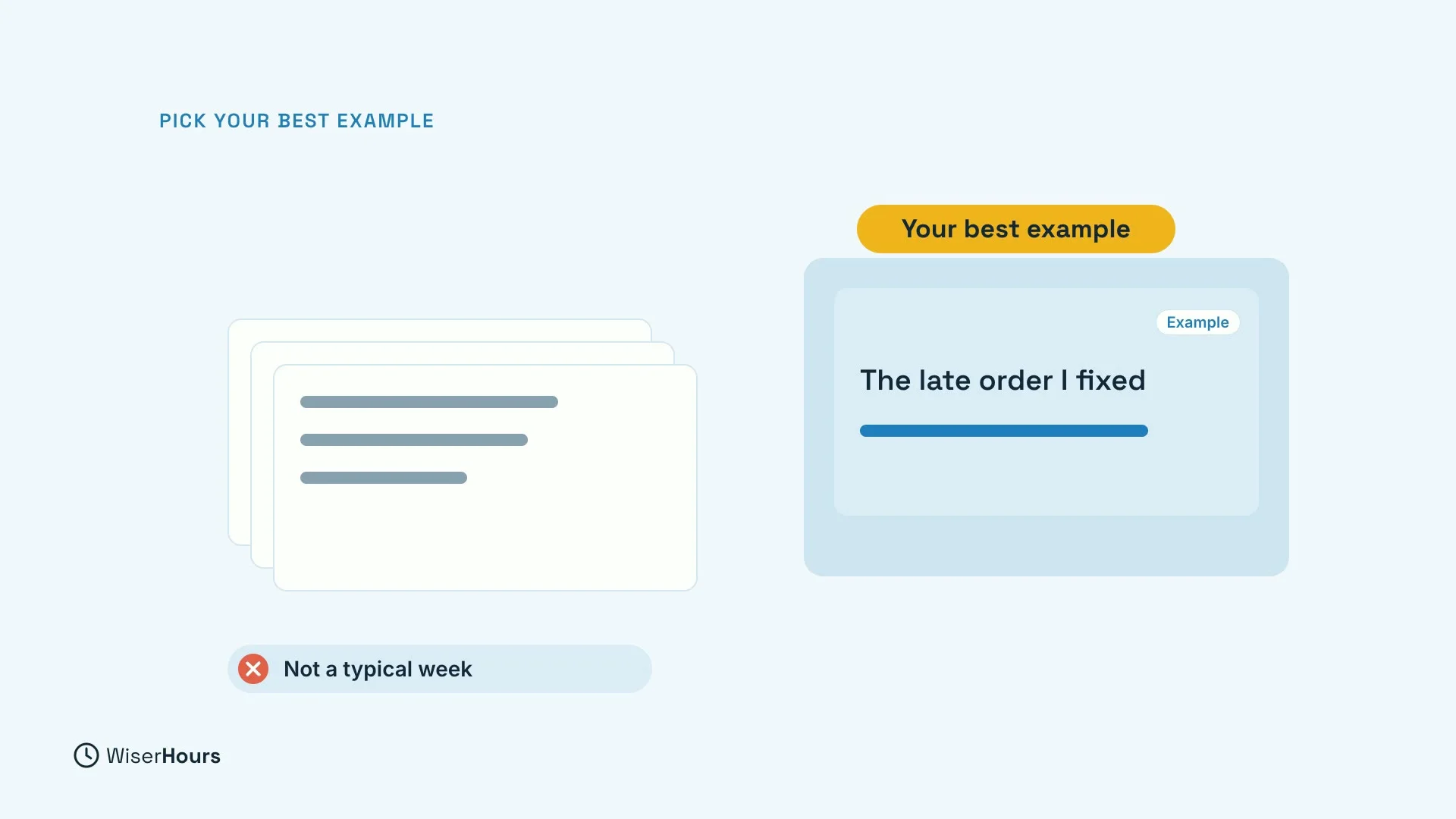
STAR gives you the shape: situation, task, action, result. It is one real episode told from start to finish, and it matches the checklist many interviewers score you against. Choose your best episode, not a typical week. In one experiment, simply asking people for their best example gave better answers and higher ratings.
 (opens the full-size picture)
Spend most of the time on the action
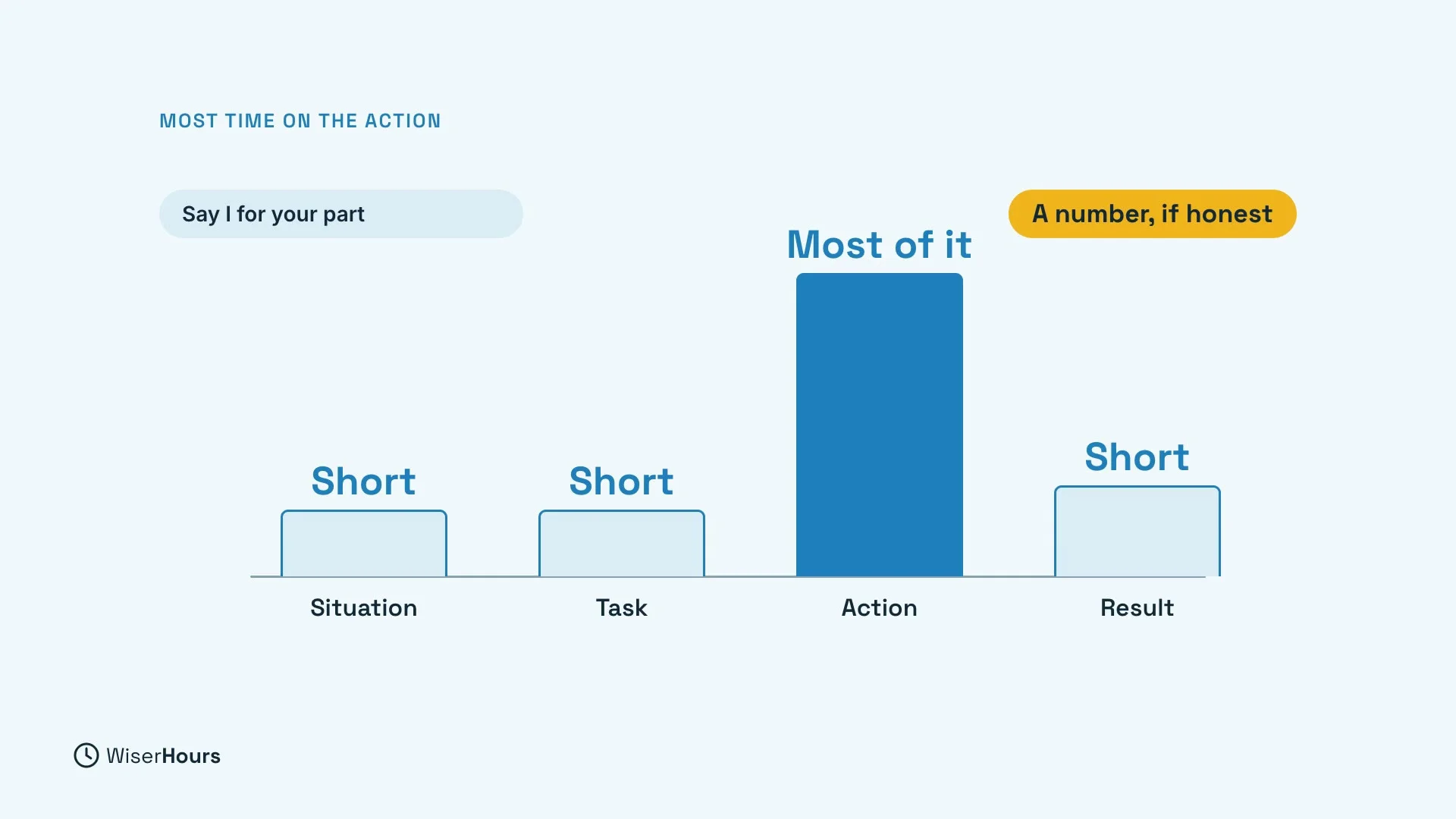
Set the scene in two sentences. Then spend most of your answer on what you did: your own steps, in order. Say “I” for your part and credit the team in a phrase. Finish with the result, with a number if you have an honest one.
 (opens the full-size picture)
Practise, then stop
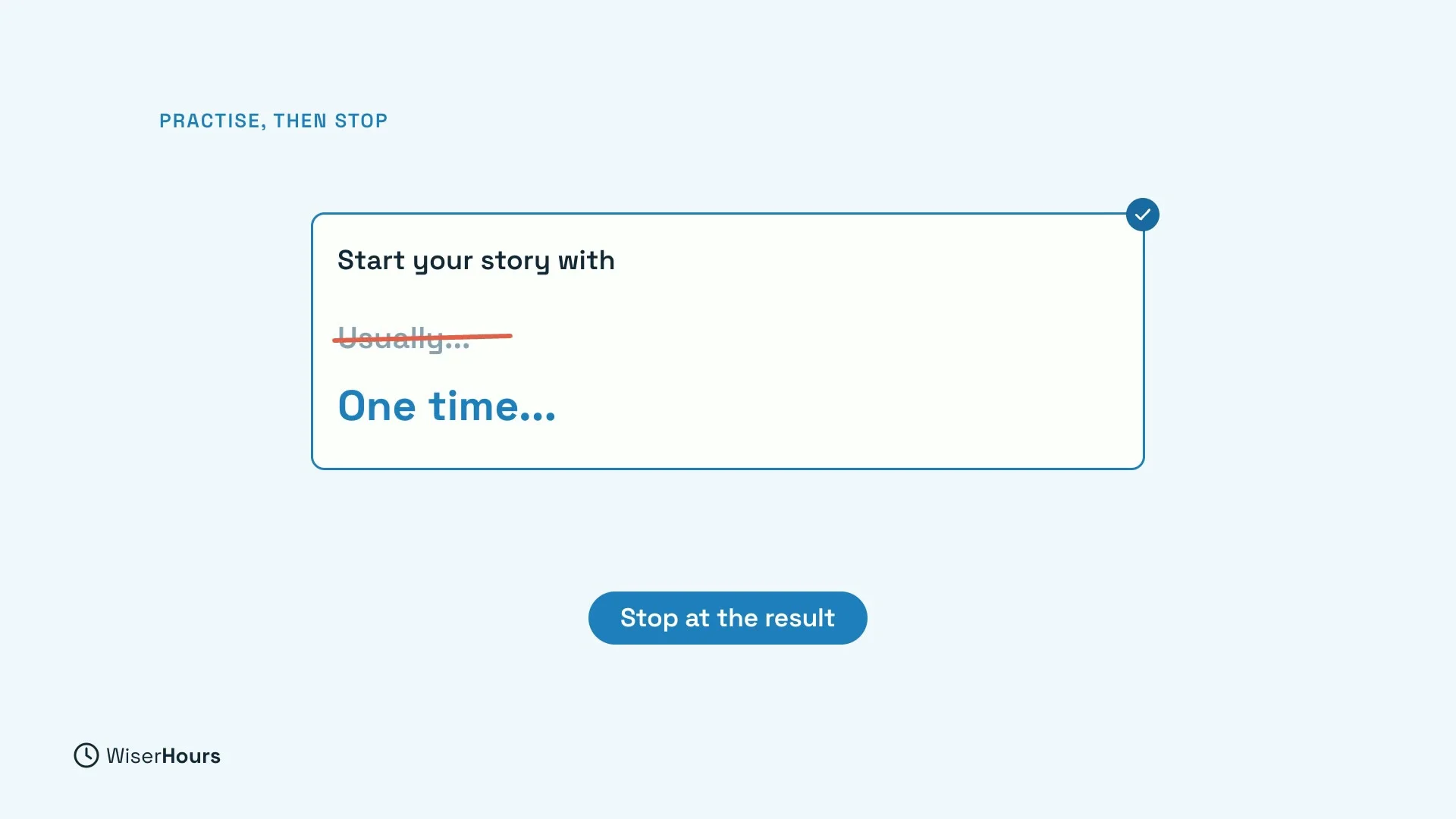
Tell each story out loud a few times before the interview. Then stop at the result and let the interviewer ask more. If you hear yourself say “usually” or “always”, start again with one time.
 (opens the full-size picture)
Keep your search going
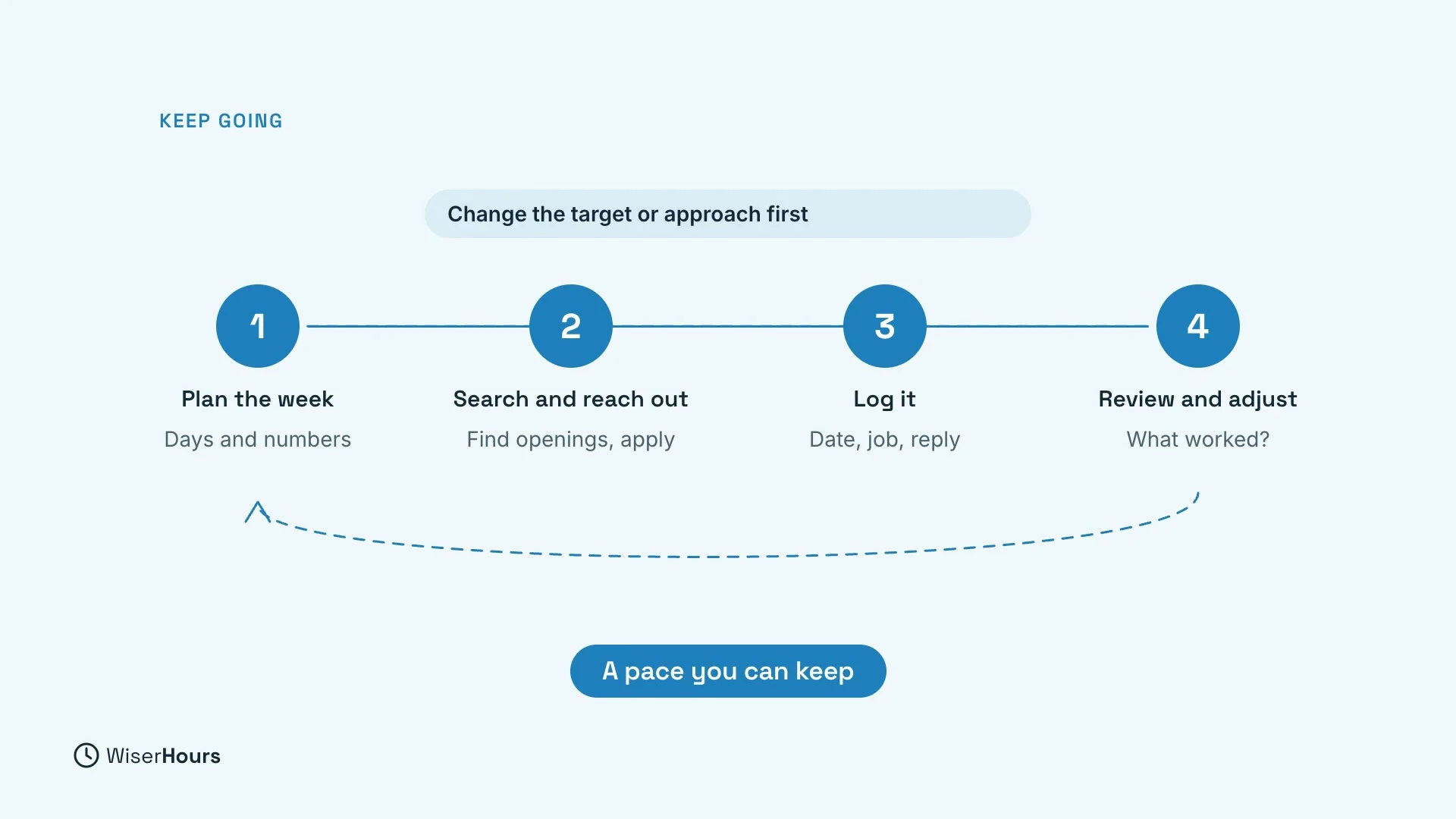
A search takes months, so keep a steady pace. Review your log every week. If replies are not coming, change your target or your approach before you simply send more. Most applications go quiet, and that is normal.
 (opens the full-size picture)
Your checklist from this course
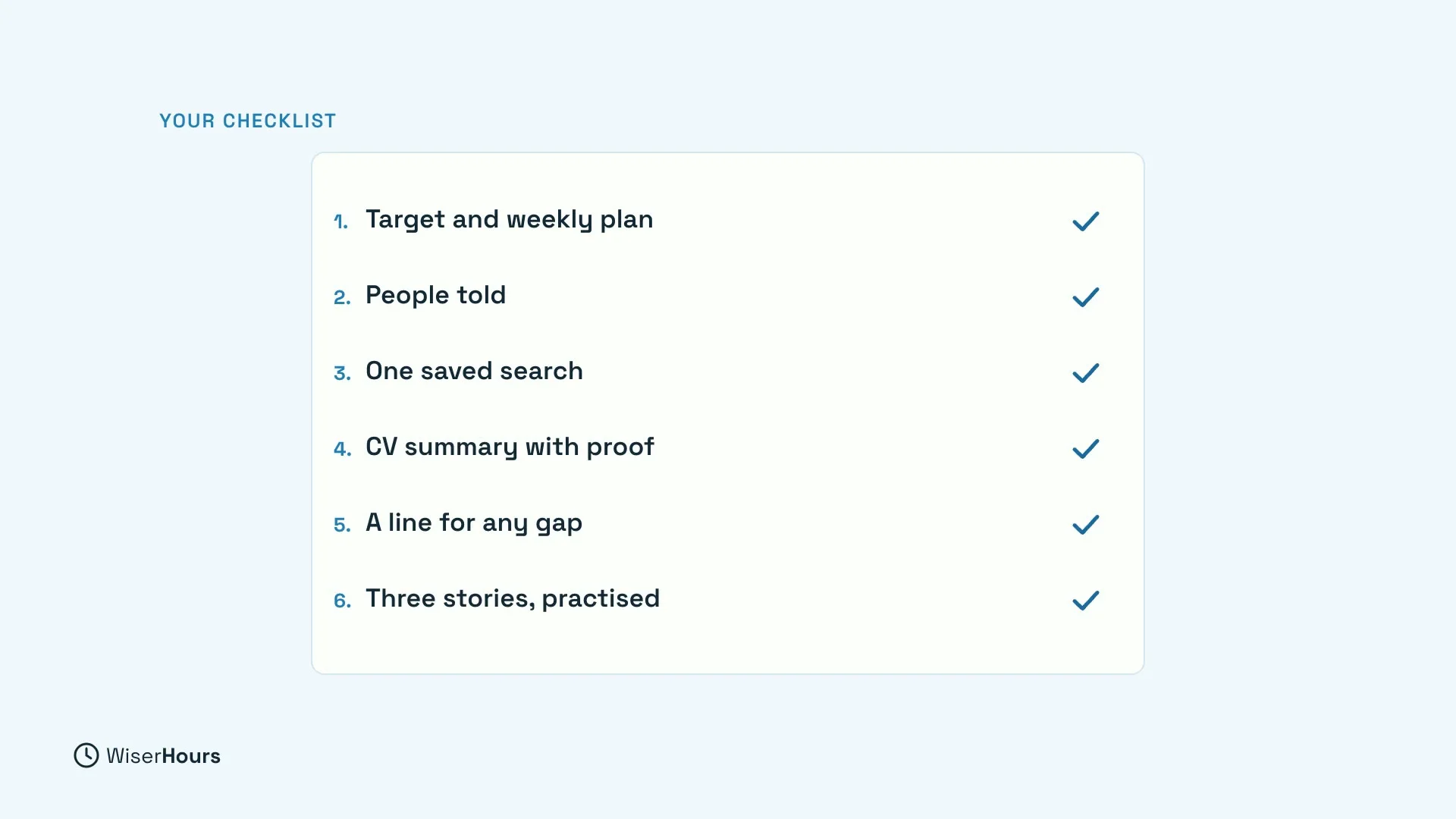
The course comes down to a short list: a target and a weekly plan with numbers, people who know you are looking, one saved search, a CV summary with proof, a line for any gap, and three stories you can tell out loud.
 (opens the full-size picture)
YOUR TURN
My weekly job-search checklist
Read more
- The STAR Method Explained: How to Structure Behavioral Answers: more detail on each part, with examples.
- How to Follow Up After an Interview Without Being Annoying: what to send once the interview is done.
Read the full video transcript
In this last lesson, you will answer the "Tell me about a time" questions with one short, true story, and you will see how to keep your search going until it works.
Interviewers often ask, "Tell me about a time when…" Most people answer with a summary of what they usually do. In real interviews that researchers studied, applicants told an actual story less than one time in four.
Star gives you the shape. Situation, task, action, result. One real episode told from start to finish. It matches the checklist many interviewers score you against. Pick one real episode and choose your best one, not a typical week. In one experiment, simply asking people for their best example gave better answers and higher ratings.
Set the scene in two sentences. Then spend most of your answer on what you did, your own steps, in order. Say "I" for your part and credit the team in a phrase. Finish with the result with a number if you have an honest one.
Tell each story out loud a few times before the interview. Then stop at the result and let the interviewer ask more. If you hear yourself say "usually" or "always", start again with one time.
A search takes months, so keep a steady pace. Review your log every week. If replies are not coming, change your target or your approach before you simply send more. Most applications go quiet, and that is normal.
Here is your checklist from this course. A target and a weekly plan with numbers. People who know you are looking. One saved search. A CV summary with proof. And three stories you can tell out loud.
So answer with one true story. Spend most of it on what you did. And keep a steady weekly rhythm.
One last thing to try. Write one star story, then tick off your checklist.
That is the end of the course. Good luck with your search!
MAKE IT A SMALL WIN
Finished this lesson?
Mark it complete to save your progress on this device.