Your application · Lesson 6 of 10
How to Explain a Gap in Your Work History
Learn when a gap in your work history matters, how to show it honestly on your CV and profile, and how to answer in an interview.
English captions available in the player. Prefer reading? Follow the written lesson below.
Many people worry about a gap in their work history more than employers do. This lesson shows when a gap matters, when it does not, and what to say about it on your CV, on your online profile and in the interview.
Short gaps barely register
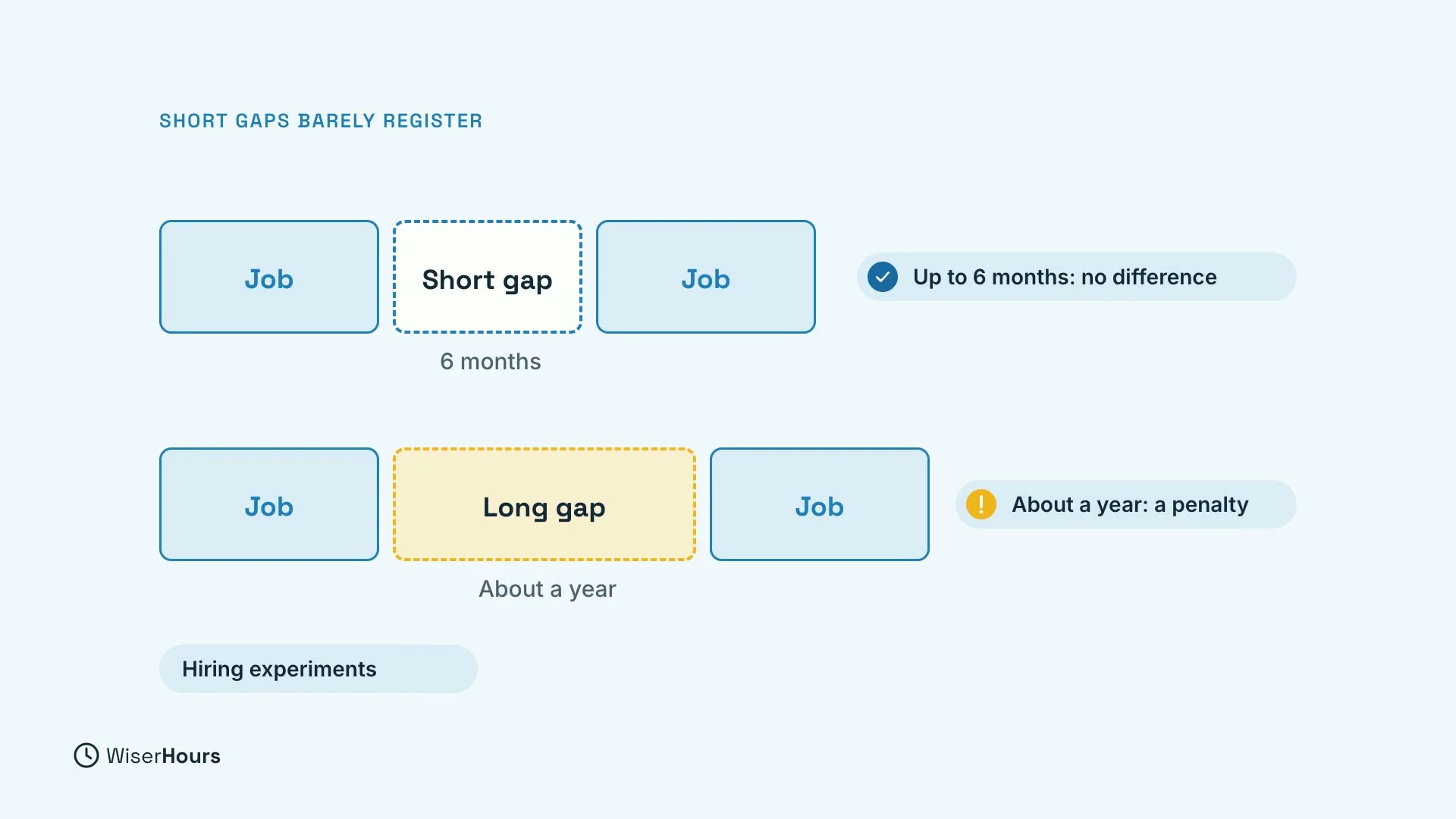
In hiring experiments, a gap of up to about six months made no difference to callbacks on average. A penalty showed up after about a year. So the length of the gap is worth knowing before you spend energy worrying about it.
 (opens the full-size picture)
Old gaps fade
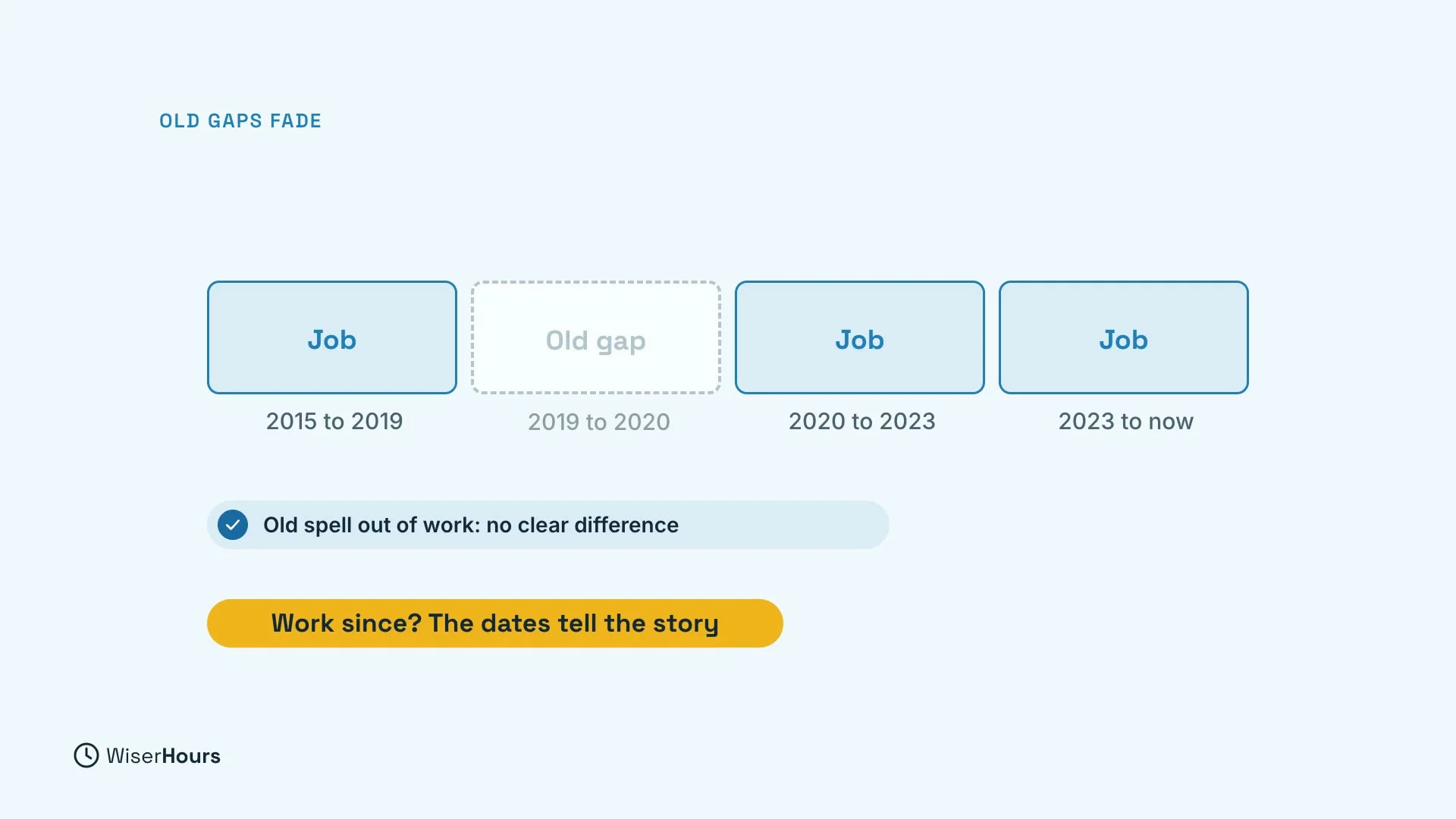
In one experiment, an old spell out of work made no clear difference to interview invitations. If you have worked since, the dates tell the story. A gap from several jobs ago is mostly history by now.
 (opens the full-size picture)
Keep the dates honest
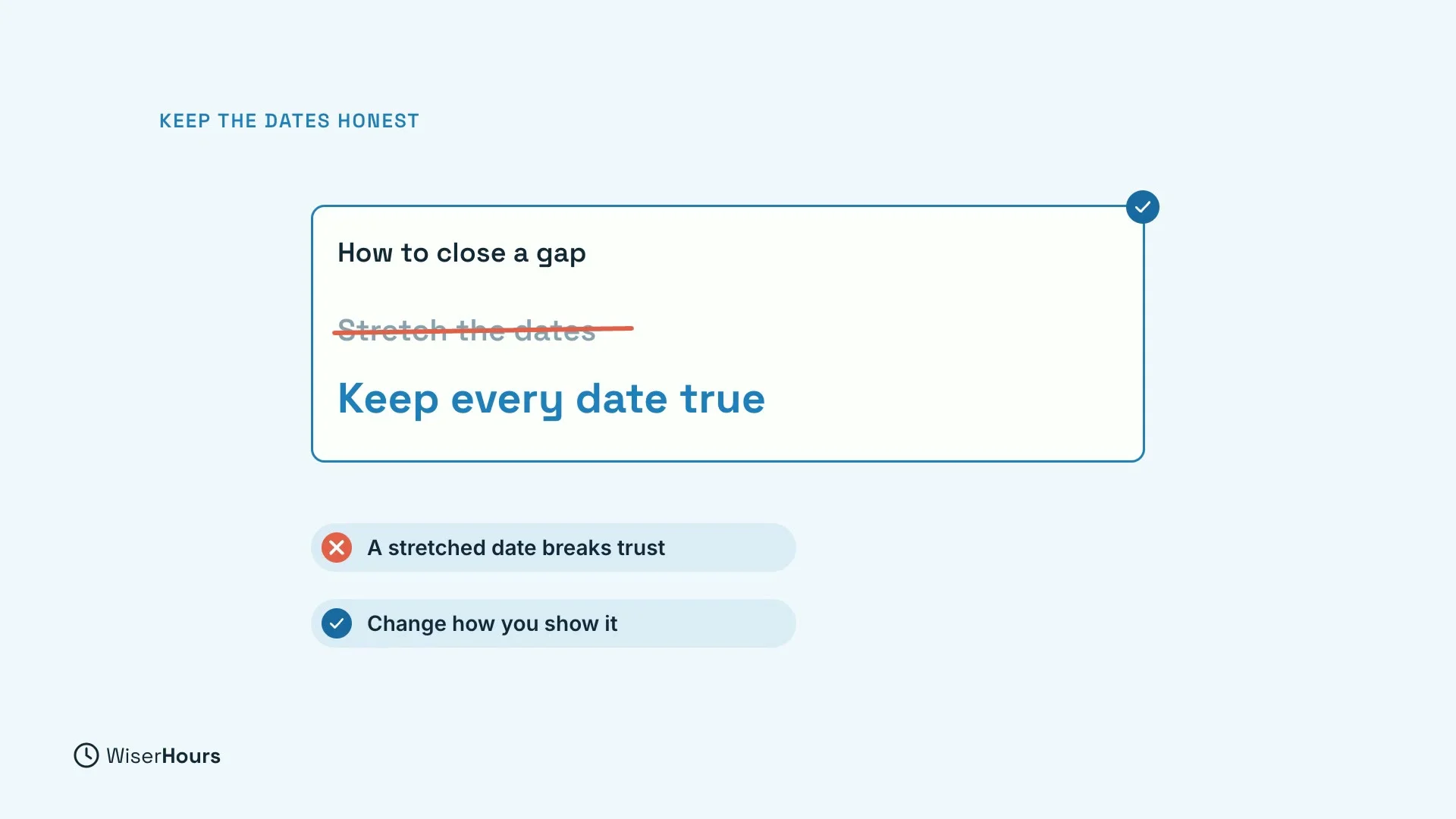
Never stretch dates to close a gap. A reader who finds one stretched date stops trusting the rest of your CV. What you can change is how you show the gap.
 (opens the full-size picture)
Give the gap one plain line
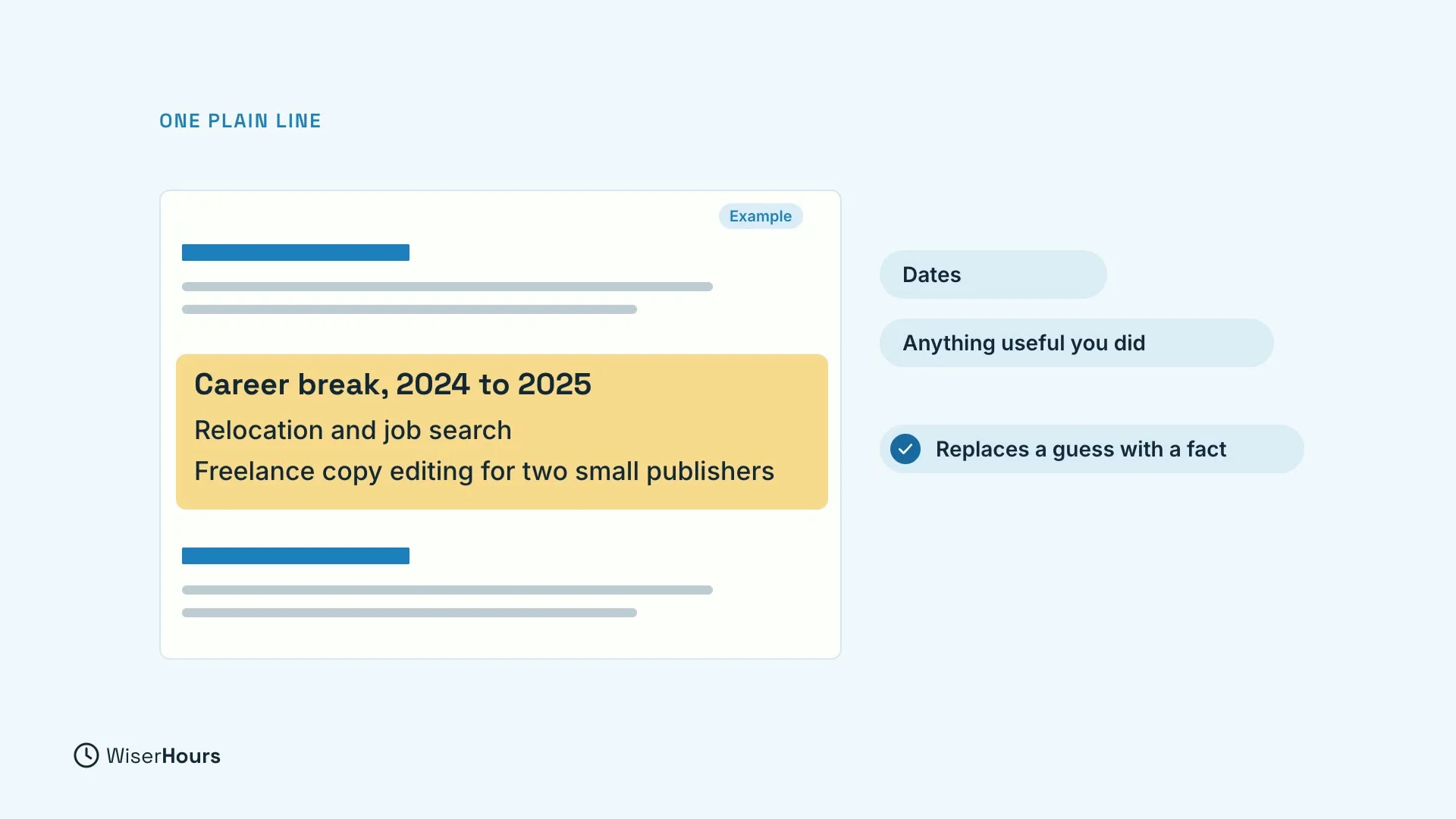
Give the gap its own short line, with dates and anything useful you did. For example: career break, 2024 to 2025, relocation and job search, freelance copy editing for two small publishers. A line like that replaces the reader’s guess with a fact.
 (opens the full-size picture)
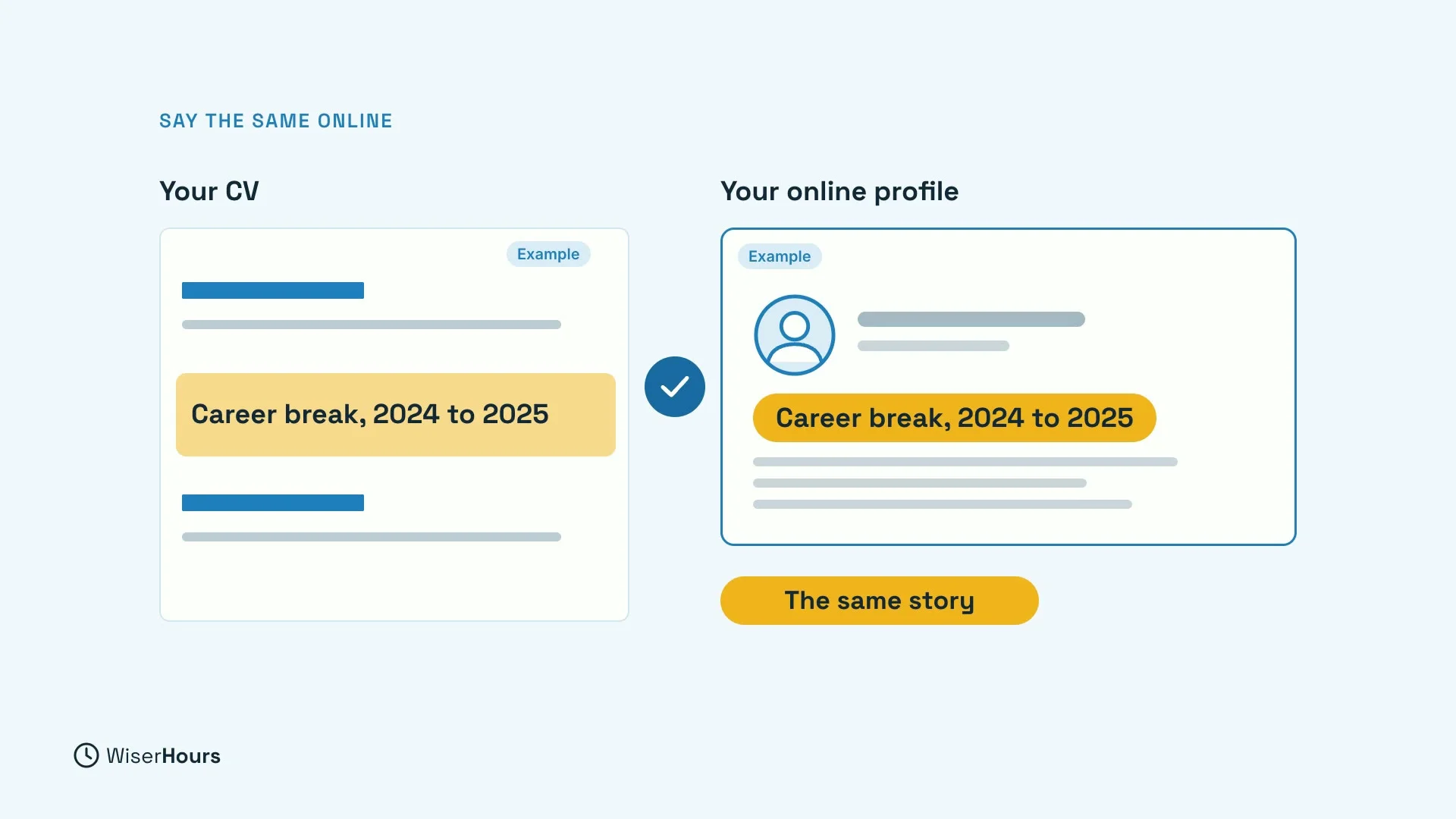
Say the same thing on your online profile. Many profiles let you add a career break. What matters most is that your profile and your CV tell the same story.
 (opens the full-size picture)
Three short parts for the interview
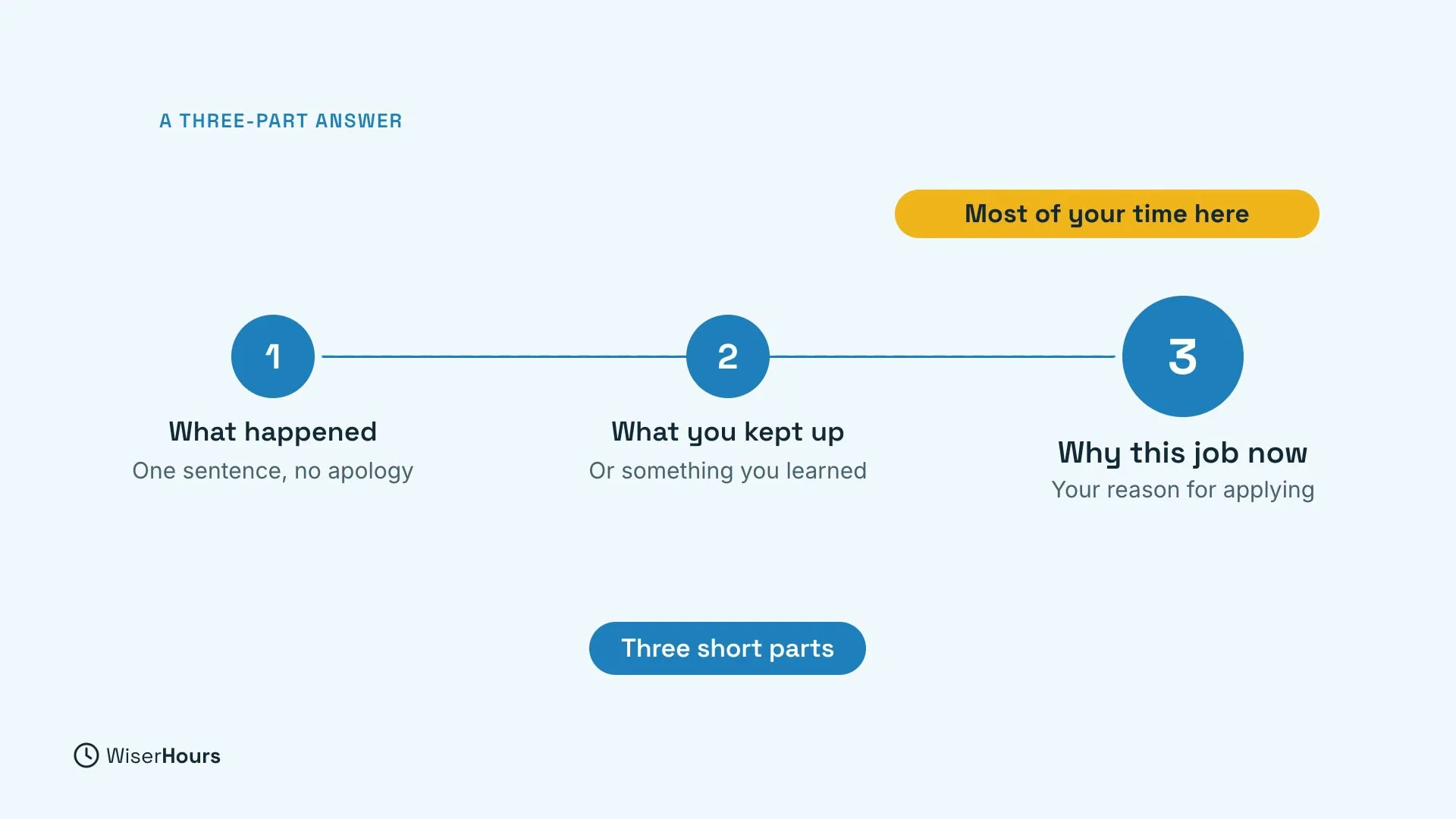
In the interview, use three short parts. First, what happened, in one sentence and with no apology. Second, one thing you kept up or learned. Third, why you want this job now. Spend most of your time on that last part, because it points the conversation forward.
 (opens the full-size picture)
Your private details
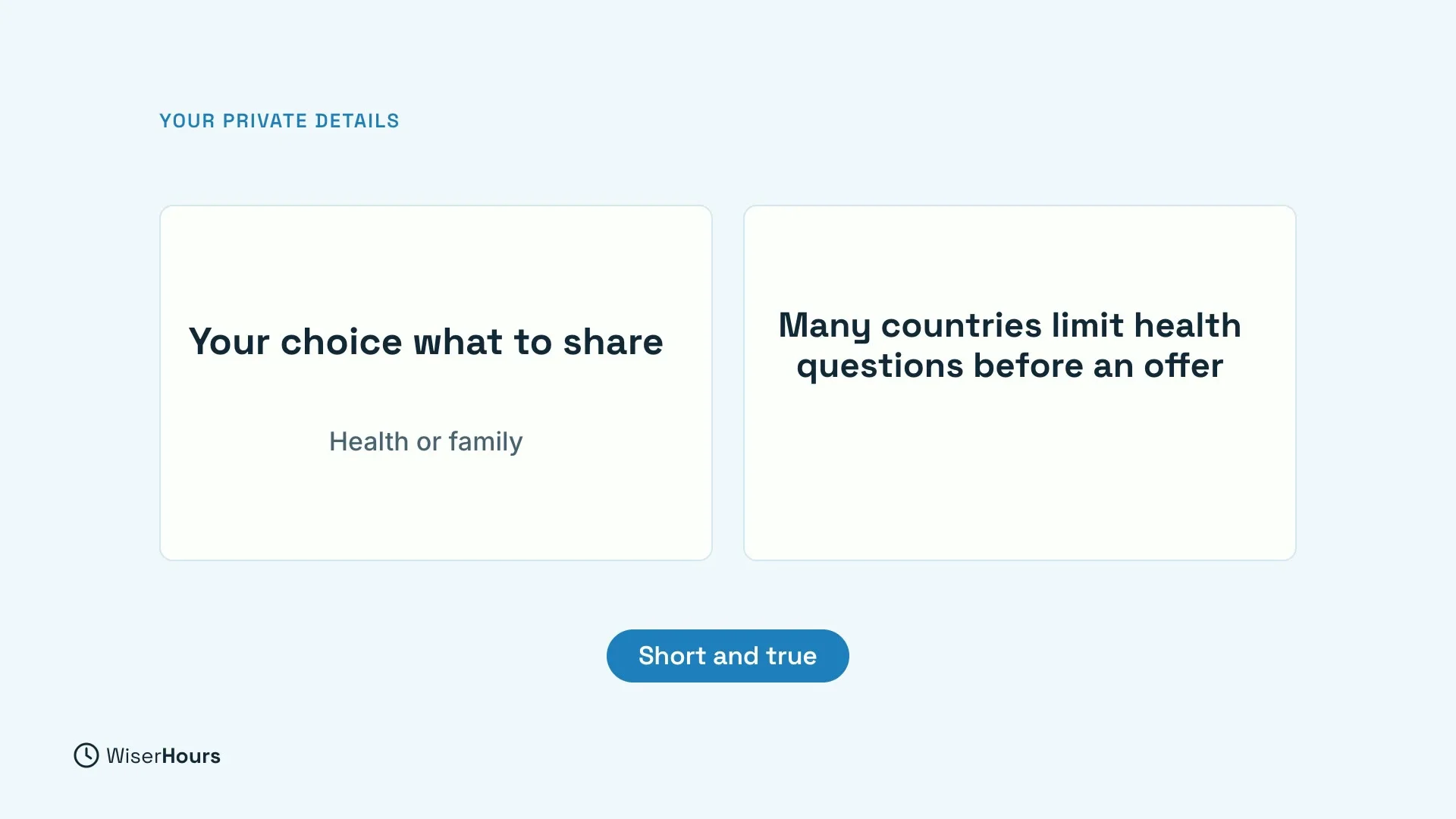
How much you share about health or family is your choice. In many countries, the law limits what an employer may ask about your health before a job offer, though rules differ by country. You can keep your answer short and true.
 (opens the full-size picture)
YOUR TURN
Read more
- How to Explain Employment Gaps on a Resume: more wording for the gap line and the interview answer.
- “Why Do You Want to Work Here?”: How to Answer Without Flattery: how to build the closing part of your answer.
Read the full video transcript
In this lesson, you will learn how to handle a gap in your work history, when it matters, when it doesn't, and what to say about it.
Many people worry about a gap more than employers do. In hiring experiments, a gap of up to about six months made no difference to callbacks on average, a penalty showed up after about a year, and a gap in the past followed by work tends to fade.
In one experiment, an old spell out of work made no clear difference to interview invitations. If you have worked since, the dates tell the story.
Never stretch dates to close a gap. A reader who finds a stretched date stops trusting the rest. What you can change is how you show it.
Give the gap its own short line, with dates and anything useful you did. For example, career break, 2024 to 2025, relocation and job search, freelance copy editing for two small publishers. It replaces the reader's guess with a fact.
Say the same thing on your online profile. Many profiles let you add a career break. What matters most is that your profile and your CV tell the same story.
In the interview, use three short parts, what happened, in one sentence, with no apology, one thing you kept up or learned, and why you want this job now. Spend most of your time on that last part.
How much you share about health or family is your choice. In many countries, the law limits what an employer may ask about your health before a job offer. You can keep your answer short and true.
So short gaps rarely matter, and old ones fade. Keep your dates honest and give the gap one plain line. And prepare a short answer that ends with why you want this job.
Before the next lesson, write the one line for your gap, or the one you worry about most.
Next, you will write a cover letter that gets read.
MAKE IT A SMALL WIN
Finished this lesson?
Mark it complete to save your progress on this device.