Your application · Lesson 7 of 10
A Cover Letter That Gets Read
Write a short four-part cover letter, know when a letter is worth sending, and adapt one letter to each job instead of starting over.
English captions available in the player. Prefer reading? Follow the written lesson below.
A cover letter is worth your time when it adds something your CV does not. This lesson shows you when that is, and how to write a short letter in four parts that a busy reader can follow.
An honest note first
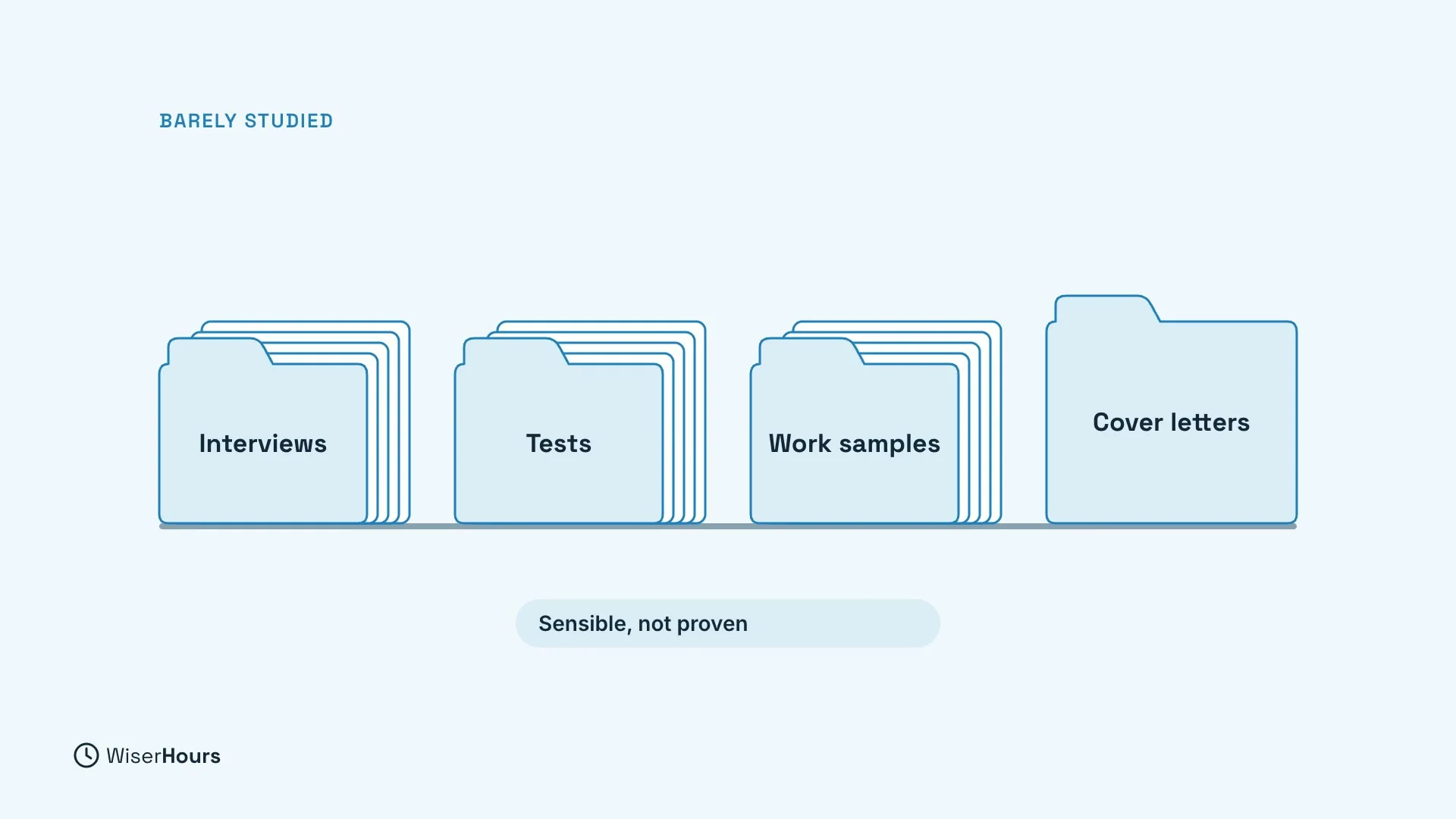
Cover letters have hardly been studied. Interviews, tests and work samples have been looked at far more. So treat all cover letter advice, including this lesson, as sensible practice rather than proven fact.
 (opens the full-size picture)
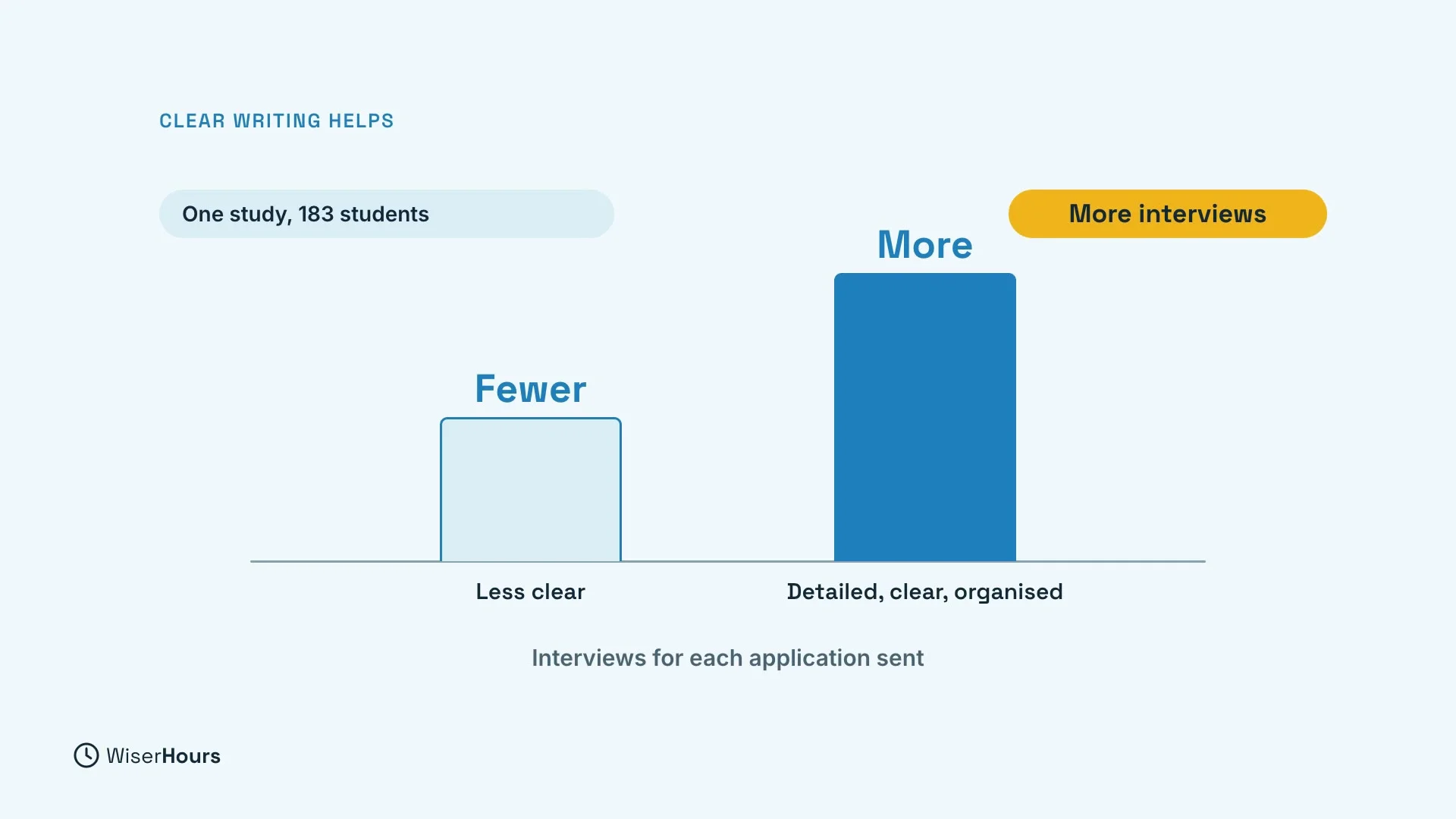
One study did look. It followed students applying for work placements. Those whose letters and CVs were more detailed, clear and well organized got more interviews for each application they sent.
 (opens the full-size picture)
When a letter is worth writing
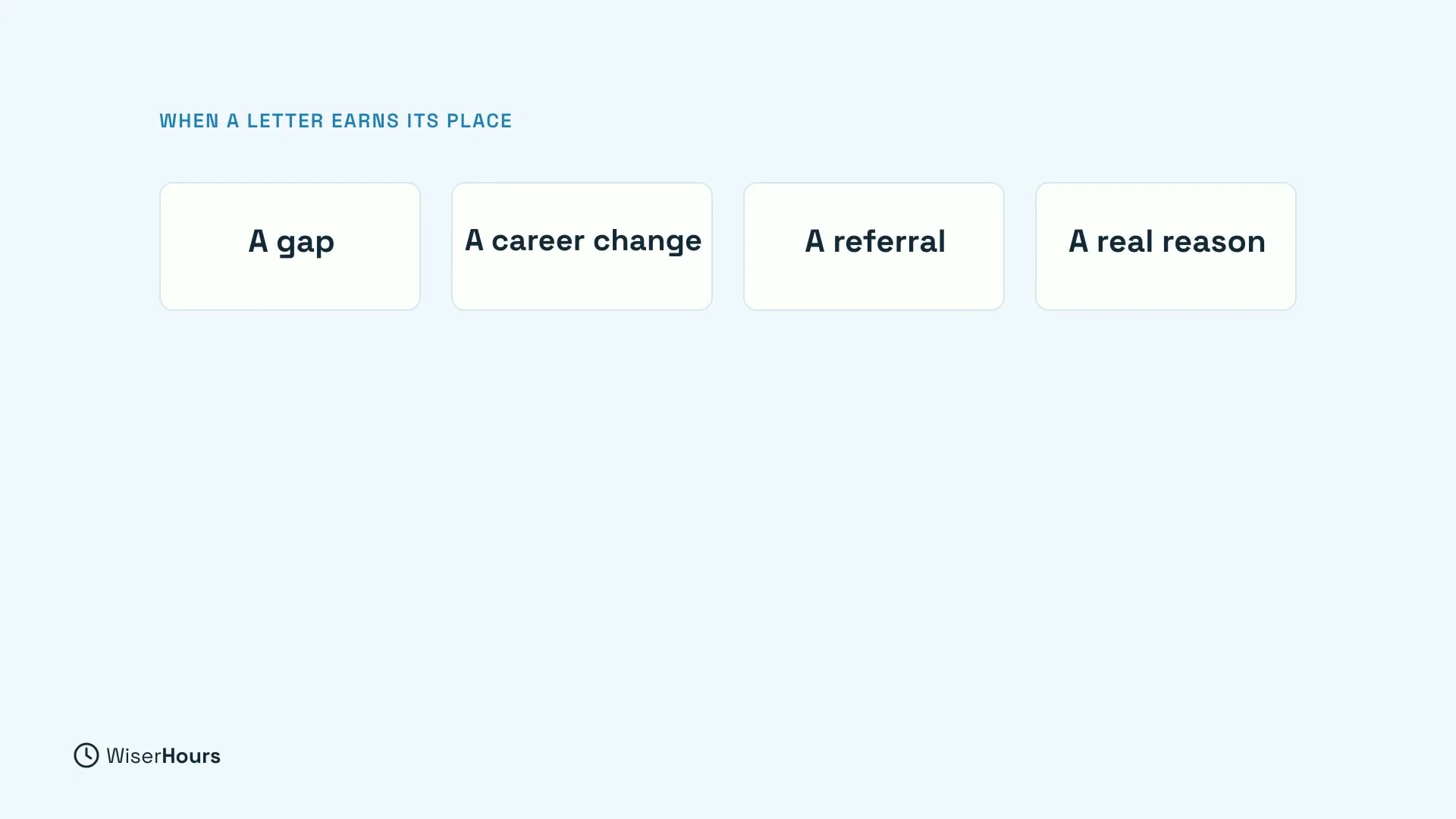
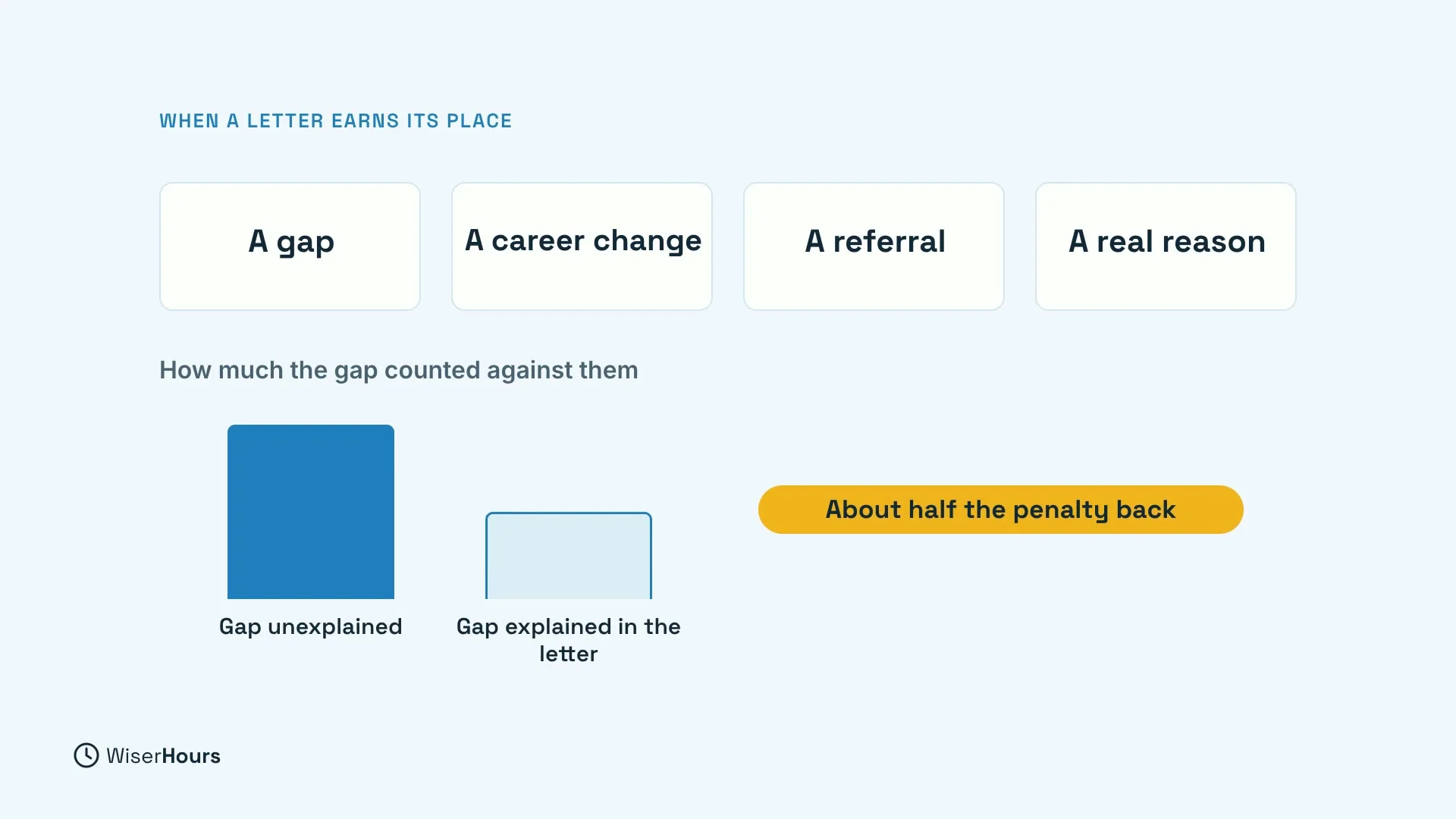
Write a letter when it can say something your CV cannot. Four cases fit: a gap, a change of career, someone who referred you, or a real reason you want this employer.
 (opens the full-size picture)
In one experiment, a letter explaining a long gap won back about half of the penalty an unexplained gap carried.
 (opens the full-size picture)
Part one: why this job
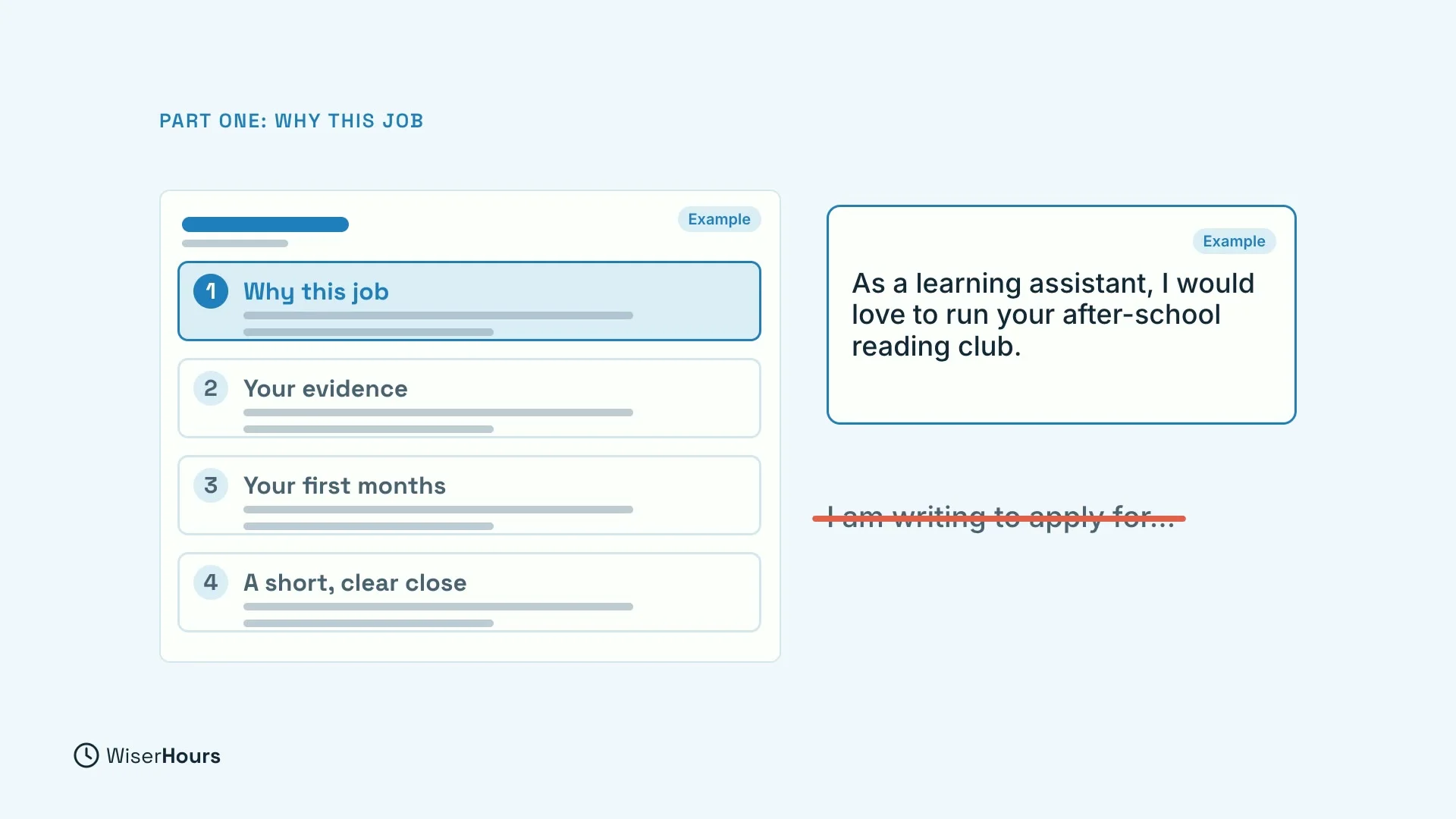
Write one specific sentence. Name the role and one real thing about the work that you could not say about any other employer. Do not spend your best line saying you are writing to apply.
 (opens the full-size picture)
Part two: your evidence
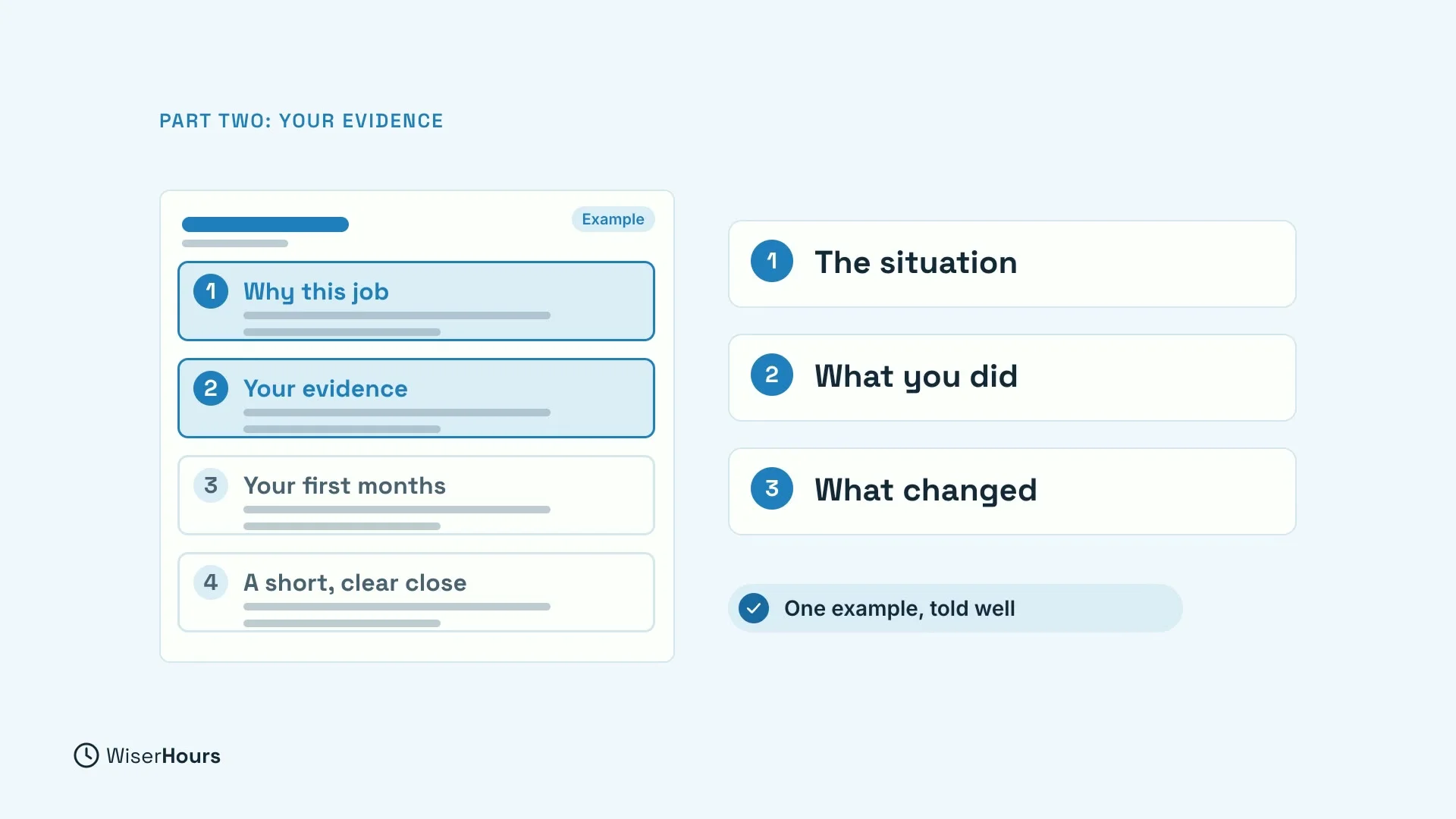
Pick one piece of work like this job, and tell it in three sentences: the situation, what you did, and what changed. One example told well beats four listed in passing.
 (opens the full-size picture)
Parts three and four: first months and close
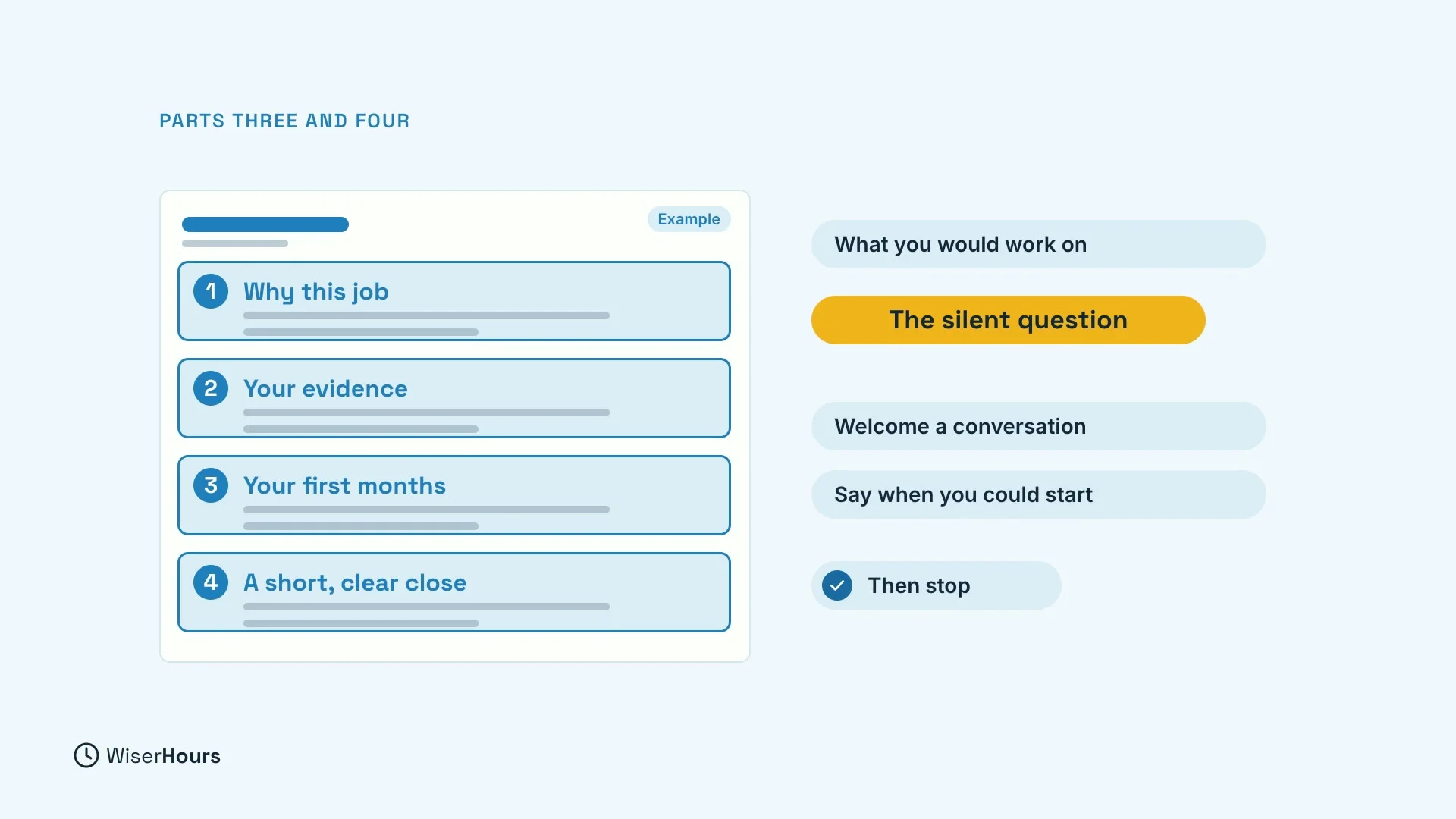
Part three is what you would work on in your first months. Most letters skip this, but it is the question the reader is silently asking. Part four is a short, clear close. Say you would welcome a conversation, add anything practical such as when you could start, and then stop.
 (opens the full-size picture)
Adapt one letter
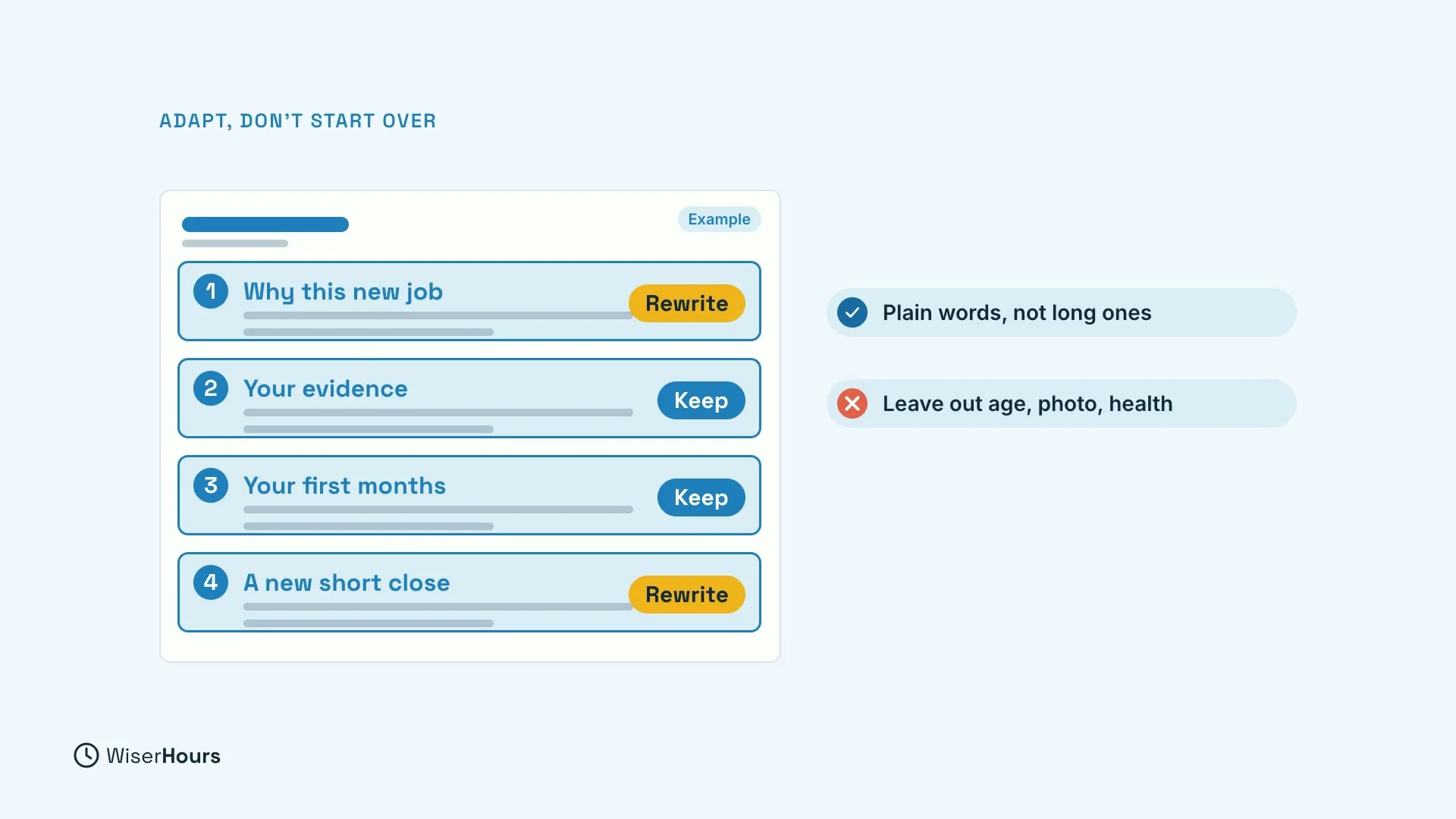
Keep one letter you can adapt. The middle changes slowly, so rewrite only the opening and the close for each job. Use plain words, not long ones, and leave out details like your age, a photo or your health.
 (opens the full-size picture)
YOUR TURN
Read more
- How to Write a Cover Letter That Gets Read: a longer guide to each part of the letter.
- How to Explain Employment Gaps on a Resume: what to say about a gap in the letter and elsewhere.
Read the full video transcript
In this lesson you will write a short cover letter in four parts, and you will learn when a letter is worth writing at all.
First, an honest note. Cover letters have hardly been studied. So treat all cover letter advice, including this lesson, as sensible practice rather than proven fact.
One study did look. It followed students applying for work placements. Those whose letters and CVs were more detailed, clear, and well organized got more interviews for each application they sent.
Write a letter when it can say something your CV can't. A gap, a change of career, someone who referred you, or a real reason you want this employer.
In one experiment, a letter explaining a long gap won back about half of the penalty an unexplained gap carried.
Part one is why this job, in one specific sentence. Name the role and one real thing about the work that you could not say about any other employer. Don't spend your best line saying you are writing to apply.
Part two is your evidence. Pick one piece of work like this job, and tell it in three sentences. The situation, what you did, and what changed. One example told well beats four listed in passing.
Part three is what you would work on in your first months. Most letters skip this, but it is the question the reader is silently asking. Part four is a short, clear close. Say you would welcome a conversation, add anything practical like when you could start and stop.
Keep one letter you can adapt. The middle changes slowly, so rewrite only the opening and the close for each job. Use plain words, not long ones, and leave out details like your age, a photo, or your health.
So write a letter when it adds something your CV can't. Use four parts. Why this job, your evidence, your first months, and a short close. And adapt one letter instead of starting over.
Before the next lesson, write the why this job sentence for one real job ad.
Next, you will prepare for an interview using the job ad itself.
MAKE IT A SMALL WIN
Finished this lesson?
Mark it complete to save your progress on this device.