Find openings · Lesson 3 of 10
Tell People You're Looking: Use Your Network
See why the people you know are a strong way into a job, whom to list, and how to send a small, clear ask.
English captions available in the player. Prefer reading? Follow the written lesson below.
Most job seekers rely on applications alone. This lesson shows why the people you know are one of the best ways into a new job, and how to ask for help in a way that feels easy.
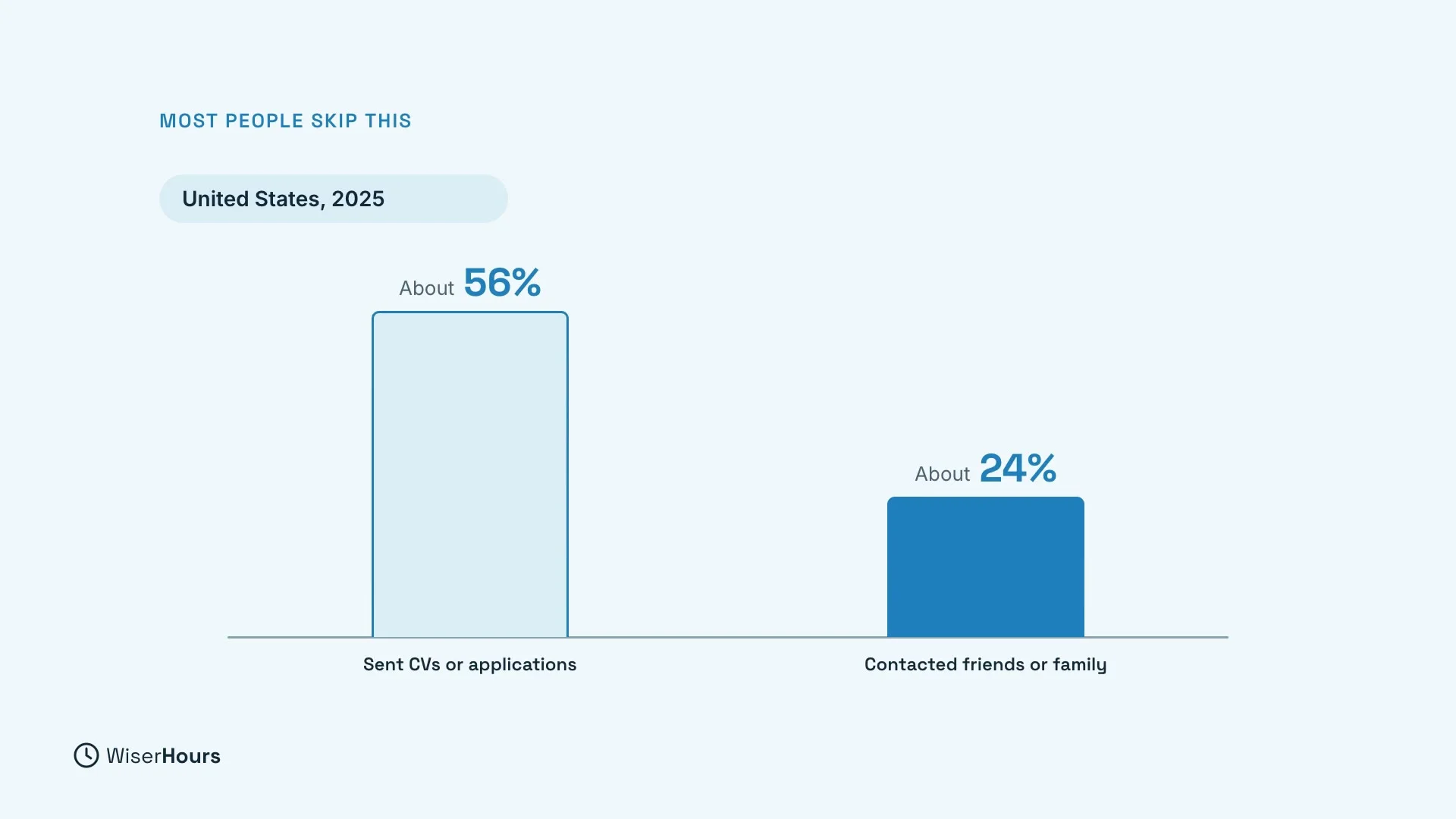
Most people skip it
In the United States, more than half of unemployed people sent out their CV, but fewer than one in four contacted friends or family. Other countries will differ, but the gap shows how often this step is missed.
 (opens the full-size picture)
Referrals carry weight
Yet many people get hired this way. At one company, only six in every hundred applicants were recommended by someone who worked there, but they made up nearly three in ten of the people hired.
 (opens the full-size picture)
Acquaintances count too
It is not only close friends. In large experiments on LinkedIn, the new contacts most likely to lead to a job move were acquaintances: people you know a little, with a few friends in common. They hear about jobs your close friends never hear about. The weak ties article explains why.
List who you know
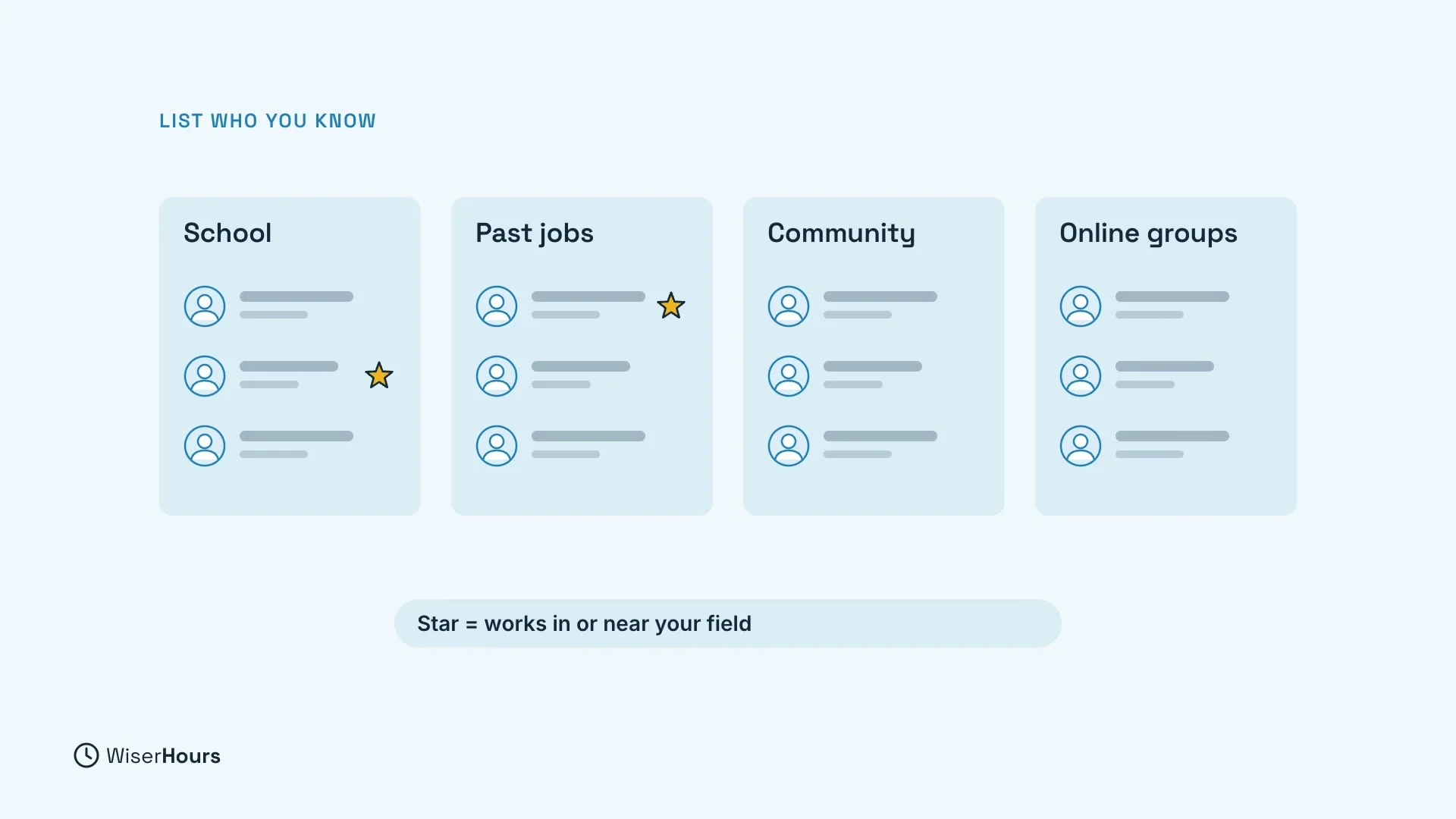
Few people start from zero. Write down names in groups: school, past jobs, your community and online groups. Don’t filter yet. Then mark the ones who work in or near the field you want.
 (opens the full-size picture)
Make a small, clear ask
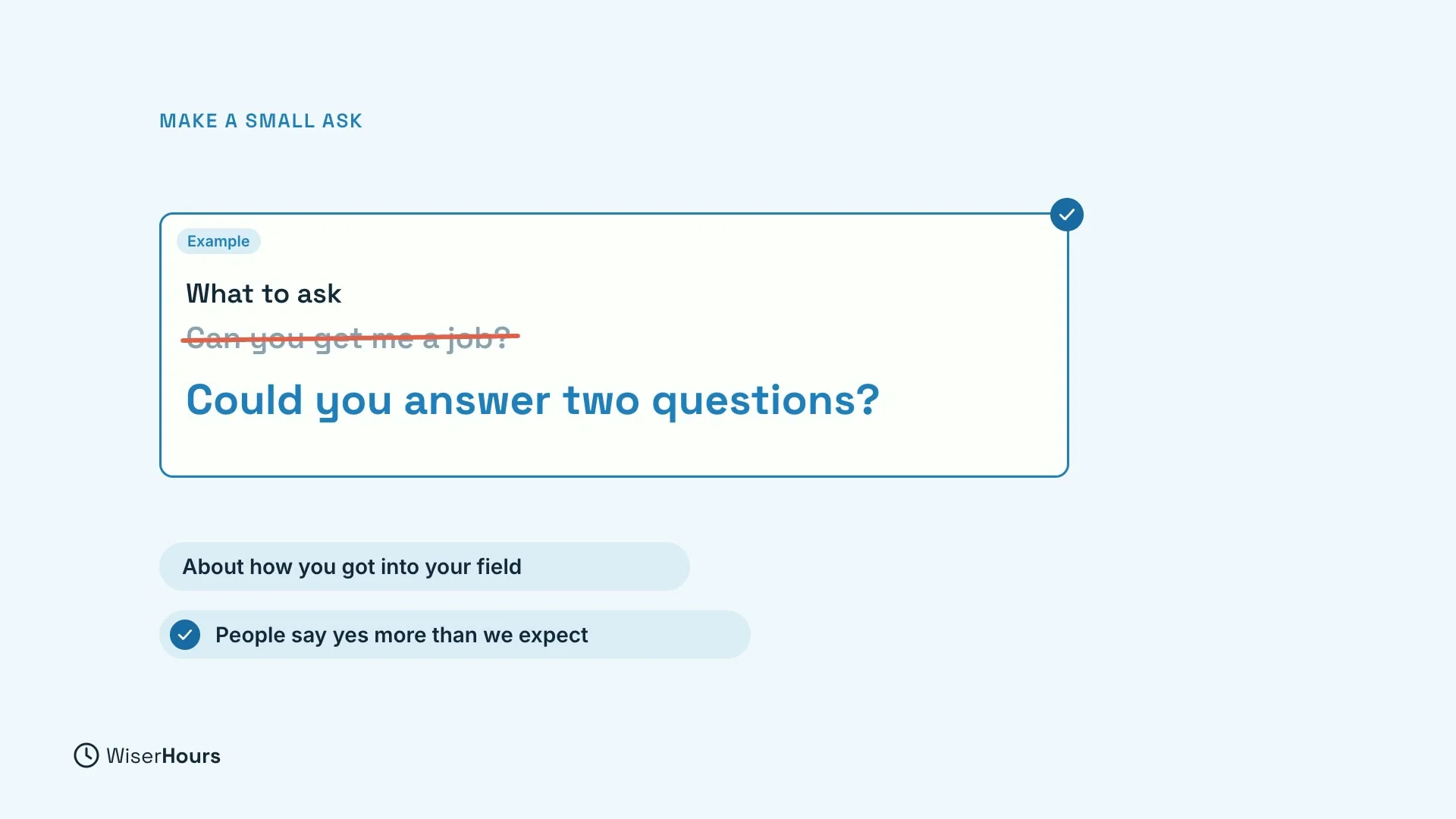
Tell them what you are looking for, and make a small, clear ask. Not “Can you get me a job?” but “Could you answer two questions about how you got into your field?” In experiments, people agreed to small requests more often than the askers expected.
 (opens the full-size picture)
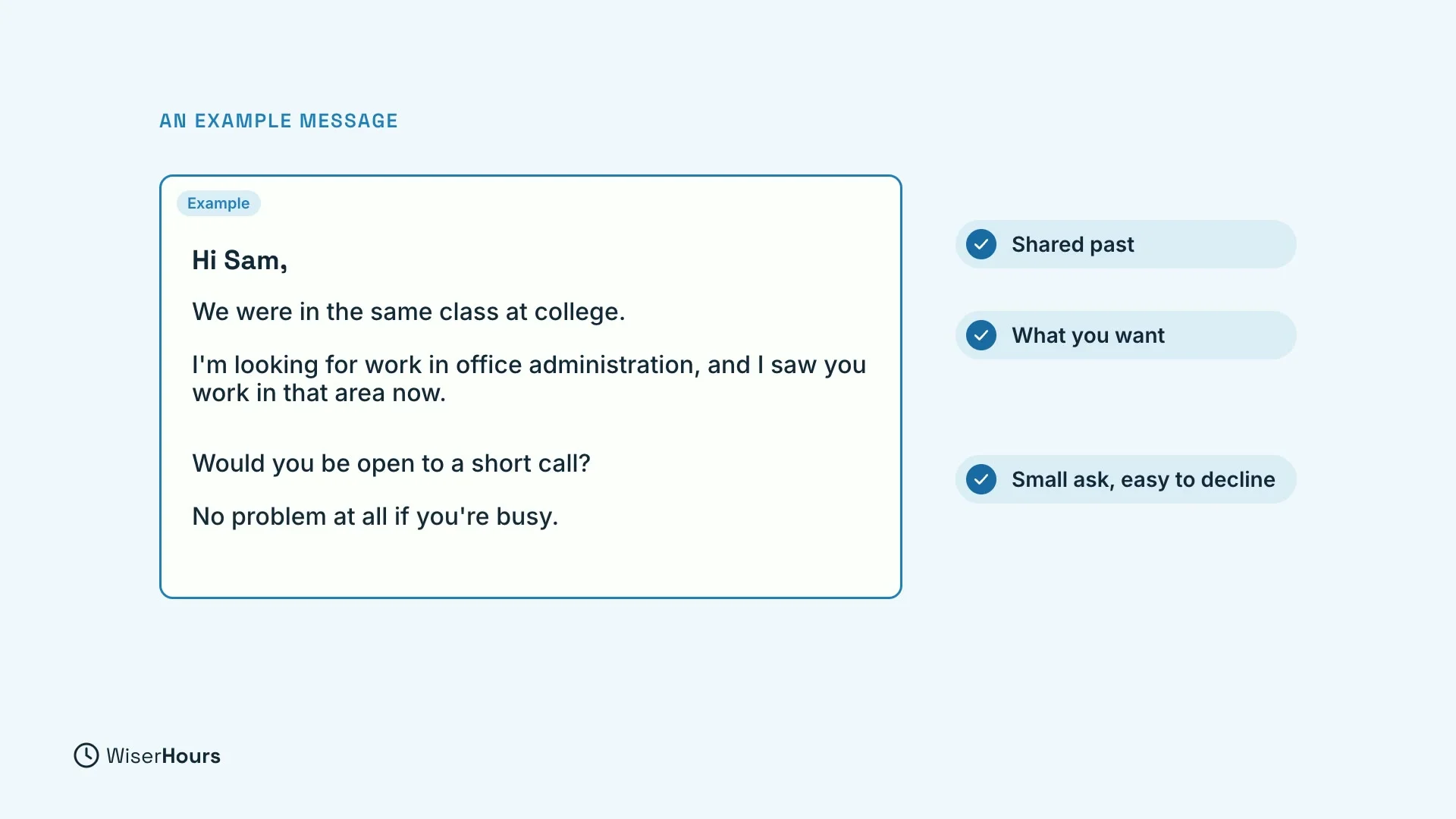
Here is a short example message.
 (opens the full-size picture)
Follow up
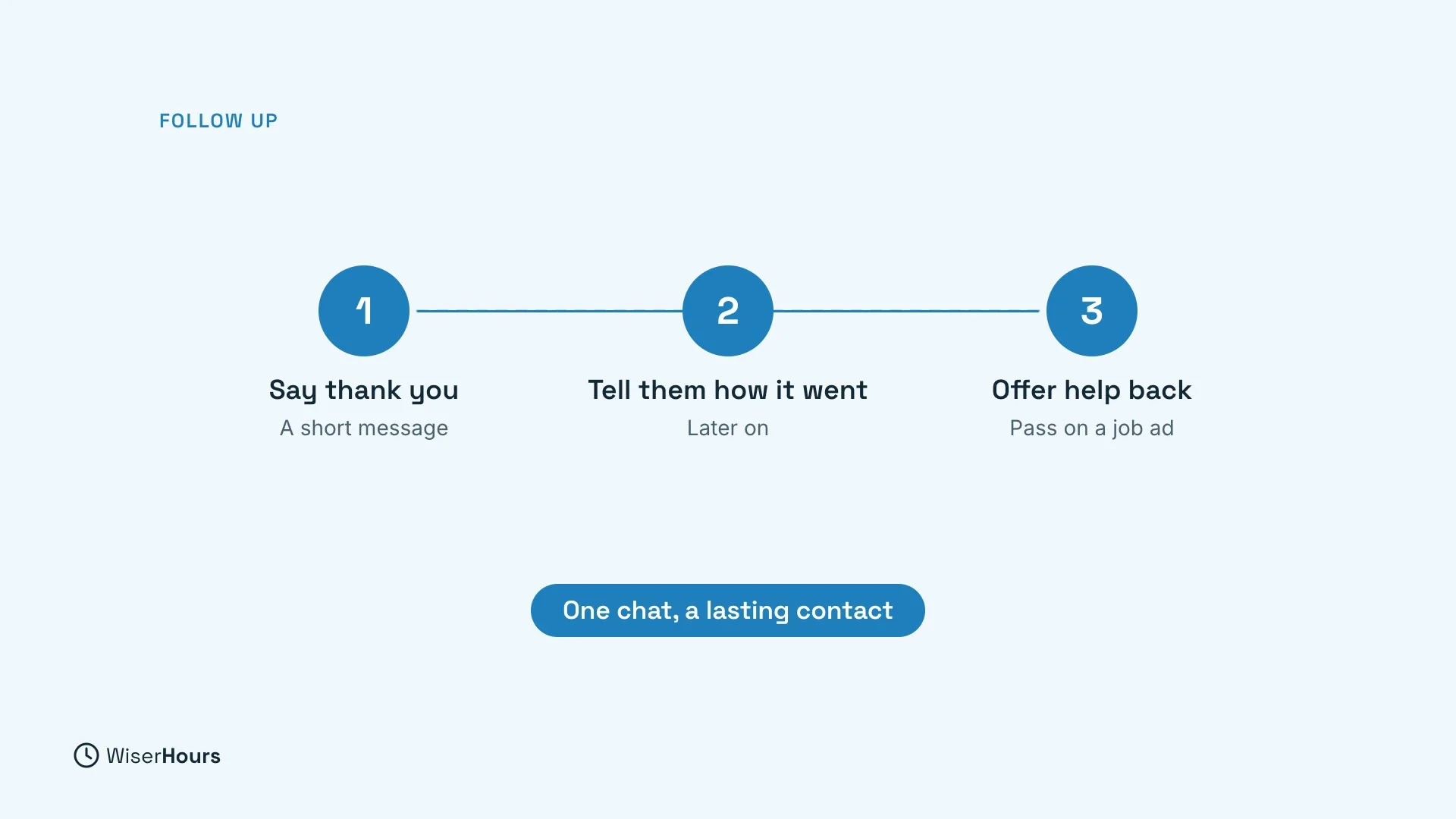
Afterwards, send a short thank you. Later, tell them how their advice turned out. And offer help back, like passing on a job ad you see. That is how one chat becomes a lasting contact.
 (opens the full-size picture)
YOUR TURN
Read more
- Why Networking Works: Granovetter’s Weak Ties Explained: why acquaintances bring news that close friends do not.
- Informational Interviews: How to Ask for One and What to Ask: the short call, step by step.
- How to Reconnect With Someone You Haven’t Spoken to in Years: for names on your list you have not contacted in a while.
- How to Build a Professional Network From Scratch: for when your list is short.
Read the full video transcript
In this lesson, you will see why the people you know are one of the best ways into a new job, and how to ask for help in a way that feels easy.
Most job seekers just send applications. In the United States, more than half of unemployed people sent out their CV, but fewer than one in four contacted friends or family.
Yet many people get hired this way. At one company, only six in every hundred applicants were recommended by someone who worked there.
But they made up nearly three in ten of the people hired. And it is not only close friends. In large experiments on LinkedIn, the new contacts most likely to lead to a job move were acquaintances. People you know a little, with a few friends in common. They hear about jobs your close friends never hear about. Few people start from zero. Write down names in groups. School, past jobs, your community, and online groups. Don't filter yet. Then mark the ones who work in or near the field you want.
Then tell them what you are looking for, and make a small, clear ask. Not, "Can you get me a job?" But could you answer two questions about how you got into your field? In experiments, people agreed to small requests more often than the askers expected.
Here is a short example, "Hi Sam, we were in the same class at college. I'm looking for work in office administration, and I saw you work in that area now. Would you be open to a short call? No problem at all if you're busy."
Afterwards, send a short thank you. Later, tell them how their advice turned out. And offer help back, like passing on a job ad you see. That is how one chat becomes a lasting contact.
So tell people you are looking, including acquaintances. Keep your asks small and clear, and follow up.
Before the next lesson, list ten people you know, and send one of them a short message.
Next you will see where to find jobs, and how to spot a fake one.
MAKE IT A SMALL WIN
Finished this lesson?
Mark it complete to save your progress on this device.