Find openings · Lesson 4 of 10
Where to Find Jobs and How to Spot a Fake Job Ad
Choose three kinds of job board, apply on the employer's own page, and learn the warning signs of a fake job ad.
English captions available in the player. Prefer reading? Follow the written lesson below.
No single place lists every job, and some of the ads you will meet are fake. This lesson shows where to look, how to avoid wasted effort, and the signs of a fake job ad.
Three kinds of board
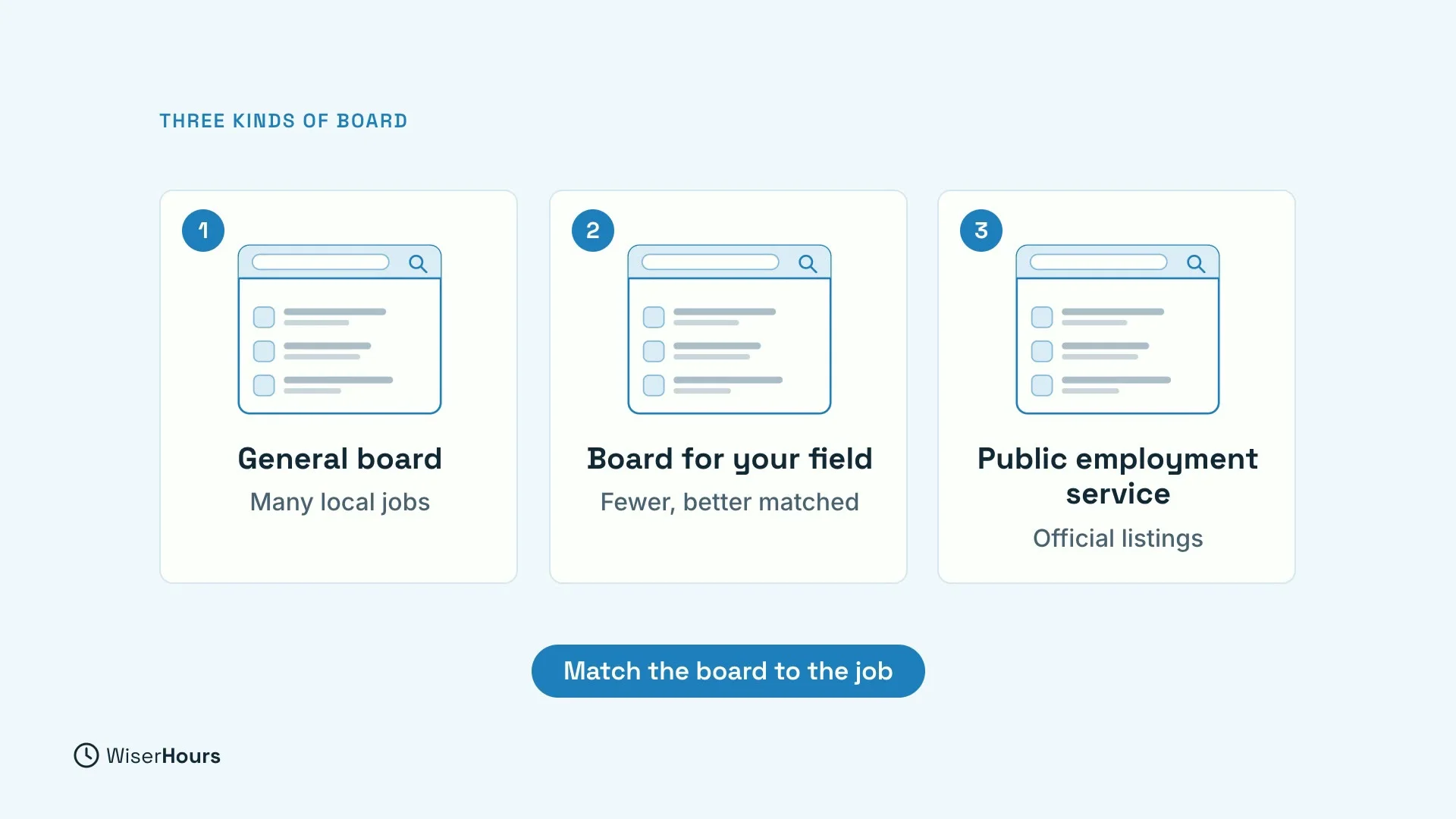
No single job board is best for everything. Use three kinds: one general board, for what is open near you; one board for your field, which tends to have fewer jobs that match better; and your country’s public employment service, for official listings.
 (opens the full-size picture)
One job, many copies
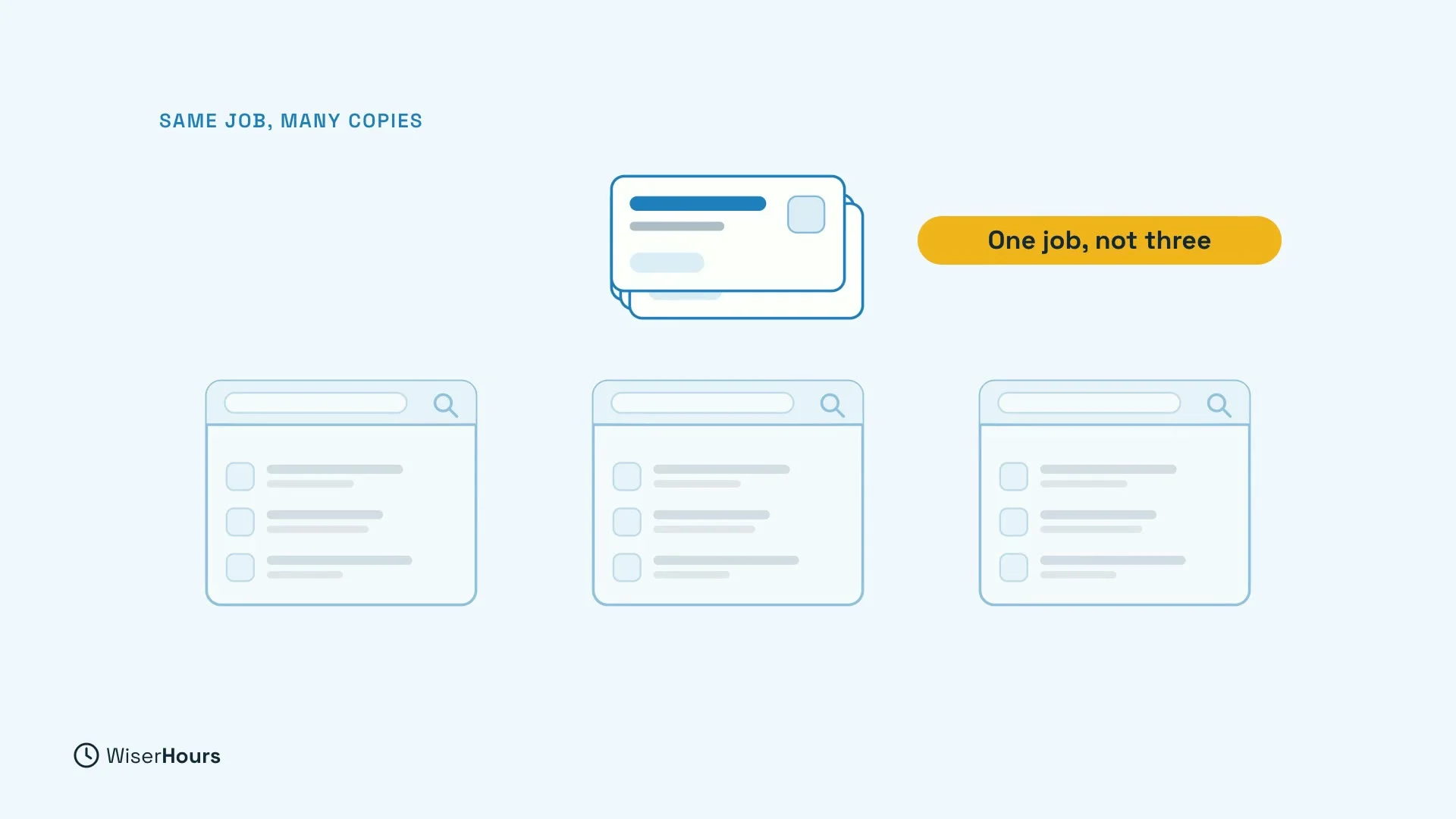
The same job often shows up on several boards. Hiring software posts it widely, and other sites copy it. So more boards often means more repeats, not more jobs. If the same title from the same employer shows up three times, it is one job.
 (opens the full-size picture)
Apply at the source
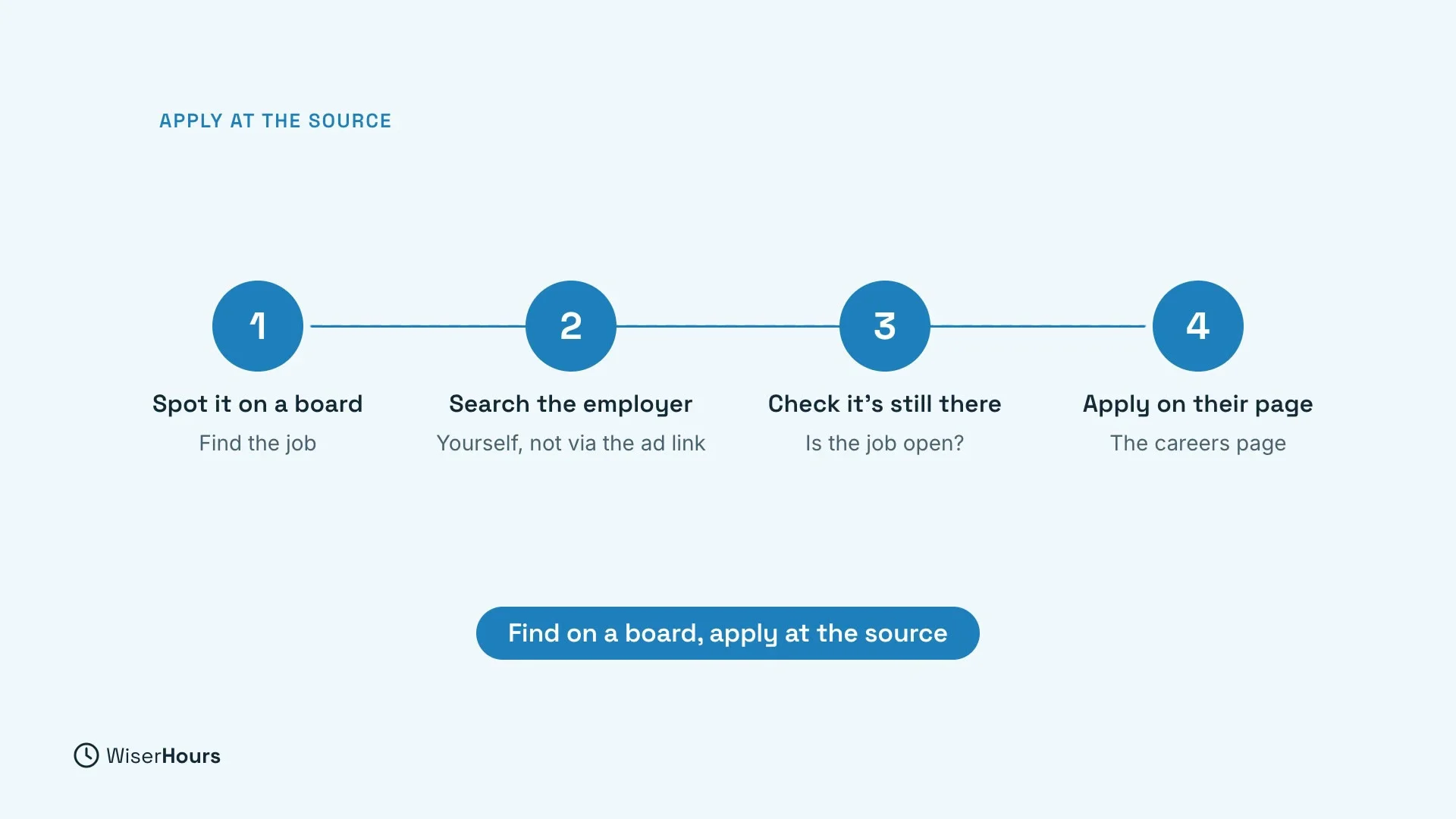
Find jobs on boards, but apply on the employer’s own careers page when you can. Search the employer’s name yourself, rather than clicking links in the ad. Check that the job is still there, then apply.
 (opens the full-size picture)
For professional and senior jobs, recruiters often search for people, not only the other way around. Keep your online profile up to date, with the job title you want. The applicant tracking system and job board articles go further.
Signs of a fake job ad
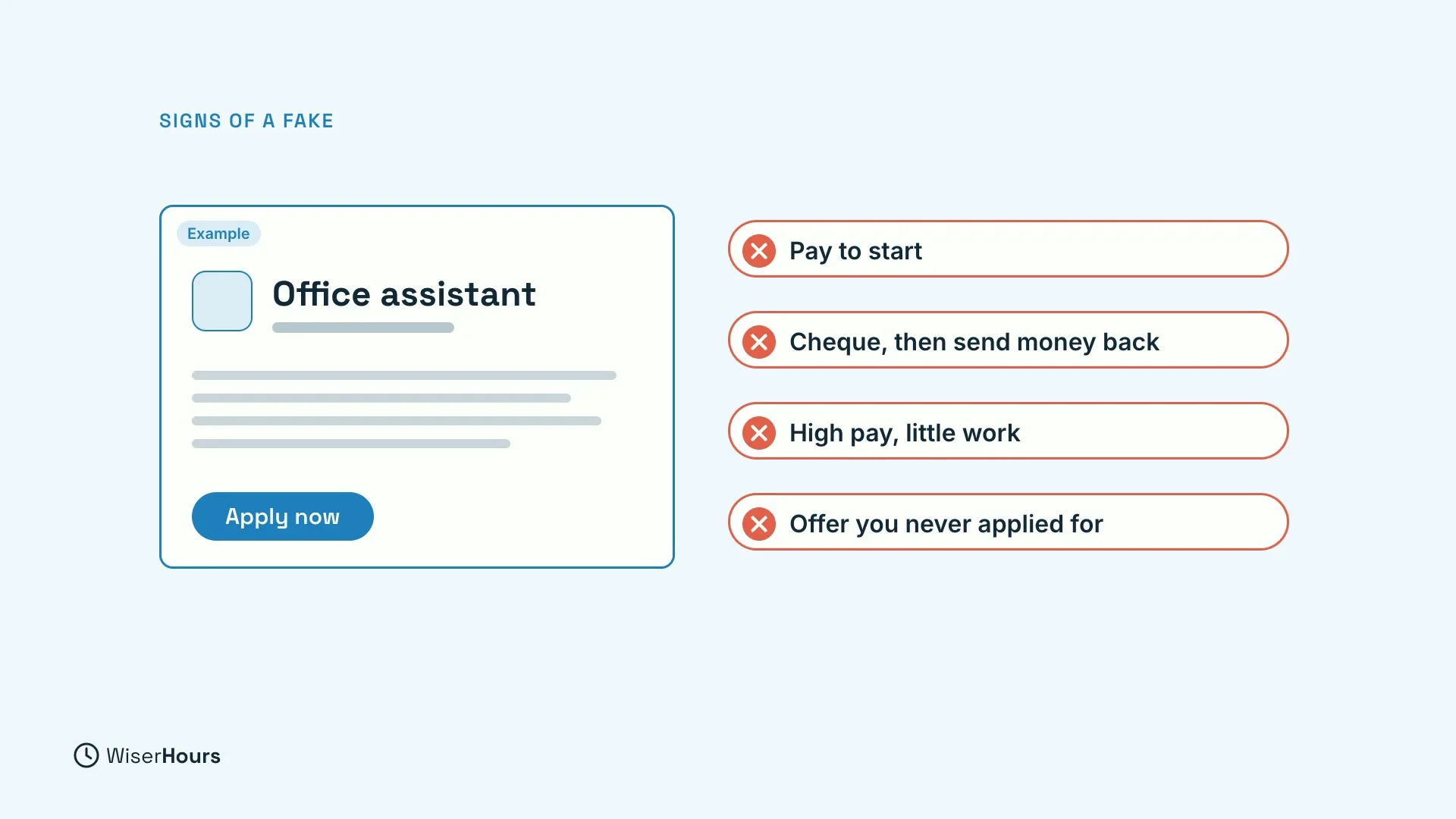
Fake job ads run on the same sites as real ones. Watch for these signs: you have to pay to be hired; they send you a check and ask for some of it back; the pay is high for very little work; or you get a job offer you never applied for.
 (opens the full-size picture)
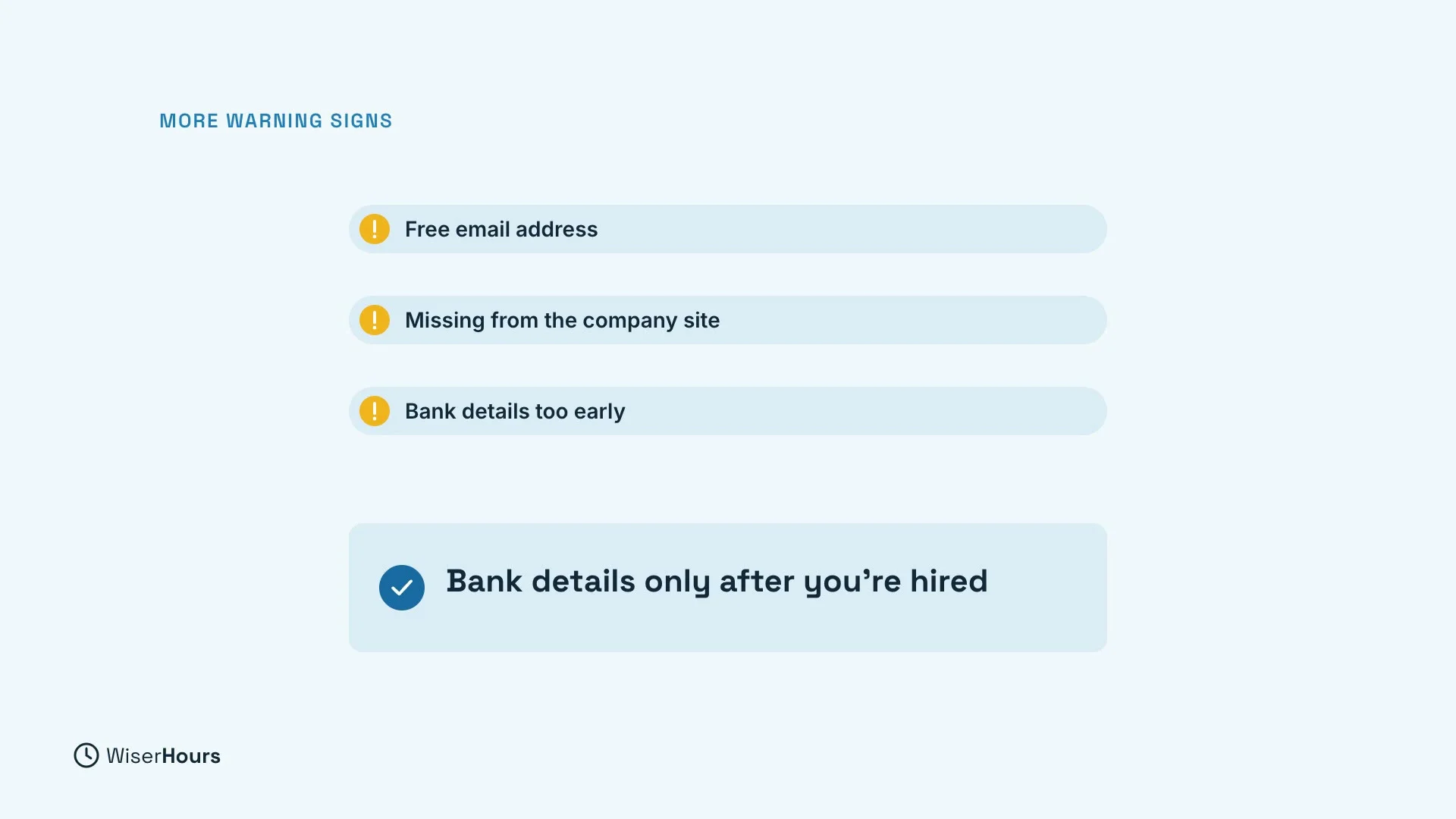
A few more signs: the recruiter writes from a free email address, not a company one; the ad is on job boards but missing from the company’s own website; or they want your bank details before you are hired. Real employers ask for those only for pay, once you have the job.
 (opens the full-size picture)
If something feels wrong
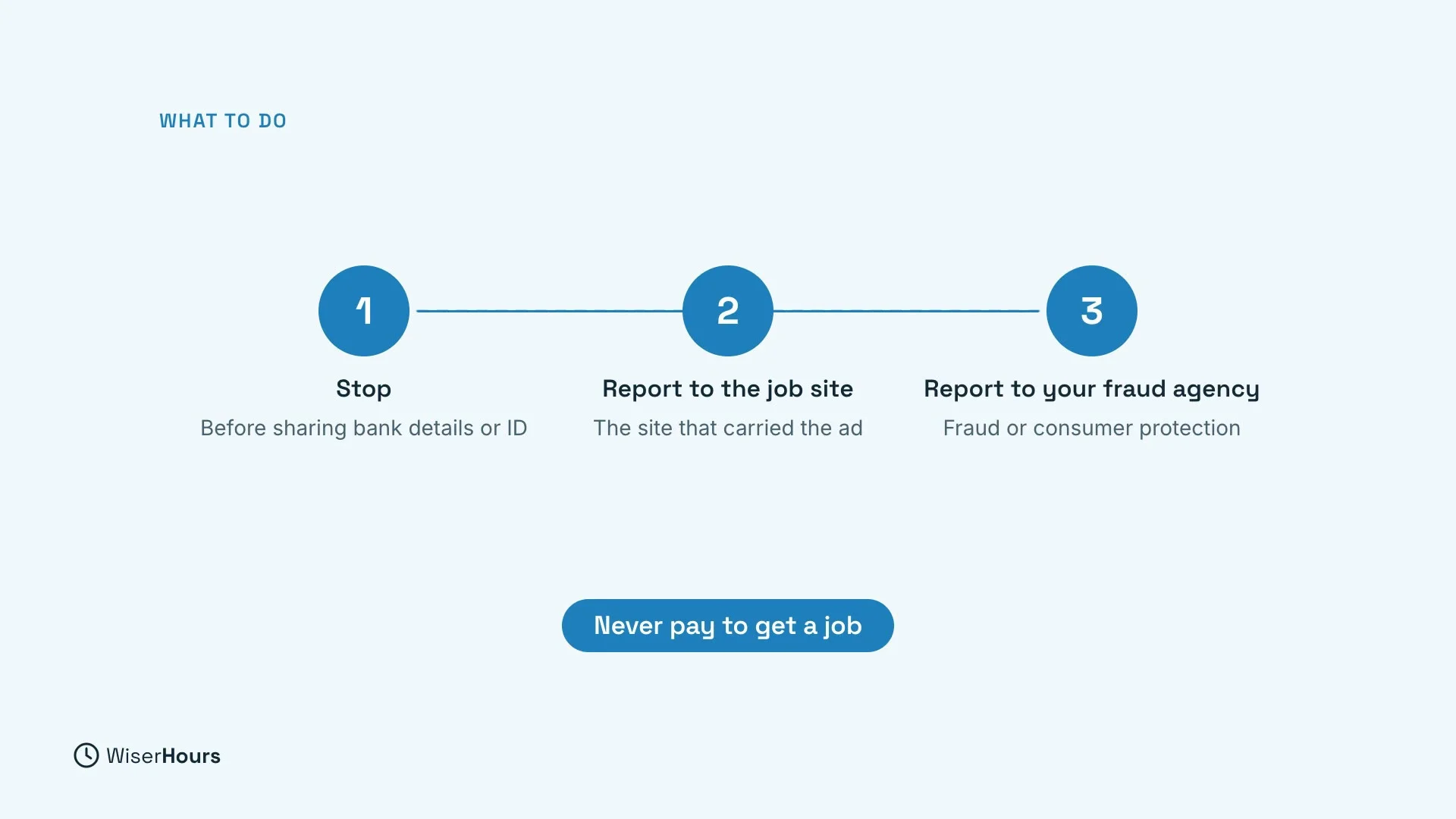
Stop before you share bank details or ID documents. Report the ad to the site that carried it, and to your country’s fraud or consumer protection agency.
 (opens the full-size picture)
YOUR TURN
Read more
- Best Job Boards Compared: what each kind of board is good for.
- Applicant Tracking Systems: why the same job is posted in many places.
Read the full video transcript
In this lesson, you will see where to look for jobs and which job boards are worth your time. And you will learn the signs of a fake job ad.
No single job board is best for everything. Use three kinds. One general board, for what is open near you. One board for your field. And your country's public employment service, for official listings.
The same job often shows up on several boards. Hiring software posts it widely, and other sites copy it. So more boards often means more repeats, not more jobs. If the same title from the same employer shows up three times, it is one job.
Find jobs on boards, but apply on the employer's own careers page when you can. Search the employer's name yourself, rather than clicking links in the ad. Check that the job is still there, then apply.
For professional and senior jobs, recruiters often search for people, not only the other way around. So keep your online profile up to date, with the job title you want.
Fake job ads run on the same sites as real ones. Watch for these signs. You have to pay to be hired. They send you a check and ask for some of it back. The pay is high for very little work. Or you get a job offer you never applied for.
A few more signs. The recruiter writes from a free email address, not a company one. The ad is on job boards, but missing from the company's own website. Or they want your bank details before you are hired. Real employers ask for those only for pay, once you have the job.
If something feels wrong, stop before you share bank details or ID documents. Report the ad to the site that carried it, and to your country's fraud or consumer protection agency.
So use three kinds of job board. Apply on the employer's own page when you can. And never pay to get a job.
Before the next lesson, set up one saved search, on a general board or your public employment service.
Next, you will write a CV that gives proof, not just nice words.
MAKE IT A SMALL WIN
Finished this lesson?
Mark it complete to save your progress on this device.