Interviews · Lesson 8 of 10
Prepare for an Interview From the Job Ad
Turn a job ad into four to six requirements, match each to a true story, and practise out loud with feedback before the interview.
English captions available in the player. Prefer reading? Follow the written lesson below.
Good interview preparation starts from the way interviews are scored. This lesson shows you how to build your preparation from the job ad and how to practise so that your answers come out clearly on the day.
How answers are scored
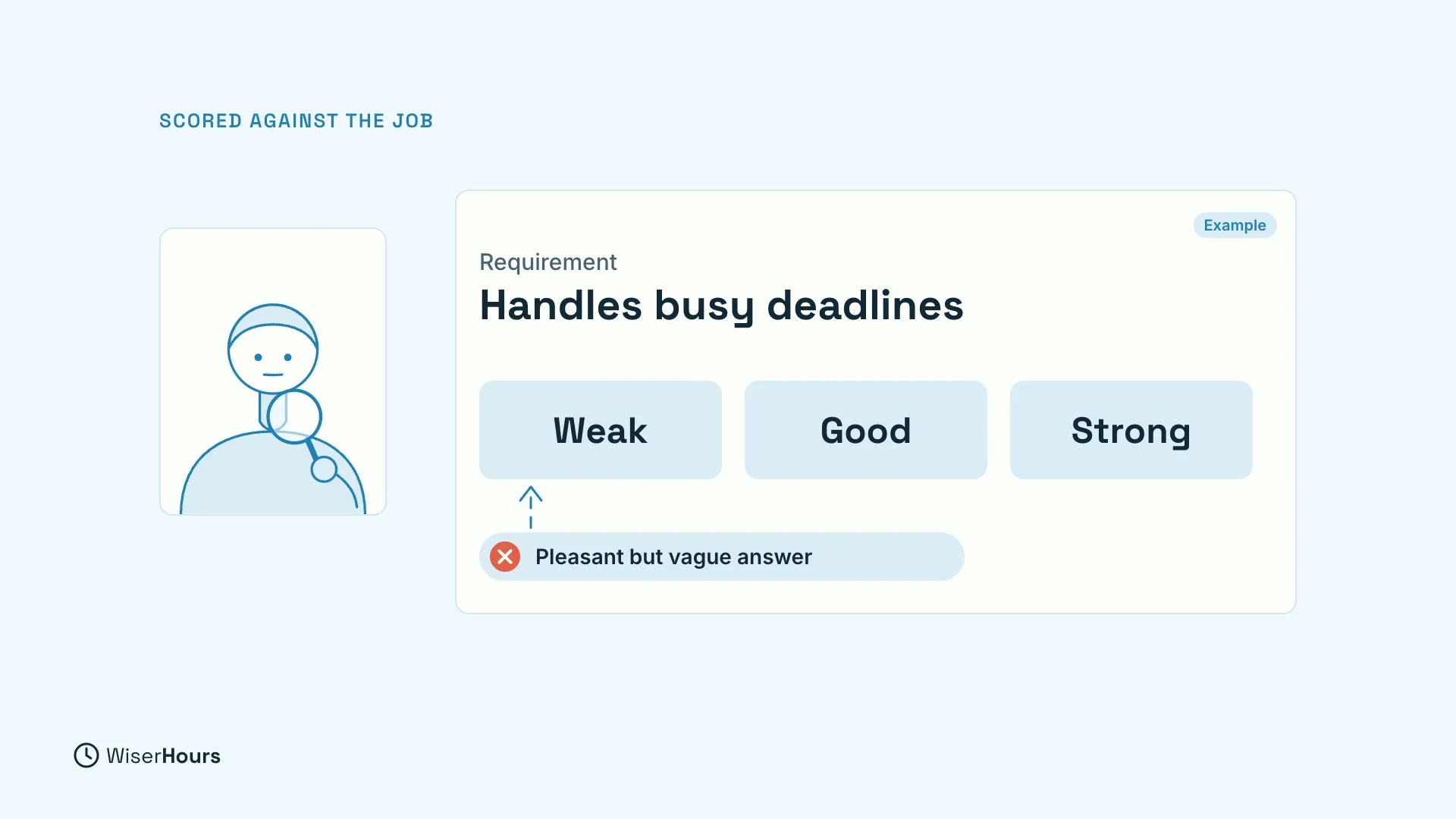
In a well-run interview, every answer is scored against what the job needs. The interviewer has a question tied to one requirement and a scale for weak, good and strong answers. A pleasant but vague reply scores low.
 (opens the full-size picture)
Turn the ad into a list
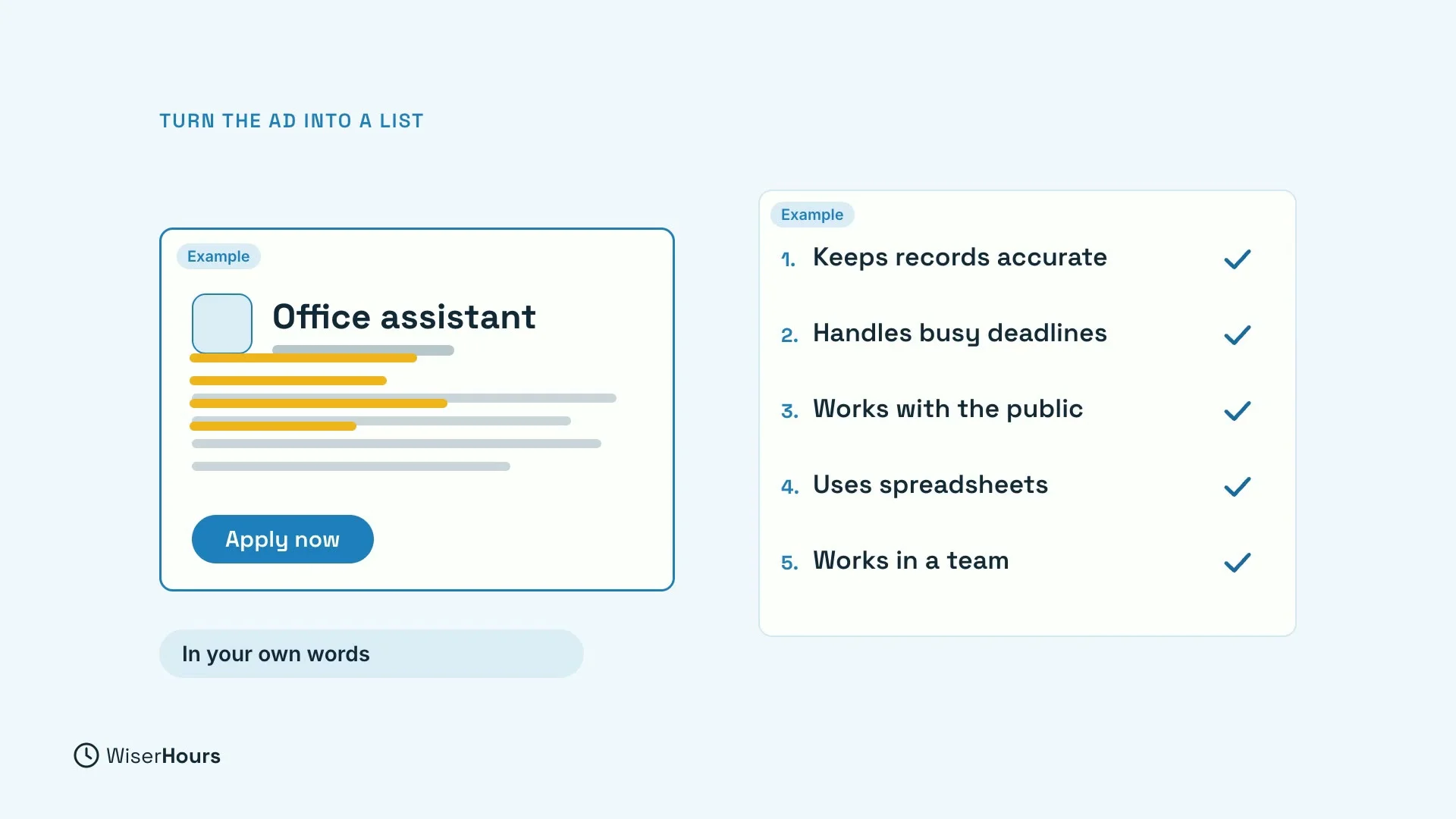
The job ad is your best study guide. Mark every skill and duty it stresses. Then boil them down to four to six requirements in your own words.
 (opens the full-size picture)
A true story for each
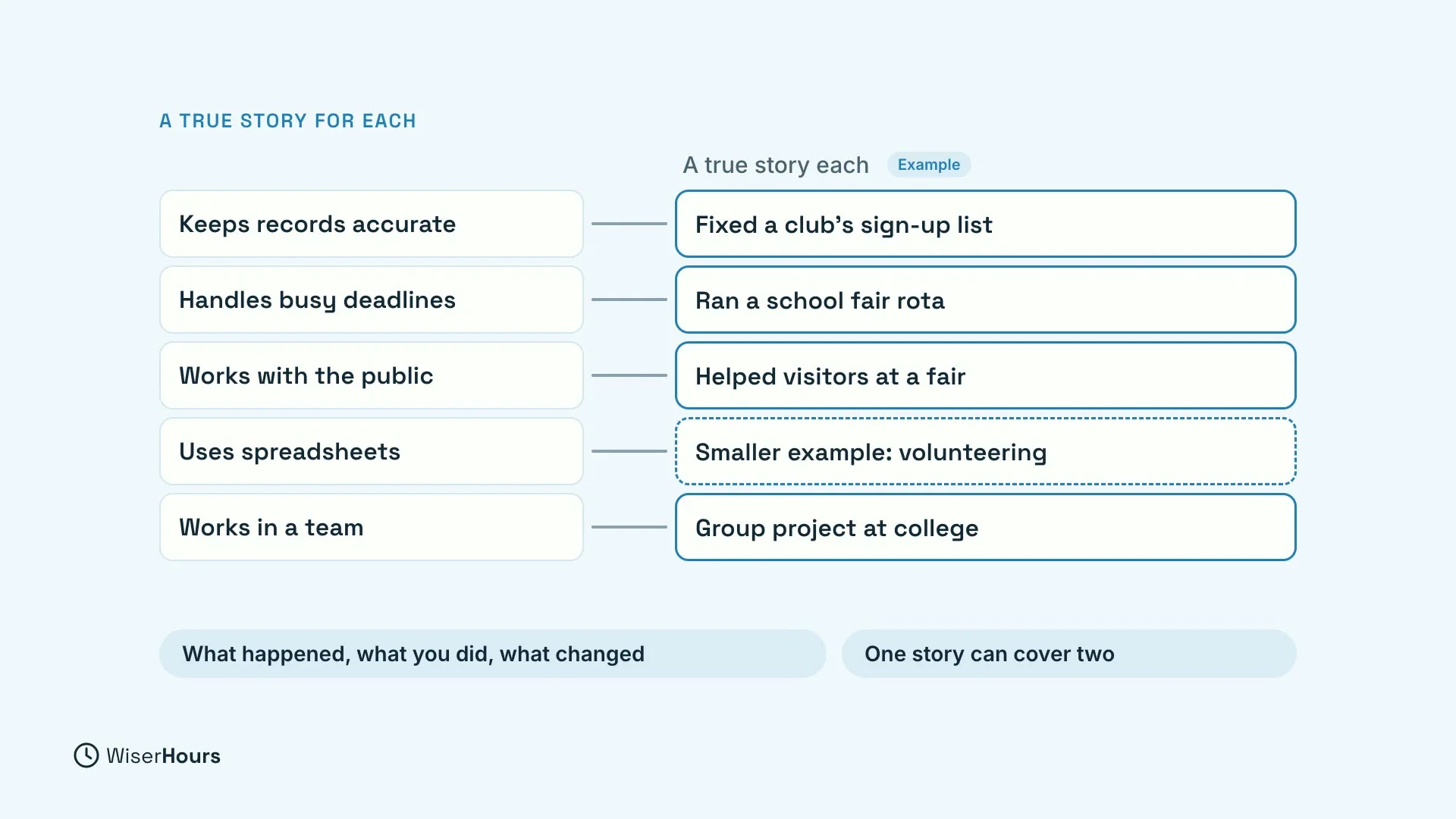
For each requirement, pick one real example: the situation, what you did and what changed. One strong story can cover two requirements. If one has no story, find a smaller example, from a side project or volunteer work.
 (opens the full-size picture)
Practise out loud
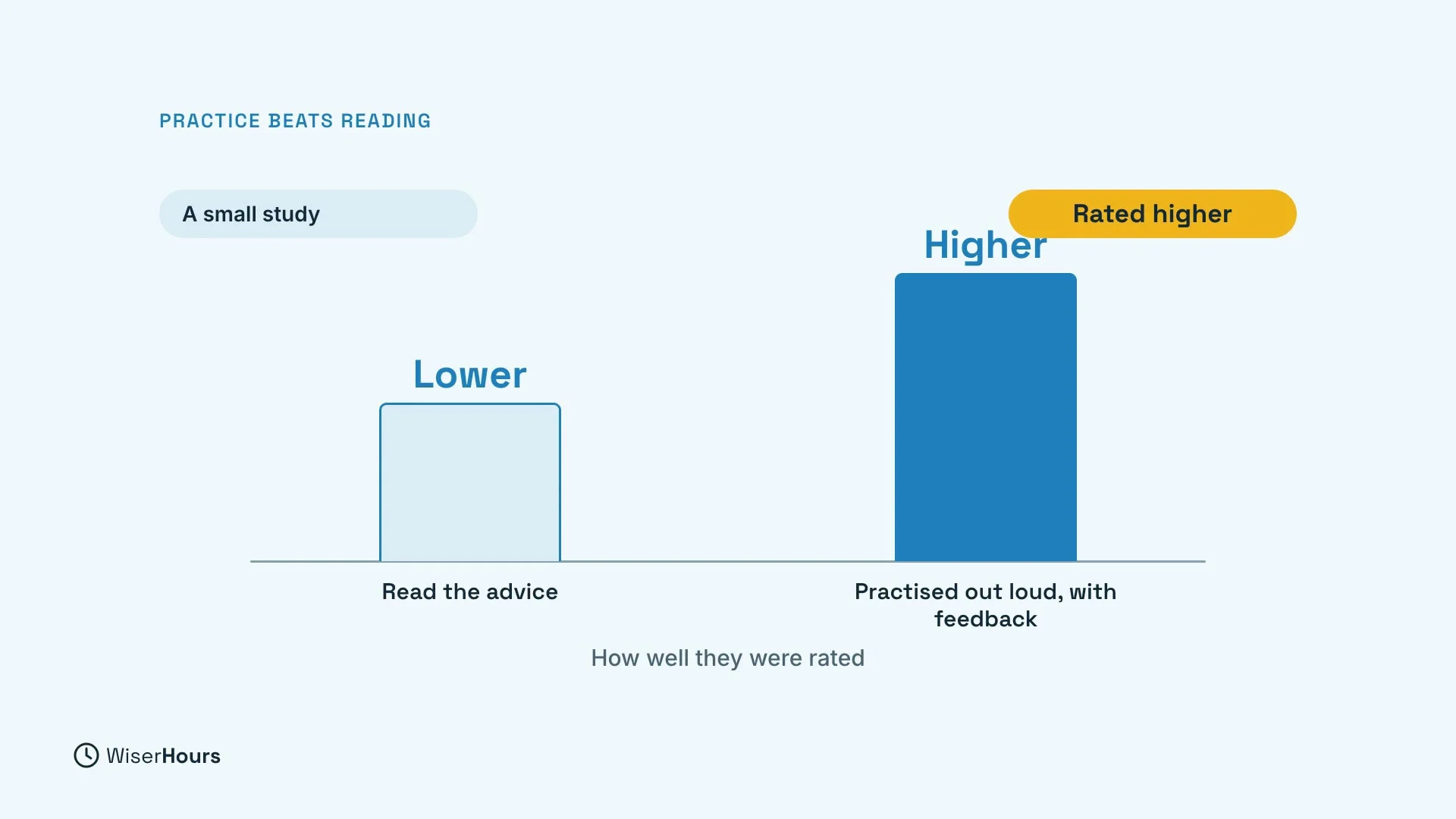
This is the step with the best evidence. In a small study, people who rehearsed a full practice interview with feedback were rated higher than people who only read the same advice.
 (opens the full-size picture)
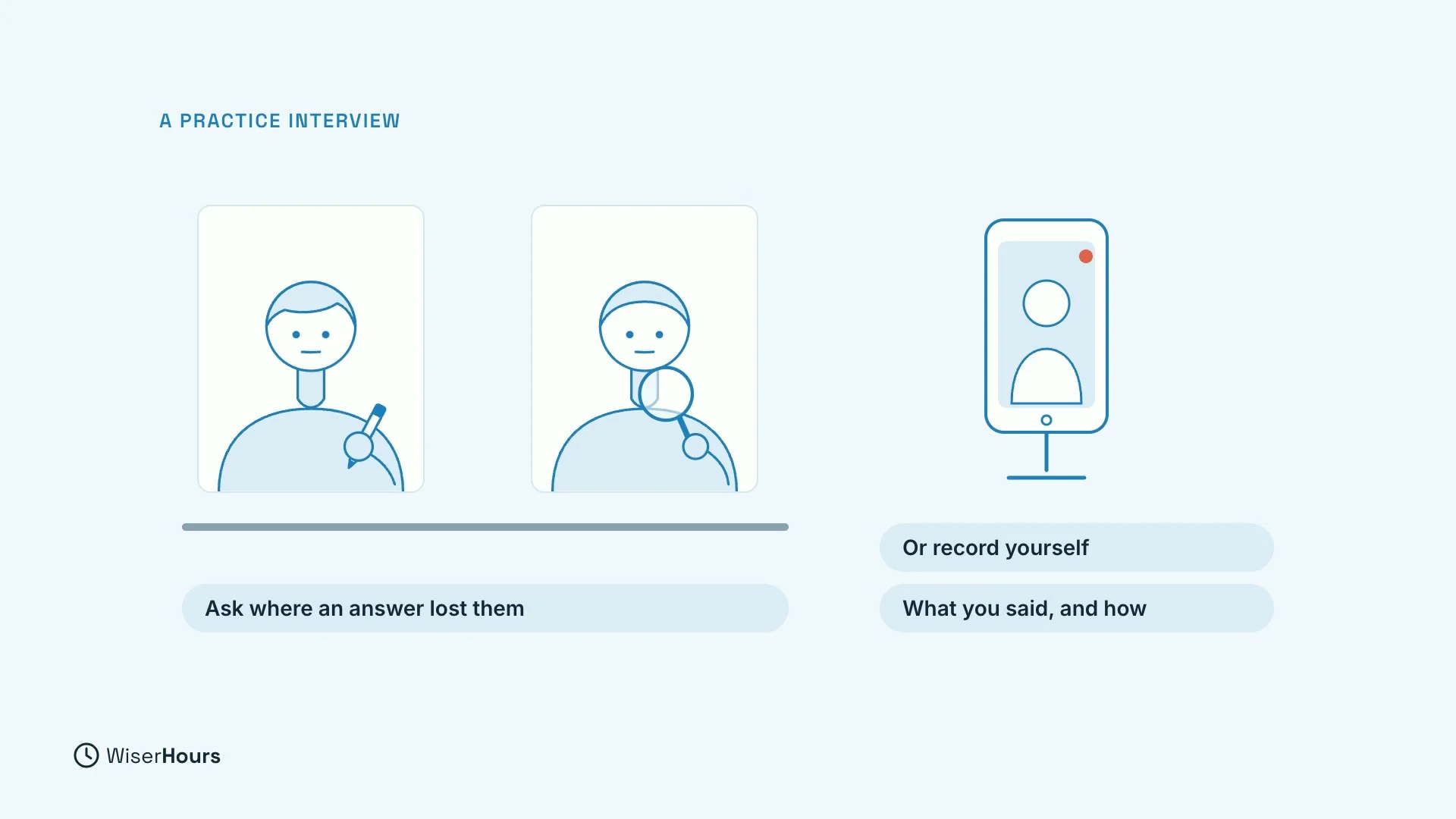
Ask someone to play the interviewer and to tell you where an answer lost them. If no one is free, record yourself and watch it back. Check what you said and how you said it.
 (opens the full-size picture)
Nerves are normal
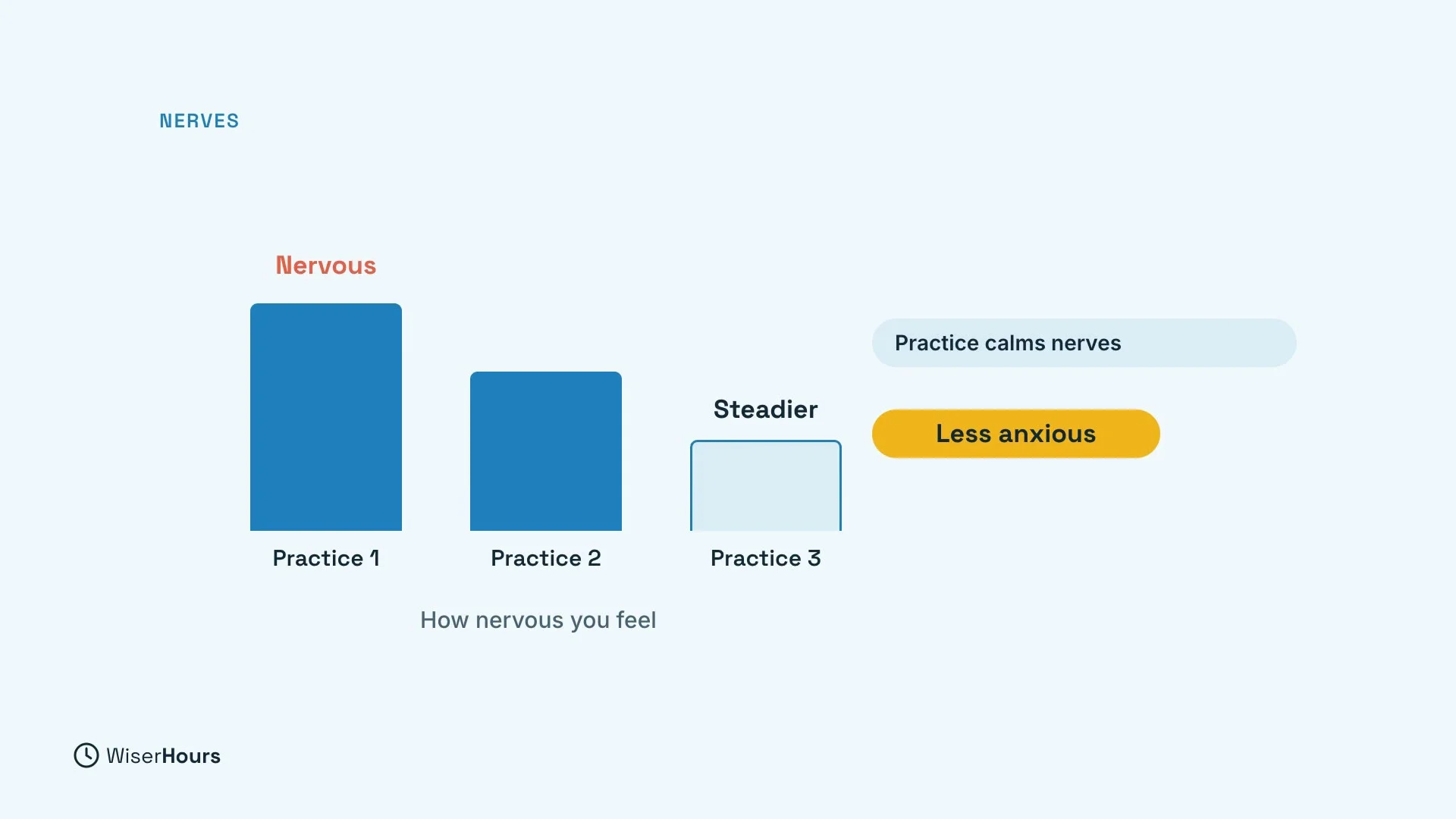
Nerves are normal, and they do go with somewhat lower scores. Practice helps here too: in that study, people who practised a full interview also felt less anxious.
 (opens the full-size picture)
The practical bits
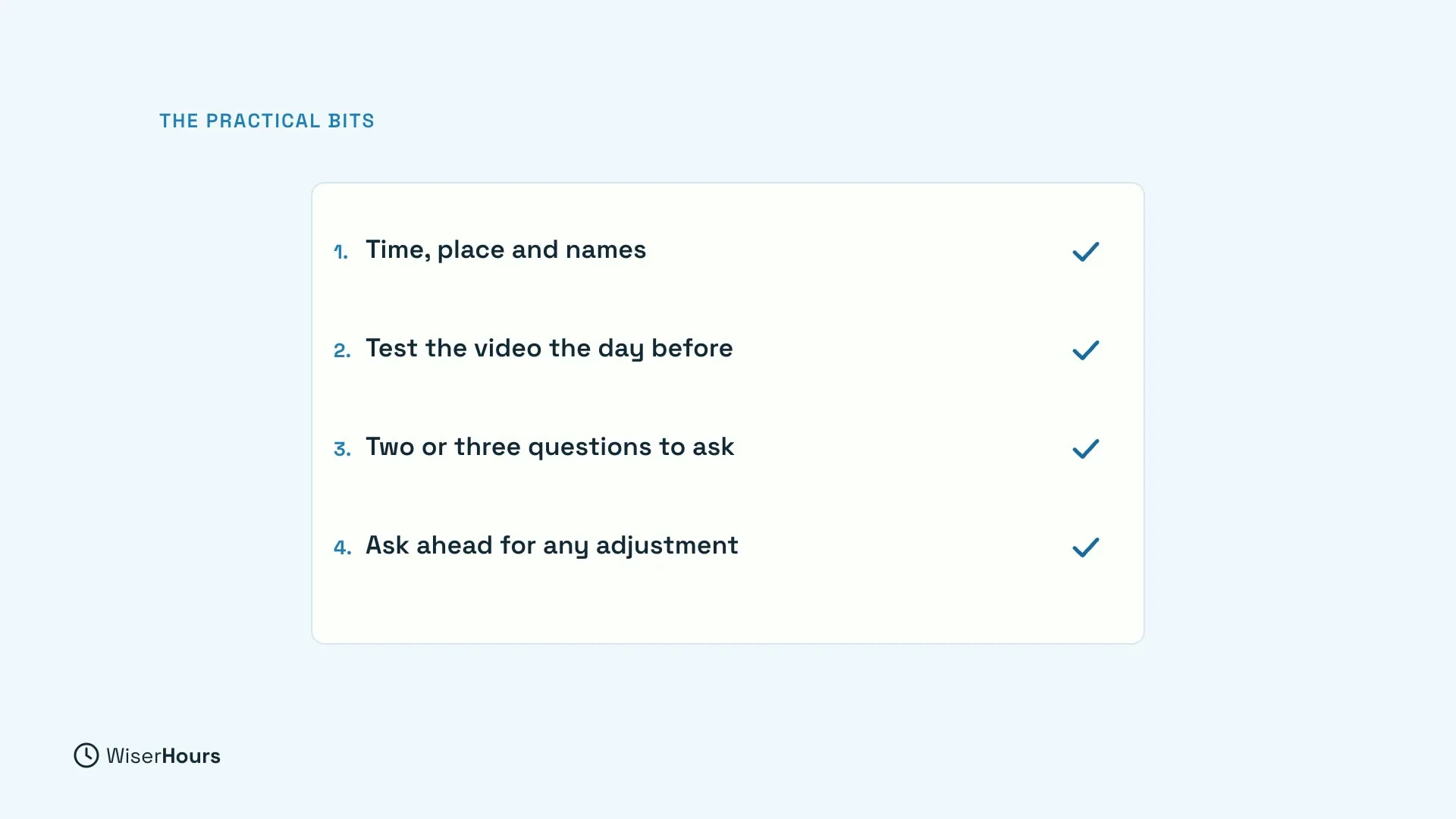
Confirm the time, place and format, and the names of who you will meet. For a video interview, test your setup the day before. Prepare two or three questions of your own. And if you need an adjustment, ask ahead.
 (opens the full-size picture)
YOUR TURN
Read more
- How to Prepare for a Job Interview: A Complete Checklist: a full checklist for the days before.
- 25 Smart Questions to Ask at the End of an Interview: ideas for the questions of your own.
- How to Follow Up After an Interview Without Being Annoying: what to do once the interview is over.
Read the full video transcript
In this lesson, you will prepare for an interview the way it is scored, starting from the job ad and ending with practice out loud.
In a well-run interview, every answer is scored against what the job needs. The interviewer has a question tied to one requirement and a scale for weak, good and strong answers. A pleasant but vague reply scores low.
So the job ad is your best study guide. Mark every skill and duty it stresses. Then boil them down to four to six requirements in your own words.
For each requirement, pick one real example, the situation, what you did, and what changed. One strong story can cover two requirements. If one has no story, find a smaller example, from a side project or volunteer work.
Now the step with the best evidence. Say your answers out loud. In a small study, people who rehearsed a full practice interview with feedback were rated higher than people who only read the same advice.
Ask someone to play the interviewer and to tell you where an answer lost them. If no one is free, record yourself and watch it back. Check what you said and how you said it.
Nerves are normal, and they do go with somewhat lower scores. Practice helps here too. In that study, people who practiced a full interview also felt less anxious.
Then the practical bits. Confirm the time, place and format, and the names of who you will meet. For a video interview tested the day before, prepare two or three questions of your own. And if you need an adjustment, ask ahead.
So prepare from the job ad, match each requirement to a true story, and practice out loud with feedback.
Before the next lesson, turn one job ad into five requirements, each with one story.
Next, you will answer the first question of almost every interview. Tell me about yourself.
MAKE IT A SMALL WIN
Finished this lesson?
Mark it complete to save your progress on this device.