Why it feels hard · Lesson 2 of 10
How Many Hours It Takes to Make a Friend
See roughly how many hours turn an acquaintance into a friend, which time counts most, and how to plan for those hours.
 Video coming soon
Many people think friendship is about being likeable, funny or outgoing. Research on how friendships form points somewhere more practical: time. In this lesson you will see how many hours it takes to turn someone you have just met into a friend, which kind of time counts most, and what that means for your week.
The numbers
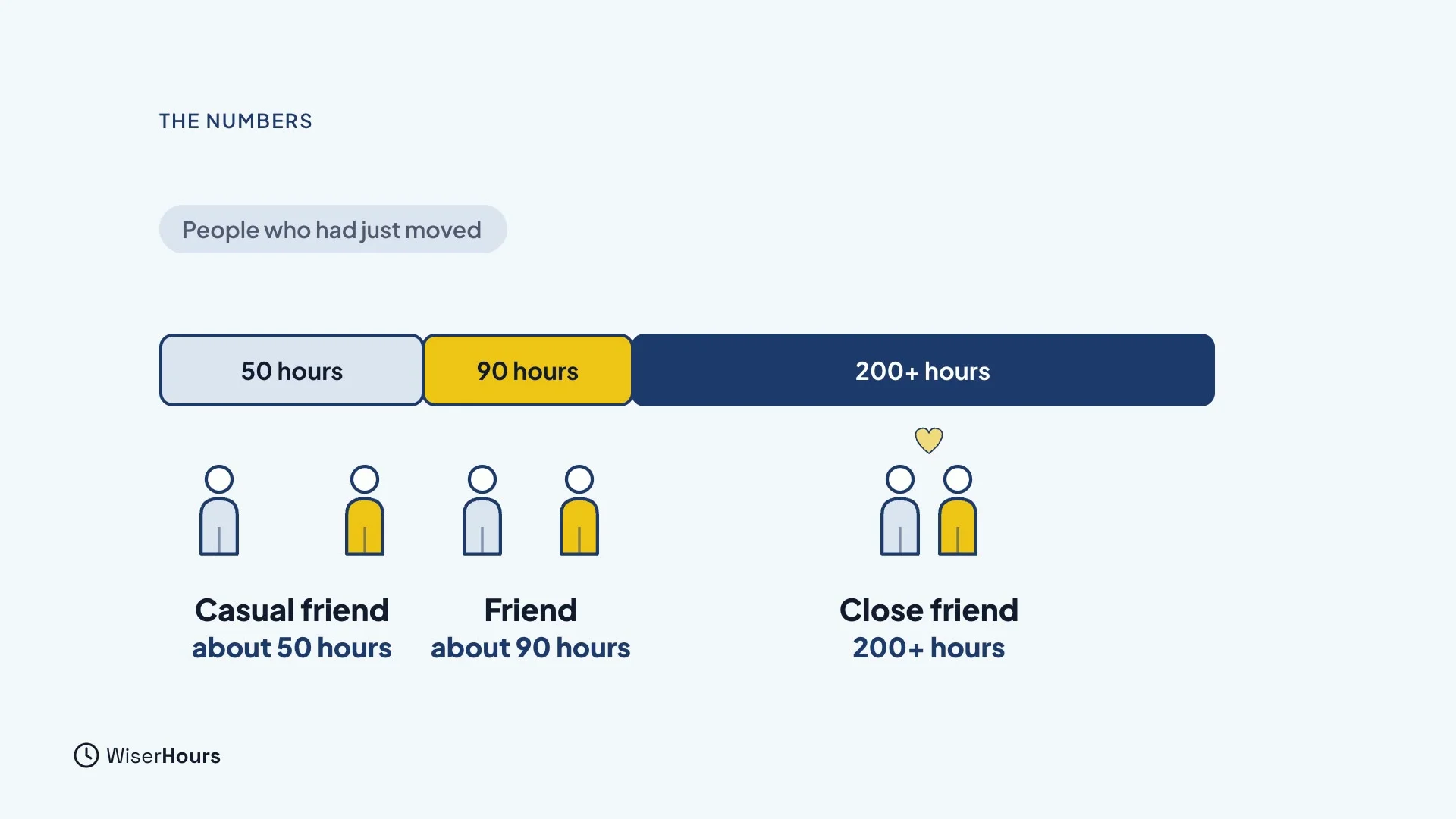
Researchers asked adults who had just moved to a new city, and students in their first weeks at university, about the people they had met. Going from acquaintance to casual friend took about 50 hours together. Becoming a real friend took about 90. And a close friend took more than 200 hours.
These numbers come from a University of Kansas study of how long it takes to make a friend. Treat them as a rough guide, not a rule. They describe people in a new place who had time and reasons to meet.
 (opens the full-size picture)
Which time counts
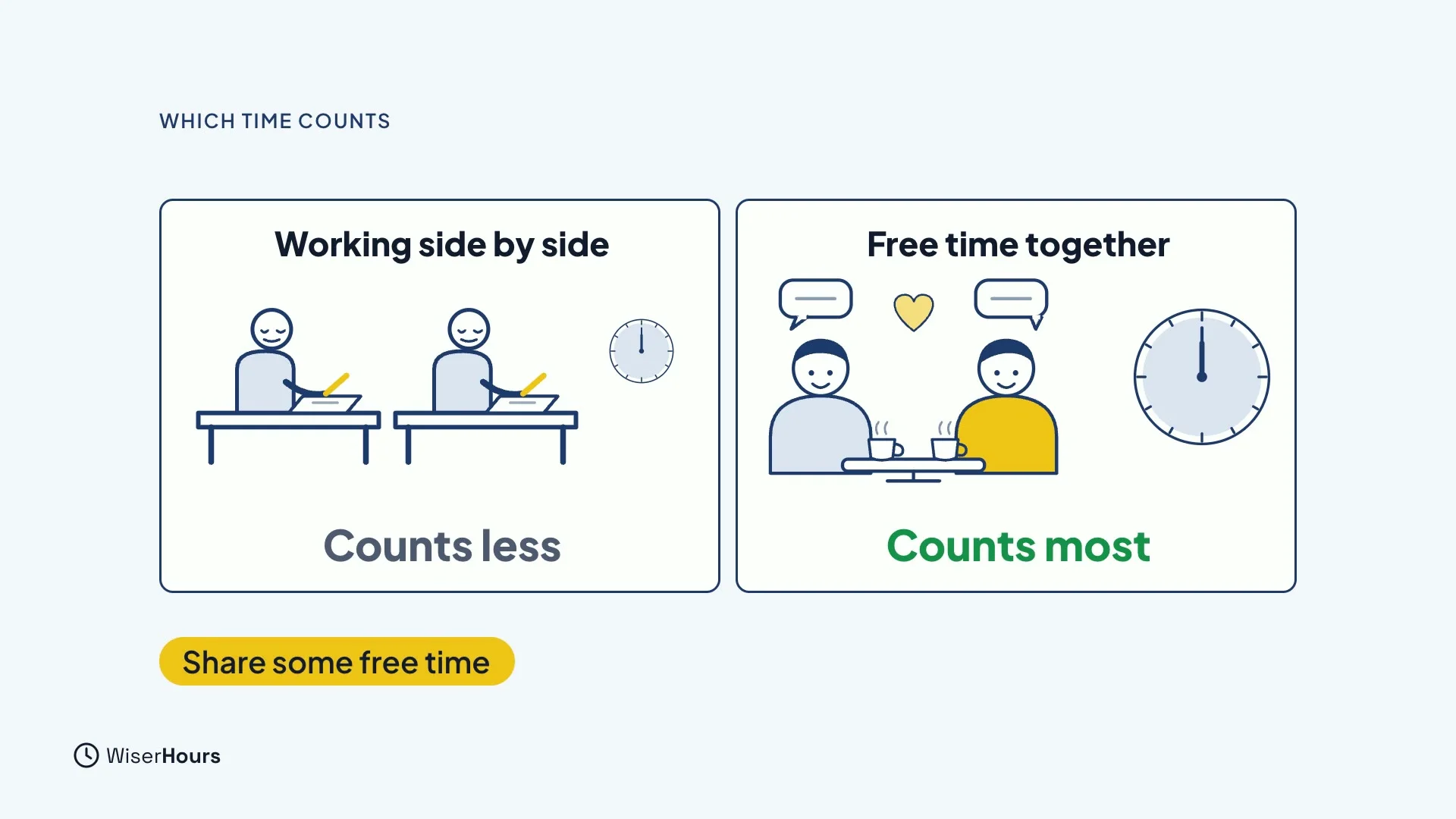
Not every hour counts the same. Time spent hanging out, joking around and playing together made the difference. Hours spent working side by side counted much less. So a colleague you sit next to all day can stay an acquaintance, until you share some free time.
 (opens the full-size picture)
A small example
You and a colleague may sit in the same office all week. A single shared lunch can do more for the friendship than another day of sitting at neighboring desks.
Moving up a stage
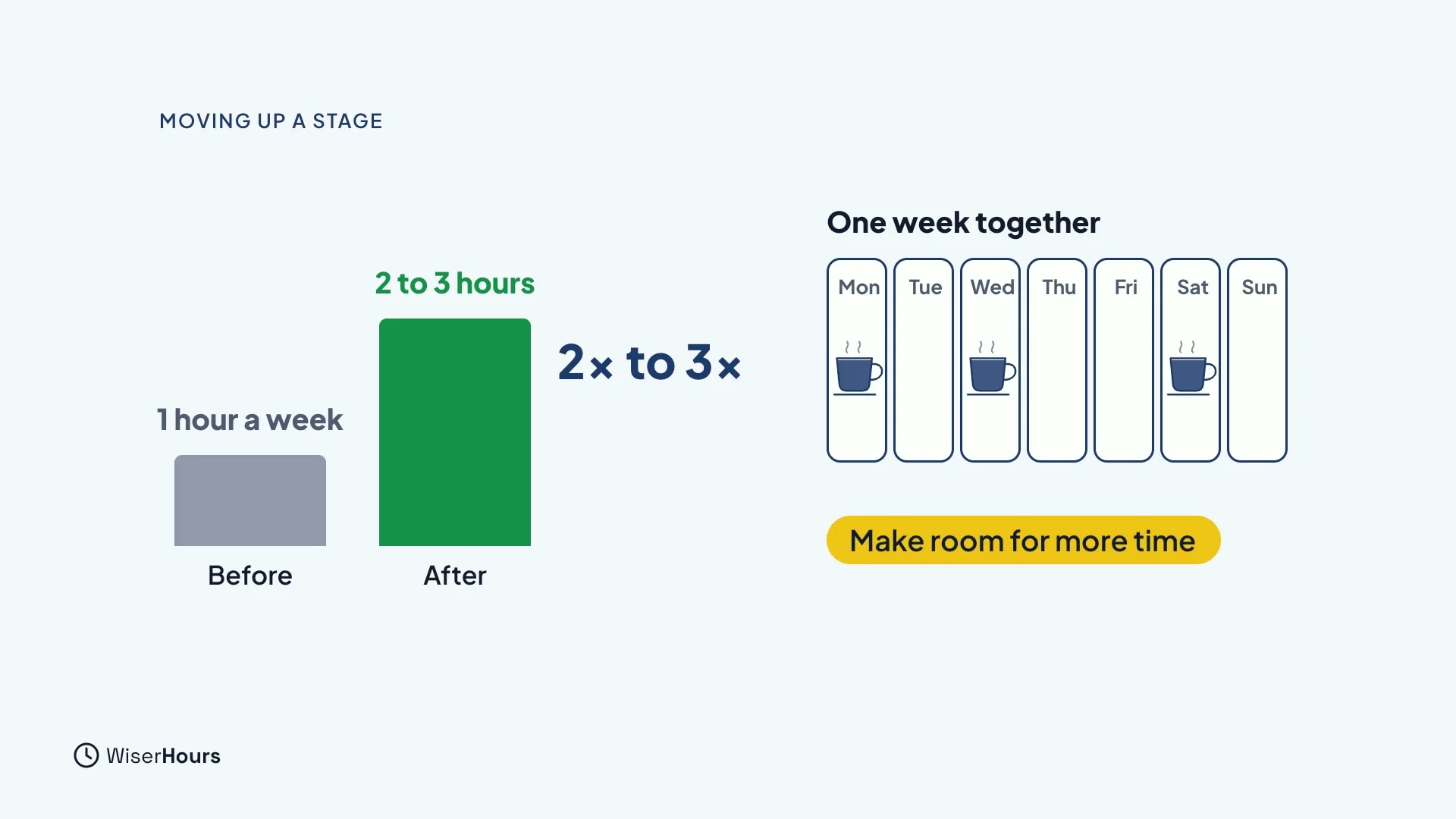
The study found something else. When two people moved from one stage of friendship to the next, they often doubled or tripled the time they spent together. For example, two people who meet for one hour a week might start meeting for two or three hours.
Friendships grow when someone makes room for more time, not just when they happen to meet.
 (opens the full-size picture)
Without time, friendships fade
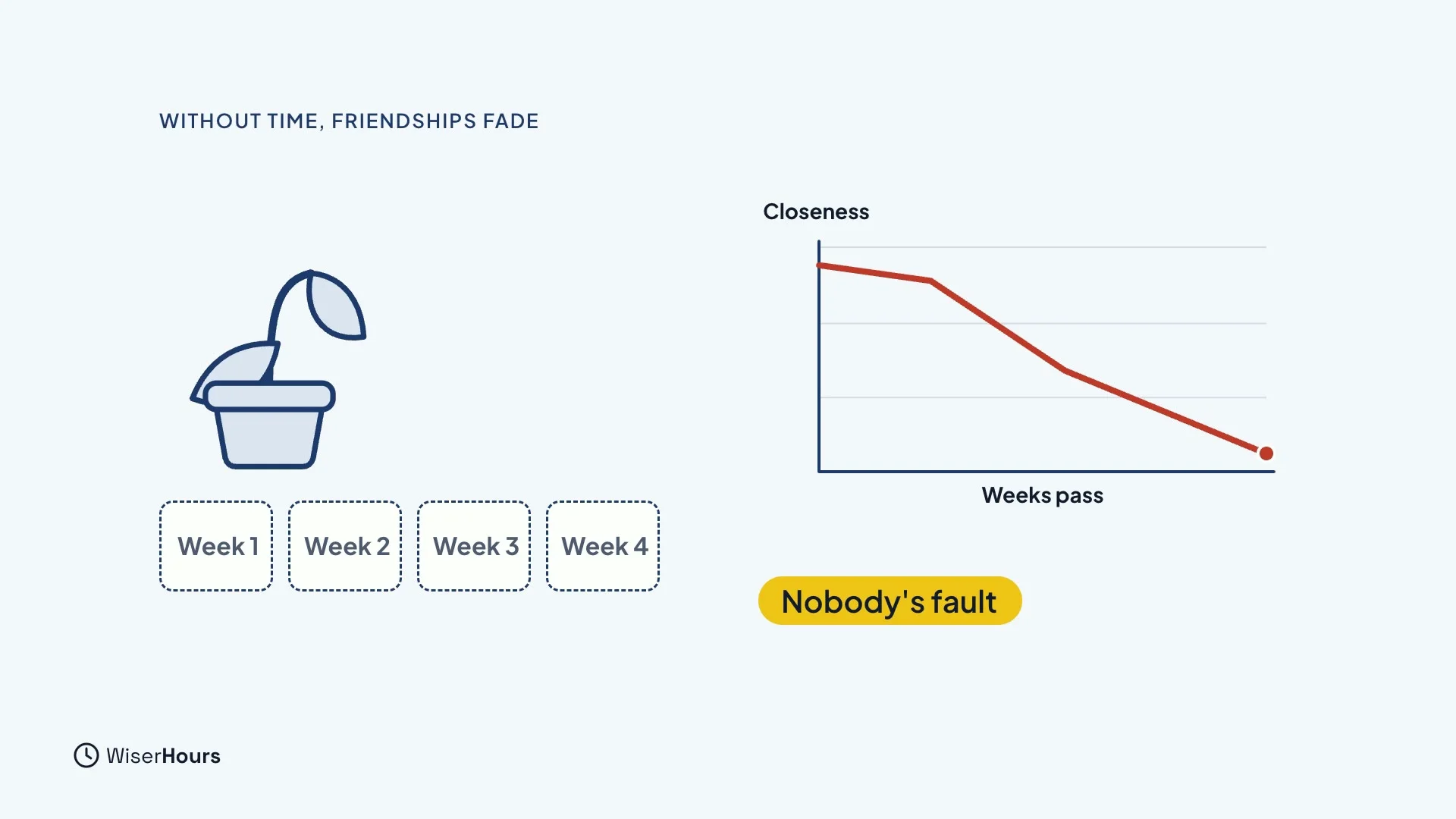
Time works the other way too. When contact stops, friendships usually fade, slowly and without anyone deciding it. That is not anyone’s fault. It is simply what happens when the hours dry up. Dunbar’s Number covers this in more detail.
 (opens the full-size picture)
A better question
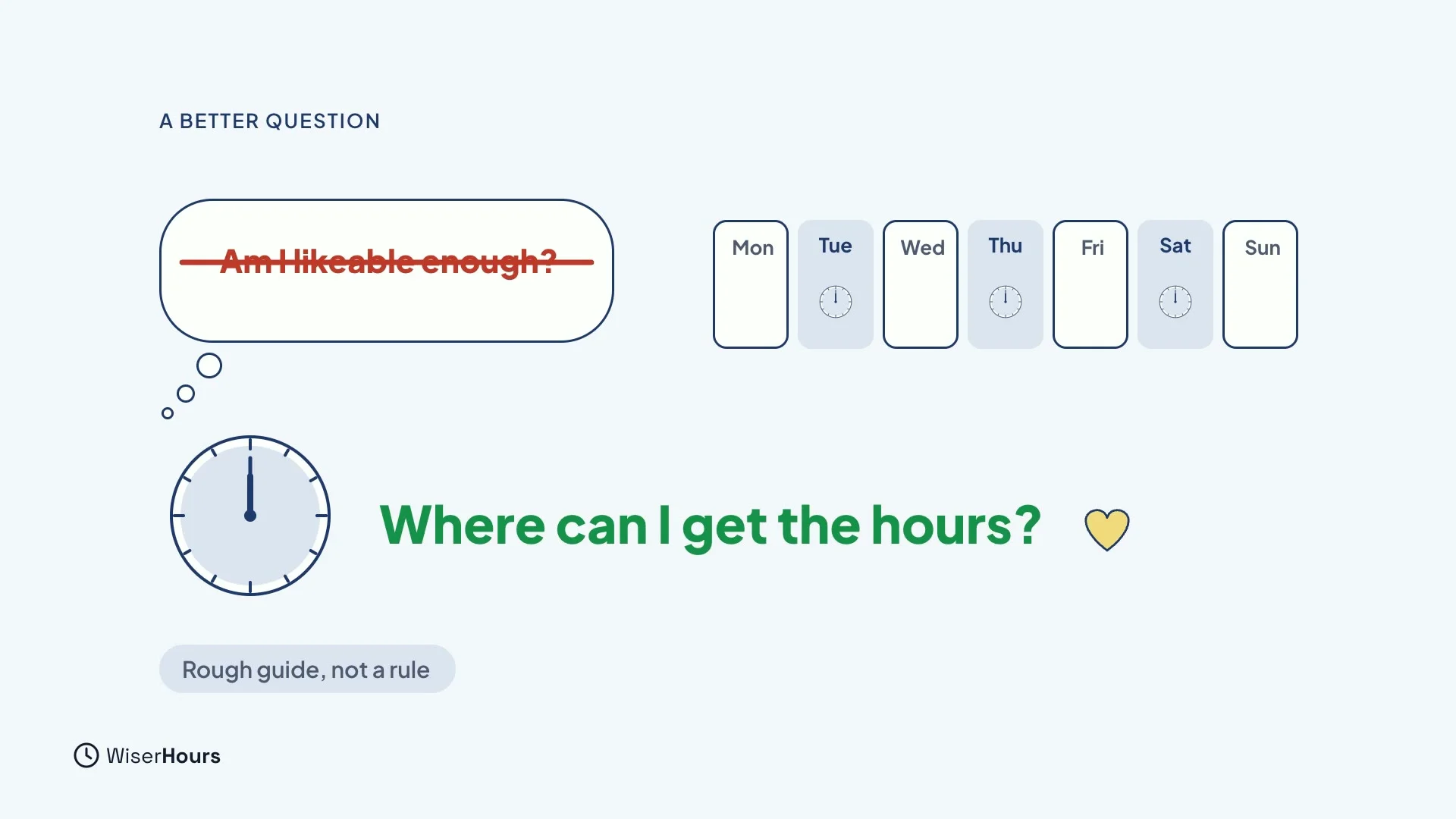
These numbers are rough. They come from people in a new place, who had time and reasons to meet. But they change the question. Instead of asking “Am I likeable enough?”, ask “Where can I get the hours?” That is a problem you can plan for.
 (opens the full-size picture)
YOUR TURN
Read more
- Dunbar’s Number: how time together shapes closeness, and why friendships slide outward when effort drops.
- How many hours does it take to make a friend?: the University of Kansas news release on the study behind the numbers.
Read the full lesson script
Welcome back. In this lesson, you'll see how many hours it really takes to turn someone you've just met into a friend, which kind of time counts most, and what that means for your week.
Researchers asked adults who had just moved to a new city, and students in their first weeks at university, about the people they'd met. Going from acquaintance to casual friend took about fifty hours together. Becoming a real friend took about ninety. And a close friend took more than two hundred hours.
Not every hour counts the same. Time spent hanging out, joking around and playing together made the difference. Hours spent working side by side counted much less. So a colleague you sit next to all day can stay an acquaintance, until you share some free time.
The study found something else. When two people moved from one stage of friendship to the next, they often doubled or tripled the time they spent together. Friendships grow when someone makes room for more time, not just when they happen to meet.
Time works the other way too. When contact stops, friendships usually fade, slowly and without anyone deciding it. That isn't anyone's fault. It's simply what happens when the hours dry up.
These numbers are rough. They come from people in a new place, who had time and reasons to meet. But they change the question. Instead of asking, am I likeable enough, ask, where can I get the hours? That's a problem you can plan for.
So remember: a casual friend takes about fifty hours, and a close friend more than two hundred. Free time together counts much more than working side by side. And friendships fade when the hours stop. Before the next lesson, name two people you'd like to know better, and estimate how many hours you spend with each in a month. Next, you'll find places where you'll see the same people again and again.
MAKE IT A SMALL WIN
Finished this lesson?
Mark it complete to save your progress on this device.