Getting closer · Lesson 7 of 10
Go Deeper in Friendships and Put the Phone Away
Move past small talk by sharing a little more in turns, listen so people feel understood, and keep your phone from getting in the way.
 Video coming soon
You have made an invitation, and you are spending time together. Now the question is how to move past small talk. This lesson shows you how to share a little more, listen so people feel understood, and stop your phone from getting in the way.
Share a bit more, in turns
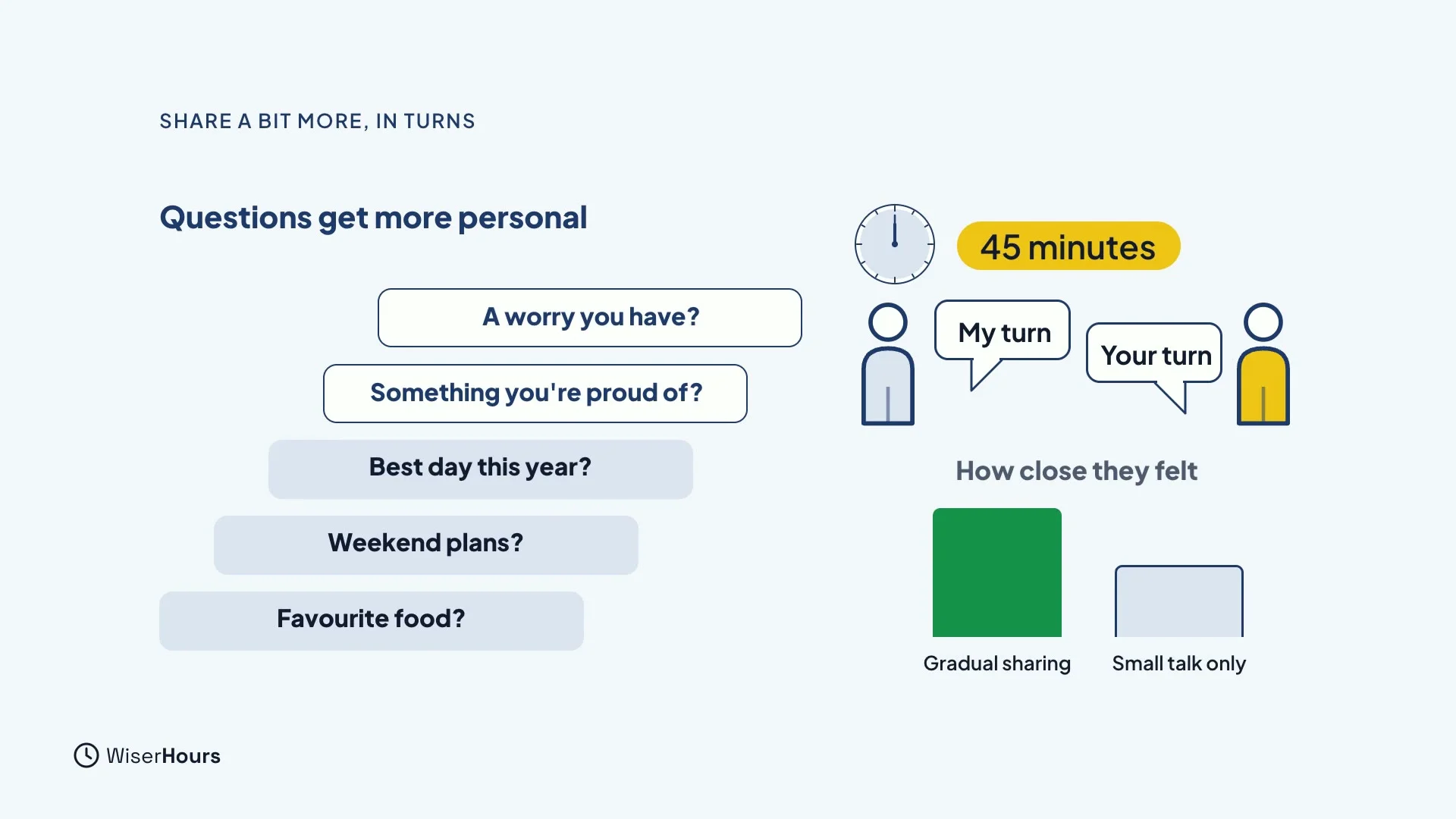
Closeness grows in small steps, when both people share about the same amount. In one experiment, pairs took turns answering questions that slowly became more personal. After forty-five minutes, they felt closer than pairs who only made small talk. You can do a relaxed version in daily life: start light, then go one step deeper each time.
 (opens the full-size picture)
Real, not heavy
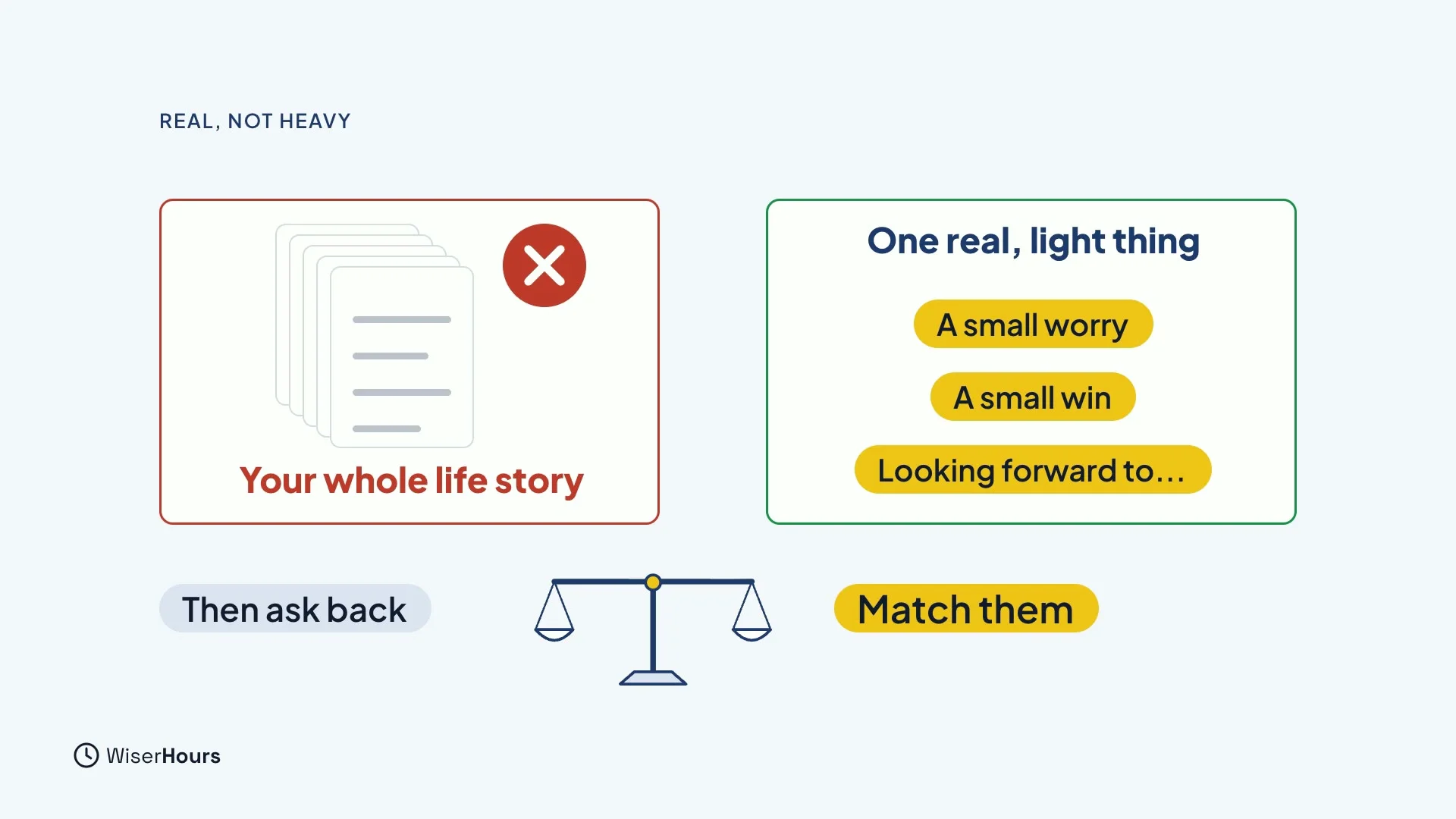
You do not need to tell your life story. Share something real but light: a small worry about a new job, a small win, or something you are looking forward to. Then ask back. If the other person opens up, match them, not much more and not much less. Matching keeps the sharing balanced, so neither of you feels exposed.
 (opens the full-size picture)
Listen to understand
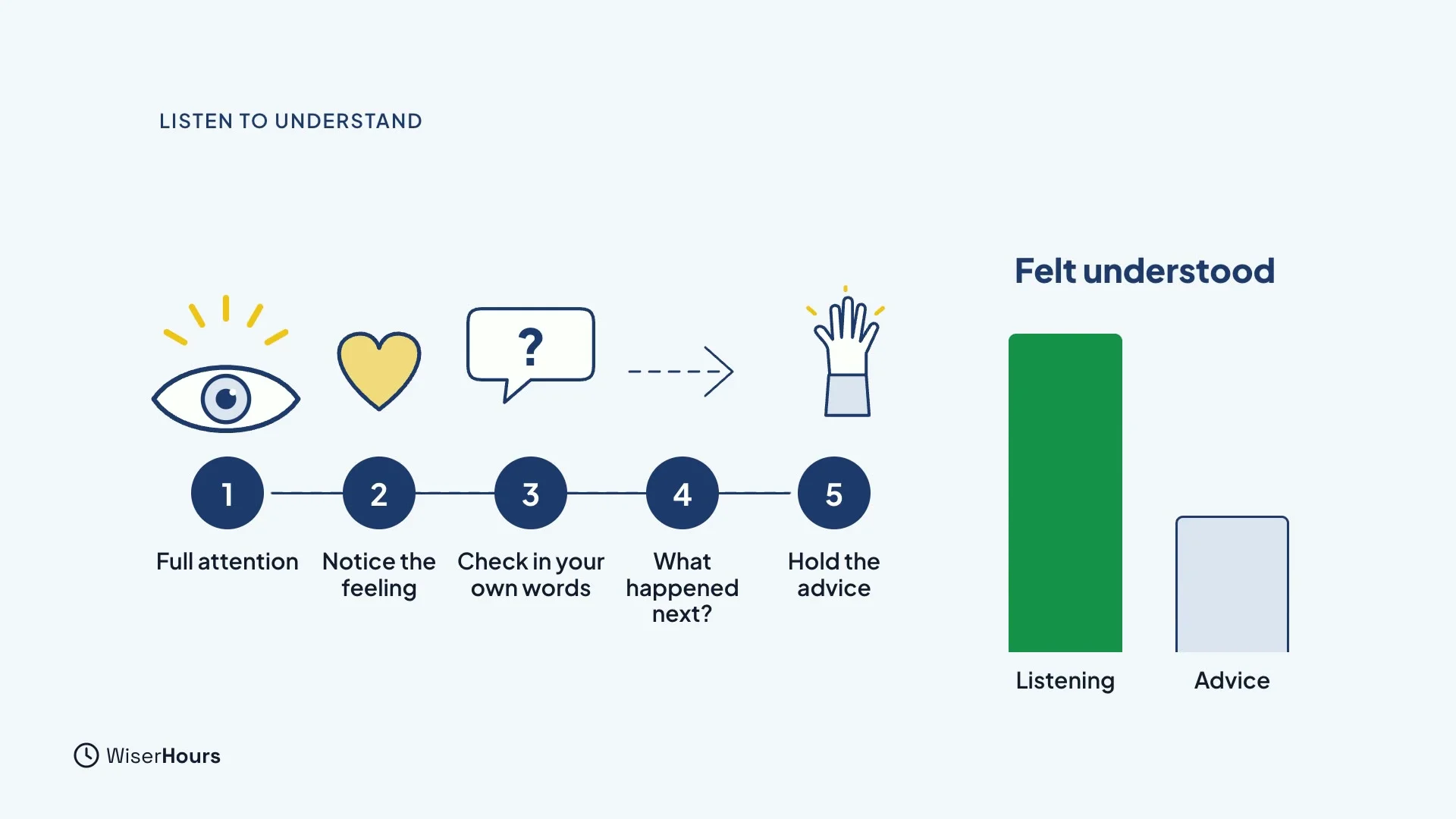
When they share, listen properly. active listeningactive listening: Listening to grasp a message from the speaker's point of view, including how they feel about it, then saying it back in your own words and checking you have it right before giving your view. The term comes from Carl Rogers and Richard Farson.Full entry in the glossary has five simple habits:
- Give them your full attention.
- Notice the feeling, not just the facts.
- Check that you have understood, in your own words.
- Ask what happened next.
- Hold back advice until they feel understood.
In the research behind this, people felt more understood when listeners did these things than when they gave advice.
 (opens the full-size picture)
The phone gets in the way
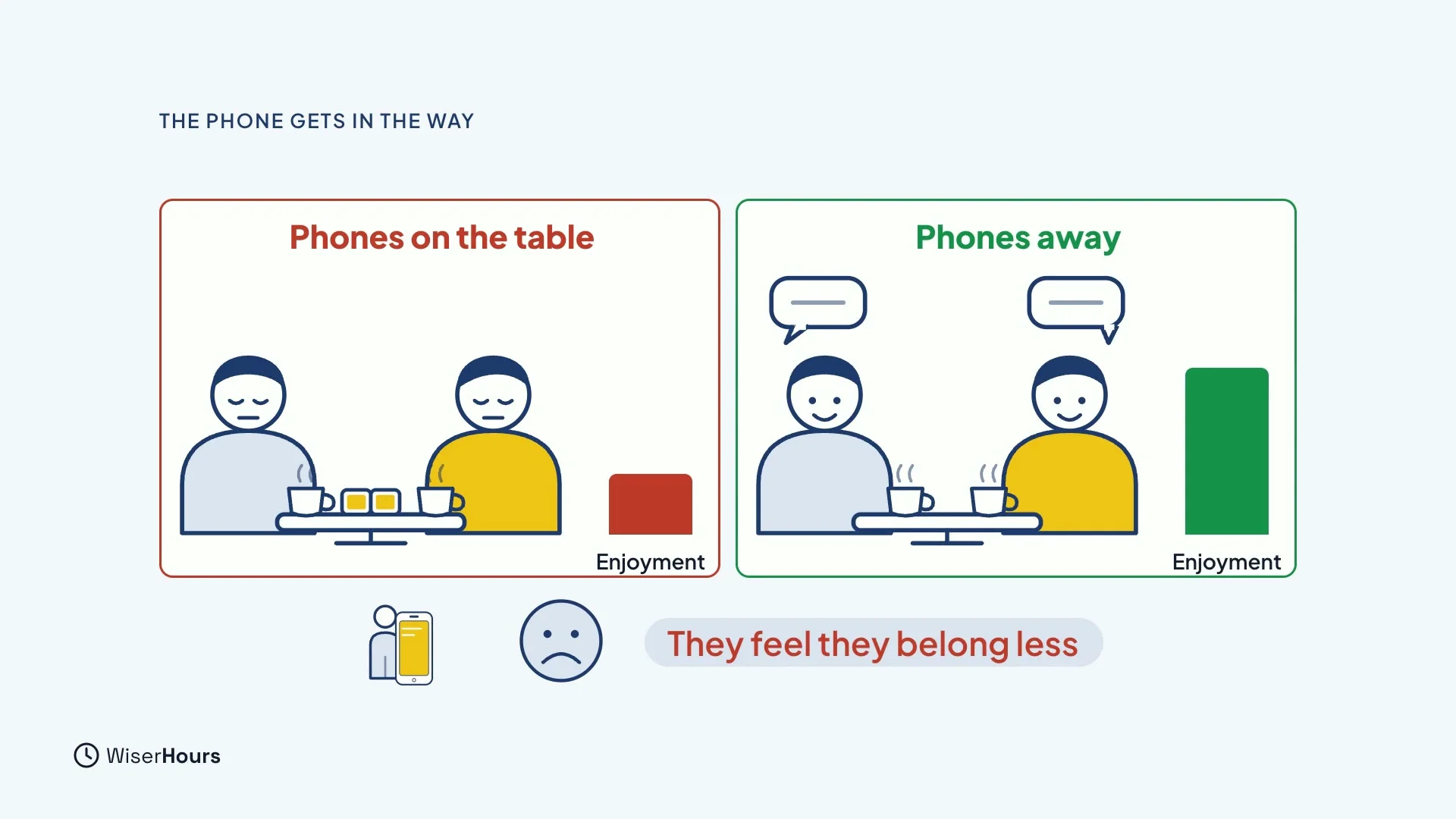
Phones make all of this harder. In a restaurant study, friends who kept their phones on the table felt more distracted and enjoyed the meal less than friends who put them away. Being ignored for a phone, sometimes called phubbing, can also make people feel that they belong less.
 (opens the full-size picture)
Simple phone habits
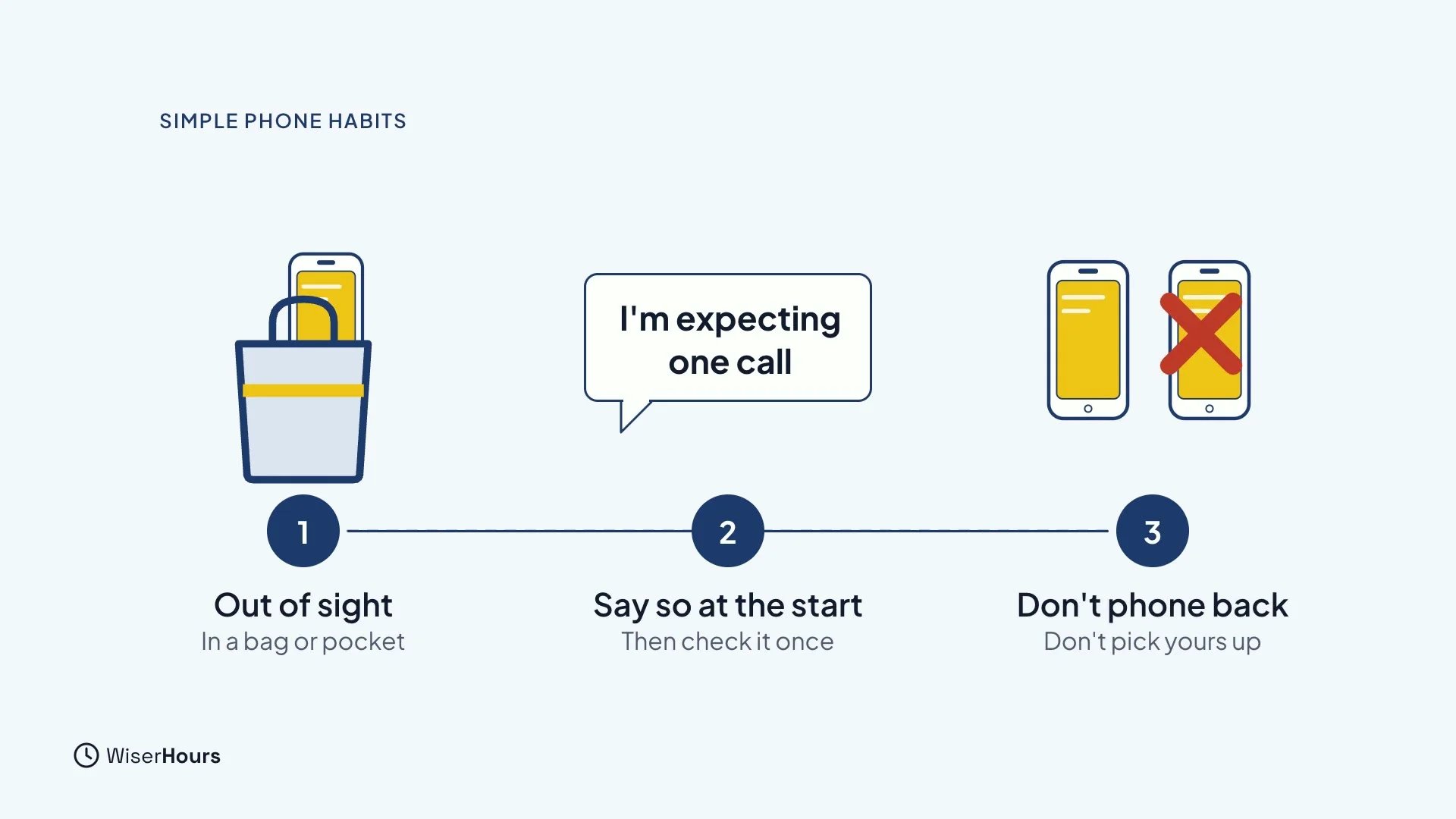
You do not need a strict rule. Three small habits are enough:
 (opens the full-size picture)
- Put your phone out of sight, in a bag or pocket, for time that matters.
- If you are waiting for something important, say so at the start, and check it once.
- If the other person picks up their phone, do not reply by picking up yours.
YOUR TURN
Read more
- 15 Team-Building Activities That Aren’t a Waste of Time: the gradual-sharing exercise behind the forty-five minute experiment.
- Active Listening Explained: What It Is and How to Practice It: the five habits in more detail.
- Phubbing: How Phones Hurt Relationships and What to Do: what the research says and what to do about it.
Read the full lesson script
Welcome back. You've made an invitation, and you're spending time together. In this lesson, you'll learn how to move past small talk, listen so people feel understood, and keep your phone from getting in the way.
Closeness grows in small steps, when both people share about the same amount. In one experiment, pairs took turns answering questions that slowly became more personal. After forty-five minutes, they felt closer than pairs who only made small talk.
You don't need to tell your life story. Share something real but light: a worry about a new job, a small win, something you're looking forward to. Then ask back. If they open up, match them, not much more and not much less.
When they share, listen properly. Give them your full attention. Notice the feeling, not just the facts. Check that you've understood, in your own words. Ask what happened next. And hold back advice until they feel understood. People felt more understood when listeners did this than when they gave advice.
Phones make this harder. In a restaurant study, friends who kept their phones on the table felt more distracted and enjoyed the meal less than friends who put them away. And being ignored for a phone makes people feel they belong less.
So put the phone out of sight, in a bag or pocket, for time that matters. If you're waiting for something important, say so at the start, and check it once. And if the other person picks up their phone, don't reply by picking up yours.
So remember: closeness grows when both people share a little more, in turns. Listen to understand, and hold back advice. And keep your phone out of sight when the time matters. Before the next lesson, at your next meet-up, put your phone away, share one small real thing, and ask one deeper follow-up question. Next, you'll see why old friends and familiar faces count.
MAKE IT A SMALL WIN
Finished this lesson?
Mark it complete to save your progress on this device.