Why it feels hard · Lesson 1 of 10
Why Making Friends Gets Harder as an Adult
Understand why adult friendships do not form by themselves, why loneliness is common, and how to read it as a signal to connect.
 Video coming soon
If making friends feels harder than it used to, you are not imagining it, and you are not doing something wrong. In this lesson you will see why friendship gets harder after school, why so many people feel this way, and how the rest of this short course helps you build the friendships you want.
Friends came with the timetable
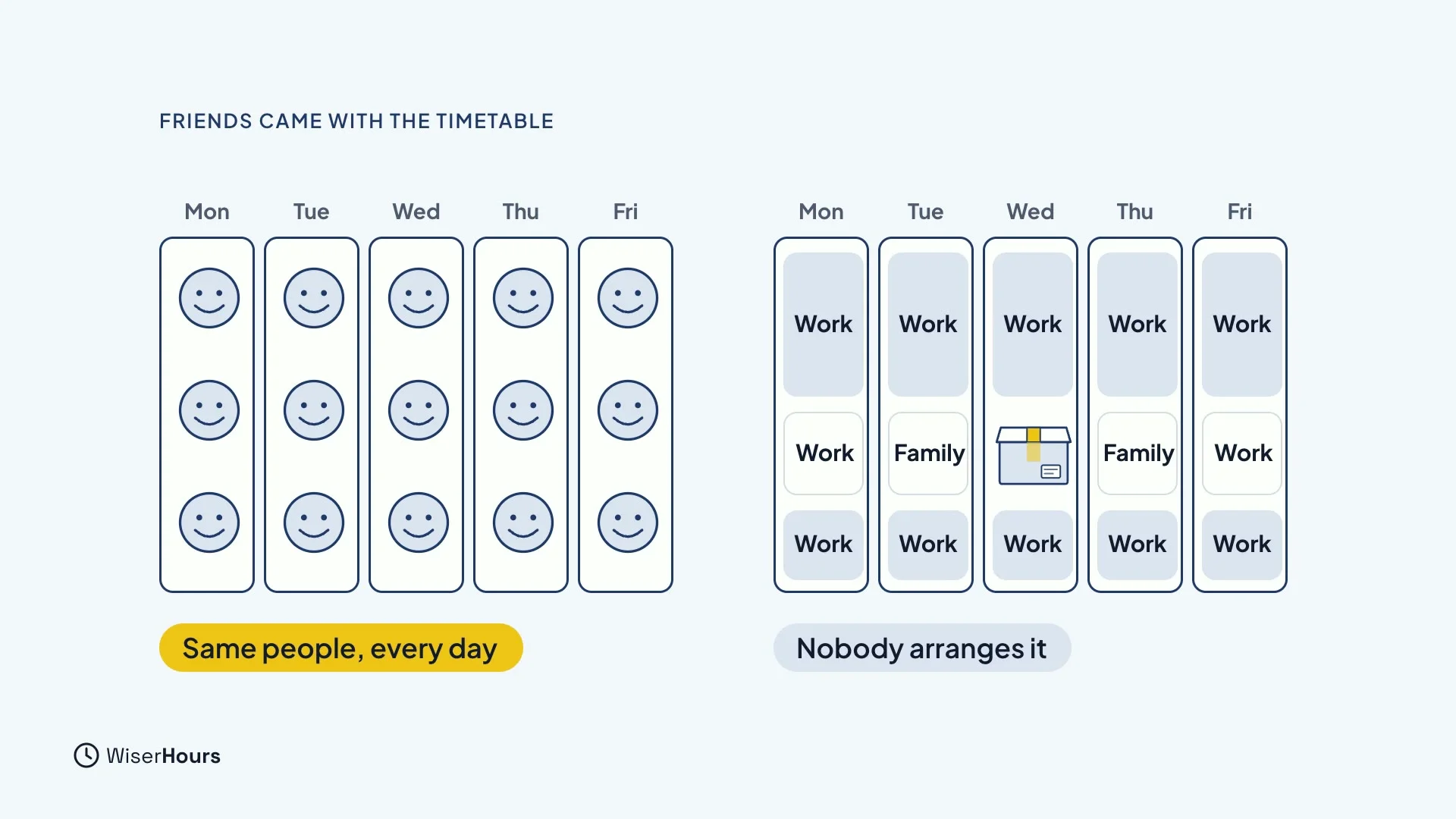
At school or university, friendships often happened by themselves. You saw the same people almost every day, with free time in between. Nobody had to plan anything.
Adult life usually takes that away. Work, family and moving fill the week, and nobody arranges the meetings for you anymore. The people are still out there. The shared timetable is gone.
 (opens the full-size picture)
You are not the only one
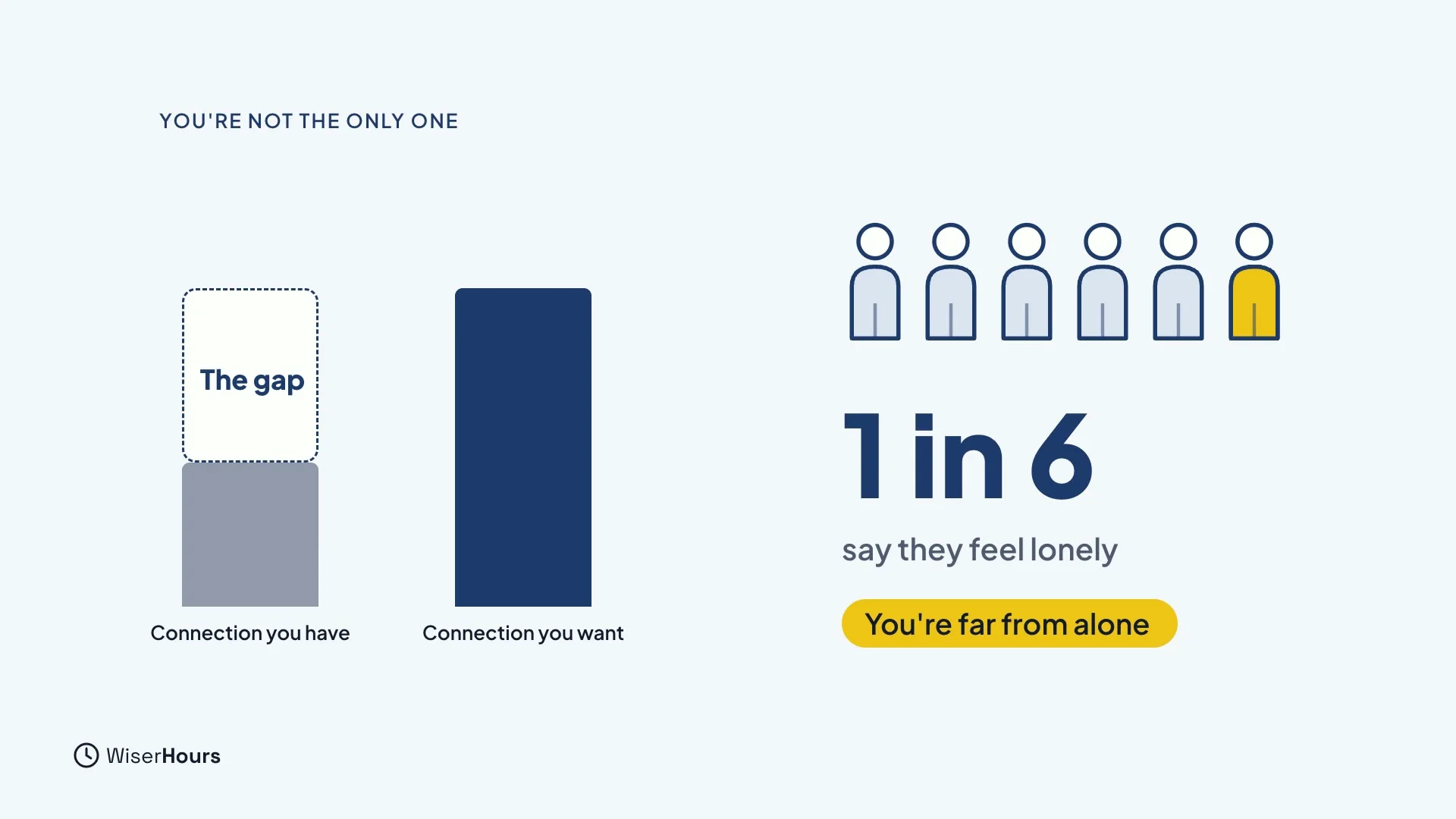
Loneliness is the gap between the connection you have and the connection you want. Around the world, about 1 in 6 people say they feel lonely. So if you would like more friends, or closer ones, you are far from alone.
 (opens the full-size picture)
Lonely is not the same as alone
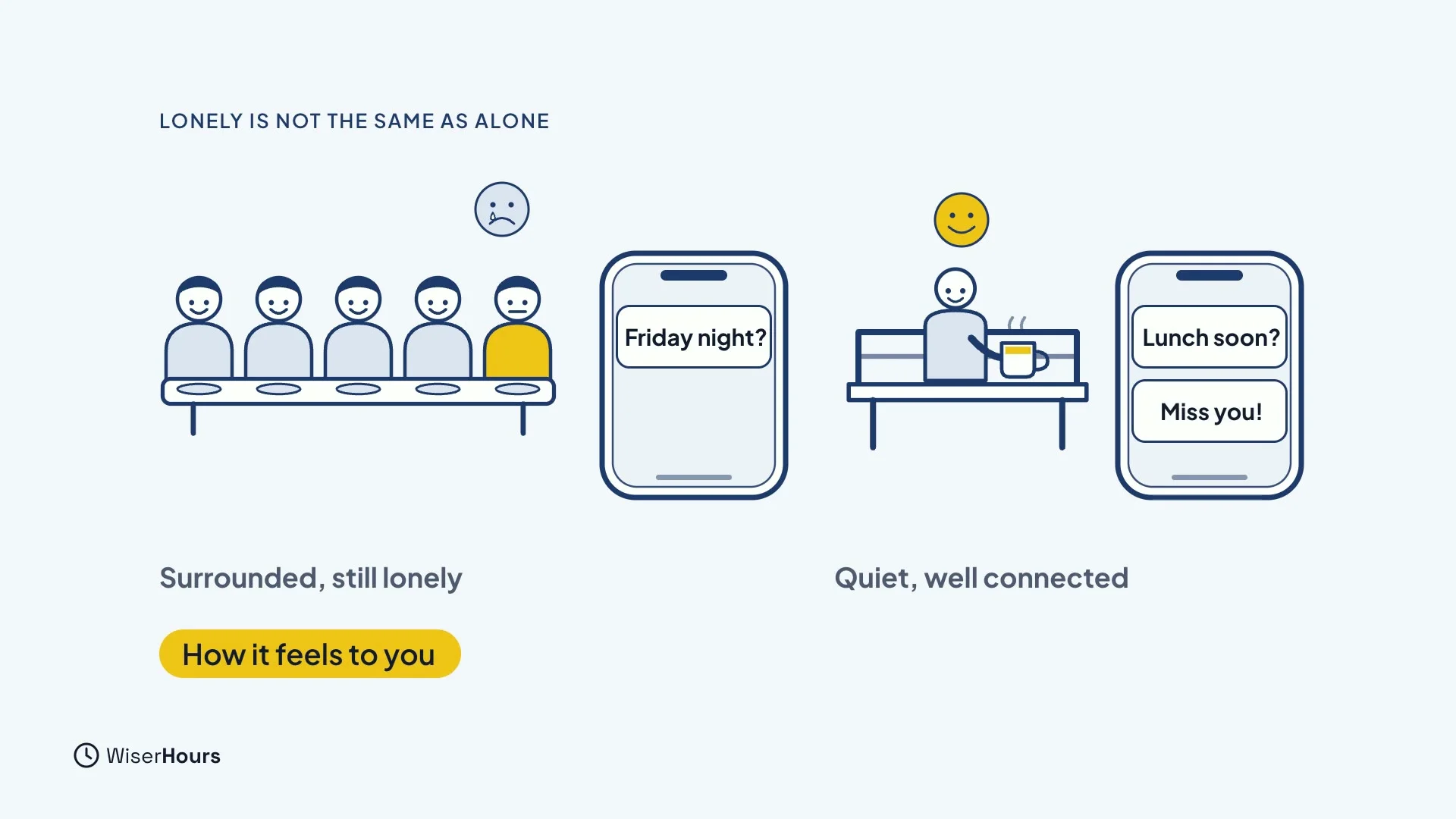
You can be surrounded by people and still feel lonely. Picture someone who has moved to a new city. They eat lunch with their team every day, but have nobody to call on a Friday night. Now picture someone who lives quietly and still feels well connected, with warm messages arriving and a friend to meet for lunch.
What counts is how your connections feel to you, not how many people are around.
 (opens the full-size picture)
Changes open gaps
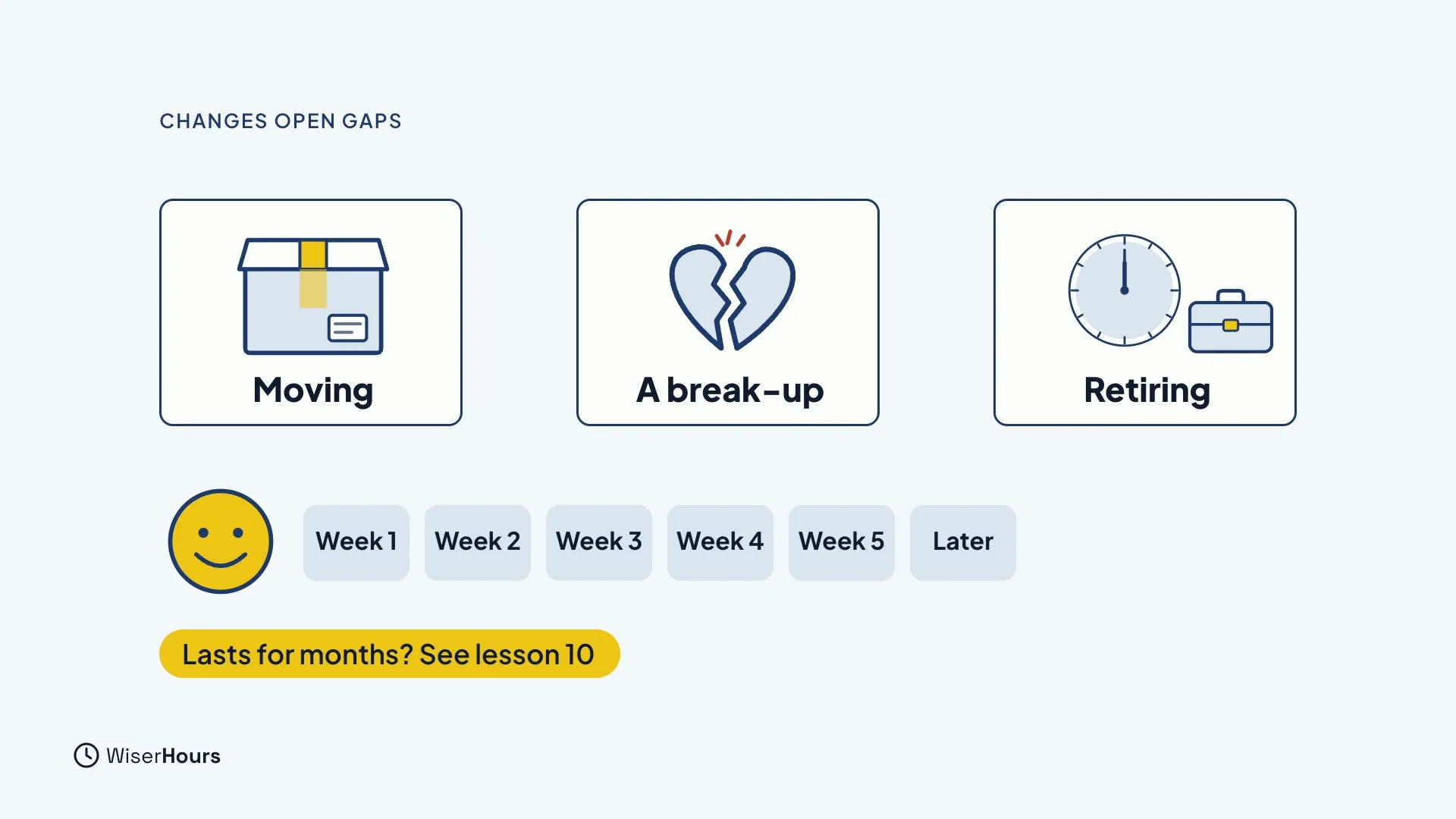
Loneliness often follows a change, like moving, a break-up or retiring. For many people it eases as they settle in. When it lasts for months or longer, it deserves more attention, and the last lesson covers that.
 (opens the full-size picture)
A signal, not a flaw
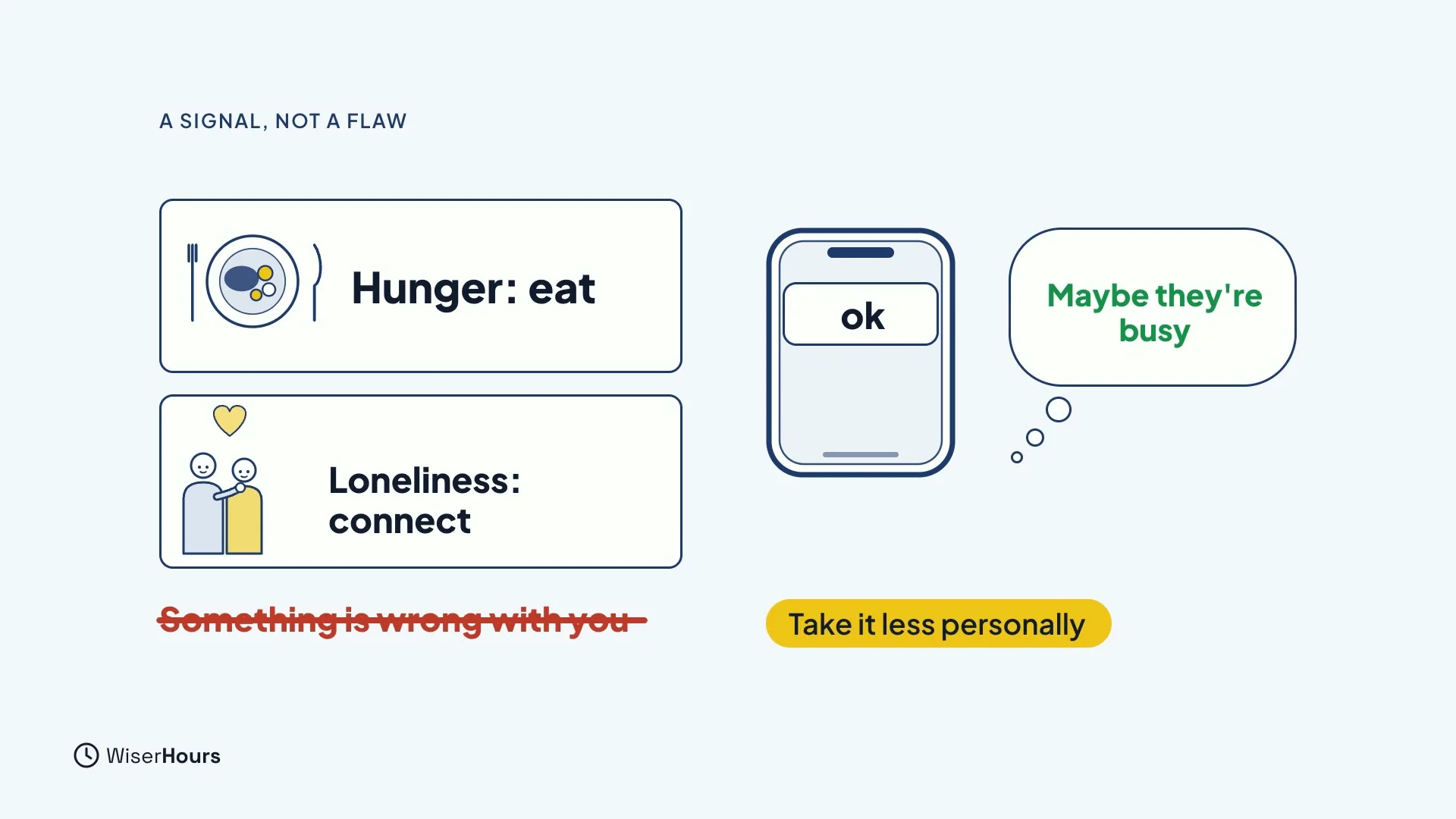
Loneliness works a bit like hunger. Hunger tells you to eat. Loneliness tells you to connect. It does not mean something is wrong with you.
It can play tricks, though. It makes people expect rejection, so a short reply can feel like a snub. If a friend answers your message with one word, the first thought may be “they don’t like me”. A kinder thought is “maybe they’re busy”. Knowing that loneliness pushes you toward the worse reading helps you take things less personally.
 (opens the full-size picture)
The course ahead
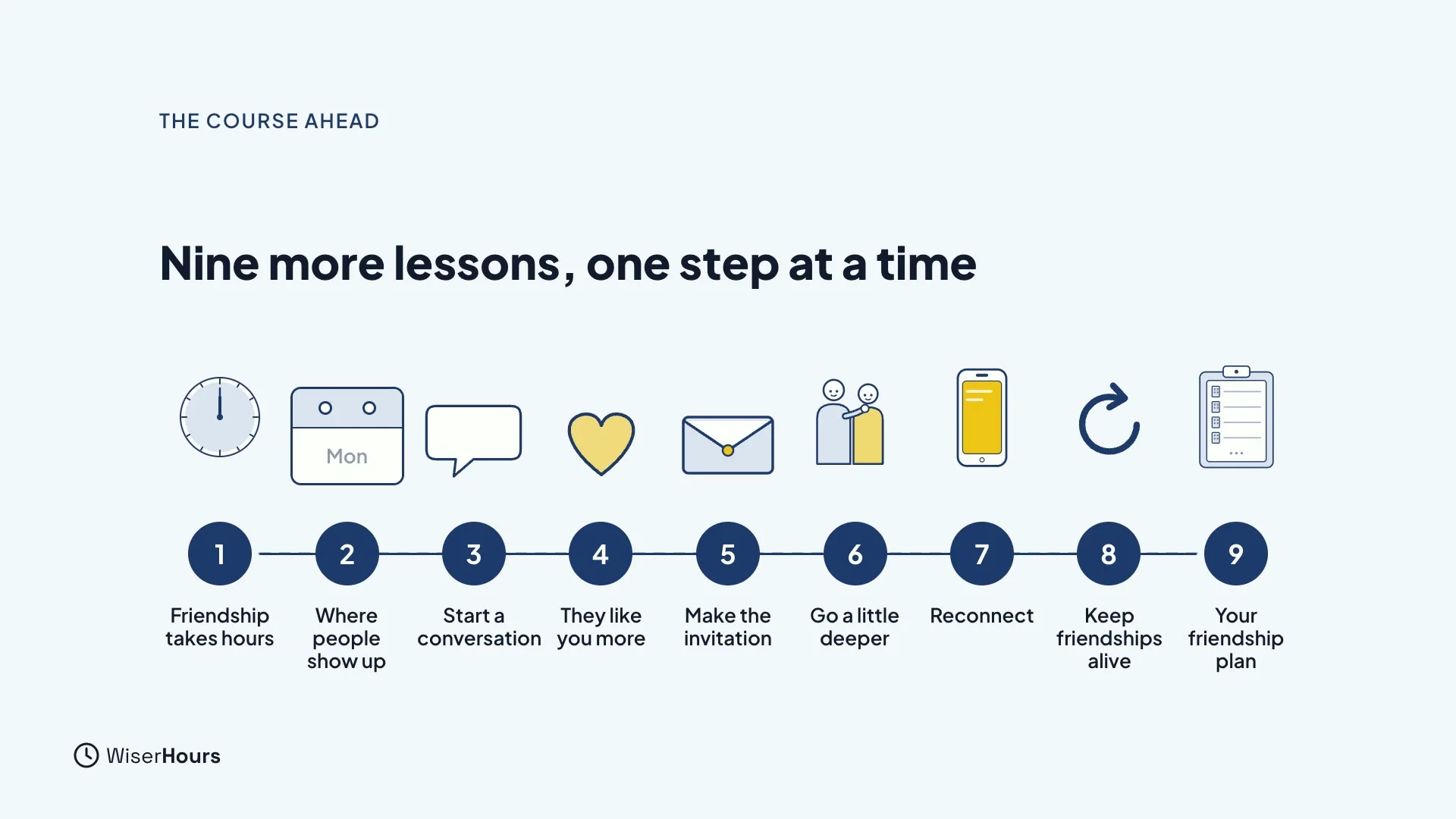
Here is where this course goes. First, you will see how many hours it takes to make a friend, and where to find people you will see again and again. Then you will learn to start a conversation, and why people like you more than you think. Next come the invitation and going a little deeper. After that you will reconnect with old friends and keep friendships alive. Finally, you will make your own friendship plan.
 (opens the full-size picture)
YOUR TURN
Read more
- Loneliness Explained: what loneliness is, how it is counted and why it is not the same as being alone.
- Dunbar’s Number: how many relationships people can keep up, and why friendships fade when contact stops.
Read the full lesson script
Welcome to How to Make Friends as an Adult. In this first lesson, you'll see why making friends often feels harder after school, why that's so common, and how this short course will help you build the friendships you want.
At school or university, friendships often happened by themselves. You saw the same people almost every day, with free time in between. Adult life usually takes that away. Work, family and moving fill the week, and nobody arranges the meetings for you anymore.
Loneliness is the gap between the connection you have and the connection you want. Around the world, about one in six people say they feel lonely. So if you'd like more friends, or closer ones, you are far from alone.
You can be surrounded by people and still feel lonely. Picture someone who has moved to a new city. They eat lunch with their team every day, but have nobody to call on a Friday night. And someone who lives quietly can feel well connected. What counts is how your connections feel to you.
Loneliness often follows a change, like moving, a break-up, or retiring. For many people, it eases as they settle in. When it lasts for months or longer, it deserves more attention, and the last lesson covers that.
Loneliness works a bit like hunger. Hunger tells you to eat. Loneliness tells you to connect. It doesn't mean something is wrong with you. But it can play tricks. It makes people expect rejection, so a short reply can feel like a snub. Knowing that helps you take things less personally.
Here's the course. First, you'll see how many hours it takes to make a friend, and where to find people you'll see again and again. Then you'll learn to start a conversation, and why people like you more than you think. Next, you'll make the invitation, and go a little deeper. After that, you'll reconnect with old friends, and keep friendships alive. Finally, you'll make your friendship plan.
So remember: adult life takes away the easy, everyday contact that school gave you. About one in six people feel lonely, so you're not alone in this. And loneliness is a signal to connect, not a flaw. Before the next lesson, write down when your friendships were easiest, and what made that time different. Next, you'll see how many hours it takes to make a friend.
MAKE IT A SMALL WIN
Finished this lesson?
Mark it complete to save your progress on this device.