Getting closer · Lesson 6 of 10
How to Invite Someone to Hang Out (Without Awkwardness)
Learn to turn an acquaintance into a friend with a small, specific invitation, and what to do if they say no or do not reply.
 Video coming soon
You have met people and had a few good chats. But a friendship rarely grows from chats alone, because somebody has to take the next step. This lesson shows you how to make an invitation that is easy to say yes to, and what to do when the answer is no or nothing.
Why someone has to ask
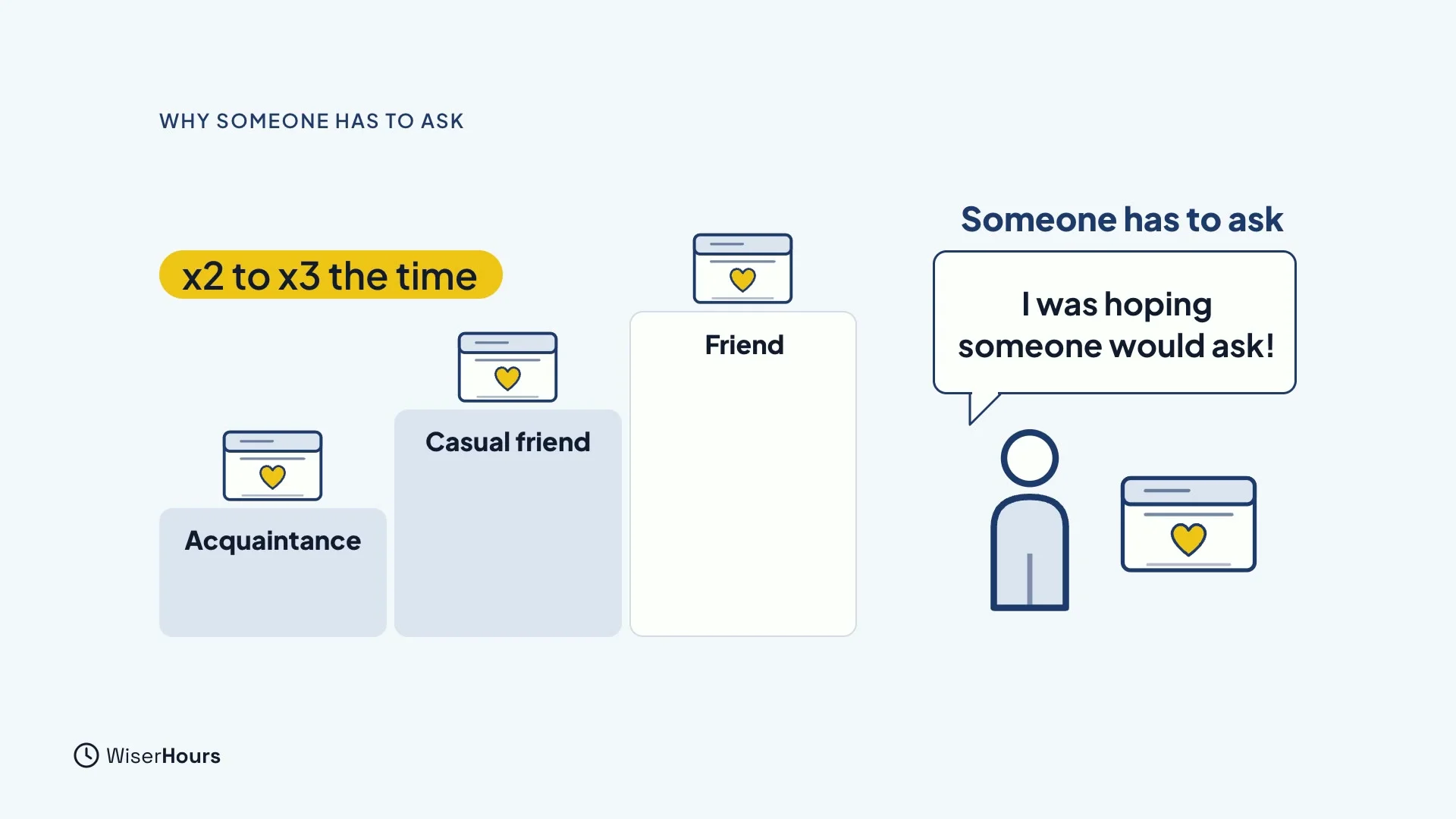
Friendships grow when people spend more time together. Moving up a stage, from acquaintance to casual friend to friend, often means doubling or tripling that time. That rarely happens by chance, because everyone is busy and everyone waits. Someone has to suggest it.
The good news is that the other person is often relieved when you ask first. Many people are quietly hoping that someone will.
 (opens the full-size picture)
Be specific, not vague
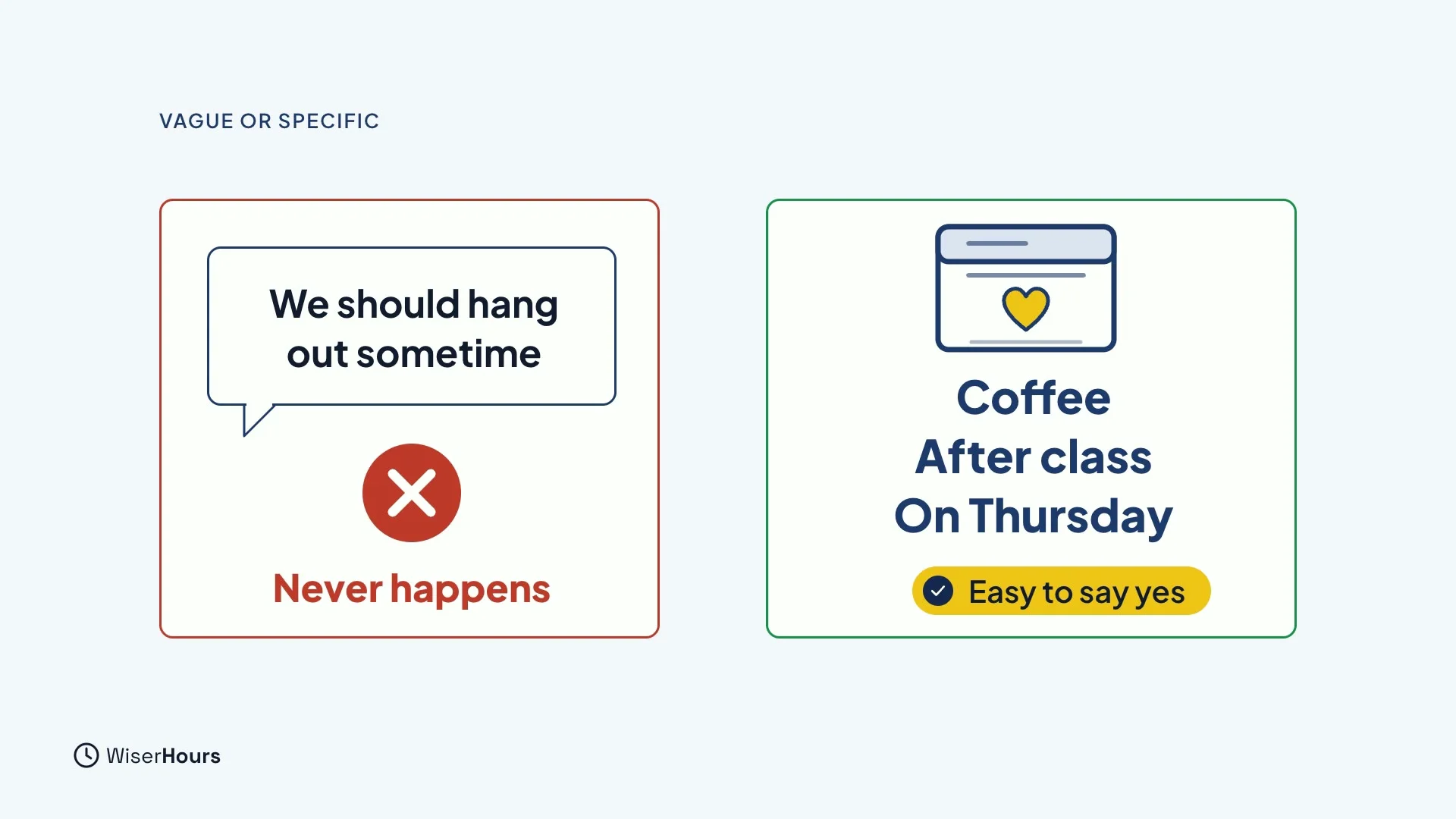
“We should hang out sometime” sounds friendly, but it almost never happens, because it gives the other person nothing to say yes to. A specific invitation works better: a day, a time and a simple plan. For example: “We’re getting coffee after class on Thursday, do you want to come?”
 (opens the full-size picture)
Keep it small and low pressure
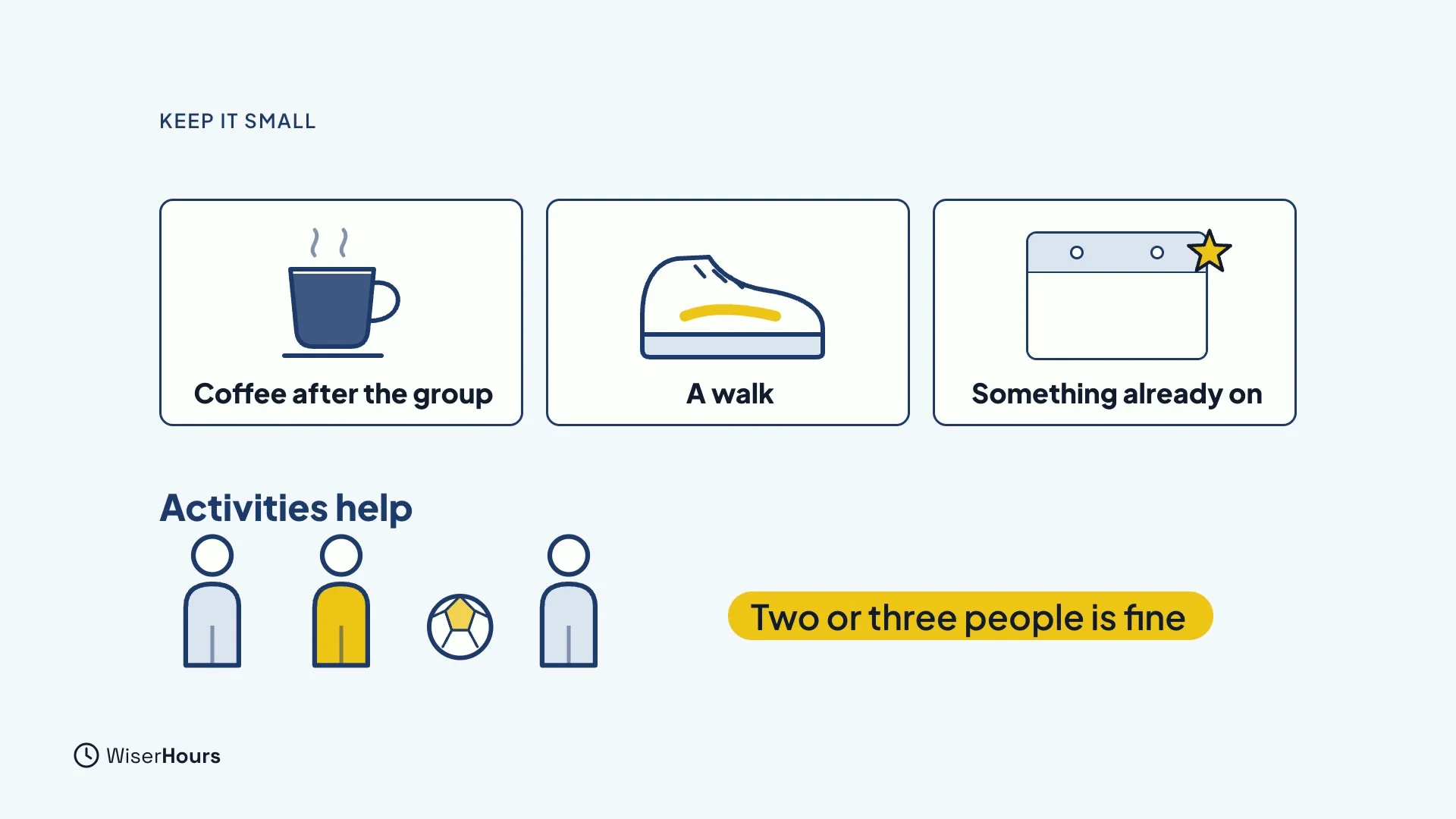
Your first invitation should be small and close to what you already share. A coffee after the group, a walk, or joining something that is already happening all work well. Activities help, because you do not have to fill every silence. Inviting two or three people can also feel easier for everyone, since nobody is in the spotlight.
 (opens the full-size picture)
If they say no, or do not reply
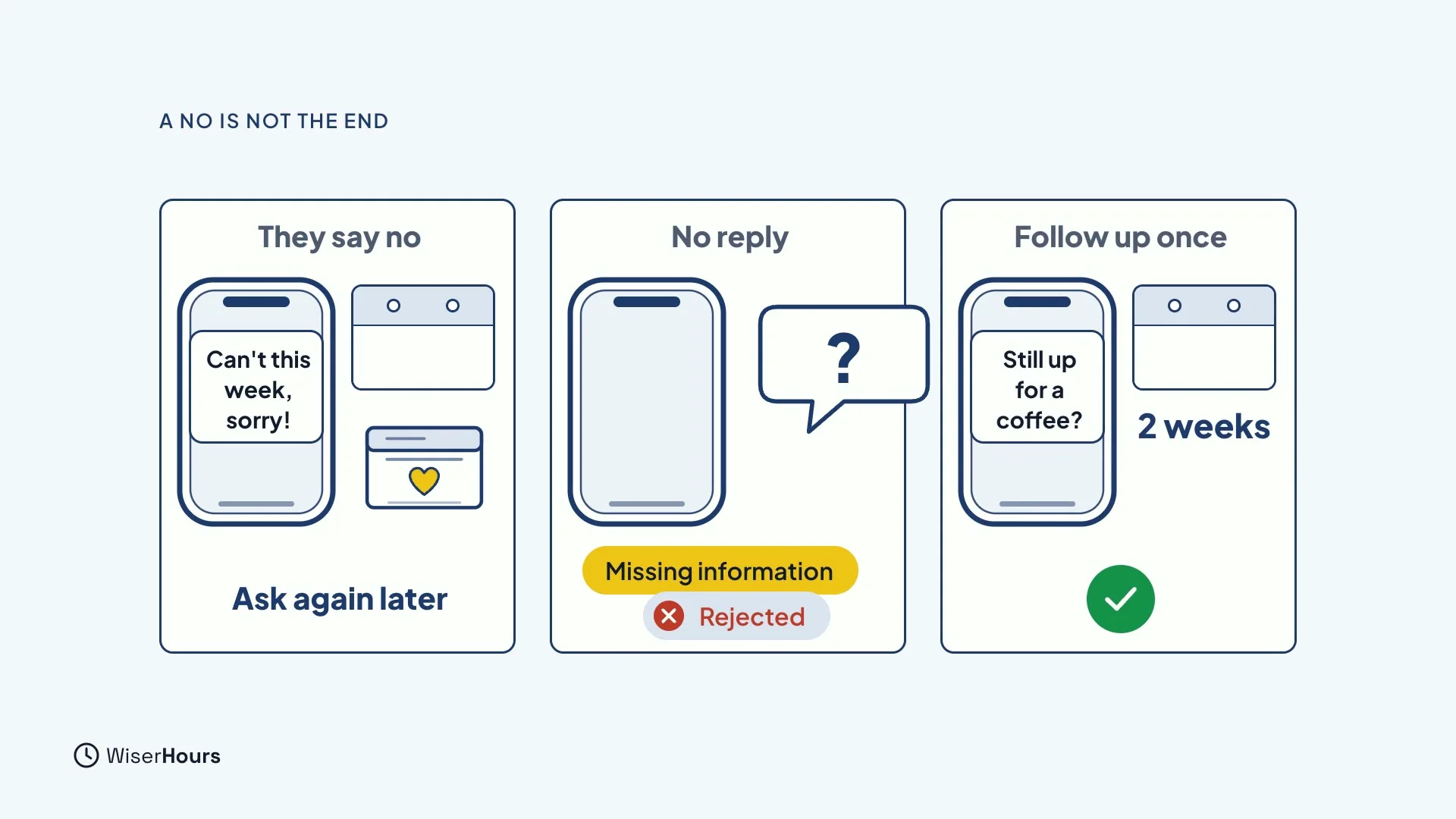
A no often means not now, not never. If they say no but sound warm, ask again another time. If they do not reply at all, treat it as missing information, not rejection: messages get buried, and nobody can say what a quiet inbox means. Send one friendly follow-up after about two weeks, then let it rest.
 (opens the full-size picture)
One follow-up is enough
Send one gentle message after about two weeks. If nothing comes back, keep your warmth and move on to someone else. You have lost very little.
Be the one who organises
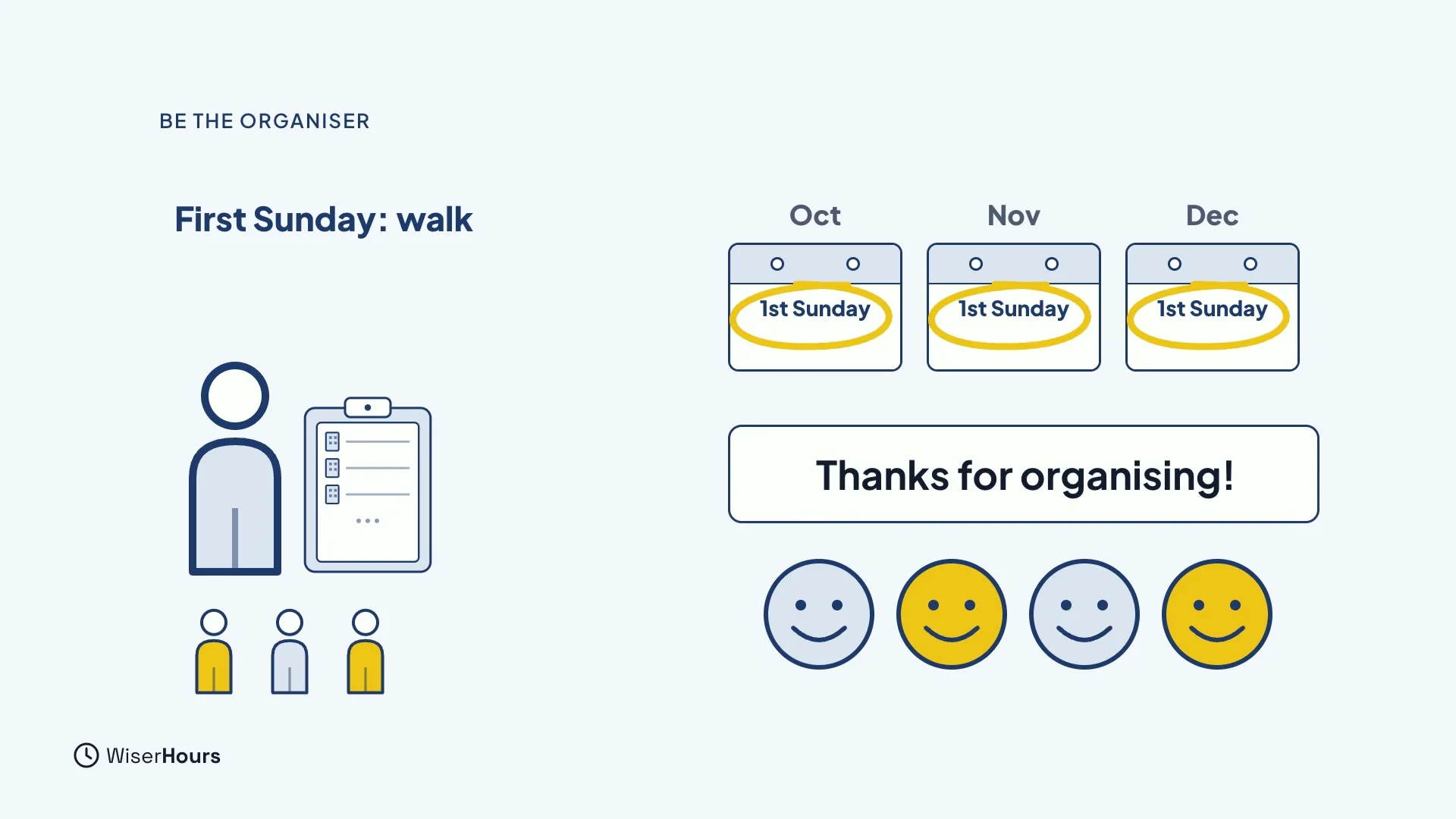
If you want more friends, be the one who organises. Start a monthly walk, a games night, or a lunch with two colleagues. Organisers get the hours without waiting for anyone, and people are grateful that someone made it happen. Pick a repeating slot, such as the first Sunday of each month, so the plan runs without new decisions.
 (opens the full-size picture)
YOUR TURN
Read more
- How to Reconnect With Someone You Haven’t Spoken to in Years: how to read a non-reply and send one gentle follow-up.
- Dunbar’s Number: How Many Relationships Can You Really Maintain?: why time together decides how close a friendship gets.
- How long it takes to make a friend: the University of Kansas news release on the hours between friendship stages.
Read the full lesson script
Welcome back. You've met people and had a few good chats. But most acquaintances stay acquaintances, because nobody takes the next step. In this lesson, you'll learn how to make an invitation that's easy to say yes to.
Friendships grow when people spend more time together, and moving up a stage often means doubling or tripling that time. That rarely happens by chance. Someone has to suggest it. And when you do, the other person is often relieved that you asked first.
We should hang out sometime sounds friendly, but it almost never happens. A specific invitation works better: a day, a time, and a simple plan. We're getting coffee after class on Thursday, do you want to come?
Keep the first invitation small and close to what you already share. A coffee after the group, a walk, or joining something that's already happening. Activities help, because you don't have to fill every silence. And inviting two or three people can feel easier for everyone.
A no often means not now, not never. If they say no but sound warm, ask again another time. If they don't reply at all, treat it as missing information, not rejection. Messages get buried. Send one friendly follow-up after about two weeks.
If you want more friends, be the one who organises. Start a monthly walk, a games night, or a lunch with two colleagues. Organisers get the hours without waiting for anyone, and people are grateful someone made it happen.
So remember: most acquaintances stay acquaintances because nobody asks. Make a specific, small invitation with a day and a time. A no often means not now, and silence is missing information, so follow up once. Before the next lesson, send one specific invitation this week. Next, you'll learn how to go a little deeper.
MAKE IT A SMALL WIN
Finished this lesson?
Mark it complete to save your progress on this device.