Keeping friends · Lesson 9 of 10
How to Keep Friendships Alive: Simple Rhythms That Work
See how many close friends people can keep, why friendships drift, and how weekly or monthly rhythms keep them going.
 Video coming soon
Making a friend is one half of the job. Keeping them is the other. This lesson shows how many close friends people can really keep, why friendships drift, and how simple rhythms keep them going without much planning.
Circles of friends
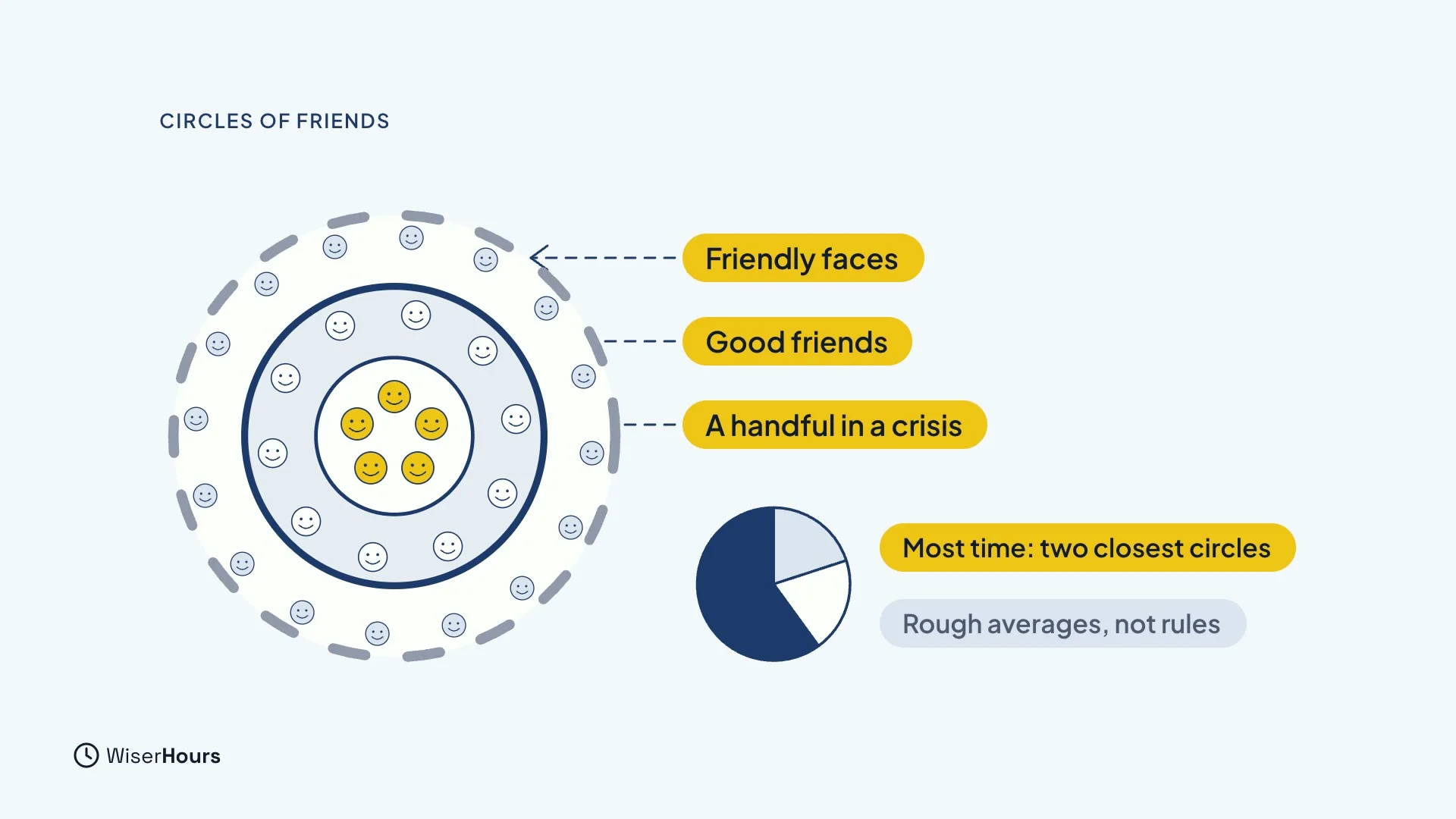
Most people have only a handful of very close people, the ones they would call in a crisis. Around them sits a wider circle of good friends, and then many more friendly faces. Most of our social time goes to the two closest circles. These numbers are rough averages, not rules, so do not worry if your circles look different.
 (opens the full-size picture)
Friendships drift
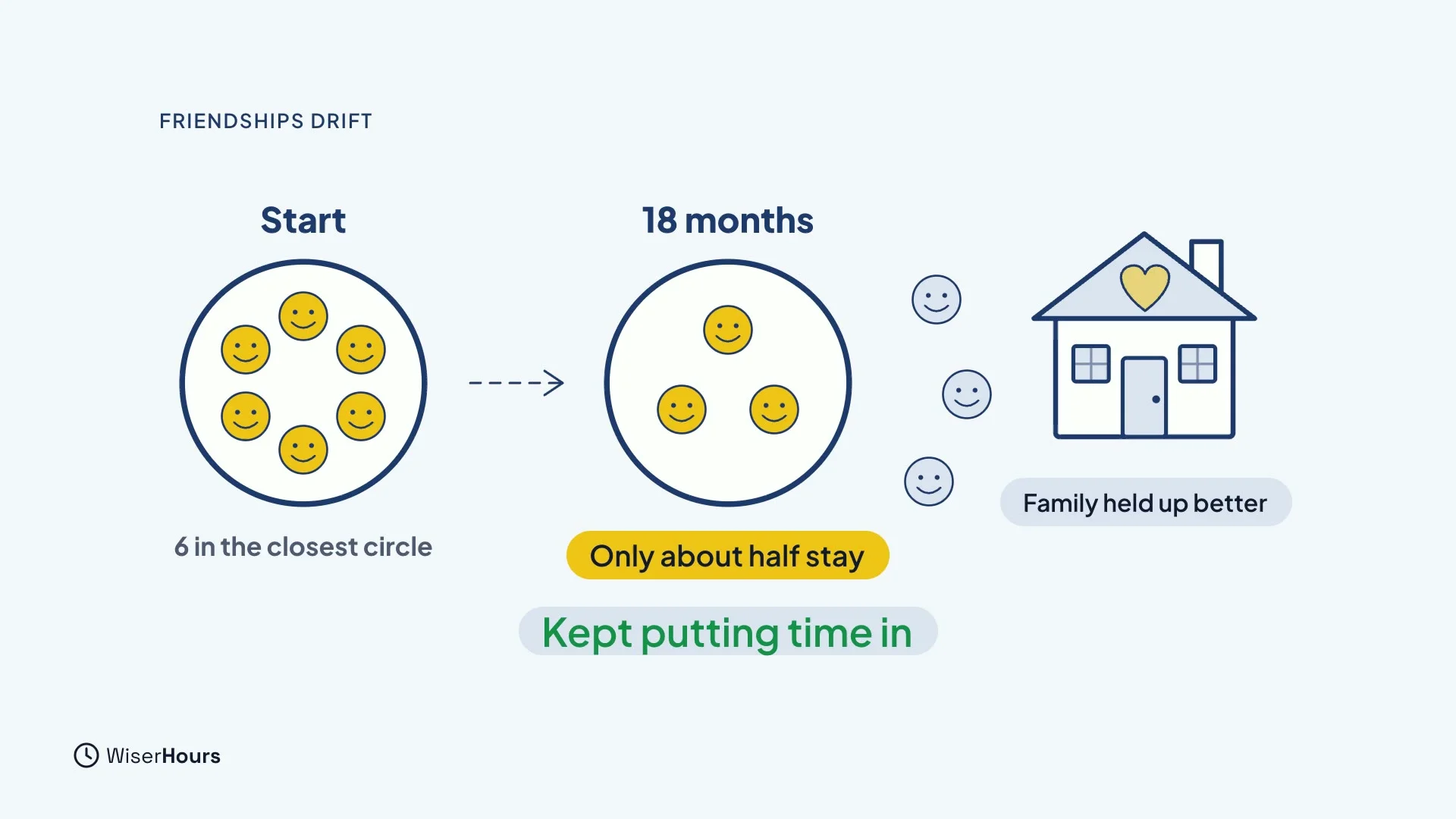
Without effort, close friendships drift. In one study that followed young people for a year and a half after they left school, only about half of the friends who started in their closest circle were still there at the end. Family ties held up better. The friendships that lasted were the ones people kept putting time into. It was a small group, so take it as a pointer.
 (opens the full-size picture)
Talking or doing
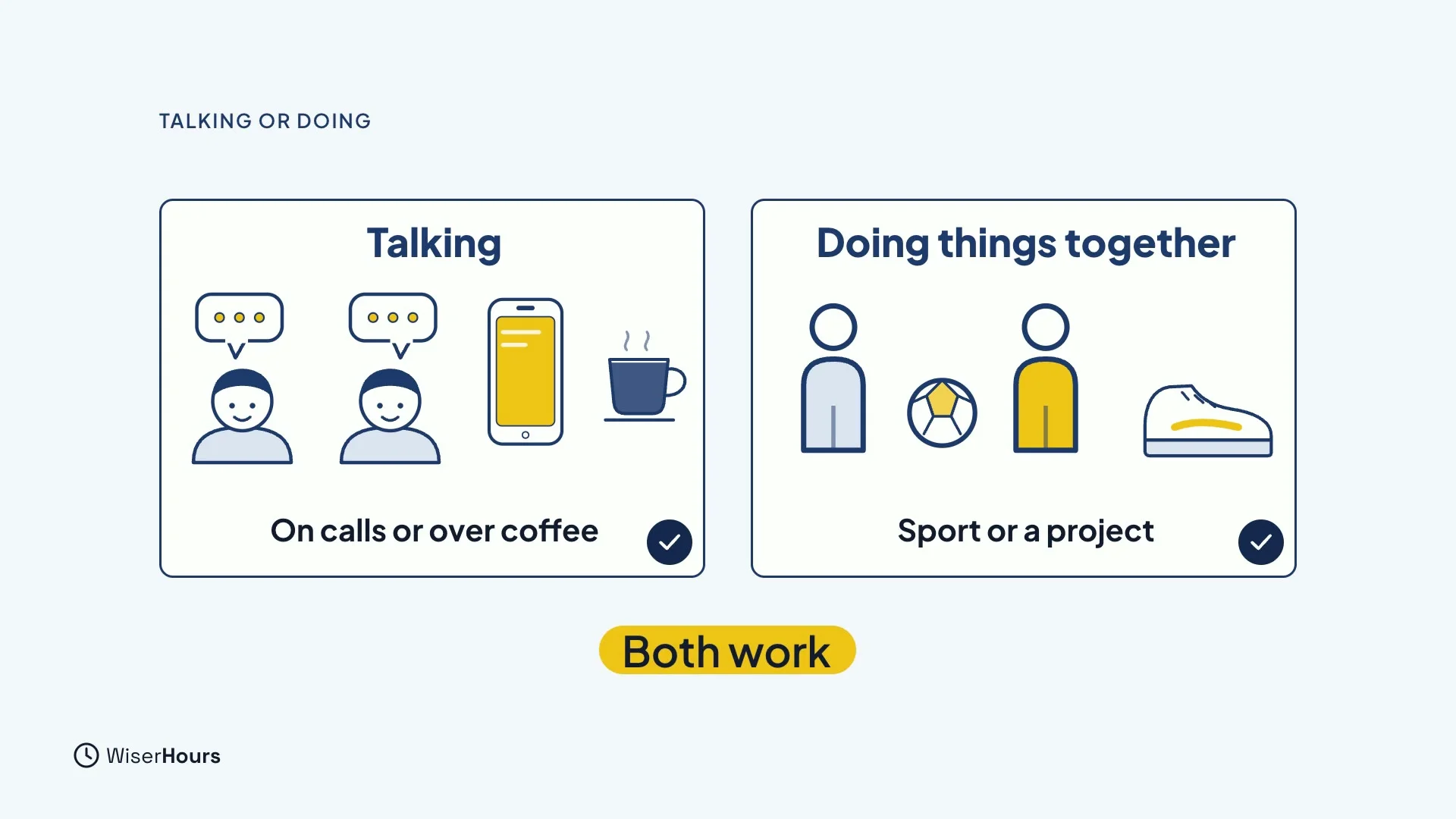
People kept friendships going in different ways. Some mostly talked, on calls or over coffee. Others mostly did things together, like sport or a project. Both worked. Pick the way that suits each friendship, and it is fine if it differs from one friend to the next.
 (opens the full-size picture)
Rhythms, not big gestures
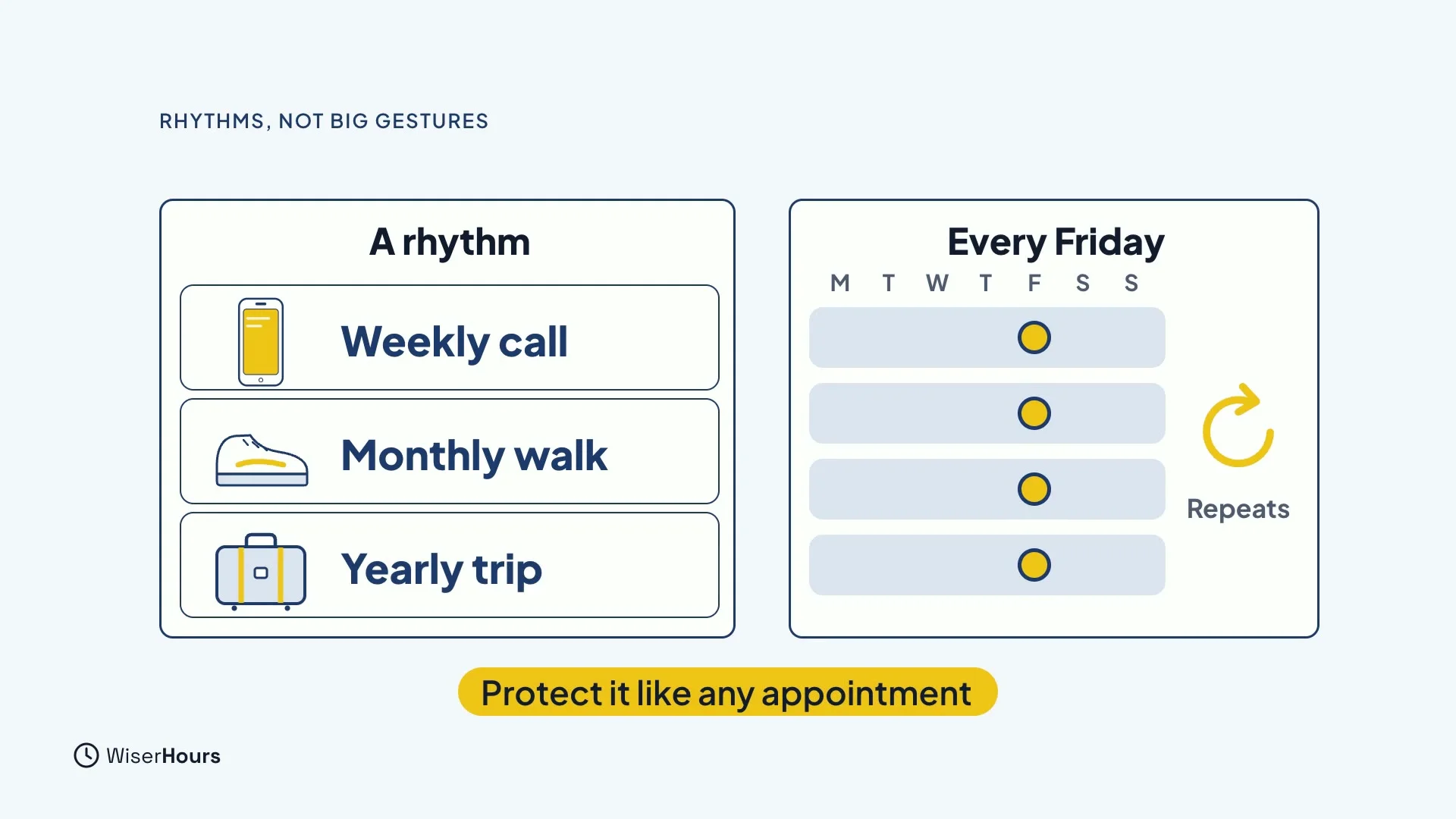
The easiest way to keep a friendship is a rhythm you do not have to organise each time. A standing weekly call. A monthly walk. A yearly trip. Put it in your calendar as a repeating date, and protect it like any other appointment.
 (opens the full-size picture)
Show up when it is hard
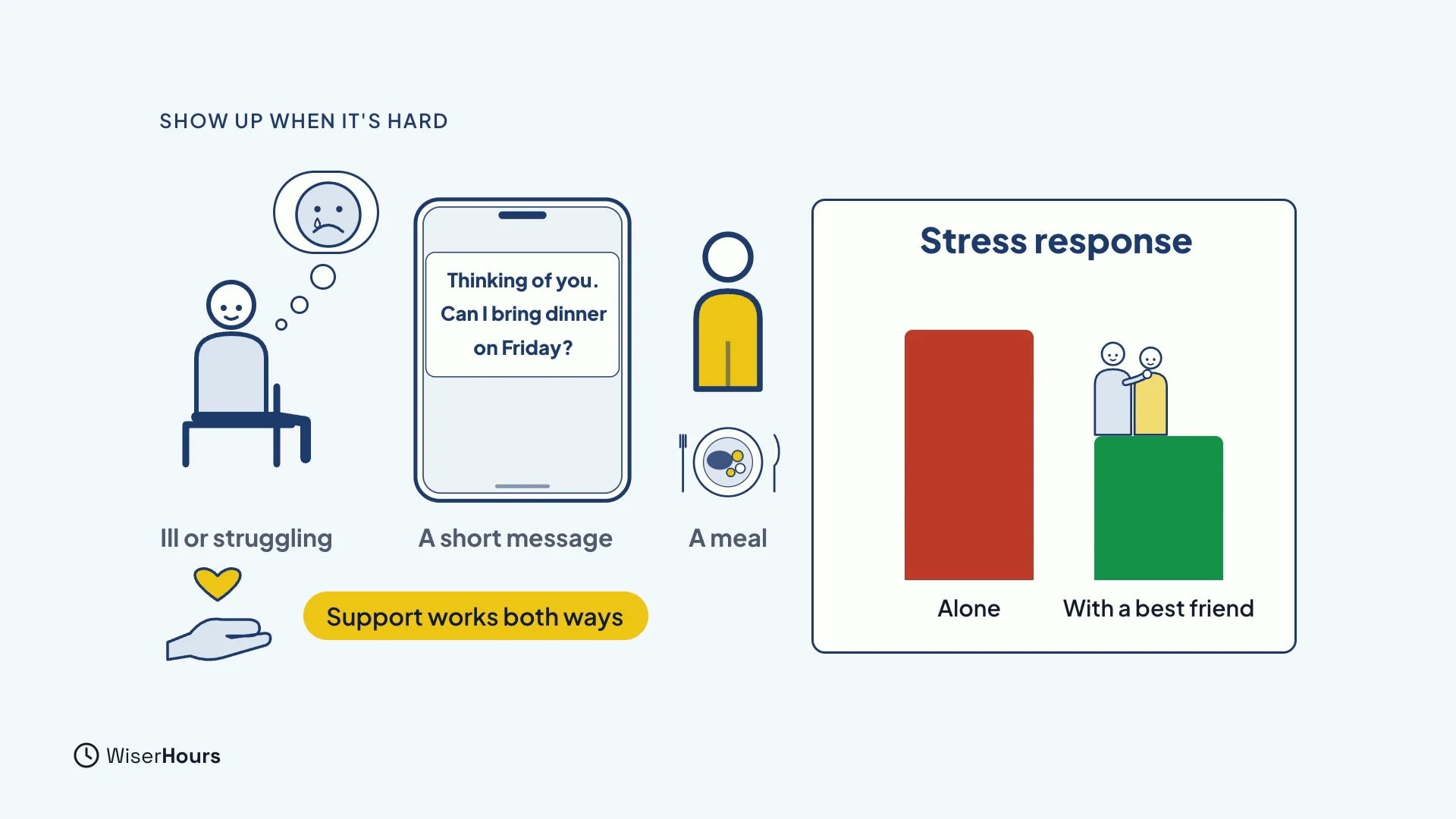
Friendships also grow in hard times. When a friend is ill, grieving or struggling, a short message, a meal, or simply being there matters a great deal. For example: “Thinking of you. Can I bring dinner on Friday?” Support works both ways. In one small study, men who had a best friend with them before a stressful task had a calmer stress response, though one small study is only a pointer.
 (opens the full-size picture)
YOUR TURN
Read more
- Dunbar’s Number: How Many Relationships Can You Really Maintain?: the circles of friends, and why any single number is only a rough guide.
- How to Reduce Stress: 15 Everyday Habits With Evidence Behind Them: why time with a close friend can help you cope.
- Loneliness Explained: What It Is, Why It Hurts, and How Common It Is: small, repeatable contact such as a weekly call.
Read the full lesson script
Welcome back. Making a friend is one half of the job. Keeping them is the other. In this lesson, you'll see how many close friends people can really keep, why friendships drift, and how simple rhythms keep them going.
Most people have only a handful of very close people, the ones they'd call in a crisis. Around them sits a wider circle of good friends, and then many more friendly faces. Most of our social time goes to the two closest circles. These numbers are rough averages, not rules.
Without effort, close friendships drift. In one study that followed young people for a year and a half after leaving school, only about half of the friends who started in their closest circle were still there at the end. Family ties held up better. The friendships that lasted were the ones people kept putting time into.
People kept friendships going in different ways. Some mostly talked, on calls or over coffee. Others mostly did things together, like sport or a project. Both worked. Pick the way that suits each friendship.
The easiest way to keep a friendship is a rhythm you don't have to organise each time. A standing weekly call. A monthly walk. A yearly trip. Put it in the calendar as a repeating date, and protect it like any other appointment.
Friendships also grow in hard times. When a friend is ill, grieving, or struggling, a short message, a meal, or simply being there matters a great deal. Support works both ways: in one small study, men who had a best friend with them before a stressful task had a calmer stress response.
So remember: most people have only a handful of very close friends, and friendships drift without time. Talking and doing things together both keep them going. And regular rhythms beat big gestures. Before the next lesson, pick two friends, and put a repeating date in your calendar for each. Next, you'll make your friendship plan.
MAKE IT A SMALL WIN
Finished this lesson?
Mark it complete to save your progress on this device.