Meeting people · Lesson 4 of 10
Small Talk for Beginners: How to Start a Conversation
Open a conversation with an easy line, keep it going with follow-up questions, use names and end by pointing to next time.
 Video coming soon
You have found places where the same people show up. Now you need to start talking. In this lesson you will see why small talk matters, and get a few simple ways to open a conversation, keep it going and end it well.
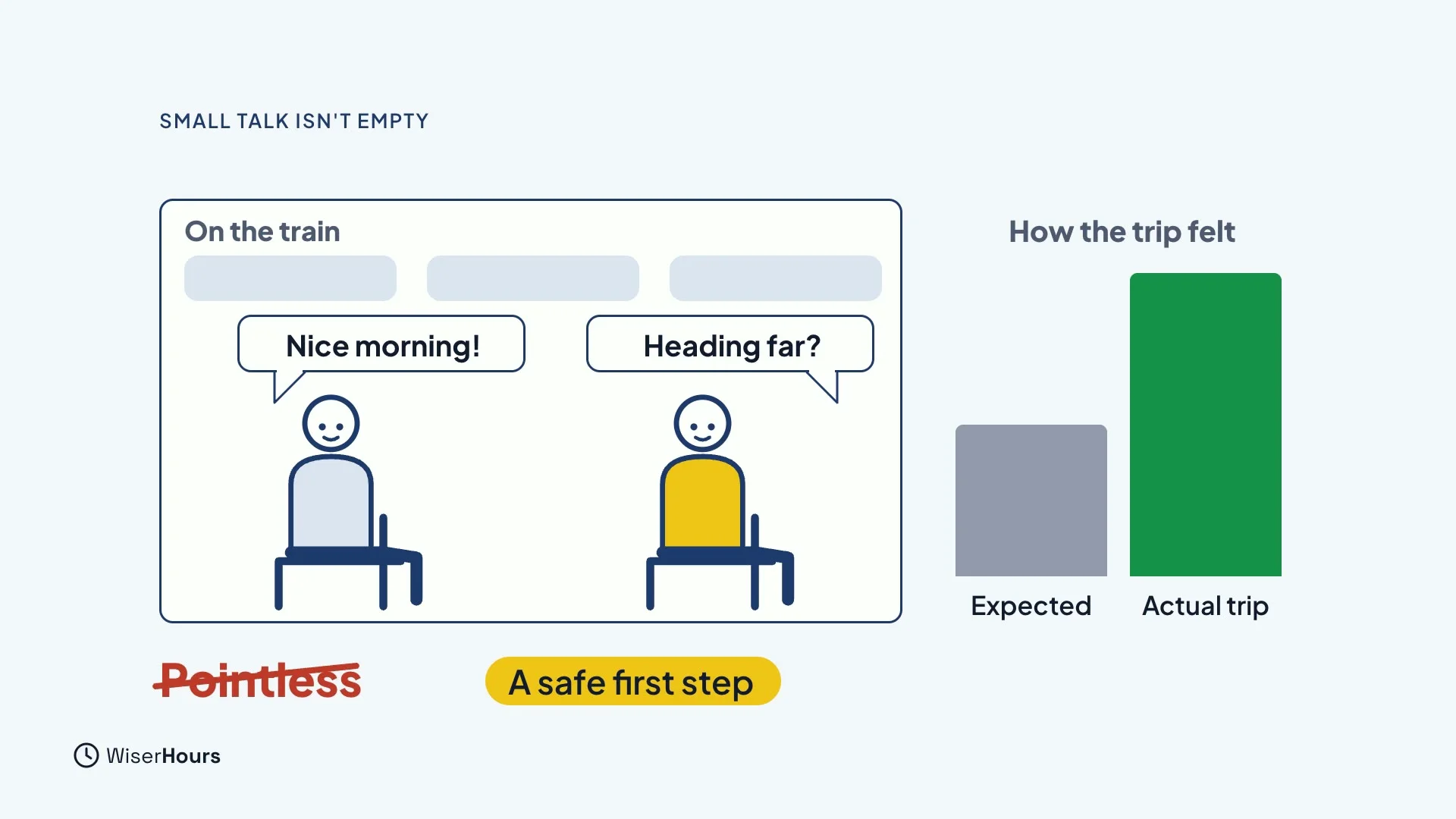
Small talk is not empty
Many people see small talk as pointless. But it is how strangers check that it is safe to talk more. In one set of experiments, commuters who were asked to talk to a stranger had a more pleasant journey, even though most people expected the opposite.
That is a useful reminder when your head says “they won’t want to chat”. The evidence from those commuters says the chat is more likely to feel good than you predict.
 (opens the full-size picture)
Easy openers
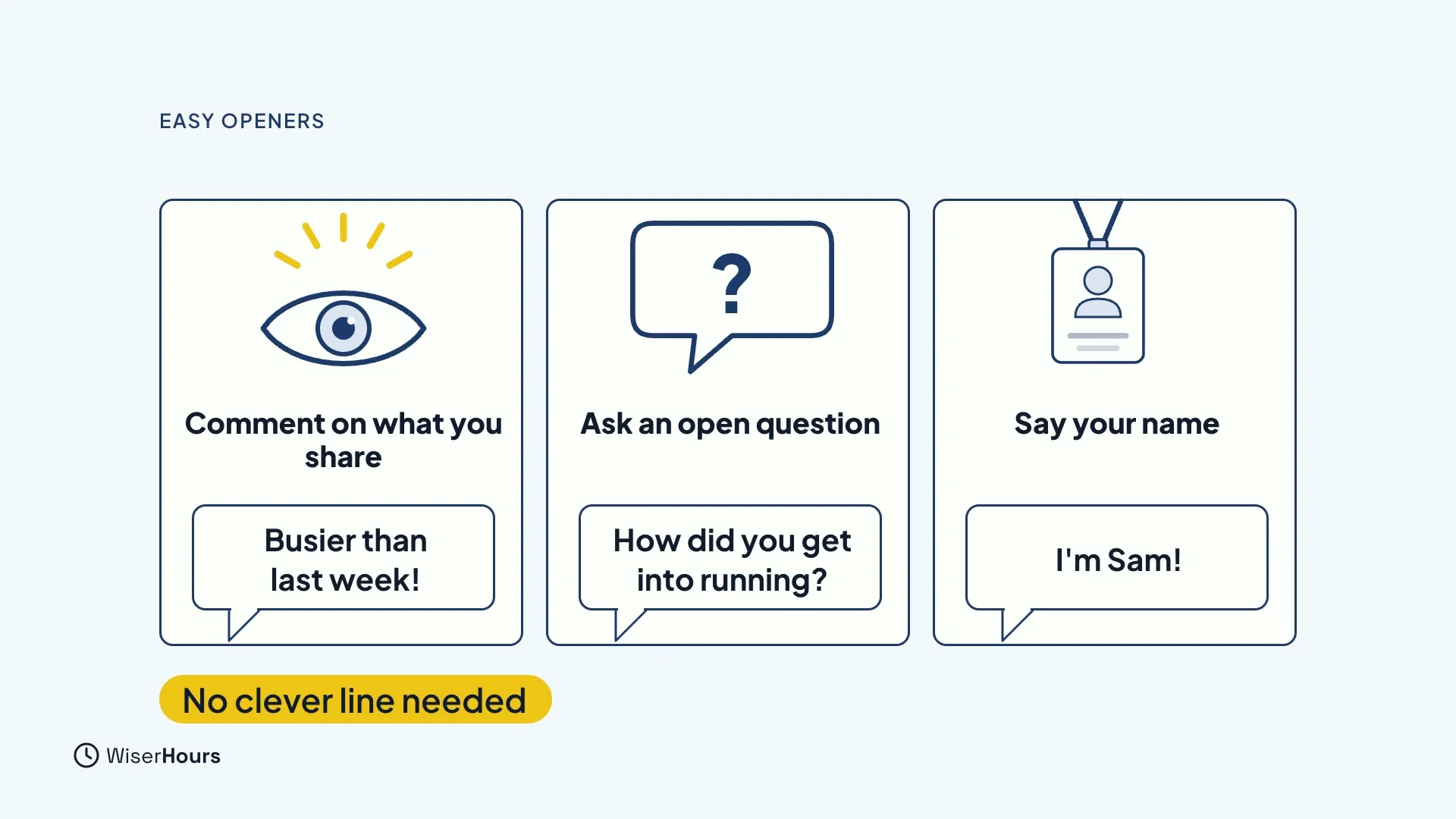
You do not need a clever line. There are three easy ways to begin.
- Comment on what you are both doing: “This class is busier than last week.”
- Ask an easy, open question, one that needs more than yes or no: “How did you get into running?”
- Or simply say your name: “I’m Sam, I’ve seen you here before.”
 (opens the full-size picture)
Keep it going
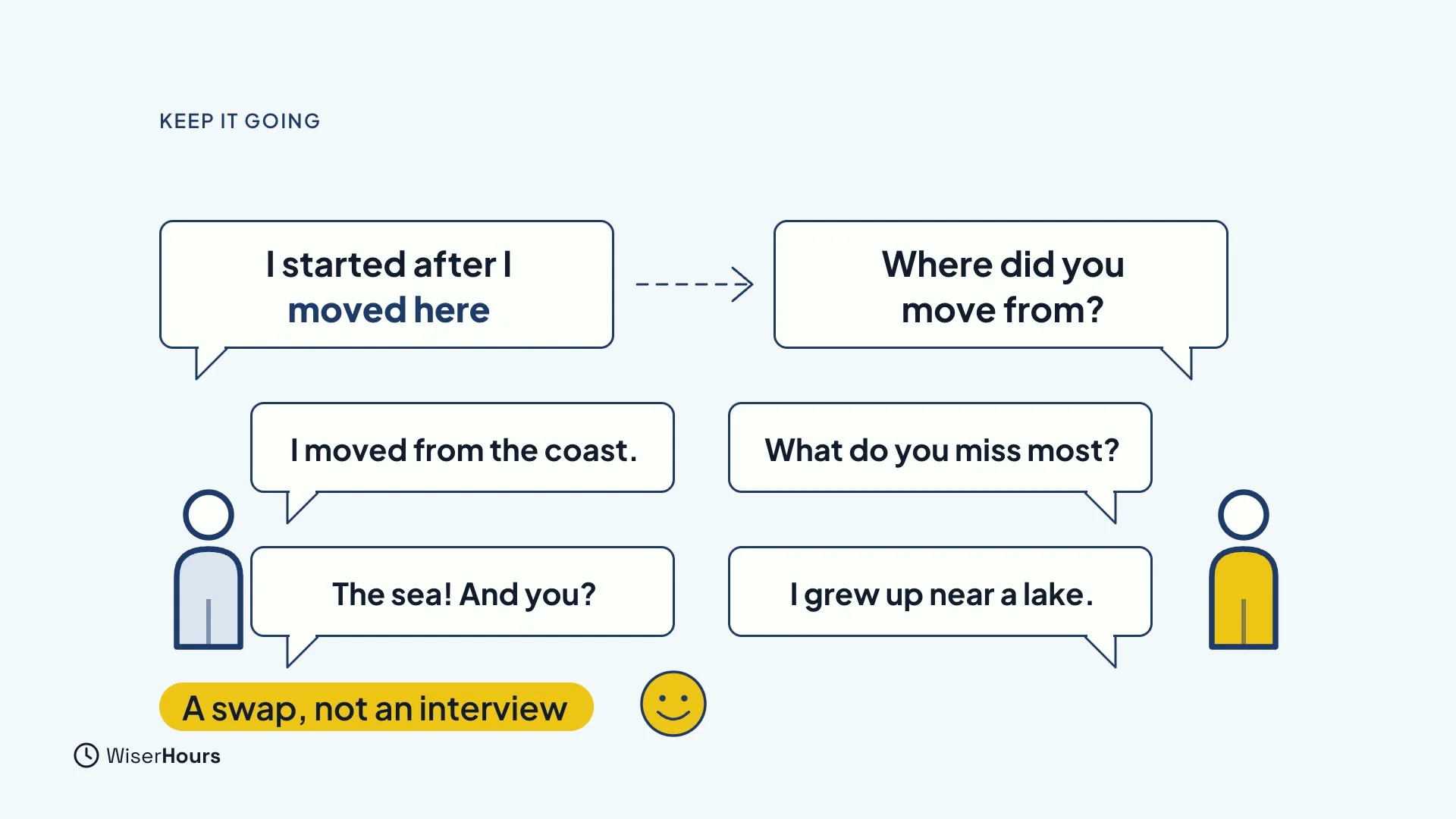
The easiest way to keep a conversation going is a follow-up question. Listen for one detail in their answer, and ask about it. Add a little about yourself too, so it feels like a swap, not an interview. People enjoy talking with someone who is curious about them. For more on listening well, see Active Listening Explained.
 (opens the full-size picture)
Names
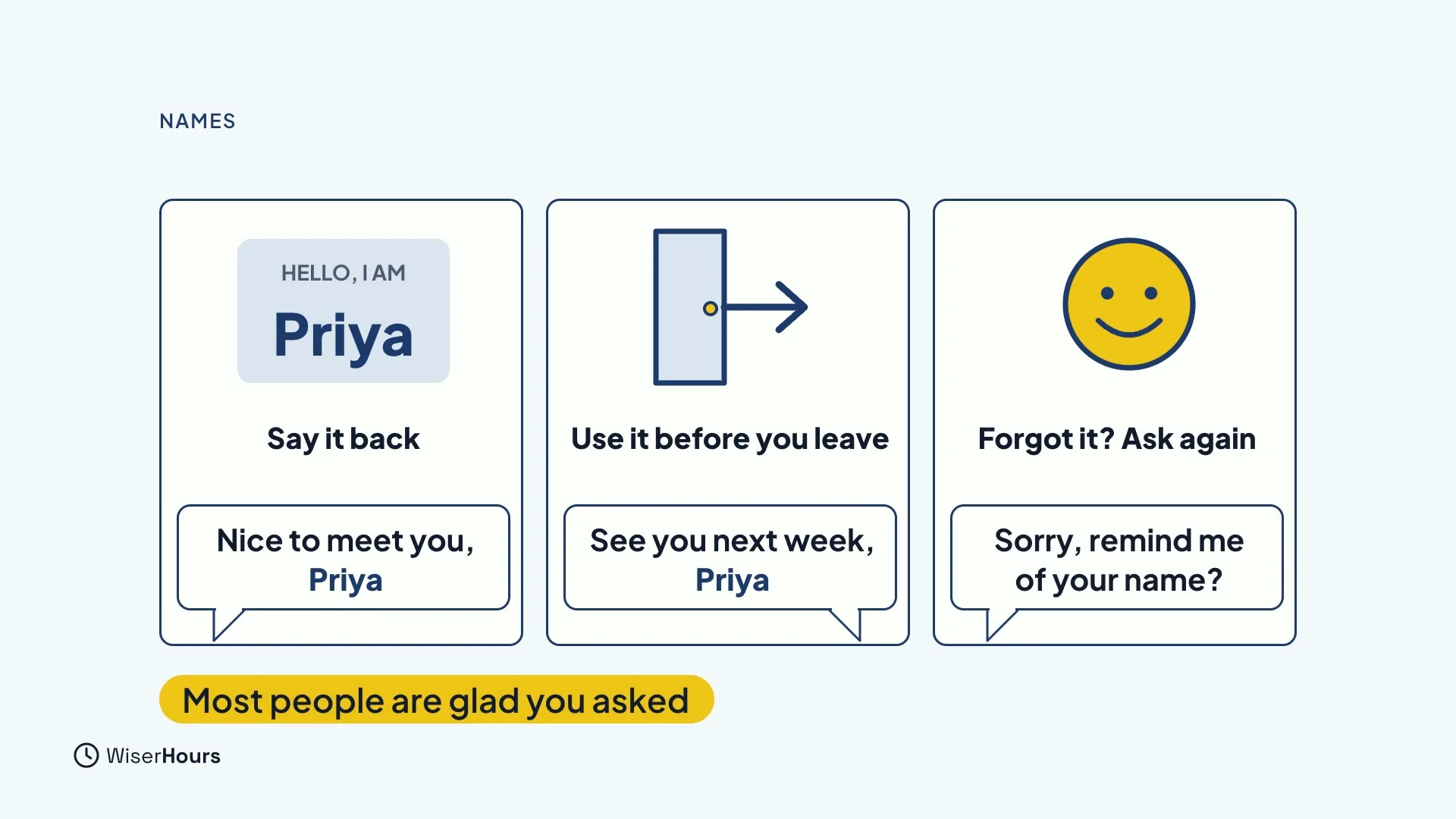
Names matter. Say the person’s name back when you hear it, and use it once more before you leave. If you forget it next time, just ask again. Most people are glad you cared enough to ask.
 (opens the full-size picture)
End well
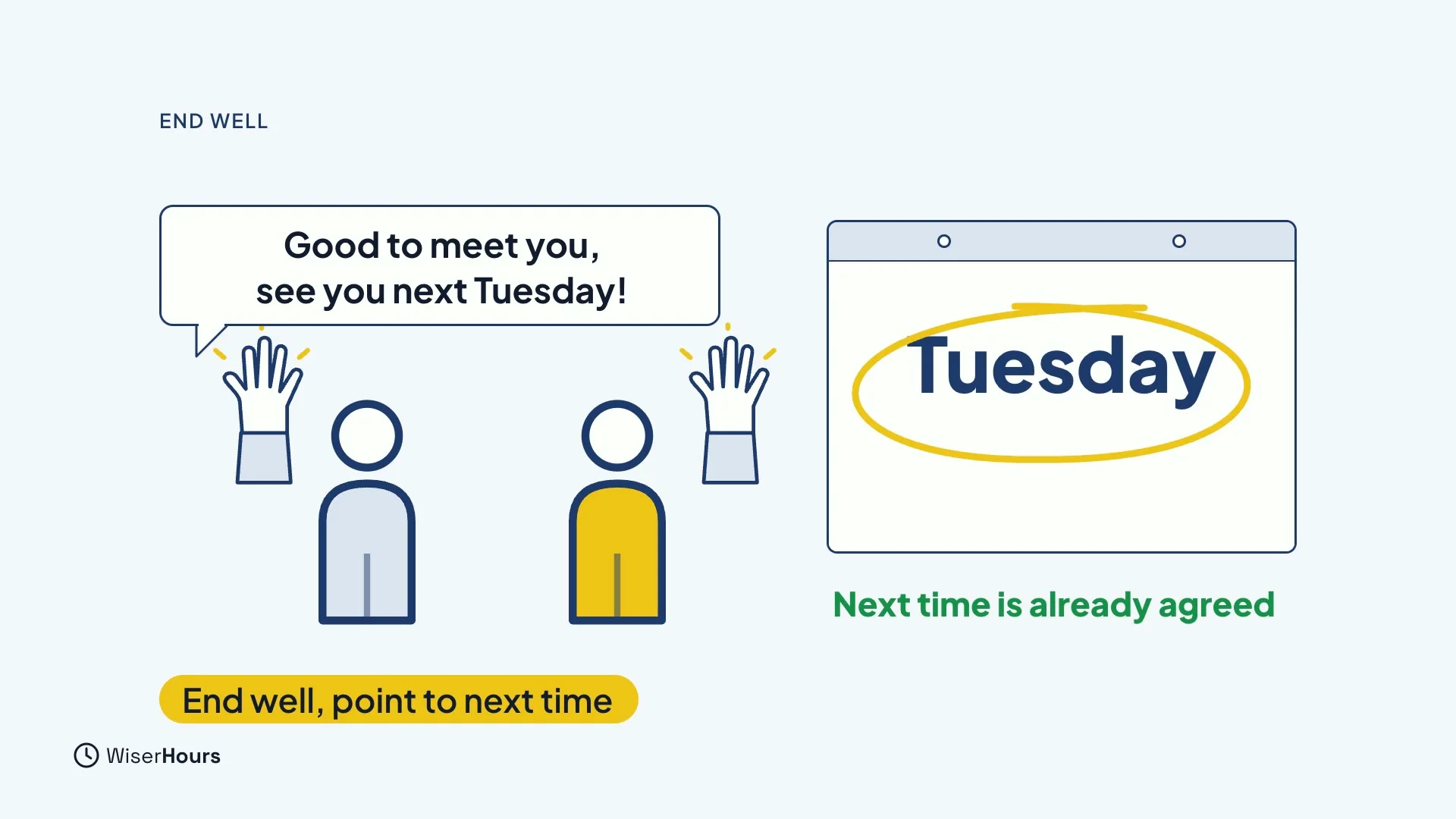
How you leave matters too. End while it is still going well, and point to next time: “Good to meet you, see you next Tuesday.” That small line makes the next chat easier, because you have already agreed there will be one.
 (opens the full-size picture)
YOUR TURN
Read more
- How to Reconnect With Someone You Haven’t Spoken to in Years: the commuter experiments, and why reaching out feels worse than it turns out to be.
- How to Run an Effective Meeting: a few words on why small talk before a meeting helps.
- Active Listening Explained: habits that make follow-up questions easy.
Read the full lesson script
Welcome back. You've found places where the same people show up. Now you need to start talking. In this lesson, you'll see why small talk matters, and get a few simple ways to open, keep going, and end a conversation.
Many people see small talk as pointless. But it's how strangers check that it's safe to talk more. In one set of experiments, commuters who were asked to talk to a stranger had a more pleasant journey, even though most people expected the opposite.
You don't need a clever line. Comment on what you're both doing: this class is busier than last week. Ask an easy, open question: how did you get into running? Or simply say your name: I'm Sam, I've seen you here before.
The easiest way to keep a conversation going is a follow-up question. Listen for one detail in their answer, and ask about it. Add a little about yourself too, so it feels like a swap, not an interview. People enjoy talking with someone who's curious about them.
Names matter. Say the person's name back when you hear it, and use it once more before you leave. If you forget it next time, just ask again. Most people are glad you cared enough to ask.
How you leave matters too. End while it's still going well, and point to next time: good to meet you, see you next Tuesday. That small line makes the next chat easier, because you've already agreed there will be one.
So remember: small talk is how people start trusting each other, and it often goes better than you expect. Open with what you share, a simple question, or your name. Then ask follow-up questions, and end by pointing to next time. Before the next lesson, use one opener with someone you see regularly but have never really talked to. Next, you'll see why people like you more than you think.
MAKE IT A SMALL WIN
Finished this lesson?
Mark it complete to save your progress on this device.