Meeting people · Lesson 5 of 10
The Liking Gap: Why People Like You More Than You Think
Learn why you probably made a better first impression than you think, and how to read people more fairly after a chat.
 Video coming soon
After a first conversation, many people walk away thinking it went badly. In this lesson you will see why that feeling is usually wrong, and how to read people more fairly.
The liking gap
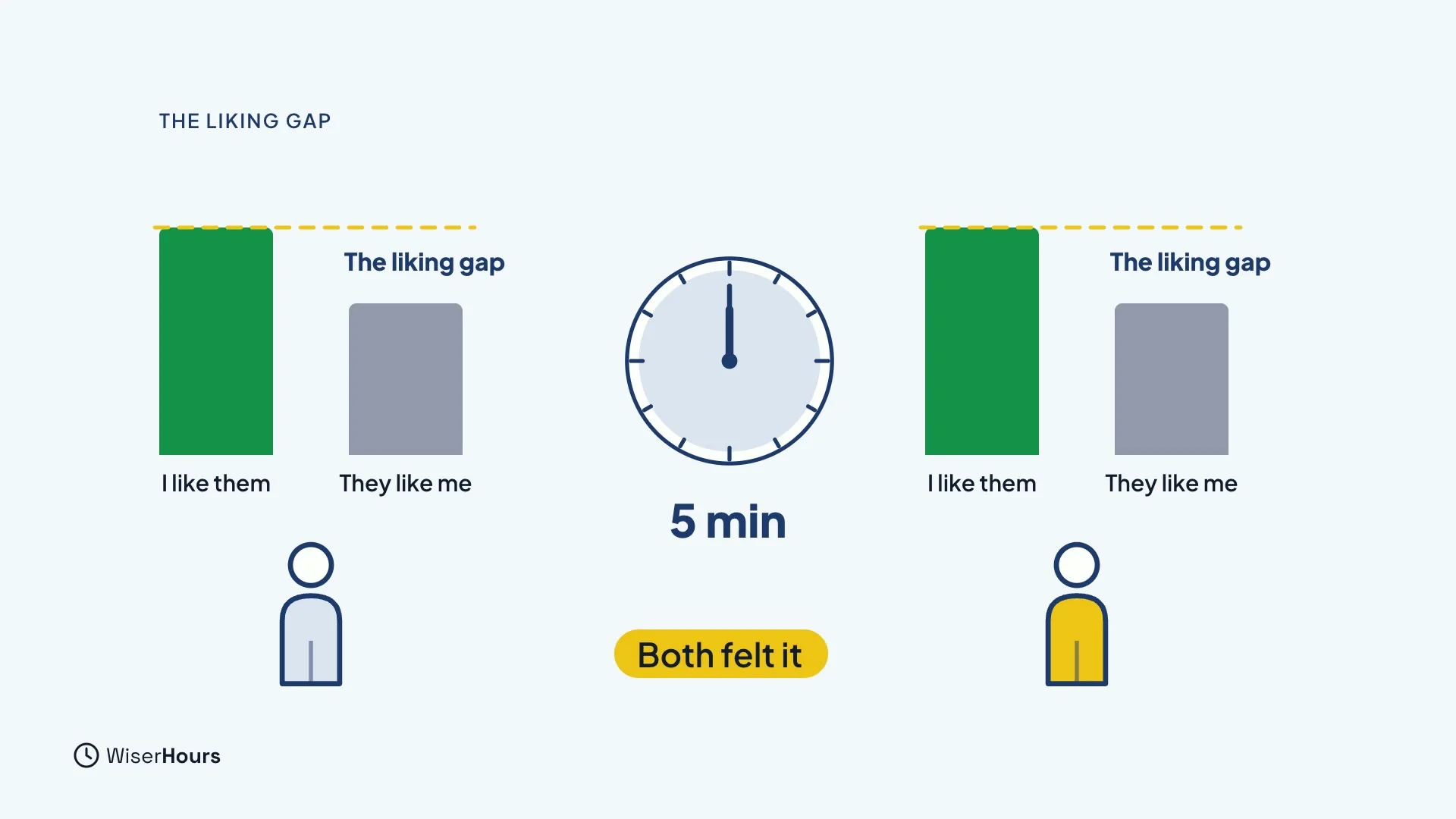
Researchers paired strangers for a short chat, then asked each person two questions. How much do you like your partner? And how much do you think your partner likes you? Most people liked their partner more than they thought their partner liked them. Both people often felt this at the same time.
This is called the liking gap. You can read more in the release about the liking-gap studies. In that work, strangers chatted for about 5 minutes, and the gap still showed up.
 (opens the full-size picture)
Why it happens
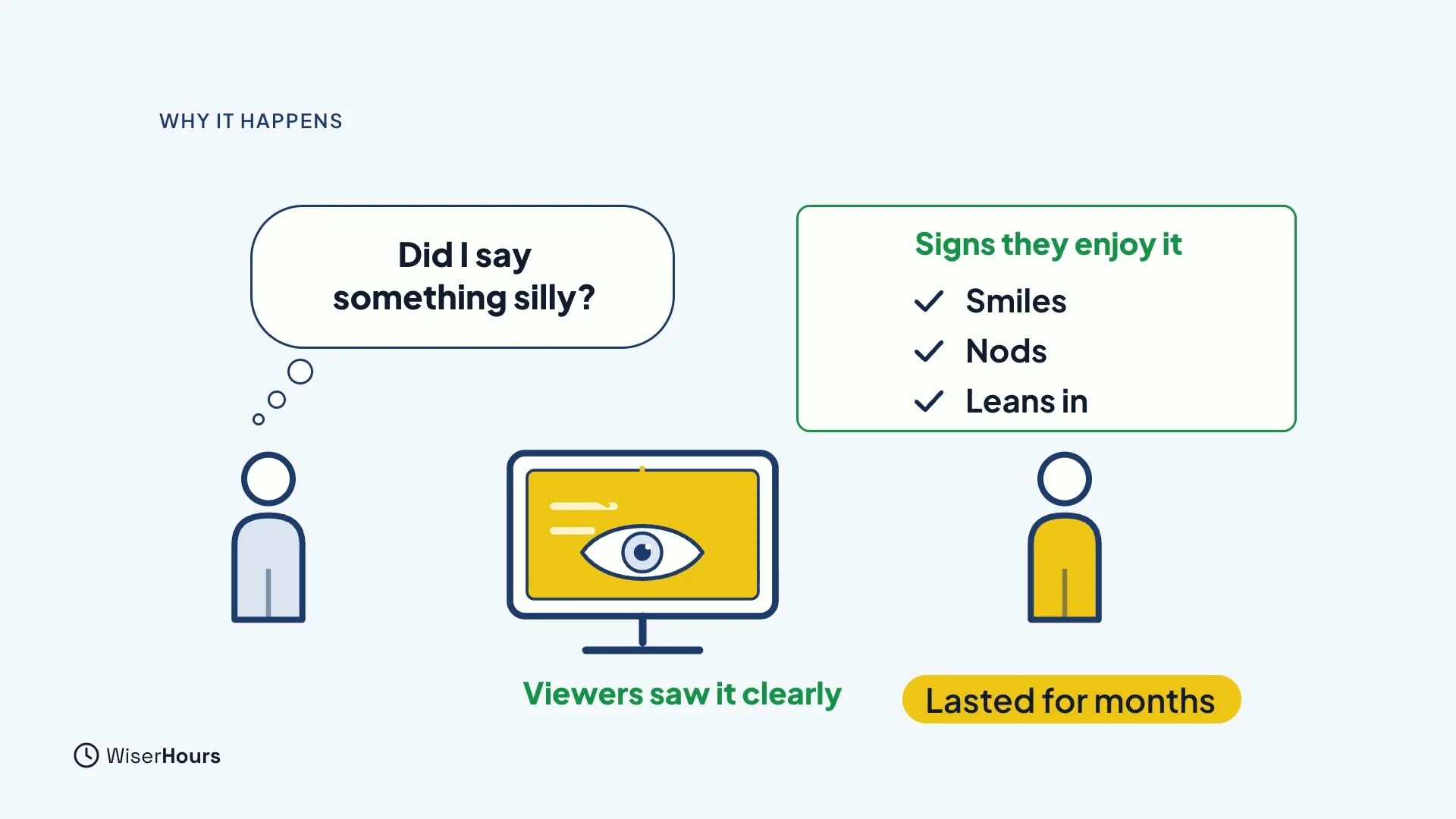
During a conversation, we are busy worrying about what we said, and we miss the signs that the other person is enjoying it. People watching a recording could see the liking clearly. The two people in the chat often could not.
The gap did not vanish quickly either. Between new roommates, it lasted for months.
 (opens the full-size picture)
Loneliness makes it stronger
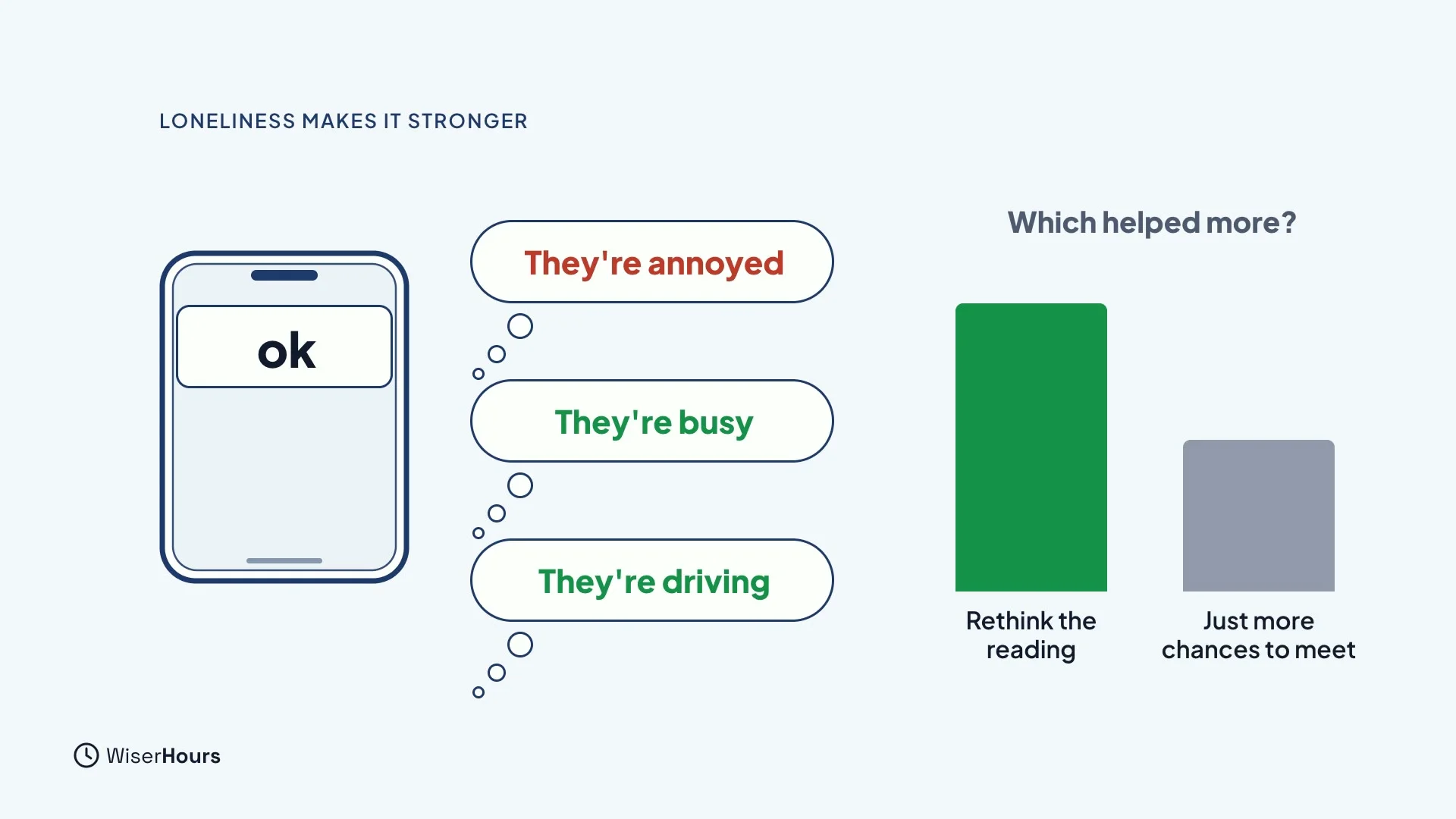
Loneliness adds to this. It makes people expect rejection, so they read neutral things as bad news. A short reply, a busy friend or a quick goodbye can feel like a snub. A one-word “ok” could mean “they’re annoyed”, or just as easily “they’re busy” or “they’re driving”.
Programmes that helped lonely people question those readings worked better than simply giving them more chances to meet people. Only a handful of trials looked at this, so treat it as a promising hint, not a promise.
 (opens the full-size picture)
Check the evidence
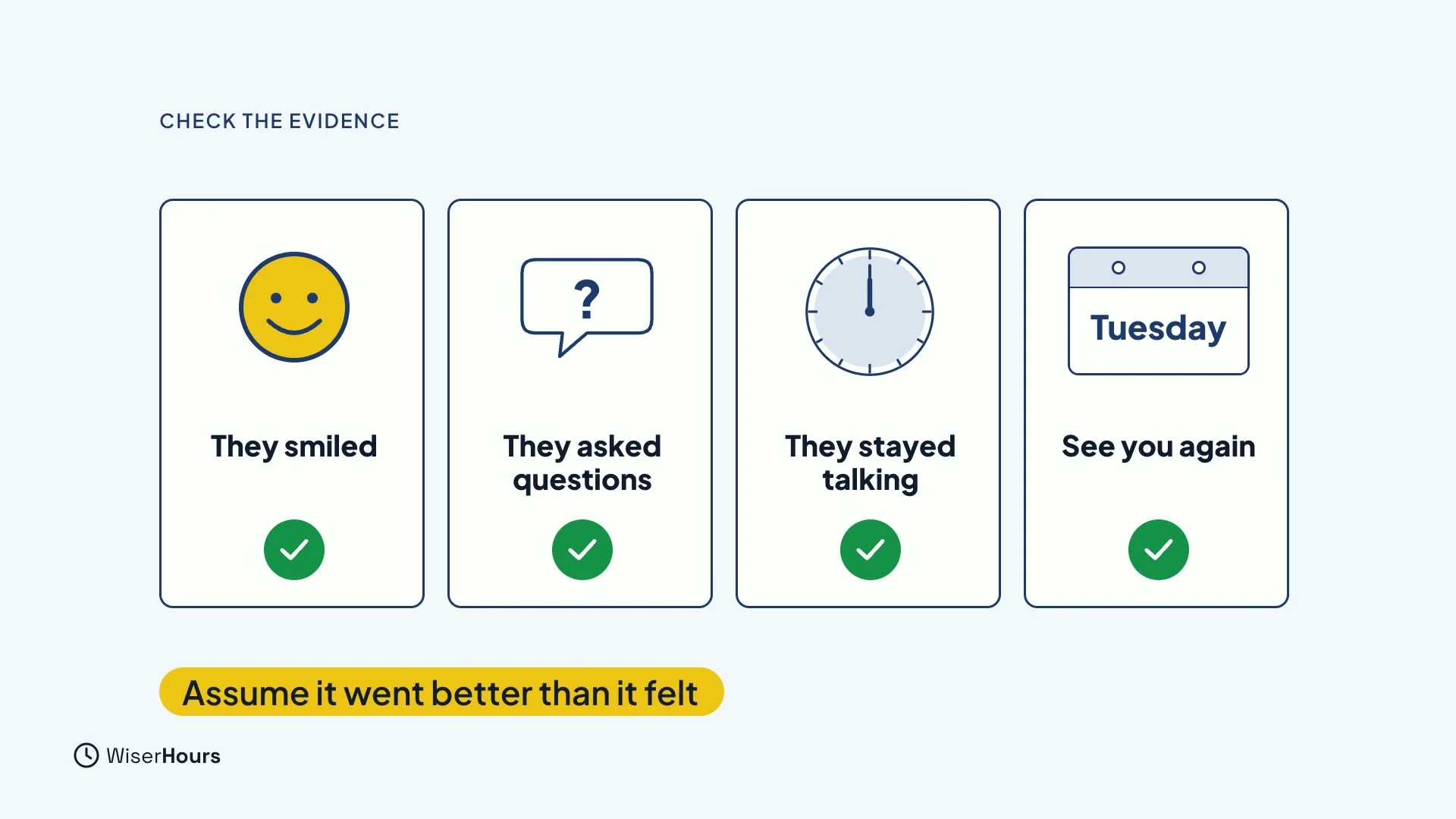
After a chat, check the evidence instead of your worry. Did they smile, ask you questions or stay talking? Did they say they would see you again? Those are good signs. And if you are not sure, assume it went better than it felt.
 (opens the full-size picture)
You are less pushy than you feel
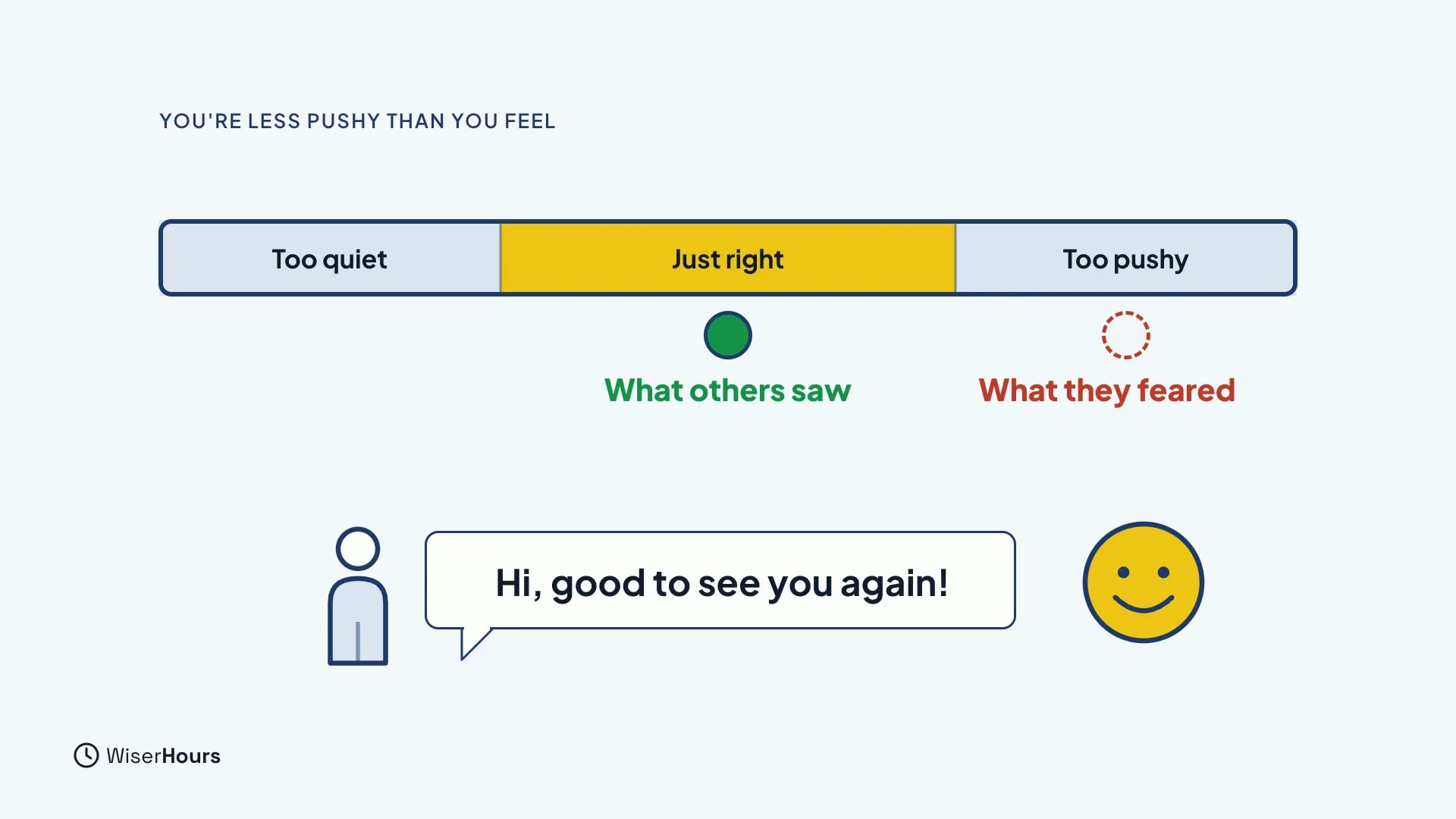
The same pattern shows up when people speak up. Many people who were seen as just right worried afterwards that they had been too pushy. So the risk of overdoing friendliness is usually smaller than it feels. A warm hello is rarely too much. The assertiveness article below covers this in more detail.
 (opens the full-size picture)
YOUR TURN
Read more
- Loneliness Explained: why loneliness makes people expect rejection, and what helps.
- Assertiveness for Beginners: why people who come across just right often think they were too pushy.
- You probably made a better first impression than you think: the Association for Psychological Science release on the liking-gap studies.
Read the full lesson script
Welcome back. After a first conversation, many people walk away thinking it went badly. In this lesson, you'll see why that feeling is usually wrong, and how to read people more fairly.
Researchers paired strangers for a short chat, then asked each person two questions. How much do you like your partner? And how much do you think your partner likes you? Most people liked their partner more than they thought their partner liked them. Both people often felt this at the same time.
Why? During a conversation, we're busy worrying about what we said, and we miss the signs that the other person is enjoying it. People watching a recording could see the liking clearly. The two people in the chat often couldn't. And the gap didn't vanish quickly: between new roommates, it lasted for months.
Loneliness adds to this. It makes people expect rejection, so they read neutral things as bad news. A short reply, a busy friend, or a quick goodbye can feel like a snub. Programmes that helped lonely people question those readings worked better than simply giving them more chances to meet people.
So after a chat, check the evidence instead of your worry. Did they smile, ask you questions, or stay talking? Did they say they'd see you again? Those are good signs. And if you're not sure, assume it went better than it felt.
The same pattern shows up when people speak up. Many people who were seen as just right worried afterwards that they had been too pushy. So the risk of overdoing friendliness is usually smaller than it feels. A warm hello is rarely too much.
So remember: after a first chat, most people underestimate how much they were liked. Worry hides the good signs, and loneliness makes neutral replies feel like snubs. So check the evidence, and assume it went better than it felt. Before the next lesson, after your next conversation, write down one sign that the other person enjoyed it. Next, you'll make the invitation.
MAKE IT A SMALL WIN
Finished this lesson?
Mark it complete to save your progress on this device.