Keeping friends · Lesson 10 of 10
Your Friendship Plan: A Simple Checklist for Adults
Learn when loneliness needs more than new friends, where to get help, and fill in a simple seven-step friendship plan.
 Video coming soon
This is the last lesson. First you will see when loneliness needs more than new friends, and where to get help. Then you will put everything from this course into one simple friendship plan. This is general information, not medical advice.
When to get help
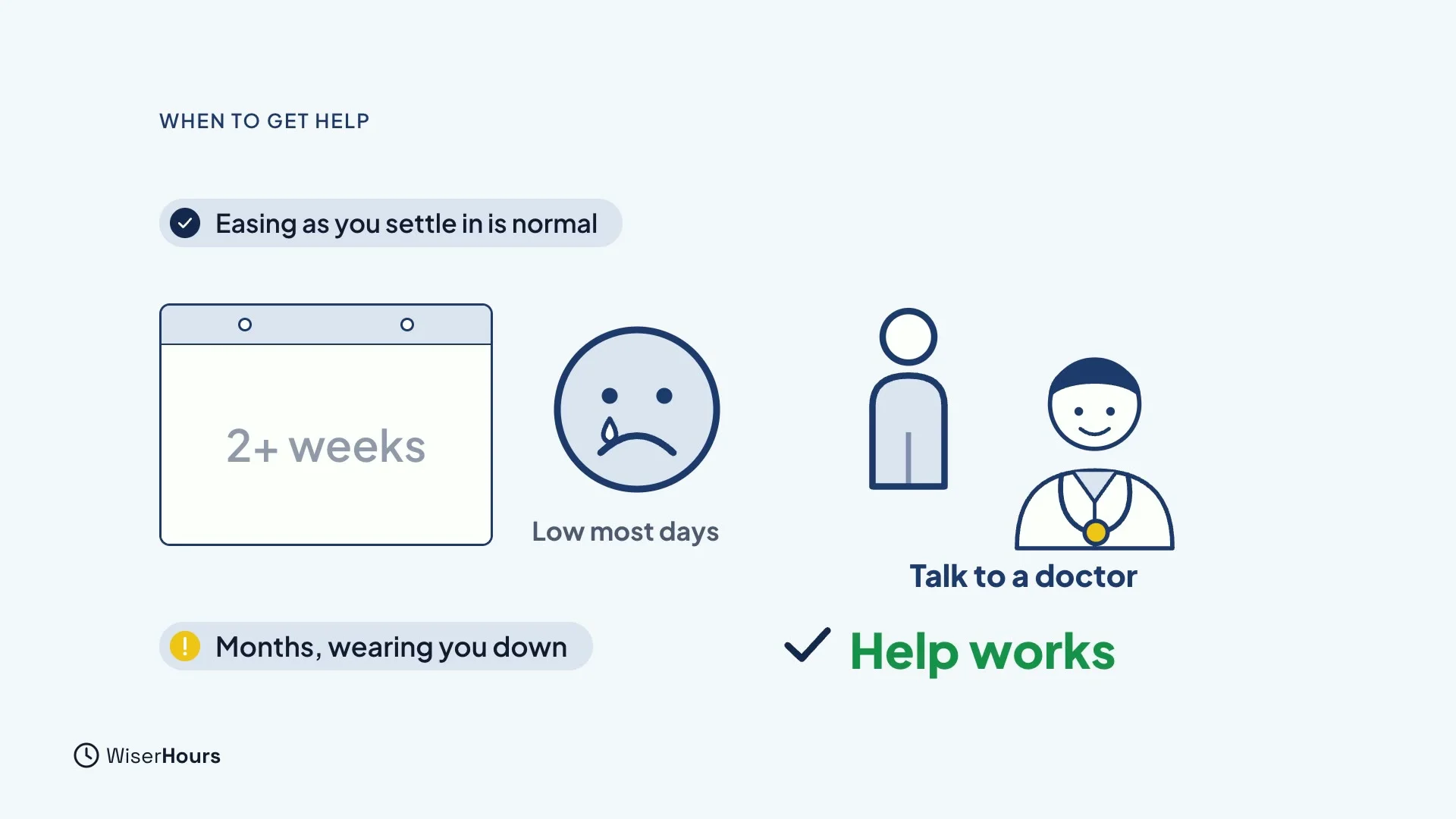
Loneliness that eases as you settle in is normal. But if you feel low most of the day, nearly every day, for more than two weeks, talk to a doctor. The same goes if loneliness has lasted for months and is wearing you down. Long, heavy loneliness can raise the risk of anxiety disorderanxiety disorder: A mental health condition in which worry or fear is persistent, out of proportion to the situation and hard to control, and gets in the way of daily life. It differs from ordinary anxiety, which passes, and it is diagnosed by a clinician.Full entry in the glossary and depressiondepression: A common mental health condition in which low mood or loss of interest lasts most of the day, nearly every day, for weeks, along with changes such as poor sleep, tiredness or trouble concentrating. It is diagnosed by a clinician, and effective treatments exist.Full entry in the glossary, and help works.
 (opens the full-size picture)
In a crisis
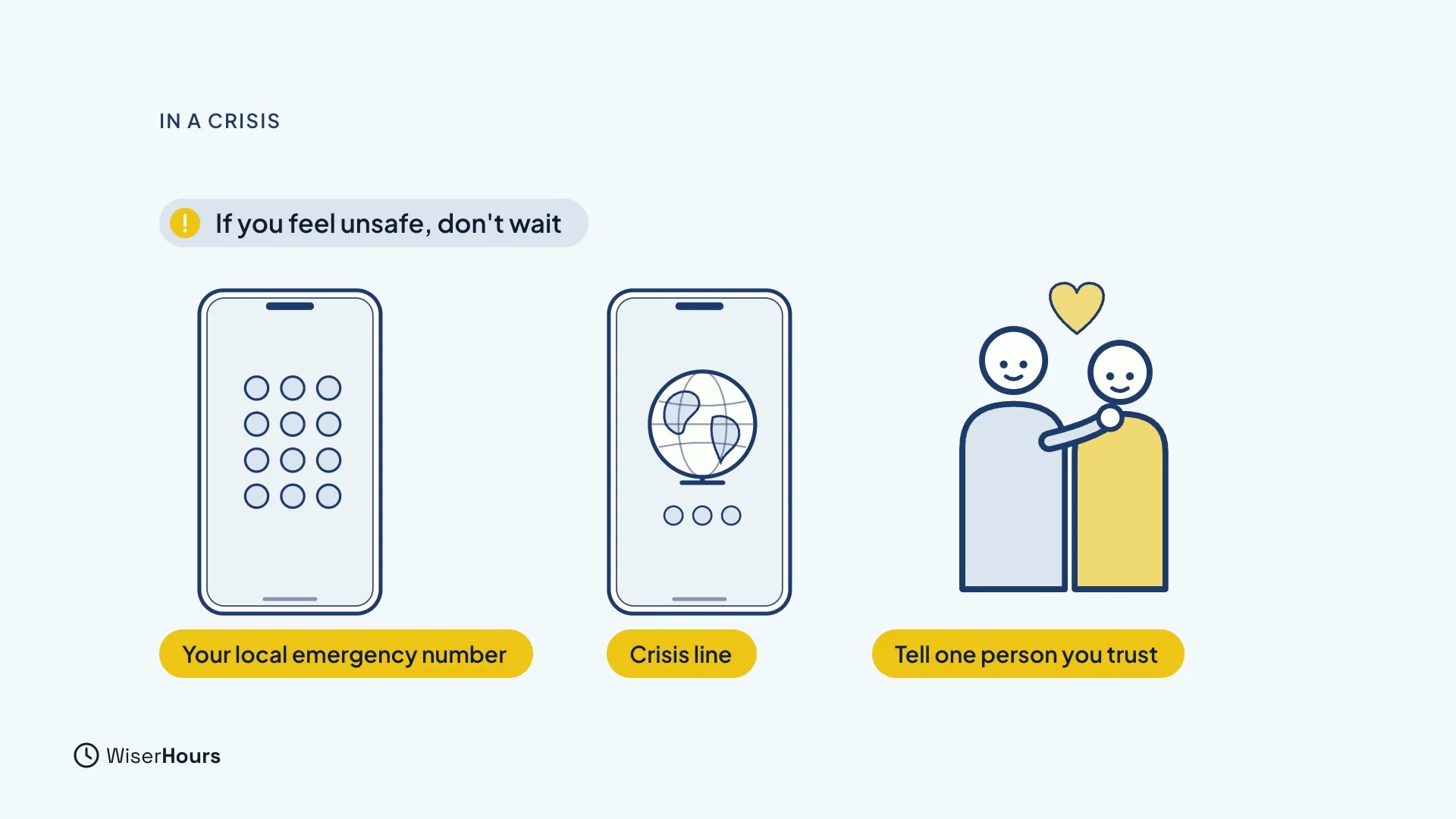
If you ever feel unsafe, or think about harming yourself, do not wait. Call your local emergency number, or a crisis line in your country. Telling one person you trust also helps.
 (opens the full-size picture)
Get help now
If you are in danger or may harm yourself, call your local emergency number right away. If you can, tell someone near you.
Apps cannot replace people
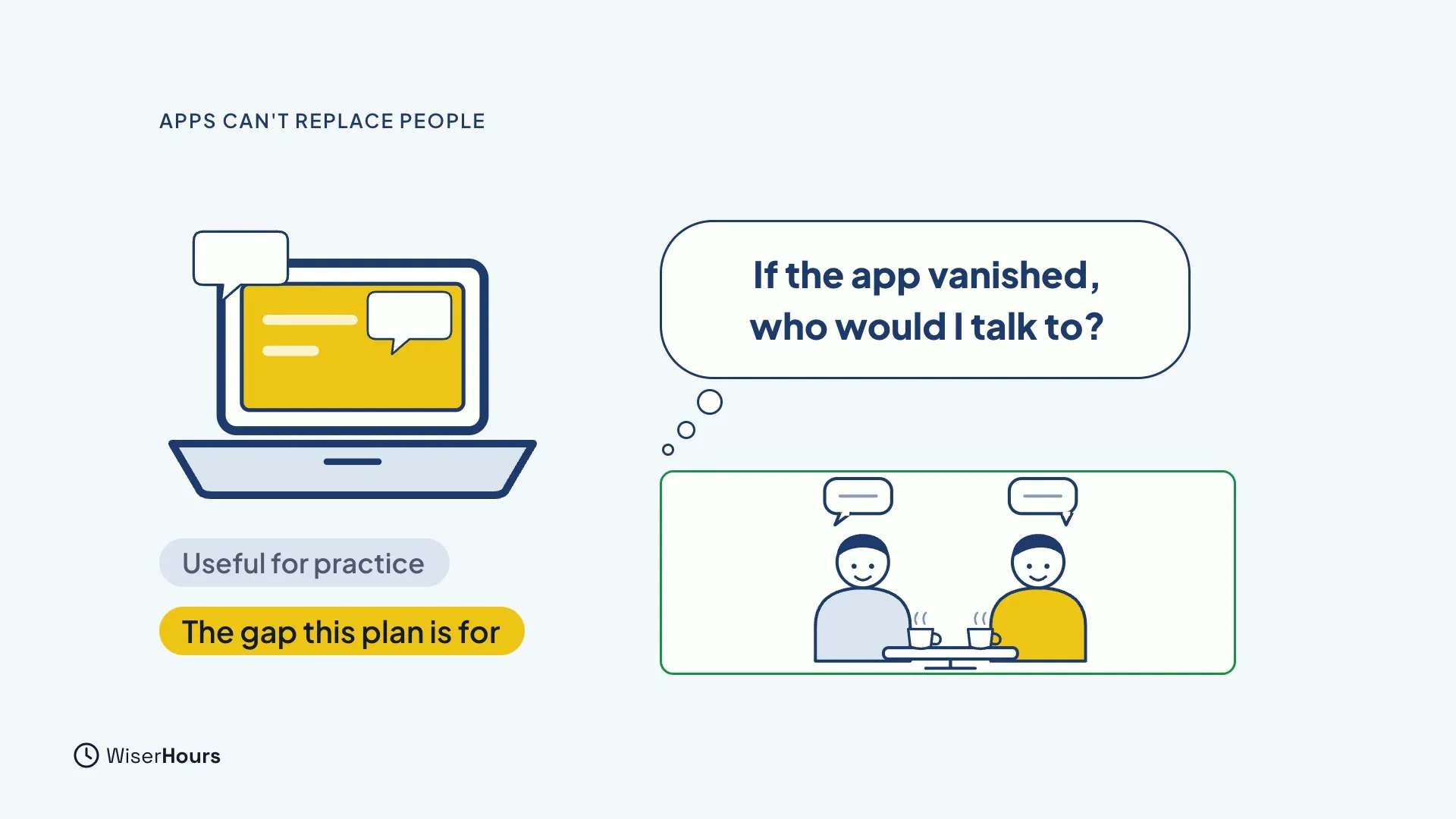
A chatbotchatbot: A program that holds a conversation in everyday language, replying to what a user types or says. Most of today's AI chatbots run on large language models, which can give fluent, confident answers that are partly or wholly wrong.Full entry in the glossary or an app can help you practise what to say, or get you through a hard evening. But ask yourself one question: if the app vanished tomorrow, who would you talk to? If there is no answer, that is the gap this plan is for.
 (opens the full-size picture)
Your friendship plan, part one
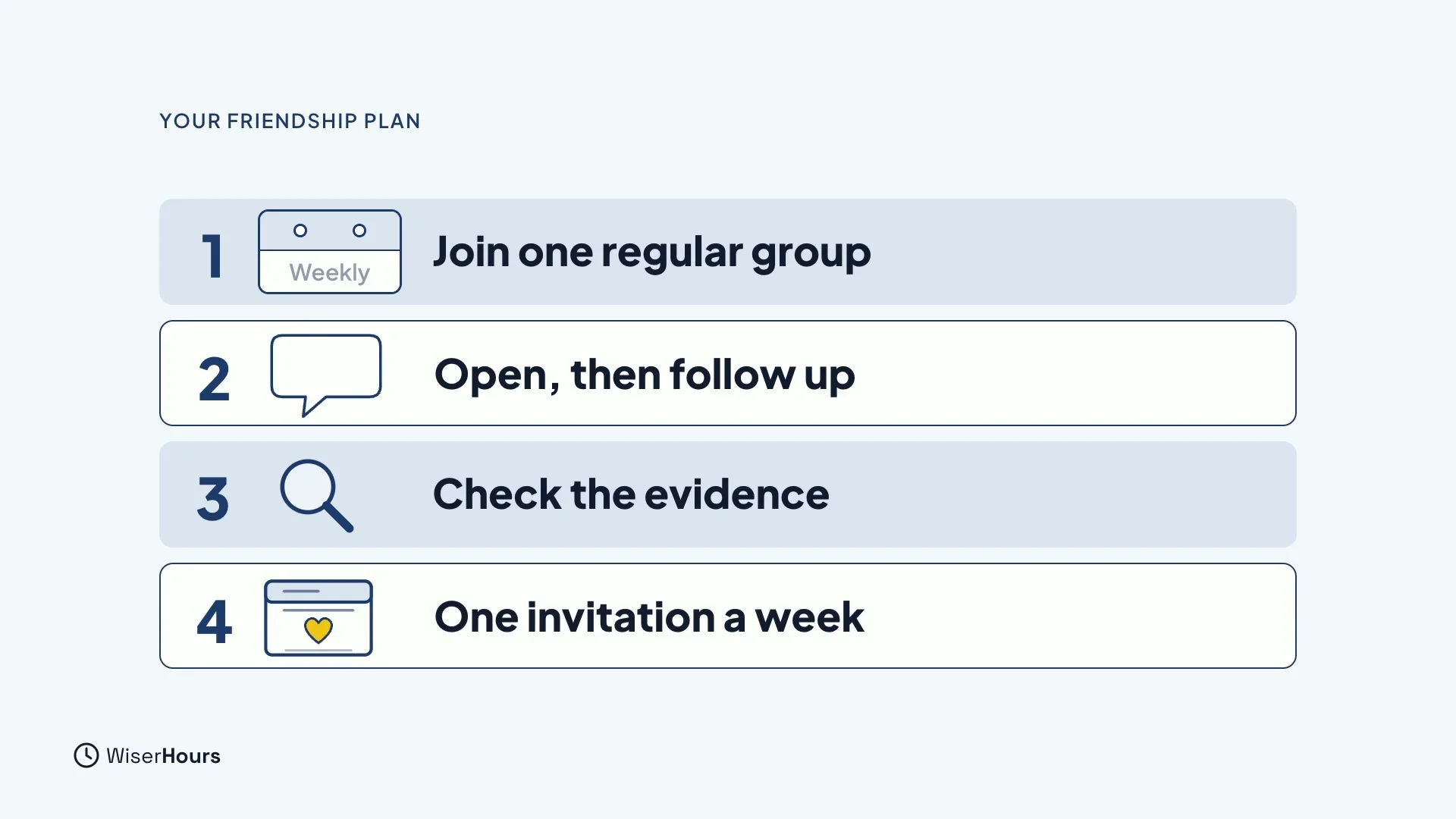
Here are the first four steps. Each one comes from an earlier lesson. One: join one regular group you would enjoy anyway, and give it a few months. Two: use an opener, and ask follow-up questions. Three: after a chat, check the evidence, not your worry. Four: make one specific invitation each week.
 (opens the full-size picture)
Your friendship plan, part two
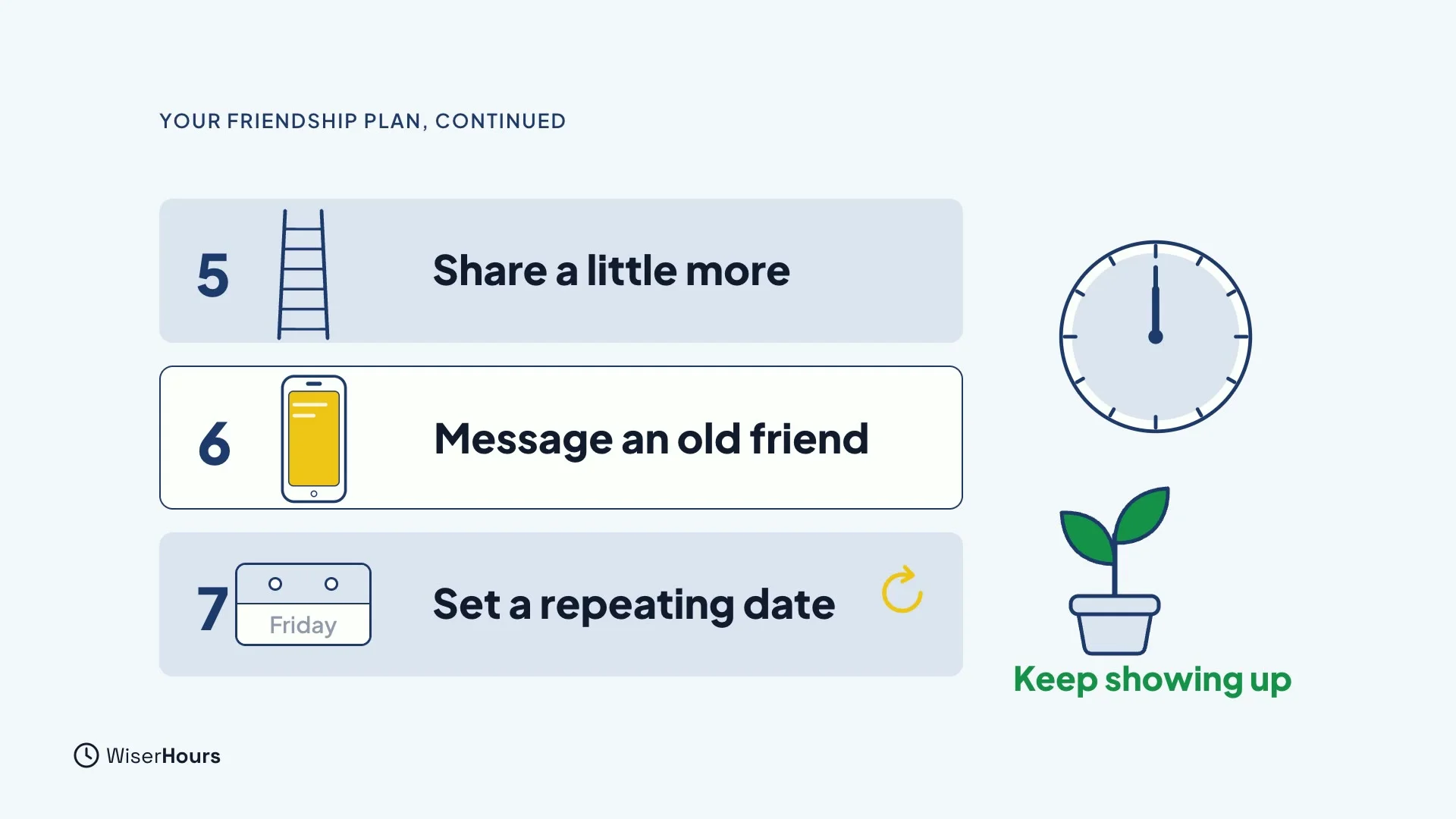
Five: share a little more, in turns, with the phone away. Six: send one warm message to an old friend, and suggest a call. Seven: set a repeating date with two friends. And remember the hours: friendship grows with time, so keep showing up. You do not need to do all seven at once. Start with one step this week, and add the next when the first feels natural.
 (opens the full-size picture)
YOUR TURN
My friendship plan
Read more
- Loneliness Explained: What It Is, Why It Hurts, and How Common It Is: when loneliness needs more help, and where to turn.
- Phubbing: How Phones Hurt Relationships and What to Do: putting the phone away so people feel heard.
- AI Chatbots for Emotional Support: Benefits, Risks, and When to See a Therapist: what chatbots can and cannot do.
Read the full lesson script
Welcome to the last lesson. First, you'll see when loneliness needs more than new friends, and where to get help. Then you'll put everything from this course into one simple friendship plan.
Loneliness that eases as you settle in is normal. But if you feel low most of the day, nearly every day, for more than two weeks, talk to a doctor. The same goes if loneliness has lasted for months and is wearing you down. Long, heavy loneliness can raise the risk of anxiety and depression, and help works.
If you ever feel unsafe, or think about harming yourself, don't wait. Call your local emergency number, or a crisis line in your country. Telling one person you trust also helps.
Chatbots and apps can help you practise what to say, or get through a hard evening. But ask yourself one question: if the app vanished tomorrow, who would you talk to? If there's no answer, that's the gap this plan is for.
Here's your plan. One: join one regular group you'd enjoy anyway, and give it a few months. Two: use an opener, and ask follow-up questions. Three: after a chat, check the evidence, not your worry. Four: make one specific invitation each week.
Five: share a little more, in turns, with the phone away. Six: send one warm message to an old friend, and suggest a call. Seven: set a repeating date with two friends. And remember the hours: friendship grows with time, so keep showing up.
So remember: if low mood lasts more than two weeks, talk to a doctor, and in a crisis call your local emergency number. Apps can help, but people matter most. And your plan is simple: show up regularly, invite, go deeper, and keep in touch. For your last task, fill in your friendship plan, and start with one step this week. Thank you for taking this course.
MAKE IT A SMALL WIN
Finished this lesson?
Mark it complete to save your progress on this device.