Getting closer · Lesson 8 of 10
Reconnect With Old Friends and Value Small Hellos
See why a short, warm message to an old friend is usually welcome, why a call beats an email, and why small everyday hellos matter.
 Video coming soon
New friends are not the only option. People you have lost touch with are often worth a message, and even light, everyday contact matters more than you might think. This lesson covers both.
They will be gladder than you think
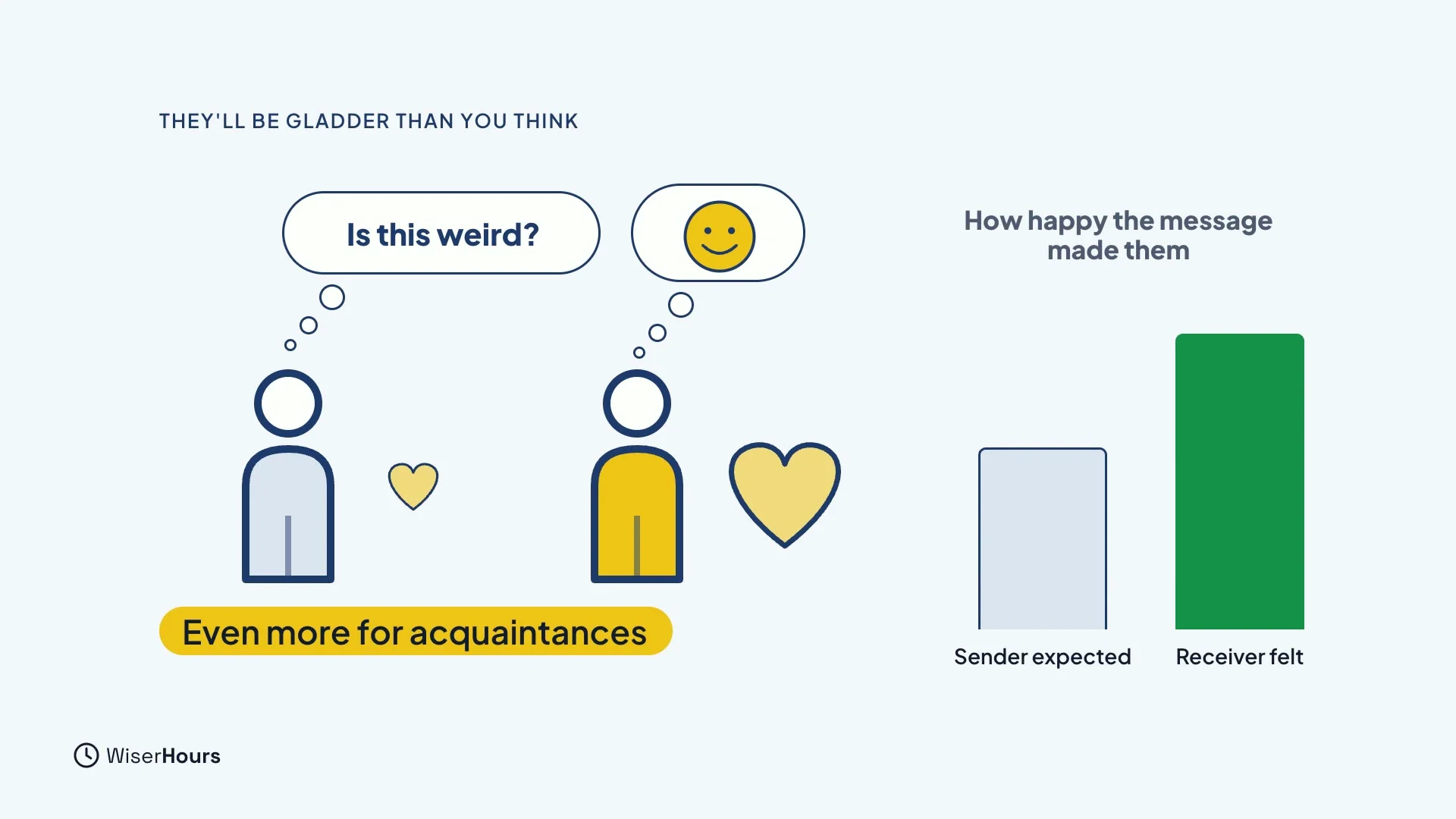
When people reach out to someone they have not spoken to in a while, they tend to underestimate how much the message will be appreciated. In a series of studies, the person receiving it was clearly happier than the sender expected. The gap was biggest for people who were not close. Not every repeat of this research found a large effect, so treat it as a nudge, not a promise.
 (opens the full-size picture)
Warm beats clever
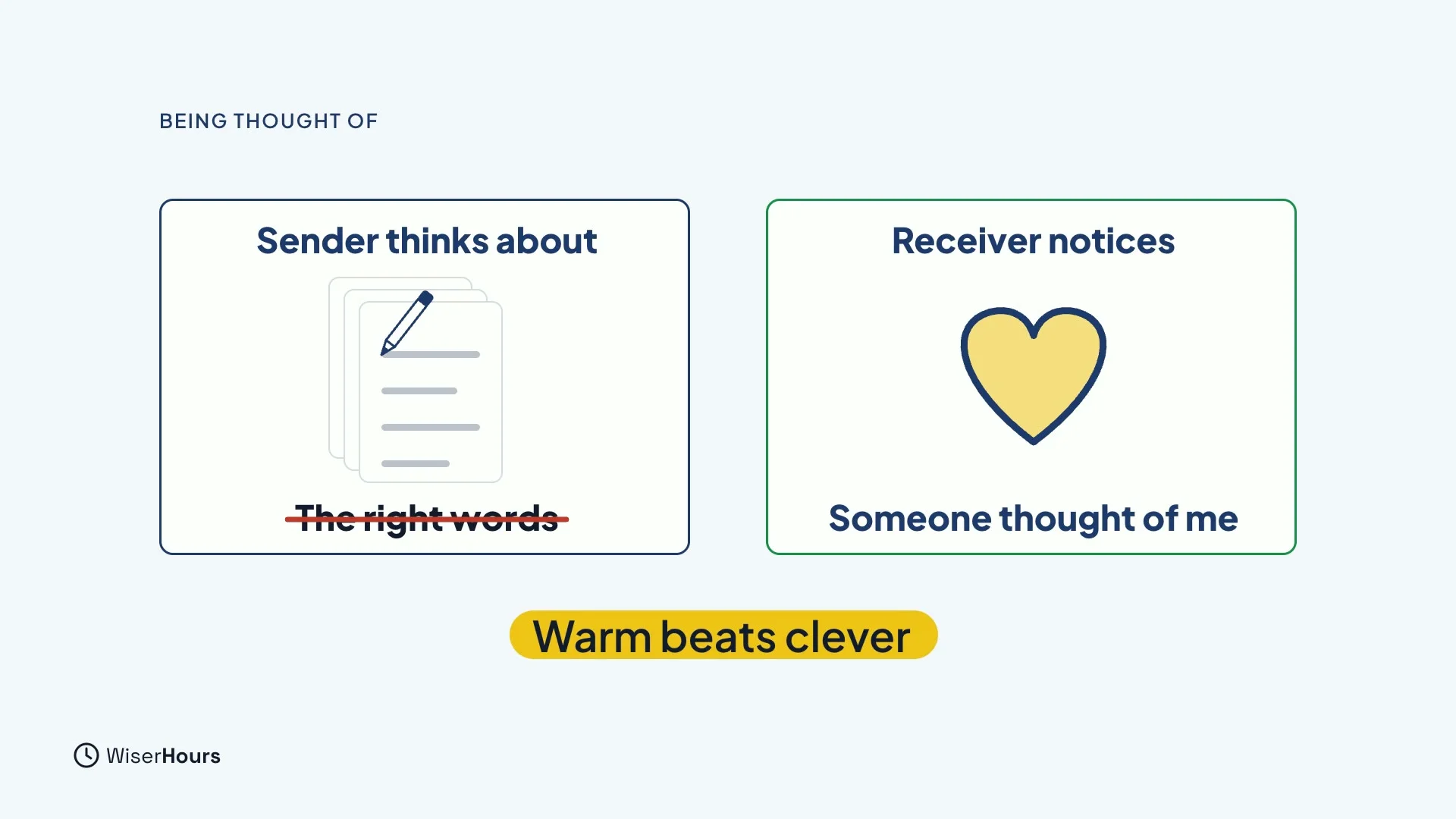
Why the gap? Senders worry about getting the words right. Receivers mostly notice that someone thought of them. So the message does not need to be clever. It needs to be warm.
 (opens the full-size picture)
Call if you can
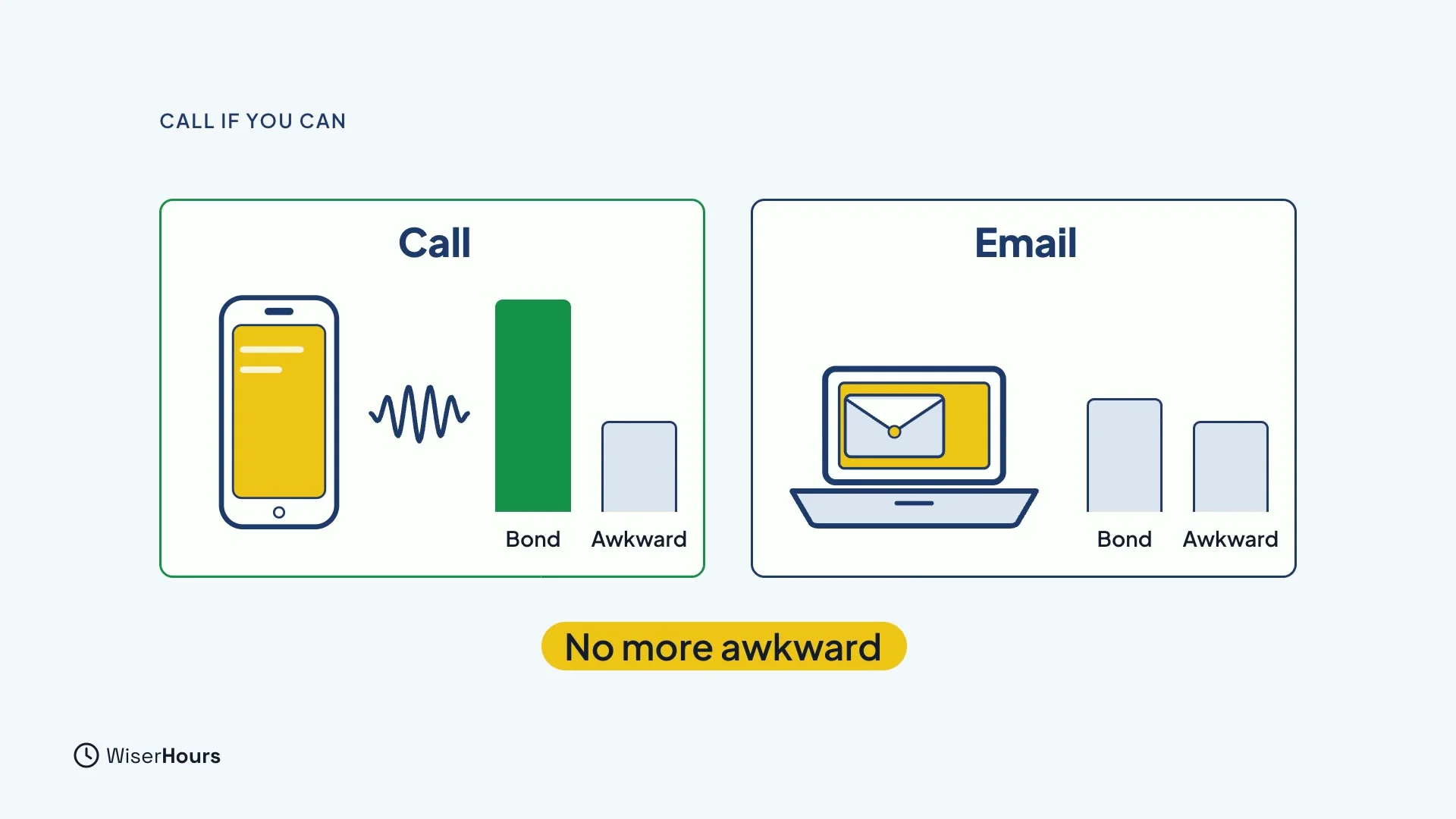
Once they reply warmly, suggest a call. When people reconnected with an old friend, a phone call built a stronger bond than an email, and it was no more awkward, even though most people expected it to be and chose email.
 (opens the full-size picture)
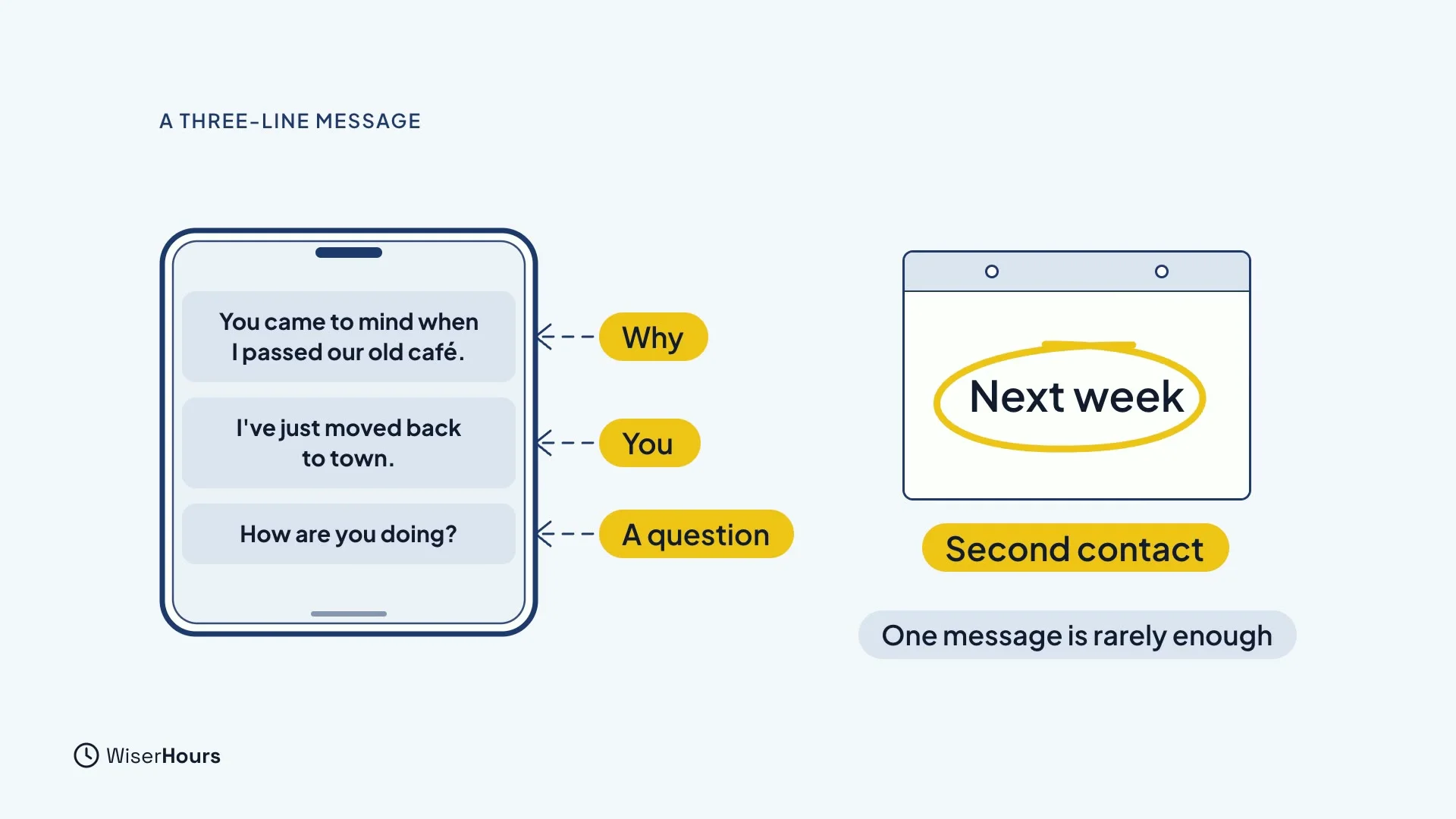
A three-line message
Keep it short. Say why they came to mind. Add one line about you. Ask a question. The same three lines work wherever your old friend lives. For example:
 (opens the full-size picture)
Then plan the second contact, such as a call next week. One message alone rarely rebuilds a friendship, and no study shows that it does.
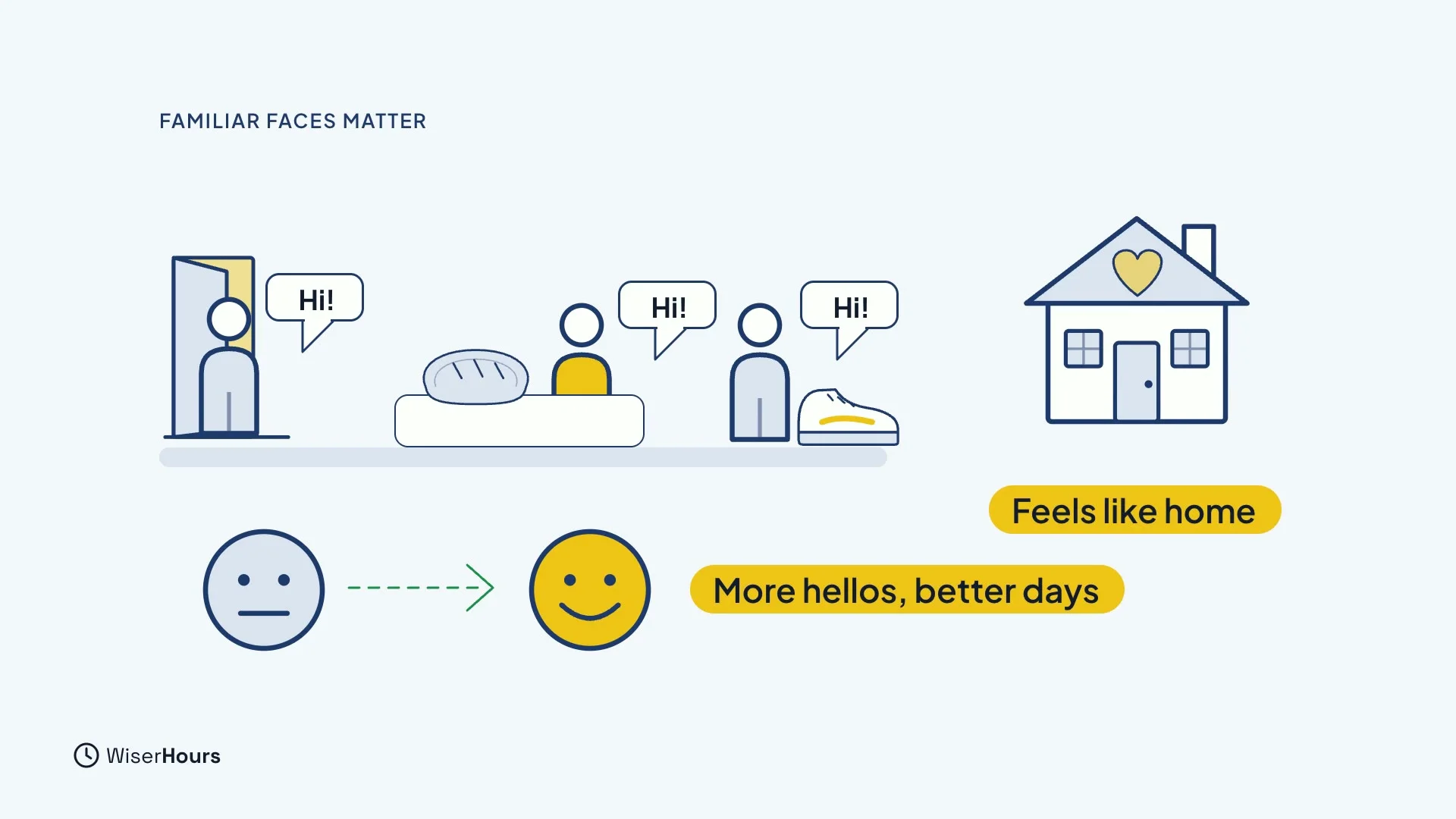
Familiar faces matter
Light contact counts too. The neighbour you nod to, the person at the bakery and the regular at the gym all count. In one study, students felt happier and more like they belonged on days when they talked with more classmates than usual. That is a link seen in daily reports, not proof of cause, but small hellos are free to try. They help a place feel like home.
 (opens the full-size picture)
Hellos are a start
You do not need a long chat. A smile and a hello to someone you see often is enough, and it often leads to more over time. This also connects to weak tiesweak ties: Relationships with little shared time, emotion, confiding or exchange of favors, such as a former colleague. Because acquaintances move in other circles, they are more likely than close friends to pass on news you have not already heard, including about jobs.Full entry in the glossary: the people you see only now and then still matter.
YOUR TURN
Read more
- How to Reconnect With Someone You Haven’t Spoken to in Years: the studies on reaching out, calls and follow-ups.
- Why Networking Works: Granovetter’s Weak Ties Explained: why light contact with many people matters.
Read the full lesson script
Welcome back. New friends aren't the only option. In this lesson, you'll see why old friends you've lost touch with are worth a message, and why even light, everyday contact matters more than you'd think.
When people reach out to someone they haven't spoken to in a while, they underestimate how much the message will be appreciated. In a series of studies, the person receiving it was clearly happier than the sender expected. The gap was biggest for people who weren't close.
Why the gap? Senders worry about getting the words right. Receivers mostly notice that someone thought of them. So the message doesn't need to be clever. It needs to be warm.
Once they reply warmly, suggest a call. When people reconnected with an old friend, a phone call built a stronger bond than an email, and it wasn't more awkward, even though most people expected it to be and chose email.
Keep it short. Say why they came to mind. Add one line about you. And ask a question. You came to mind when I passed our old café. I've just moved back to town. How are you doing? Then plan the second contact, because one message alone rarely rebuilds a friendship.
Light contact counts too. The neighbour you nod to, the person at the bakery, the regular at the gym. Students felt happier and more like they belonged on days when they talked with more classmates than usual. These small hellos make a place feel like home.
So remember: an old friend will usually be gladder to hear from you than you expect. A warm, short message beats a clever one, and a call builds more than an email. And small daily hellos count too. Before the next lesson, send a short message to one person you've lost touch with, with no request. Next, you'll learn how to keep friendships alive.
MAKE IT A SMALL WIN
Finished this lesson?
Mark it complete to save your progress on this device.