Meeting people · Lesson 3 of 10
Where to Meet Friends: Go Where the Same People Show Up
Choose regular groups where you see the same people again and again, and use small habits to make each visit count.
 Video coming soon
You have seen that friendship takes hours. This lesson is about where those hours can build up. The answer is simple: go where you will see the same people again and again.
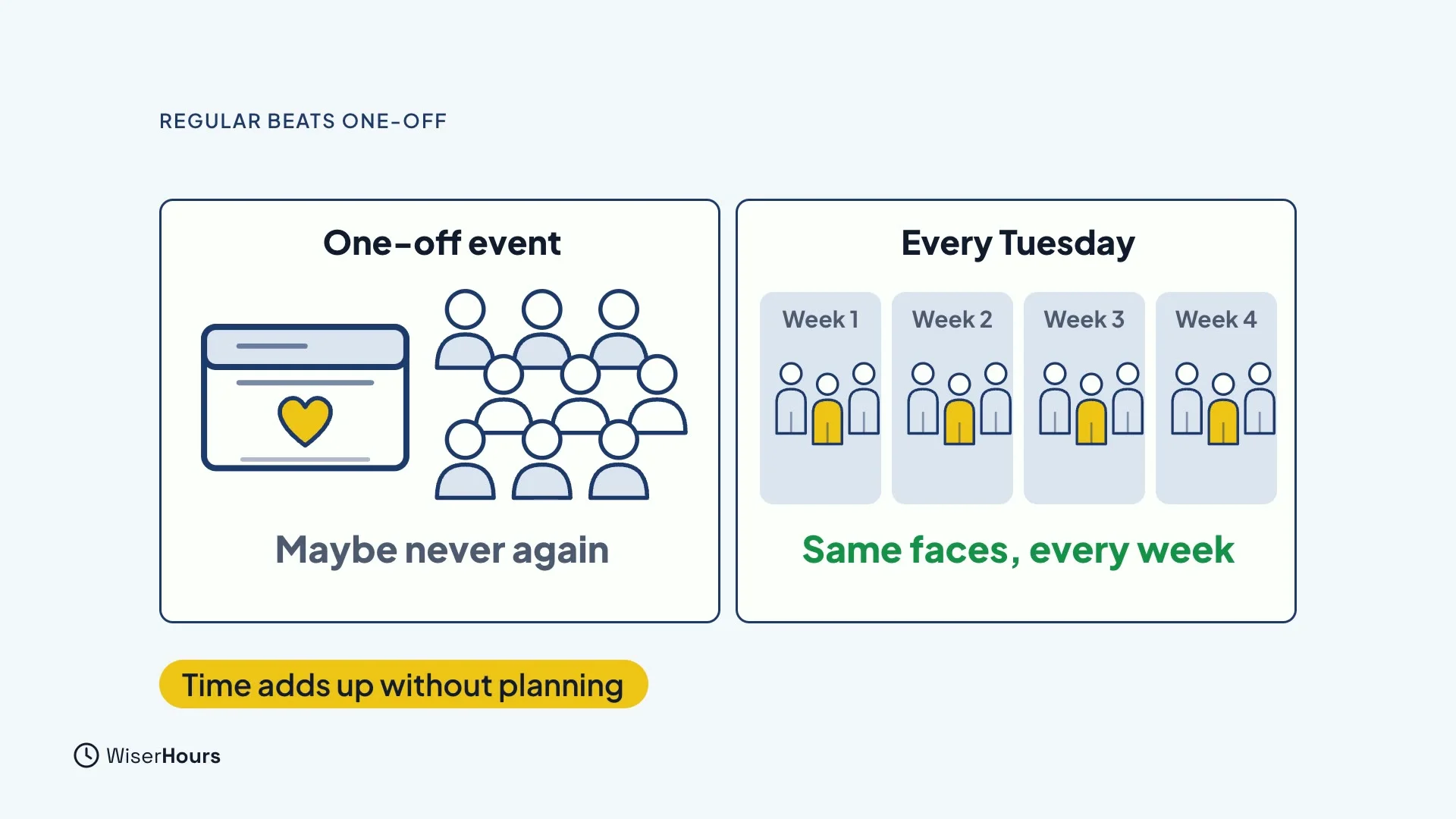
Regular beats one-off
A party or a big event can be fun, but you might never see those people again. A weekly class, club or team is different. You meet the same faces every week, and each meeting adds a little time together without anyone having to arrange it.
That is the closest an adult week gets to the school timetable from lesson 1: the schedule does the arranging for you.
 (opens the full-size picture)
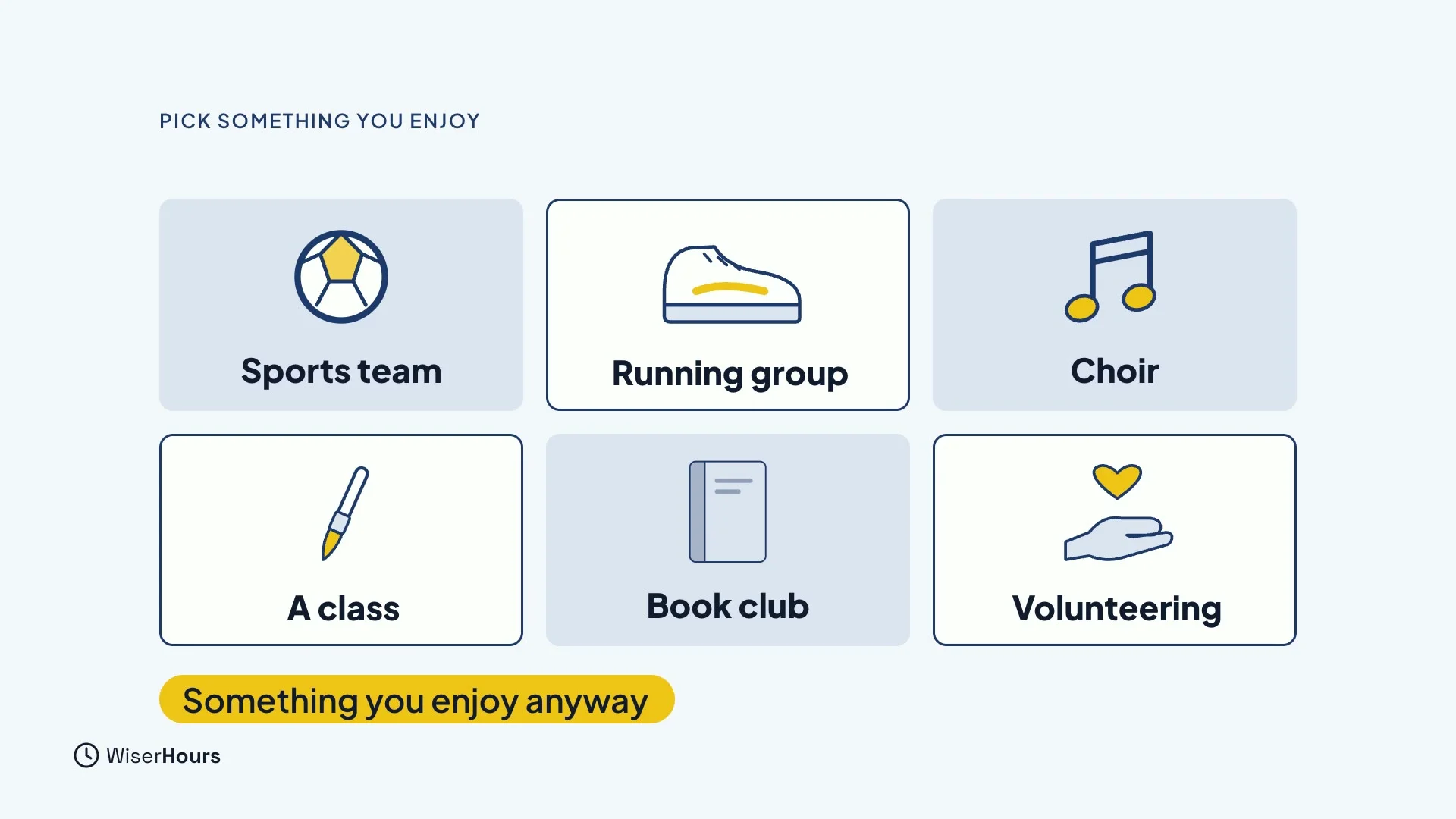
Pick something you enjoy
Choose something you would enjoy even if you made no friends there, so you keep going. It could be a sports team, a walking or running group, a choir, a class, a book club, volunteering or a faith group. Health services give the same advice: join a group built around something you enjoy. A weekly running group is a good example of small, repeatable contact rather than one big social push.
 (opens the full-size picture)
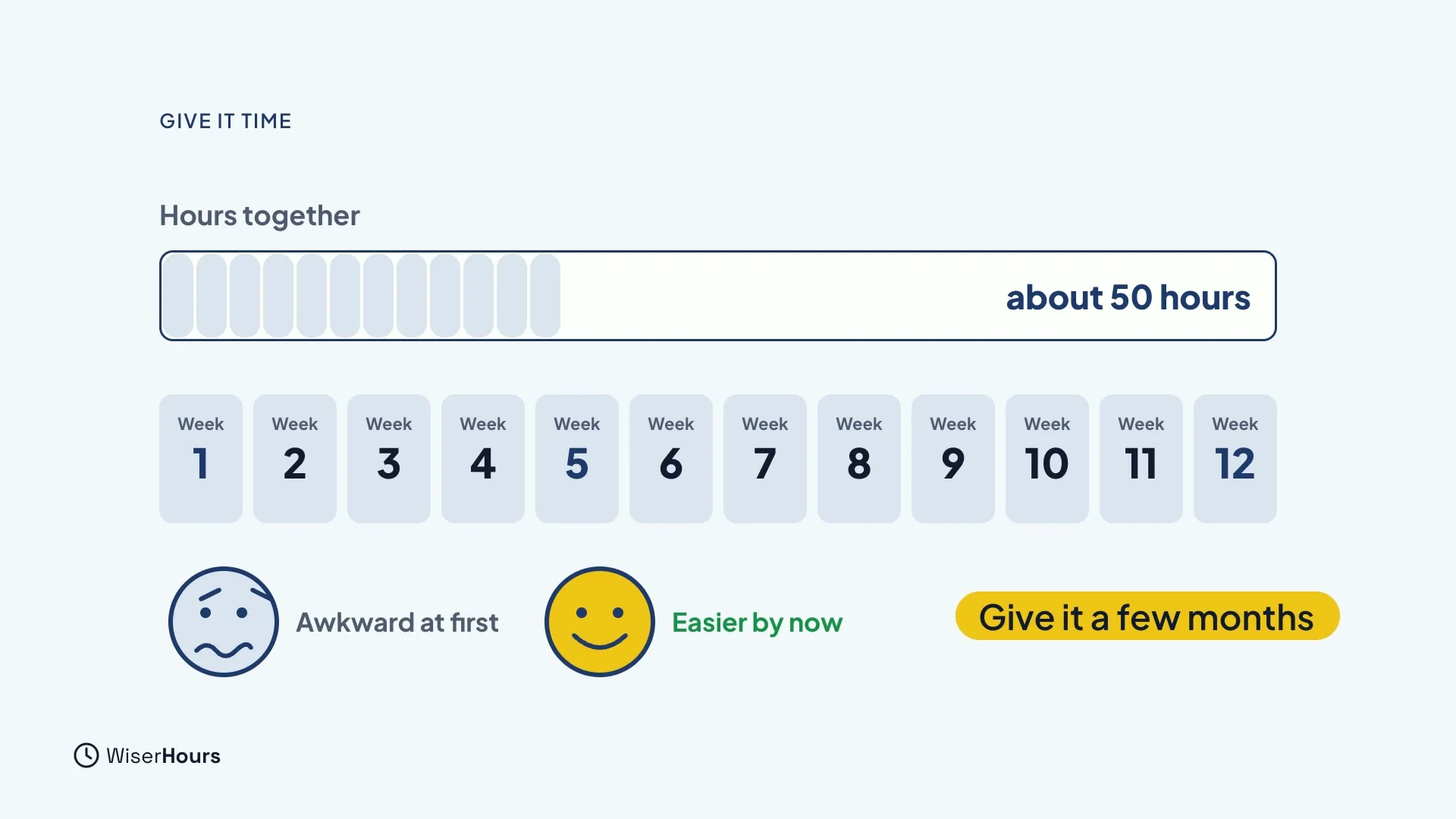
Give it time
One visit is not a test. Remember the hours: at one or two hours a week, it takes months to reach a casual friendship. So plan to keep going for a few months before you judge a group. Most groups feel awkward the first time, and easier by the fourth or fifth.
 (opens the full-size picture)
Not every group is the right one
Giving a group a fair chance is different from forcing yourself to stay in one that feels wrong. If a group does not suit you after a few months, try another. The idea is to be fair to it, not to stay forever.
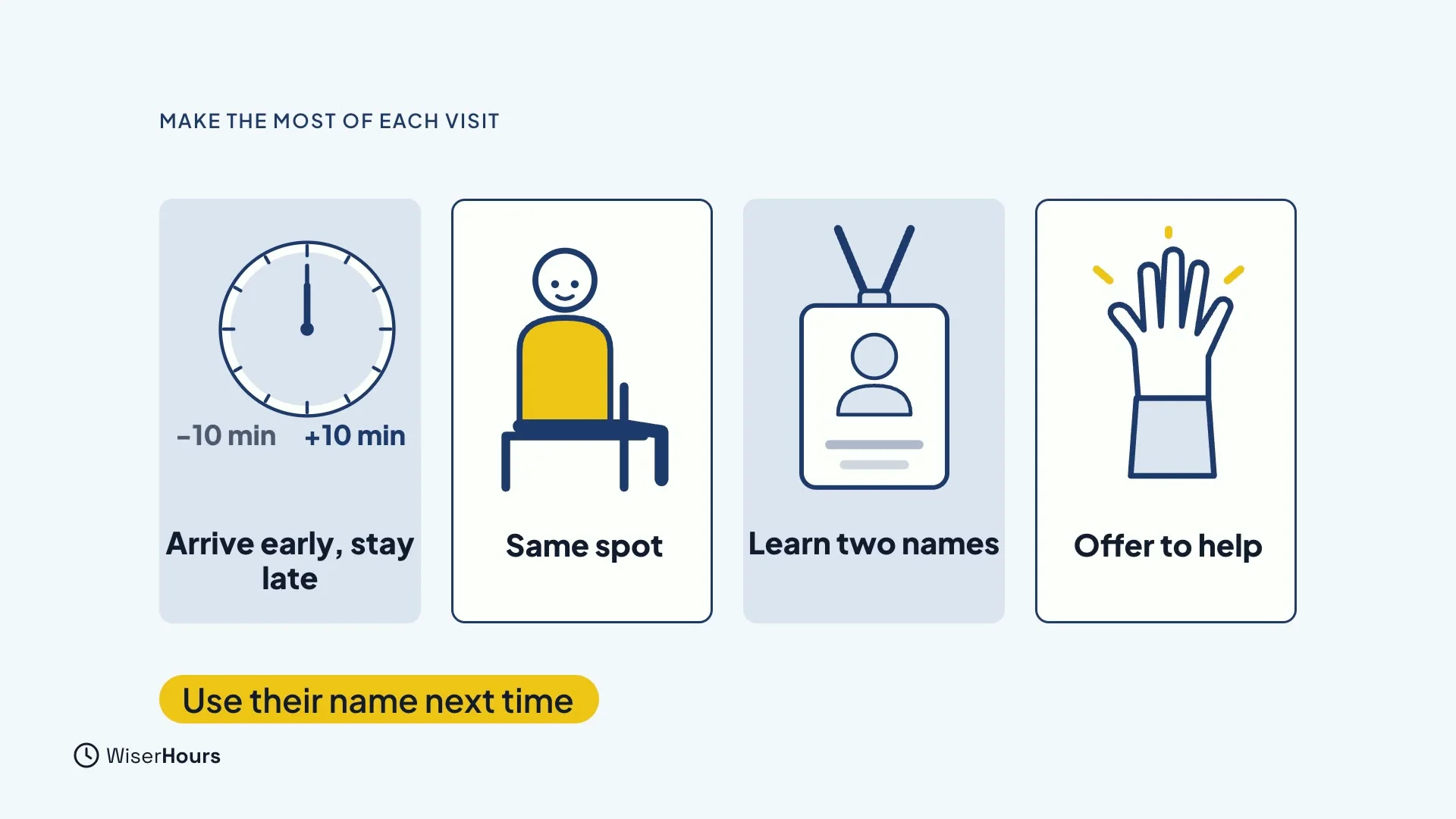
Make the most of each visit
Small habits help.
- Arrive a few minutes early and stay a little late, because that is when people chat.
- Sit in the same spot so people learn your face.
- Learn two names, and use them next time.
- If there is a small job, like setting up chairs, offer to help.
 (opens the full-size picture)
Online can count too
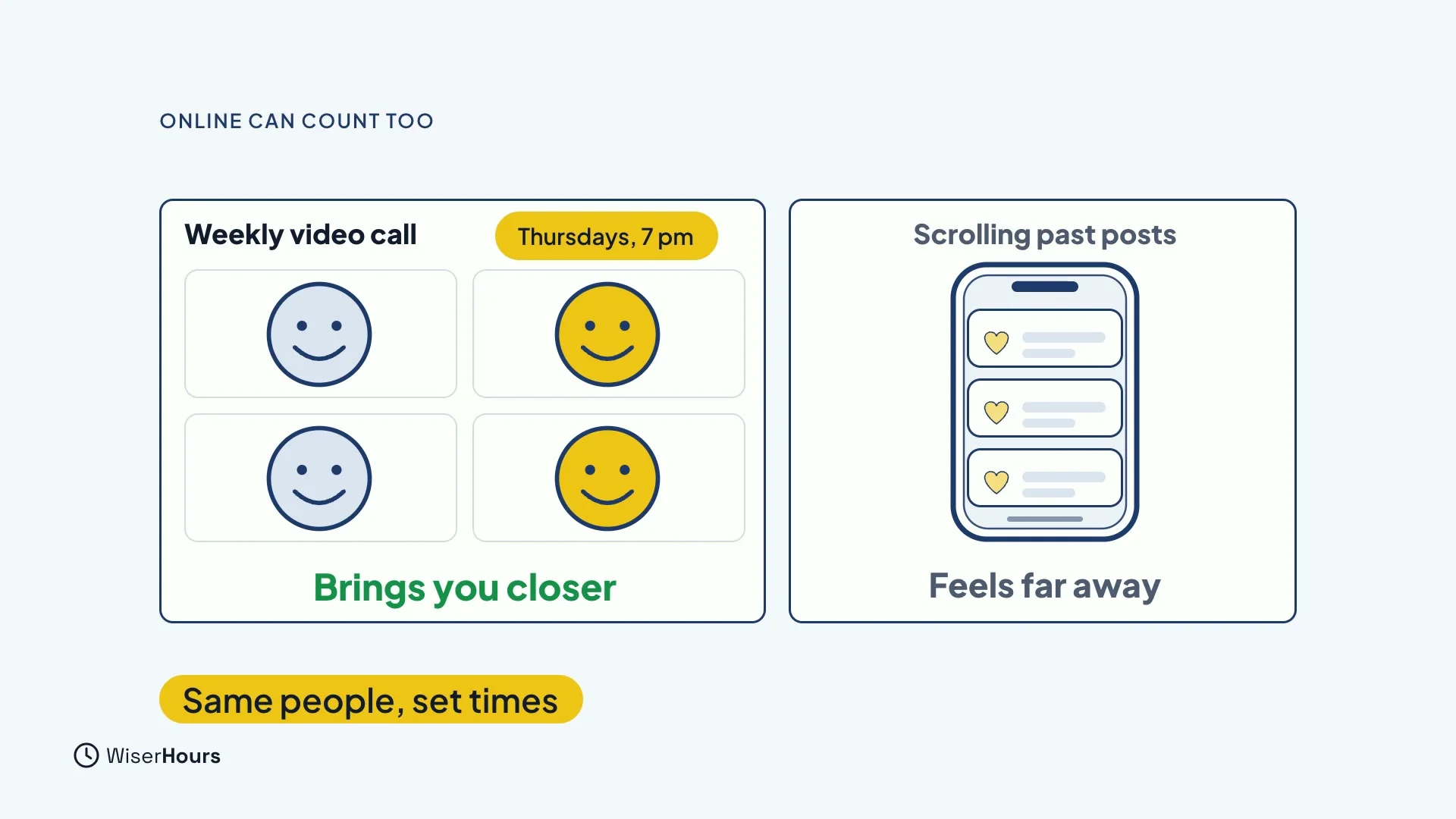
If you cannot get out easily, a regular online group can work the same way, as long as it meets at set times with the same people. Video calls or voice chats bring you closer than scrolling past posts. And if a group can meet in person later, even better.
 (opens the full-size picture)
YOUR TURN
Read more
- Loneliness Explained: the health-service tips to keep in regular touch and join a group built around something you enjoy.
- How to Build a Professional Network From Scratch: why months of repeated contact beat one big event, and how to join groups that meet regularly.
Read the full lesson script
Welcome back. You've seen that friendship takes hours. In this lesson, you'll find places where those hours can build up, because you'll see the same people again and again.
A party or a big event can be fun, but you might never see those people again. A weekly class, club or team is different. You meet the same faces every week, and each meeting adds a little time together without anyone having to arrange it.
Choose something you'd enjoy even if you made no friends there, so you keep going. It could be a sports team, a walking or running group, a choir, a class, a book club, volunteering, or a faith group. Health services give the same advice: join a group built around something you enjoy.
One visit isn't a test. Remember the hours: at one or two hours a week, it takes months to reach a casual friendship. So plan to keep going for a few months before you judge a group. Most groups feel awkward the first time, and easier by the fourth or fifth.
Small habits help. Arrive a few minutes early and stay a little late, because that's when people chat. Sit in the same spot so people learn your face. Learn two names, and use them next time. If there's a small job, like setting up chairs, offer to help.
If you can't get out easily, a regular online group can work the same way, as long as it meets at set times with the same people. Video calls or voice chats bring you closer than scrolling past posts. And if a group can meet in person later, even better.
So remember: choose groups that meet regularly over one-off events. Pick something you'd enjoy anyway, so you keep going. And give a group a few months before you judge it. Before the next lesson, list three regular groups near you or online, and sign up for one this week. Next, you'll learn how to start talking.
MAKE IT A SMALL WIN
Finished this lesson?
Mark it complete to save your progress on this device.