Get started · Lesson 3 of 11
How to Sit for Meditation: Posture for Beginners
Find a comfortable way to sit, or lie down, for meditation, and set up a spot where you can practice for ten minutes without being disturbed.
 Video coming soon
You don’t need to sit cross-legged on the floor to meditate. You just need a position that keeps you still, relaxed and awake. This lesson helps you find yours, so that tomorrow’s session starts easily.
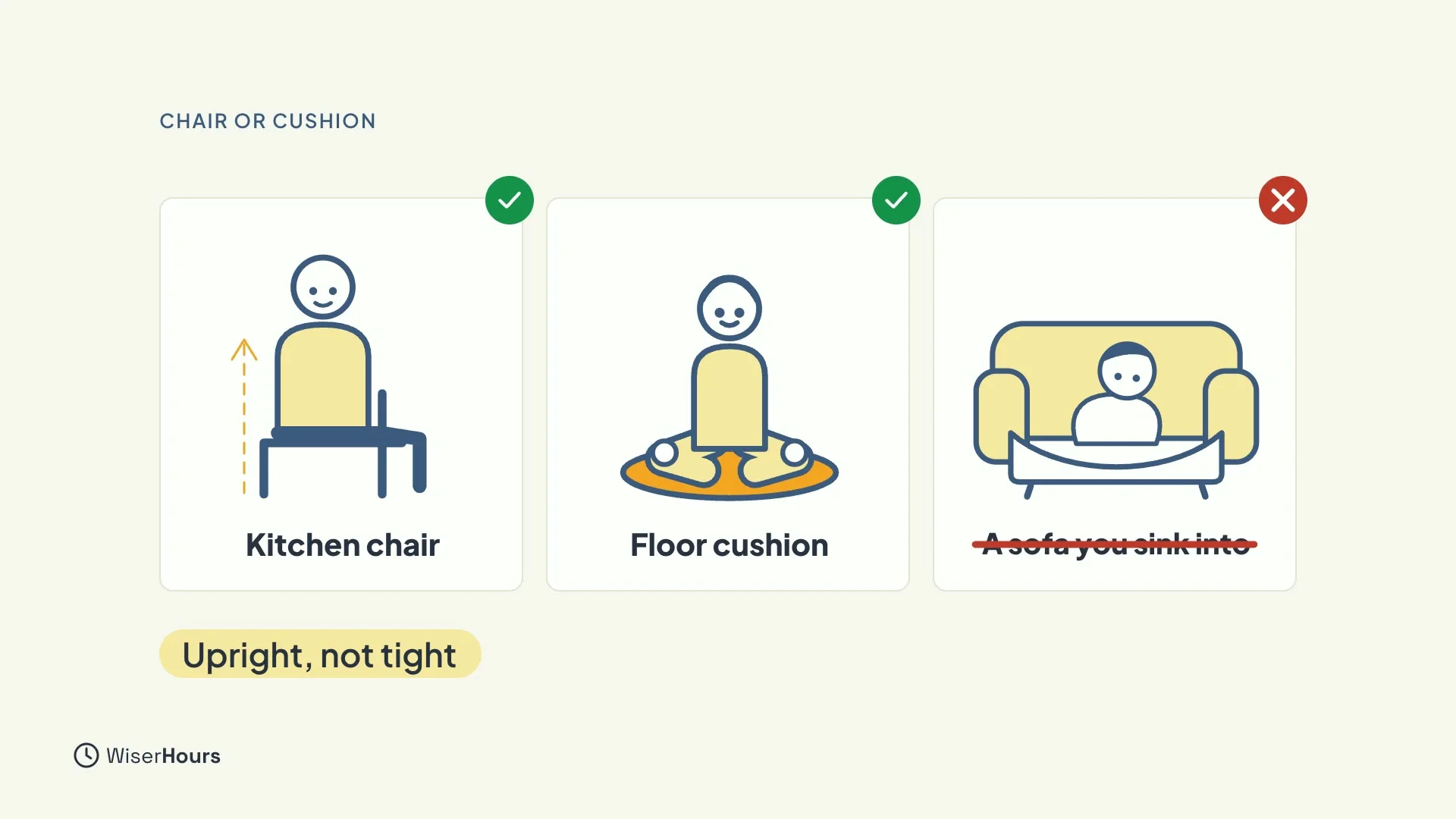
Chair or cushion
Sit on a chair, or on a cushion on the floor. Keep your back upright, but not tight, and let your hands rest wherever they are comfortable. A kitchen chair beats a sofa you sink into, because a sofa tends to make you slump.
 (opens the full-size picture)
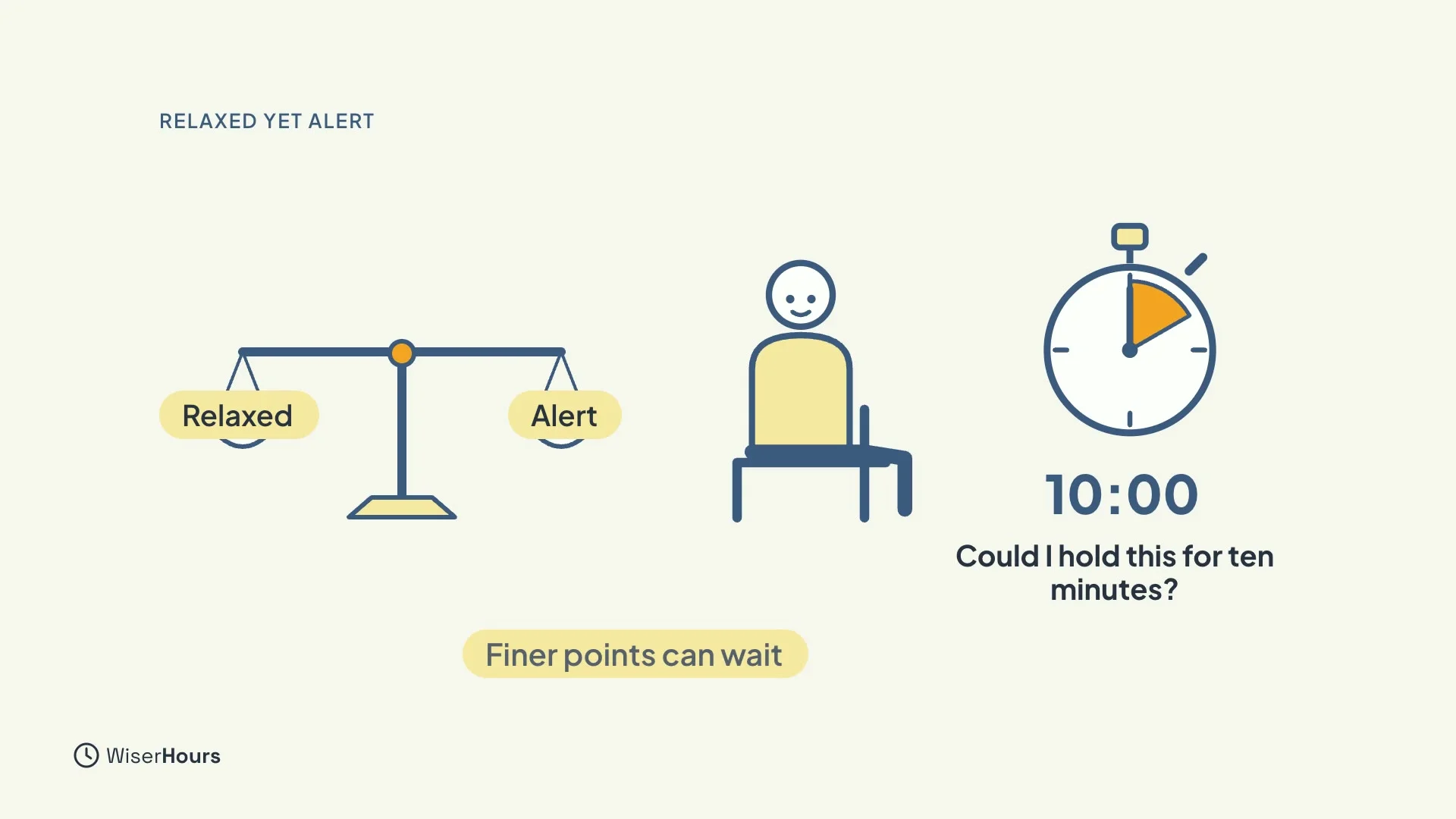
Relaxed yet alert
The aim is a seat that is relaxed and at ease, yet alert. Pick a position you could hold for ten minutes without shifting every few breaths. Finer points of posture can wait. You can adjust them later, once you have a few sessions behind you.
 (opens the full-size picture)
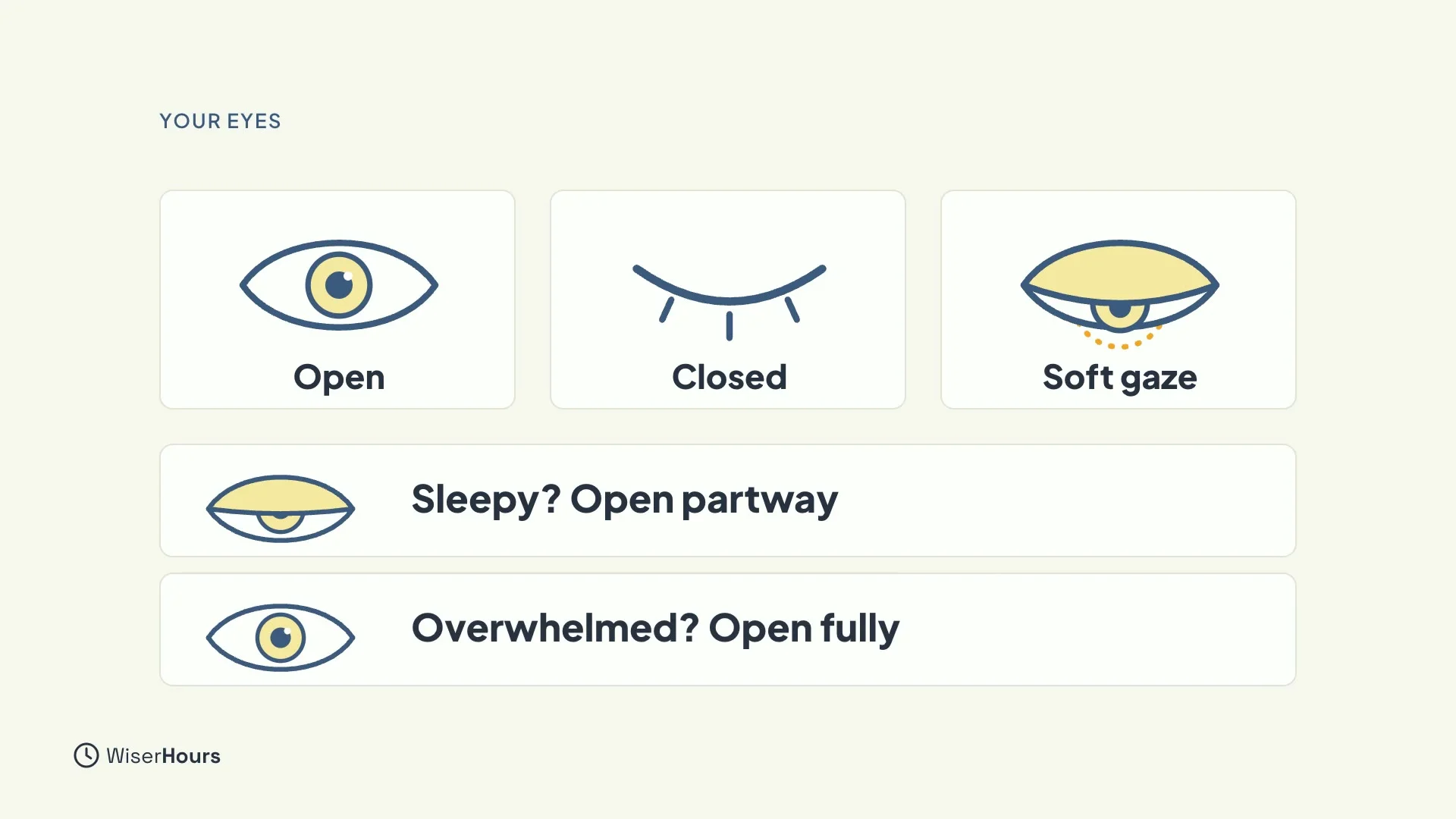
Your eyes
Your eyes can be open or closed, or rest in a soft gaze, partly closed and not focused on anything. If you keep getting sleepy, open them partway. If something that comes up feels overwhelming, open them fully.
 (opens the full-size picture)
Lying down
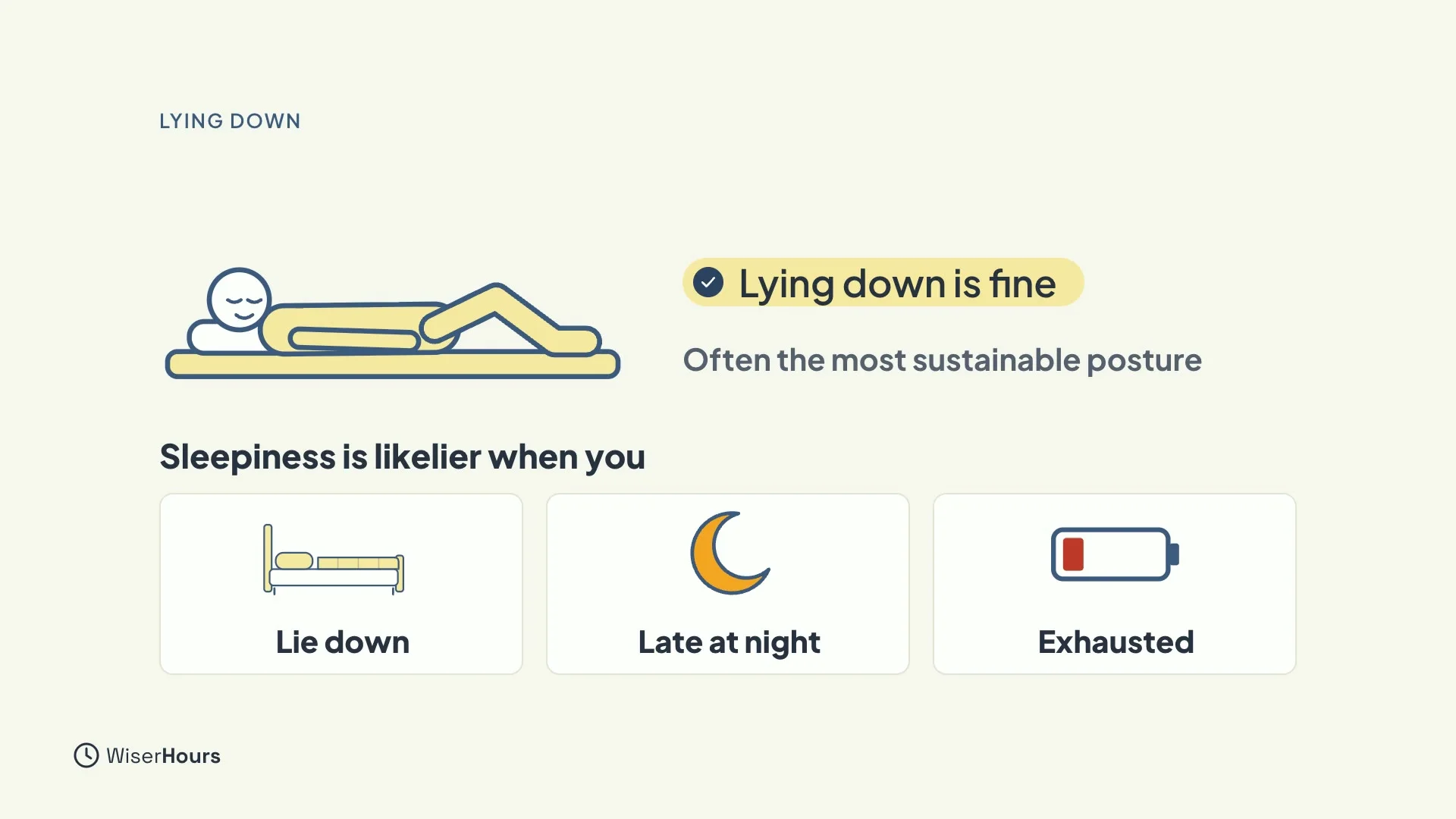
If sitting upright is hard, for example with chronic pain, tiredness or back problems, lying down is fine. It may be the most sustainable posture for you. Just know that sleepiness is more likely when you lie down, late at night, or when you are exhausted.
 (opens the full-size picture)
Itches and moving
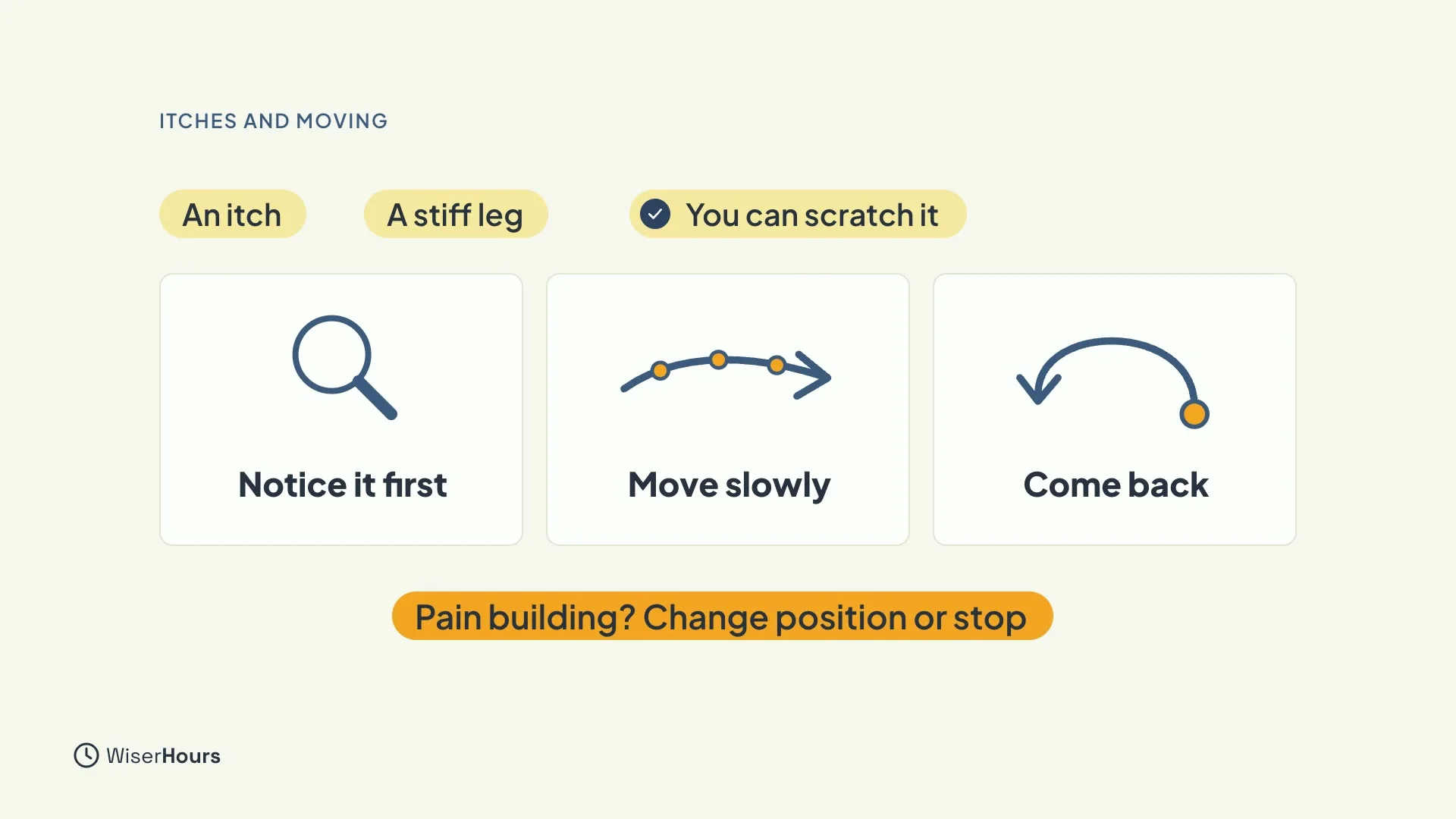
What if you get an itch, or your leg goes stiff? You can scratch it. First, simply pay attention to it for a moment. If you need to shift, move slowly, then come back. If pain keeps building, change position or stop.
 (opens the full-size picture)
Your spot
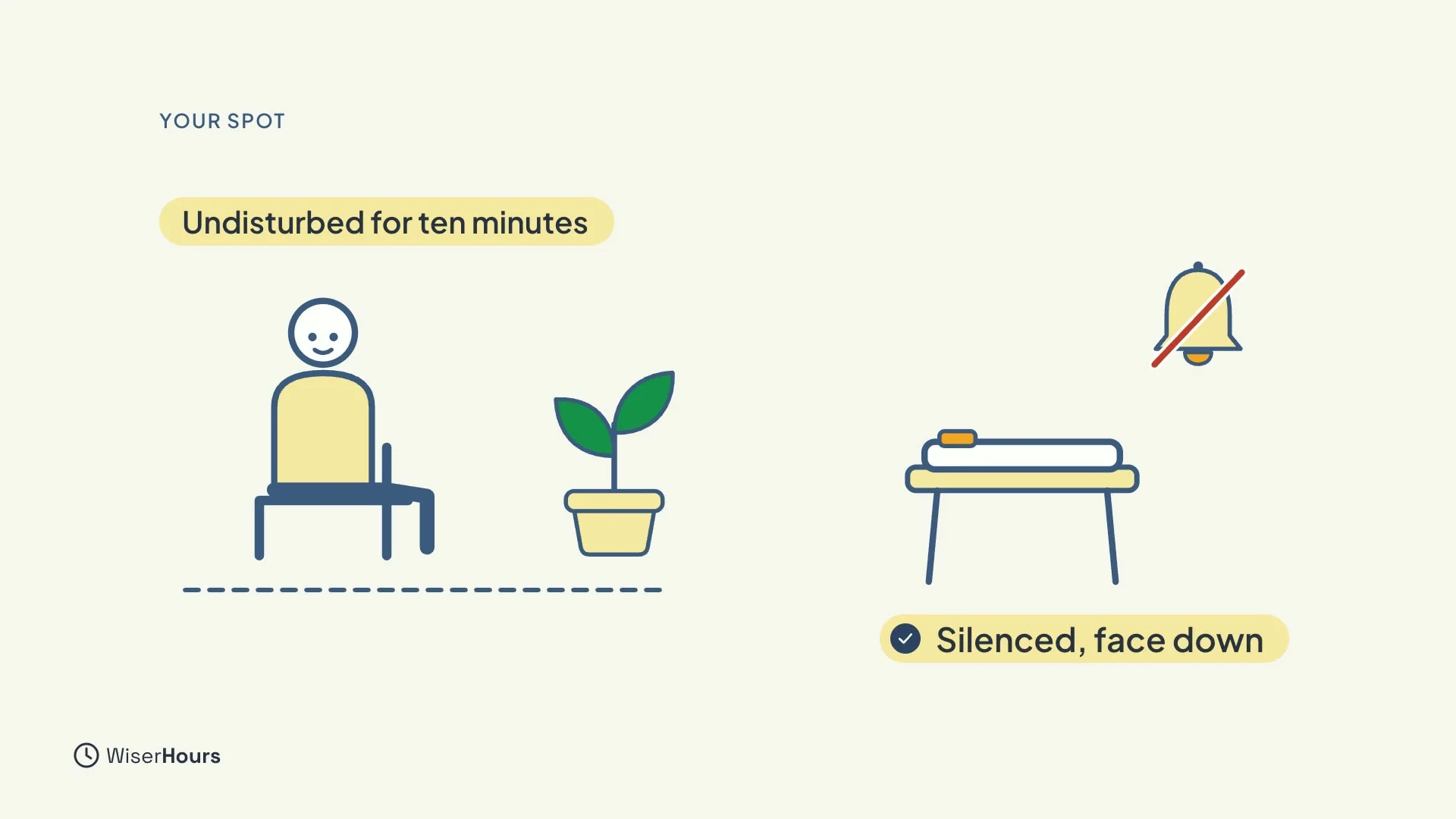
Finally, choose your spot, somewhere you can sit for ten minutes without being disturbed. Silence your phone, and lay it face down where you can’t see the screen.
 (opens the full-size picture)
YOUR TURN
Read more
- How to Meditate: posture, eyes, itches and the full five-step practice.
Read the full lesson script
In this lesson, you'll learn how to sit for meditation. You don't need to sit cross-legged on the floor. You just need a position that keeps you still, relaxed and awake.
Sit on a chair, or on a cushion on the floor. Keep your back upright, but not tight, and let your hands rest wherever they're comfortable. A kitchen chair beats a sofa you sink into.
The aim is a seat that's relaxed and at ease, yet alert. Pick a position you could hold for ten minutes without shifting every few breaths. Finer points of posture can wait.
Your eyes can be open or closed, or rest in a soft gaze, partly closed and not focused on anything. If you keep getting sleepy, open them partway. If something that comes up feels overwhelming, open them fully.
If sitting upright is hard, for example with chronic pain, tiredness or back problems, lying down is fine. It may be the most sustainable posture for you. Just know that sleepiness is more likely when you lie down, late at night, or when you're exhausted.
What if you get an itch, or your leg goes stiff? You can scratch it. First, simply pay attention to it for a moment. If you need to shift, move slowly, then come back. If pain keeps building, change position or stop.
Finally, choose your spot, somewhere you can sit for ten minutes without being disturbed. Silence your phone, and lay it face down where you can't see the screen.
So remember: upright but relaxed, eyes open or closed, and lying down is fine if you need it. Before the next lesson, find your spot and your position for your first session. Next, you'll try your first five-minute session.
MAKE IT A SMALL WIN
Finished this lesson?
Mark it complete to save your progress on this device.