Get started · Lesson 2 of 11
Meditation Myths That Stop Beginners (and the Truth)
Clear up five common meditation myths, from emptying your mind to needing an app, and swap each one for what is actually true.
 Video coming soon
Many beginners quit before they really start because of an idea about meditation that isn’t true. In this lesson you clear up five of these myths, and swap each one for what is actually true.
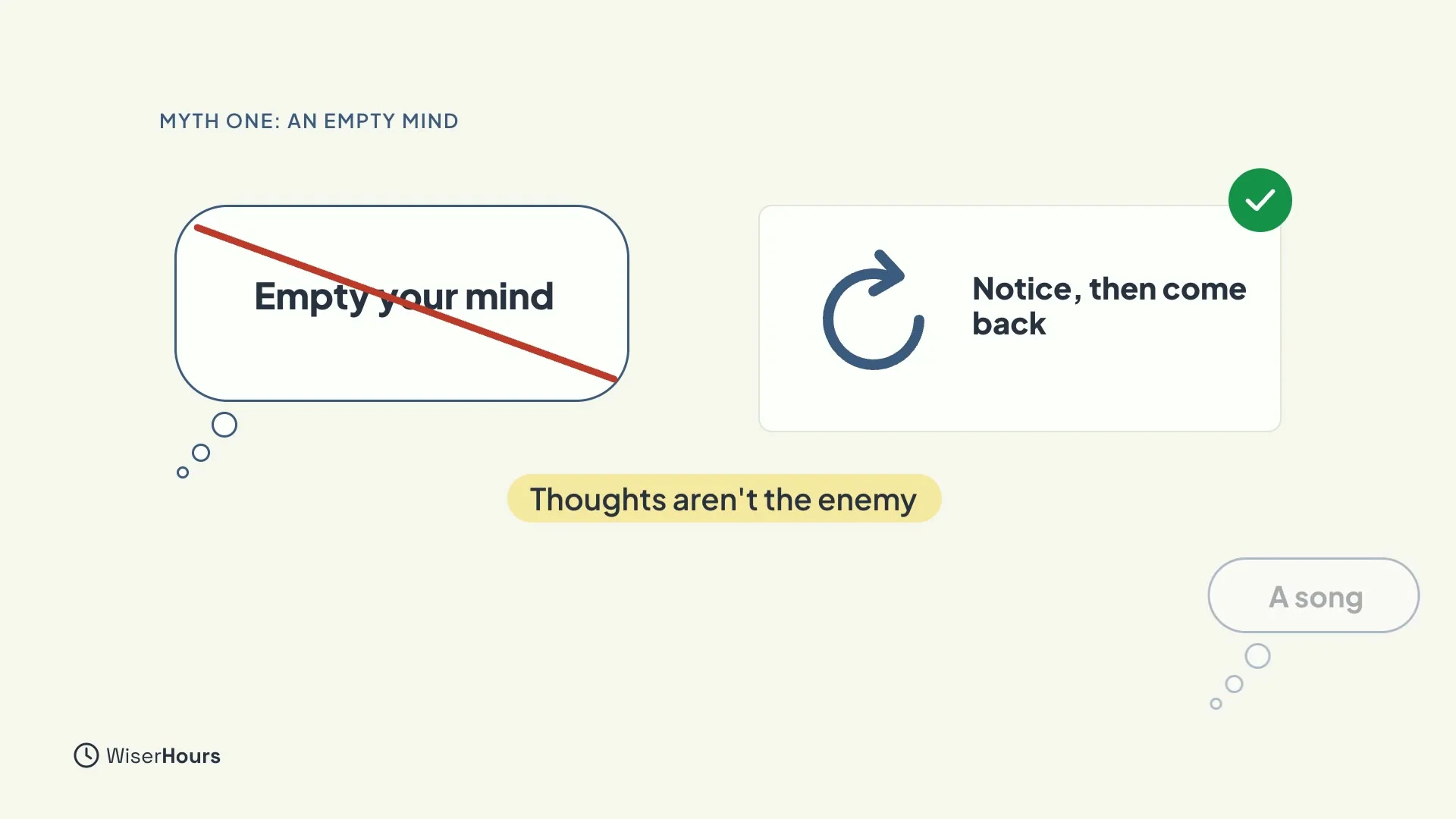
Myth one: you have to empty your mind
You don’t. Your mind will wander, often within a breath or two. Noticing that it has wandered, and coming back, is the exercise itself. Thoughts aren’t the enemy. You learn to see them as events that come and go.
 (opens the full-size picture)
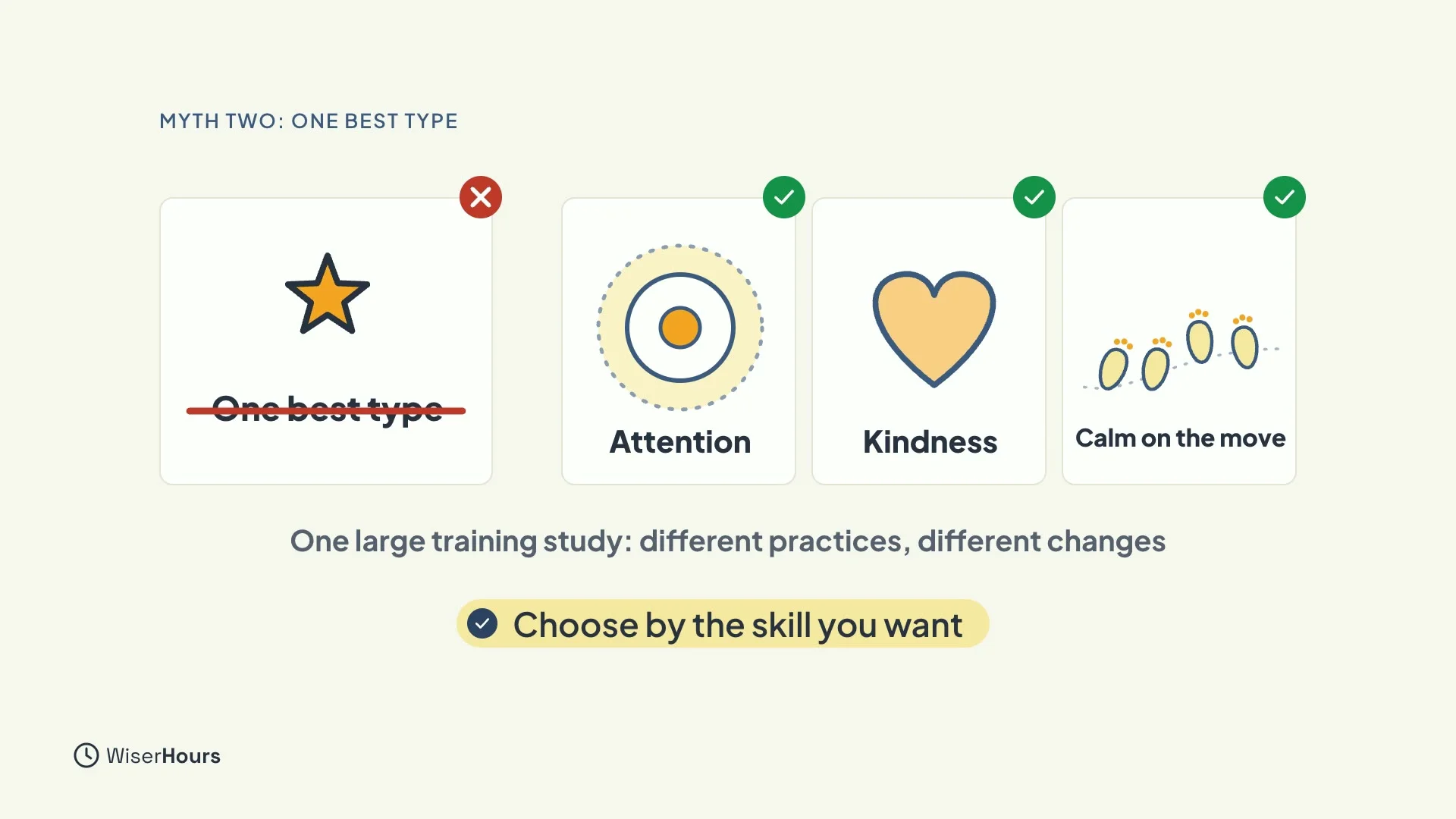
Myth two: there’s one best type
In fact, different types train different skills. In one large training study, different practices went with different changes. So choose a type by what you want to train, not by how popular it is. You will meet the main types in lesson 6.
 (opens the full-size picture)
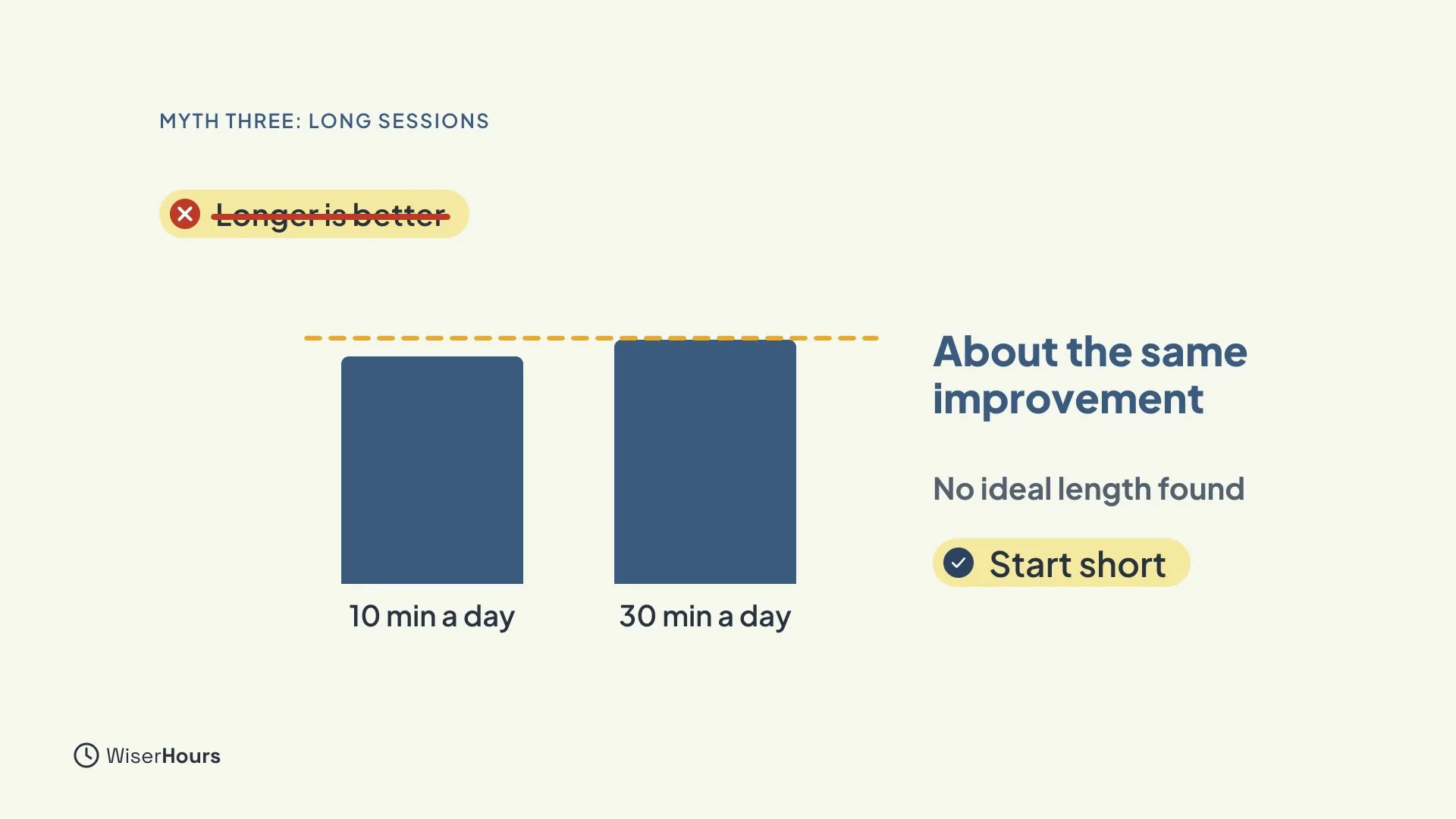
Myth three: you need long sessions
You don’t. In one trial, adults who meditated for about ten minutes a day for two weeks improved about as much as those who did thirty. No study has found an ideal length, so start short.
 (opens the full-size picture)
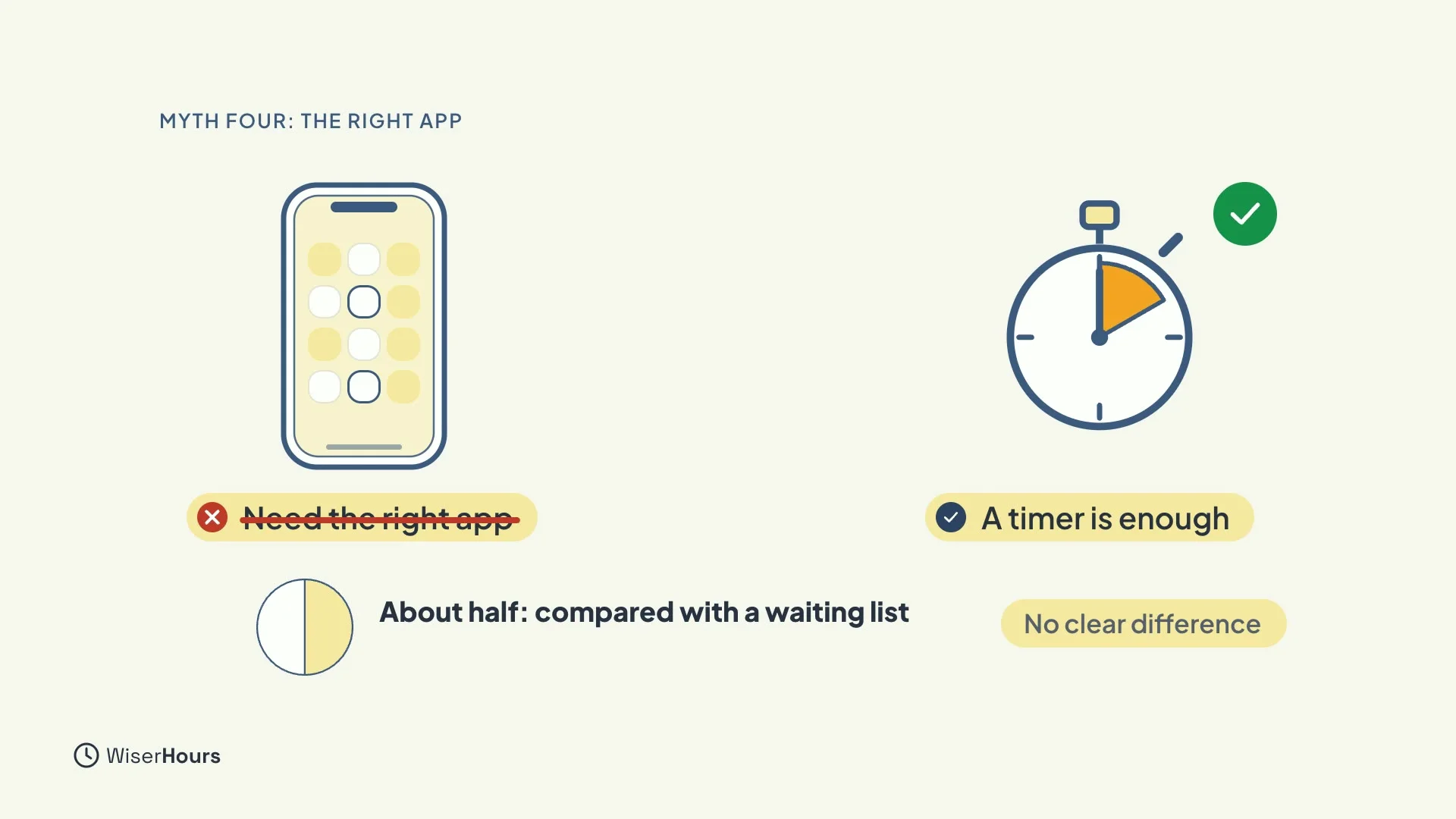
Myth four: you need the right app
A plain timer is enough. Apps can help a little, but about half of app trials only compared them with people on a waiting list. The few trials against other good options found no clear difference.
 (opens the full-size picture)
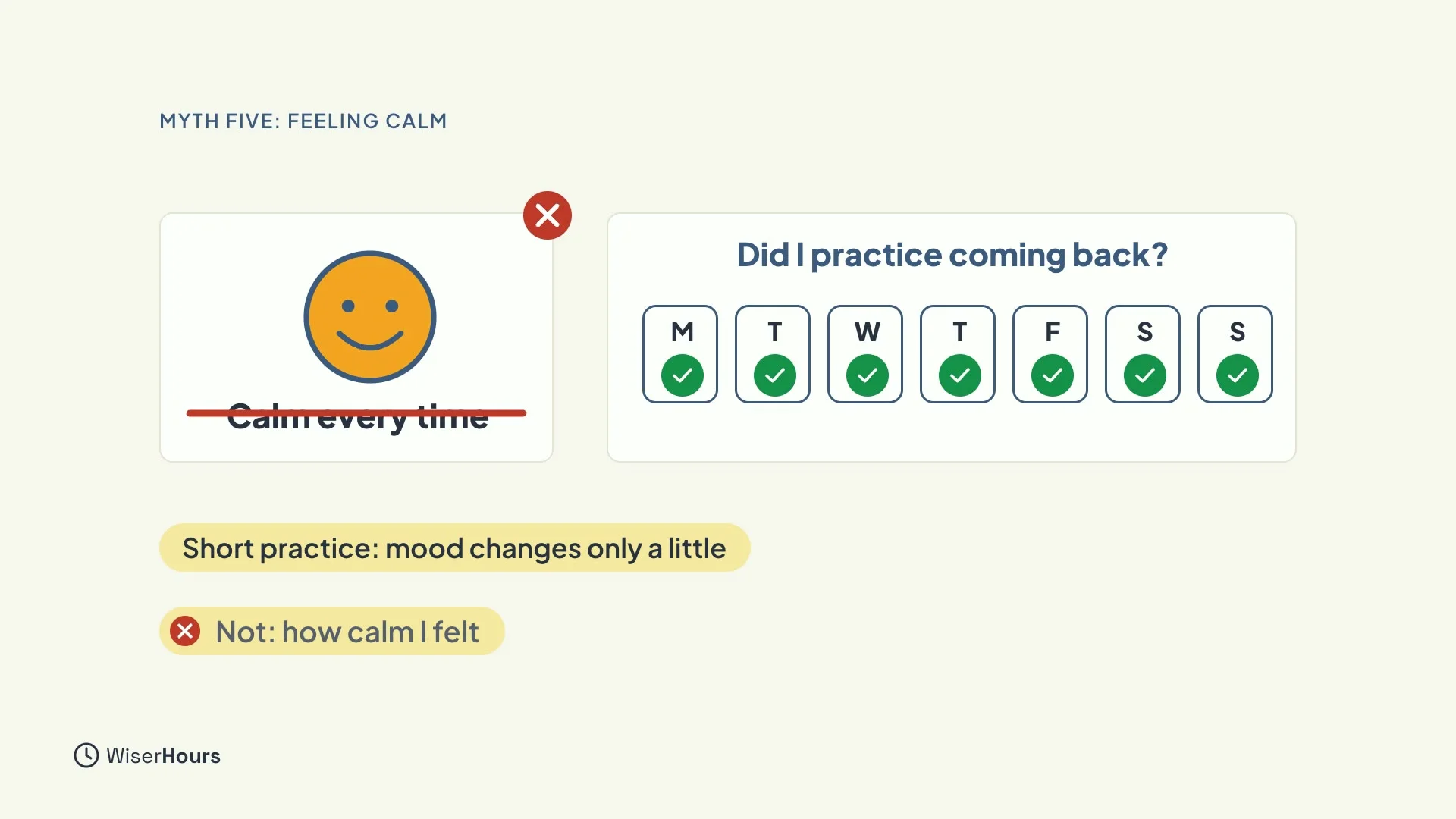
Myth five: you should feel calm afterwards
Sometimes you will, and sometimes you won’t. In trials, short practice changed mood only a little. So judge your first week by whether you sat down and practiced coming back, not by how calm you felt.
 (opens the full-size picture)
YOUR TURN
Read more
- How to Meditate: what to do when your mind wanders, and how to judge your first week.
- Types of Meditation Compared: how to choose a type by the skill you want.
- How Long Should You Meditate?: what the research says about session length.
- Meditation Apps: what the app trials do and don’t show.
- What Is Mindfulness?: why short practice changes mood only a little.
Read the full lesson script
Welcome back. In this lesson, you'll clear up five myths that stop many beginners before they even start, and swap each one for what's actually true.
Myth one: you have to empty your mind. You don't. Your mind will wander, often within a breath or two. Noticing that it has wandered, and coming back, is the exercise itself. Thoughts aren't the enemy. You learn to see them as events that come and go.
Myth two: there's one best type of meditation. In fact, different types train different skills. In one large training study, different practices went with different changes. So choose a type by what you want to train, not by how popular it is.
Myth three: you need long sessions. You don't. In one trial, adults who meditated for about ten minutes a day for two weeks improved about as much as those who did thirty. No study has found an ideal length, so start short.
Myth four: you need the right app. A plain timer is enough. Apps can help a little, but about half of app trials only compared them with people on a waiting list. The few trials against other good options found no clear difference.
Myth five: you should feel calm afterwards. Sometimes you will, and sometimes you won't. In trials, short practice changed mood only a little. So judge your first week by whether you sat down and practiced coming back, not by how calm you felt.
So remember: a wandering mind is part of it, short sessions count, and a plain timer is enough. Before the next lesson, pick the myth that's held you back, and write the truth next to it. Next, you'll learn how to sit.
MAKE IT A SMALL WIN
Finished this lesson?
Mark it complete to save your progress on this device.