Make it last · Lesson 11 of 11
Meditation Apps, Safety and Your Practice Plan
Know what to expect from apps, the signs to stop, when to talk to a clinician first, and write your own two-week practice plan.
 Video coming soon
This is the last lesson. You will see what to expect from apps and timers, learn how to stay safe, and then make your own practice plan. Read the safety sections even if you feel fine: they take a minute, and they matter.
A timer is enough
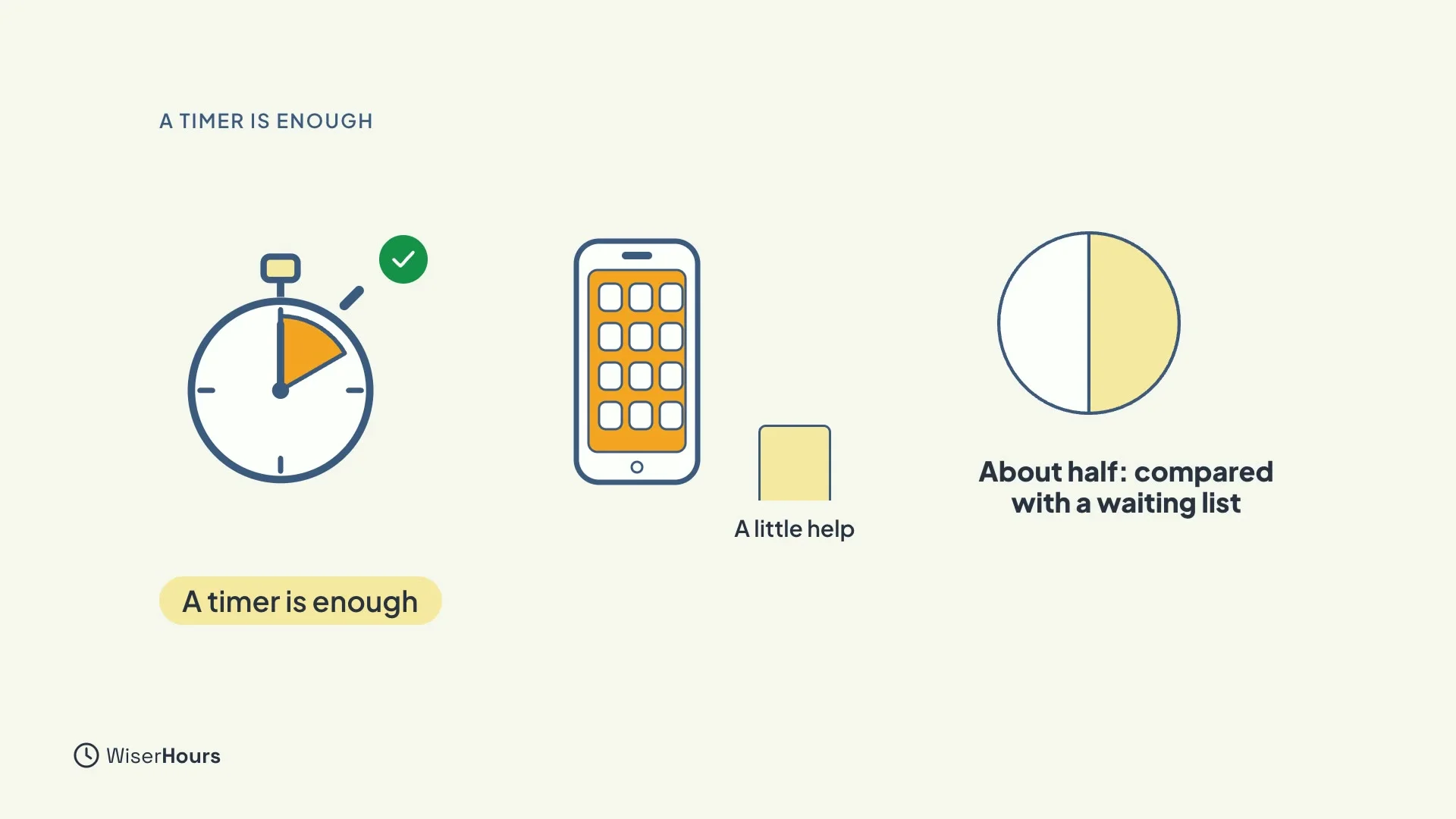
A plain timer is all you need. Apps can help a little: in trials, they lowered anxiety and low mood slightly over a few weeks. But about half of those trials only compared apps with a waiting list, which is an easy comparison to win. An app is a low-cost way to practice, not a treatment.
 (opens the full-size picture)
Most people stop
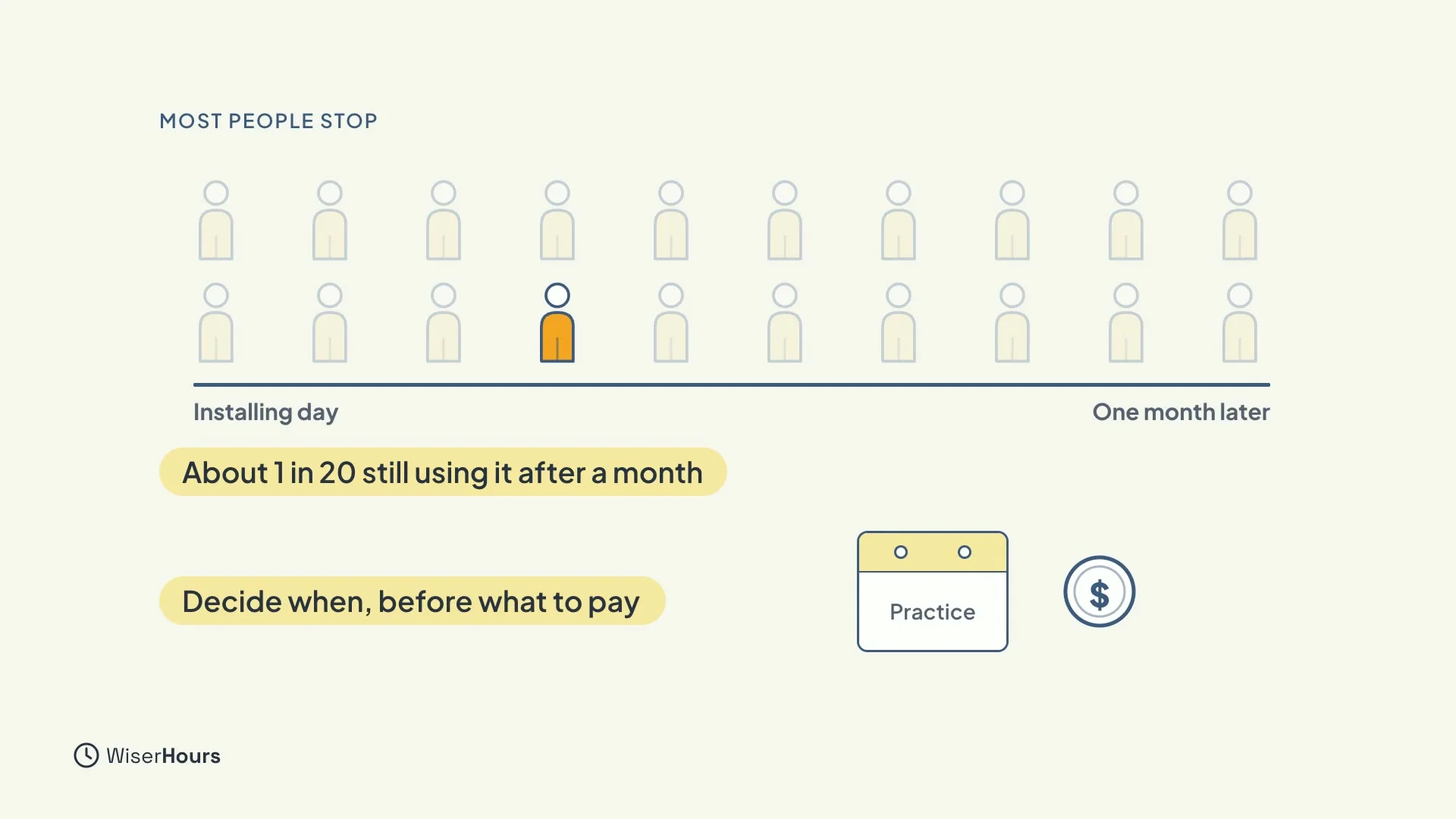
Most people stop using meditation apps. In one study of app usage worldwide, only about one in twenty users still opened a mindfulnessmindfulness: Paying attention to what is happening in the present moment, including thoughts and sensations, on purpose and without judging it. The word covers both a state of mind and the courses that train it, and most research tests the courses.Full entry in the glossary app a month after installing it. So decide when you will practice, before you decide what to pay.
 (opens the full-size picture)
What is ordinary
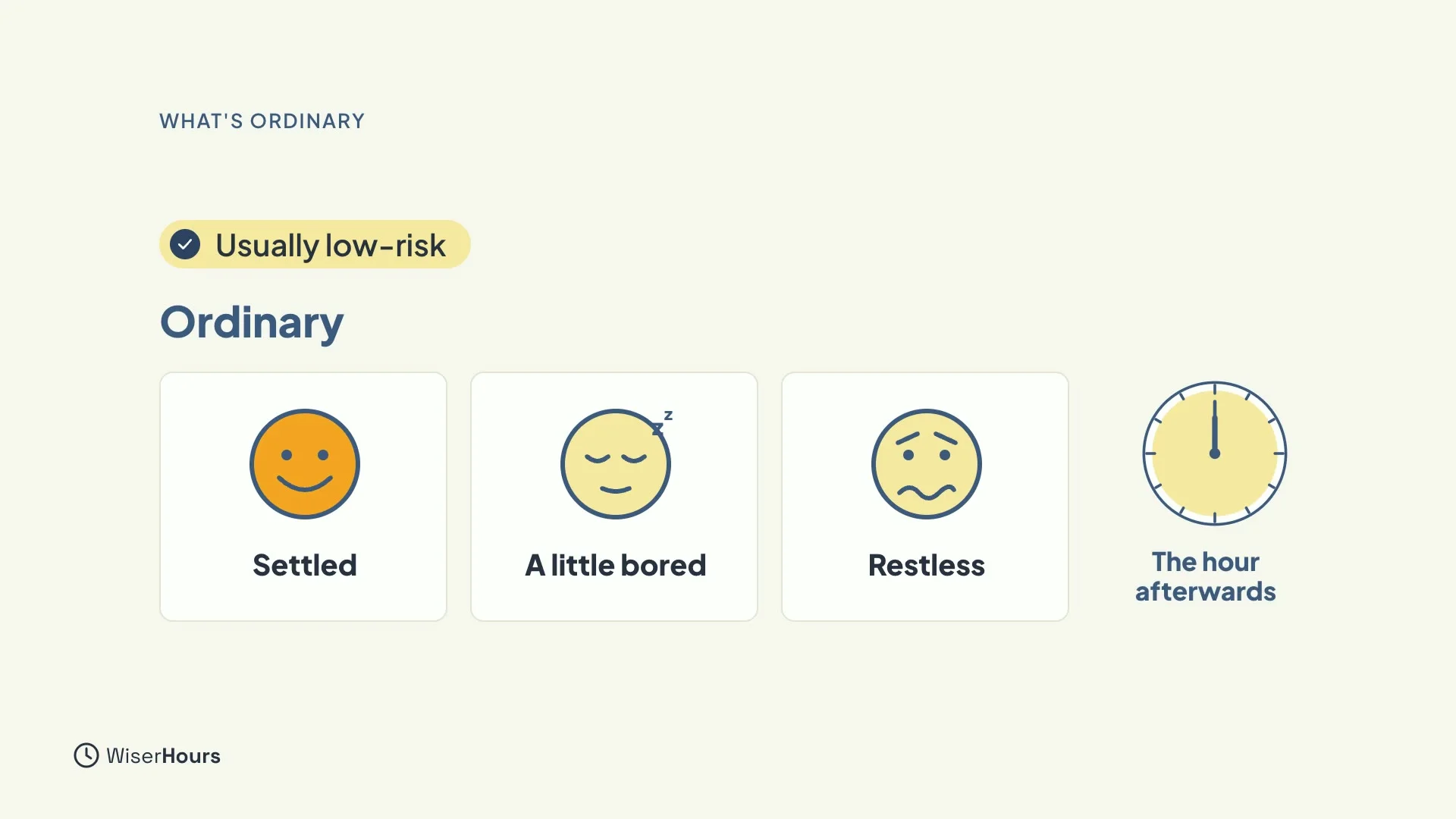
Meditation is usually low-risk, but it can stir up difficult feelings. Feeling settled, a little bored or restless afterwards is ordinary. Notice how a practice leaves you in the hour afterwards.
 (opens the full-size picture)
Signs to stop
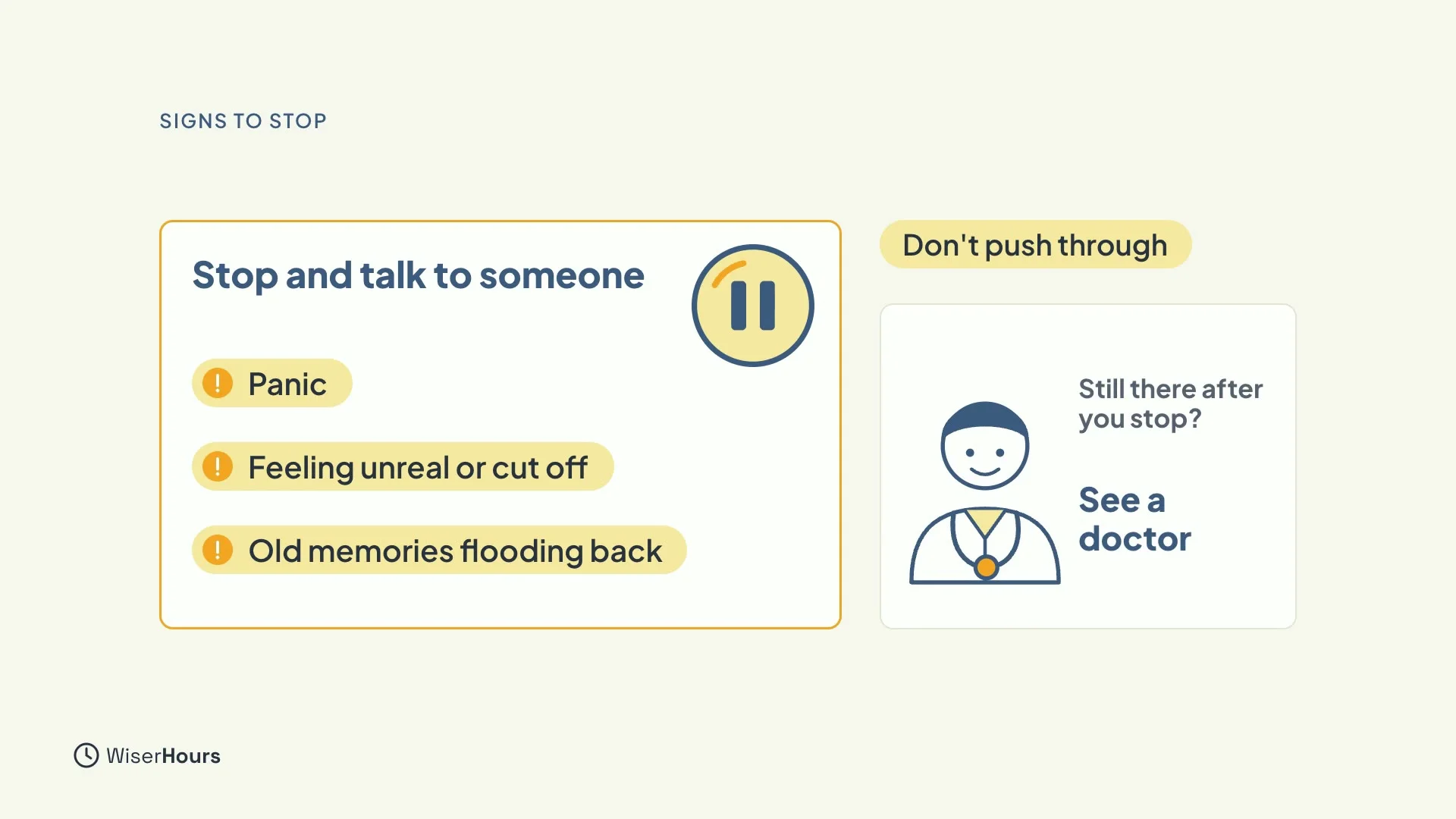
Stop and talk to someone
Panic, feeling unreal or cut off, or old memories flooding back are signals to stop that practice and talk to someone. Don’t push through. If low mood, poor sleep or a sense of unreality last after you stop, see a doctor.
 (opens the full-size picture)
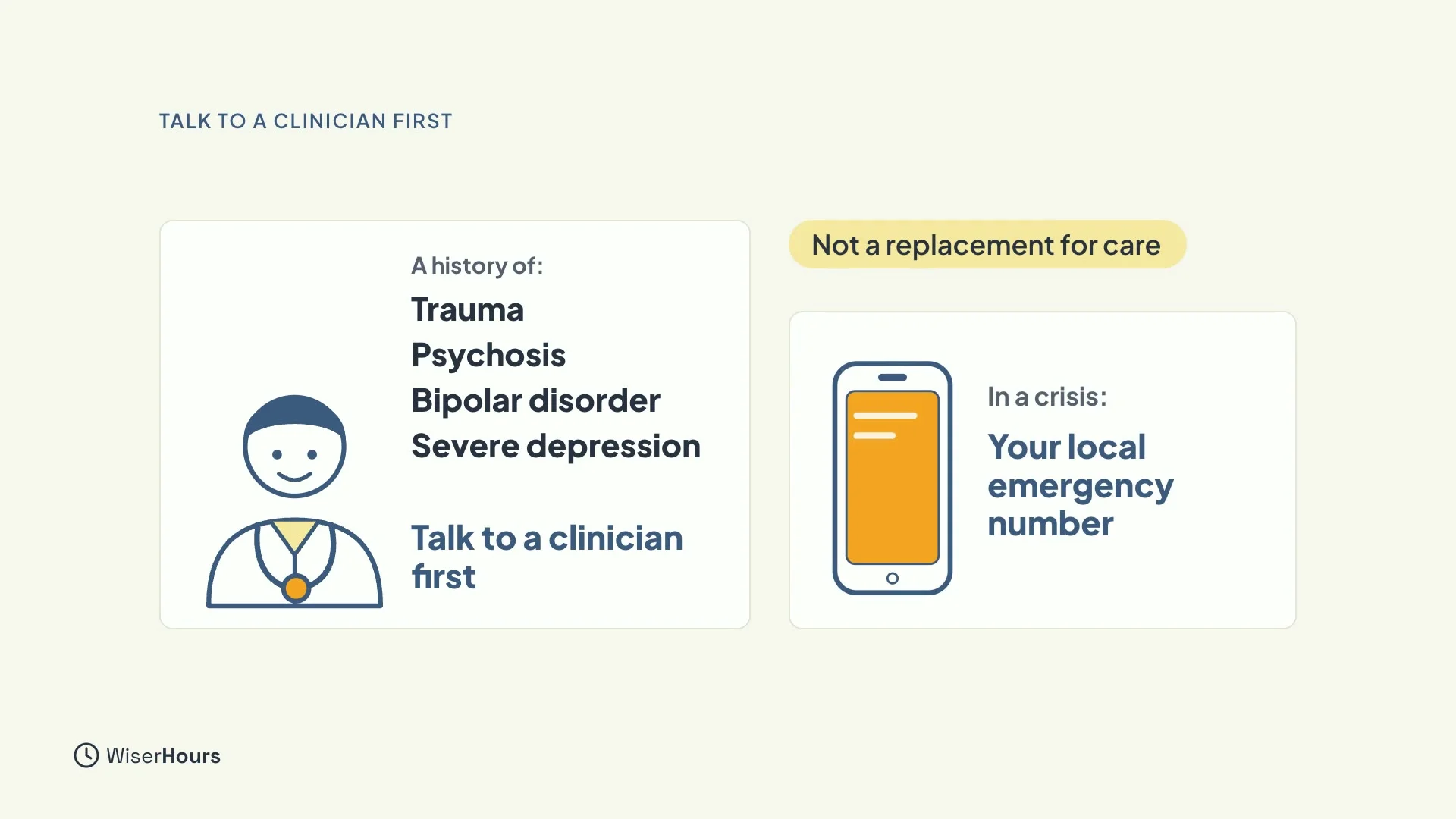
Talk to a clinician first
Before you start
If you have a history of trauma, psychosis, bipolar disorder or severe depression, talk to a clinician before you start. Meditation shouldn’t replace medical care. In a crisis, call your local emergency number straight away.
 (opens the full-size picture)
Make your plan
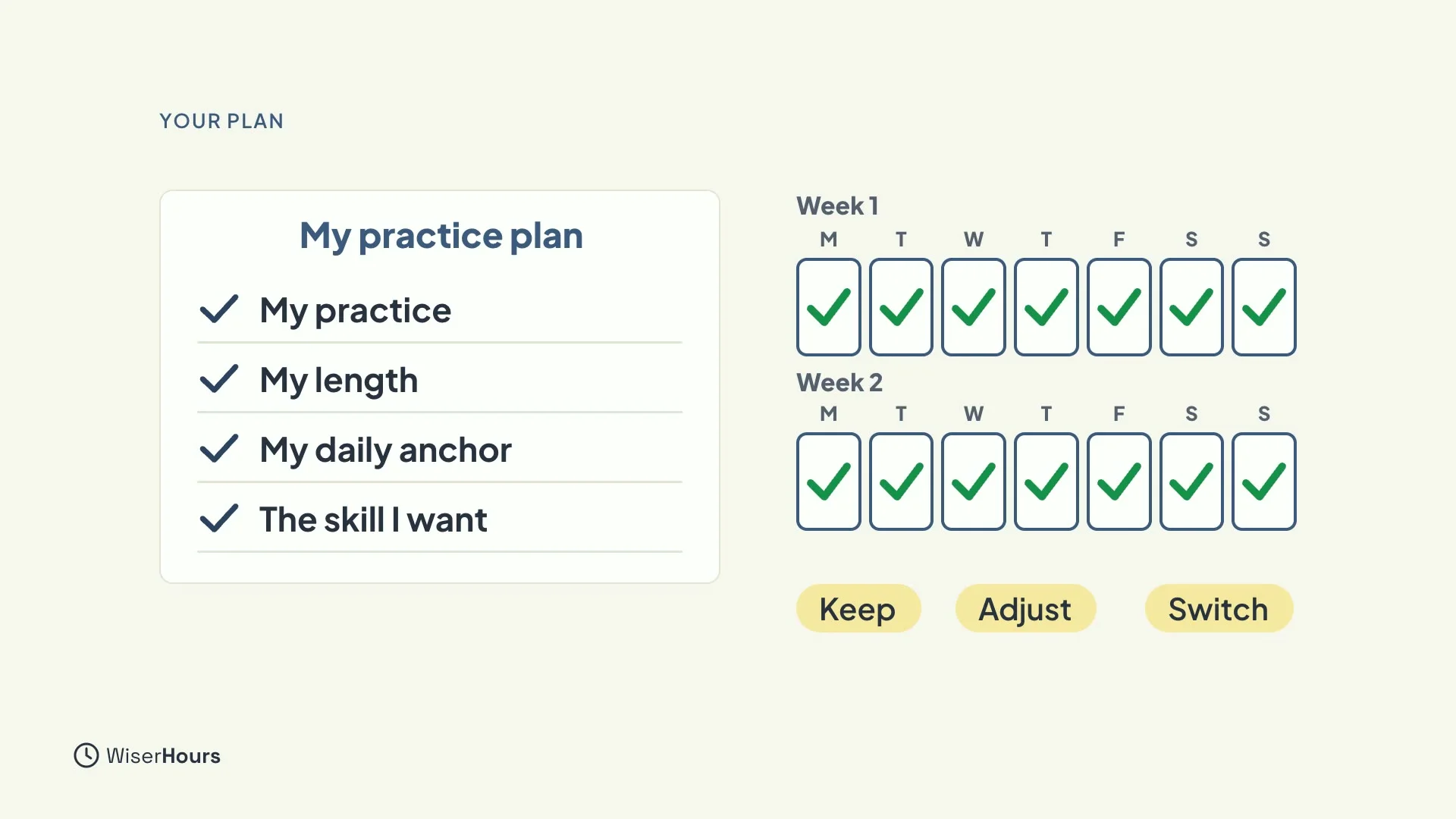
Now make your plan. Choose your practice, your length, and your daily anchor. Write down the skill you want to build. Then practice for two weeks, counting days, and review: keep it, adjust it, or switch to a different practice.
 (opens the full-size picture)
My practice plan
YOUR TURN
Read more
- Meditation Apps: What the Research Says: what trials found, and why most people stop using them.
- How to Meditate: A Beginner’s Guide: safety and when to see a doctor.
- Types of Meditation Compared: how to choose a practice and test it fairly.
- What Is Mindfulness?: a plain-English definition.
Read the full lesson script
In this last lesson, you'll learn what to expect from apps and timers, how to stay safe, and you'll make your practice plan.
A plain timer is all you need. Apps can help a little: in trials, they lowered anxiety and low mood slightly over a few weeks. But about half of those trials only compared apps with a waiting list.
And most people stop. In one study of app usage worldwide, only about one in twenty users still opened a mindfulness app a month after installing it. So decide when you'll practice, before you decide what to pay.
Meditation is usually low-risk, but it can stir up difficult feelings. Feeling settled, a little bored or restless afterwards is ordinary. Notice how a practice leaves you in the hour afterwards.
But panic, feeling unreal or cut off, or old memories flooding back are signals to stop that practice and talk to someone. Don't push through. If low mood, poor sleep or a sense of unreality last after you stop, see a doctor.
If you have a history of trauma, psychosis, bipolar disorder or severe depression, talk to a clinician before you start. Meditation shouldn't replace medical care. And in a crisis, call your local emergency number straight away.
Now make your plan. Choose your practice, your length, and your daily anchor. Write down the skill you want to build. Then practice for two weeks, counting days, and review: keep it, adjust it, or switch.
So remember: a timer is enough, know the signs to stop, and keep it short and regular. Before you go, fill in your practice plan, and start tomorrow. Thank you for taking this course, and enjoy your practice.
MAKE IT A SMALL WIN
Finished this lesson?
Mark it complete to save your progress on this device.