Get started · Lesson 1 of 11
What Meditation Is, and What It Isn't
Learn what meditation really is, what it isn't, and what to honestly expect from it as a complete beginner, with no beliefs or gear needed.
 Video coming soon
Welcome to Meditation for Beginners. In this first lesson you learn what meditation is, what it isn’t, and what you can honestly expect from it. You don’t need any beliefs or special equipment. This course is general information, not medical advice.
Paying attention, on purpose
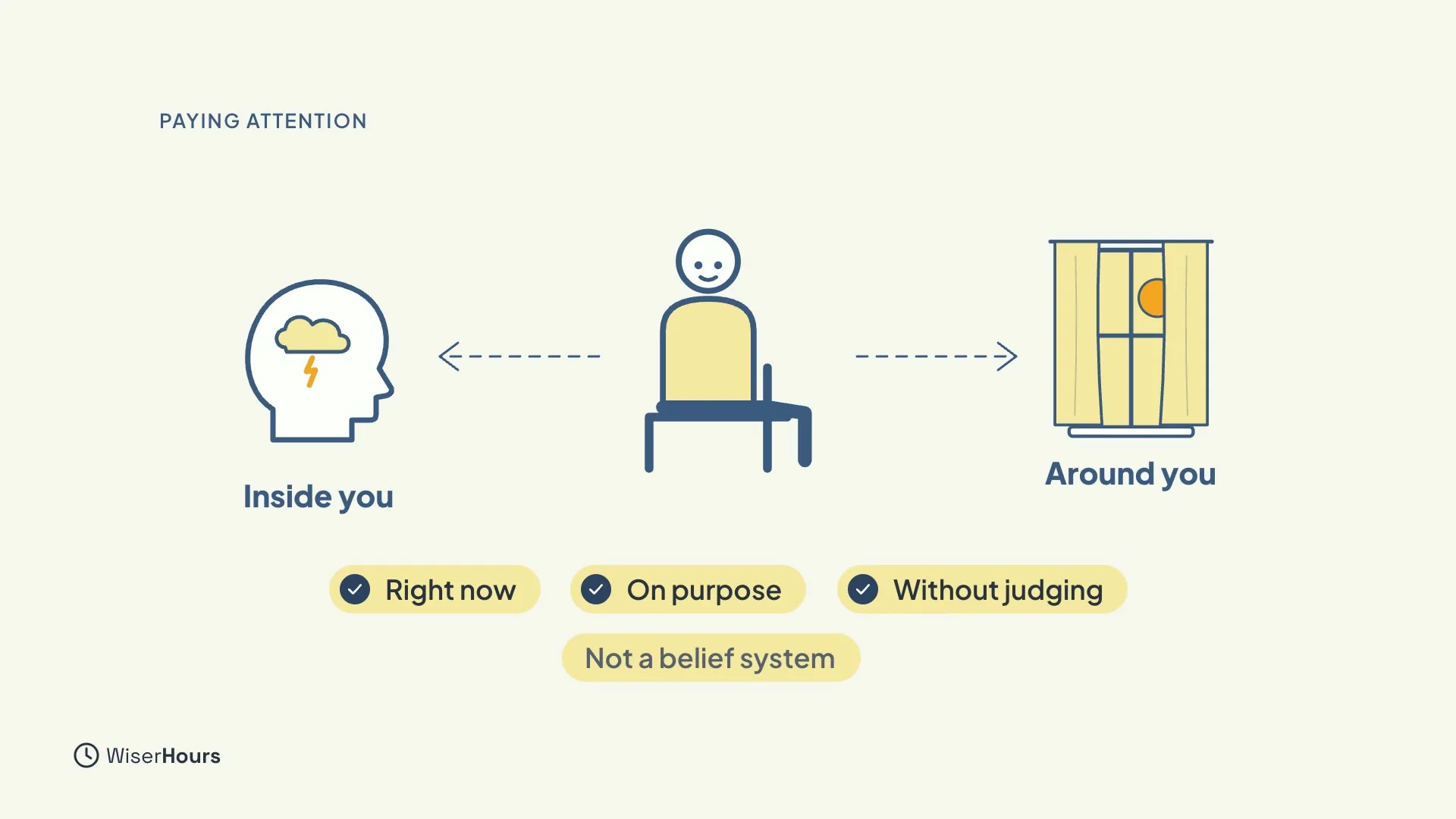
Mindfulness means paying attention to what is happening right now, inside you and around you, on purpose, and without judging it. Inside you might be a thought or a feeling. Around you might be a sound or the light in the room.
It is a way of paying attention, not a belief system. You can do it with any background and any worldview.
 (opens the full-size picture)
A family of practices
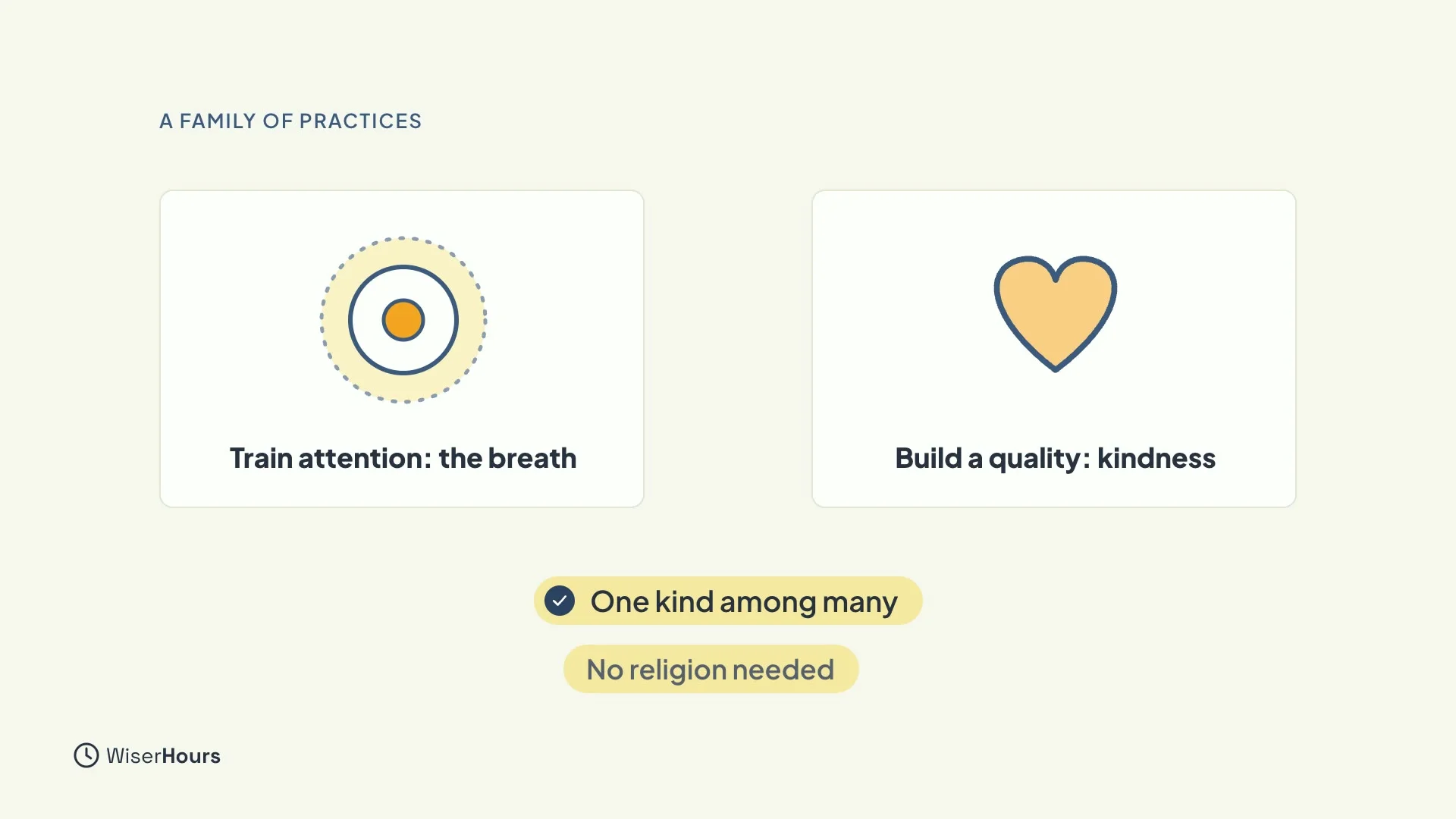
Meditation is a family of practices. Some train your attention, like resting on the feel of your breath. Others build a quality, like kindness. Mindfulness meditation is one kind among many. It has Buddhist roots, but modern courses teach it without any religion, so you can keep it as plain as you like.
 (opens the full-size picture)
What it isn’t
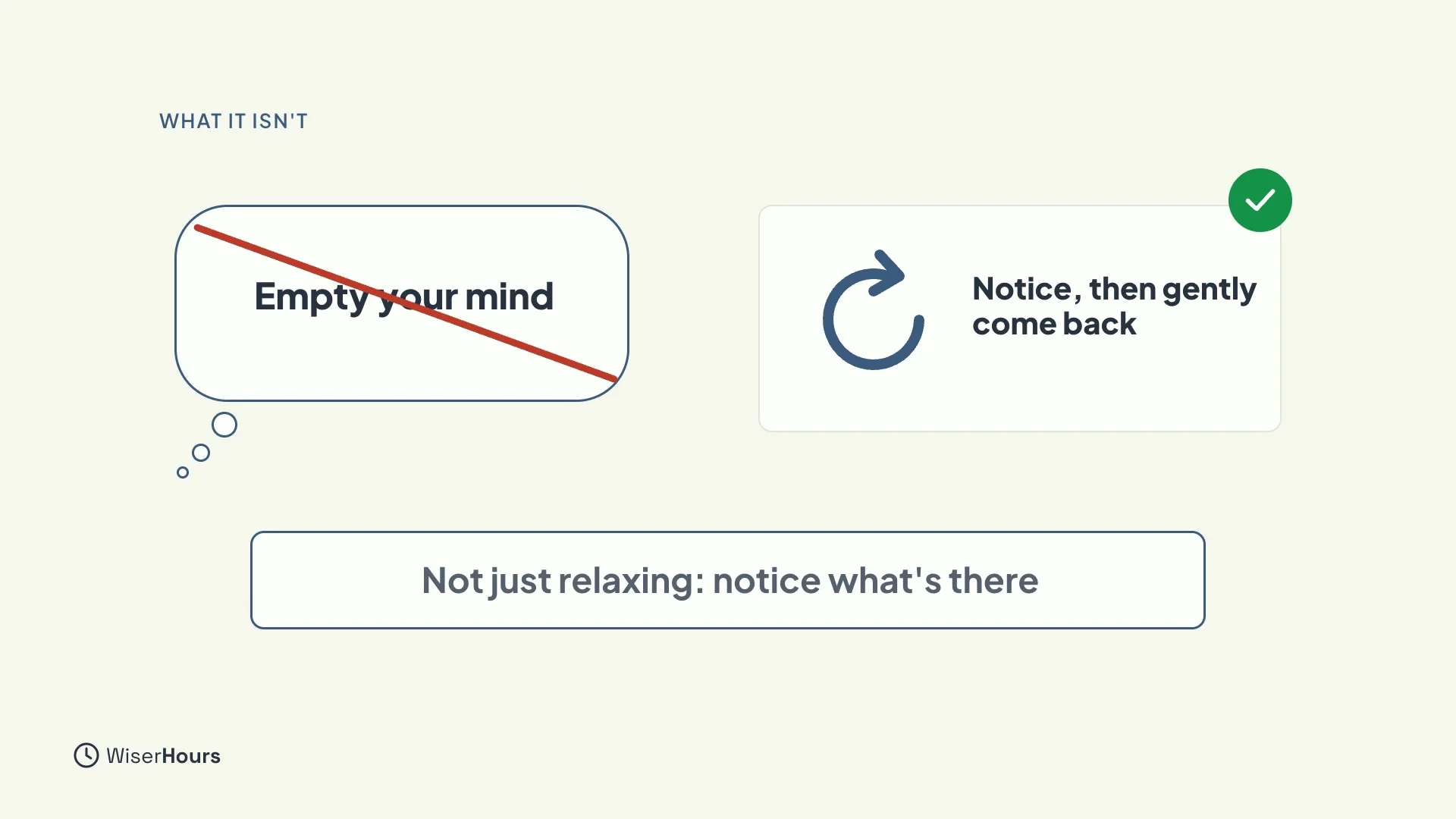
Meditation isn’t emptying your mind. Your mind will wander, and that is expected. The practice is noticing that it has wandered, and gently coming back.
It also isn’t the same as relaxing. You notice whatever is there, pleasant or not, though you may feel calmer too.
 (opens the full-size picture)
Honest expectations
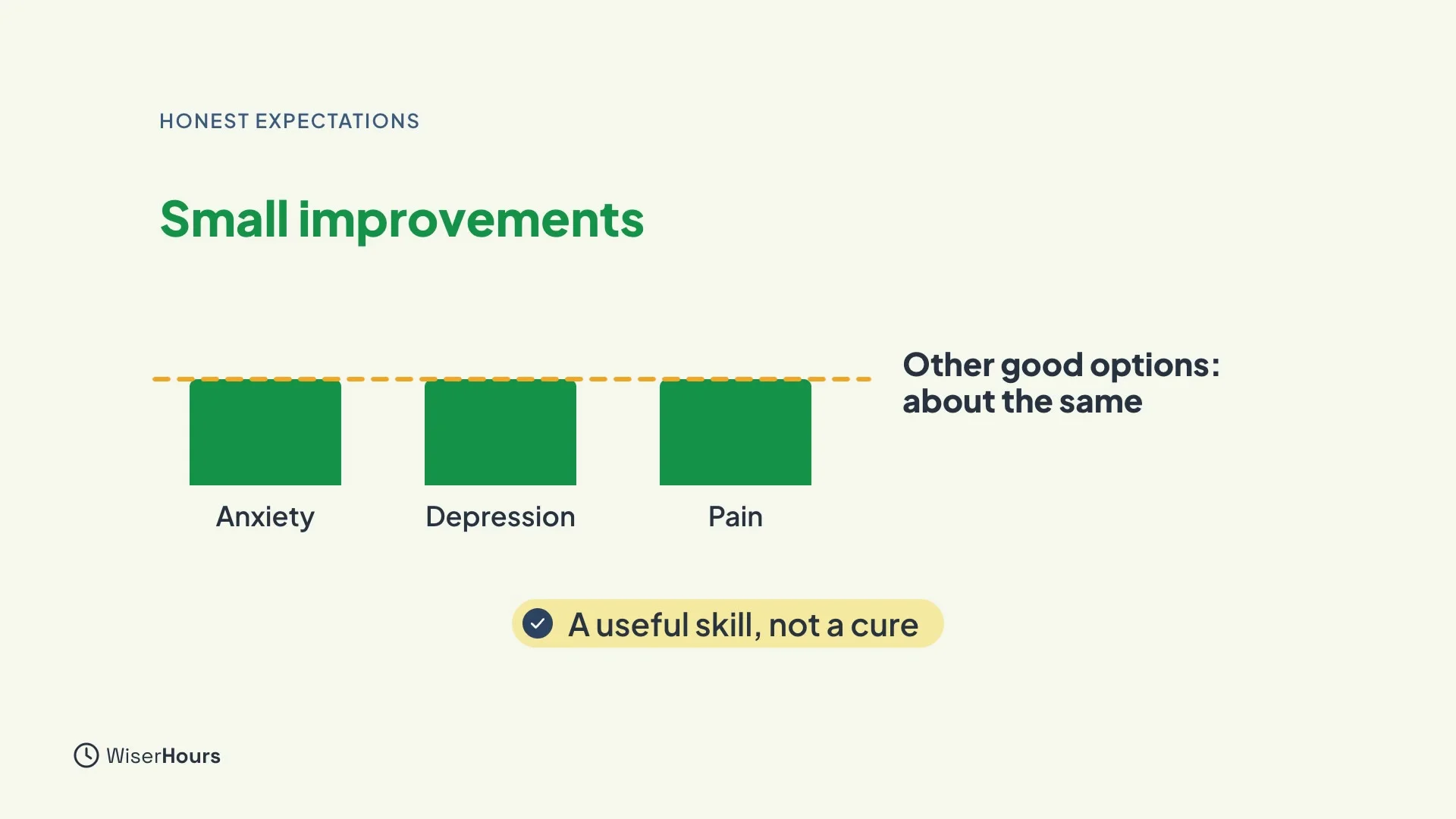
In reviews of many trials, mindfulness brought small improvements in anxiety, depression and pain. That was about as much as other good options, but not more. After short courses, the changes were small. So treat it as a useful skill, not a cure.
 (opens the full-size picture)
A note on safety
For most people, meditation is low-risk. But it can sometimes stir up difficult feelings. If you have a history of trauma, psychosis, bipolar disorder or severe depression, talk to a clinician before you start. Later in the course you will learn the signs to watch for.
The course ahead
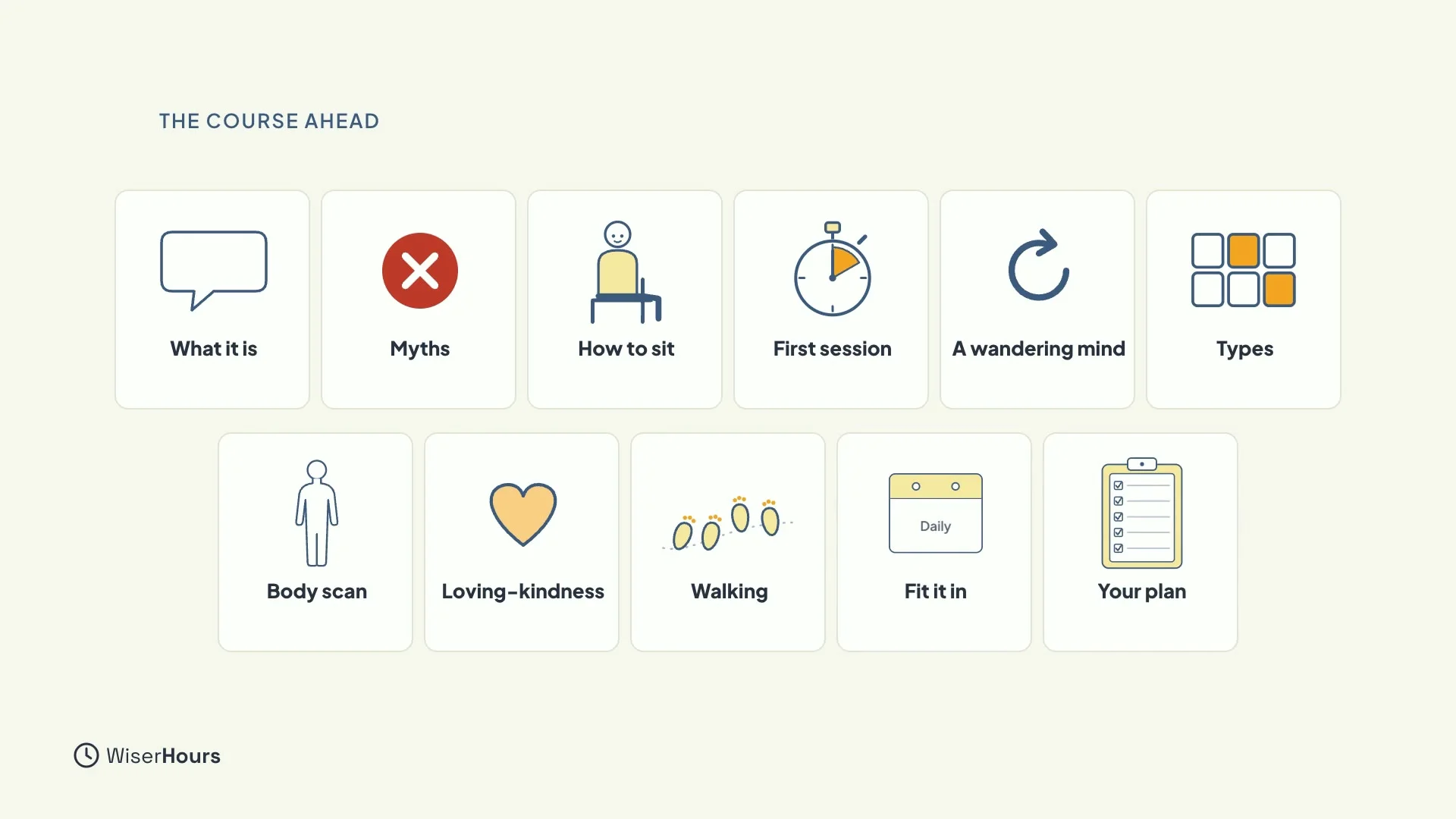
First you will clear up common myths, learn how to sit, and try your first five-minute session. Then you will see why a wandering mind is the practice, and explore the different types. Next come a body scan, loving-kindness and walking meditation. Finally you will find a routine that fits your day and make your plan.
 (opens the full-size picture)
YOUR TURN
Read more
- What Is Mindfulness?: a plain definition and what the trials show.
- How to Meditate: a step-by-step guide to your first ten minutes.
Read the full lesson script
Welcome to Meditation for Beginners. In this first lesson, you'll learn what meditation is, what it isn't, and what you can honestly expect from it. You don't need any beliefs or special equipment. This course is general information, not medical advice.
Mindfulness means paying attention to what's happening right now, inside you and around you, on purpose, and without judging it. It's a way of paying attention, not a belief system.
Meditation is a family of practices. Some train your attention, like resting on the feel of your breath. Others build a quality, like kindness. Mindfulness meditation is one kind among many. It has Buddhist roots, but modern courses teach it without any religion.
Meditation isn't emptying your mind. Your mind will wander, and that's expected. The practice is noticing that it has wandered, and gently coming back. It also isn't the same as relaxing. You notice whatever is there, pleasant or not, though you may feel calmer too.
What can you expect? In reviews of many trials, mindfulness brought small improvements in anxiety, depression and pain, about as much as other good options, but not more. After short courses, the changes were small. So treat it as a useful skill, not a cure.
For most people, meditation is low-risk. But it can sometimes stir up difficult feelings. If you have a history of trauma, psychosis, bipolar disorder or severe depression, talk to a clinician before you start. You'll learn the signs to watch for later in the course.
Here's the course. First, you'll clear up common myths, learn how to sit, and try your first five-minute session. Then you'll learn why a wandering mind is the practice, and explore the different types. Next, you'll try a body scan, loving-kindness, and walking meditation. Finally, you'll find a routine that fits your day, and make your plan.
So remember: meditation is paying attention on purpose, without judging. A wandering mind is part of it. And expect a useful skill, not a cure. Before the next lesson, sit for one minute, and simply notice your breath. Next, you'll clear up the myths that stop beginners.
MAKE IT A SMALL WIN
Finished this lesson?
Mark it complete to save your progress on this device.