Understand the practice · Lesson 6 of 11
Types of Meditation: How to Choose One That Suits You
See how the many named types of meditation fit into three families, and choose one by the skill you want to build.
 Video coming soon
There are many named types of meditation. In this lesson you see how they fit into a few families, and how to choose one that suits you. If you are new, a simple rule helps: pick by the skill you want to build.
Three families
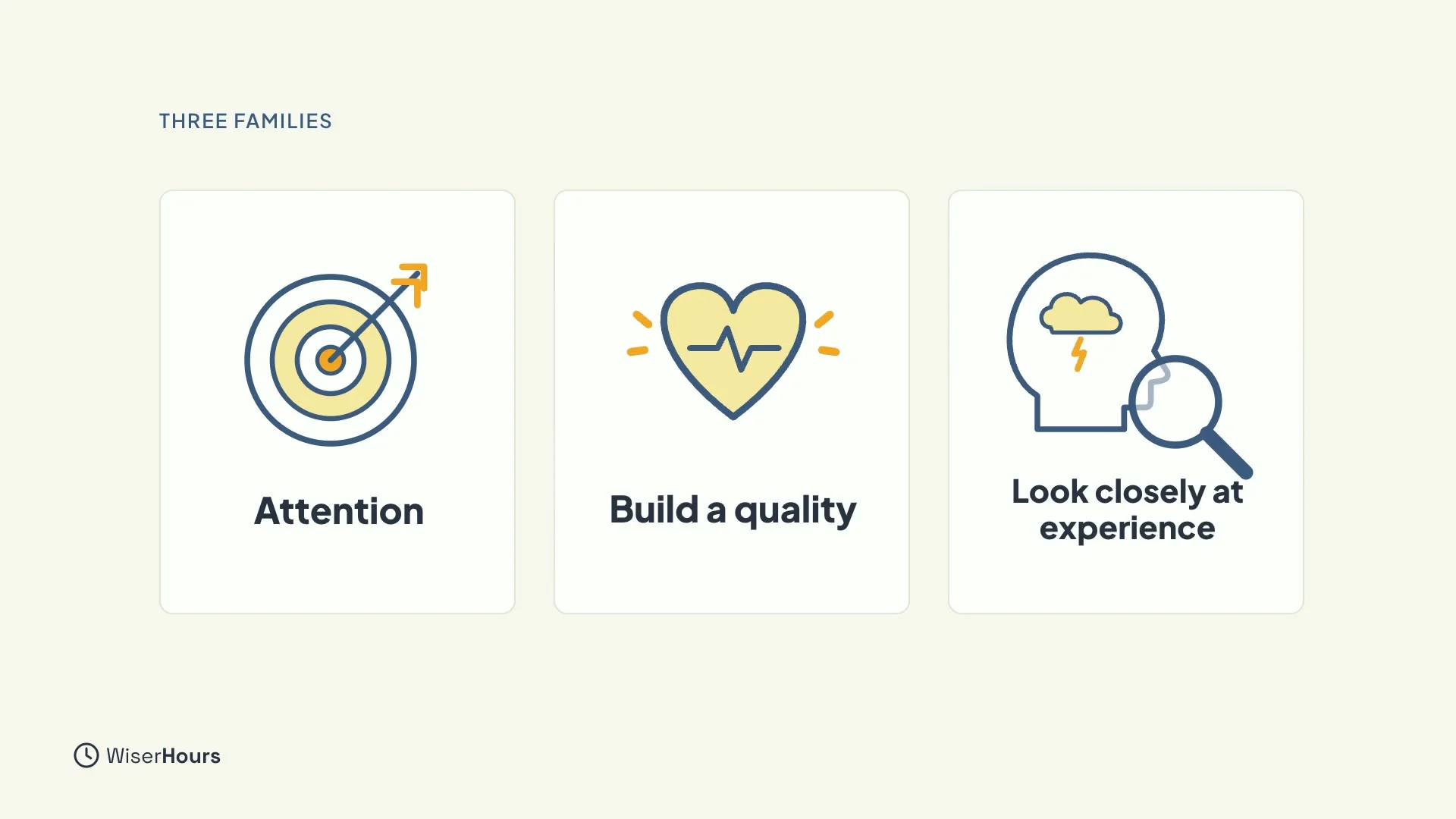
Most types belong to one of three families. Some steady or widen your attention. Some build a quality, such as kindness. And some look closely at how your thoughts and sense of self are put together.
 (opens the full-size picture)
Focused or open
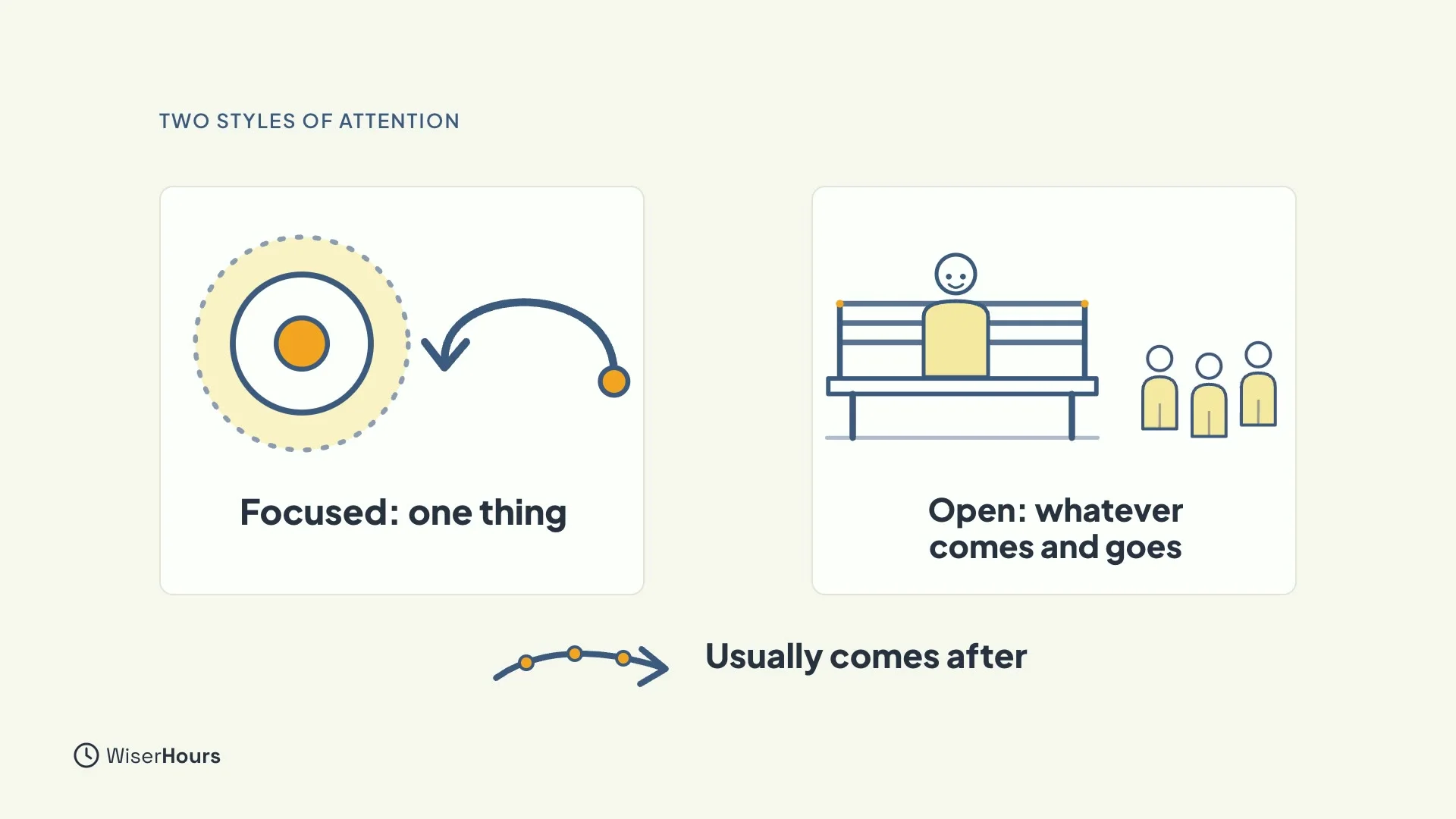
Within attention, there are two styles. Focused attention holds one thing, like the breath: when you drift, you notice and come back. Open monitoring notices whatever comes and goes, like watching people pass from a park bench. It usually comes after focused attention, once that has steadied the mind.
 (opens the full-size picture)
Common practices
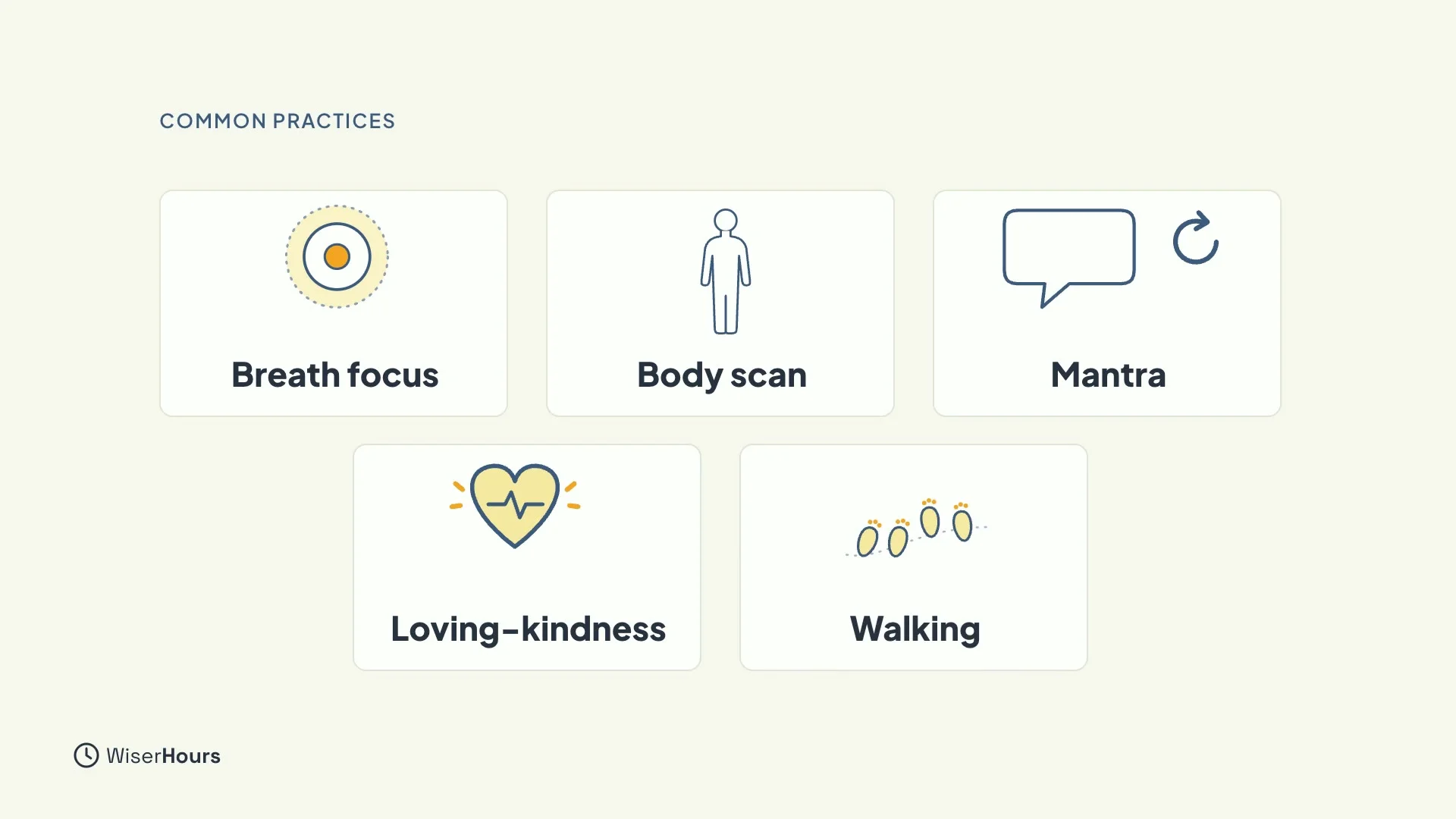
You will meet a few common practices. Breath focus rests on the feel of breathing. A body scan moves slowly through the body. A mantra repeats a word or sound. Loving-kindness offers good wishes. Walking meditation follows each step. You will try three of these later in the course.
 (opens the full-size picture)
Choose by the skill
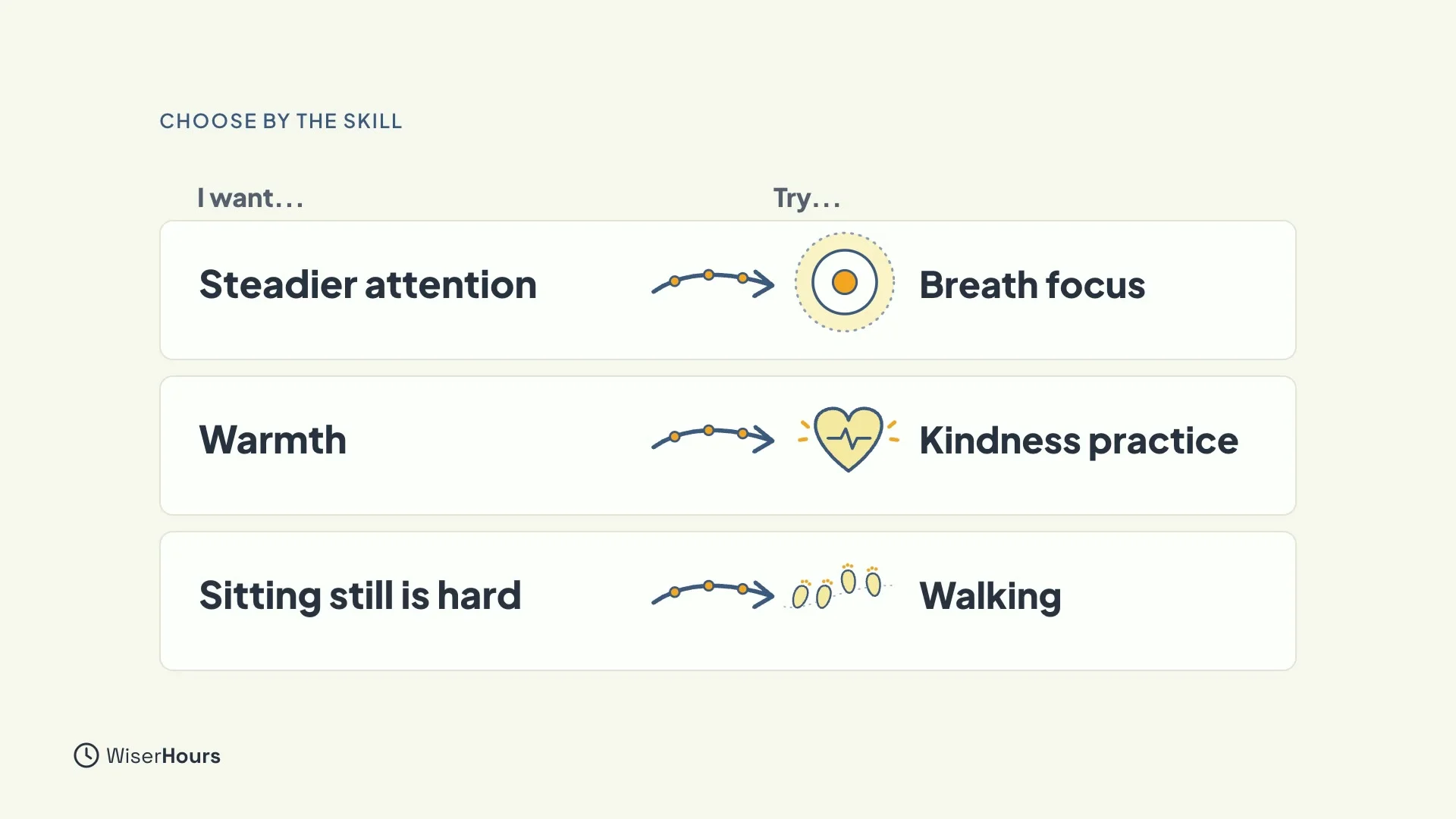
So choose by the skill you want. For steadier attention, try breath focus. For warmth toward yourself and others, try a kindness practice. And if sitting still is hard, try walking meditation.
 (opens the full-size picture)
A fair test
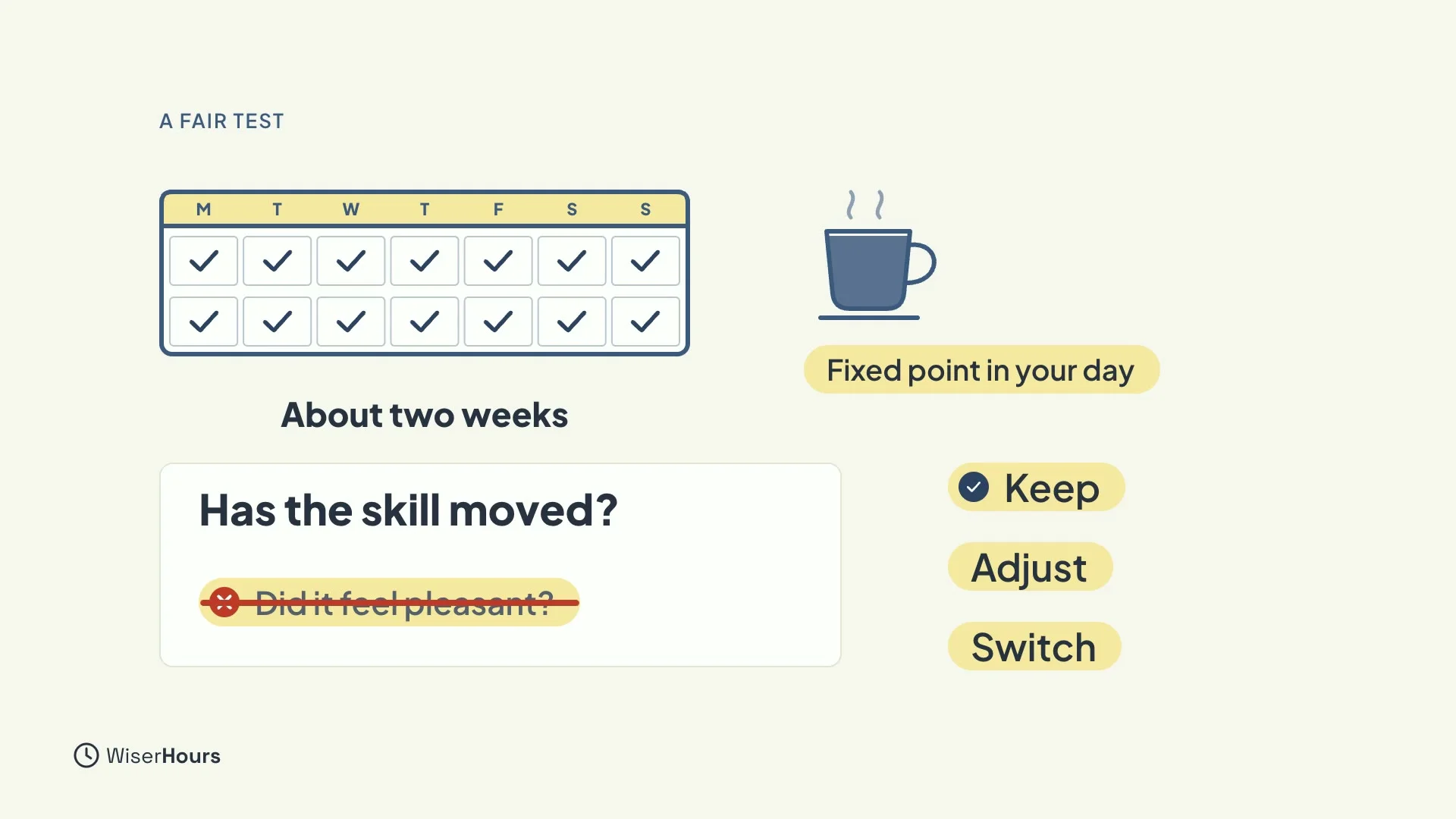
If you are new, start with focused attention on the breath. Give one practice about two weeks, with short sessions tied to a fixed point in your day, such as your first coffee. Then ask whether the skill has moved in daily life, not whether sessions felt pleasant. Then keep it, adjust it, or switch.
 (opens the full-size picture)
Big promises
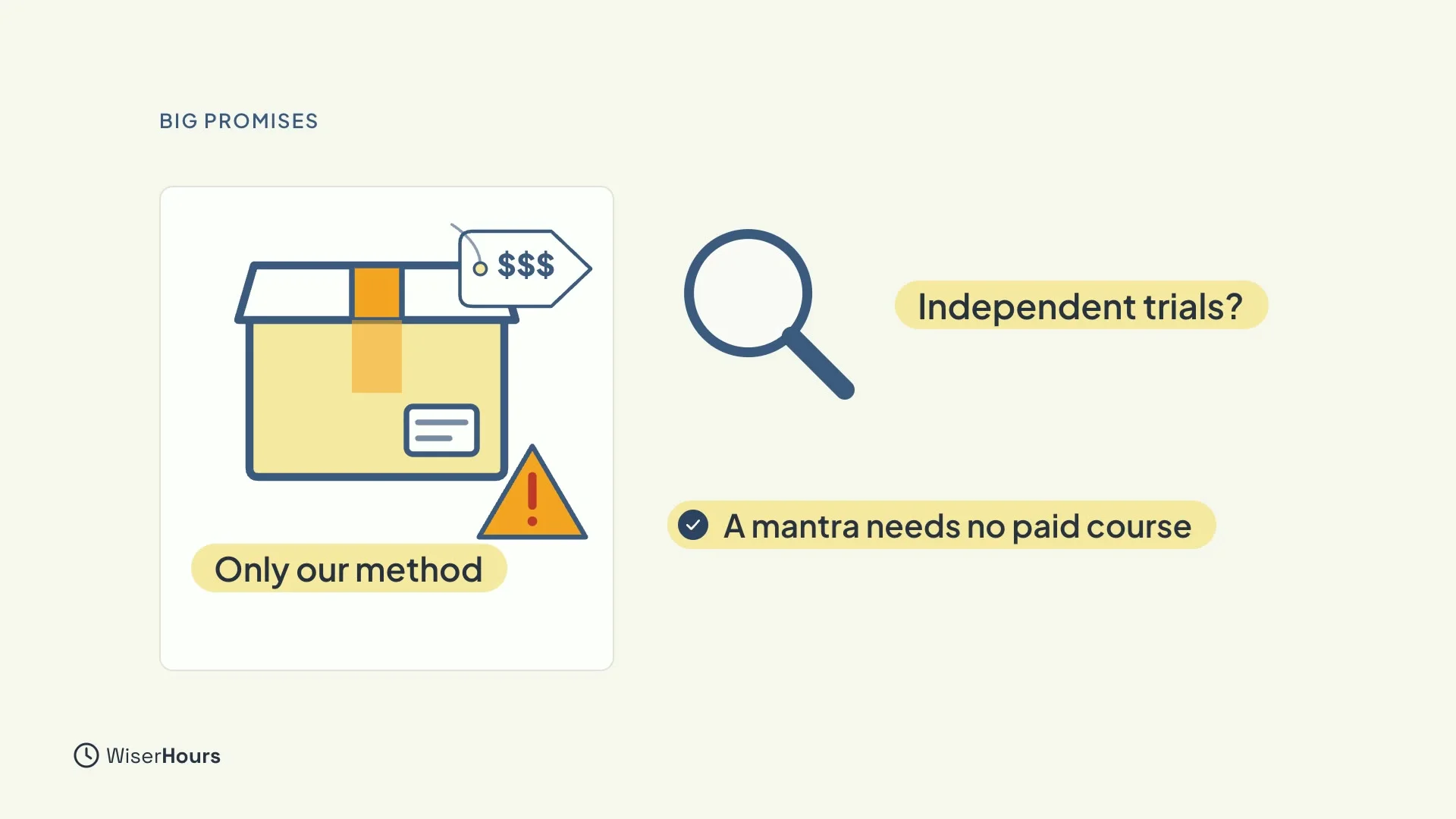
Be careful with courses that promise a benefit only their method can give. Ask whether independent trials back it. You don’t need a paid course to repeat a word or sound.
 (opens the full-size picture)
YOUR TURN
Read more
- Types of Meditation Compared: the full comparison, with a step-by-step way to choose.
Read the full lesson script
There are many named types of meditation. In this lesson, you'll see how they fit into a few families, and how to choose one that suits you.
Most types belong to one of three families. Some steady or widen your attention. Some build a quality, such as kindness. And some look closely at how your thoughts and sense of self are put together.
Within attention, there are two styles. Focused attention holds one thing, like the breath: when you drift, you notice and come back. Open monitoring notices whatever comes and goes, like watching people pass from a park bench. It usually comes after focused attention.
You'll meet a few common practices. Breath focus rests on the feel of breathing. A body scan moves slowly through the body. A mantra repeats a word or sound. Loving-kindness offers good wishes. Walking meditation follows each step.
So choose by the skill you want. For steadier attention, try breath focus. For warmth toward yourself and others, try a kindness practice. And if sitting still is hard, try walking meditation.
If you're new, start with focused attention on the breath. Give one practice about two weeks, with short sessions tied to a fixed point in your day. Then ask whether the skill has moved in daily life, not whether sessions felt pleasant. Then keep it, adjust it, or switch.
Be careful with courses that promise a benefit only their method can give. Ask whether independent trials back it. You don't need a paid course to repeat a word or sound.
So remember: three families, choose by the skill you want, and give one practice two weeks. Before the next lesson, write down the one skill you want to build. Next, you'll try a body scan.
MAKE IT A SMALL WIN
Finished this lesson?
Mark it complete to save your progress on this device.