Try more practices · Lesson 8 of 11
Loving-Kindness Meditation: Four Simple Wishes
Learn to silently offer four good wishes to yourself and then to others, what to do if it feels awkward, and what early research says.
 Video coming soon
Loving-kindness is a meditation where you silently offer good wishes, first to yourself, then to other people. Unlike the breath practice, it trains a warm feeling rather than attention. The steps follow the Greater Good in Action loving-kindness practice from UC Berkeley, which takes about 15 minutes in full. You will start with a much shorter version.
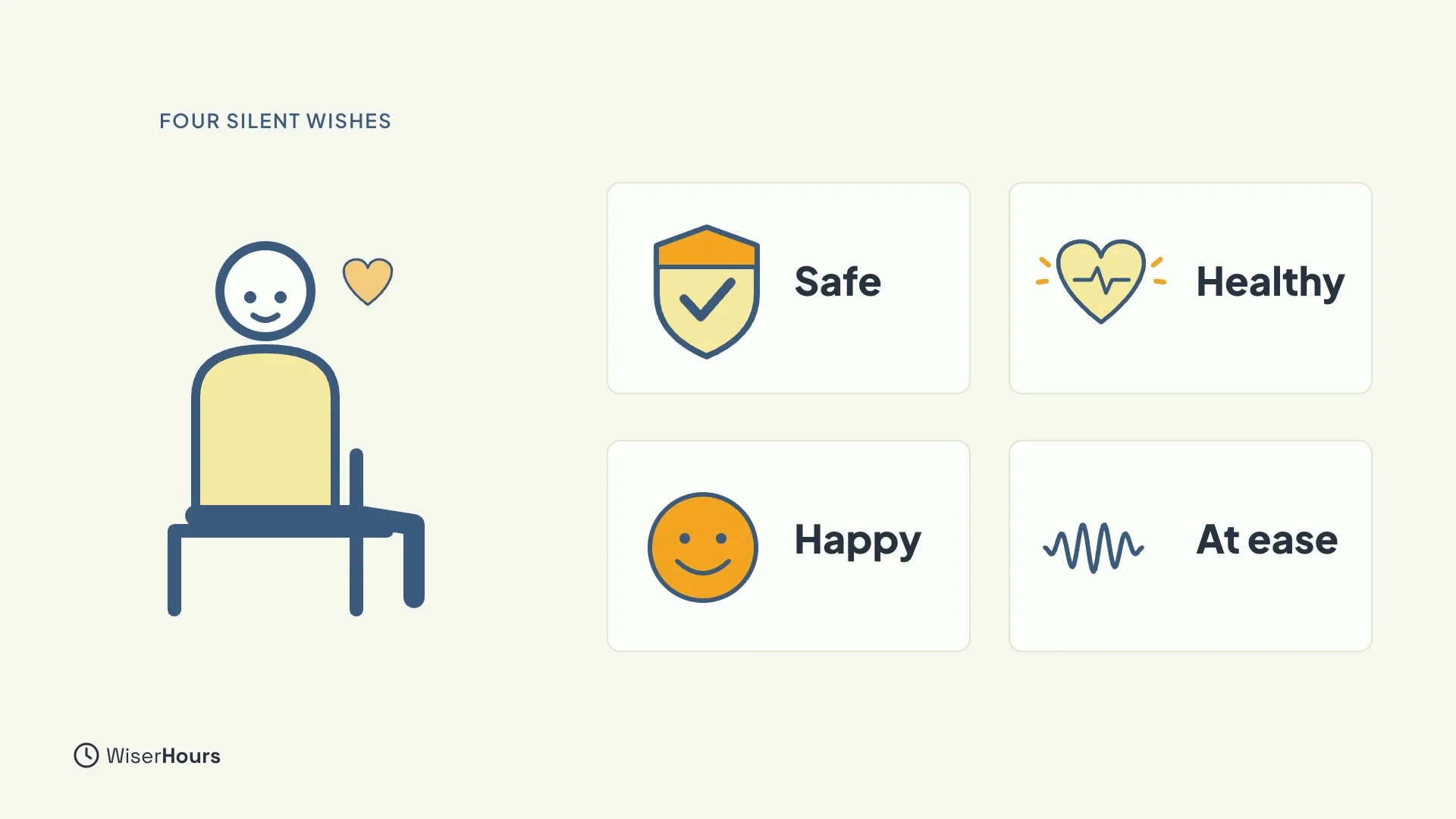
Four wishes for yourself
Start by settling with a few breaths. Then silently repeat four wishes for yourself: may I be safe, may I be healthy, may I be happy, may I live with ease. Say them slowly, with a pause between each one.
 (opens the full-size picture)
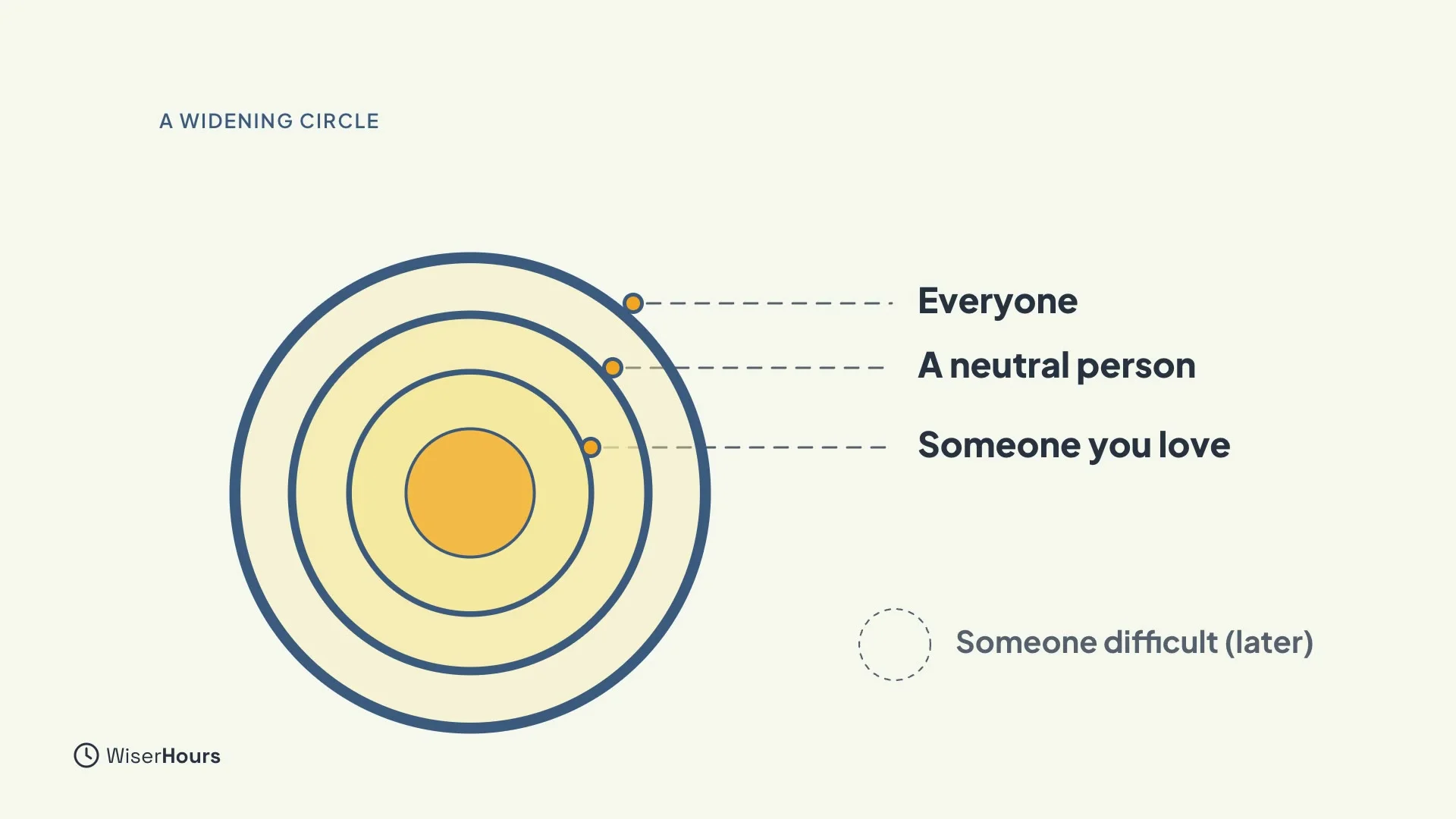
A widening circle
Then offer the same wishes to someone you love. Then to a neutral person, someone you see but don’t really know. And finally, outward to everyone. Later, some people include someone they find difficult. There is no hurry to do that, and you can leave it out.
 (opens the full-size picture)
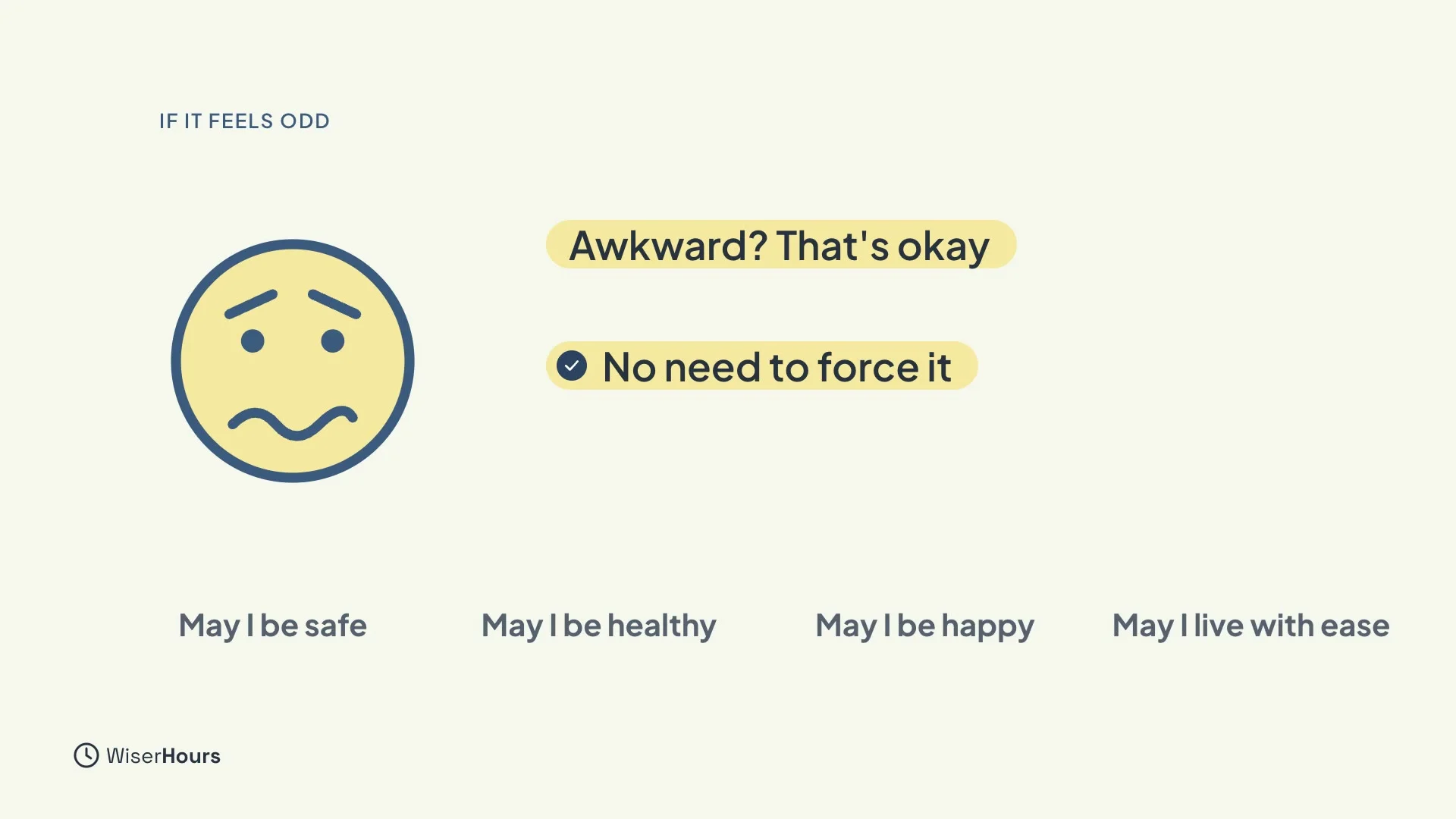
If it feels odd
If it feels artificial or awkward at first, that’s okay. You don’t need to force a feeling. Just repeat the words gently, and notice whatever comes. Noticing an awkward feeling is part of the practice, not a sign that you are doing it wrong.
 (opens the full-size picture)
What the research says
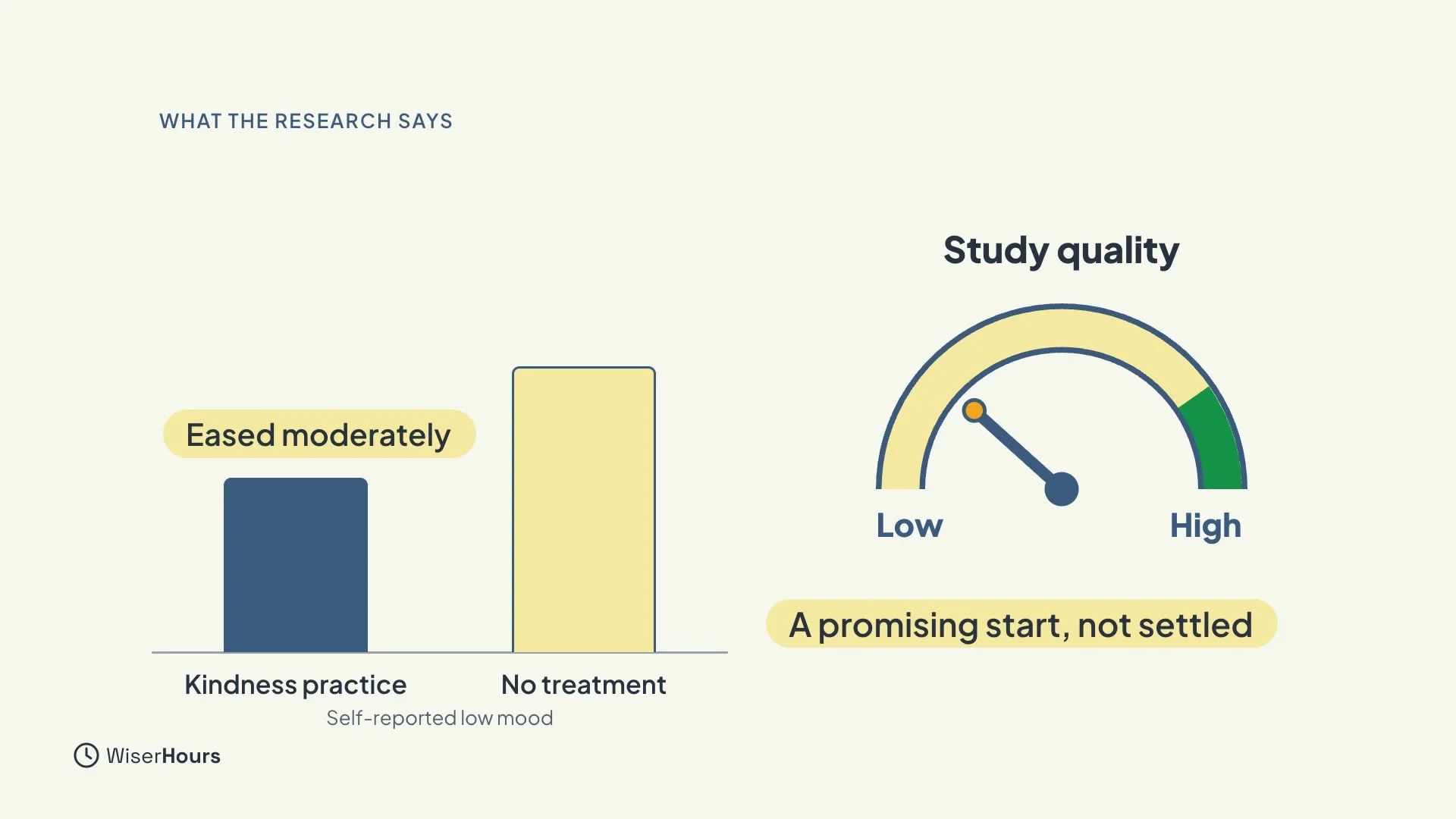
In a review of trials, kindness practices moderately eased self-reported low mood, compared with no treatment. But the studies were of low to moderate quality, and the results were imprecise. So treat it as a promising start, not a settled answer. You are trying it because it may help, not because it is proven.
 (opens the full-size picture)
Wishes you can follow
The video has a guided version with silences between the wishes. Without it, follow these steps, pausing for a slow breath after each wish:
- Sit comfortably. Let your eyes close, or rest your gaze softly.
- Take a slow breath, and settle.
- Silently, for yourself: may I be safe. May I be healthy. May I be happy. May I live with ease.
- Now bring to mind someone you love. May you be safe. May you be healthy. May you be happy. May you live with ease.
- Now think of everyone, everywhere. May everyone be safe, healthy and happy, and live with ease.
- When you are ready, open your eyes.
YOUR TURN
Read more
- Types of Meditation Compared: how kindness practice compares with breath, body and walking practices, and what the early research found.
- Loving-Kindness Meditation, Greater Good in Action (UC Berkeley): the practice these steps follow.
Read the full lesson script
In this lesson, you'll try loving-kindness: silently offering good wishes, first to yourself, then to others. It trains a warm feeling, rather than attention.
Start by settling with a few breaths. Then silently repeat four wishes for yourself: may I be safe, may I be healthy, may I be happy, may I live with ease.
Then offer the same wishes to someone you love. Then to a neutral person, someone you see but don't really know. And finally, outward to everyone. Later, some people include someone they find difficult.
If it feels artificial or awkward at first, that's okay. You don't need to force a feeling. Just repeat the words gently, and notice whatever comes.
What does the research say? In a review of trials, kindness practices moderately eased self-reported low mood, compared with no treatment. But the studies were of low to moderate quality. So treat it as a promising start, not a settled answer.
Let's offer these wishes together. Sit comfortably, and let your eyes close, or rest your gaze softly. Take a slow breath, and settle. Now, silently, for yourself: may I be safe. May I be healthy. May I be happy. May I live with ease. Now bring to mind someone you love. May you be safe. May you be healthy. May you be happy. May you live with ease. Now think of everyone, everywhere. May everyone be safe, healthy and happy, and live with ease. When you're ready, open your eyes.
So remember: four simple wishes, a widening circle, and awkward is okay. Before the next lesson, offer the four wishes to yourself and one other person. Next, you'll try walking meditation.
MAKE IT A SMALL WIN
Finished this lesson?
Mark it complete to save your progress on this device.