Understand the practice · Lesson 5 of 11
When Your Mind Wanders, That Is the Practice
See why a wandering mind is not a sign that you are bad at meditation, and learn to count your returns instead of your calm moments.
 Video coming soon
A wandering mind isn’t a sign that you are bad at meditation. It is the very thing you are practicing. This lesson shows why, and how to keep going when your thoughts keep running off.
Everyone wanders
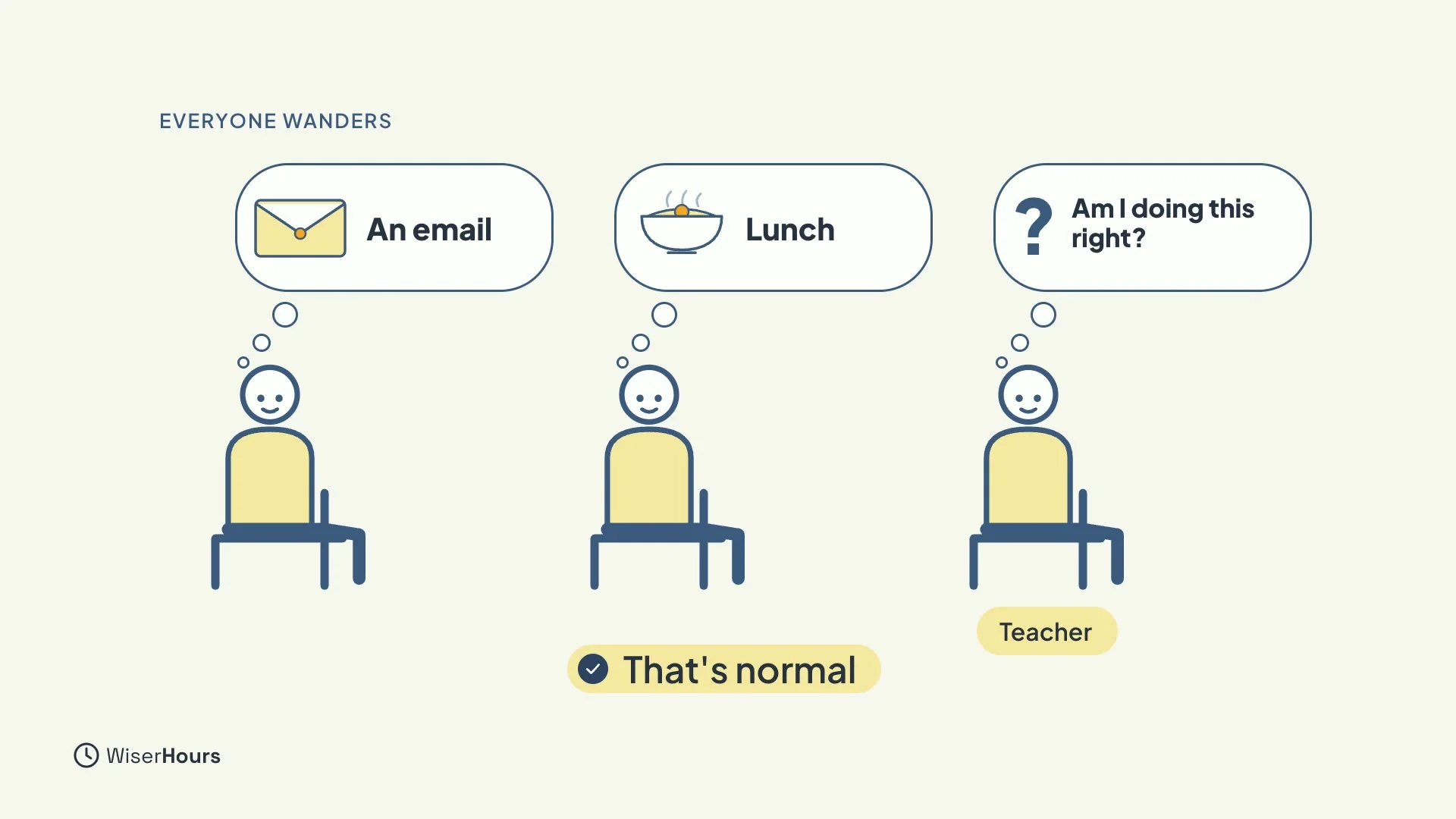
Everyone’s mind wanders, even experienced teachers’. One well-known teacher recalls her first try: one breath, and she was gone. Thoughts about an email, lunch, or whether you are doing this right will keep arriving. That is normal.
 (opens the full-size picture)
The cycle
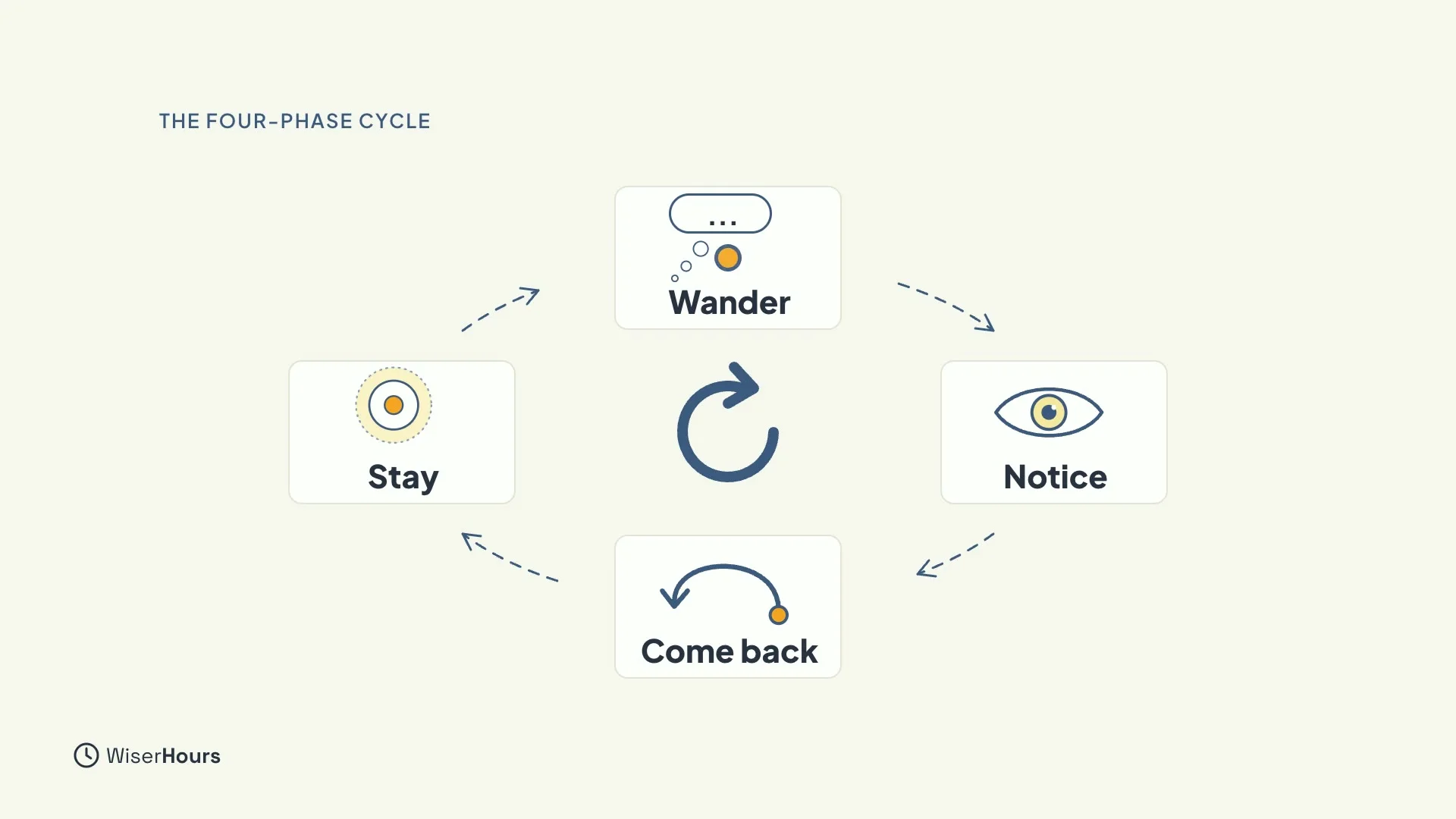
Researchers describe it as a cycle with four phases. Your mind wanders. You become aware of it. You shift your attention back. And you stay with the breath for a while. Then it starts again.
 (opens the full-size picture)
Noticing is a success
The key moment is noticing. When you realize you have drifted, that is not a failure. It is a success. Thoughts don’t have to go away. You see them as events that come and go.
 (opens the full-size picture)
Repetitions
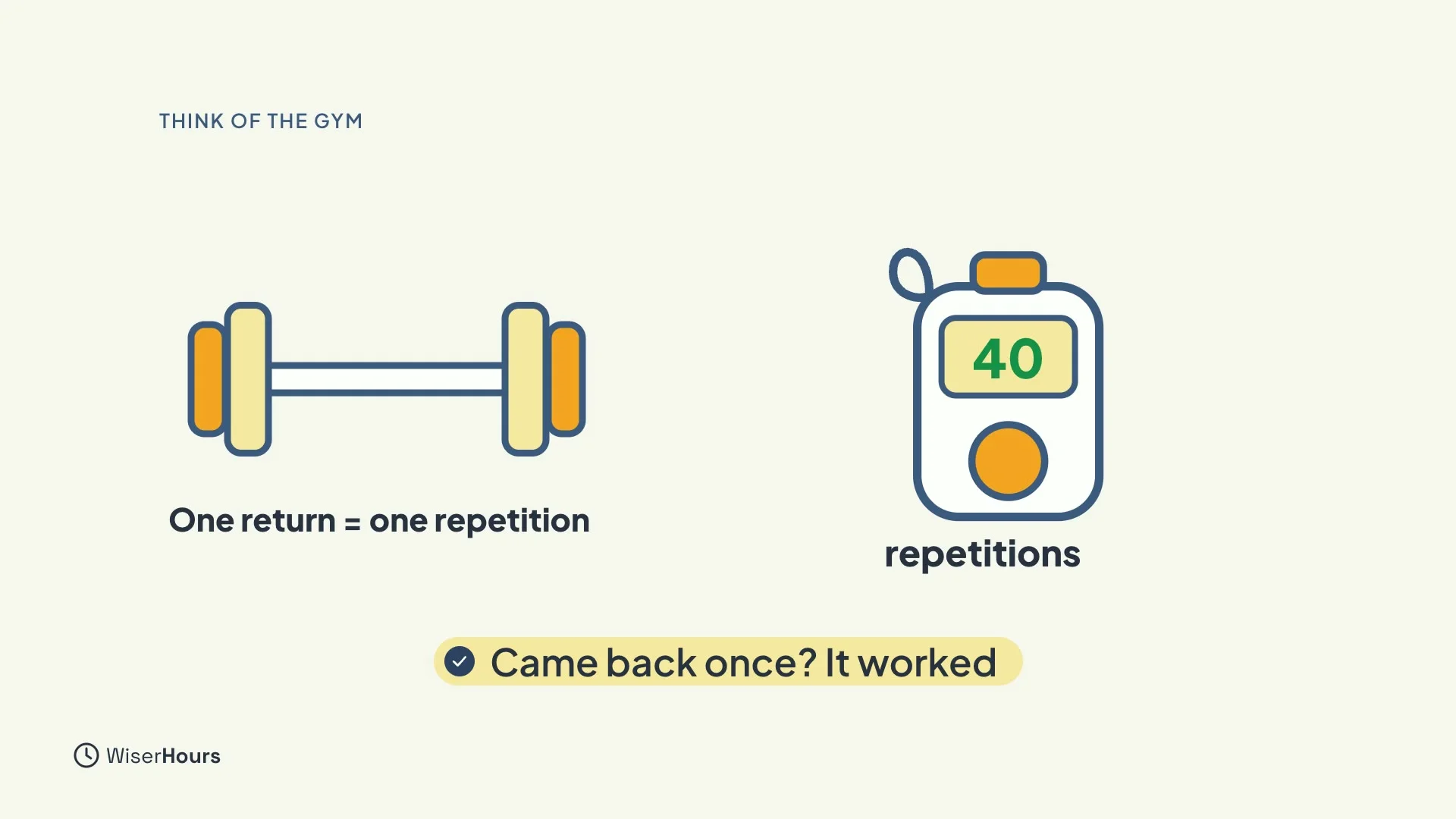
Think of each return as one repetition at the gym. A session with forty wanderings holds forty repetitions. If you came back even once, the session worked.
 (opens the full-size picture)
Come back gently
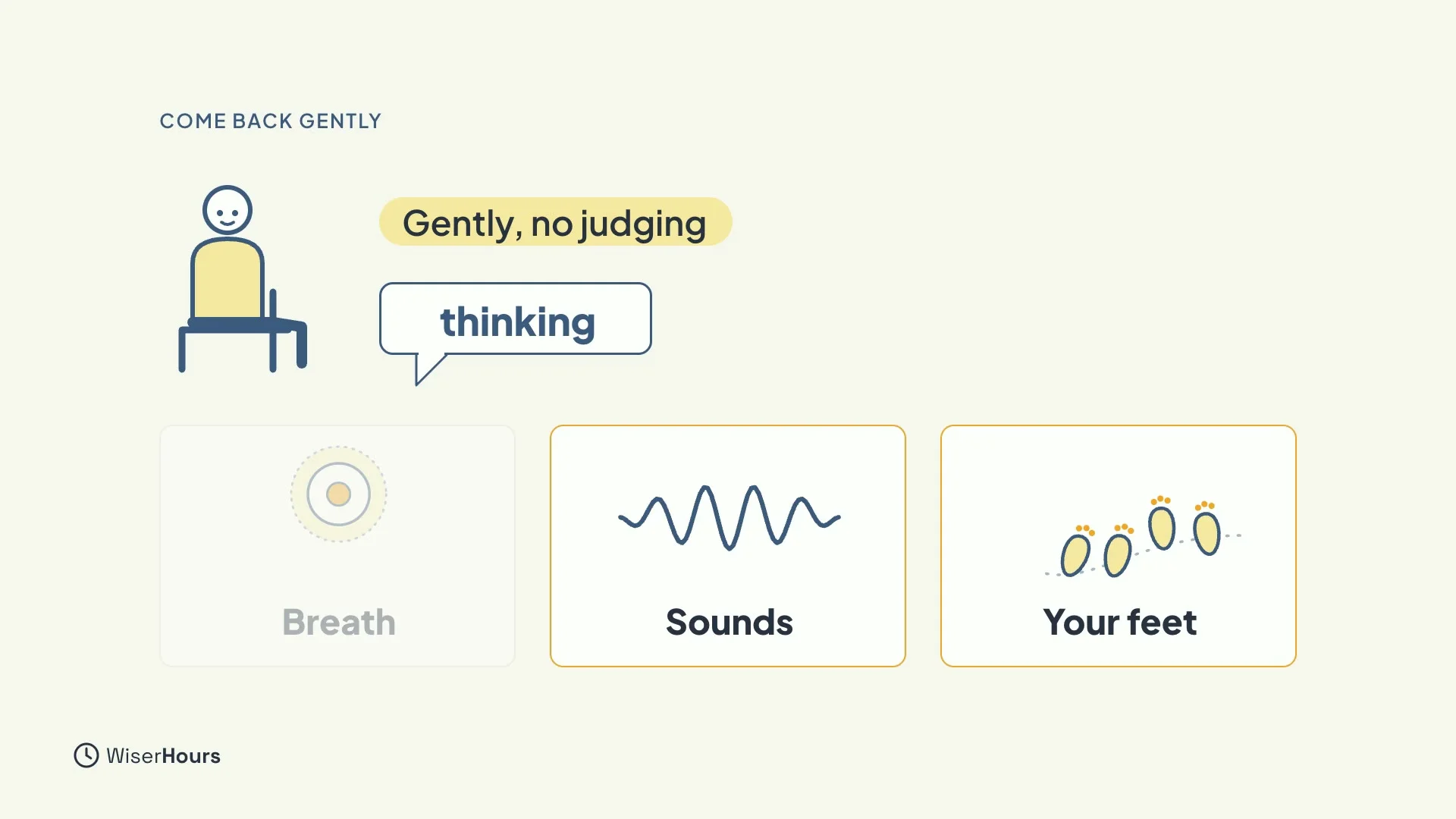
Come back gently, without judging yourself. Saying thinking softly in your head can help. If the breath makes you tense, rest on another anchor instead: the sounds in the room, or the feel of your feet on the floor.
 (opens the full-size picture)
First-week snags
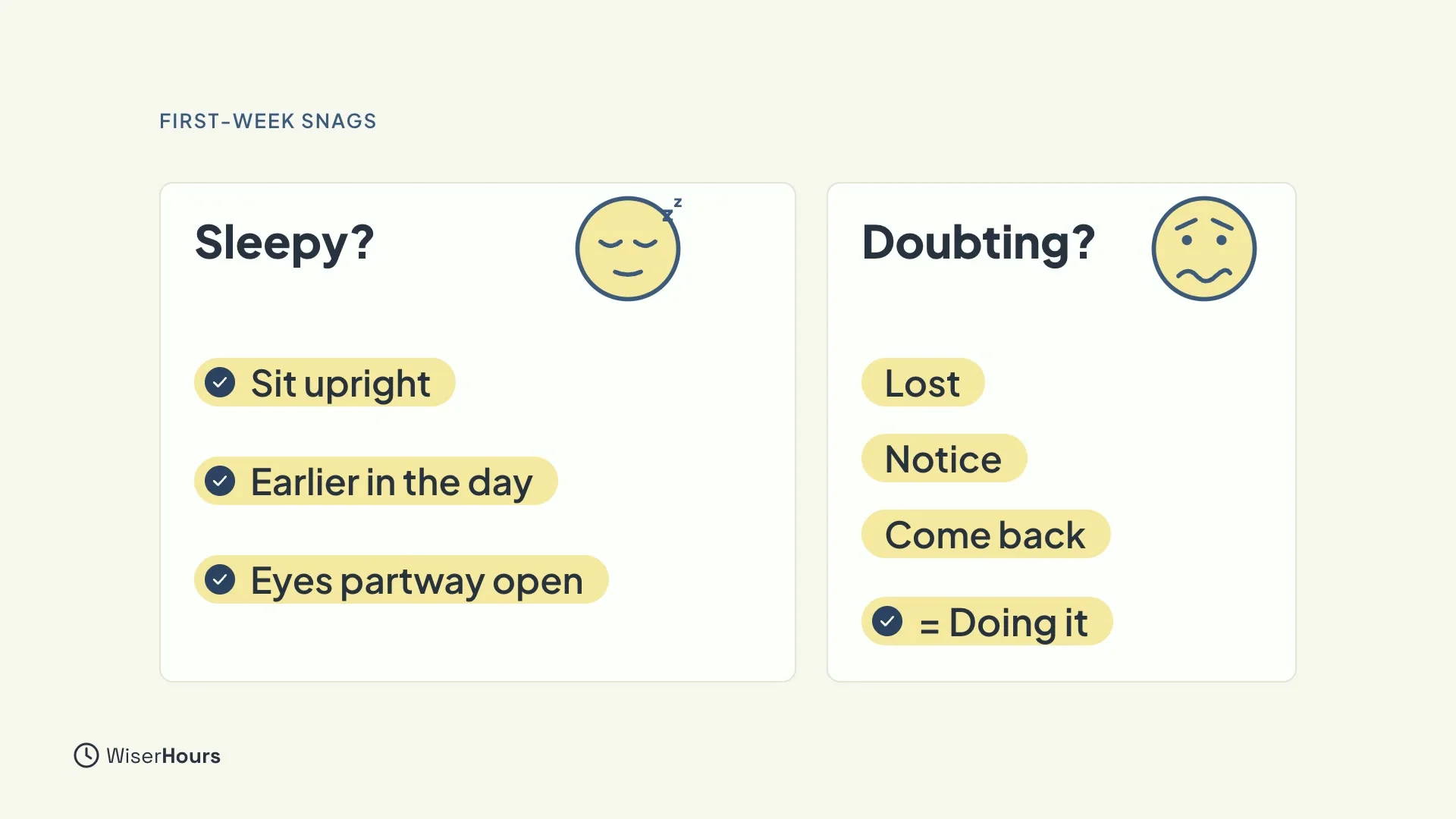
Two snags are common in the first week. If you keep nodding off, sit upright, practice earlier in the day, or open your eyes partway. If you doubt yourself, remember: getting lost, noticing and coming back is how it is done.
 (opens the full-size picture)
YOUR TURN
Read more
- How to Meditate: the full steps, and what to do about sleepiness and doubt.
- What Is Mindfulness?: the idea of noticing without judging.
Read the full lesson script
In this lesson, you'll see why a wandering mind isn't a sign that you're bad at meditation. It's the very thing you're practicing.
Everyone's mind wanders, even experienced teachers'. One well-known teacher recalls her first try: one breath, and she was gone. Thoughts about an email, lunch, or whether you're doing this right will keep arriving. That's normal.
Researchers describe it as a cycle with four phases. Your mind wanders. You become aware of it. You shift your attention back. And you stay with the breath for a while. Then it starts again.
The key moment is noticing. When you realize you've drifted, that's not a failure. It's a success. Thoughts don't have to go away. You see them as events that come and go.
Think of each return as one repetition at the gym. A session with forty wanderings holds forty repetitions. If you came back even once, the session worked.
Come back gently, without judging yourself. Saying thinking softly in your head can help. If the breath makes you tense, rest on another anchor instead: the sounds in the room, or the feel of your feet on the floor.
Two snags are common in the first week. If you keep nodding off, sit upright, practice earlier in the day, or open your eyes partway. If you doubt yourself, remember: getting lost, noticing and coming back is how it's done.
So remember: everyone wanders, noticing is a success, and every return is one repetition. Before the next lesson, in your next session, count your returns, not your calm moments. Next, you'll explore the main types of meditation.
MAKE IT A SMALL WIN
Finished this lesson?
Mark it complete to save your progress on this device.