Try more practices · Lesson 9 of 11
Walking Meditation: A Slow Practice for Restless Minds
Learn to walk a short path slowly, notice each step in four parts, and practice if sitting still is hard, including in a wheelchair.
 Video coming soon
Walking meditation uses the feel of your steps as the thing to pay attention to, instead of the breath. It is a good choice if sitting still is hard, and you can do it indoors or outside. The steps follow the Greater Good in Action walking meditation from UC Berkeley.
Your path
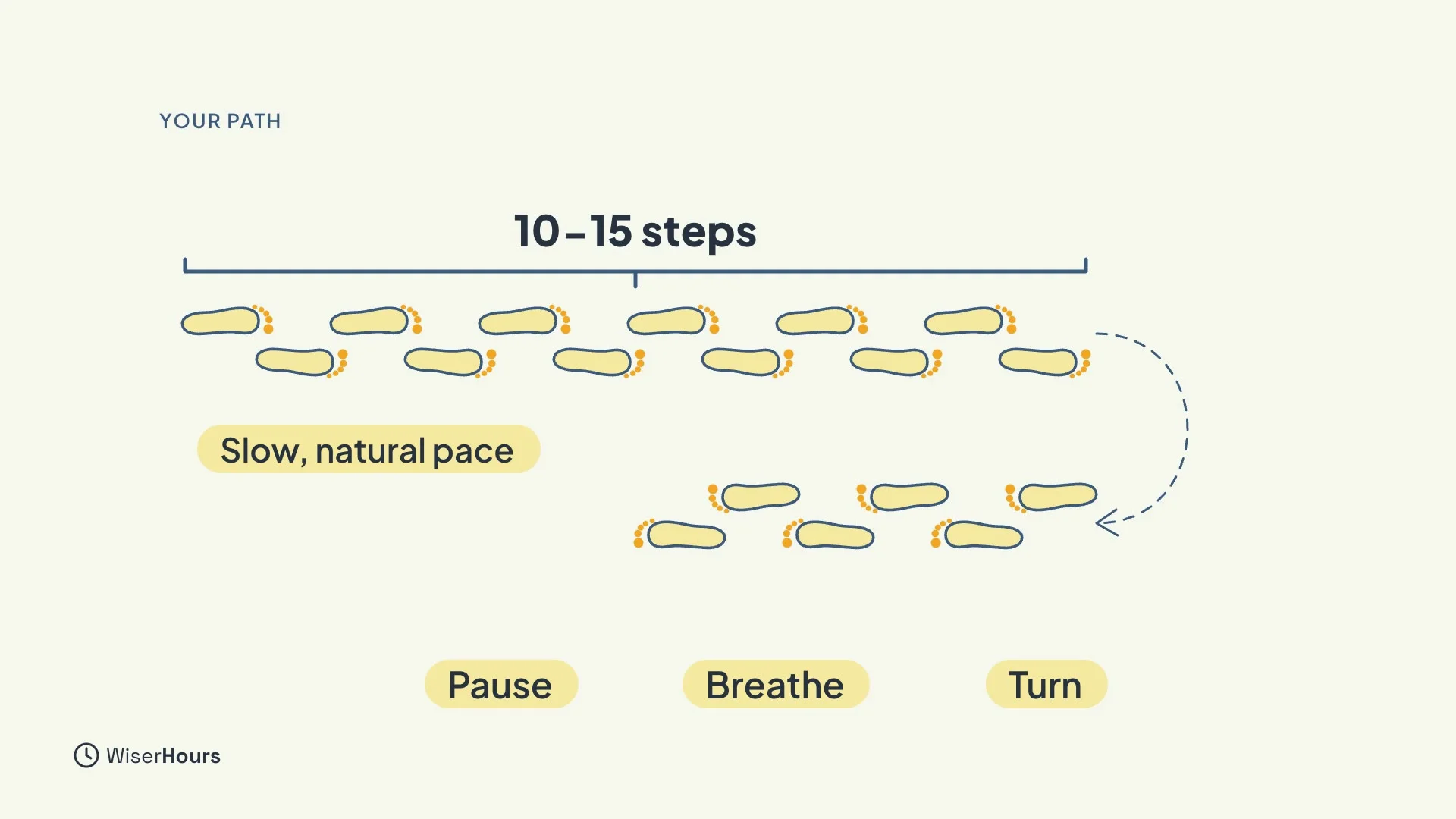
Choose a quiet path about ten to fifteen steps long. Walk slowly, at a natural pace. At the end, pause, breathe, turn around, and walk back. It can be indoors or outside.
 (opens the full-size picture)
Four parts of a step
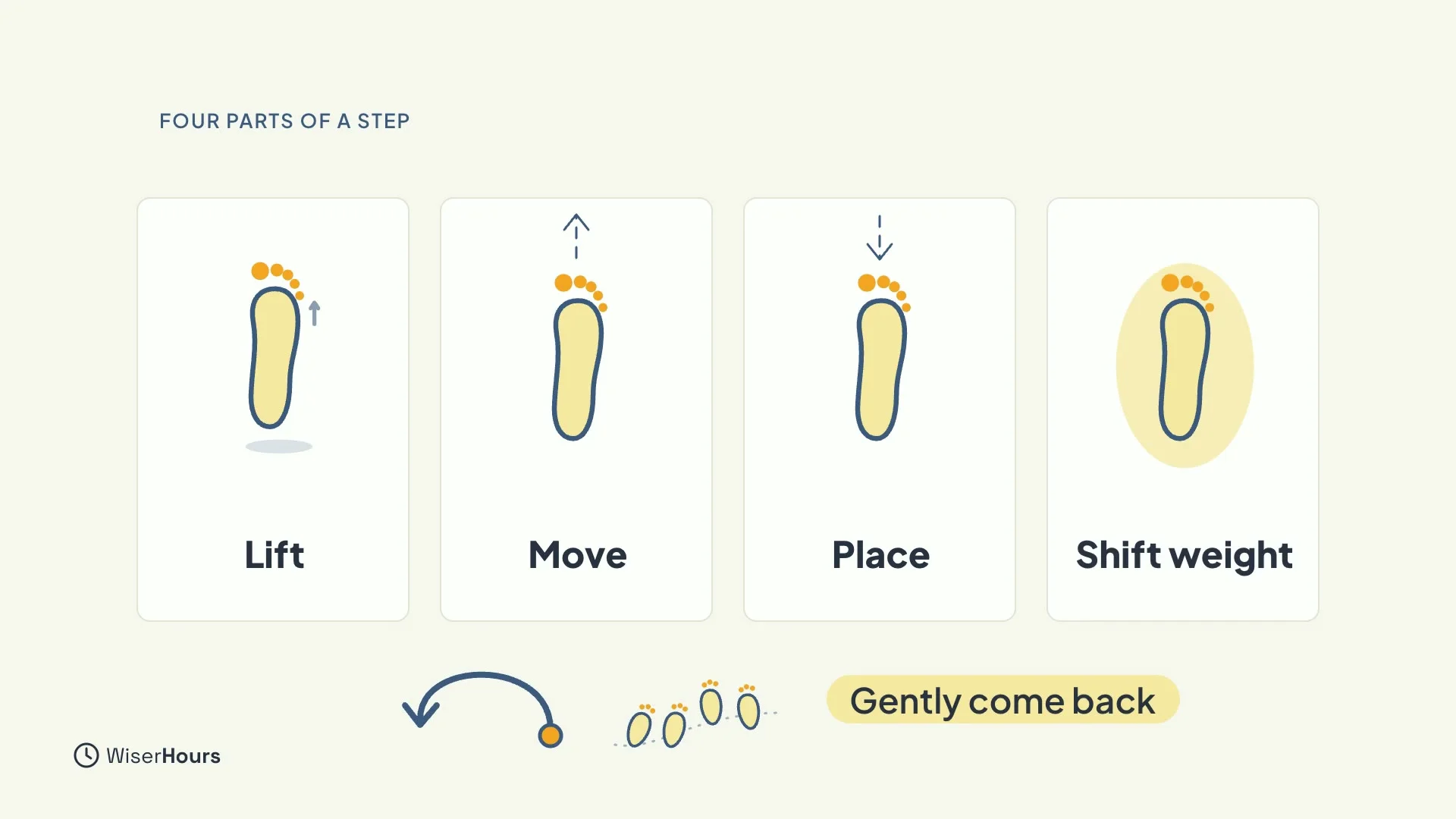
As you walk, notice each step in four parts: lifting your foot, moving it forward, placing it down, and shifting your weight onto it. When your mind wanders, gently come back to the feel of your steps. That is the same skill as with the breath: notice, and come back.
 (opens the full-size picture)
In a wheelchair
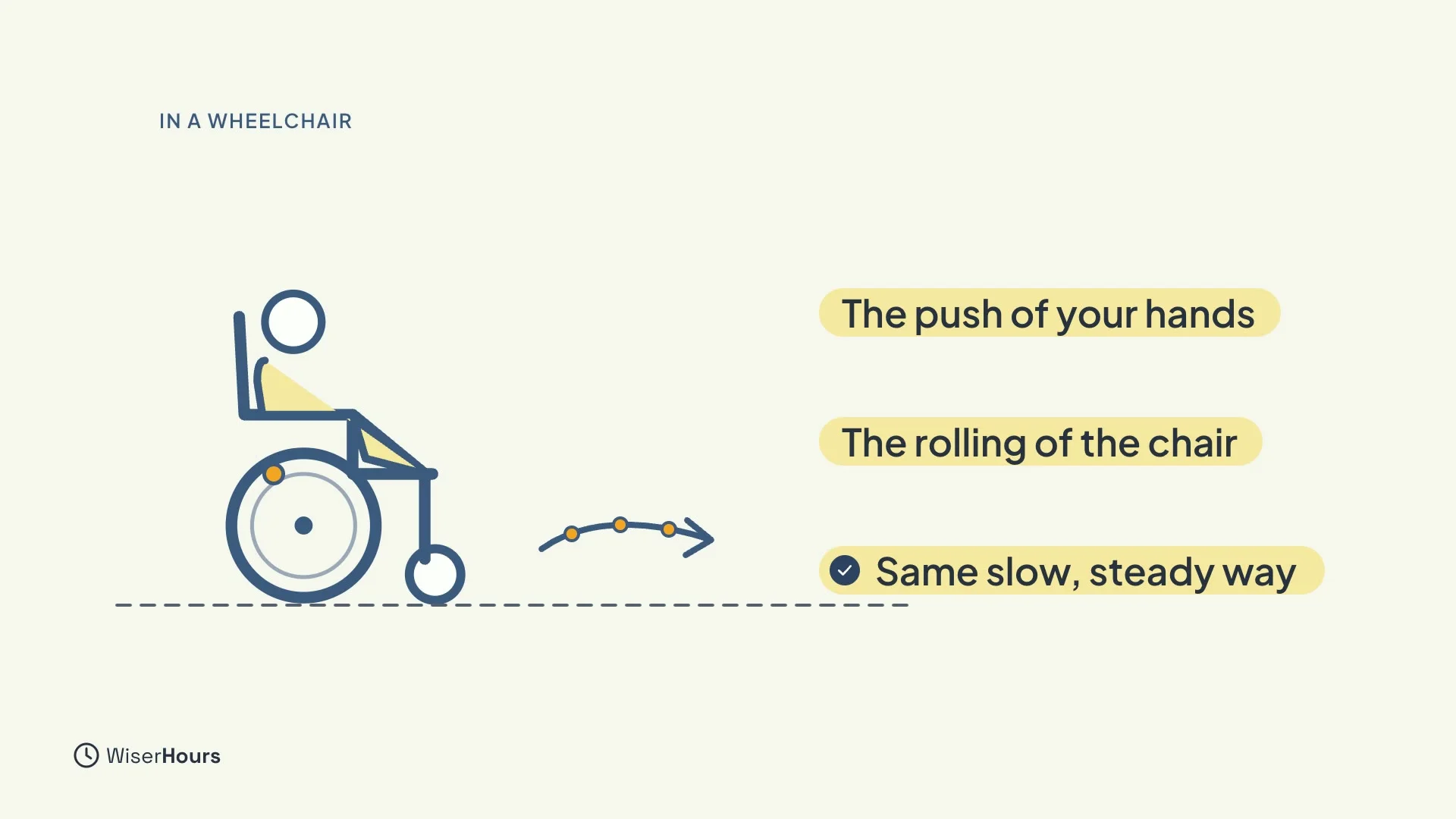
If you use a wheelchair, you can practice too. Notice the push of your hands, and the rolling of the chair, in the same slow, steady way.
 (opens the full-size picture)
Choose what suits you
Walking meditation has few trials of its own, so choose it because it suits you, not because it is proven. If you enjoy it and you can keep it up, that is a good enough reason.
 (opens the full-size picture)
A few steps you can follow
The video has a guided version with silences. Without it, follow these steps at your own slow pace:
- If you can, stand up where you have a few steps of space. If not, you can follow along by noticing your feet on the floor.
- Lift your right foot slowly, and notice it lifting.
- Move it forward. Place it down. Shift your weight onto it.
- Now the left foot. Lift it. Bring it forward. Place it. Shift your weight.
- Keep going at your own slow pace: lift, move, place, shift.
- If your mind has wandered, gently come back to your feet.
- Now pause, and stand still for a breath.
- When you are ready, you can sit back down.
YOUR TURN
Read more
- Types of Meditation Compared: why walking suits anyone who finds sitting still hard, and how thin its own evidence is.
- Walking Meditation, Greater Good in Action (UC Berkeley): the practice these steps follow.
Read the full lesson script
In this lesson, you'll learn walking meditation. It's a good choice if sitting still is hard, and you can do it indoors or outside.
Choose a quiet path about ten to fifteen steps long. Walk slowly, at a natural pace. At the end, pause, breathe, turn around, and walk back.
As you walk, notice each step in four parts: lifting your foot, moving it forward, placing it down, and shifting your weight onto it. When your mind wanders, gently come back to the feel of your steps.
If you use a wheelchair, you can practice too. Notice the push of your hands, and the rolling of the chair, in the same slow, steady way.
Walking meditation has few trials of its own, so choose it because it suits you, not because it's proven. The skill is the same as with the breath: notice, and come back.
Let's try it together. If you can, stand up where you have a few steps of space. If not, you can follow along by noticing your feet on the floor. Lift your right foot slowly, and notice it lifting. Move it forward. Place it down. Shift your weight onto it. Now the left foot. Lift it. Bring it forward. Place it. Shift your weight. Keep going at your own slow pace: lift, move, place, shift. If your mind has wandered, gently come back to your feet. Now pause, and stand still for a breath. When you're ready, you can sit back down.
So remember: a short path, a slow natural pace, and four parts to each step. Before the next lesson, do ten minutes of walking meditation. Next, you'll find out how long and how often to practice.
MAKE IT A SMALL WIN
Finished this lesson?
Mark it complete to save your progress on this device.