Make it last · Lesson 10 of 11
How Long and How Often to Meditate: Start Small
Choose a session length you can keep on a bad day, tie it to a daily routine, and track days instead of minutes.
 Video coming soon
Many beginners ask how long they should meditate, and how often. The honest answer is that short and regular is a fine place to start. This lesson shows what the research says, and how to build a habit you can actually keep.
No ideal length
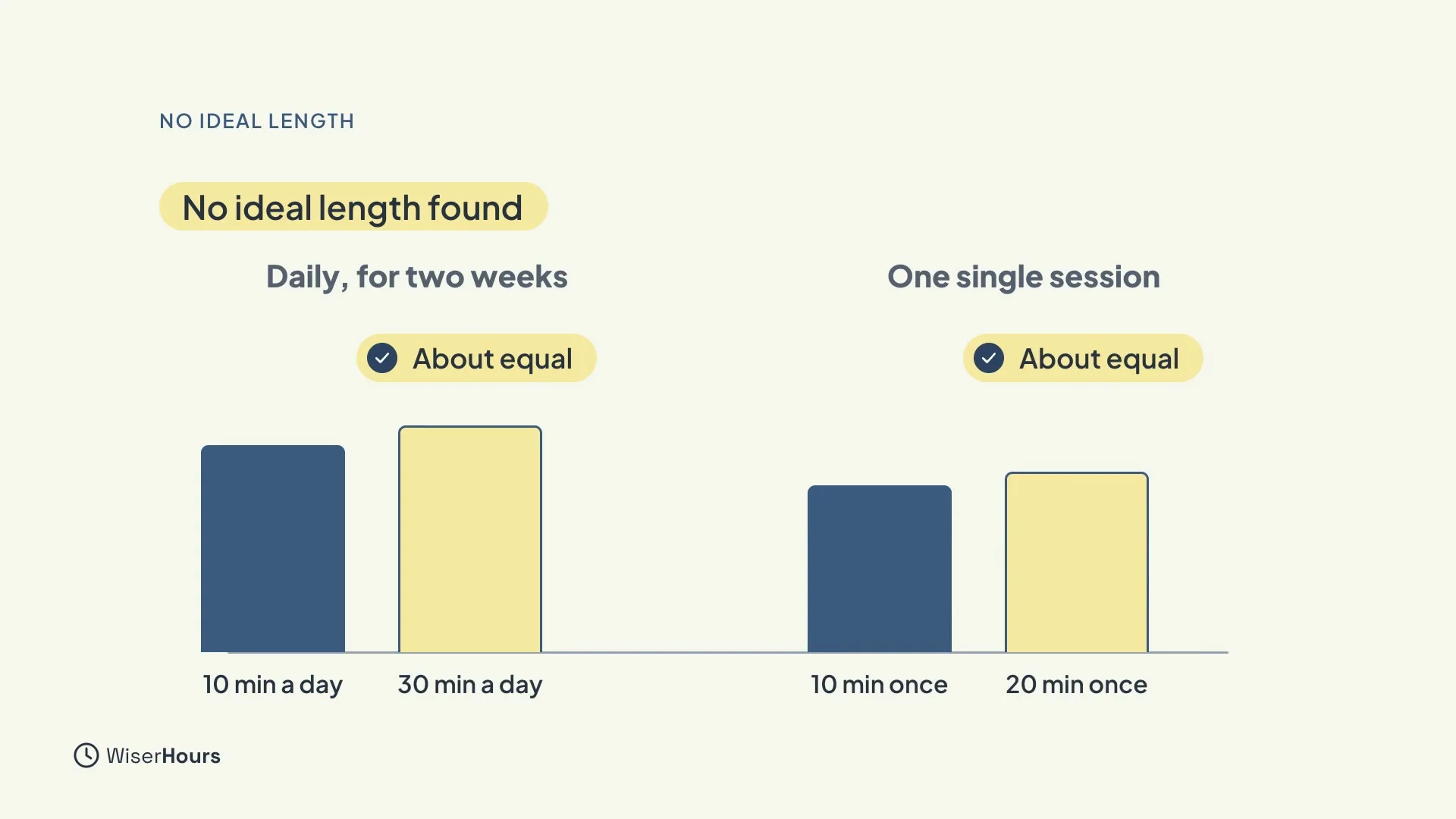
No study has found an ideal length. In one trial, about ten minutes a day helped about as much as thirty. In single sessions, ten minutes did about as well as twenty. So there is no need to aim for long sittings before you begin.
 (opens the full-size picture)
How often matters
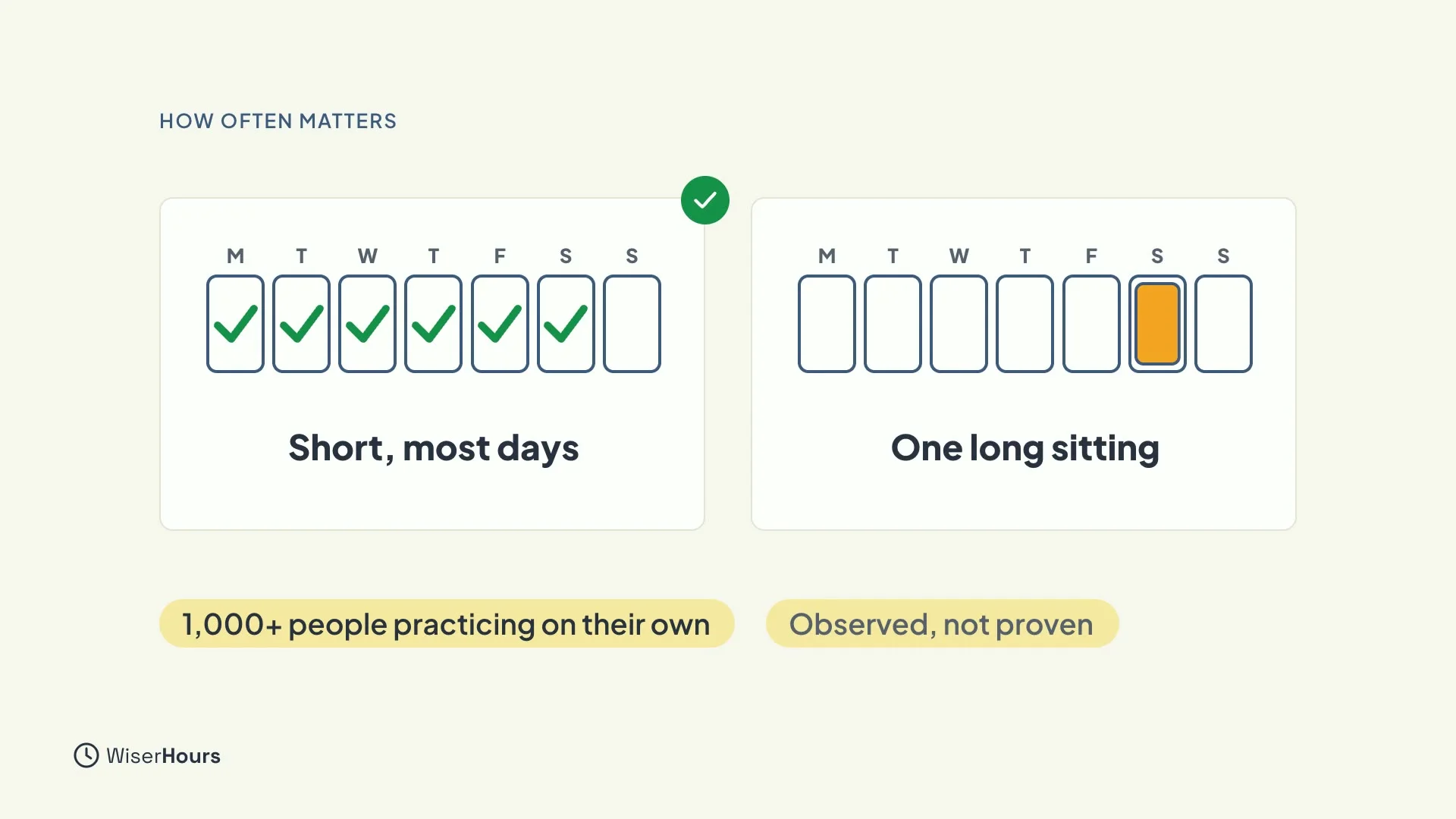
How often you practice may matter more than how long. In a study of more than a thousand people practicing on their own, practicing on more days predicted benefit more strongly than longer sessions. It only observed people, so it can’t prove cause, but it points the same way. This is called an observational studyobservational study: A study in which researchers record what people already do or are exposed to, rather than assigning anyone to anything. It can show that two things go together, not that one causes the other, because the groups being compared may differ in other ways as well.Full entry in the glossary.
 (opens the full-size picture)
A length for a bad day
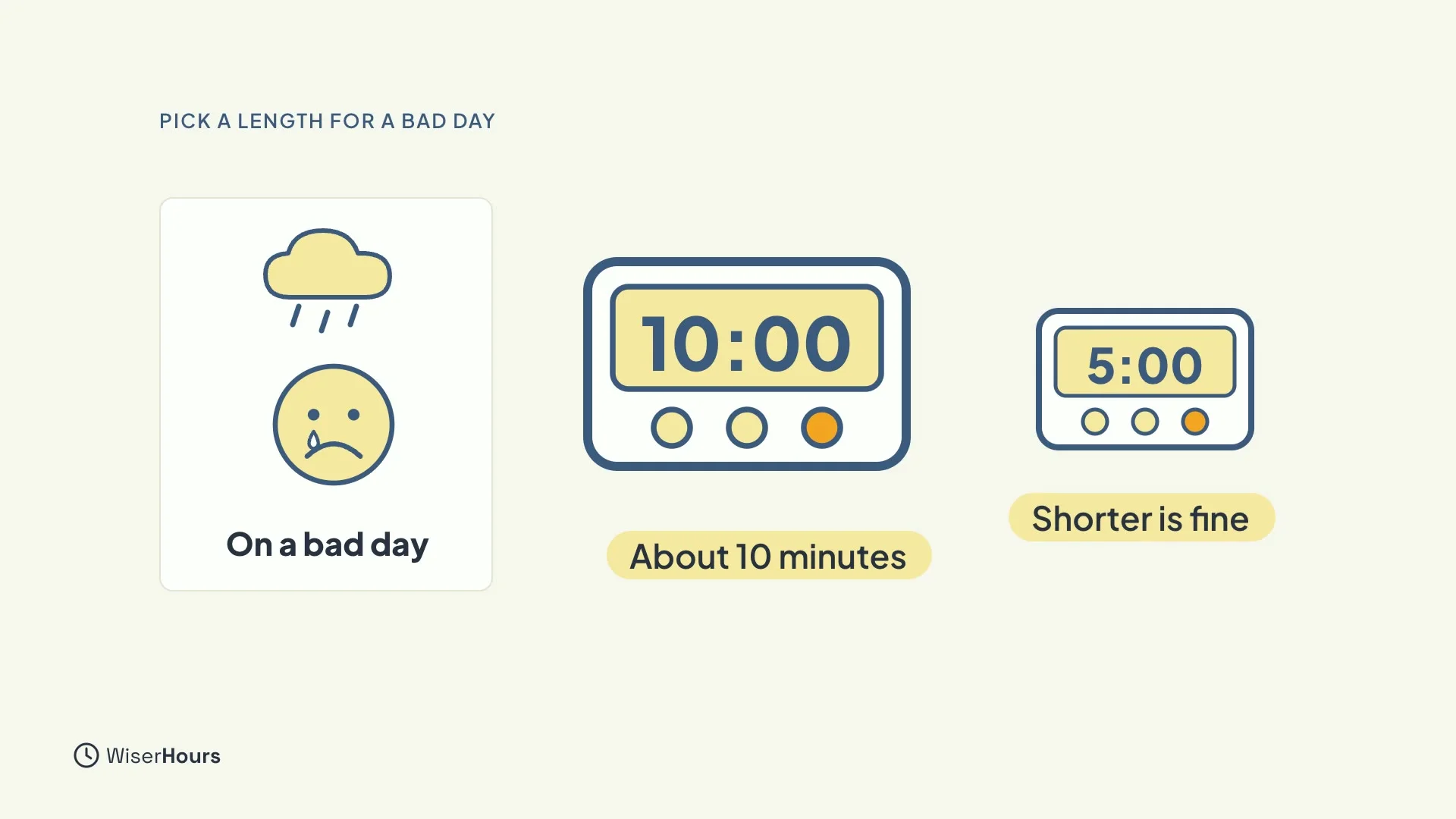
So pick a length you could manage on a bad day. About ten minutes is a sensible start. If that feels long, shorter is fine too.
 (opens the full-size picture)
Hang it on a routine
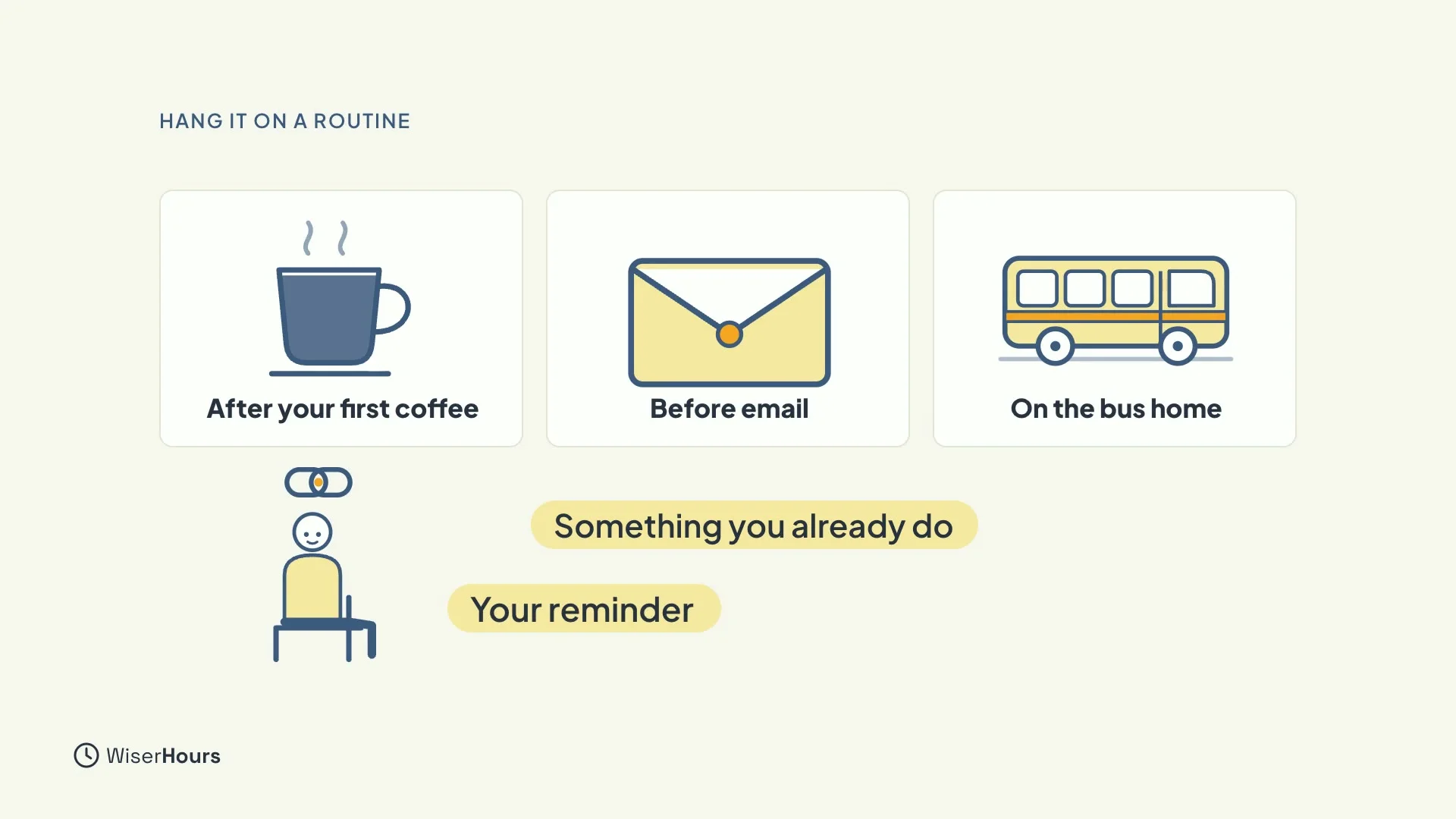
Next, hang it on something you already do every day: after your first coffee, before you open your email, or on the bus home. The routine becomes your reminder.
 (opens the full-size picture)
Count the days
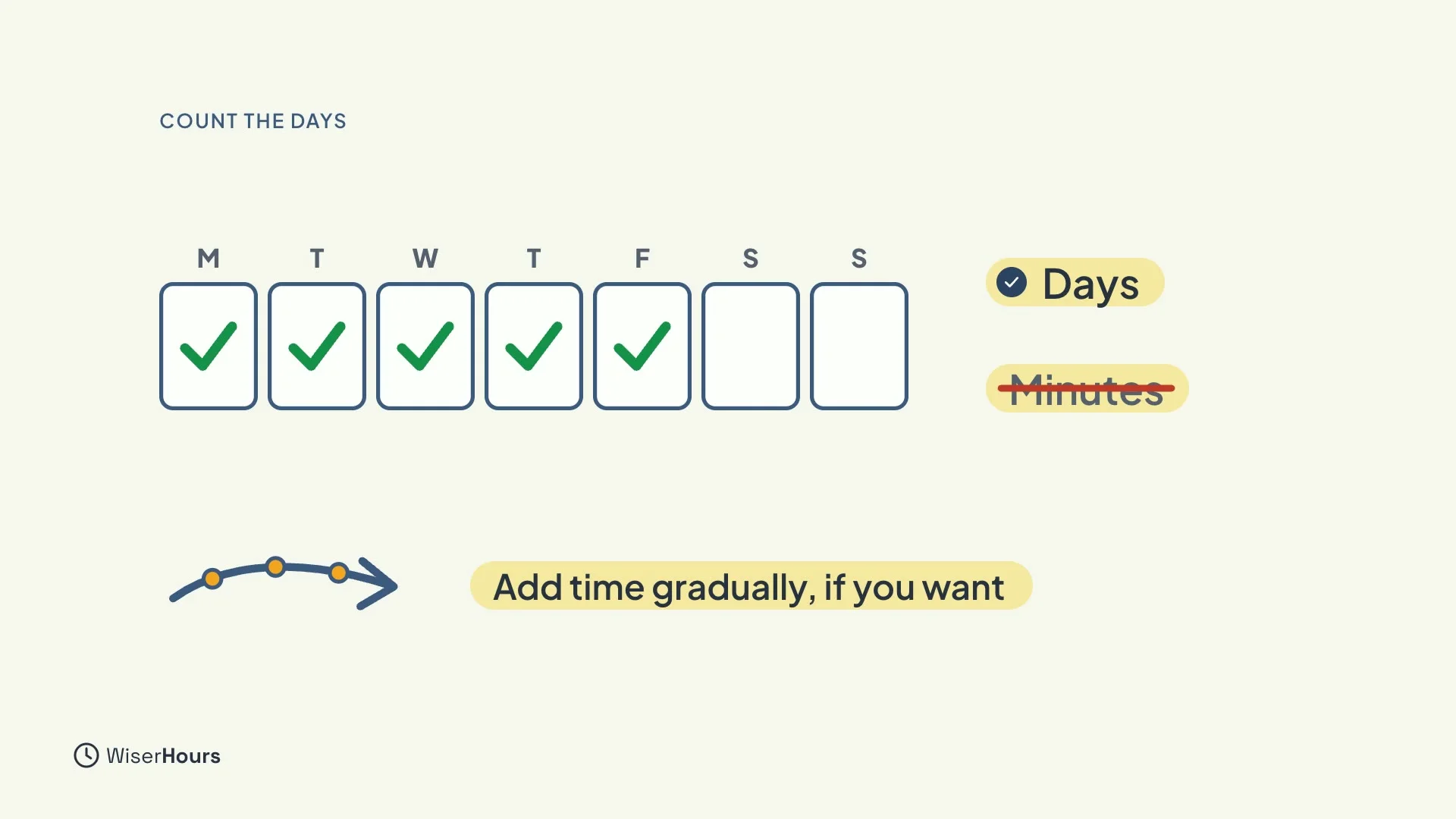
Then count the days, not the minutes. Keep a simple tally of the days you practiced. Add time only if you want to, and gradually, once the short session feels settled.
 (opens the full-size picture)
YOUR TURN
Read more
- How Long Should You Meditate?: the research on session length and frequency in more detail.
- How to Meditate: A Beginner’s Guide: how to fit a regular slot into your day.
Read the full lesson script
In this lesson, you'll find out how long and how often to meditate, and how to fit it into a busy day.
First, no study has found an ideal length. In one trial, about ten minutes a day helped about as much as thirty. In single sessions, ten minutes did about as well as twenty.
How often you practice may matter more than how long. In a study of more than a thousand people practicing on their own, practicing on more days predicted benefit more strongly than longer sessions. It only observed people, so it can't prove cause, but it points the same way.
So pick a length you could manage on a bad day. About ten minutes is a sensible start. If that feels long, shorter is fine too.
Next, hang it on something you already do every day: after your first coffee, before you open your email, or on the bus home. The routine becomes your reminder.
Then count the days, not the minutes. Keep a simple tally of the days you practiced. Add time only if you want to, and gradually, once the short session feels settled.
So remember: short is fine, practicing on more days may matter most, and tie it to a daily routine. Before the next lesson, choose your daily anchor, and tick off this week's practice days. Next, you'll learn about apps, staying safe, and making your plan.
MAKE IT A SMALL WIN
Finished this lesson?
Mark it complete to save your progress on this device.