Get ready · Lesson 2 of 10
Find Your Market Value: Build a Salary Range
Learn where to find real pay figures, compare them fairly and turn them into a low, typical and high range you can explain.
 Video coming soon
Before you ask for money, you need to know what your work is worth. This lesson shows where to find real pay figures, how to compare them fairly, and how to turn them into a simple range you can explain.
Why your own figure matters
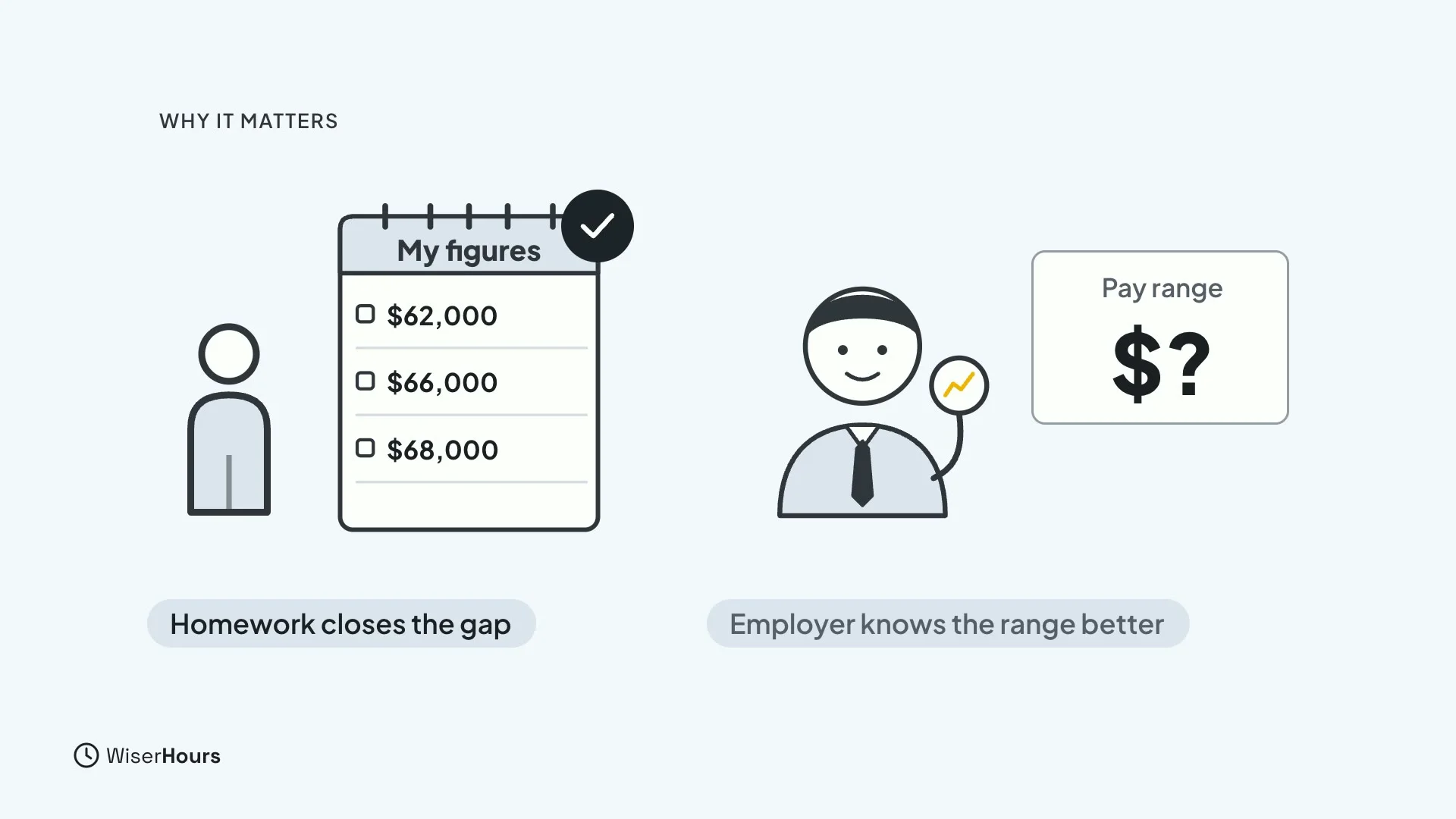
Without your own figure, the first number someone else names becomes the yardstick. And in hiring, the employer usually knows the pay range much better than you do. Doing your homework closes that gap. It also gives you something solid to hold on to when you feel nervous.
 (opens the full-size picture)
Where to look
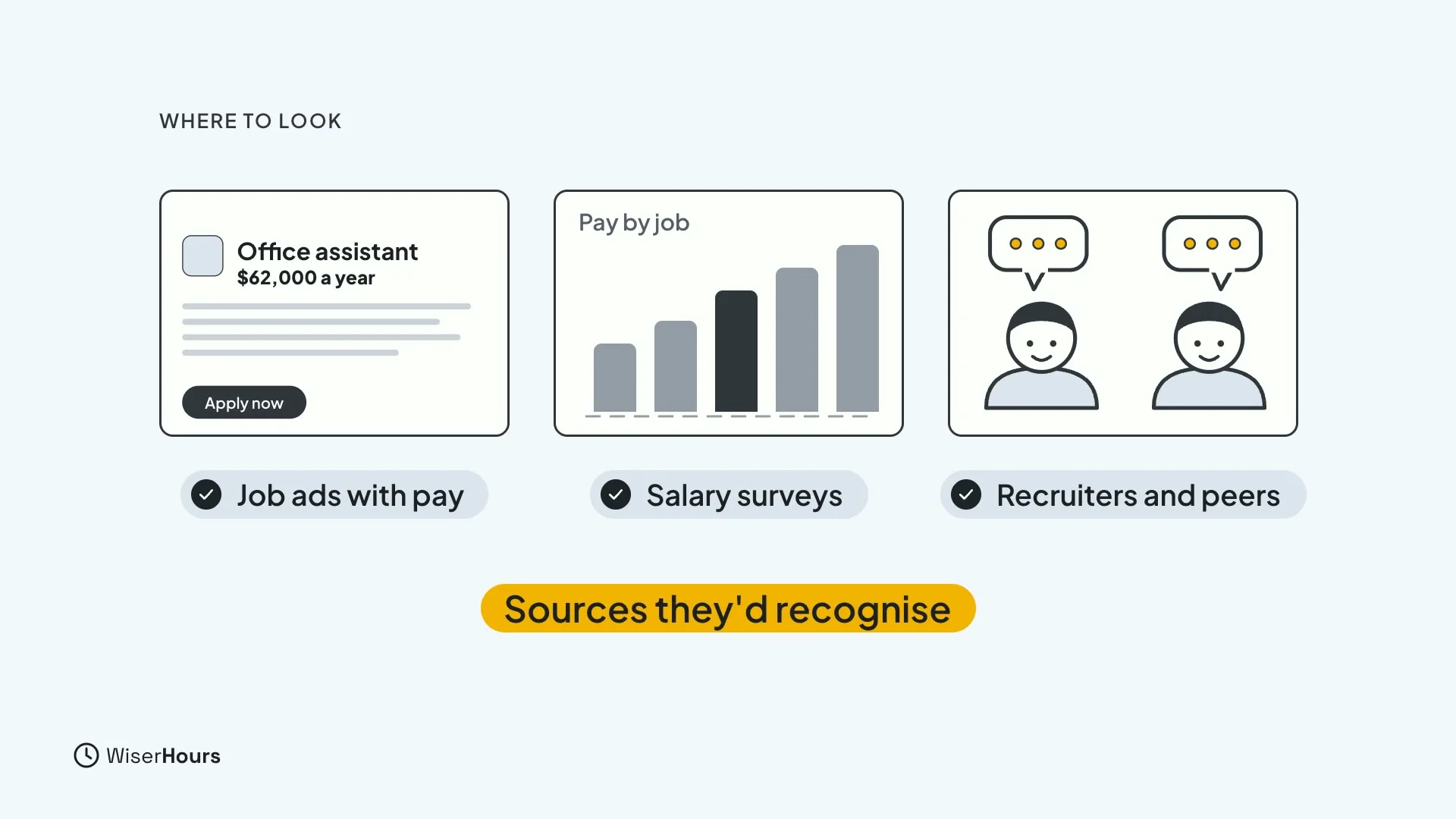
Look in three places. First, job ads that list pay for roles like yours. Second, salary surveys and official pay figures. Third, what recruiters or people in your field tell you. Use sources the other side would recognise, so your number is hard to wave away.
 (opens the full-size picture)
Compare like with like
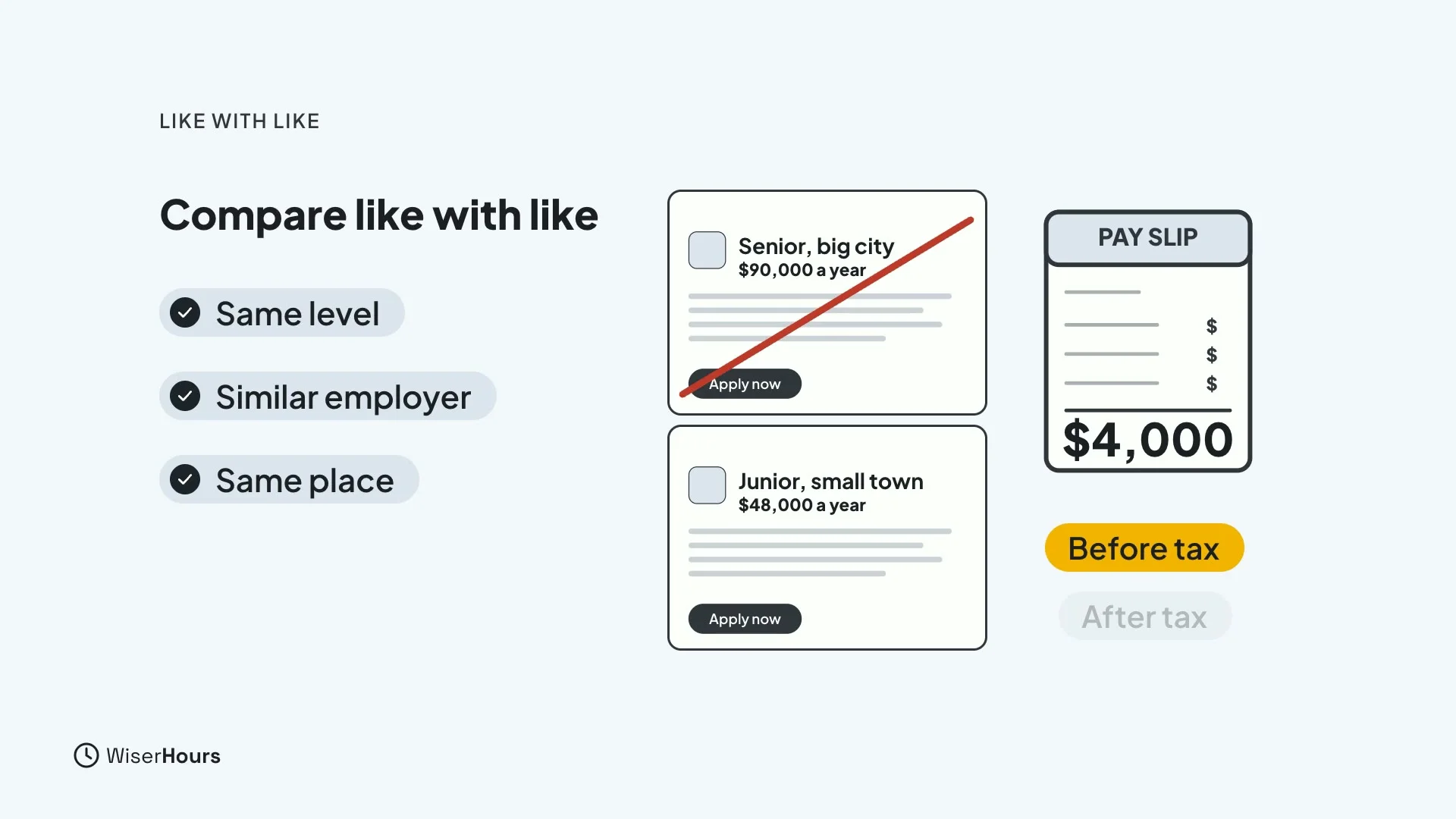
Compare the same level of job, a similar kind of employer and the same country or city. A senior role in a big city tells you little about a junior role somewhere else.
Also check whether each figure is before or after tax. Pay is usually quoted before tax, so compare before-tax figures with each other, never one before-tax figure with one after-tax figure.
 (opens the full-size picture)
Keep a simple list
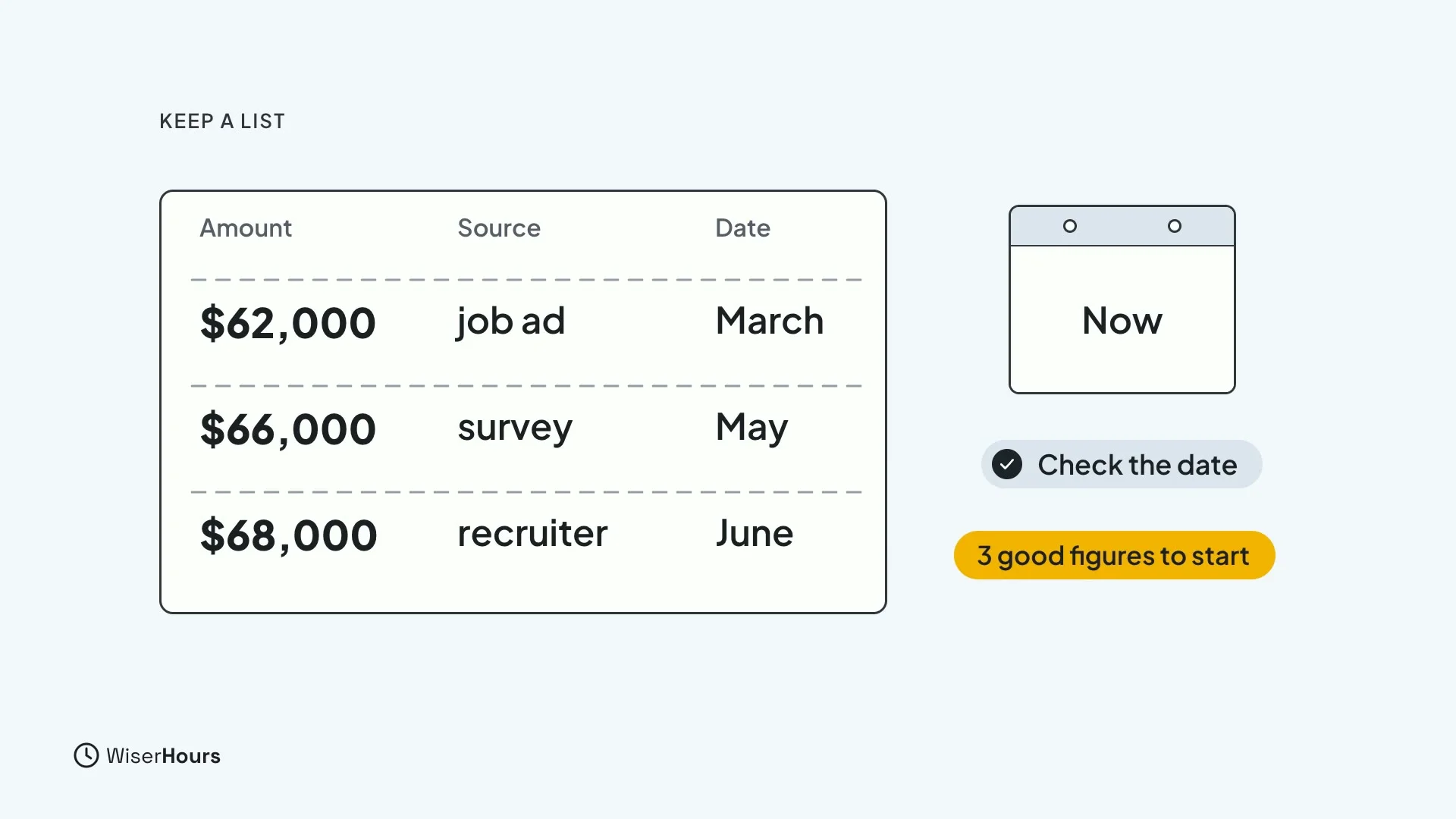
For each figure, write down the amount, where it came from and the date. Old figures can mislead, because pay moves over time. Three good figures are enough to start.
 (opens the full-size picture)
Make a range
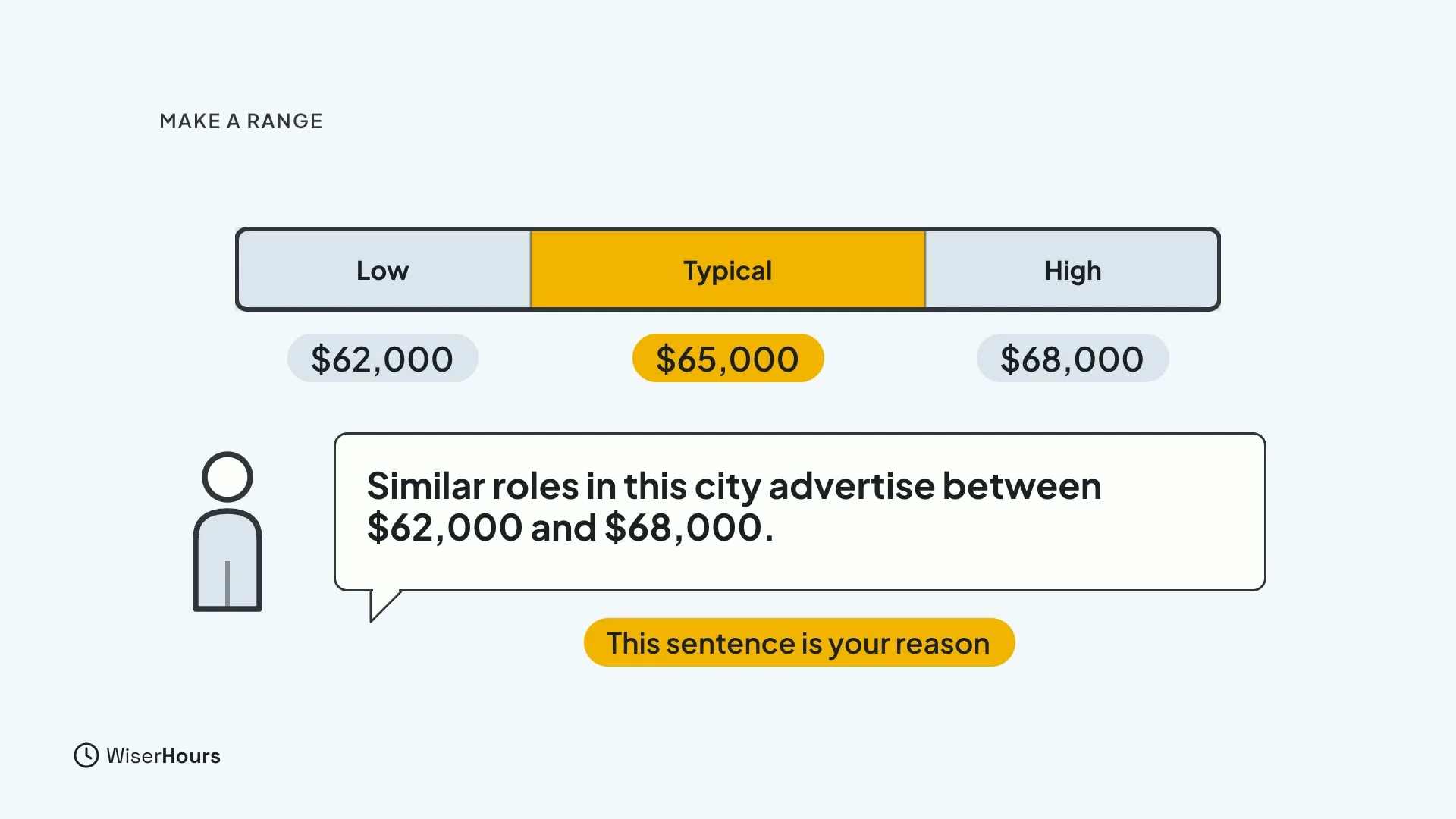
Now turn your list into a range: the lowest, the typical and the highest figure. Then add one sentence on why the range is fair. For example: “Similar roles in this city advertise between $62,000 and $68,000.” That sentence becomes your reason later, when you ask.
 (opens the full-size picture)
Check your take-home pay
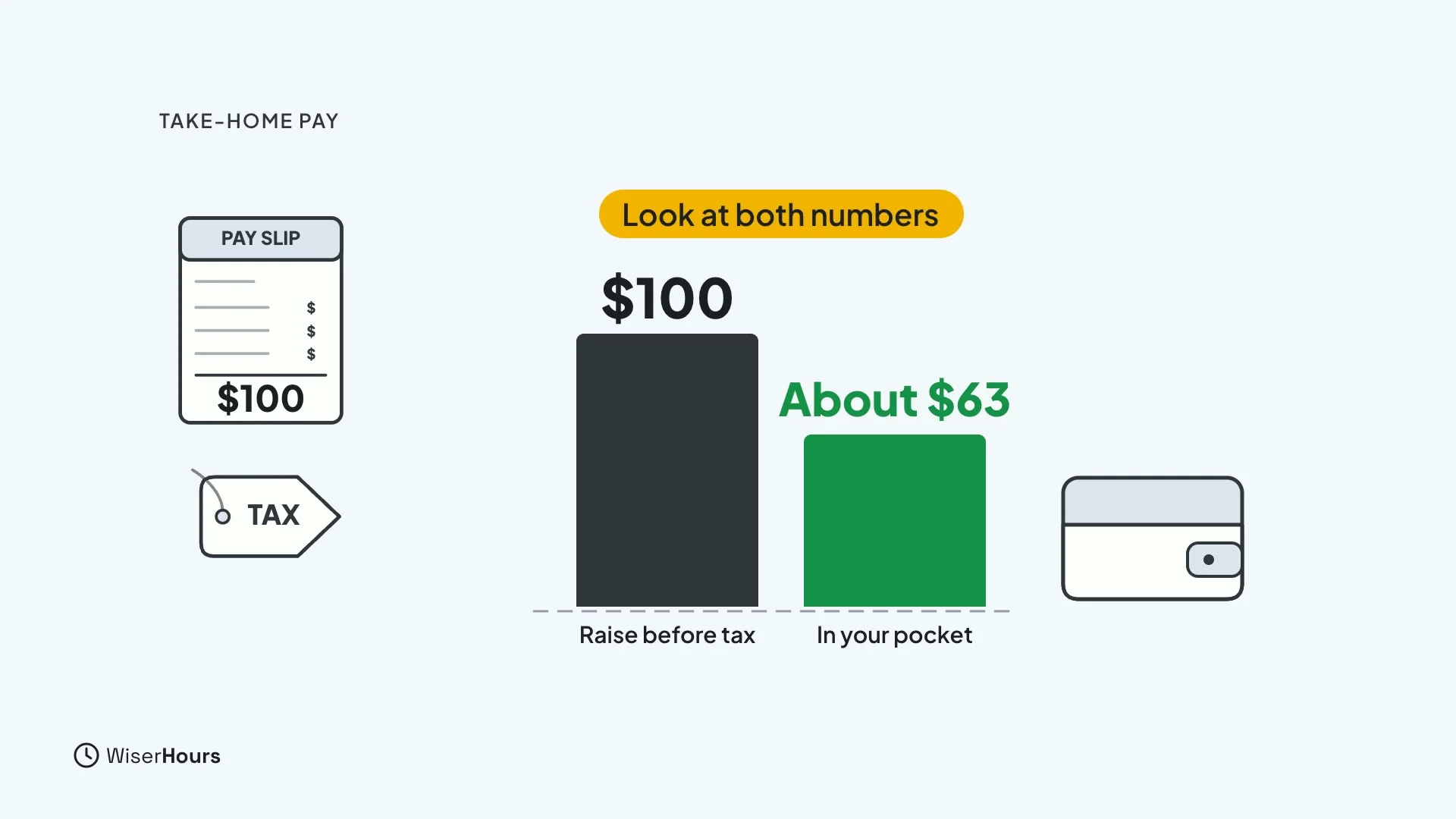
One more check. A raise on paper is not the same as a raise in your pocket. Tax and other deductions take a share, so a raise adds less to your take-home pay than its size. In one worked example, an extra $100 a month before tax added about $63 after tax. Look at both numbers before you decide what is worth it.
 (opens the full-size picture)
YOUR TURN
Read more
- How to Ask for a Raise: A Step-by-Step Guide: how to gather evidence and build your case.
- How to Prepare for a Negotiation in 30 Minutes: a quick preparation routine.
- Gross vs. Net Income: Which Number Your Budget Should Start From: before-tax and after-tax pay explained.
Read the full lesson script
In this lesson, you'll learn how to find out what your work is worth, using real pay figures, and how to turn them into a simple range you can explain.
Without your own figure, the first number someone else names becomes the yardstick. And in hiring, the employer usually knows the pay range much better than you do. Doing your homework closes that gap, and it gives you something solid to hold on to when you feel nervous.
Look in three places. First, job ads that list pay for roles like yours. Second, salary surveys and official pay figures. Third, what recruiters or people in your field tell you. Use sources the other side would recognise, so your number is hard to wave away.
Compare like with like: the same level of job, a similar kind of employer, and the same country or city. A senior role in a big city tells you little about a junior role somewhere else. And check whether each figure is before or after tax. Pay is usually quoted before tax, so compare before-tax figures with each other.
Keep a simple list. For each figure, write the amount, where it came from, and the date. Old figures can mislead, because pay moves over time. Three good figures are enough to start.
Now turn your list into a range: the lowest, the typical, and the highest figure. Then add one sentence on why the range is fair. For example: similar roles in this city advertise between sixty-two and sixty-eight thousand dollars. That sentence becomes your reason later.
One more check. A raise on paper is not the same as a raise in your pocket. Tax and other deductions take a share, so a raise adds less to your take-home pay than its size. In one worked example, a hundred extra a month before tax added about sixty-three after tax. Look at both numbers before you decide what's worth it.
So remember: use real pay figures, with their sources and dates. Compare like with like, and before tax with before tax. And turn your figures into a range with a reason. Before the next lesson, find three real pay figures for your role and write down the range. Next, you'll set your target and your walk-away point.
MAKE IT A SMALL WIN
Finished this lesson?
Mark it complete to save your progress on this device.