A new job · Lesson 6 of 10
Negotiate the Whole Package, Not Just the Salary
See every part of a job offer you can negotiate, and trade what you value less for what you value more.
 Video coming soon
A job offer is more than a salary figure. This lesson shows how to see every part you could negotiate, and how trading between those parts can get you a better deal than arguing over one number.
More than salary
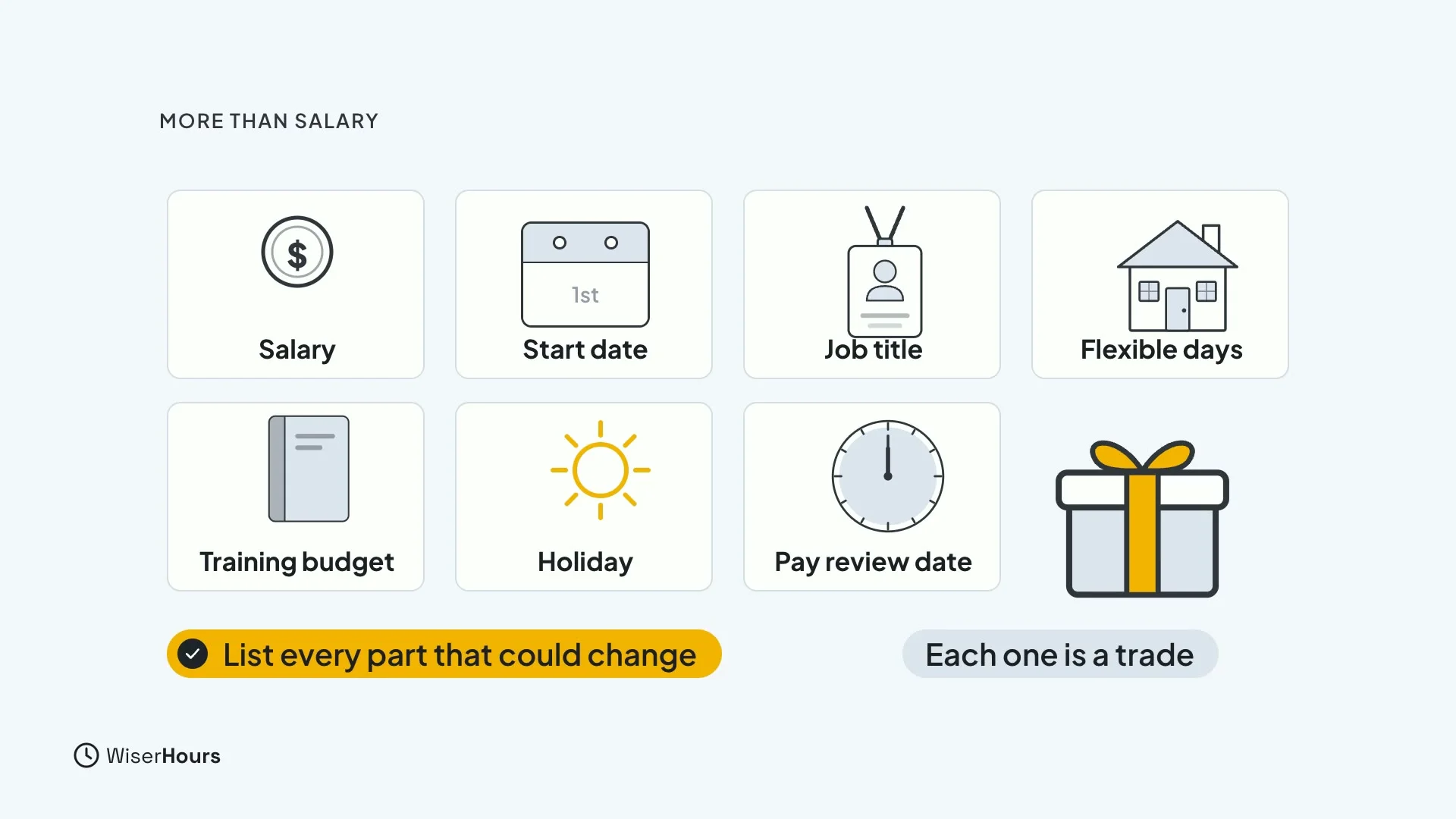
An offer has many parts that can move: the salary, the start date, the job title, flexible or remote days, a training budget, holiday, and when your pay will next be reviewed.
Before arguing about one number, list every part that could change. Each one is something you can trade.
 (opens the full-size picture)
Why you want it
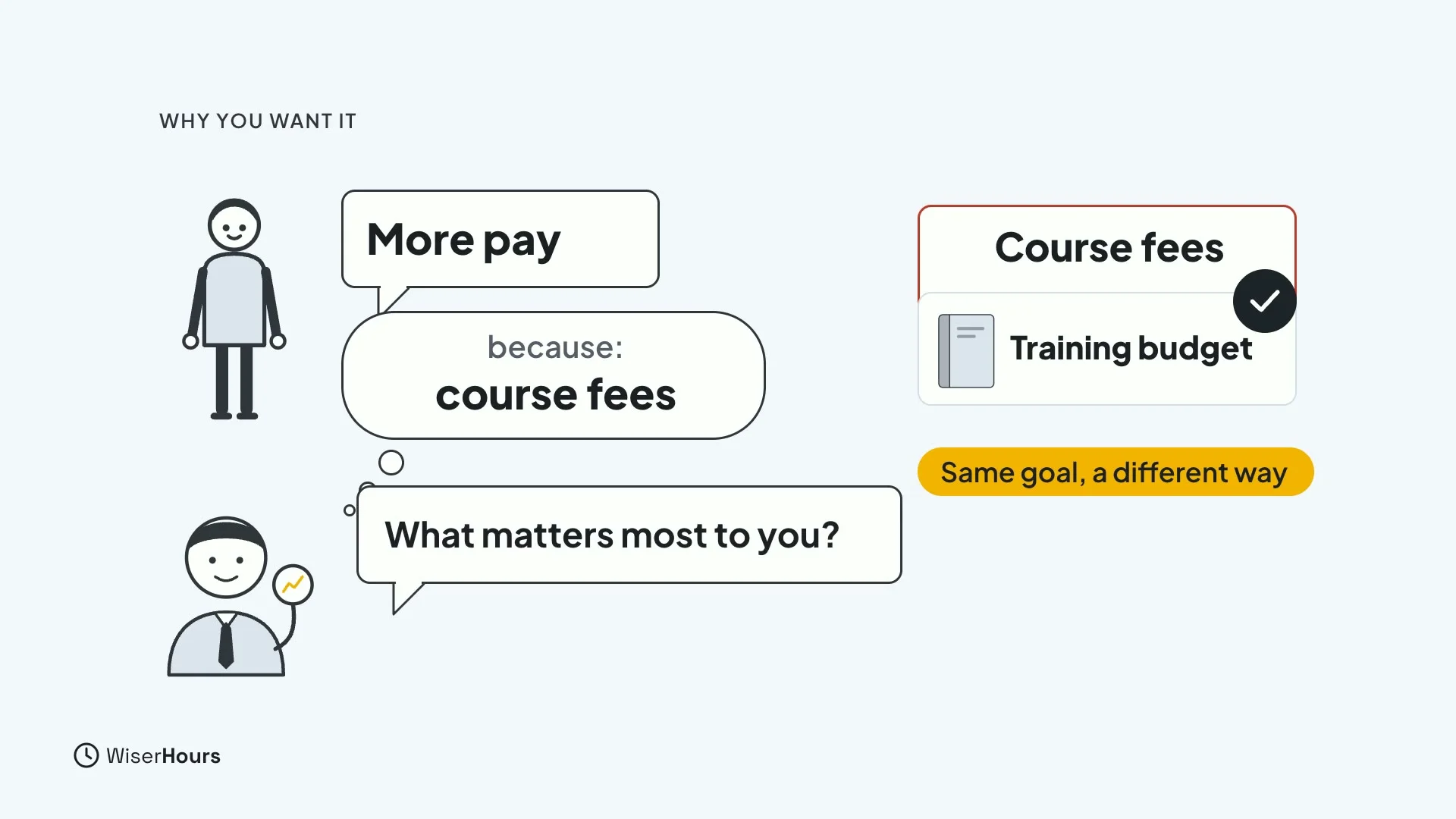
Ask yourself why you want each thing. Maybe you want more pay because you are paying for a course. Then a training budget might solve the same problem, in a different way.
Ask the employer the same question: what matters most to you about this hire? Their answer shows what they might give.
 (opens the full-size picture)
Trade, do not give
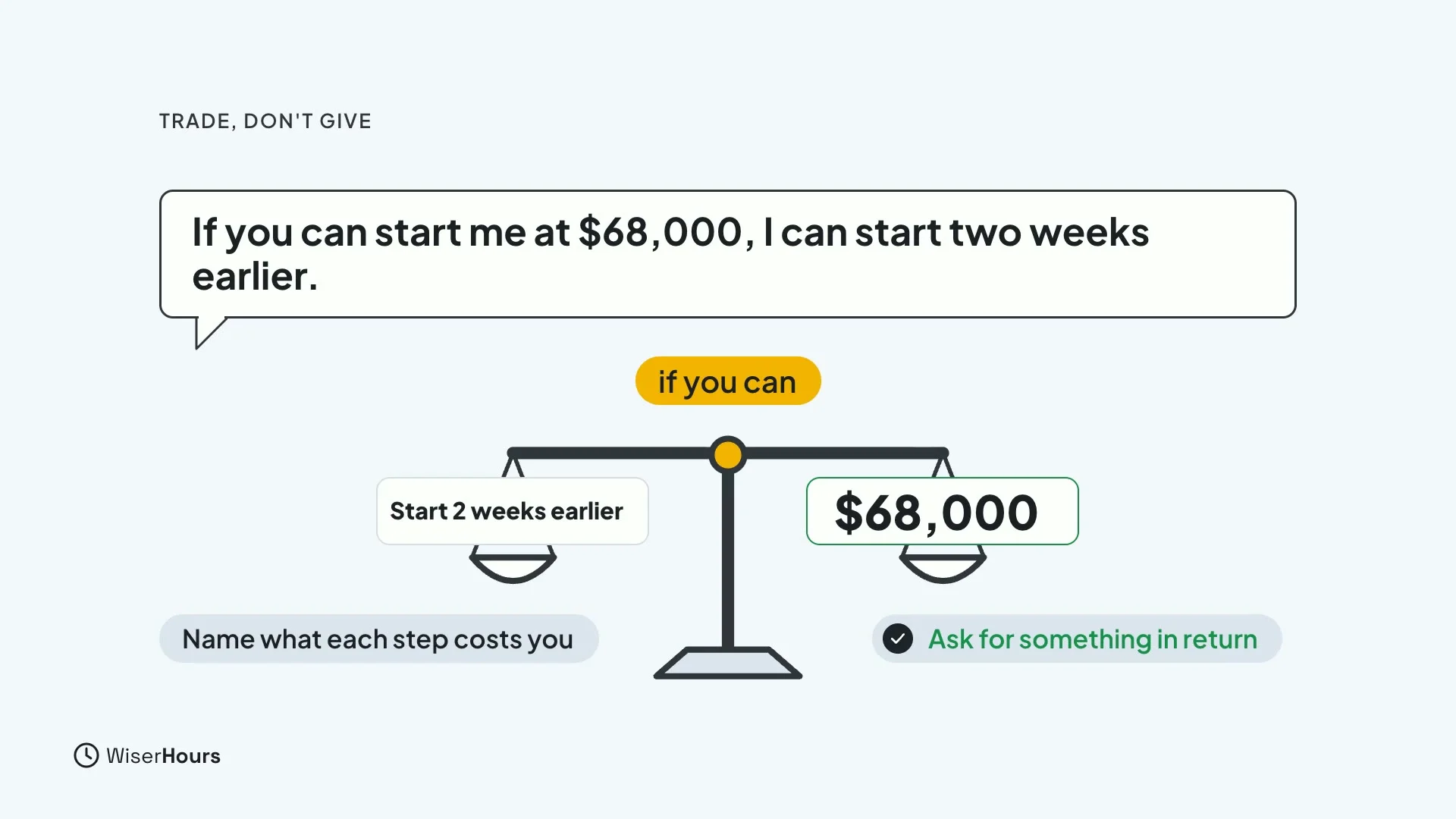
Then trade what you value less for what you value more. Make each step conditional. For example: “If you can start me at $68,000, I can start two weeks earlier.”
Name what each step costs you, and ask for something in return. A concession with nothing back is just a gift.
 (opens the full-size picture)
Do not show your hand
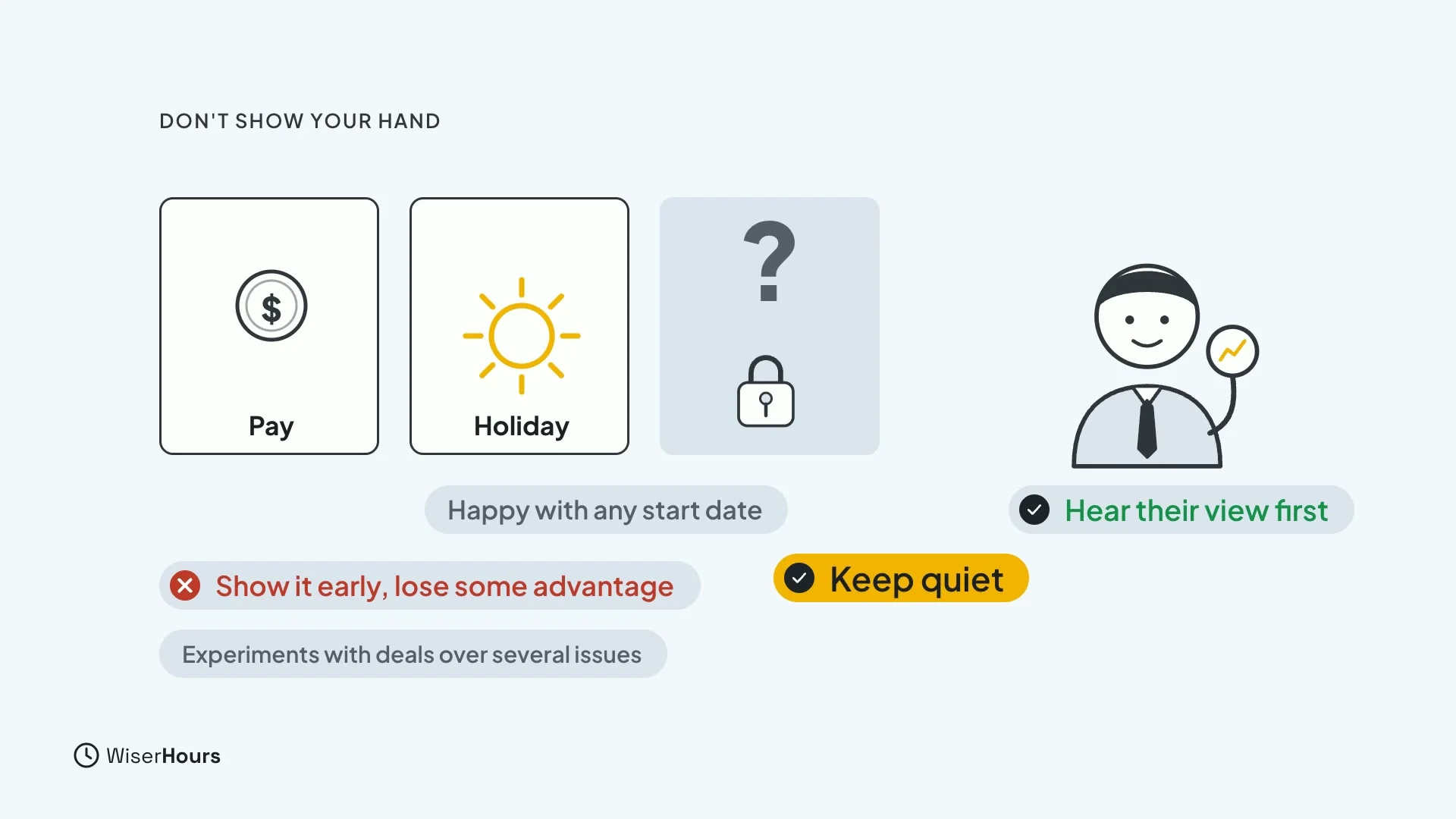
Be careful what you reveal early. In experiments with deals over several issues, people who showed early that they already agreed on a point lost part of their advantage.
So keep quiet about points you would happily accept, such as a start date that suits you either way, until you have heard their view.
 (opens the full-size picture)
Flexible work
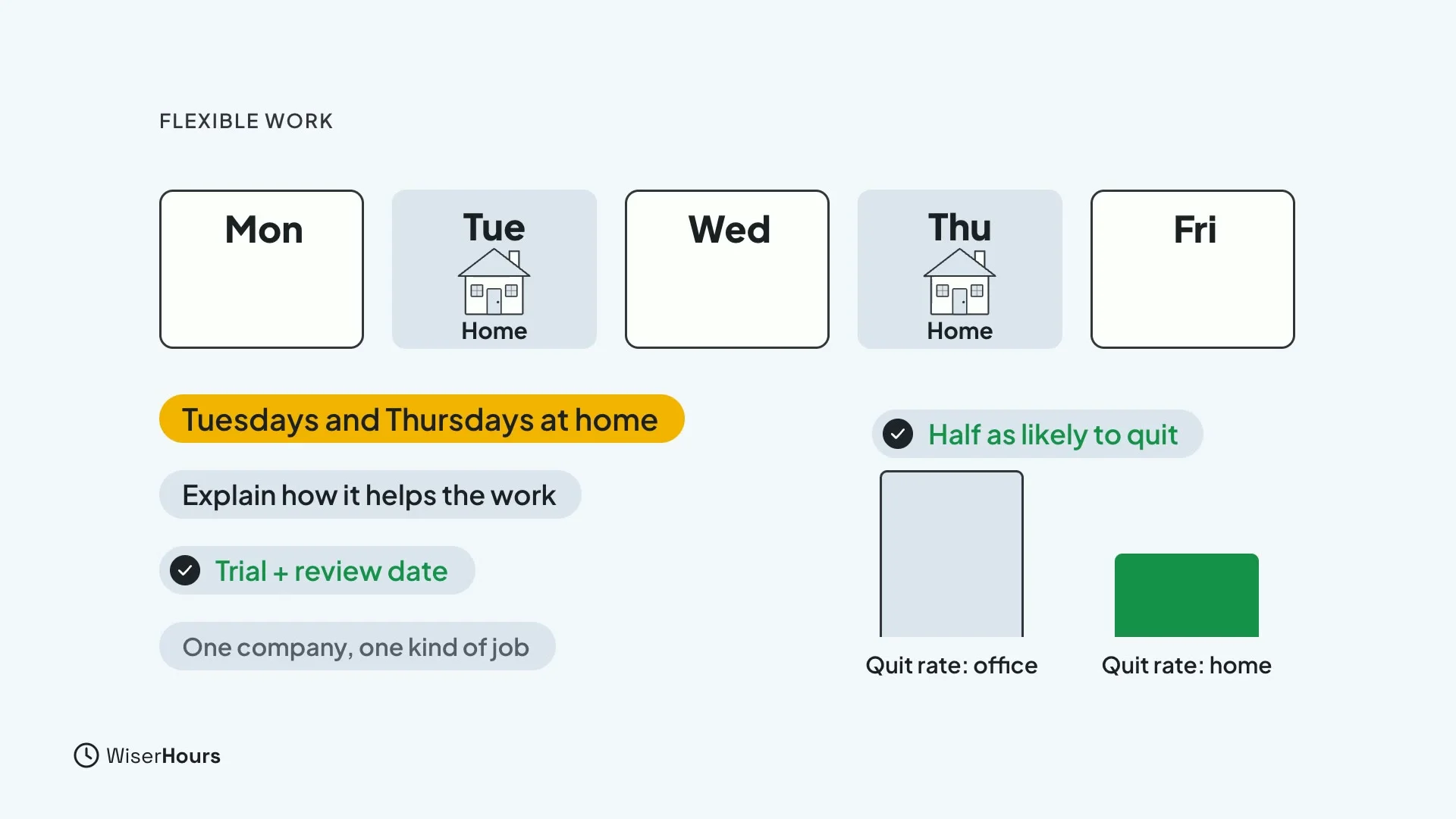
Flexible work can be a valuable part of the package. Be exact, for example: “Tuesdays and Thursdays at home.” Explain how it helps the work, and offer a trial with a review date.
In one well-known trial, staff working from home were more productive and half as likely to quit, though it was one company and one kind of job. Treat it as a hint, not a promise.
 (opens the full-size picture)
Money on a timer
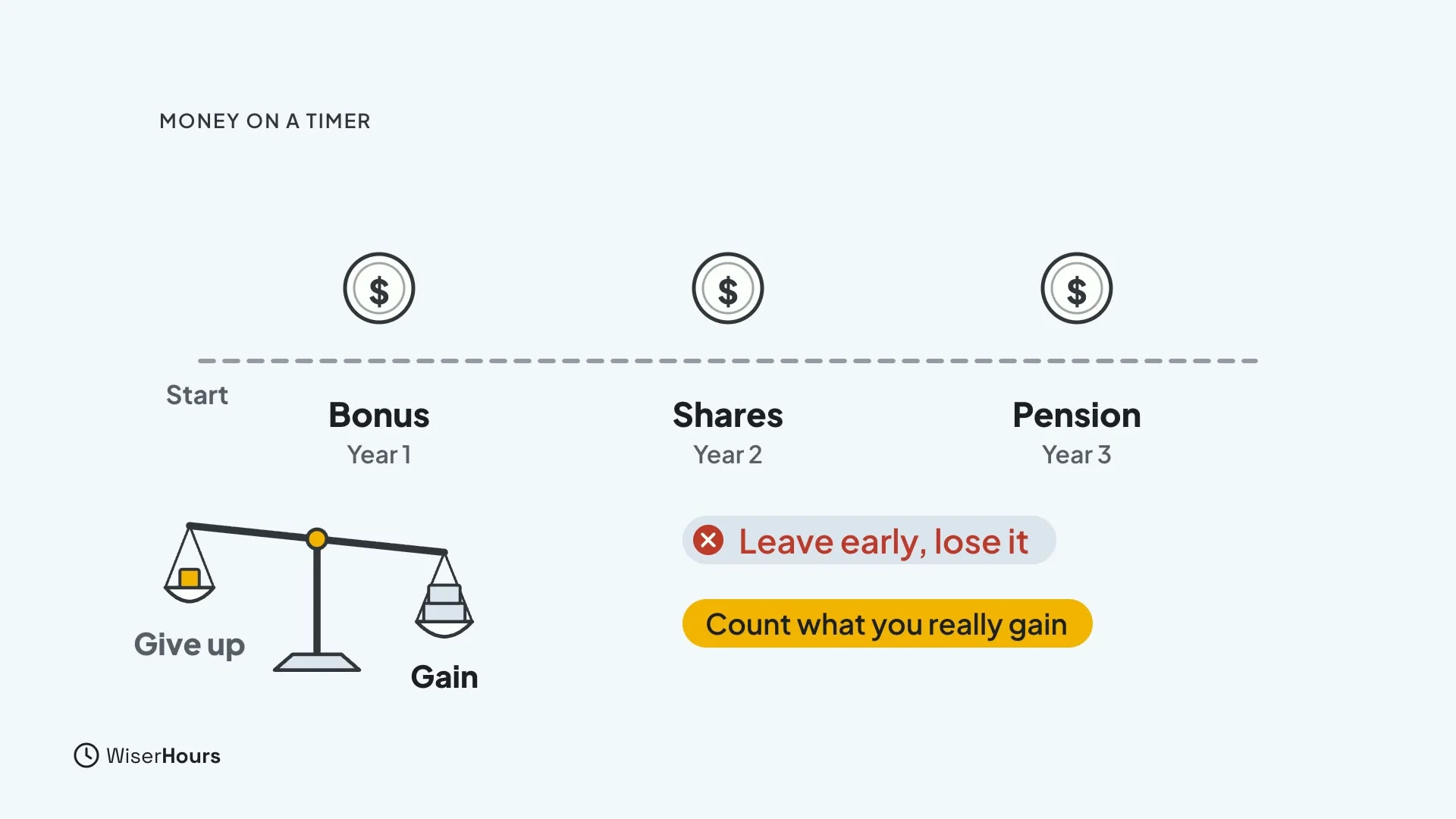
When you compare offers, look past the headline salary. Some money depends on staying for a while, like bonuses, shares, or employer pension money that only becomes yours after a set time. Leaving early can mean losing it.
Count what you would really gain, and what you would give up.
 (opens the full-size picture)
YOUR TURN
Read more
- Interests vs. Positions: The Idea That Changes Most Negotiations: looking behind a demand to the reason for it.
- How to Negotiate: A Research-Backed Guide for Everyday Life: trading and conditional steps in more depth.
- Should You Make the First Offer? What the Research Says: what to reveal and when.
- Negotiating Flexible or Remote Work: Making the Case: asking for exact days and a trial.
- Job Hopping vs. Staying Put: What the Evidence Says About Pay and Growth: weighing pay against staying.
Read the full lesson script
In this lesson, you'll see that salary is only one part of an offer, and how trading between the parts can get you a better deal.
An offer has many parts that can move: the salary, the start date, the job title, flexible or remote days, a training budget, holiday, and when your pay will next be reviewed. Before arguing about one number, list every part that could change. Each one is something you can trade.
Ask yourself why you want each thing. Maybe you want more pay because you're paying for a course. Then a training budget might solve the same problem. Ask the employer the same question: what matters most to you about this hire?
Then trade what you value less for what you value more. Make each step conditional: if you can start me at sixty-eight, I can start two weeks earlier. Name what each step costs you, and ask for something in return.
Be careful what you reveal early. In experiments with deals over several issues, people who showed early that they already agreed on a point lost part of their advantage. So keep quiet about points you'd happily accept, until you've heard their view.
Flexible work can be a valuable part of the package. Be exact, for example: Tuesdays and Thursdays at home. Explain how it helps the work, and offer a trial with a review date. In one well-known trial, staff working from home were more productive and half as likely to quit, though it was one company and one kind of job.
When you compare offers, look past the headline salary. Some money depends on staying for a while, like bonuses, shares, or employer pension money that only becomes yours after a set time. Leaving early can mean losing it. Count what you'd really gain, and what you'd give up.
So remember: list every part of the offer that can move. Trade what matters less to you for what matters more. And count money that depends on staying. Before the next lesson, list everything in an offer that could move, and mark your top two. Next, you'll practise simple scripts for the conversation.
MAKE IT A SMALL WIN
Finished this lesson?
Mark it complete to save your progress on this device.