The conversation · Lesson 9 of 10
Handling a No When You Ask for More Pay
Learn how to respond when the answer is no: find out which kind of no it is, what would change it, and agree a date.
 Video coming soon
Sooner or later you may hear no. This lesson shows you what to do next, so that a no becomes a plan instead of a dead end.
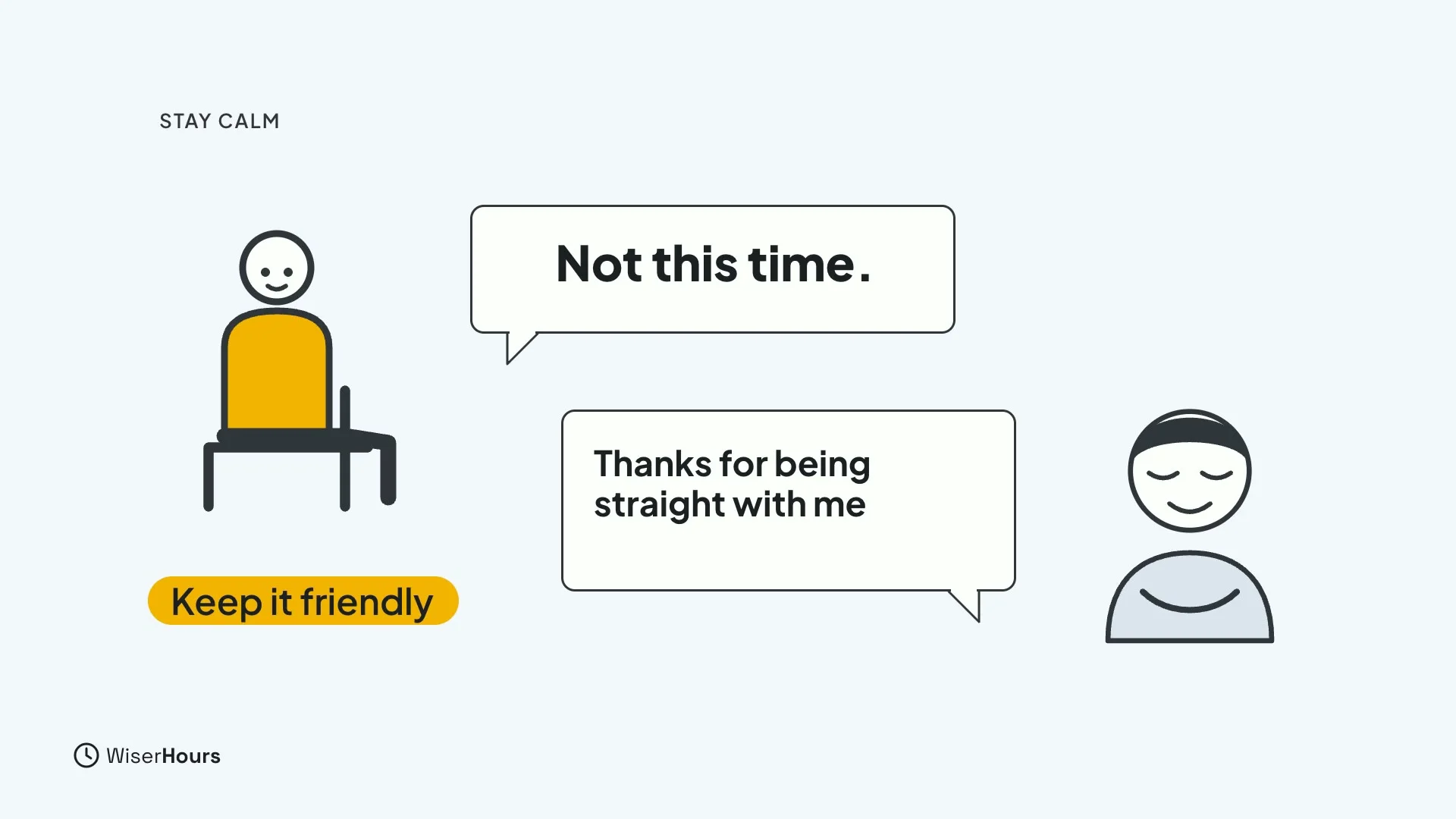
Stay calm and keep it friendly
First, don’t argue or react on the spot. A no is common, and it’s rarely the end of the story. Thank your manager for being straight with you, and keep the tone friendly. You’ll need this relationship for the next conversation.
 (opens the full-size picture)
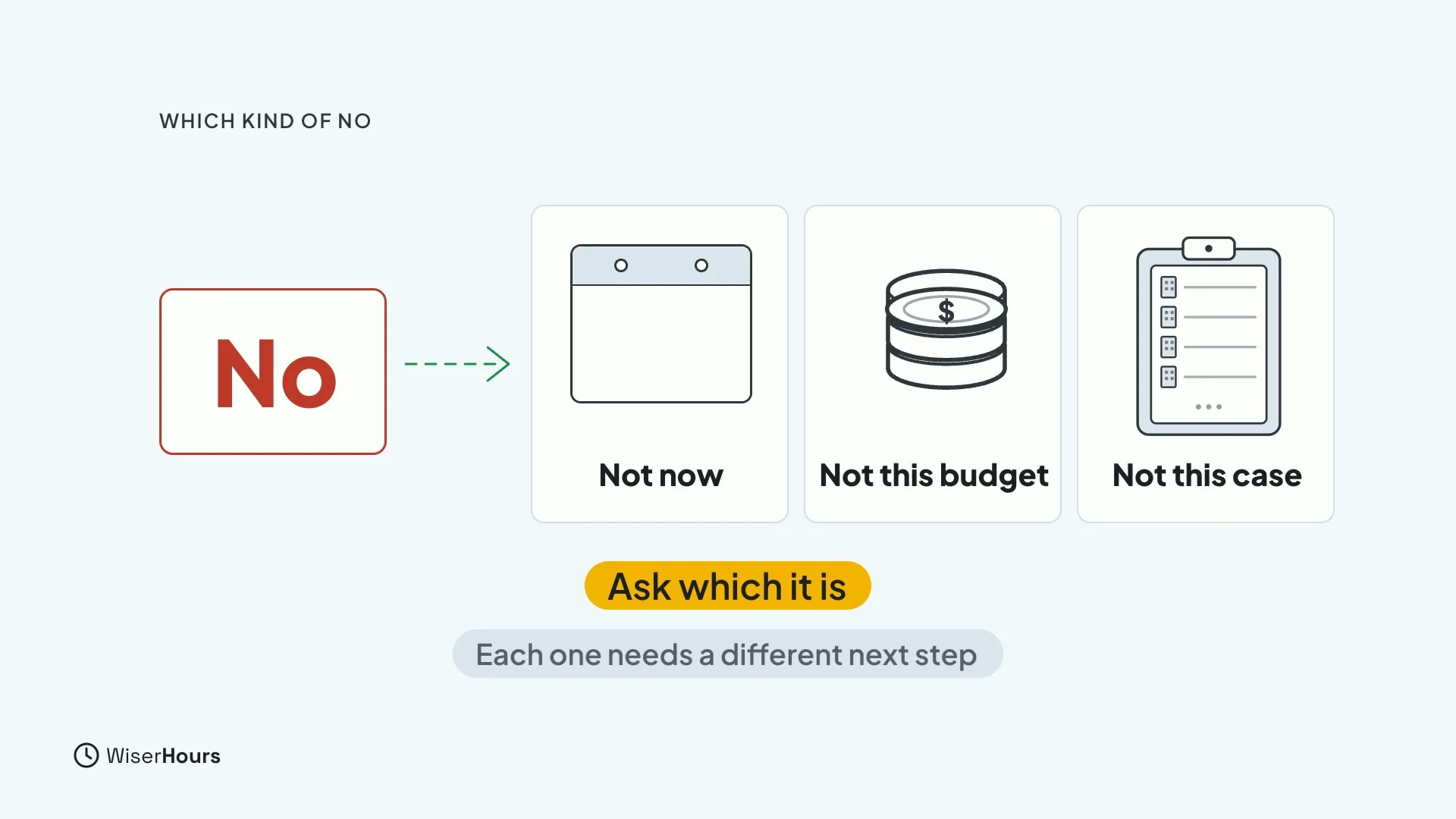
Ask which kind of no it is
A no usually means one of three things: not now, not this budget, or not this case. Ask which it is: “Is it the timing, the budget, or something about my work?” Each one needs a different next step.
 (opens the full-size picture)
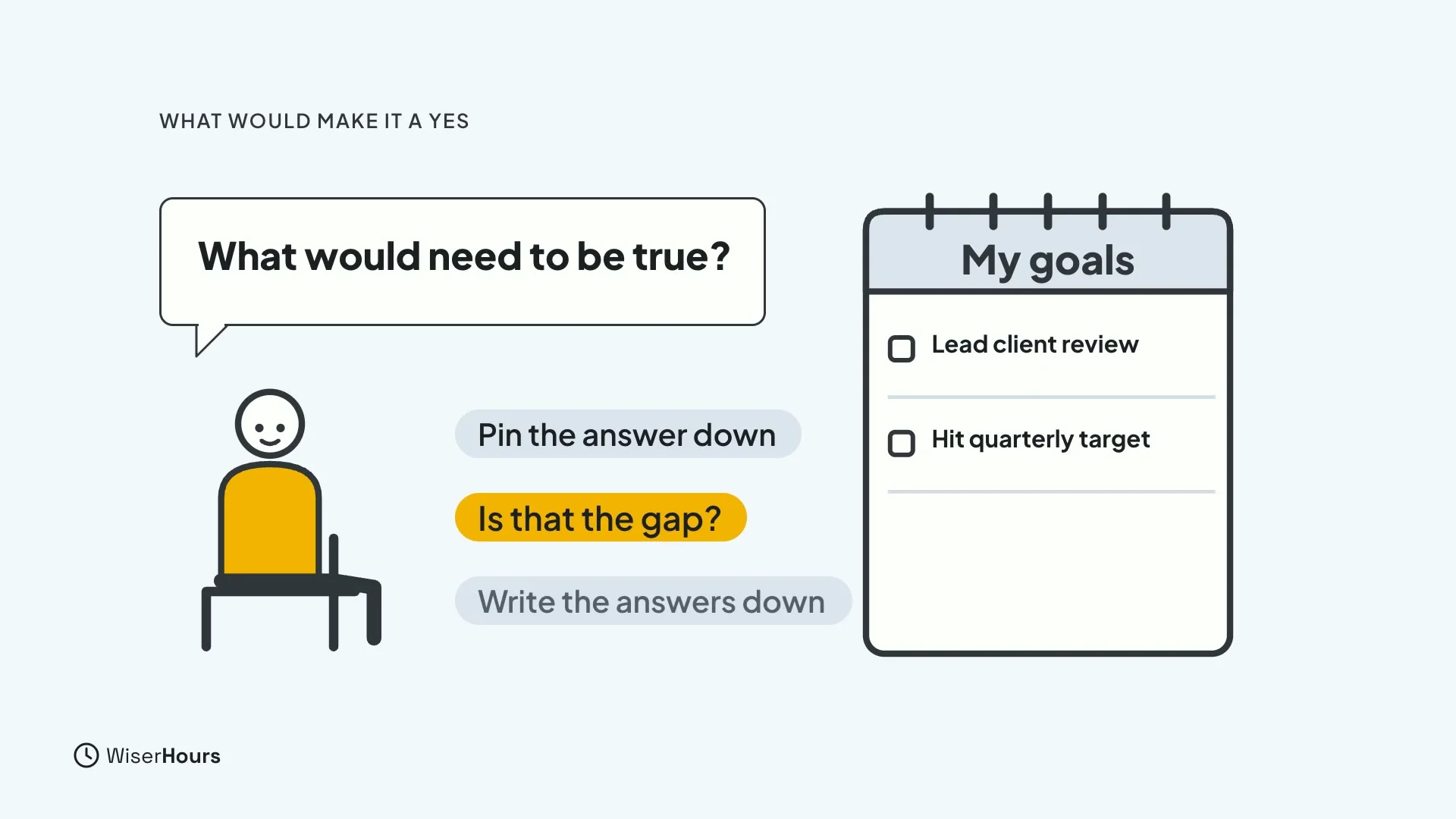
Ask what would make it a yes
Then ask: “What would need to be true for this to be a yes?” Pin the answer down. For example: “So, leading the client review on my own, and hitting the quarterly target. Is that the gap?” Write the answers down.
 (opens the full-size picture)
Ask for something else
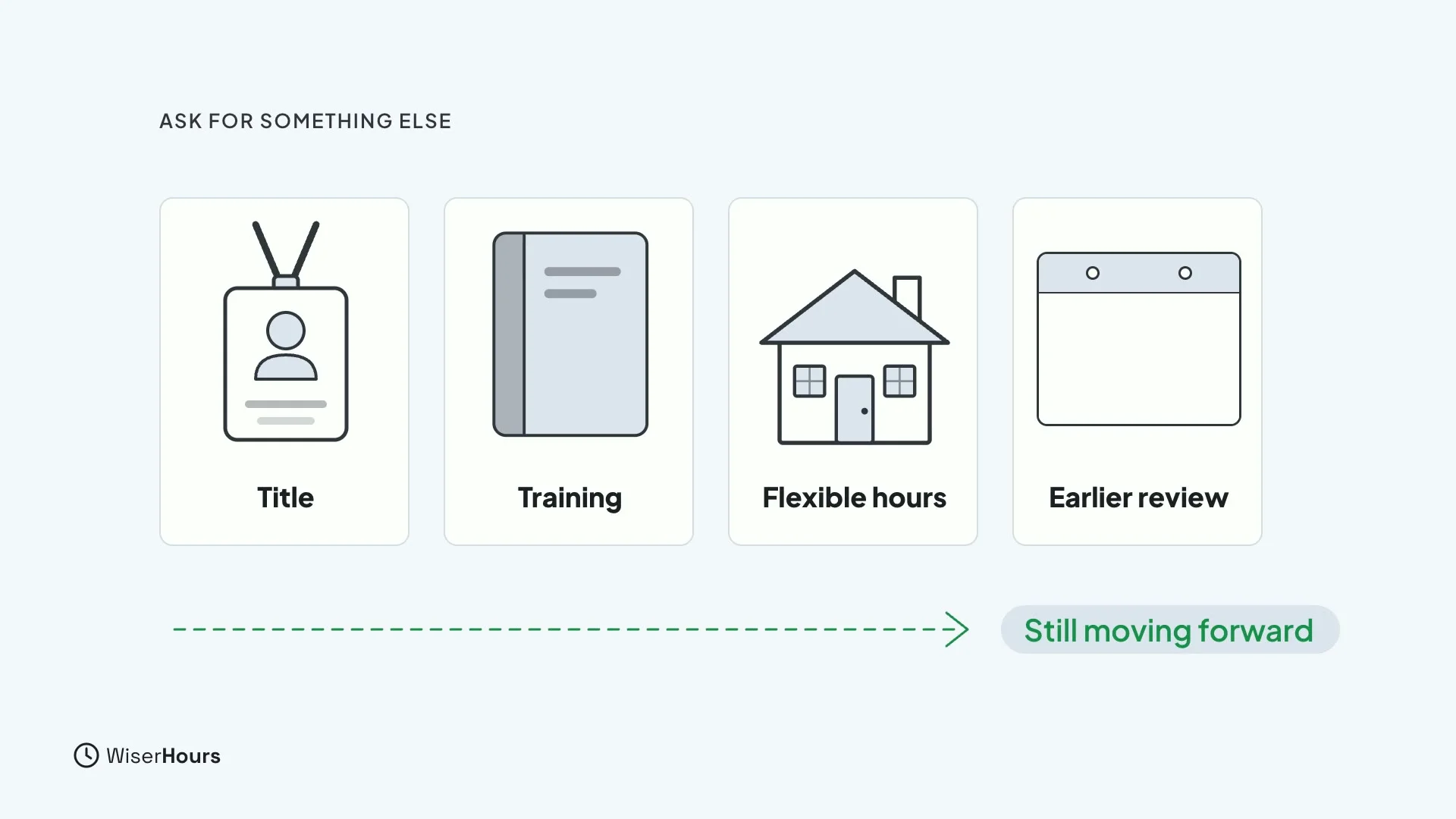
If the money really isn’t there right now, ask for something else that matters: a better title, training, more flexible hours, or an earlier review date. These can cost the employer less, and still move you forward.
 (opens the full-size picture)
Set a date
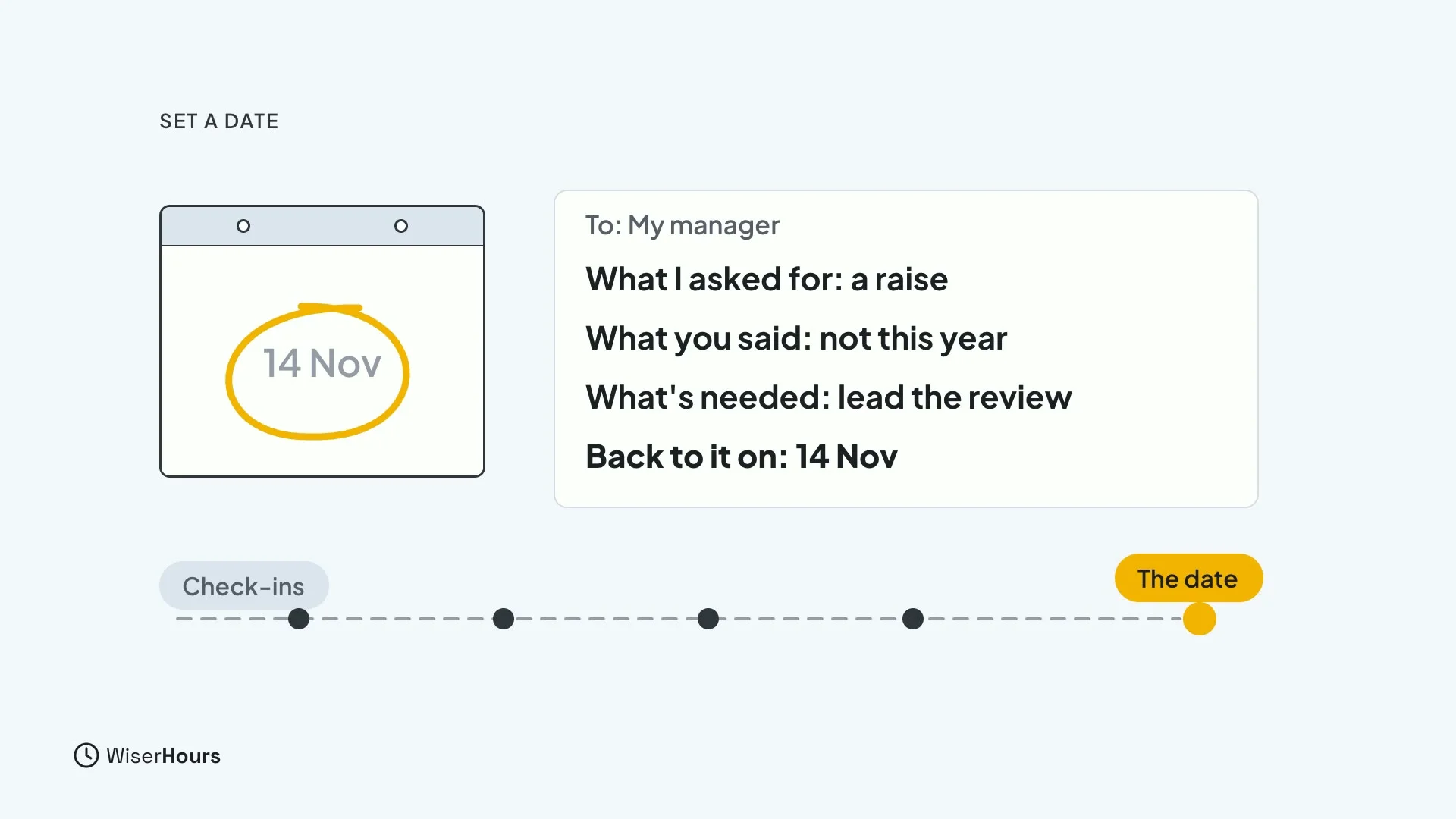
Agree when you’ll talk again, and put it in the calendar. Within a day, send a short note: what you asked for, what was said, what’s needed, and the date to come back to it. Then check in along the way, so there are no surprises.
 (opens the full-size picture)
When to look elsewhere
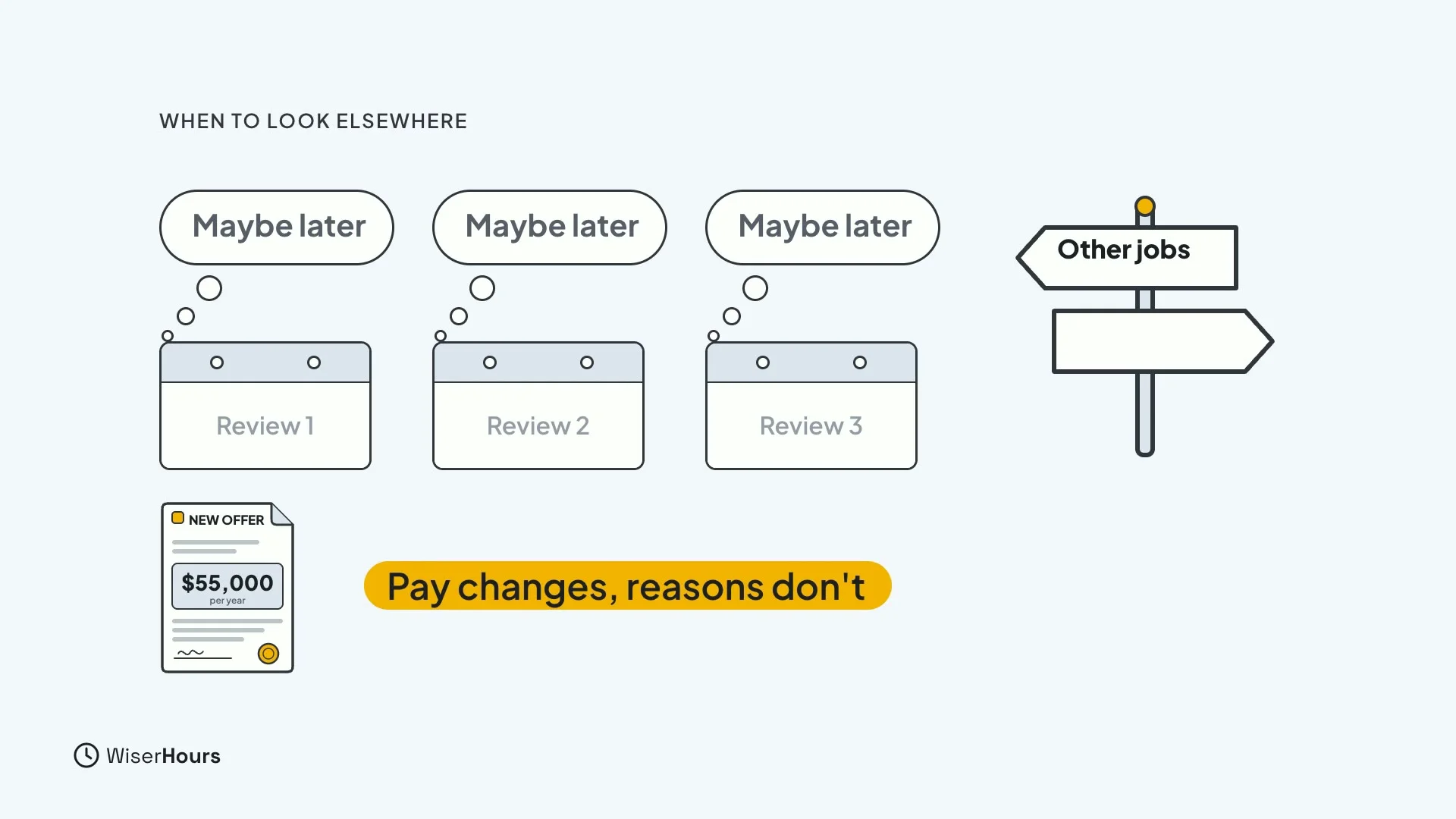
If the answers stay vague over several review cycles, that tells you something. Looking for another job is one option.
And if your employer makes a counteroffer when you resign, remember: it changes the pay, but not the other reasons you started looking.
 (opens the full-size picture)
YOUR TURN
Read more
- How to Ask for a Raise: A Step-by-Step Guide: what to ask when the answer is no.
- How to Ask for a Promotion (With Scripts): handling a no to a bigger role.
- Job Hopping vs. Staying Put: What the Evidence Says About Pay and Growth: weighing a move, and what a counteroffer changes.
Read the full lesson script
In this lesson, you'll learn what to do when the answer is no, so that a no becomes a plan instead of a dead end.
First, don't argue or react on the spot. A no is common, and it's rarely the end of the story. Thank your manager for being straight with you, and keep the tone friendly. You'll need this relationship for the next conversation.
A no usually means one of three things: not now, not this budget, or not this case. Ask which it is. Is it the timing, the budget, or something about my work? Each one needs a different next step.
Then ask: what would need to be true for this to be a yes? Pin the answer down. So, leading the client review on my own, and hitting the quarterly target. Is that the gap? Write the answers down.
If the money really isn't there right now, ask for something else that matters: a better title, training, more flexible hours, or an earlier review date. These can cost the employer less, and still move you forward.
Agree when you'll talk again, and put it in the calendar. Within a day, send a short note: what you asked for, what was said, what's needed, and the date to come back to it. Then check in along the way, so there are no surprises.
If the answers stay vague over several review cycles, that tells you something. Looking for another job is one option. And if your employer makes a counteroffer when you resign, remember: it changes the pay, but not the other reasons you started looking.
So remember: ask which kind of no it is. Ask what would need to be true for a yes. And agree a date, and write it down. Before the next lesson, write the three questions you'll ask if the answer is no. Next, you'll learn how to get it in writing, and make your plan.
MAKE IT A SMALL WIN
Finished this lesson?
Mark it complete to save your progress on this device.