Your plan · Lesson 10 of 10
Get Pay Agreements in Writing and Make Your Plan
Learn how to confirm a pay agreement in writing, what to do about unfair pay, and put your whole negotiation plan together.
 Video coming soon
This last lesson shows you how to lock in what you agreed and what to do if you think your pay is unfair. Then you will put your whole negotiation plan together. This is general information, not legal advice.
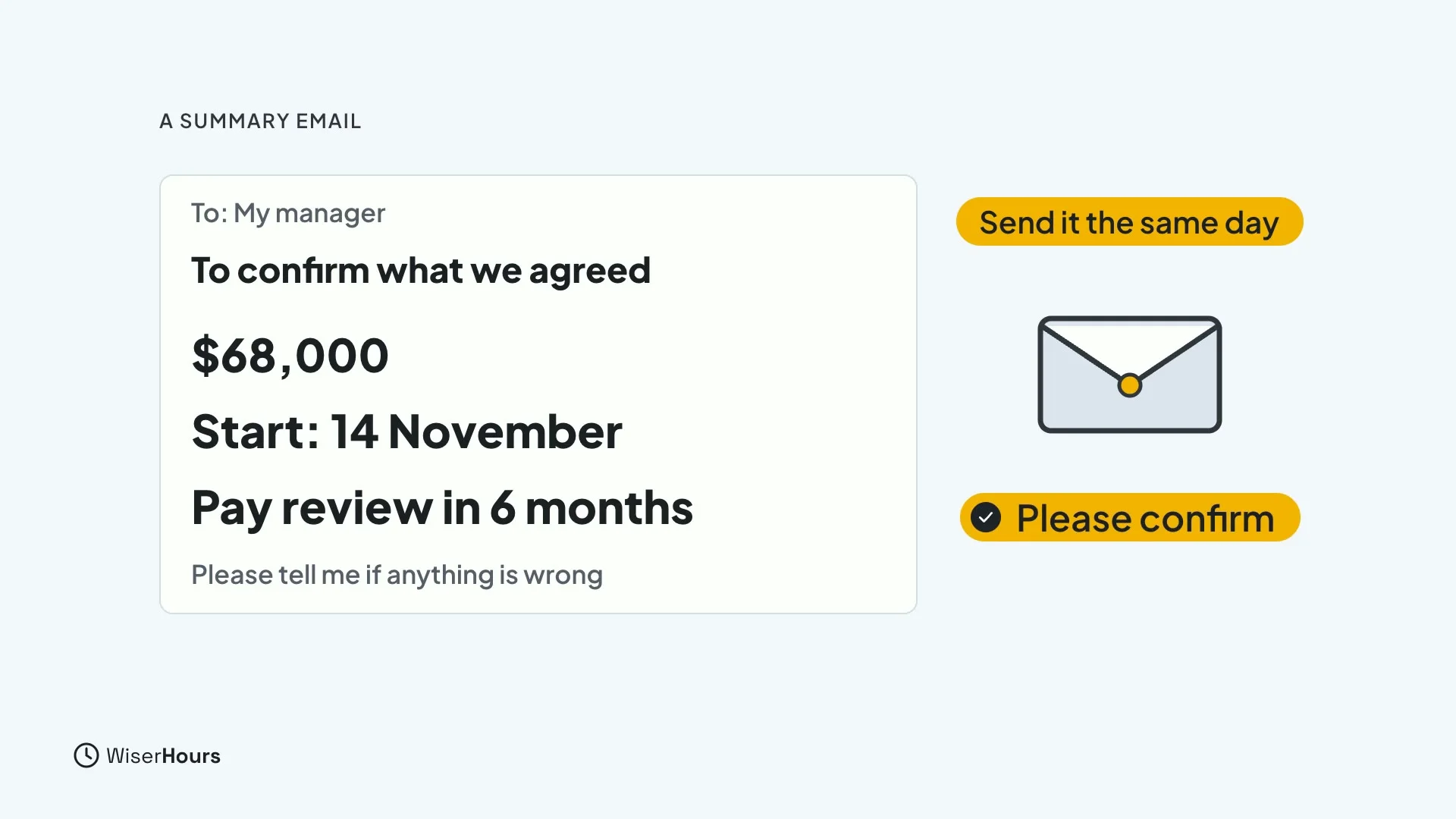
Send a summary the same day
After any pay conversation, send a short summary the same day. For example: “To confirm what we agreed: a salary of $68,000, starting on 14 November, with a pay review in six months. Please reply to confirm, or tell me if I’ve got anything wrong.”
 (opens the full-size picture)
Make the details clear
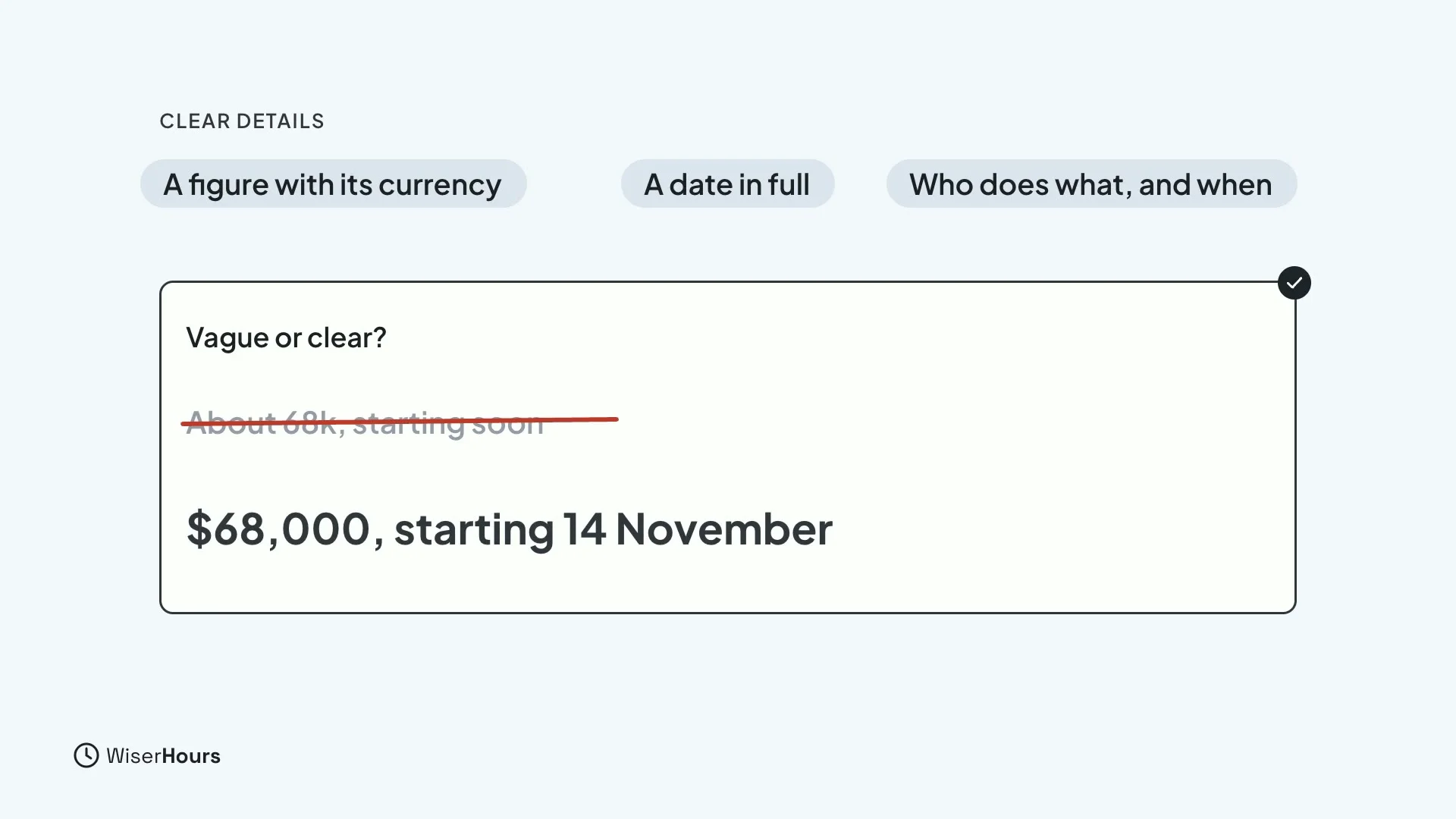
Write every figure with its currency, and every date in full. Say what each side will do, and when. Vague words like “soon” or “about” can cause arguments later. A clear note protects both of you.
 (opens the full-size picture)
Wait for the written offer
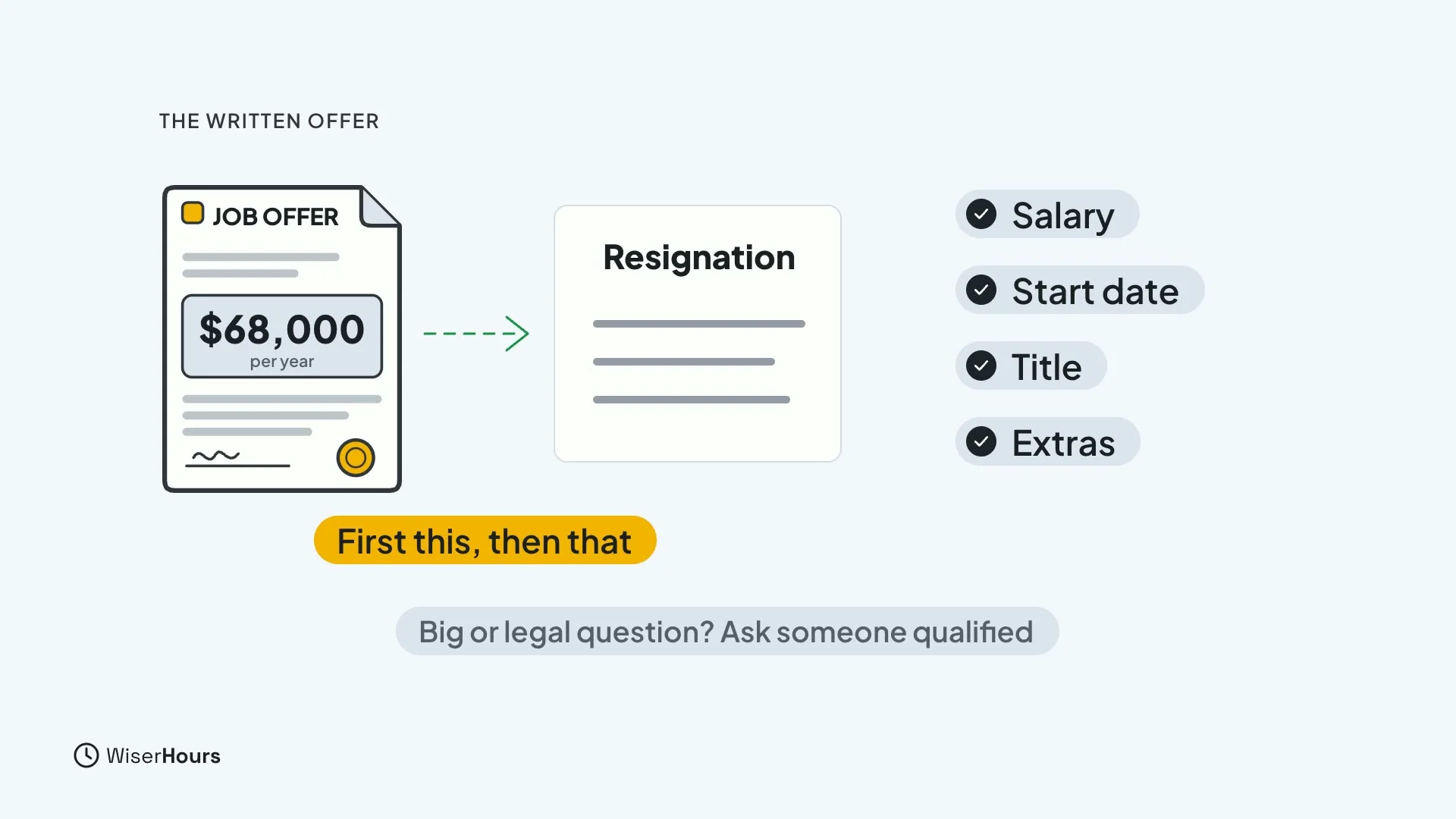
For a new job, wait for the written offer before you resign from your current one. Check that it matches what you agreed: the salary, start date, title, and anything else you traded for. For big or legal questions, ask someone qualified where you live.
 (opens the full-size picture)
If you think your pay is unfair
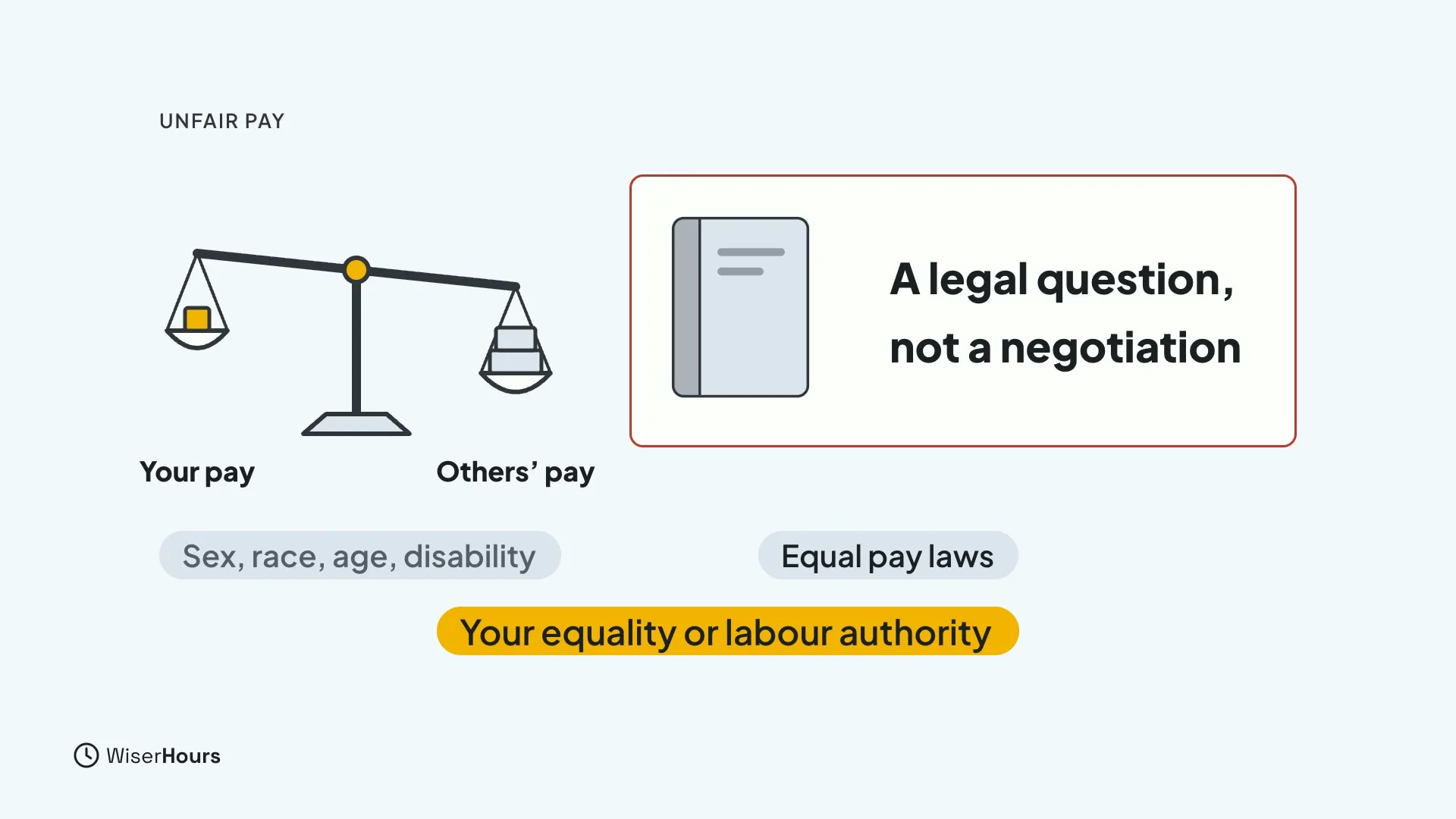
If you think you’re paid less because of who you are, such as your sex, race, age or a disability, that’s a legal question, not a negotiation. Many countries have equal pay laws. Contact your national equality or labour authority for advice.
As examples, the Ask for a Raise article names the Equal Employment Opportunity Commission in the US and Acas in the UK. They are examples only. Your own country will have its own authority.
 (opens the full-size picture)
Your negotiation plan
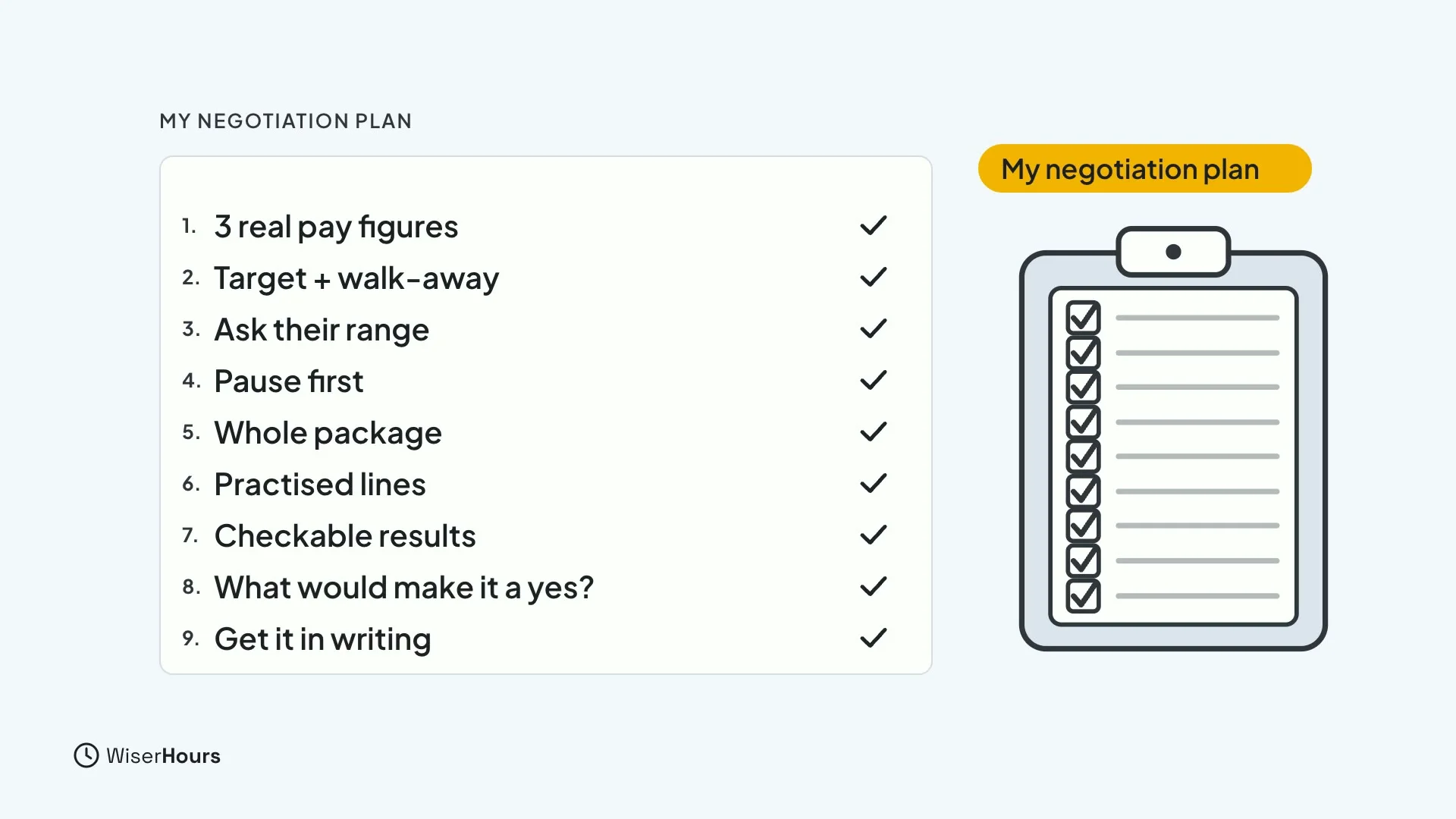
Now put the whole course together. Find three real pay figures. Set your target and your walk-away point. Ask for their range first. Pause before you reply to any number. Look at the whole package. Use your short, practised sentences. For a raise, bring results someone can check. If it’s a no, ask what would need to be true. And always get it in writing.
 (opens the full-size picture)
YOUR TURN
My negotiation plan
Read more
- Negotiating by Email: What to Write and What to Avoid: wording for written follow-ups.
- How to Ask for a Raise: A Step-by-Step Guide: the raise steps, plus where to turn for unfair pay.
- How to Negotiate: A Research-Backed Guide for Everyday Life: the core habits behind your plan.
Read the full lesson script
In this last lesson, you'll learn how to lock in what you agreed, what to do if you think your pay is unfair, and you'll put your whole negotiation plan together.
After any pay conversation, send a short summary the same day. For example: to confirm what we agreed, a salary of sixty-eight thousand dollars, starting on the fourteenth of November, with a pay review in six months. Please reply to confirm, or tell me if I've got anything wrong.
Write every figure with its currency, and every date in full. Say what each side will do, and when. Vague words like soon, or about, can cause arguments later. A clear note protects both of you.
For a new job, wait for the written offer before you resign from your current one. Check that it matches what you agreed: the salary, start date, title, and anything else you traded for. For big or legal questions, ask someone qualified where you live.
If you think you're paid less because of who you are, such as your sex, race, age, or a disability, that's a legal question, not a negotiation. Many countries have equal pay laws. Contact your national equality or labour authority for advice.
Now, your negotiation plan. Find three real pay figures. Set your target and your walk-away point. Ask for their range first. Pause before you reply to any number. Look at the whole package. Use your short, practised sentences. For a raise, bring results someone can check. If it's a no, ask what would need to be true. And always get it in writing.
So remember: confirm every agreement in writing. Check the written offer before you resign. And unfair pay is a legal question, not a negotiation. Fill in your negotiation plan on the lesson page, and pick your first step. Well done for finishing How to Negotiate Your Salary and Ask for a Raise.
MAKE IT A SMALL WIN
Finished this lesson?
Mark it complete to save your progress on this device.