Get ready · Lesson 1 of 10
Why Most People Don't Negotiate Their Salary
See why many people accept the first pay offer, what holds them back, and how a polite, reasoned ask keeps goodwill.
 Video coming soon
Many people take the first number they are offered and never ask for more. This lesson shows why that happens, what really goes wrong when people do ask, and how the rest of this course will help you ask with confidence.
The first number is a starting point
When an offer arrives, many people say yes on the spot. Asking for more feels rude or risky. But an offer is rarely truly final. It is usually the start of a conversation.
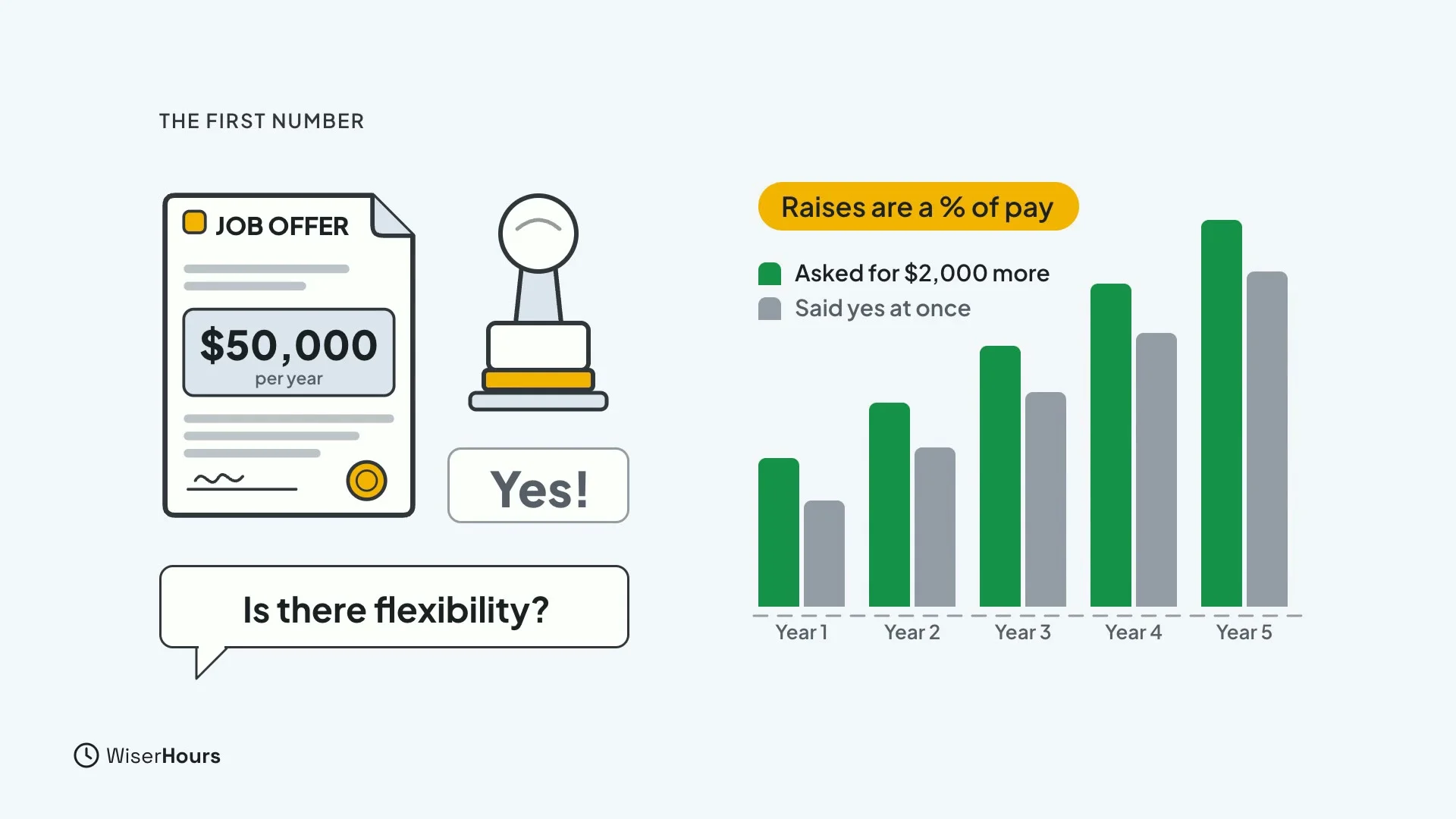
A small difference now can also follow you for years. Raises are often a percentage of what you already earn, so a gap at the start tends to grow. In the picture, two people start $2,000 apart (invented numbers, to show the idea). One asked and one said yes at once, and the gap widens every year.
 (opens the full-size picture)
Nerves lower the number
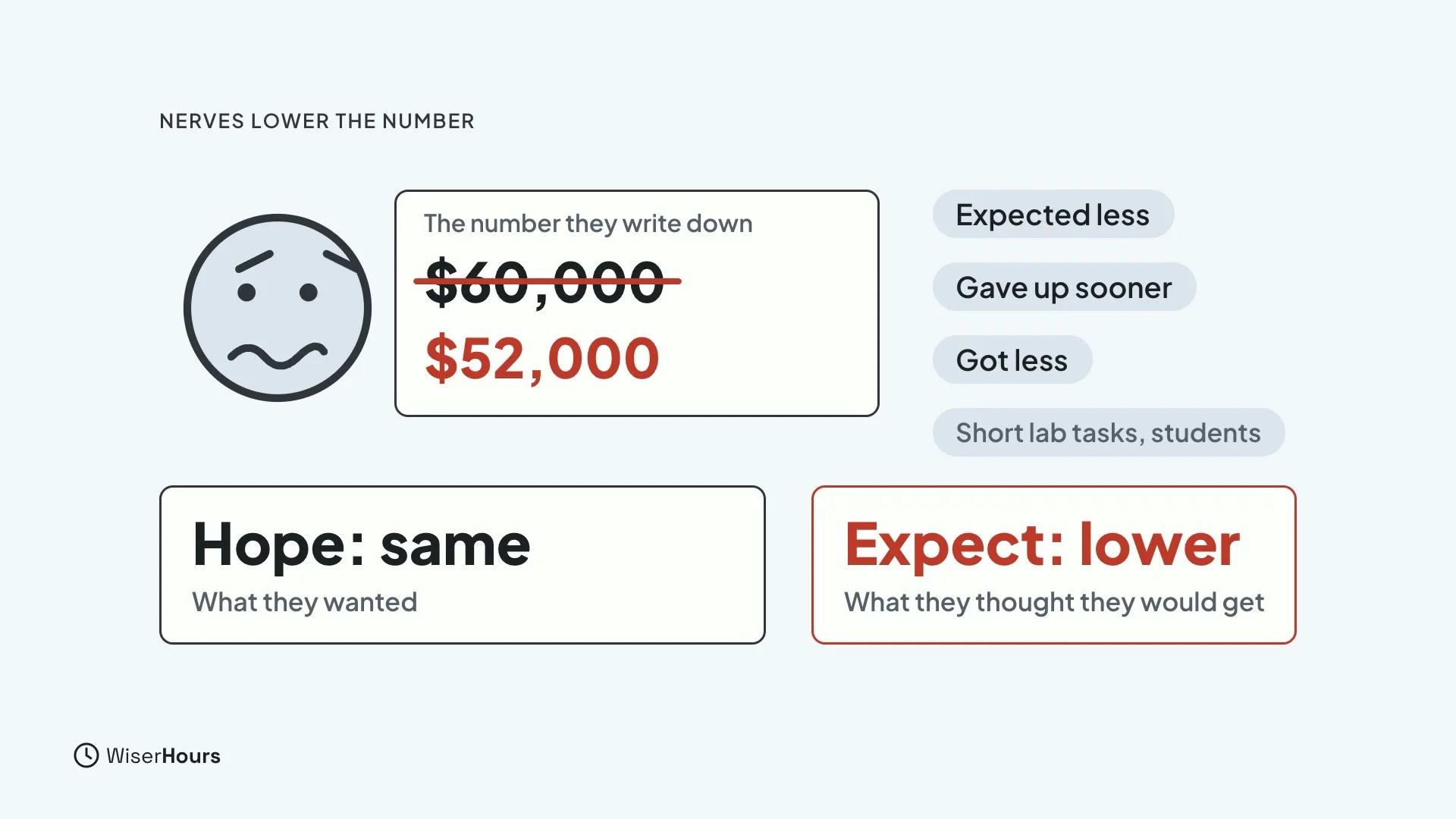
Nerves play a big part. In a set of experiments, people who felt anxious expected less, opened with lower numbers, gave up sooner and ended up with less money. The worry did not change what they hoped for. It changed what they expected to get.
These were short lab tasks, and most of the people in them were students, so treat the finding as a pattern worth knowing, not a rule. The useful part is this: if nerves lower your number, then preparing early, before you feel the pressure, is the best protection.
 (opens the full-size picture)
Clear rules help
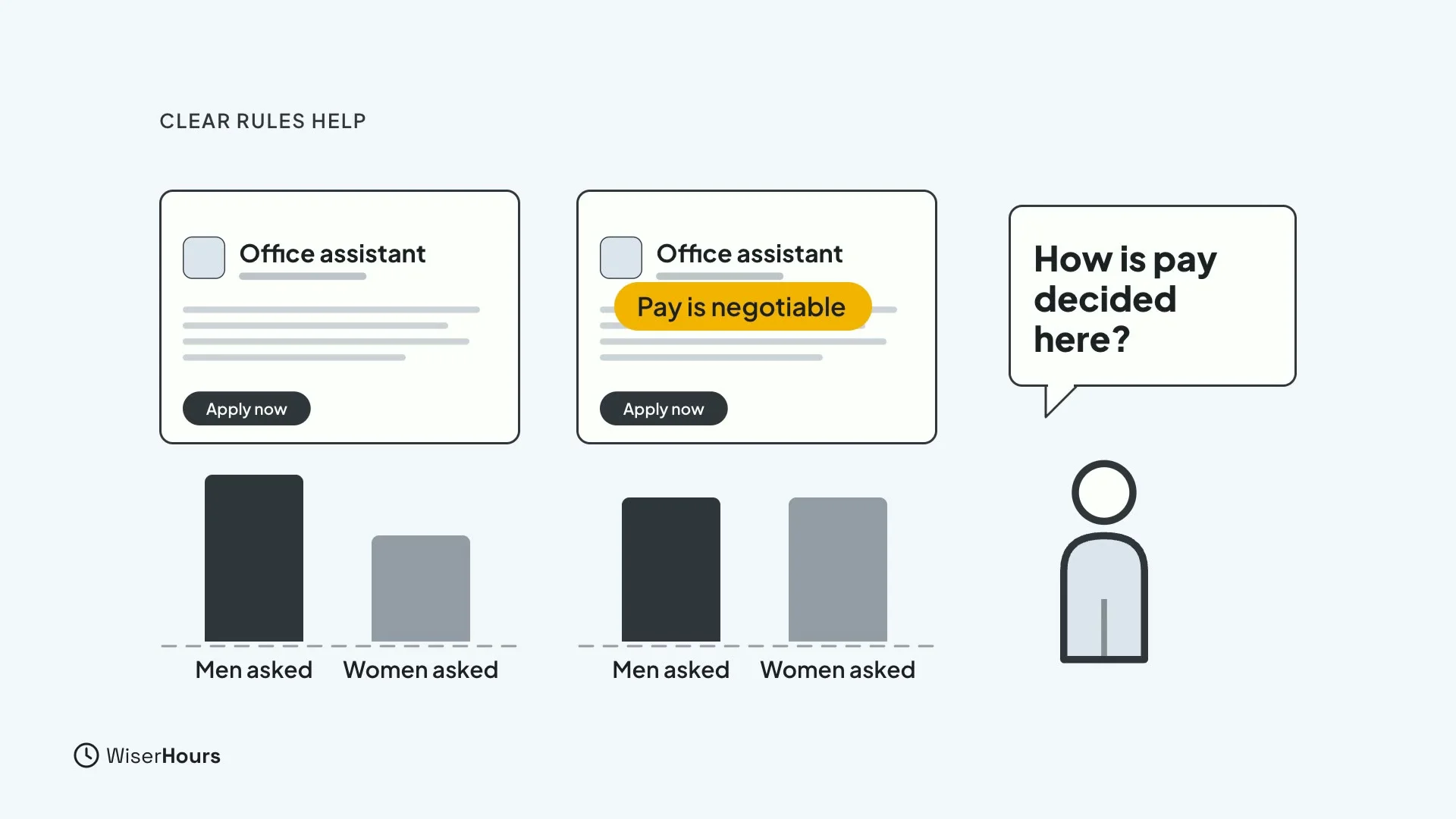
Not knowing the rules holds people back too. In one large experiment with job seekers, men tried to negotiate their pay more often than women. But when the job ad said the pay was negotiable, the gap disappeared.
So one simple question helps everyone: “How is pay decided here?” It tells you whether asking is expected, and it is a calm, friendly way to start.
 (opens the full-size picture)
What actually goes wrong
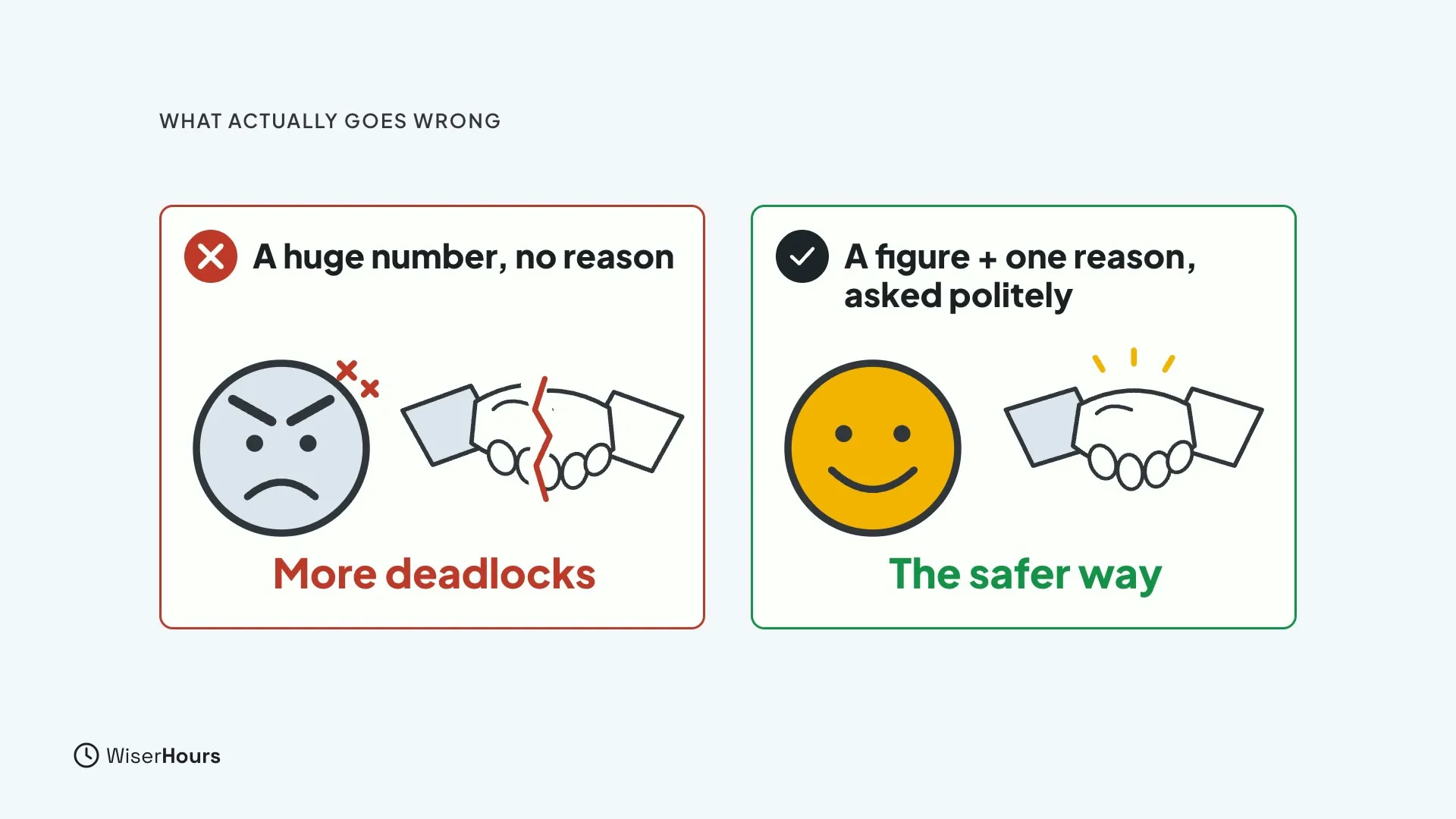
In research on first offers, very bold openings led to more deadlocks, which means talks that get stuck with no deal, and to more bad feeling. Anger did most of the damage. A figure you can back with a reason, asked politely, is the safer way.
 (opens the full-size picture)
The method for this course
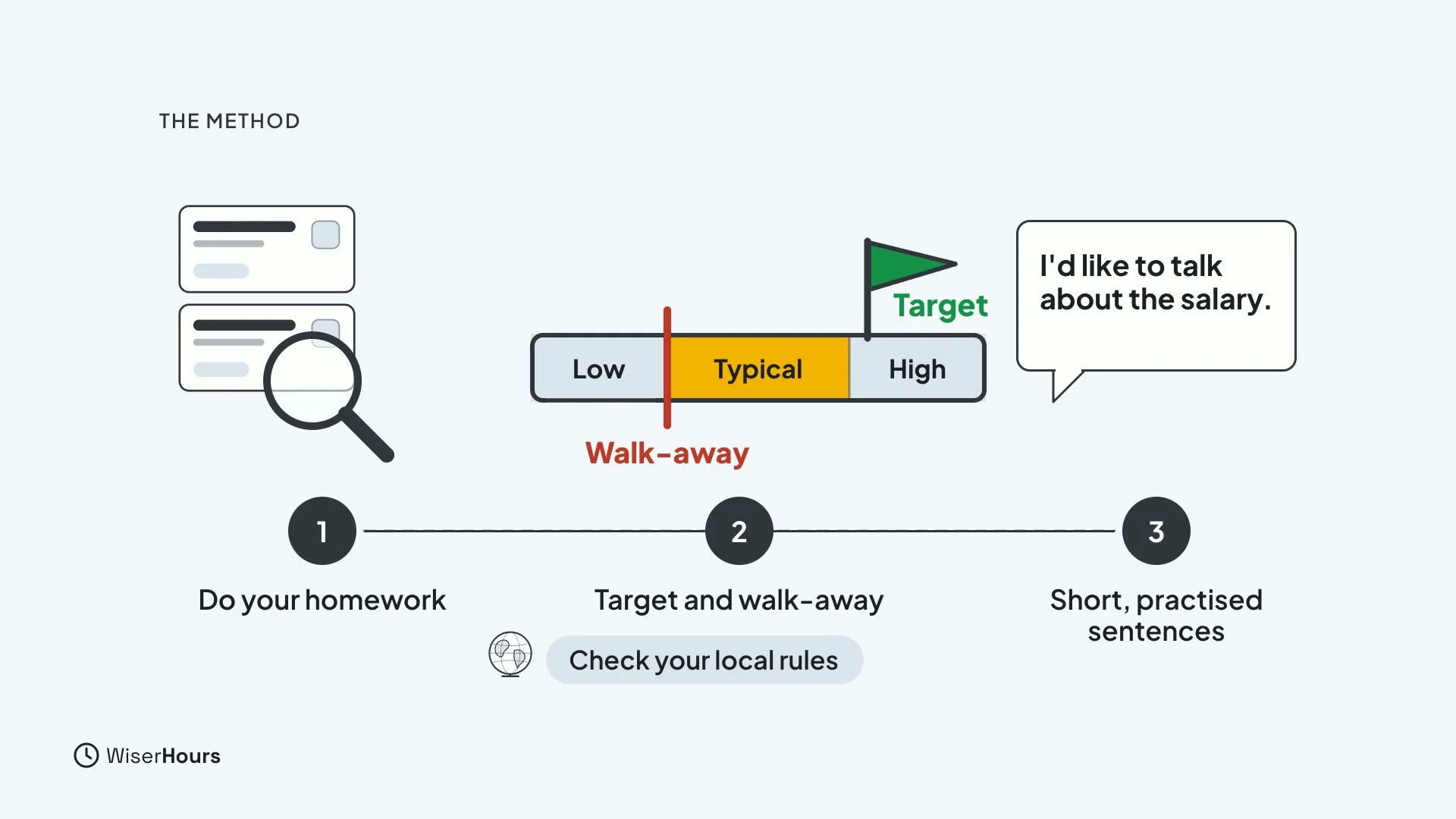
The course gives you a simple method with three steps. First, do your homework on what the work is worth. Second, decide your target and the point where you would say no. Third, use short, polite sentences that you have practised.
Pay rules differ between countries. Where the law matters, the course will tell you to check your local rules, because it cannot give legal advice.
 (opens the full-size picture)
The course ahead
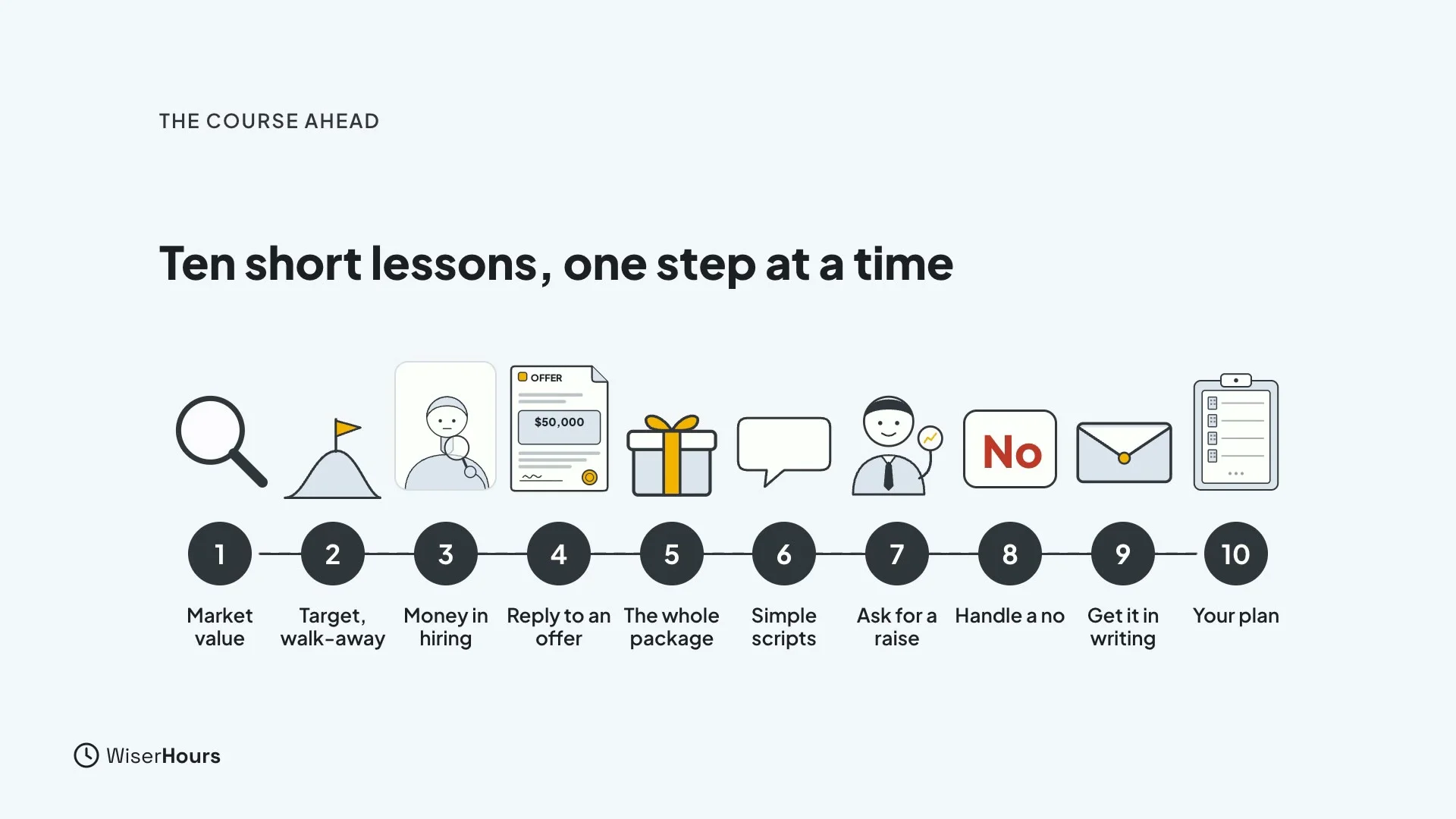
There are ten short lessons. You will find your market value, set your target and walk-away point, and learn what to say when money comes up in hiring. Then you will reply to a job offer, negotiate the whole package and practise simple scripts. Last, you will ask for a raise, handle a no, get it in writing and make your plan.
 (opens the full-size picture)
YOUR TURN
Read more
- How to Ask for a Raise: A Step-by-Step Guide: how pay is decided and how to ask.
- Negotiation Anxiety: How to Stay Calm When the Stakes Feel High: why nerves lower your number and what helps.
- How to Negotiate: A Research-Backed Guide for Everyday Life: the whole method in one article.
Read the full lesson script
Welcome to How to Negotiate Your Salary and Ask for a Raise. In this first lesson, you'll see why so many people take the first number they're offered, what holds them back, and how this short course will help you ask with confidence.
Picture a job offer arriving. Many people say yes on the spot, because asking for more feels rude or risky. But an offer is rarely truly final. It's usually the start of a conversation. And a small difference now can follow you for years, because future raises are often a percentage of what you earn.
Nerves play a big part. In a set of experiments, people who felt anxious expected less, opened with lower numbers, gave up sooner, and ended up with less money. The worry didn't change what they hoped for. It changed what they expected to get. These were short lab tasks with students, but the pattern is worth knowing.
Not knowing the rules holds people back too. In one large experiment with job seekers, men tried to negotiate their pay more often than women. But when the job ad said the pay was negotiable, the gap disappeared. So one simple question helps everyone: how is pay decided here?
Asking itself is rarely the problem. What causes trouble is a number you can't explain, or asking angrily. In research on first offers, very bold openings led to more deadlocks and more bad feeling. A figure you can back with a reason, asked politely, is the safer way.
This course gives you a simple method. Do your homework on what the work is worth. Decide your target, and the point where you'd say no. Then use short, polite sentences you've practised. Pay rules differ between countries, so where the law matters, you'll be told to check your local rules.
Here's the course. First, you'll find your market value, and set a target and a walk-away point. Then you'll learn what to say when money comes up in hiring, and how to reply to a job offer. Next, you'll negotiate the whole package, and practise simple scripts. After that, you'll ask for a raise in your current job, and handle a no. Finally, you'll get it in writing, and make your plan.
So remember: a salary offer is usually a starting point. Nerves make people expect less, so prepare early. And a polite request with a reason is the safe way to ask. Before the next lesson, write down one time you took a number without asking, and what you could have asked for instead. Next, you'll find your market value.
MAKE IT A SMALL WIN
Finished this lesson?
Mark it complete to save your progress on this device.