Get ready · Lesson 3 of 10
Set Your Salary Target and Walk-Away Point
Set a bold target you can explain and a private walk-away point, starting from your best alternative.
 Video coming soon
Before any pay talk, set two numbers: a target to aim for and a walk-away point where you would say no. This lesson shows how to set them, starting from the question that makes both of them clearer.
Start with your best alternative
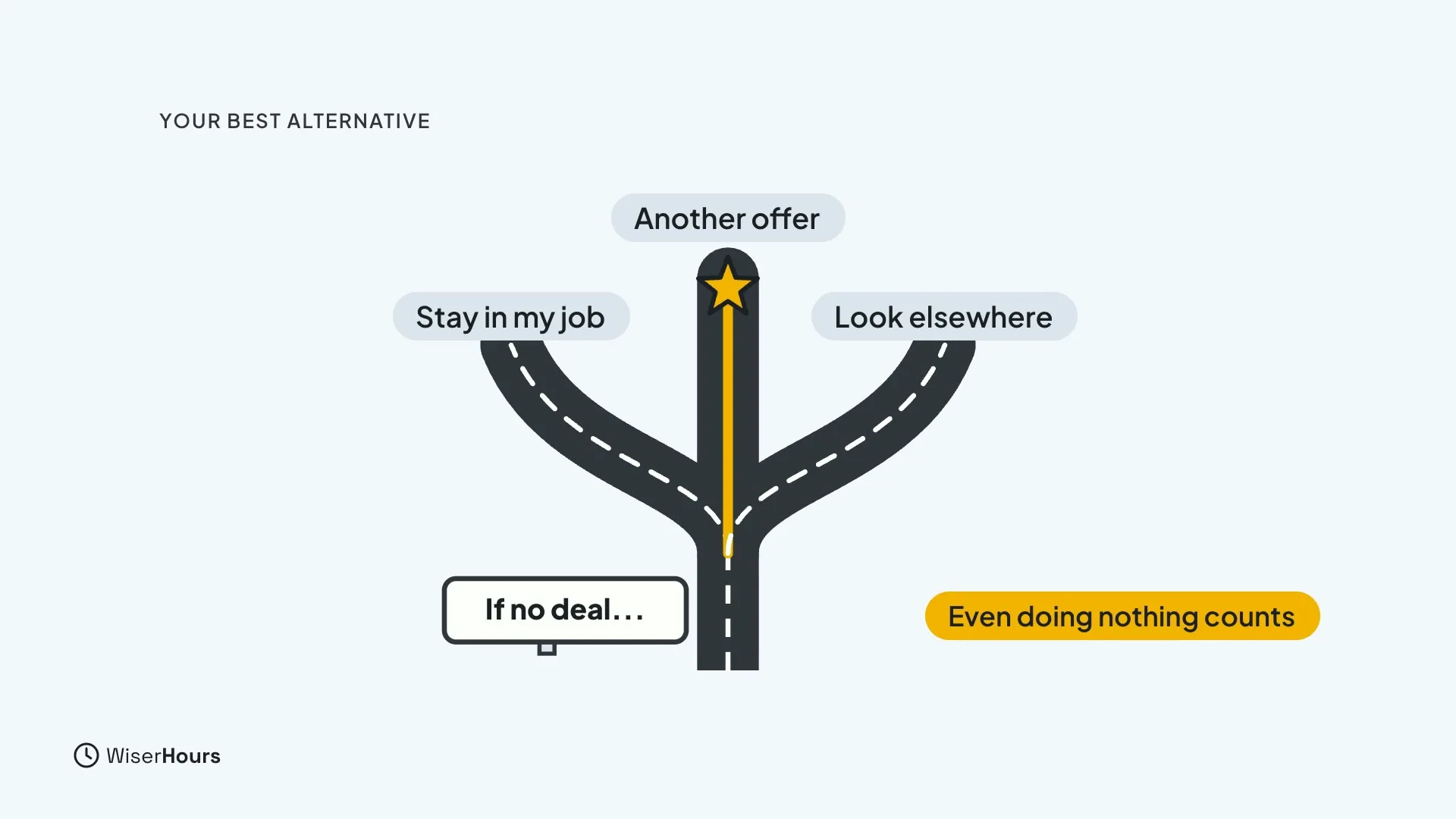
Ask yourself one question: what will I do if this deal does not happen? That is your best alternative. For a job offer, it might be staying in your current job, or another offer. For a raise, it might be staying as you are, or looking elsewhere. List every option, including doing nothing. Even doing nothing counts.
 (opens the full-size picture)
Check that it is real
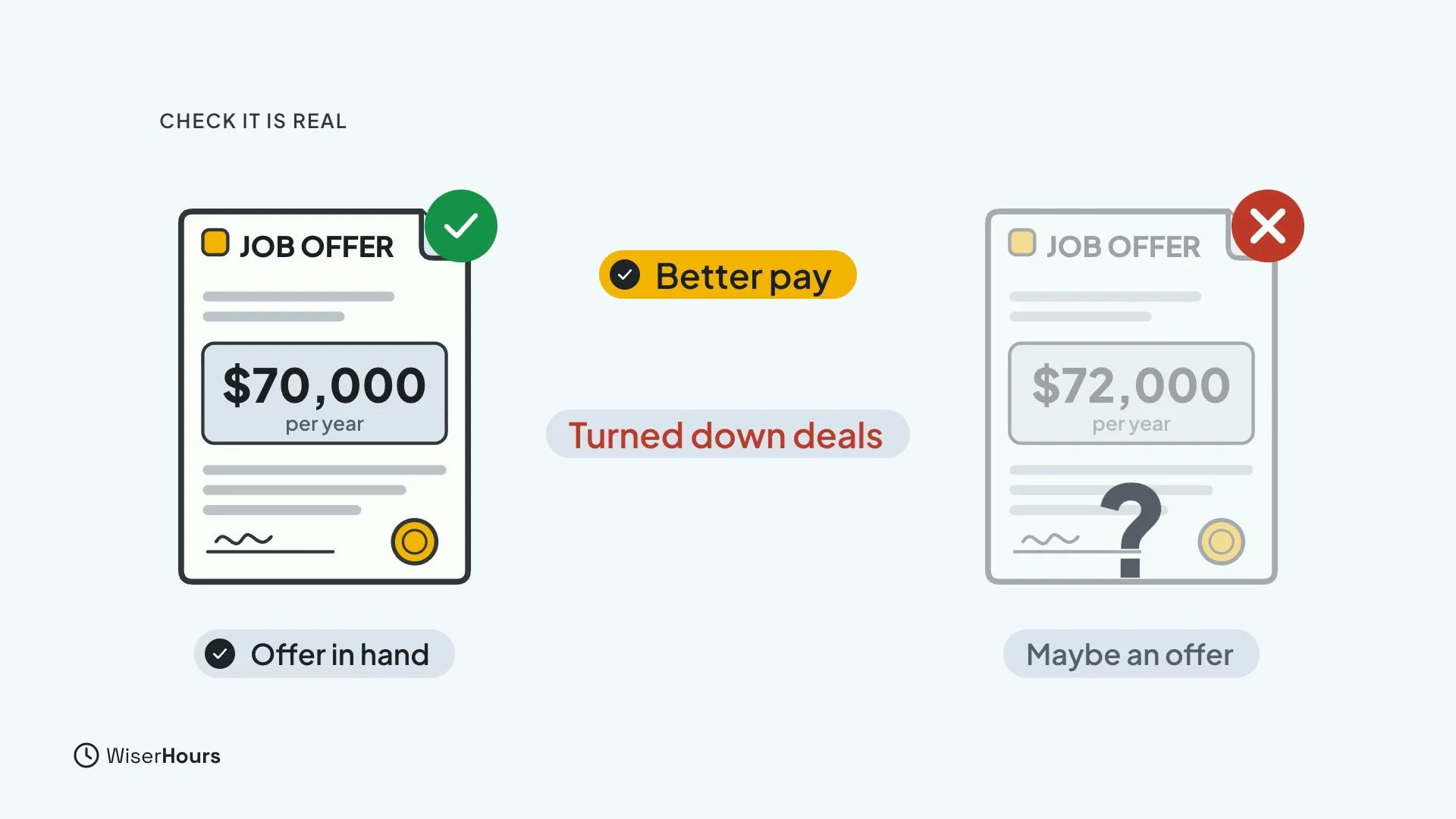
Then check that your alternative is real. In experiments with job candidates, people with a second offer felt more powerful and got better salaries. But some were too sure that an uncertain offer would come through, and turned down deals they should have taken.
An offer that might happen is not the same as one you have. Count an alternative as strong only when it is in hand.
 (opens the full-size picture)
Your walk-away point
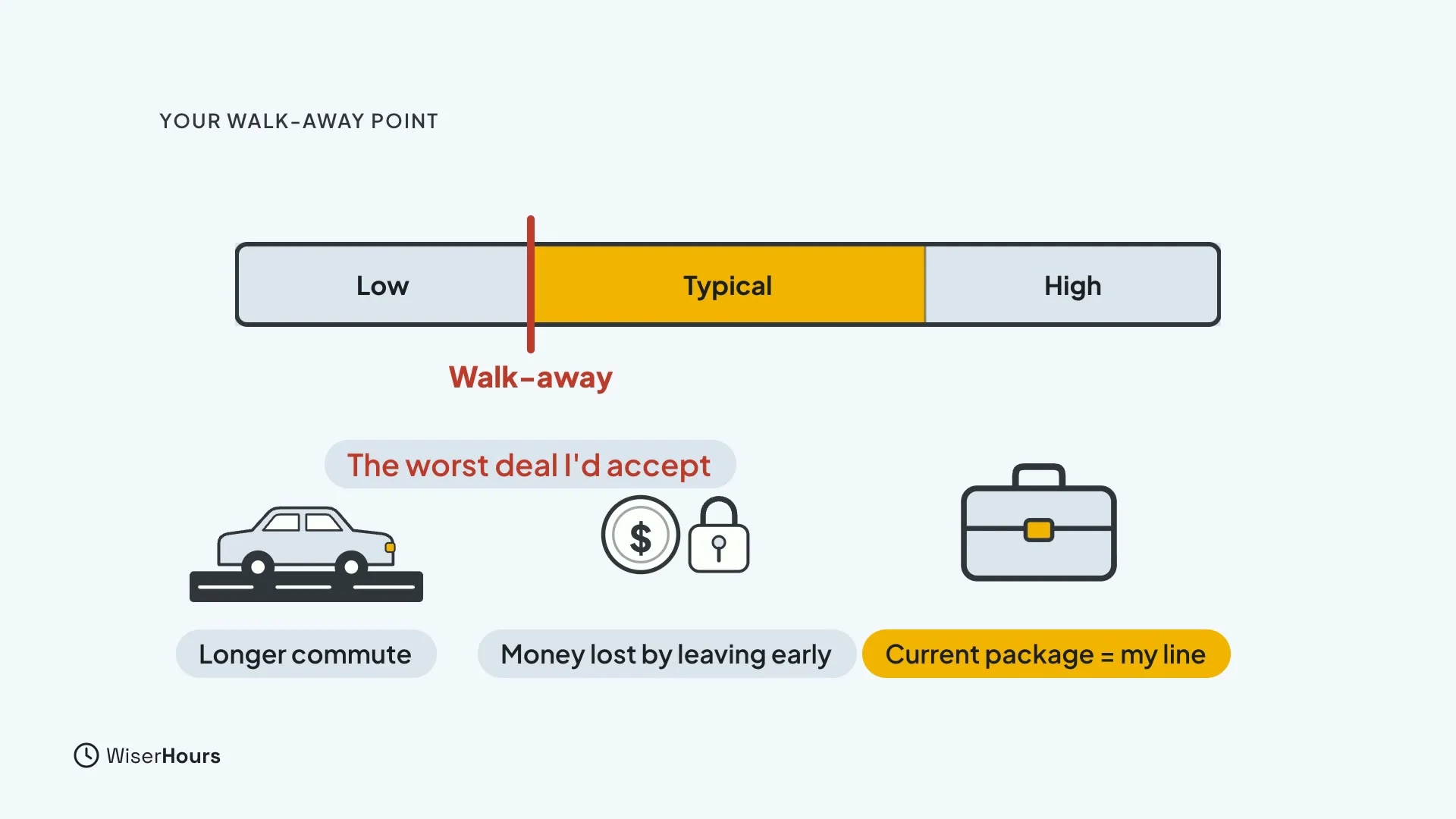
Your walk-away point comes from that alternative. It is the worst deal you would still accept. If you would only move for a package at least as good as your current job, that is your line.
Add the costs of each option, like a longer commute or money you would lose by leaving early, because they change where the line sits.
 (opens the full-size picture)
Your target
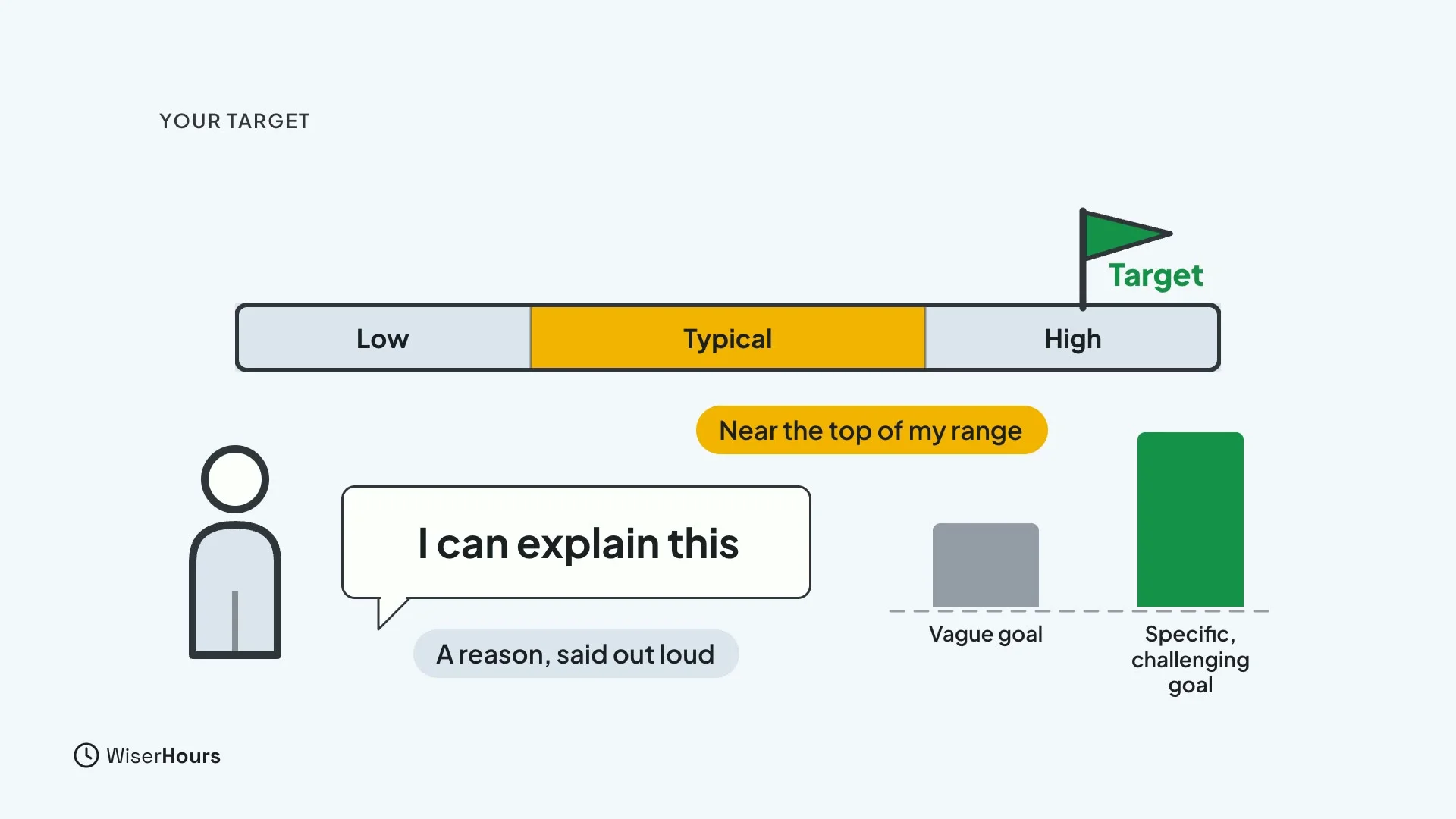
Your target is different. It is ambitious, but something you can explain out loud with a reason, without feeling embarrassed. Aim near the top of your researched range. In experiments, people with specific, challenging goals did better than people with vague ones.
 (opens the full-size picture)
Use both numbers
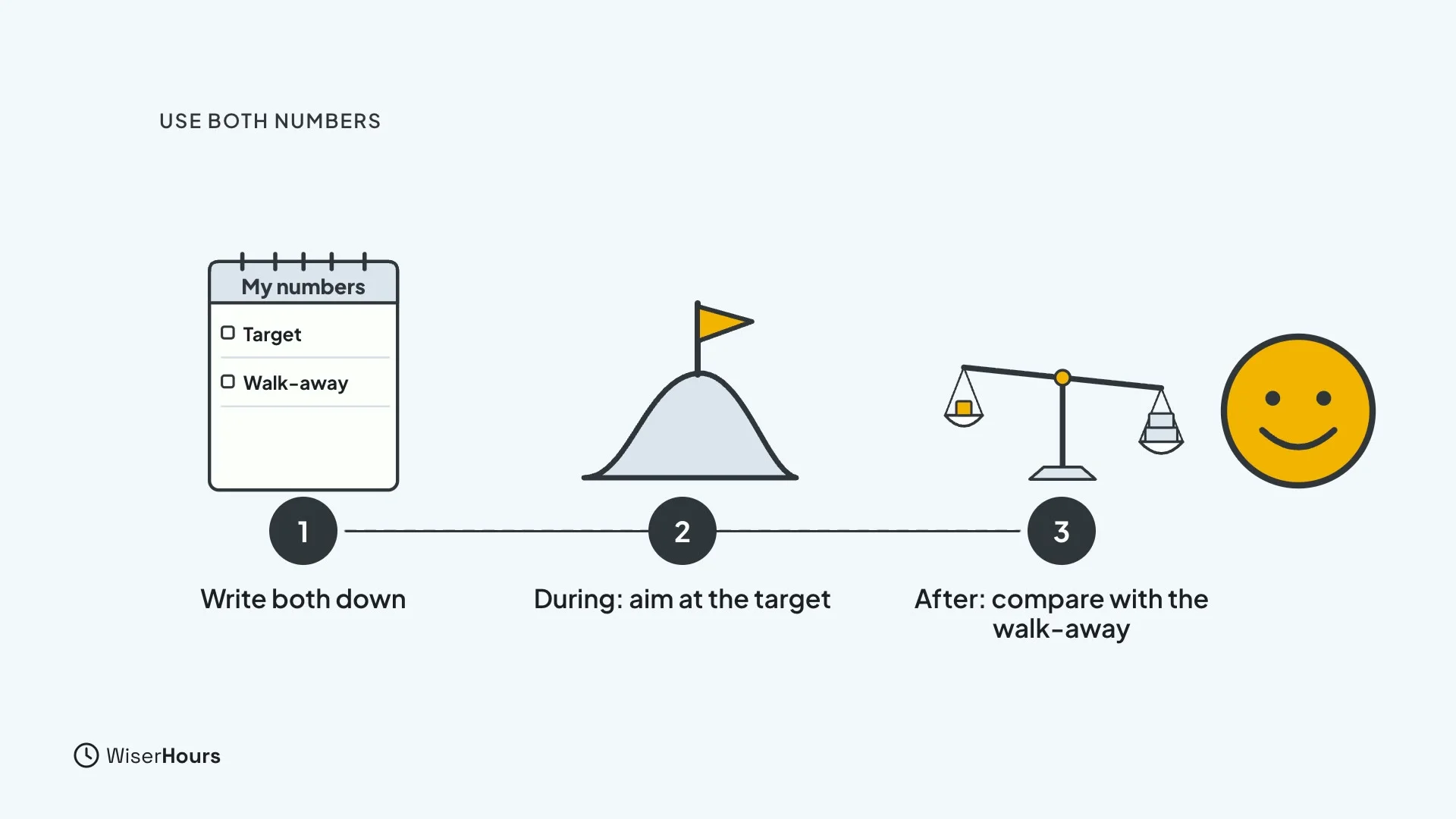
Write both numbers down before you talk. During the talk, aim at your target. Afterwards, judge the result against your walk-away point. In one set of experiments, people focused on their target got better deals, and being reminded of their walk-away point afterwards made them happier with the result.
 (opens the full-size picture)
Keep it private
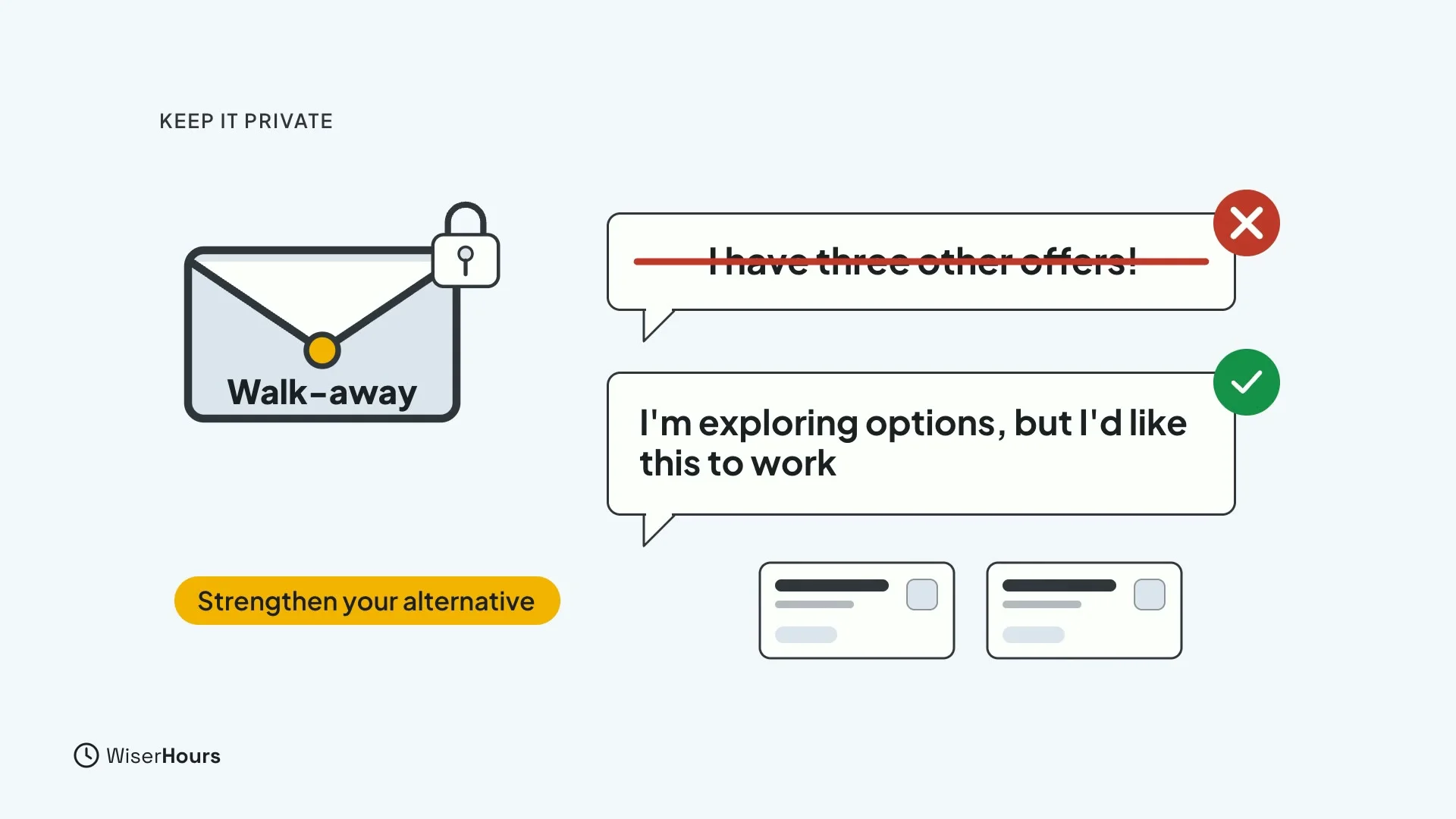
Keep your walk-away number to yourself, and do not bluff about other offers. If someone asks, say truthfully that you are exploring other options but you would like to make this one work. If you can, strengthen your alternative before you talk, for example by keeping other job leads open.
 (opens the full-size picture)
Never bluff
Do not claim offers you do not have. A truthful “I’m exploring options, but I’d like this to work” keeps trust and keeps your options open.
YOUR TURN
Read more
- Your Walk-Away Point: How to Know When a Deal Isn’t Worth Taking: how to set and use your line.
- How to Prepare for a Negotiation in 30 Minutes: put your two numbers into a quick plan.
- Should You Make the First Offer? What the Research Says: when to name a number and when to wait.
Read the full lesson script
In this lesson, you'll set two numbers before any pay talk: a target to aim for, and a walk-away point where you'd say no. You'll also see why your best alternative matters so much.
Start with one question: what will you do if this deal doesn't happen? That's your best alternative. For a job offer, it might be staying in your current job, or another offer. For a raise, it might be staying as you are, or looking elsewhere. List every option, including doing nothing.
Then check that your alternative is real. In experiments with job candidates, people with a second offer felt more powerful and got better salaries. But some were too sure that an uncertain offer would come through, and turned down deals they should have taken. An offer that might happen is not the same as one you have.
Your walk-away point comes from that alternative. It's the worst deal you'd still accept. If you'd only move for a package at least as good as your current job, that's your line. Add the costs of each option, like a longer commute, or money you'd lose by leaving early.
Your target is different. It's ambitious, but something you can explain out loud with a reason, without feeling embarrassed. Aim near the top of your researched range. In experiments, people with specific, challenging goals did better than people with vague ones.
Write both numbers down before you talk. During the talk, aim at your target. Afterwards, judge the result against your walk-away point. In one set of experiments, people focused on their target got better deals, and being reminded of their walk-away point afterwards made them happier with the result.
Keep your walk-away number to yourself. Don't bluff about other offers. If someone asks, say truthfully that you're exploring other options, but you'd like to make this one work. And if you can, strengthen your alternative before you talk, for example by keeping other job leads open.
So remember: know your best alternative, and check that it's real. Your walk-away point is your private floor. And your target is ambitious, but something you can explain. Before the next lesson, write down your target, your walk-away point, and your best alternative. Next, you'll learn what to say when money comes up in hiring.
MAKE IT A SMALL WIN
Finished this lesson?
Mark it complete to save your progress on this device.