The conversation · Lesson 8 of 10
Asking for a Raise in Your Current Job
Learn when to ask for a raise, how to build a case your manager can check, and what to say in a meeting just for pay.
 Video coming soon
Asking for a raise in the job you already have is different from negotiating a new offer. You know the people, and they know your work. This lesson shows you when to ask, what to say, and how to build a case your manager can repeat to others.
Learn how pay is set
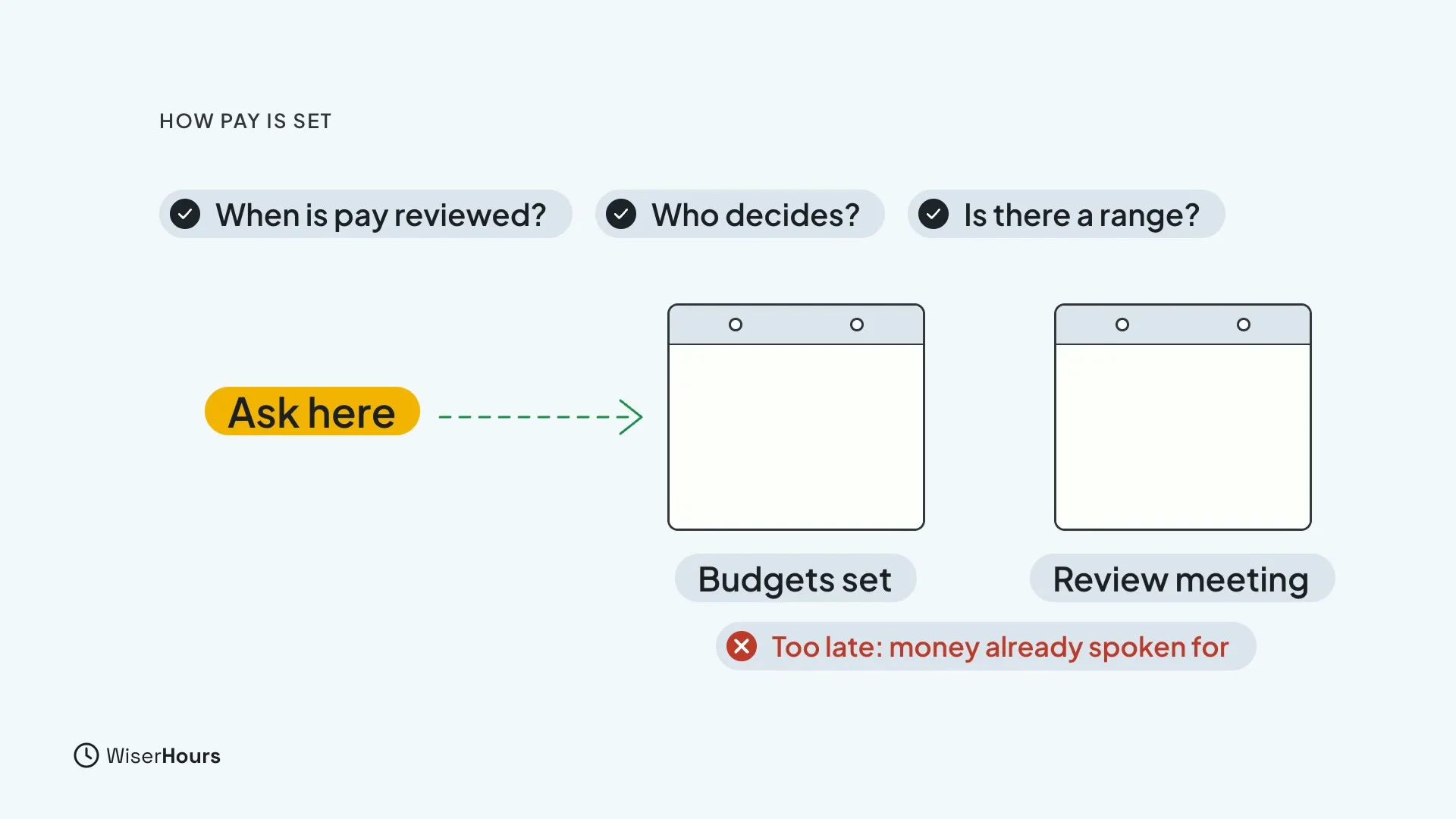
Start by learning how pay works where you are. Ask your manager or HR: when is pay reviewed, who decides, and is there a pay range for my role?
Then ask before budgets are fixed. If you wait until the review meeting, the money may already be spoken for.
 (opens the full-size picture)
What an ordinary raise looks like
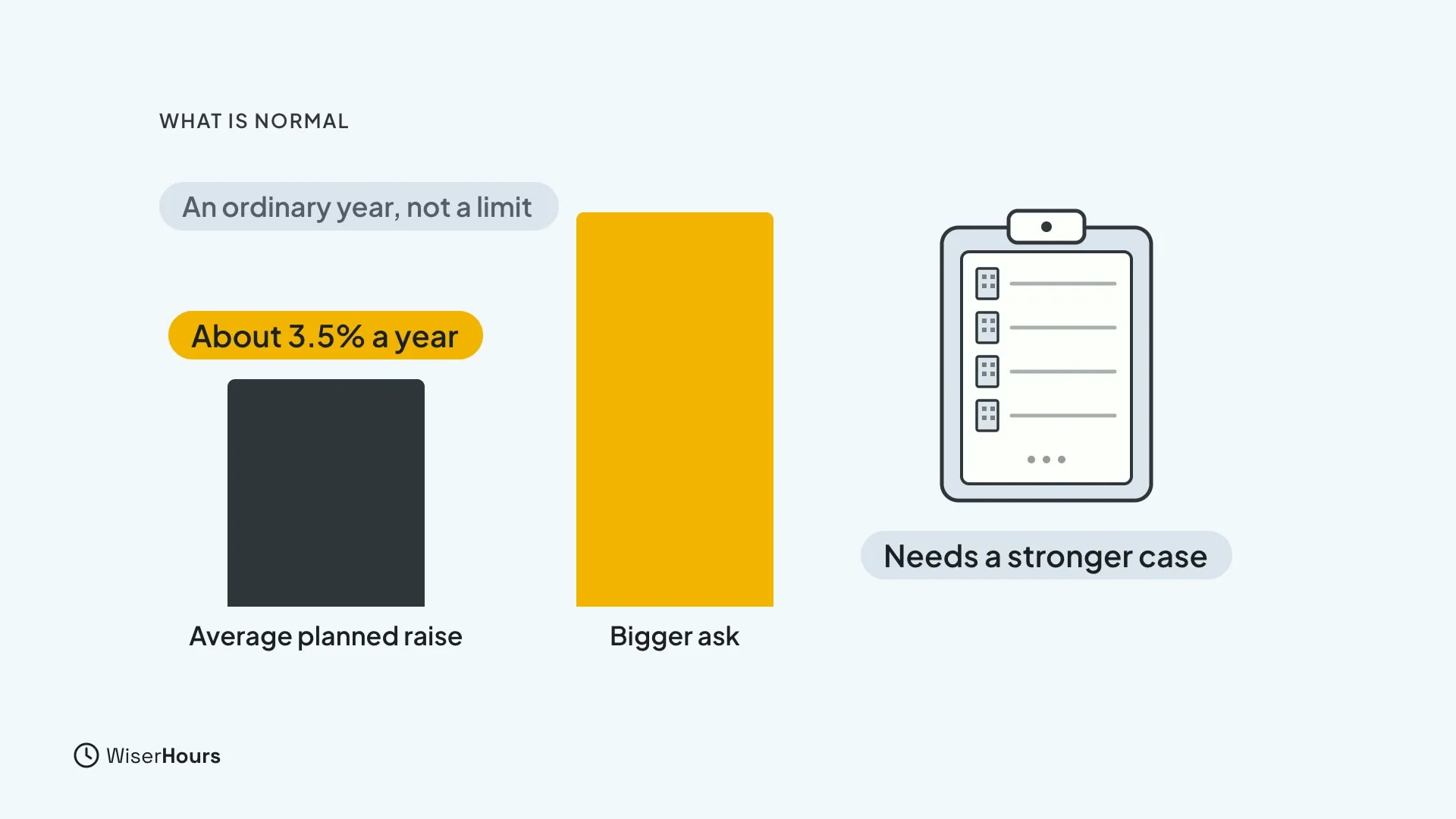
It helps to know what an ordinary raise looks like. In recent surveys of companies in the US, planned raise budgets averaged around 3.5% a year.
Treat the average as an ordinary year, not a limit. A bigger request needs a stronger case.
 (opens the full-size picture)
Build your case on facts
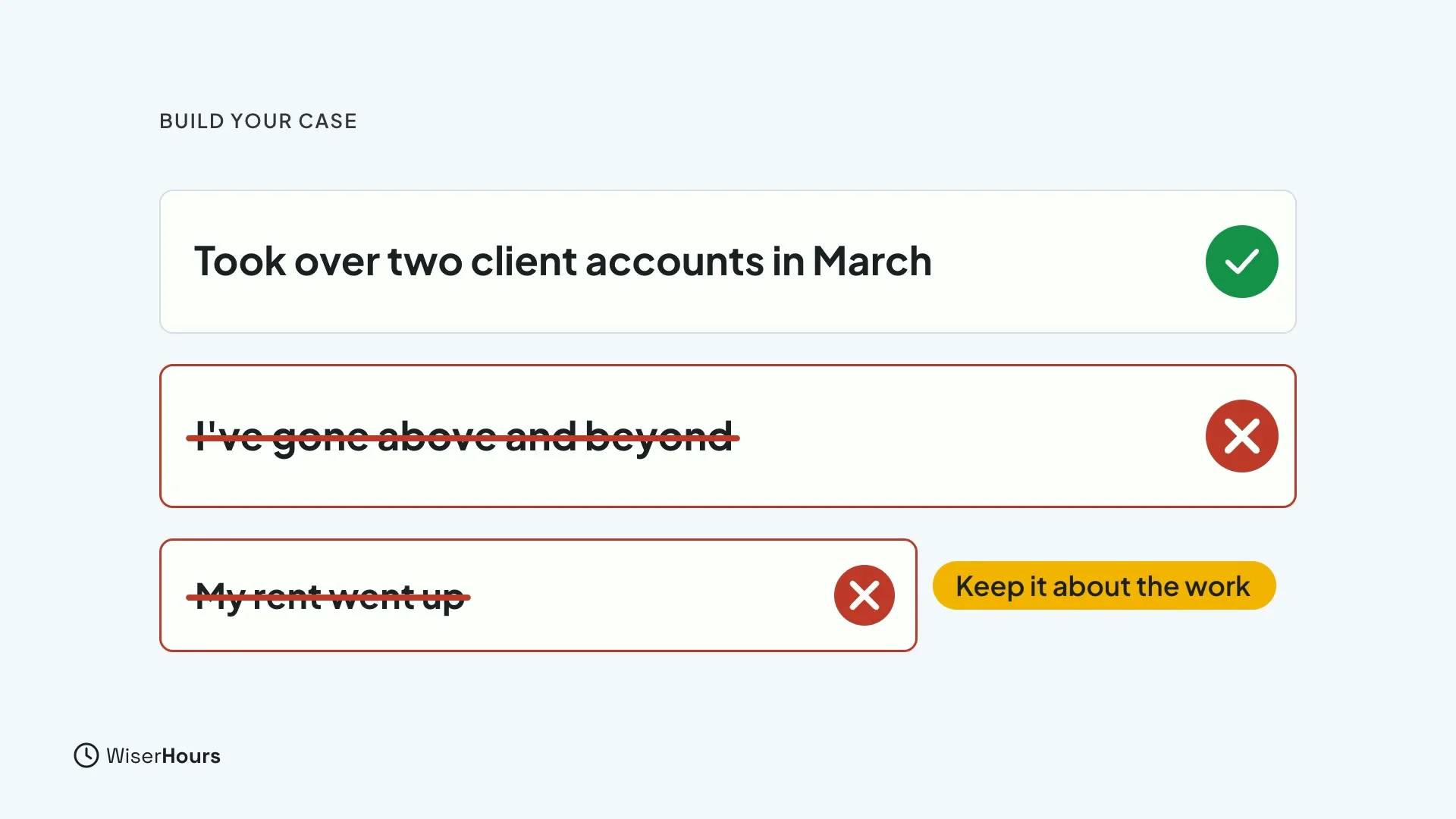
Build your case on facts someone can check: results, new responsibilities, and skills the team relies on. “Took over two client accounts in March” works. “I’ve gone above and beyond” does not.
Keep it about the work, not your personal costs, like rent.
 (opens the full-size picture)
A case your manager can repeat
Your manager may need to explain your raise to someone else. A dated, checkable result is easy to repeat. A general feeling is not.
Book the meeting and lead with your case
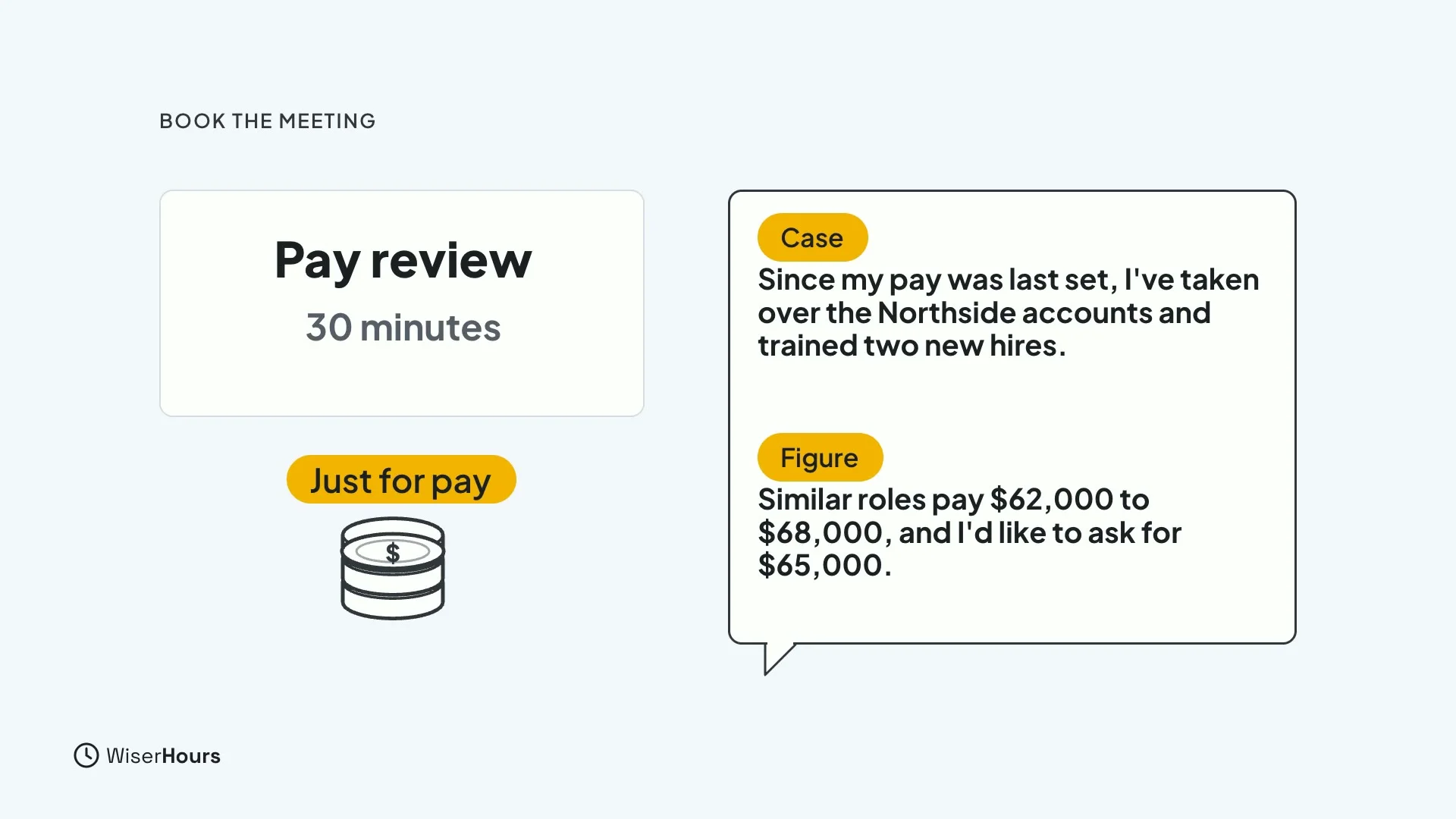
Ask for a meeting just for pay, not the last five minutes of something else. Lead with your case, then your figure.
For example: “Since my pay was last set, I’ve taken over the Northside accounts and trained two new hires. Similar roles pay $62,000 to $68,000, and I’d like to ask for $65,000.”
 (opens the full-size picture)
Outside offers
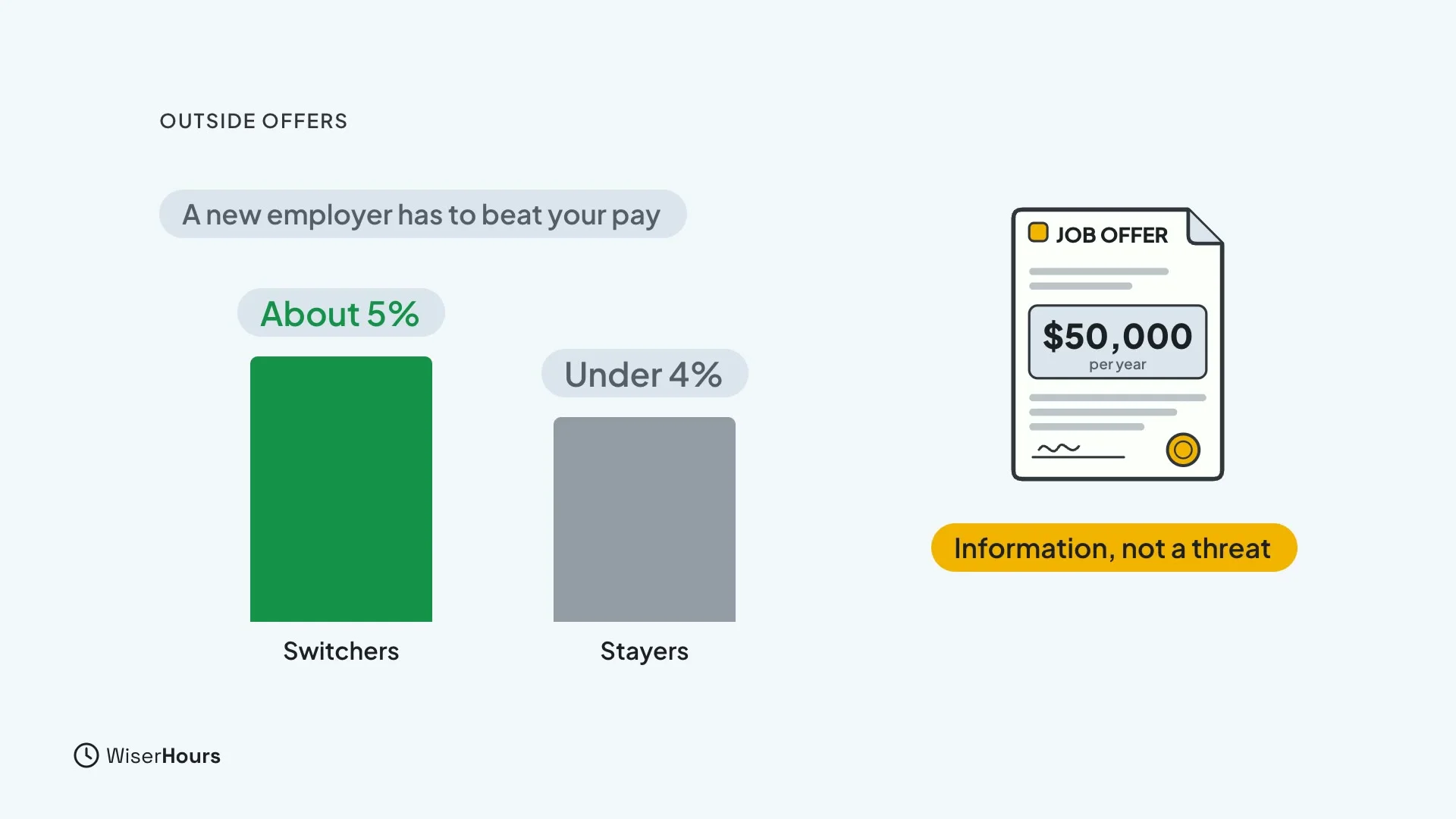
What about an offer from another company? People who change jobs often see bigger pay rises than people who stay, because a new employer has to beat your current pay. In one large US tracker, job switchers’ pay grew about 5% in a year, against under 4% for people who stayed.
An outside offer shows your market price. Use it as information, not as a threat.
 (opens the full-size picture)
After the talk
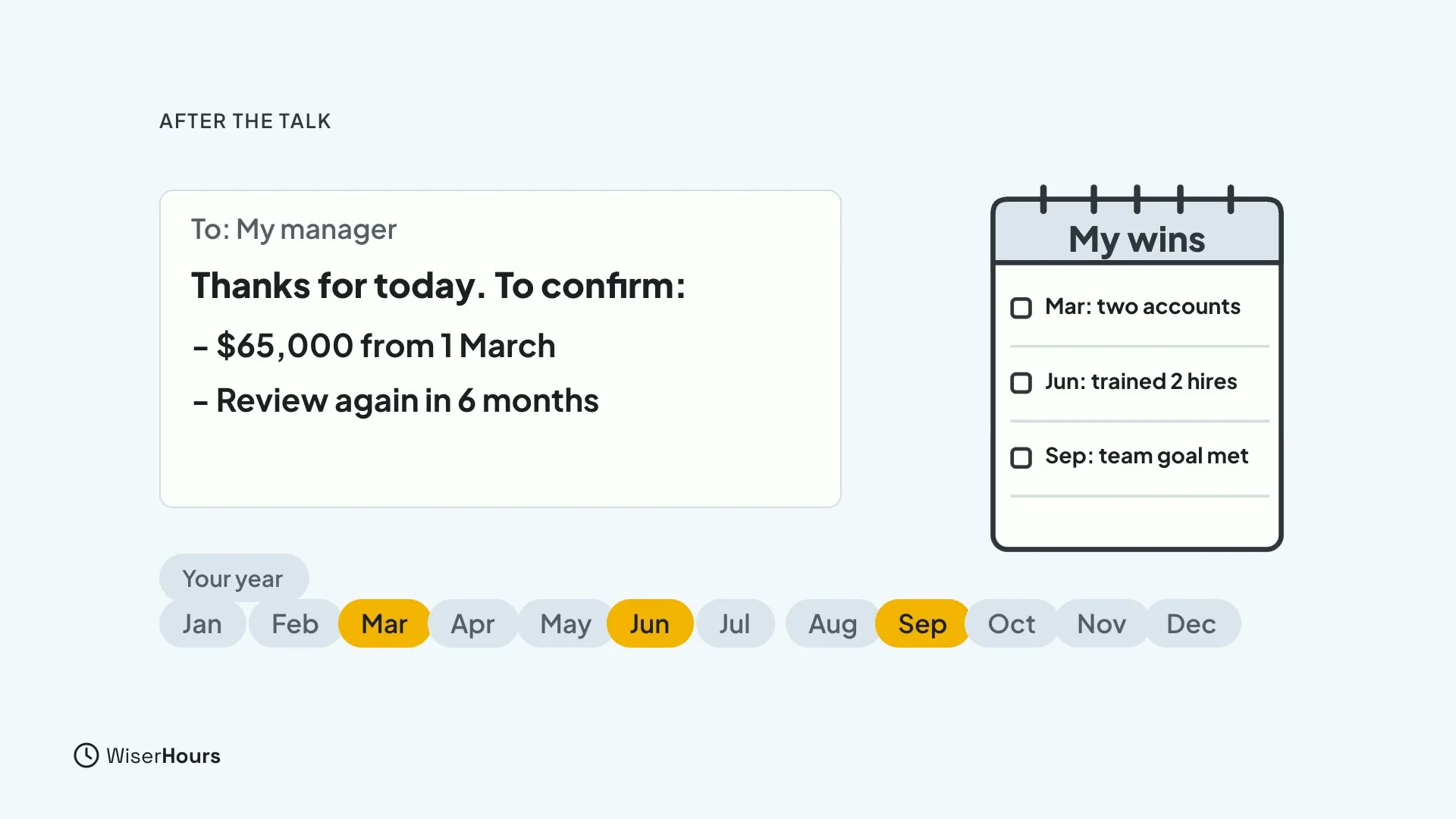
Afterwards, send a short note of what you discussed or agreed, with figures and dates. And keep a running list of your wins through the year, so next time your case is ready.
 (opens the full-size picture)
YOUR TURN
Read more
- How to Ask for a Raise: A Step-by-Step Guide: the full steps, with a checklist to prepare.
- How to Ask for a Promotion (With Scripts): wording for a bigger step up.
- Job Hopping vs. Staying Put: What the Evidence Says About Pay and Growth: how outside offers and staying compare.
Read the full lesson script
In this lesson, you'll learn how to ask for a raise in the job you have: when to ask, what to say, and how to build a case your manager can repeat to others.
Start by learning how pay works where you are. Ask your manager or HR: when is pay reviewed, who decides, and is there a pay range for my role? Then ask before budgets are fixed. If you wait until the review meeting, the money may already be spoken for.
It helps to know what an ordinary raise looks like. In recent surveys of companies in the US, planned raise budgets averaged around three and a half percent a year. Treat the average as an ordinary year, not a limit. A bigger request needs a stronger case.
Build your case on facts someone can check: results, new responsibilities, and skills the team relies on. Took over two client accounts in March works. I've gone above and beyond does not. And keep it about the work, not your personal costs, like rent.
Ask for a meeting just for pay, not the last five minutes of something else. Lead with your case, then your figure. Since my pay was last set, I've taken over the Northside accounts and trained two new hires. Similar roles pay sixty-two to sixty-eight thousand, and I'd like to ask for sixty-five thousand.
What about an offer from another company? People who change jobs often see bigger pay rises than people who stay, because a new employer has to beat your current pay. In one large US tracker, job switchers' pay grew about five percent in a year, against under four percent for people who stayed. An outside offer shows your market price. Use it as information, not as a threat.
Afterwards, send a short note of what you discussed or agreed, with figures and dates. And keep a running list of your wins through the year, so next time your case is ready.
So remember: learn when pay is set, and ask before budgets are fixed. Build your case on results someone can check. And give your case first, then your figure. Before the next lesson, write three results from the past year, each with a fact or a number. Next, you'll learn how to handle a no.
MAKE IT A SMALL WIN
Finished this lesson?
Mark it complete to save your progress on this device.